In May 2026 I flew from Denmark to Bavaria for one reason: to compete in Steinheben, traditional German stone lifting, at the 30th Lechfeld-Cup in Klosterlechfeld. Between landing in Munich on Saturday night and taking off again early on Monday morning, I had about 32 hours on the ground.
I finished fifth in my class. I wasn't happy with that – I'm still not. But the competition itself was one of the best things I've done in strength sport, and I'd recommend it to anyone who likes lifting heavy things in unusual places.
The short version
Steinheben means lifting a 254 kg stone (508 old German pounds) by a handle and pulling it as high as possible. At the Lechfeld-Cup it happens on a stage in a huge festival tent in front of a paying crowd. I lifted it 55.4 cm and came fifth of eight in the men's -110 kg class. Neuschwanstein and the Lechfall were fine; the competition was the reason to go.
A late arrival in Bavaria
I flew KLM from Billund via Amsterdam on Saturday 23 May and landed in Munich at 22.31. I picked up a rental car at the airport and drove about an hour west to Landhotel Endhart in Landsberg am Lech.
Arriving that late, self check-in was exactly what I needed: the key was waiting in a key box, and I walked straight into a nice, quiet room. Breakfast was included, so the next morning started properly before the day got going. I'd booked two nights through Hotels.com and paid 1,319.92 DKK in total. The hotel was also handy for the competition – about 15 minutes' drive from Klosterlechfeld.
A hot morning: the Lechfall and Neuschwanstein
On Sunday morning my German friend Chris picked me up. We know each other through arm wrestling and strongman, and since the competition wasn't until the evening, we headed south towards Füssen.
First stop was the Lechfall, where the river Lech drops over a series of stepped concrete weirs just outside Füssen. It was a very hot day and the setting – green slopes, milky glacial water – was pretty. Honestly, though, it's a nice short stop if you're already nearby, not something I'd drive far for.
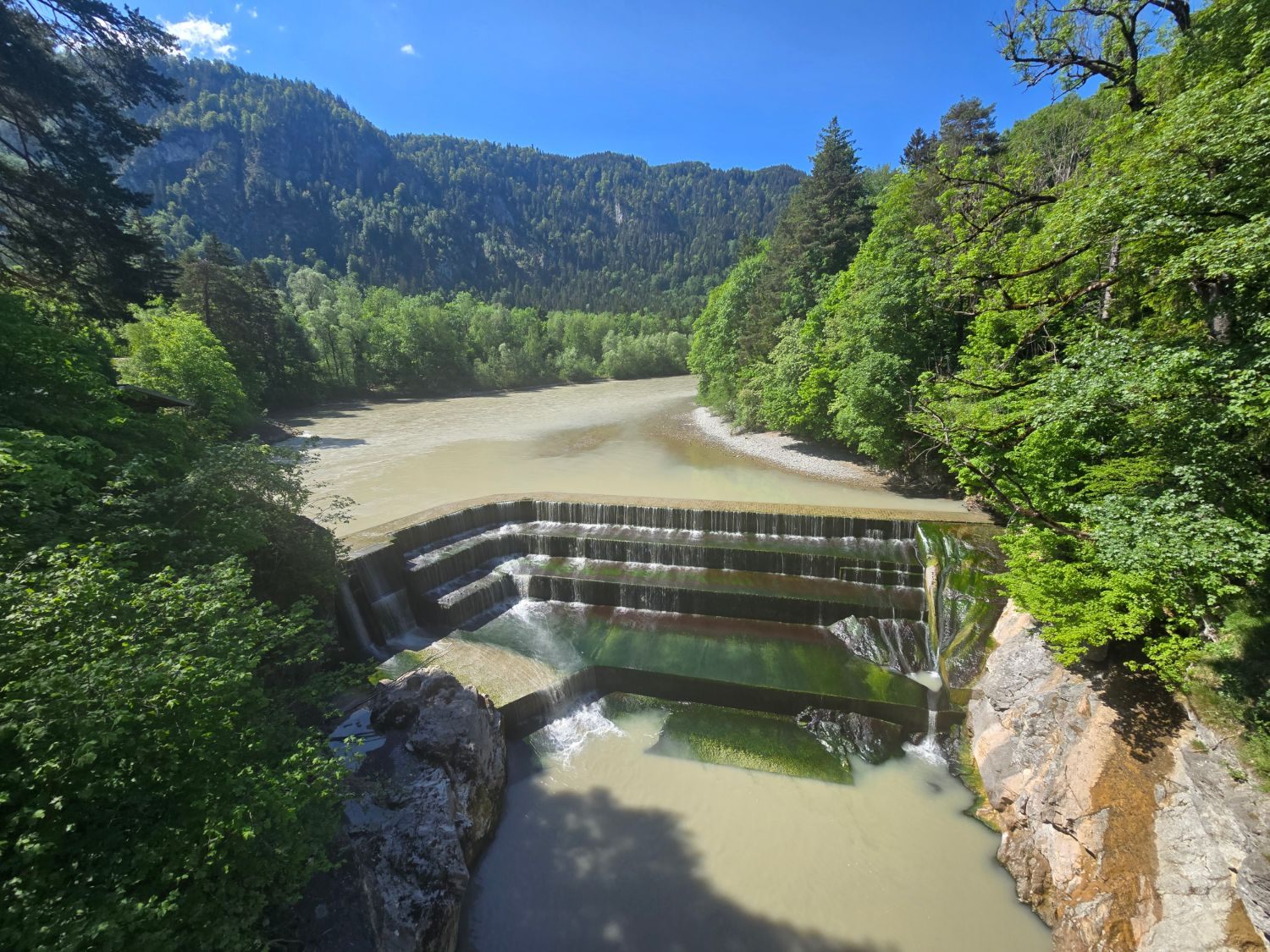
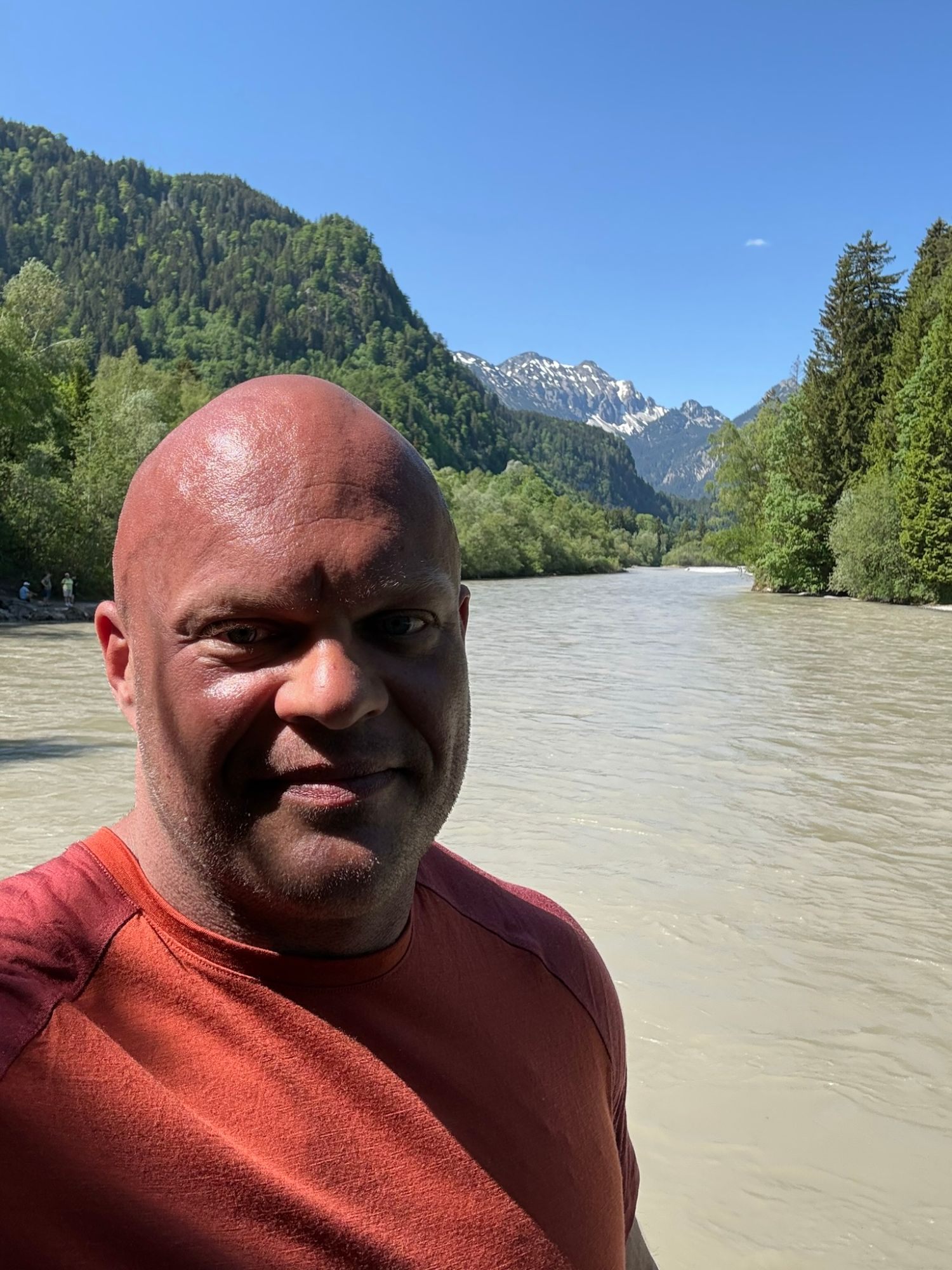
Then Neuschwanstein. We paid for parking in one of the car parks below the castle and walked up. You get close to the walls and towers, and the architecture really is impressive – but so is the number of people. We didn't go inside.
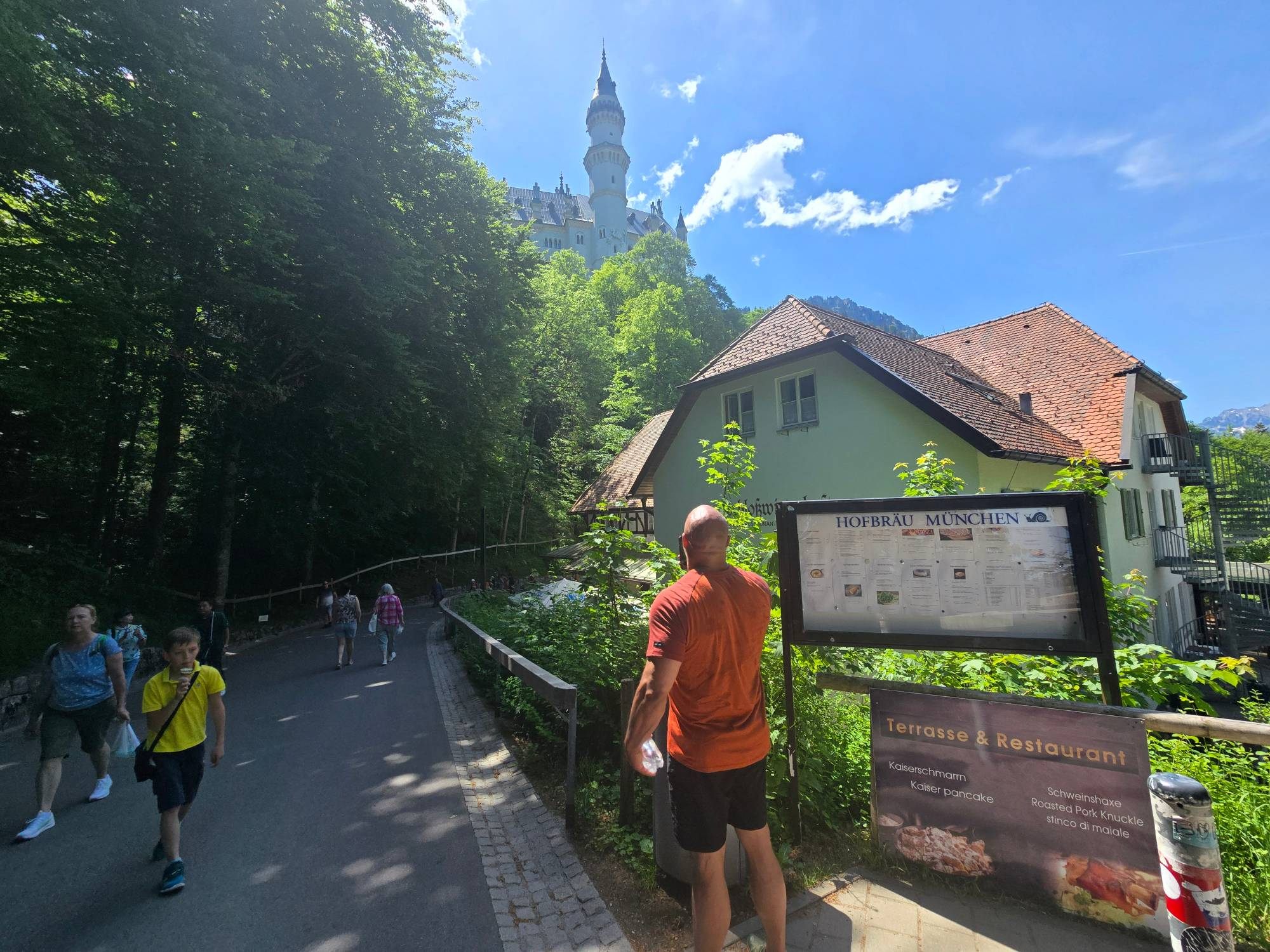
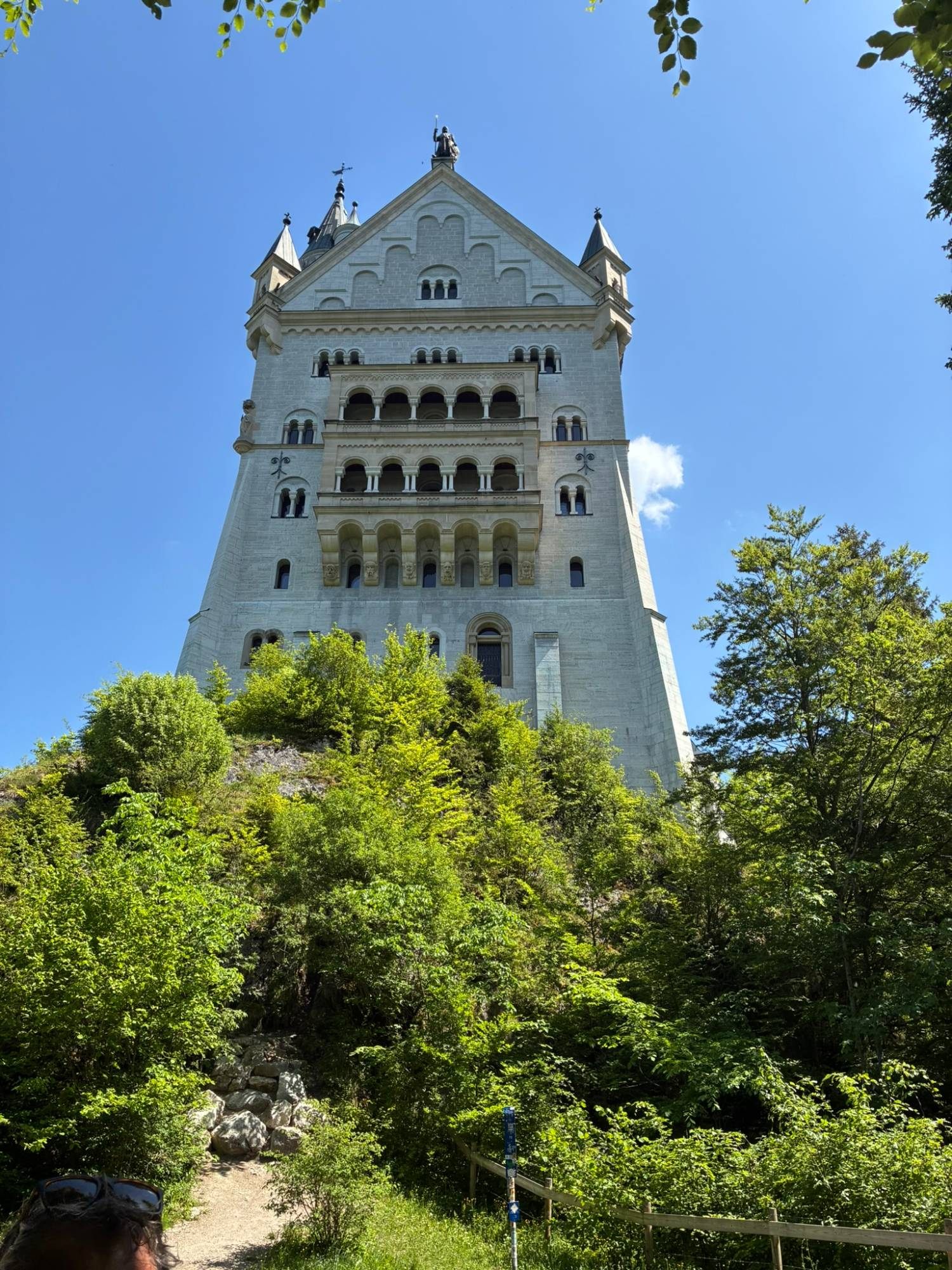
We wanted to walk out onto Marienbrücke, the bridge with the classic view of the castle, but the queue to get onto it was long. We decided it wasn't worth it and went to a nearby viewpoint instead, which looks out over Hohenschwangau, the other castle, and the Alpsee.
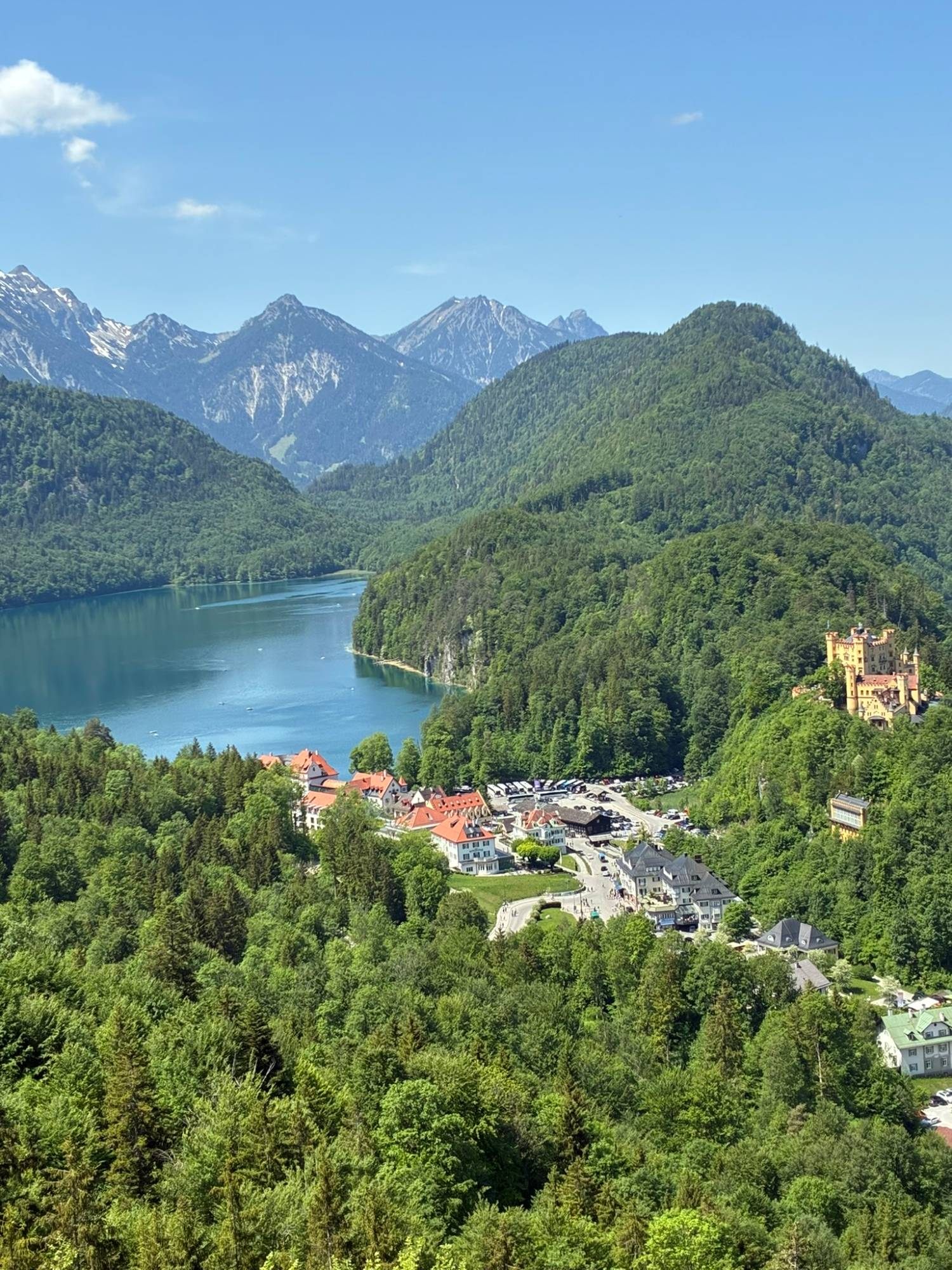
It was a good morning, but very much a tourist experience. If you want Marienbrücke without the queue, I'd go as early in the day as you can – though that's no guarantee.
A quick look at Landsberg am Lech
Chris dropped me back at the hotel and I rested for a bit. In the afternoon I drove through Landsberg am Lech: a pretty old town with colourful houses along the river and a wide weir, the Lechwehr, right in the centre. I also passed the prison where Adolf Hitler was held in 1924 after the failed Beer Hall Putsch in Munich the year before.
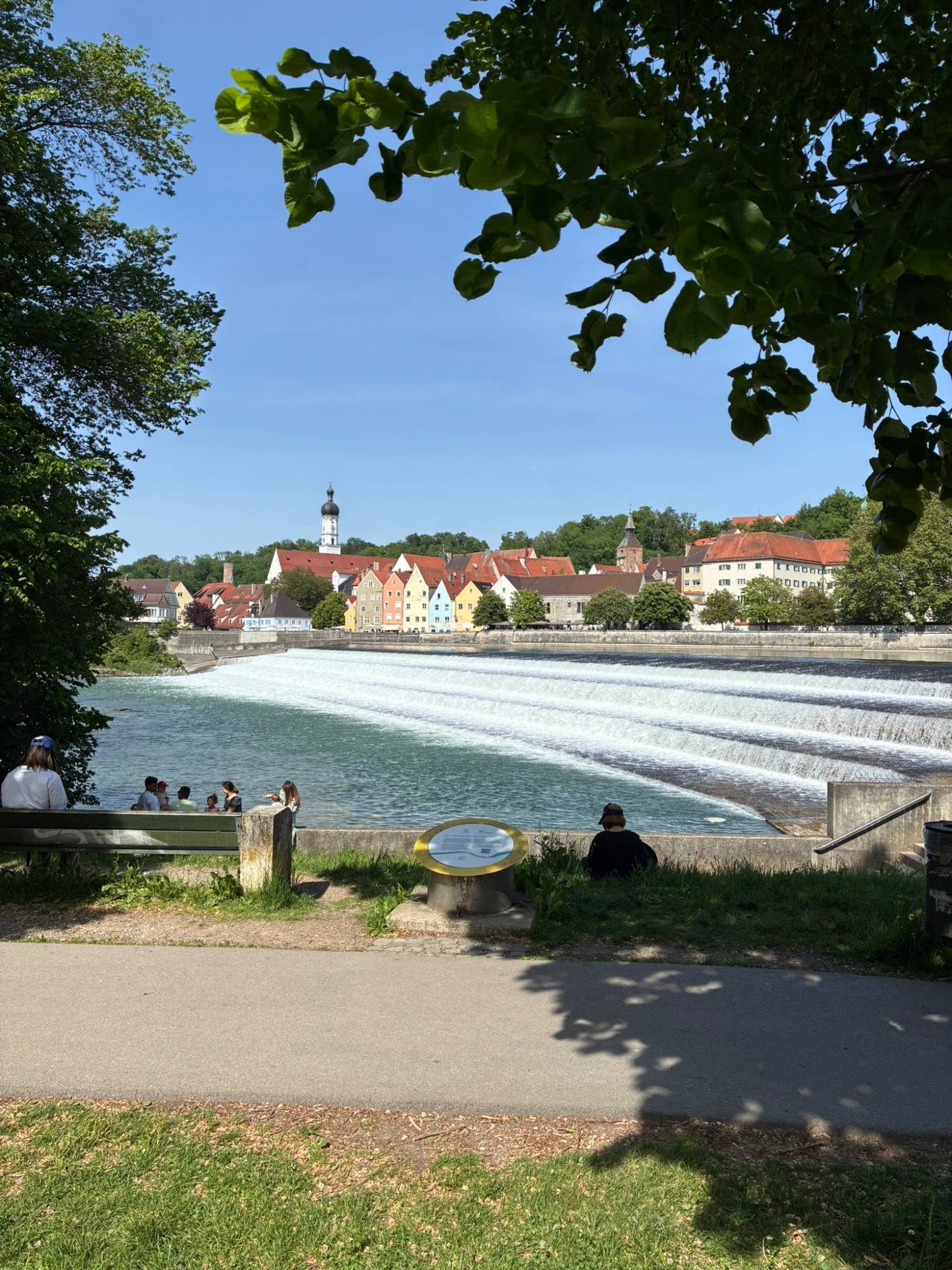
The Lechfeld-Cup: a festival built around a stone
In the evening I drove to Klosterlechfeld. The Lechfeld-Cup is part of the town's Pentecost festival, held on Pentecost Sunday, and it was immediately clear this wasn't an ordinary strength competition. There were stalls, a festival ground and an enormous beer tent where the lifting took place.
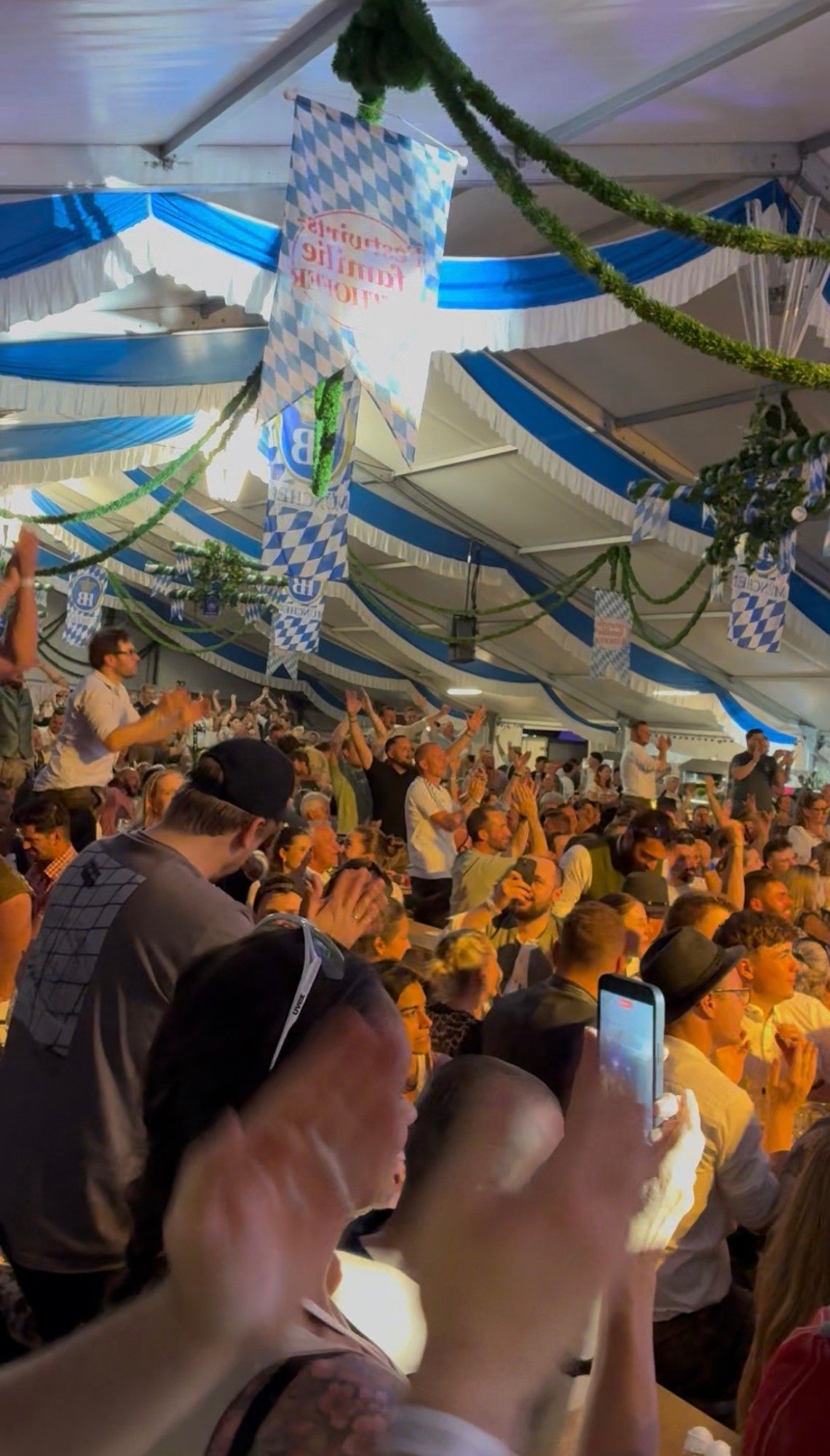
The tent was already filling up when we arrived. People sat along the long tables, many in traditional Bavarian dress, eating, drinking litre glasses of beer – and waiting to watch stone lifting. My own guess is that there were somewhere between 1,500 and 2,000 people, and they had paid to get in.
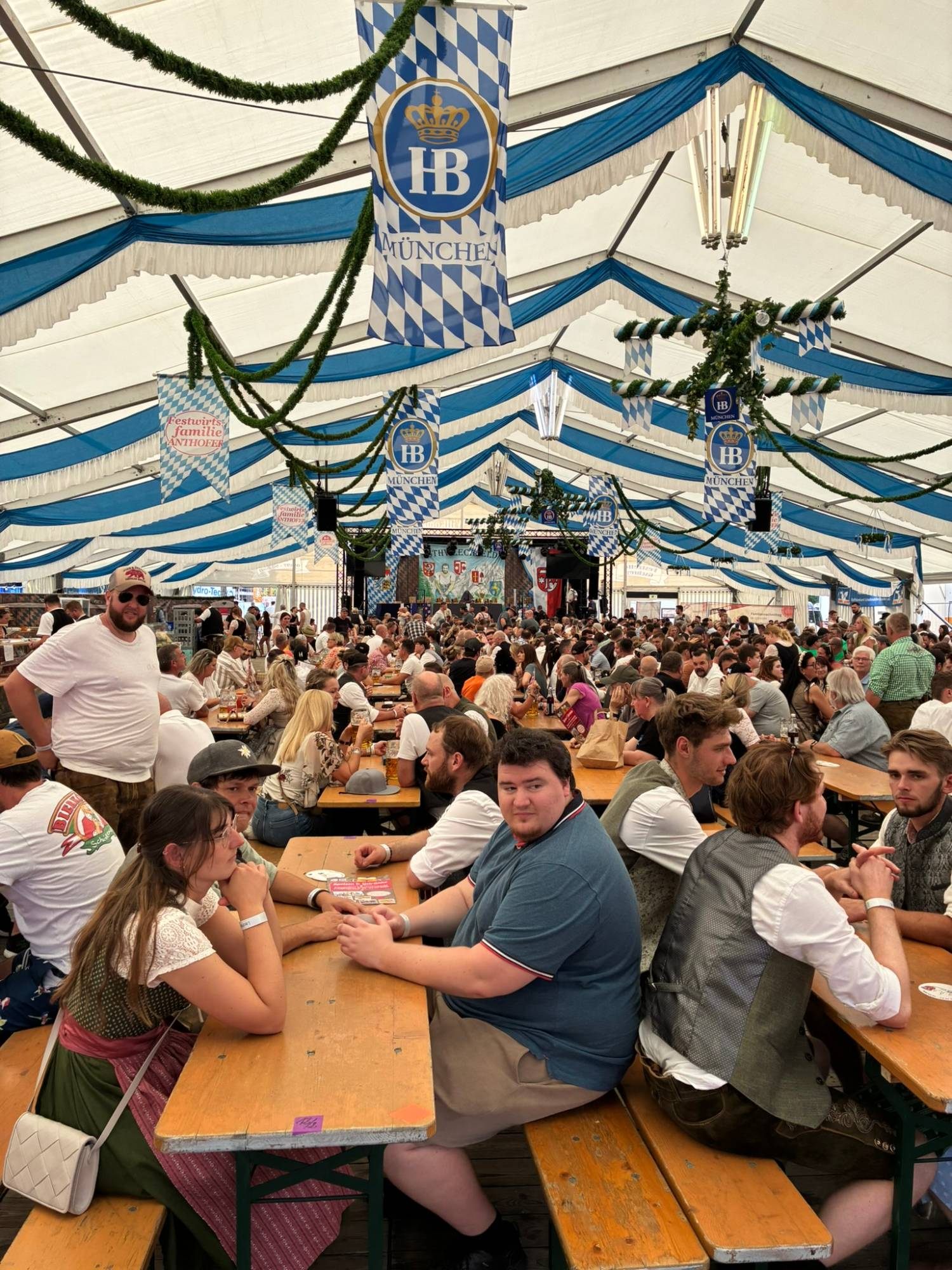
This year was the 30th Lechfeld-Cup, and it's held by the local Steinheber club, STHV Lechfeld, on the same day every year. That anniversary says a lot: this is an established tradition, not a one-off show.
What is Steinheben?
Steinheben is a traditional Bavarian and Alpine strength discipline. The classic stone weighs 254 kg – 508 pounds in the old German measure, which is painted on the stone itself. You stand on a platform above it, grip a handle connected to the stone and pull it up between your legs as high as you can. The height is measured electronically and shown on a big screen.
According to the official results list, the base weight is 254 kg and the maximum height is 100 cm, with extra 25 kg plates added for the lifters who need more weight.
It isn't only about raw strength. Your stance on the platform, your position over the handle, timing and getting the stone moving in the right line all matter a lot. I'd trained for it at home and had pulled around 300 kg in my own setup – but I'd never used the exact rig they use in competition, and that turned out to matter more than I'd expected.
Sources: Steinheber Landesverband Bayern and the official Lechfeld-Cup 2026 results.
My lifts
The women competed first, then the men. It wasn't like a track meet where you know exactly when you're up – I had to stay warm, keep an eye on the stage and work out when my class was getting close.
I weighed in at 102.9 kg and lifted in the men's -110 kg class. Before each lift you choose the height of the handle – anywhere from –15 to +50 cm – which decides where you start the pull from. Because I wasn't sure of the technique, I started fairly conservatively, with the handle set at +20 cm. My first lift went to 55.4 cm, which was enough to go through.
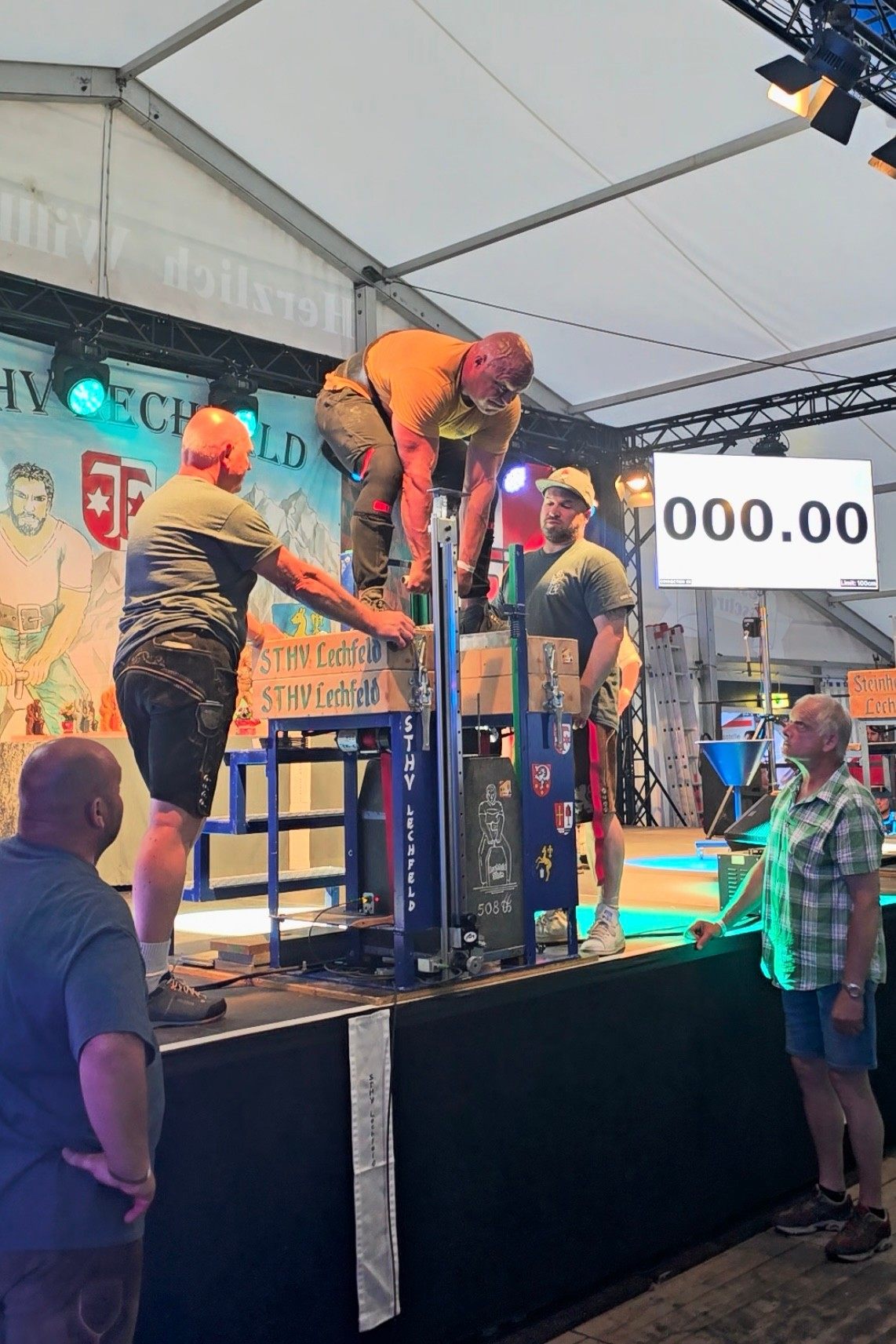
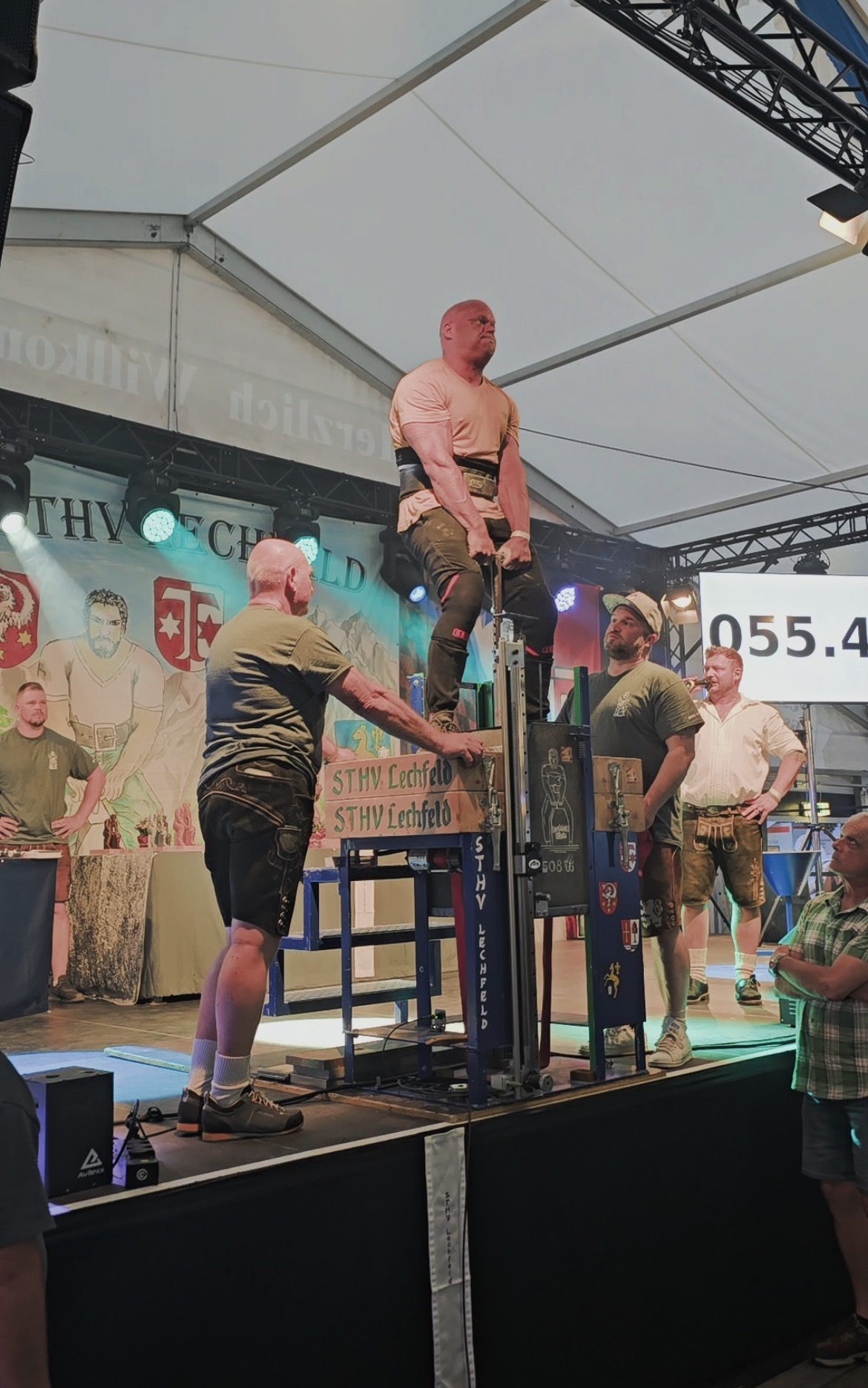
Several of the others didn't get the stone past the 40 cm mark, so I was called back up quite quickly. It's an odd feeling: you're standing high up on a stage, right at the edge, with a drop in front of you. I didn't stand far enough forward, partly because I was careful not to lose my balance and tip off the front of the platform.
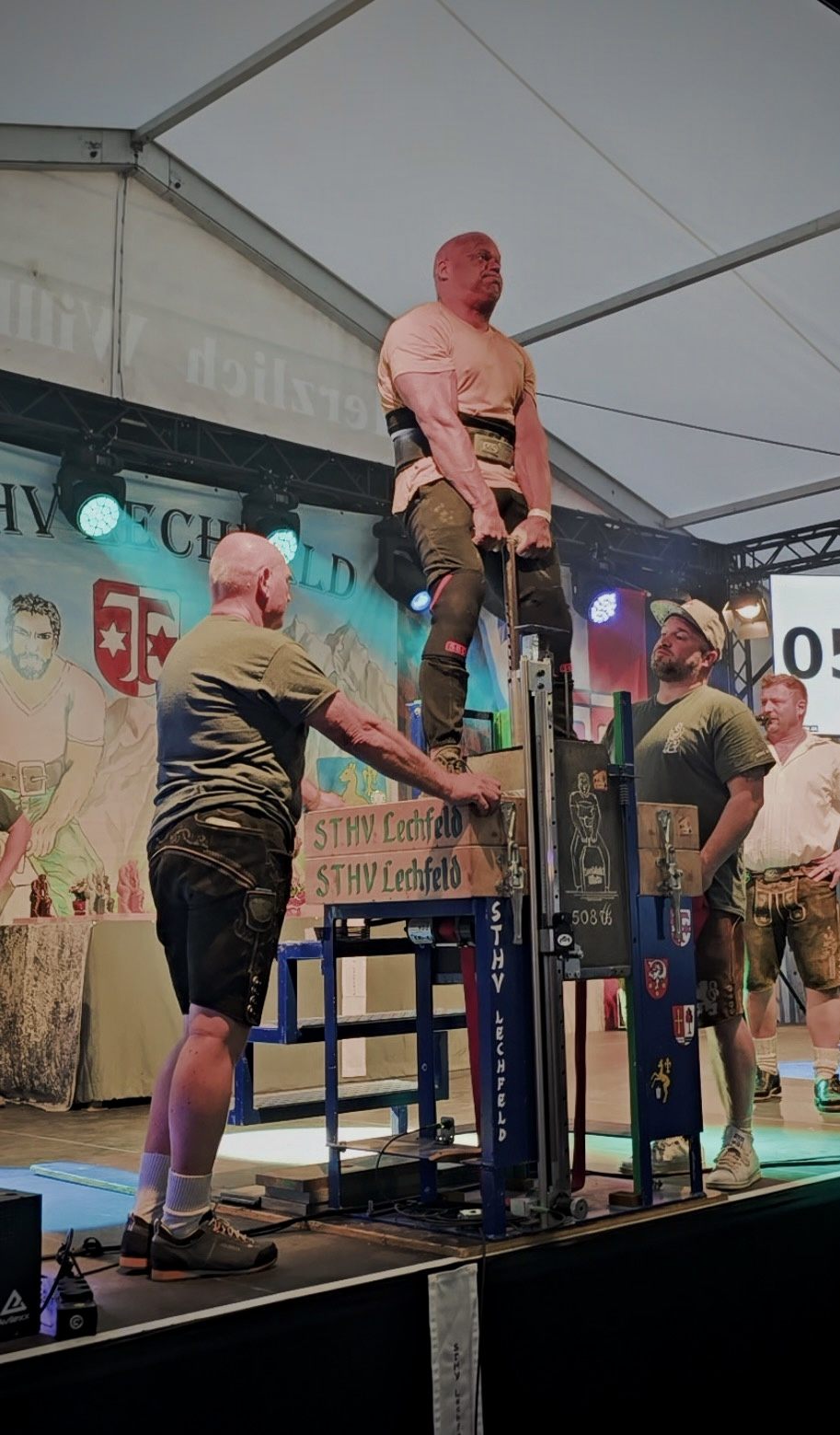
For my second lift I set the handle lower, at around +15 cm, hoping a longer pull would get the stone higher. It didn't work – I couldn't improve on the first lift, so 55.4 cm stood.
See it in motion
Photos don't show how fast it's over – here's my lift on video.
Fifth place – and why I wasn't happy
The official results put me fifth of eight in the men's -110 kg class, with 55.4 cm.
I was disappointed. I know I'm stronger than what I showed on that stage. My deadlift is better than several of the lifters who finished ahead of me, and I believe I had the raw strength for a better result. What I didn't have was the technique: I hadn't quite worked out how to position myself and pull on this rig, so I couldn't turn strength into height.
If I'd done my best and still come fifth, I could have lived with it. It's the feeling that I left something on the platform that stings.
Harry from the USA
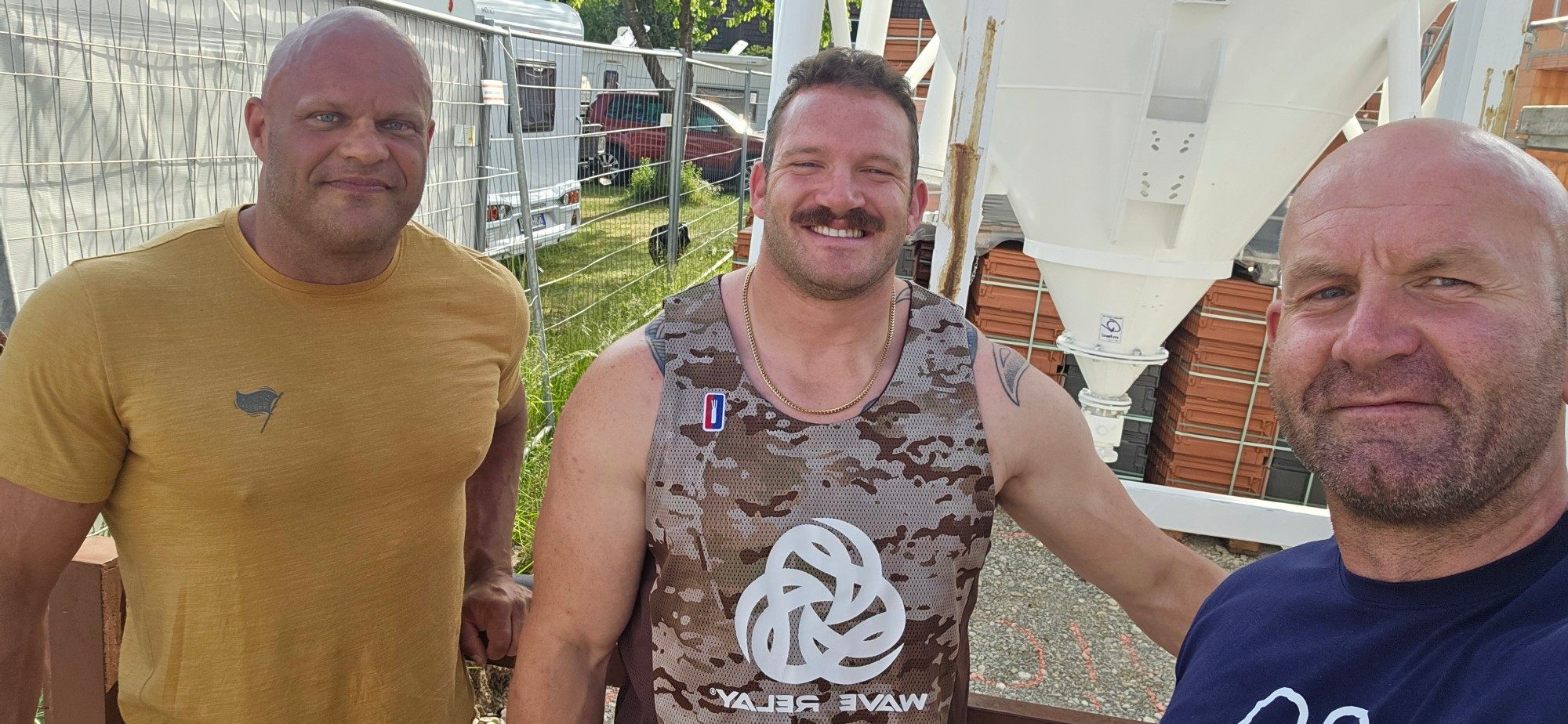
One of the fun moments of the day was a conversation about who had travelled furthest to be there. I'd come from Denmark – but Harry, who lifted in my class, had come from the USA. He also won it, with 77.8 cm.
It says something about the Lechfeld-Cup that it doesn't just draw local lifters. People are willing to cross an ocean to try this.
The stage, the crowd and the whole experience
Disappointed or not, this was the wildest stage and the most impressive setup I've ever lifted on. A packed tent, music, people standing on the benches to cheer – and all of it for stone lifting. This wasn't a small niche event with a handful of spectators; it was the centre of a big local festival.
That's the contrast I came home with: unhappy with my own performance, but really glad I went. If you're into strongman, strength sport or simply unusual local traditions, I'd recommend going – to lift, or just to watch.
Straight to the airport
After the competition I drove back to the hotel, packed and tried to sleep. It didn't really happen – too much adrenaline and too many impressions. So I drove to Munich Airport in the night and returned the car, which was quick and easy.
My flight left at 07.00 on Monday 25 May, and after a change in Amsterdam I landed in Billund at 11.00.
Practical information
| When | 23–25 May 2026; the Lechfeld-Cup was on Pentecost Sunday, 24 May |
|---|---|
| Where | Klosterlechfeld, Bavaria – in the festival tent of the Pentecost festival |
| The stone | 254 kg (508 Pfund) base weight; max height 100 cm (official results list) |
| My result | 5th of 8, men's -110 kg, 55.4 cm (bodyweight 102.9 kg) |
| Flights | KLM Billund–Amsterdam–Munich, landing 22.31 on 23 May; home 07.00 on 25 May via Amsterdam |
| Stayed | Landhotel Endhart, Landsberg am Lech – 2 nights, breakfast included, self check-in, 1,319.92 DKK (Hotels.com) |
| Getting around | Rental car from Munich Airport; about 1 hour to Landsberg, ~15 min from there to Klosterlechfeld |
Final thoughts
I flew to Germany to lift a 254 kg stone, and I came home with a fifth place I wasn't satisfied with. But I also got to stand on a stage in front of a full Bavarian festival tent, inside a strength tradition that's been running for 30 years, and lift alongside people who'd travelled from as far as the USA.
It's the kind of trip that stays with you – not because everything went to plan, but because you went to try something most people never will. And I'd like another go at that stone.