We're honestly not big museum people. On most trips we'd rather be outside, and when we do go into a museum, we tend to walk quickly past most of the information boards.
The Vasa Museum in Stockholm was different. It made a bigger impression on us than almost any museum we've been to, and it's one of those visits we still bring up. If you're in Stockholm and wondering whether it's worth the ticket, our answer is short: yes.
The short version
Worth it – even if museums aren't your thing. You stand right next to a real warship from the 1620s, and you can see it from several levels. We spent about 1–1.5 hours there on regular tickets, without an audio guide. Plan for 1–2 hours. Adult tickets currently cost 195–240 SEK depending on the season, and visitors aged 18 and under get in free.
The first thing you see is the ship
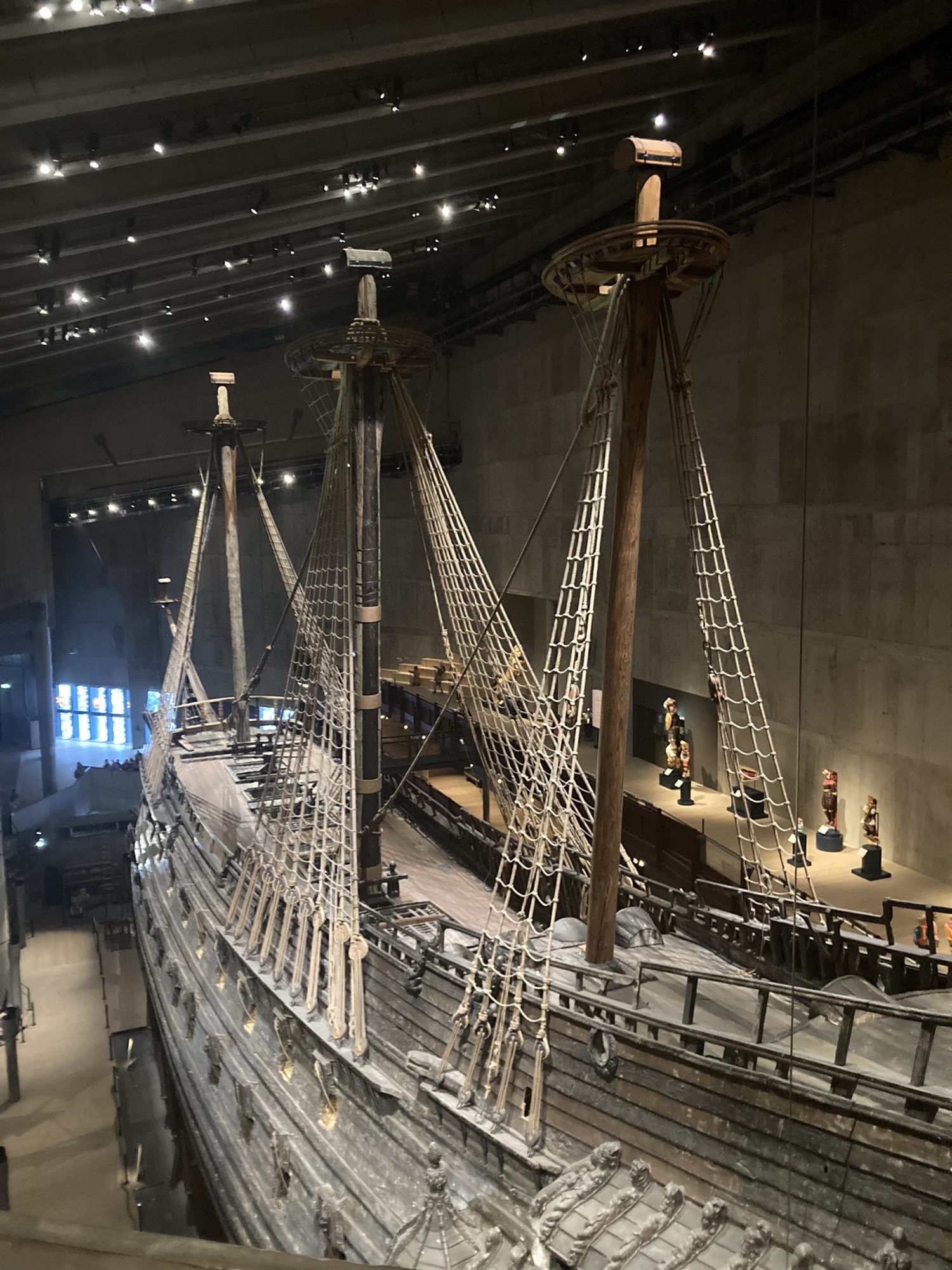
We visited on 1 December 2023 and arrived around 10am. There's no slow build-up. You walk in, and there it is: the warship Vasa, enormous, dark and filling the whole hall.

It's hard not to be impressed by the size, the detail and how well it has been preserved. Vasa sank on its maiden voyage in Stockholm in 1628 and lay on the seabed for 333 years before it was raised in 1961. According to the museum, around 98 percent of what you see is original.
That's what makes it special. This isn't a collection of small objects behind glass. You're standing next to a real 17th-century warship.

Different levels, different views
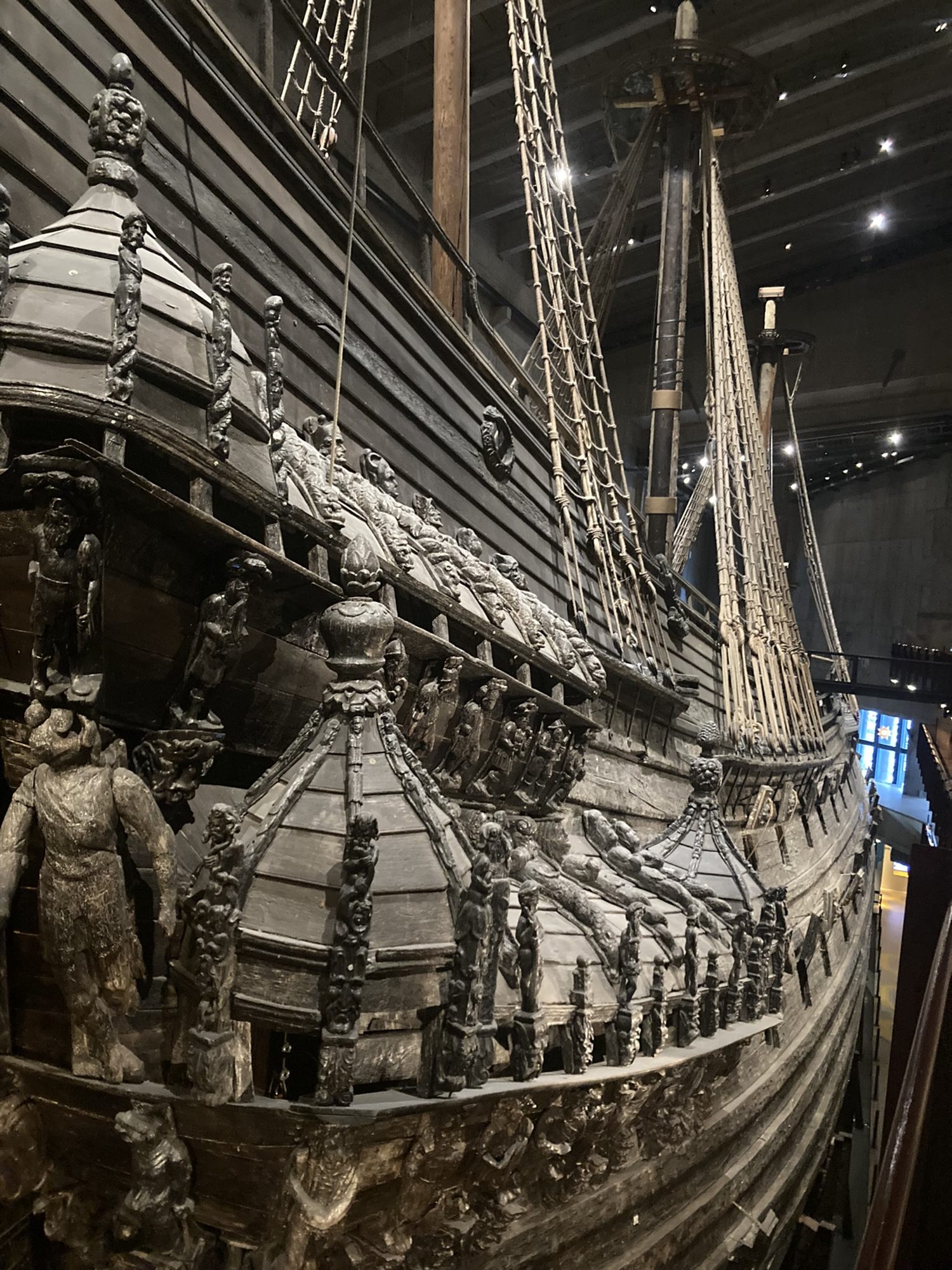
You can't go on board, but you don't need to. The museum is built around the ship on several levels, so you can look at Vasa from below, from the side and from above. Every level shows you something new, and you get close enough to see the carvings and the details of how it was built.



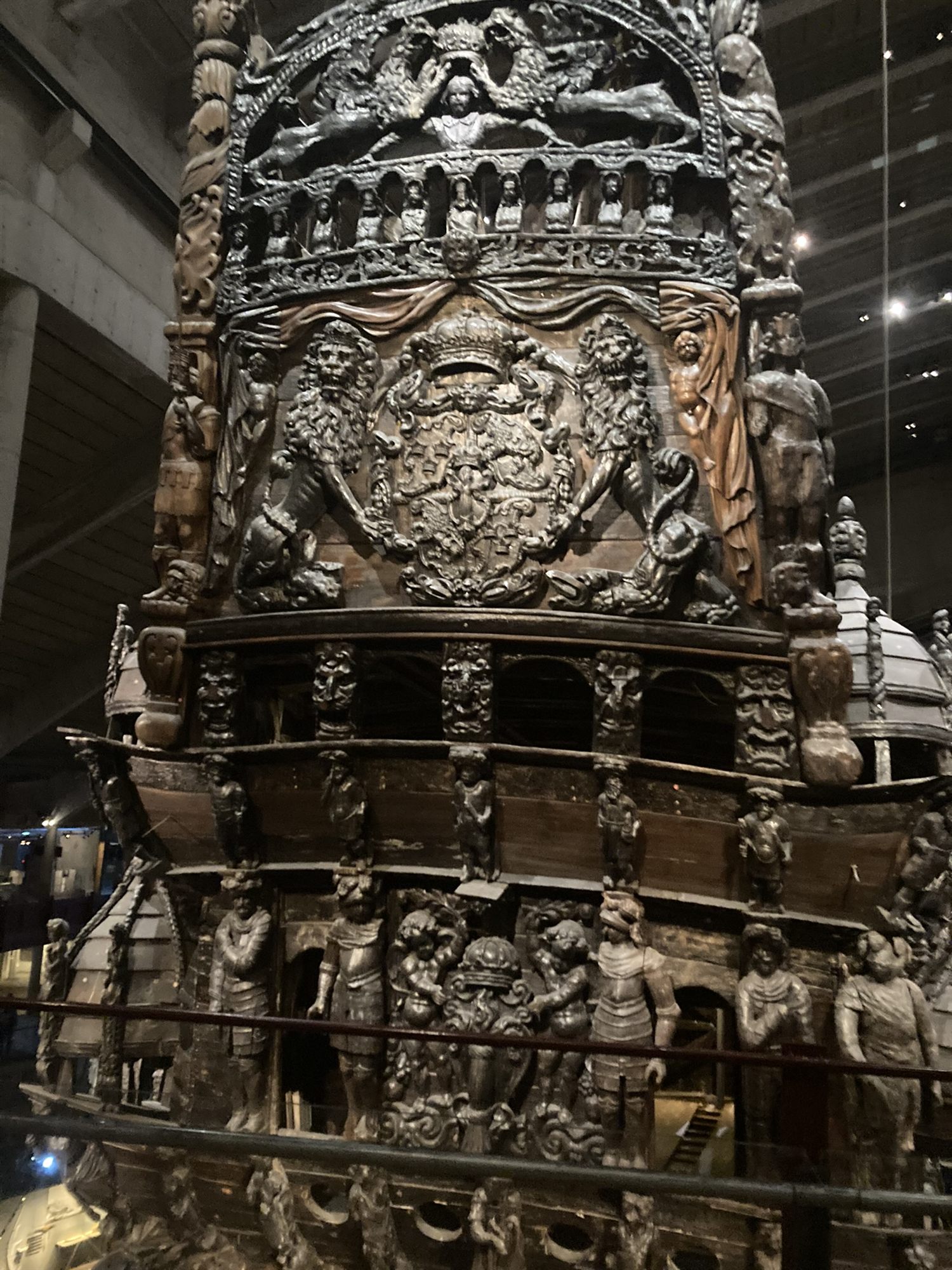
The carvings are worth taking your time over. The stern is covered in figures, lions, faces and a huge coat of arms. You could stand looking at it for a long time and still find new details.
More than an old ship
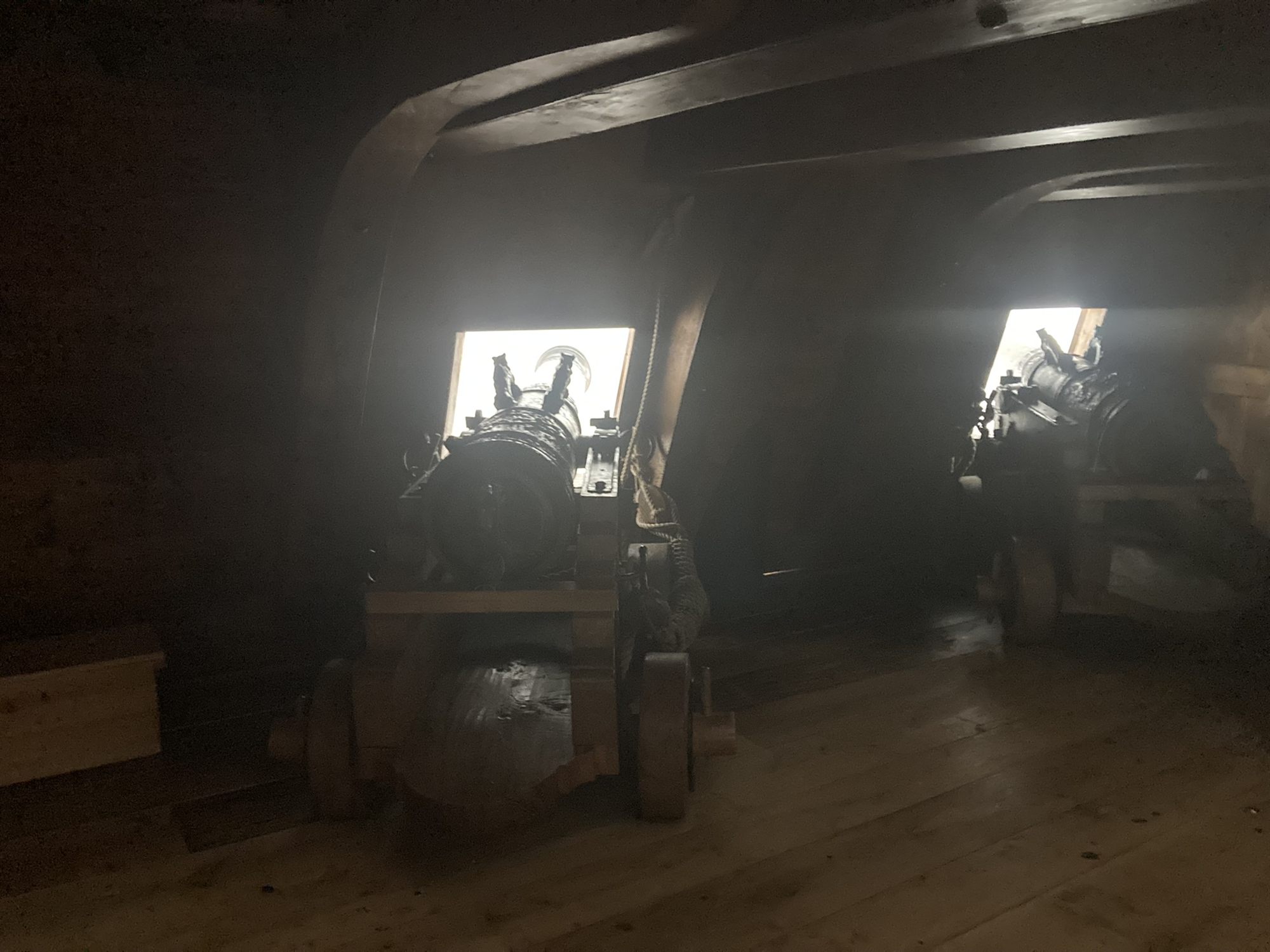
There's plenty to explore around the ship itself. You can see cannons and exhibitions about life on board.
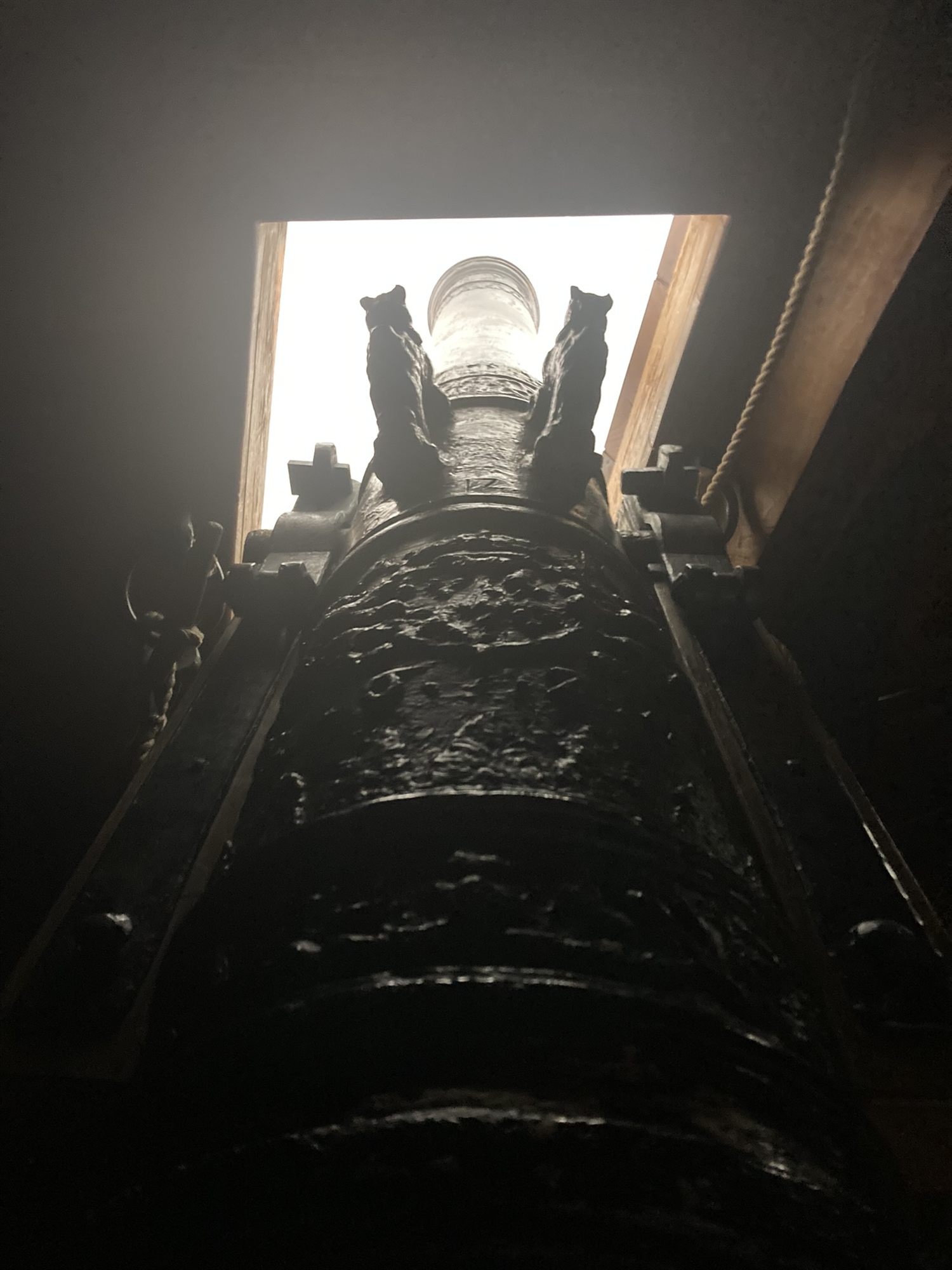
What we found most interesting was reading about the people who worked on the ship, and what can be learned from their skeletons and living conditions. For example, there were differences in height and diet between people with different positions and different amounts of money. That made the history feel much more human, and it gave us a real glimpse of life in the 1600s.
Normally we don't read every board in a museum. Here, we actually got caught up in it. We wanted to know who had been on board and what life on the ship had been like. That combination – the huge, original ship and the human stories around it – is what makes the museum work so well.
How long should you spend there?
We spent about an hour to an hour and a half. We bought regular entrance tickets and walked around on our own, without an audio guide.
We'd suggest planning for 1–2 hours. That's enough to see the ship, walk around the different levels and read a bit of the history. If you're really into history, ships or museums, you could easily spend much longer.
We went outside the high season. There was a school class there, among others, but because you can move between several levels, it was still easy to get a good look at the ship. It didn't feel overly touristy during our visit, even though it's one of Sweden's big attractions.
Is it worth the money?
For us, clearly yes. We don't usually prioritise museums on our trips, and still this is one of the museums that has made the biggest impression on us.
It isn't just the size of the ship. It's how well preserved it is, and the feeling of being close to a real piece of history. It's hard to imagine how impressive it is until you're standing in front of it. Even if you only have an hour, we think it's worth the ticket. If you have more time, you can go much deeper into the exhibitions.
We bought ordinary tickets ourselves. The GetYourGuide link is an affiliate link: if you book through it, we may earn a small commission at no extra cost to you. You can also just buy tickets from the museum.
Practical information
| Our visit | 1 December 2023, arriving around 10am. About 1–1.5 hours, regular tickets, no audio guide. |
|---|---|
| Adult tickets (current) | May–September: 240 SEK. January–April and October–December: 195 SEK. These are the museum's current prices, not what we paid in 2023. |
| Children | Free for visitors aged 18 and under. Children 12 and under must be with an adult. |
| Combination ticket | A combined ticket for the Vasa Museum and Vrak – Museum of Wrecks, also on Djurgården, is valid for 72 hours. Check the current price on the museum's website before you go. |
| Opening hours | September–May: daily 10:00–17:00, Wednesdays until 20:00. June–August: daily 08:30–18:00. Closed 24–25 December. |
| Official website | vasamuseet.se – Hours & admission |
Prices and opening hours are from the museum's website, checked October 2026. They can change, so check before you go.
Our recommendation
If you're in Stockholm, make room for the Vasa Museum – even if you're normally not a museum person. Plenty of famous attractions don't live up to their reputation. This one does.
Where to stay
We've stayed in Stockholm three times, but always out at Älvsjö, because we were competing at the fitness festival there – so we can't recommend a hotel in the centre from our own experience. If you're visiting for the sights, Gamla Stan, the old town, is a natural base.
Affiliate link: if you book through it, we may earn a small commission at no extra cost to you.