Some travel days are built around a view. This one was built around two stones.
On 22 August 2023 we woke up by the sea in Stonehaven, walked around Dunnottar Castle, stood above the cliffs at Crawton – and in the late afternoon, at Potarch on the River Dee, I lifted the Dinnie Stones. Both lifts were approved, and my name went into the official register as the first Dane to lift them.
It was day two of a short road trip through Scotland, and the reason we went in the first place.
The short version
The Dinnie Stones weigh 332.49 kg together and are lifted by their iron rings. I lifted them in two styles – straddle and side by side – and both were approved. Around the lift we had a cheap, cosy night by the sea in Stonehaven, Dunnottar Castle, the cliffs at Crawton and a celebration dinner at The Boat Inn in Aboyne.
Getting there
We flew Ryanair from Billund to Edinburgh on 21 August 2023 and home again on 25 August. At Edinburgh Airport we picked up a rental car – a Nissan Juke, booked through Rentalcars.com, with Enterprise as the rental company – and drove north to Stonehaven, a small coastal town in Aberdeenshire.
A night by the sea at Number 44 in Stonehaven
Our first night was at Number 44 Hotel & Bar in Stonehaven, booked through Hotels.com. We really liked it. It's cosy, it sits right by the water, and for what we got it felt fairly cheap: we paid 922.96 DKK for the night, breakfast included (booked in July 2023 – prices change with the season, so check current rates).
What I remember best is the sound. From the room we could hear the waves breaking on the shore all night.
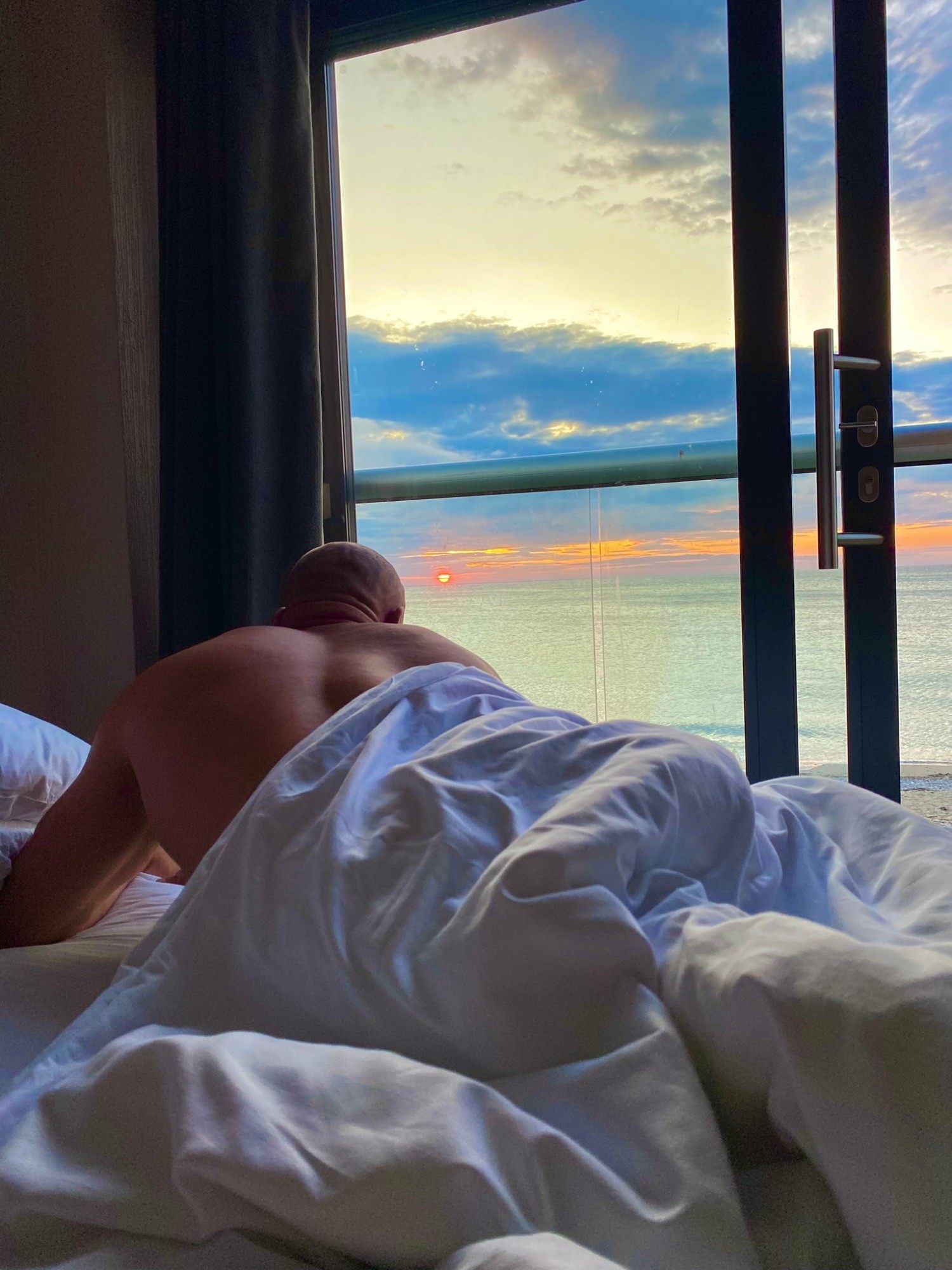
We got up around six to watch the sunrise – and then went straight back to bed for a bit longer. Just after nine we went down for breakfast. A full cooked breakfast was included in the stay, and it was exactly what I wanted on the day of a big lift.
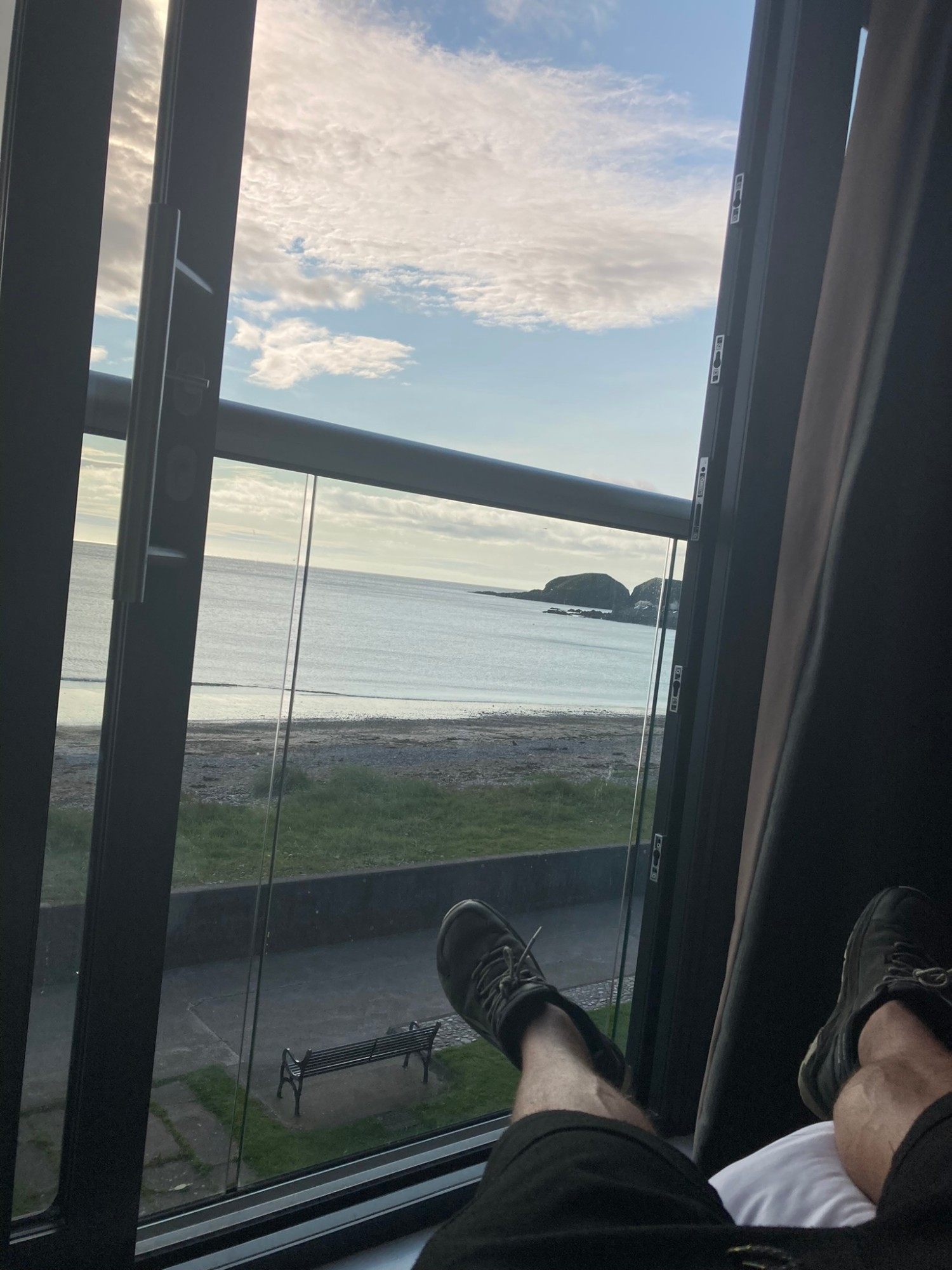
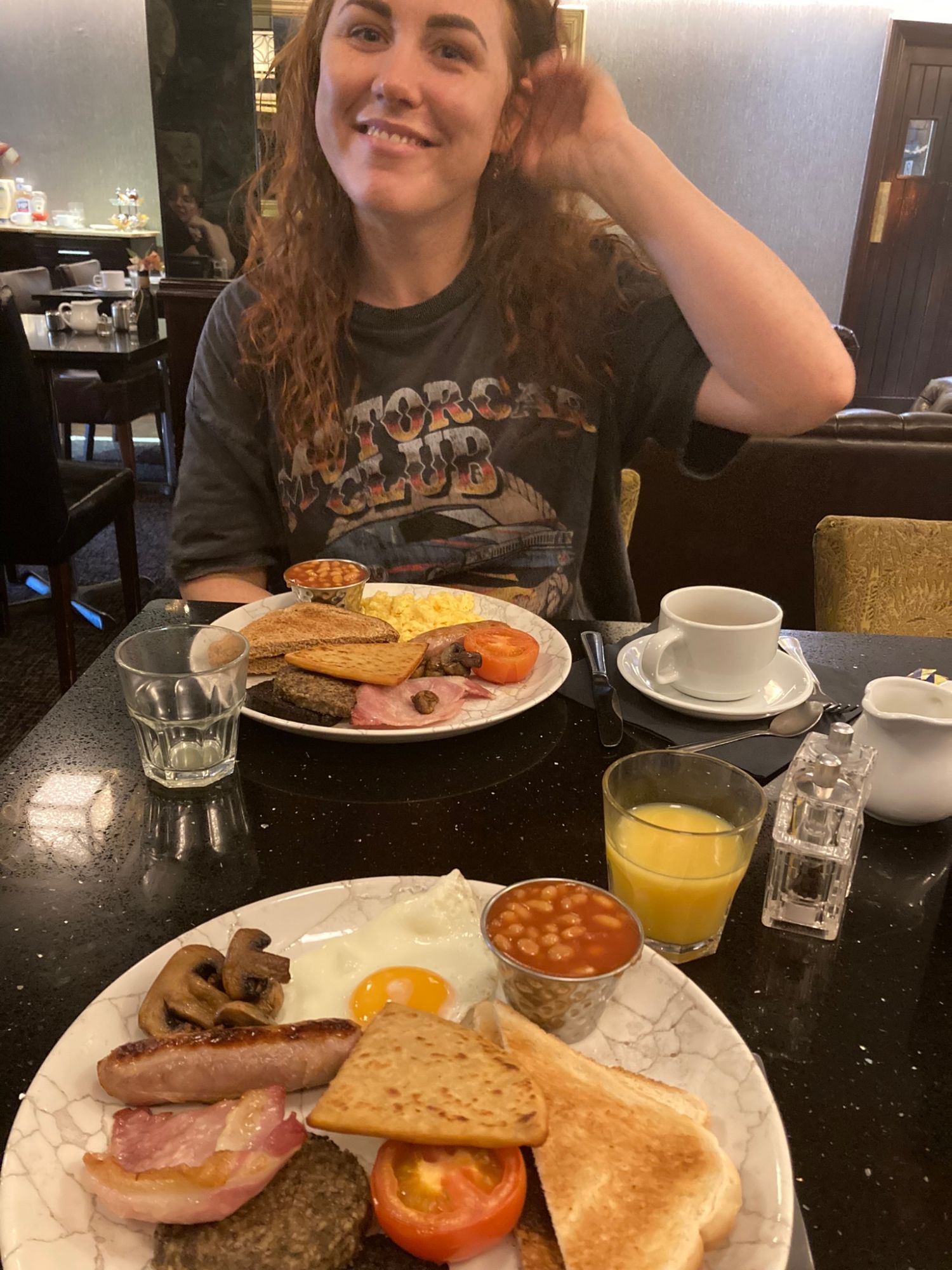
The hotel was part of the experience, not just a place to sleep. The sea, the view and the relaxed atmosphere made it a great start to our road trip.
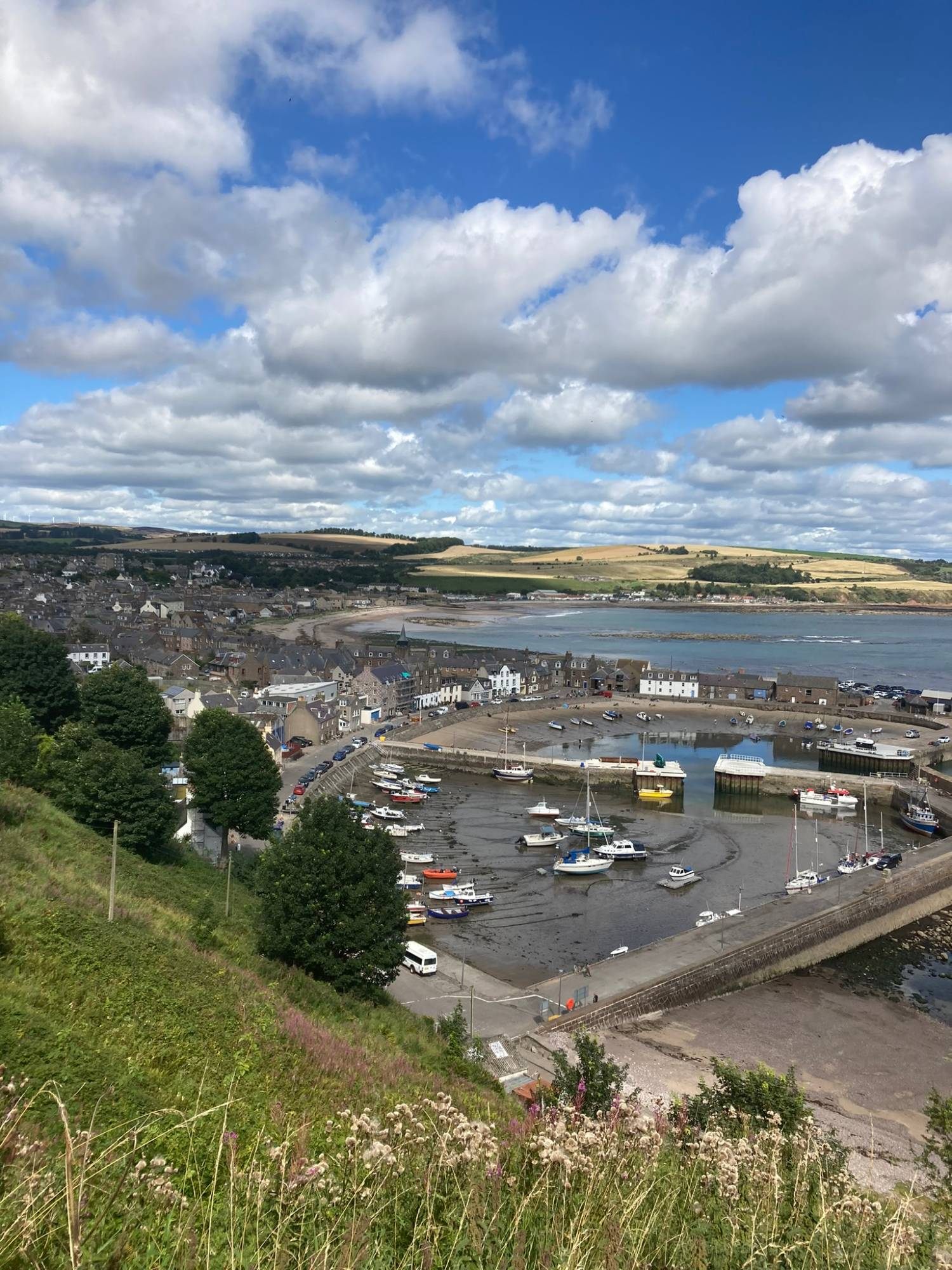
Exploring Dunnottar Castle
After breakfast we picked up the car and drove to Dunnottar Castle – only about five minutes from Stonehaven. We arrived around 10.30–10.40 and spent roughly an hour and a half there.
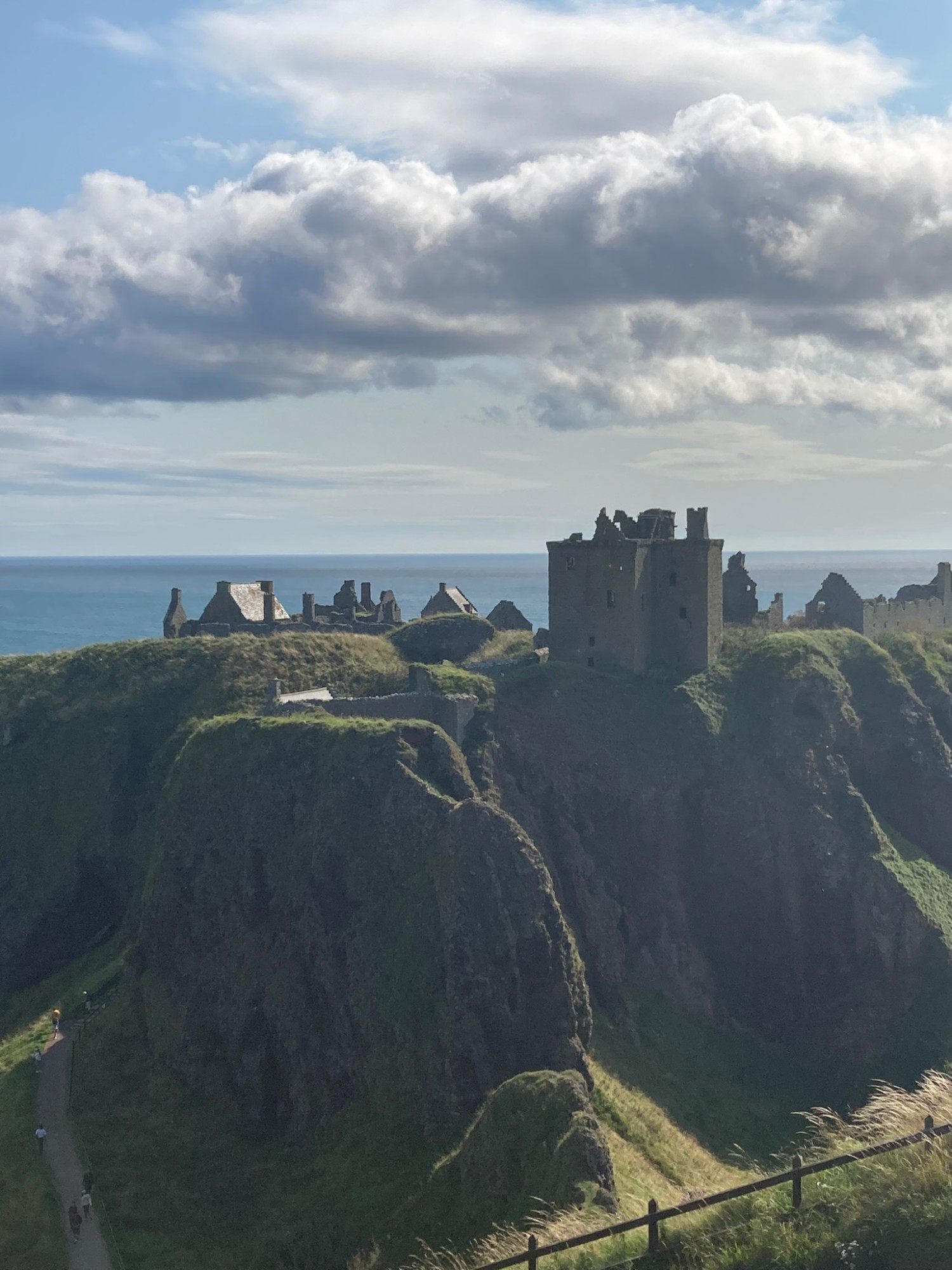
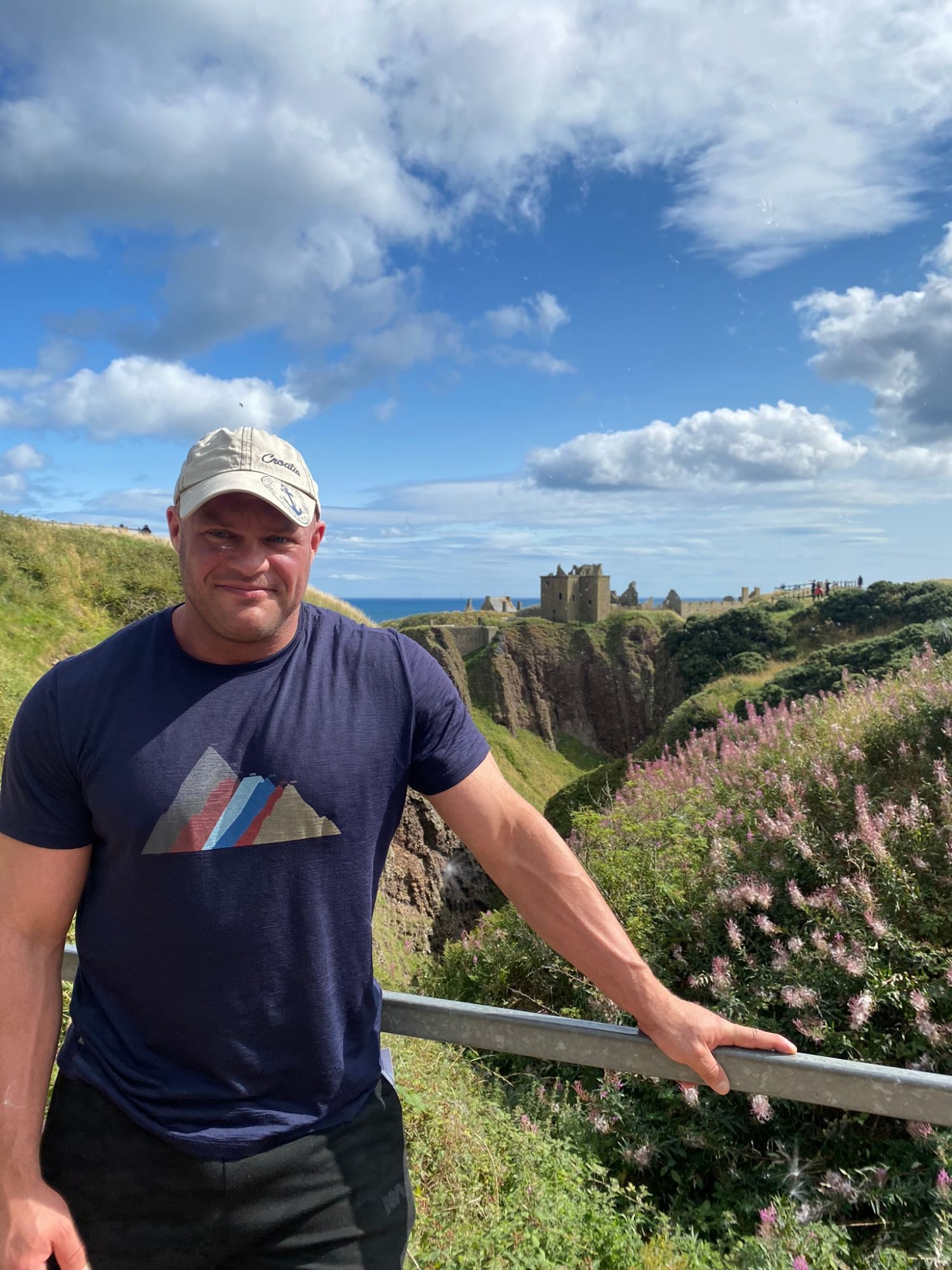
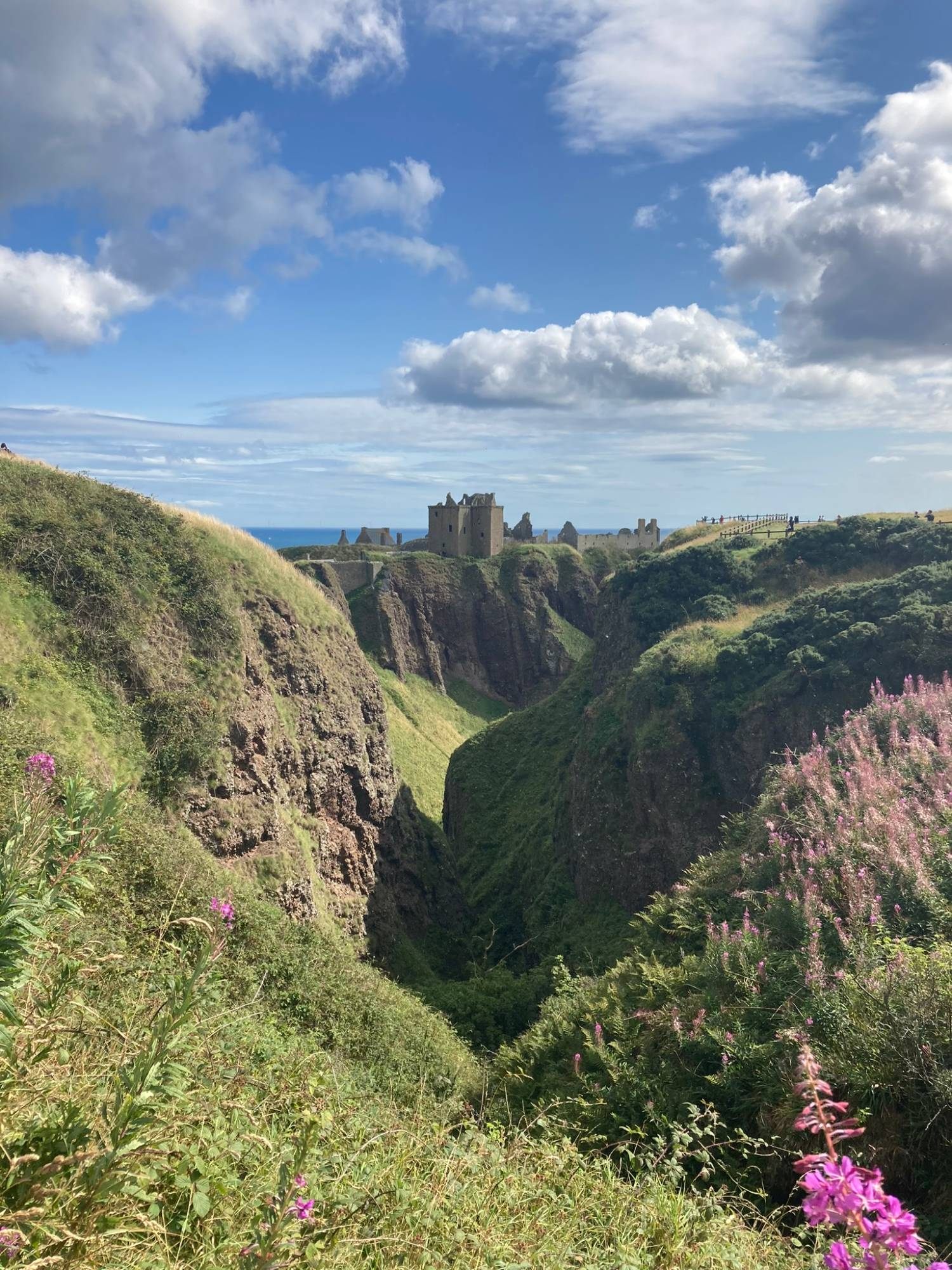
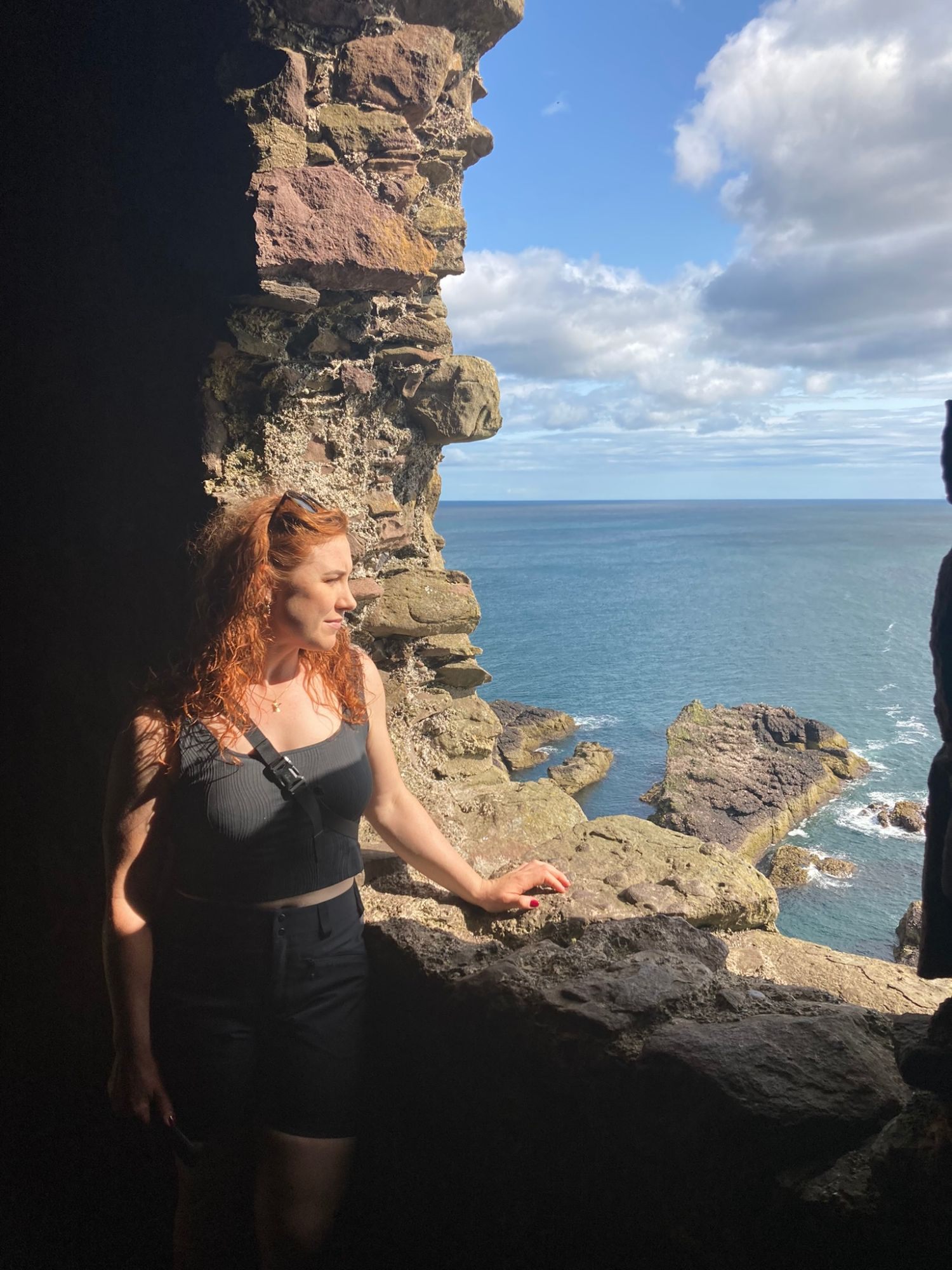
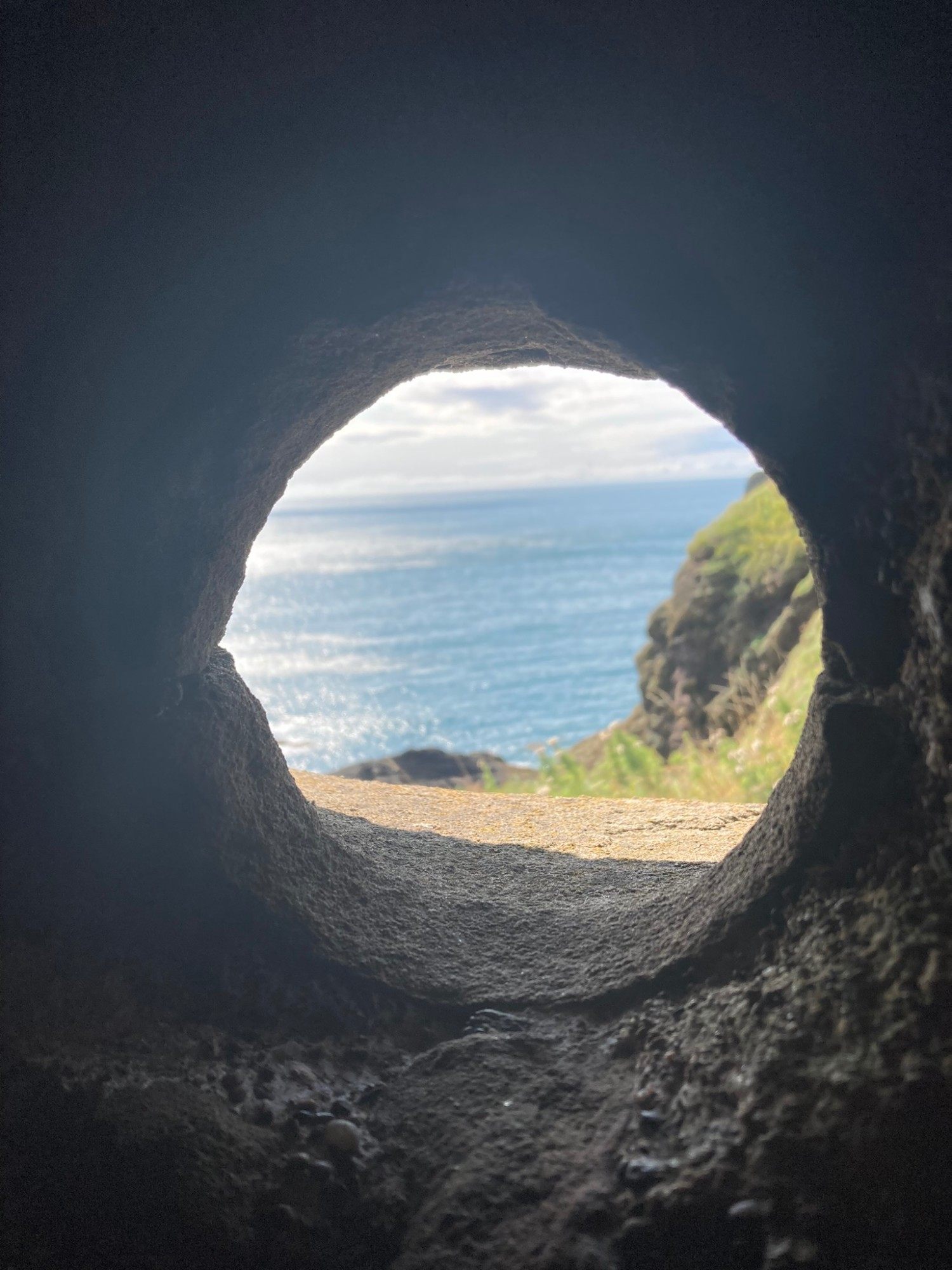
It's a genuinely atmospheric place. The castle sits on a rock headland with sheer cliffs on almost every side and the North Sea all around, and the setting is as much a part of the visit as the ruins themselves. It felt authentic rather than polished.
A short history of Dunnottar
The castle's own history page gives a long timeline. A few points that stuck with us:
- 1297 – William Wallace. During the Wars of Scottish Independence, Wallace attacked the English garrison at Dunnottar. According to legend, he set fire to the chapel where English soldiers had taken refuge.
- 1392 – the Keep. Sir William Keith, Great Marischal of Scotland, built the first stone castle on the rock. That tower, the Keep, is still the oldest part of the ruins you see today.
- 1651–52 – the Honours of Scotland. When Cromwell's army invaded, Dunnottar played a key part in keeping the Scottish crown jewels out of English hands. Today they're on display at Edinburgh Castle.
- 1685 – the Whigs' Vault. More than 160 Covenanters were imprisoned in a cellar at the castle in terrible conditions for refusing religious reforms imposed by Charles II.
Source: dunnottarcastle.co.uk/history. Opening hours and tickets: dunnottarcastle.co.uk/visit.
Crawton Waterfall and the rugged coast
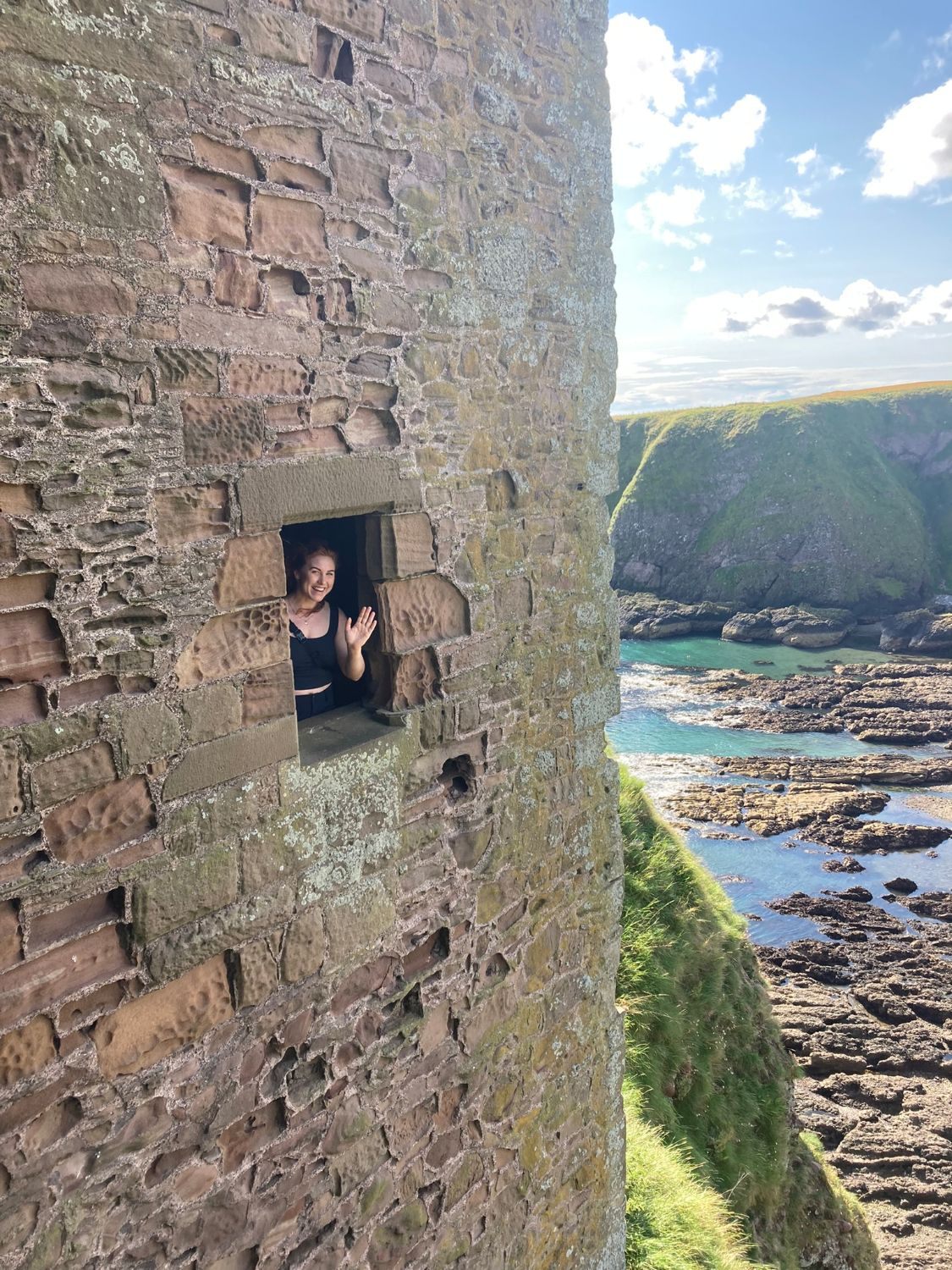
From Dunnottar we drove a short way south to Crawton, where a small stream runs off the clifftop and falls straight down into the sea. The RSPB's Fowlsheugh seabird reserve begins right here, and we also stopped at a viewpoint over the bird cliffs nearby.
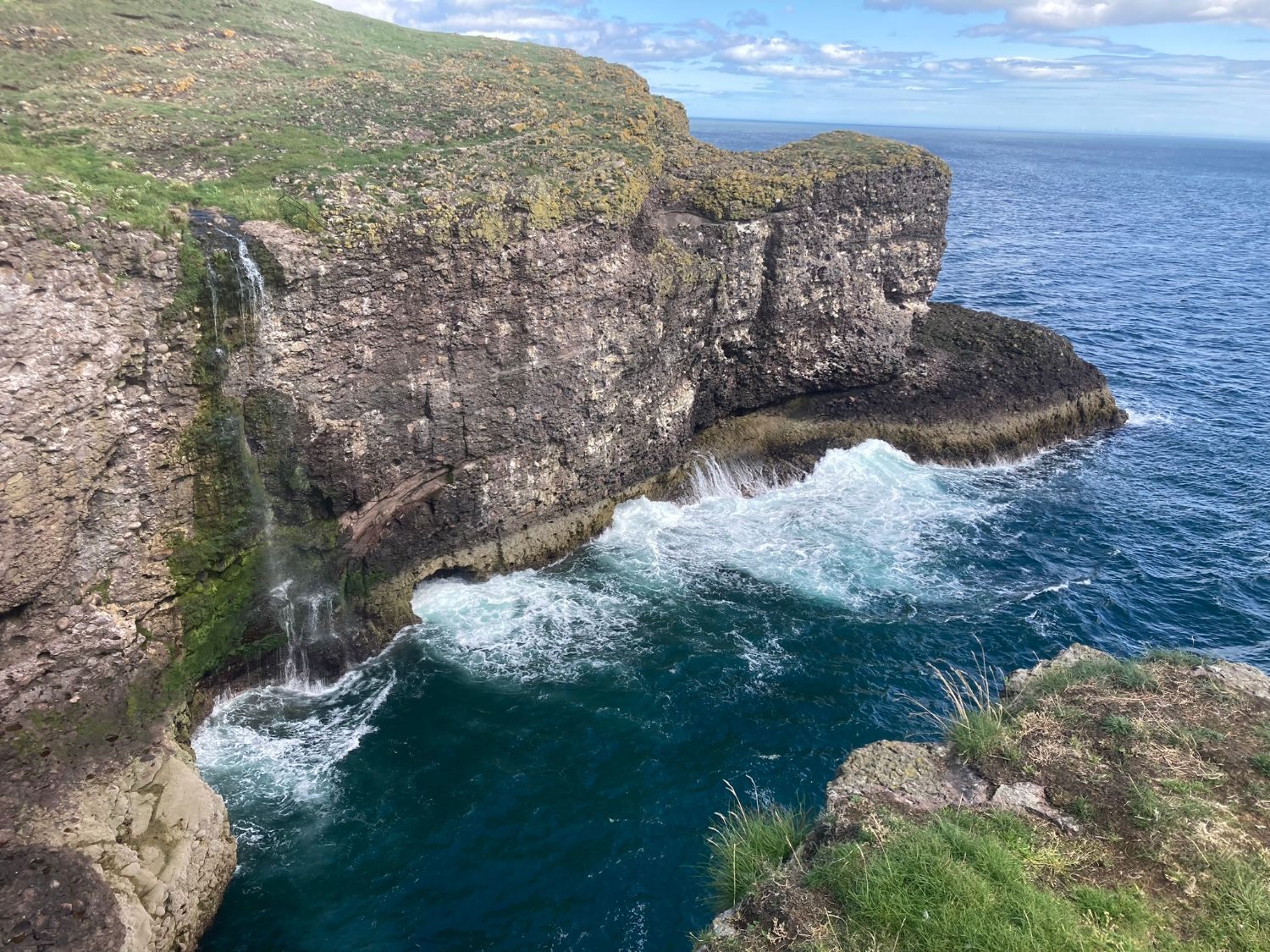
It's a completely different experience from the castle – raw rock, deep blue water and waves breaking in the cove below – but the two fit well together on the same day. And neither of them costs much: a lot of what made this part of Scotland special for us was simply walking out to the edge and looking.
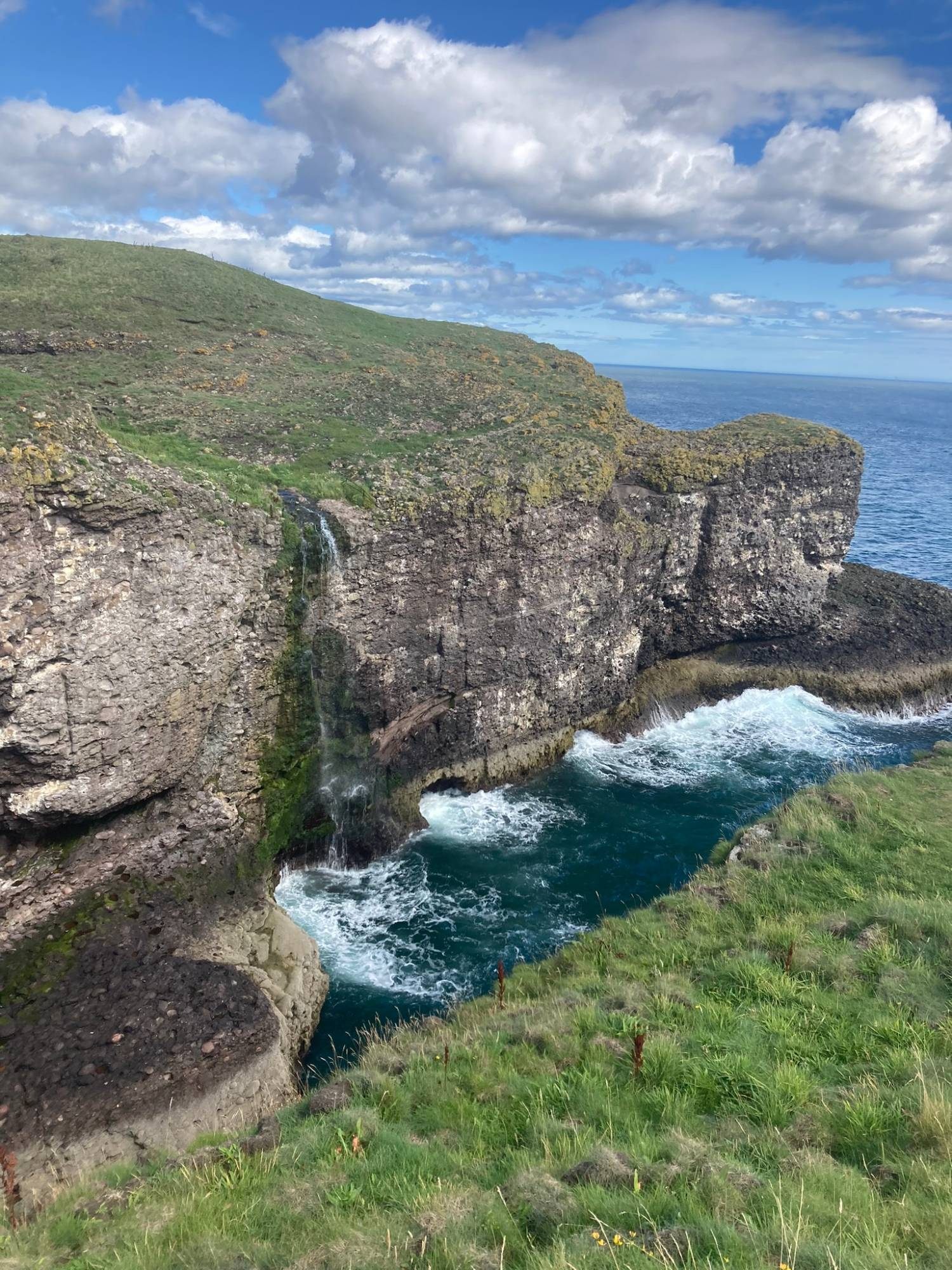
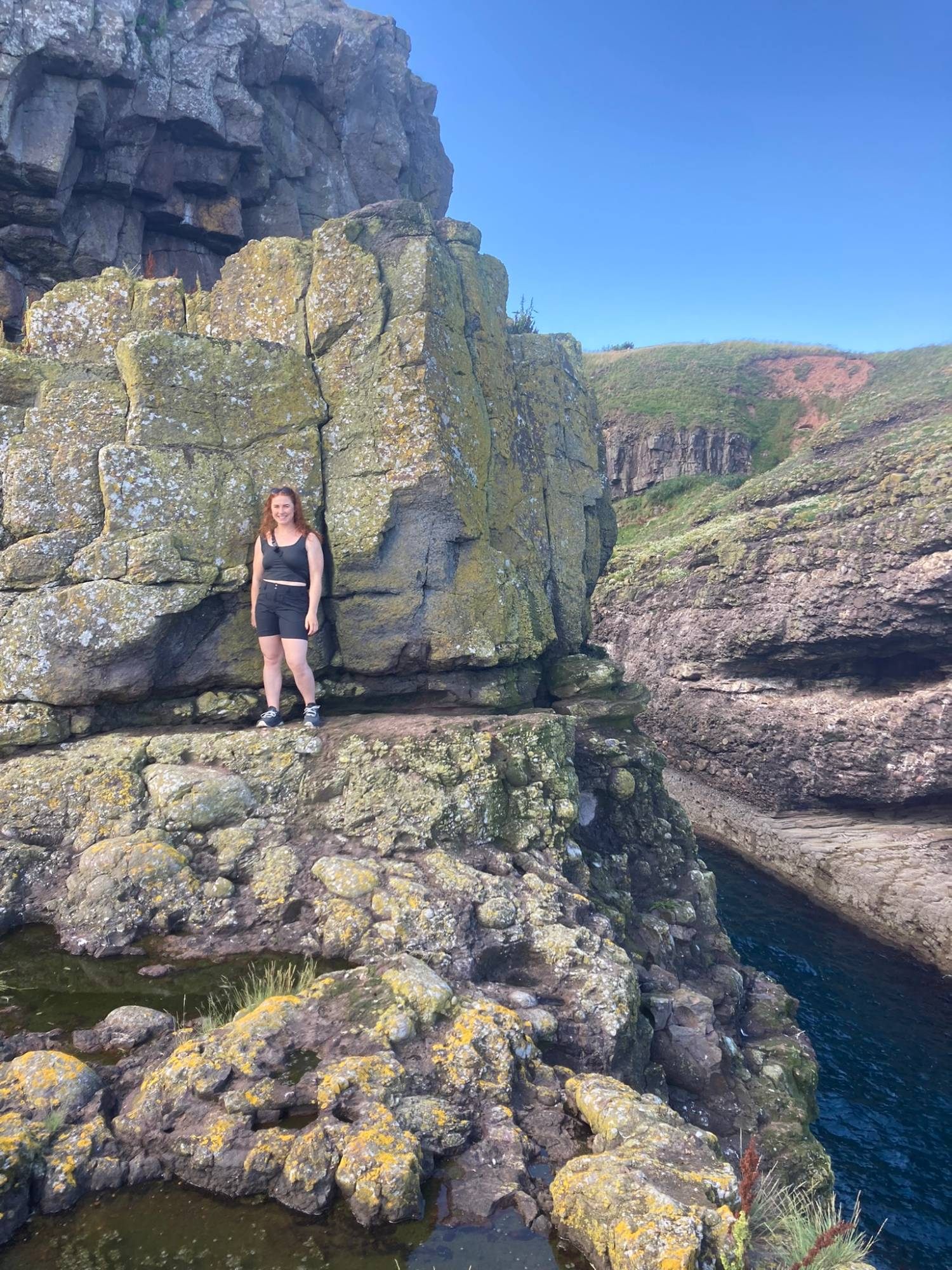
The cliff edges here are unfenced. Stay well back, especially when the grass is wet.
The drive to Potarch
Then it was time to head inland to the Dinnie Stones at Potarch Bridge – a drive of around 37–40 minutes. We were due to meet at about 4pm.
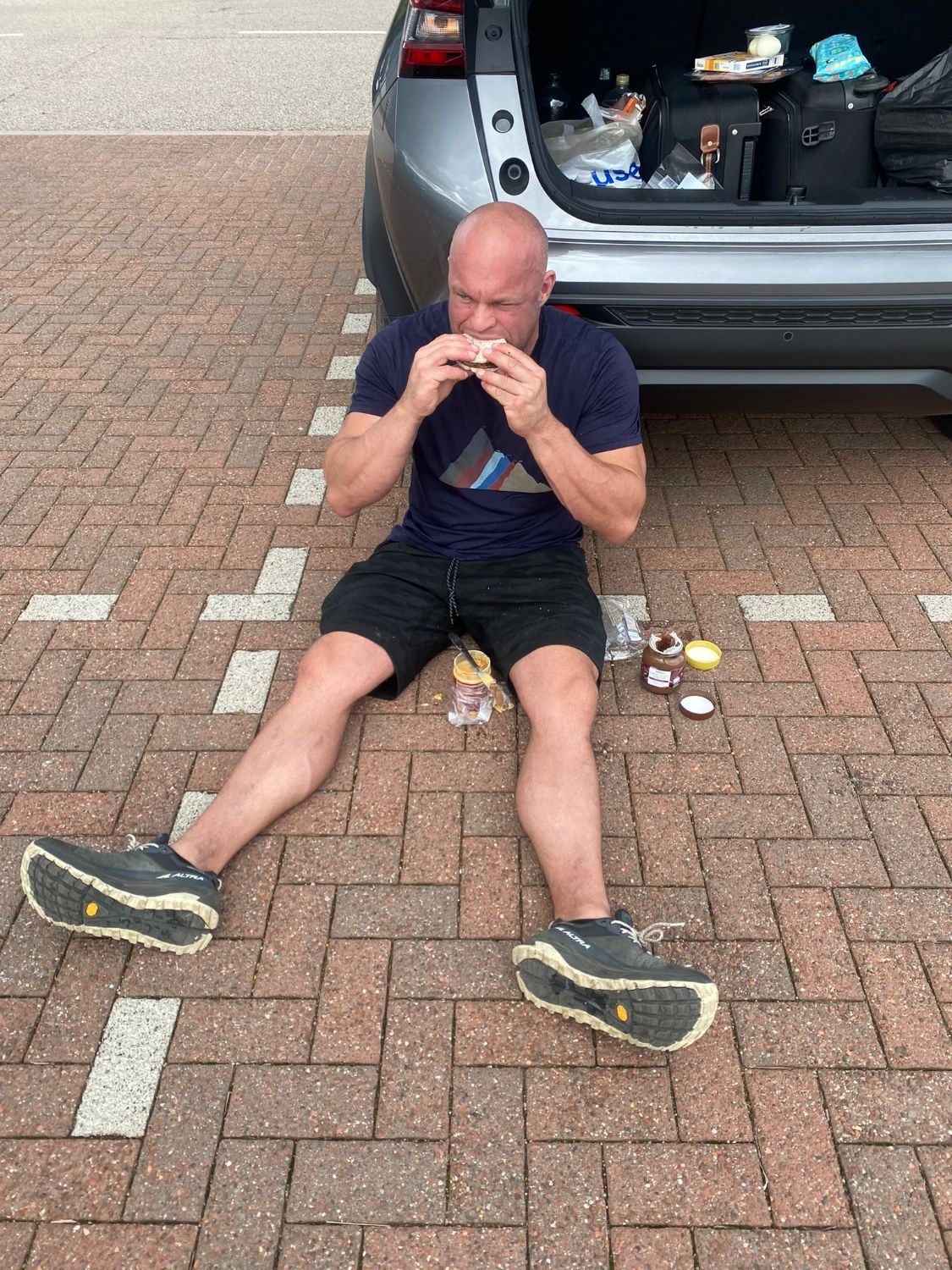
Around 2.45pm we made a quick stop so I could eat, sitting on the ground behind the car: rice cakes with peanut butter. A small detail, but it says something about the day. This wasn't a spontaneous stop at a tourist sight – I'd trained for this lift, and I wanted fuel in the tank before I tried it.
The history of the Dinnie Stones
The Dinnie Stones are two granite boulders with iron rings, kept at Potarch in Aberdeenshire, by the bridge over the River Dee. According to the official register, they weigh:
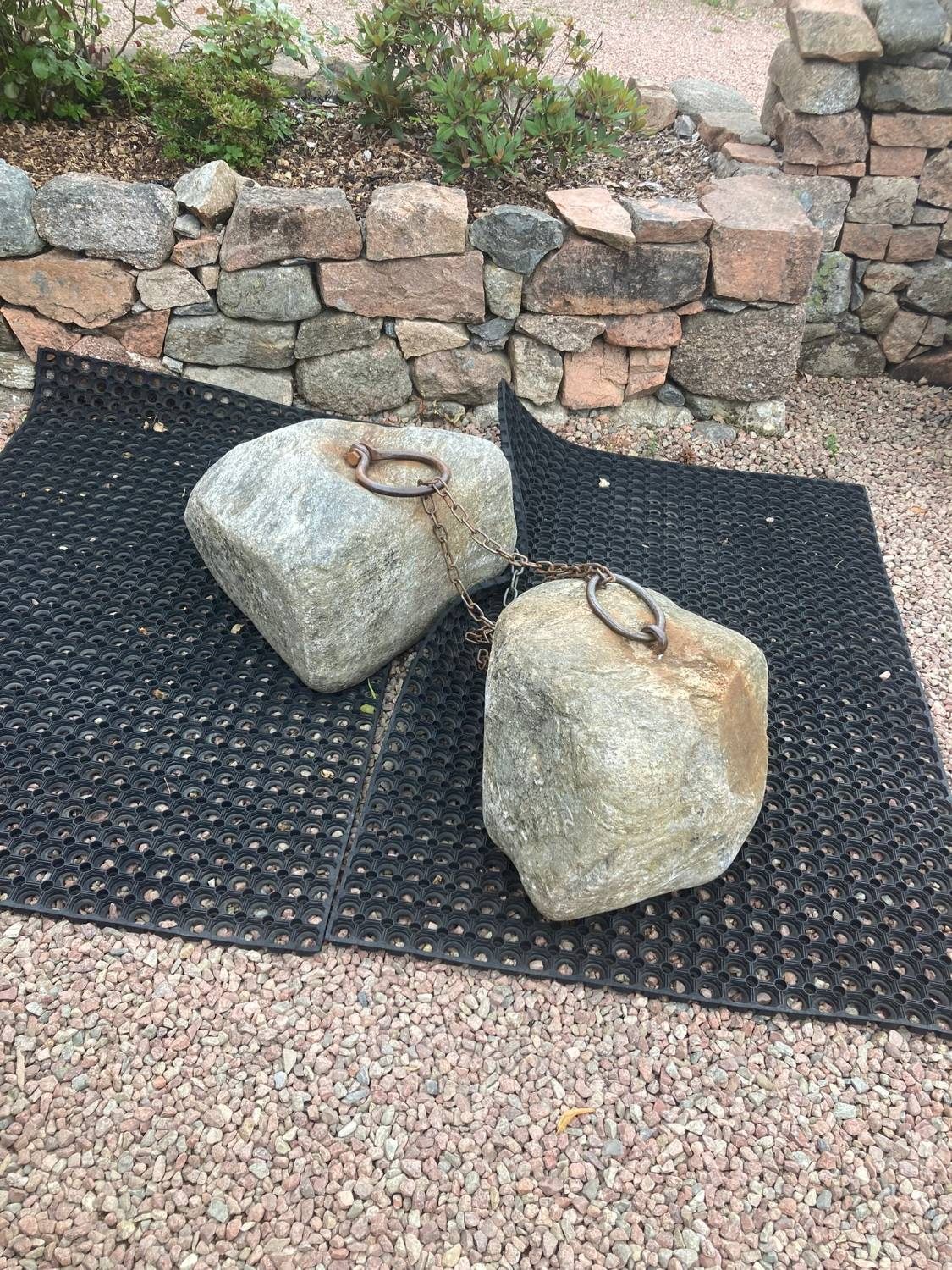
What makes them so hard is the rings. You don't get a bar or a handle – you hold a rough iron loop on top of an awkward, uneven stone. Grip, hands, forearms, back, legs and the ability to keep the whole body stable all get tested at once. It's a very different feeling from a deadlift with a barbell.
Donald Dinnie and Potarch Bridge
The stones had a practical job before they became famous. They were used as counterweights during maintenance work on Potarch Bridge, and the iron rings were fixed to them so that scaffolding ropes could be attached.
Donald Dinnie, born in 1837, became one of Scotland's most famous strongmen and Highland Games athletes. In 1860 he carried both stones across the width of Potarch Bridge – a distance the official register gives as 17 feet 1½ inches.
The stones later went missing. In 1953 the strength historian David Webster found them again beside the River Dee, and since then they've become a pilgrimage site for strongmen, grip athletes and strength enthusiasts from all over the world. Today they're kept at the Potarch Café and Restaurant, close to the bridge.
It's worth separating the two things: Donald Dinnie carried the stones across the bridge. Most people who visit today try to lift them, in one of the styles the register recognises.
Sources: thedinniestones.com (the official register) and liftingstones.org.
For me, that's what makes this place special. The stones are a direct, physical link to a feat from more than 160 years ago – and they still beat most of the people who try them.
Lifting the Dinnie Stones
A lift that goes into the register has to be arranged in advance through the official Dinnie Stones website, so it can be judged and recorded properly. We met at Potarch around 4pm, warmed up, and the whole session took about an hour and a half.
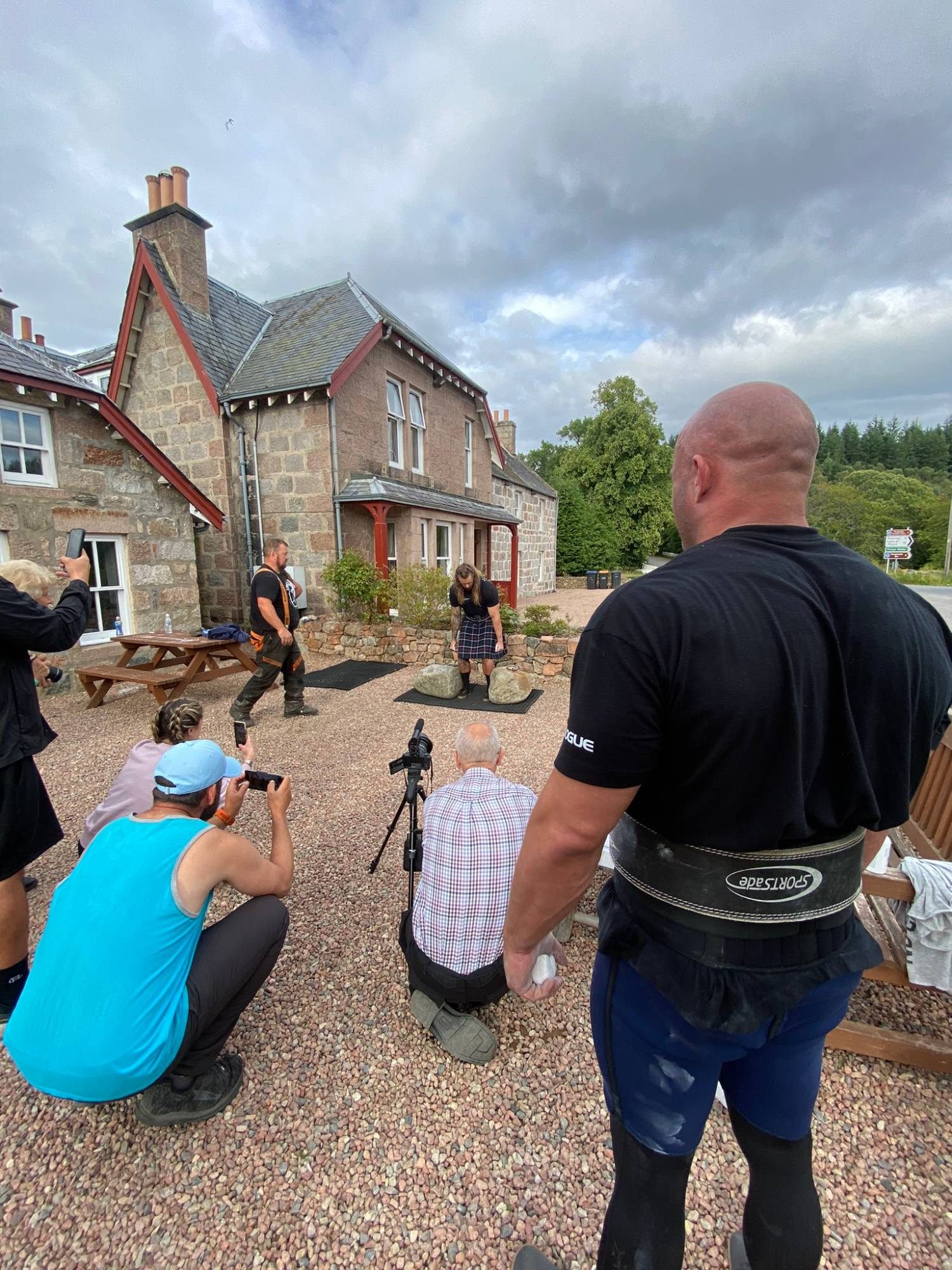
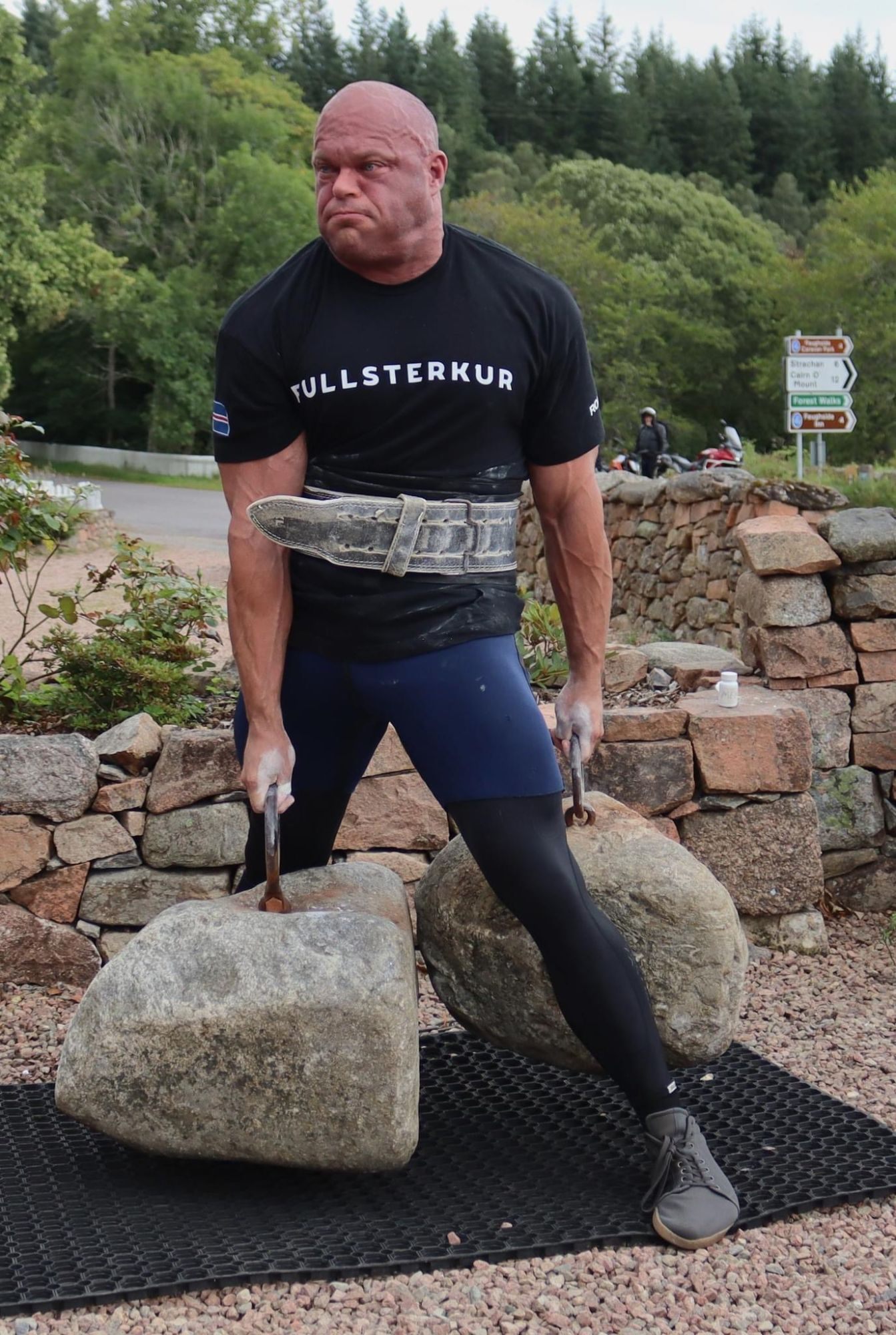
First lift: straddle
My first lift was in the straddle style: you stand over the stones, one in front and one behind, take a ring in each hand and lift both stones off the ground together. It's the more common way to do it, because the position gives you better leverage.
The lift was approved.
Second lift: side by side
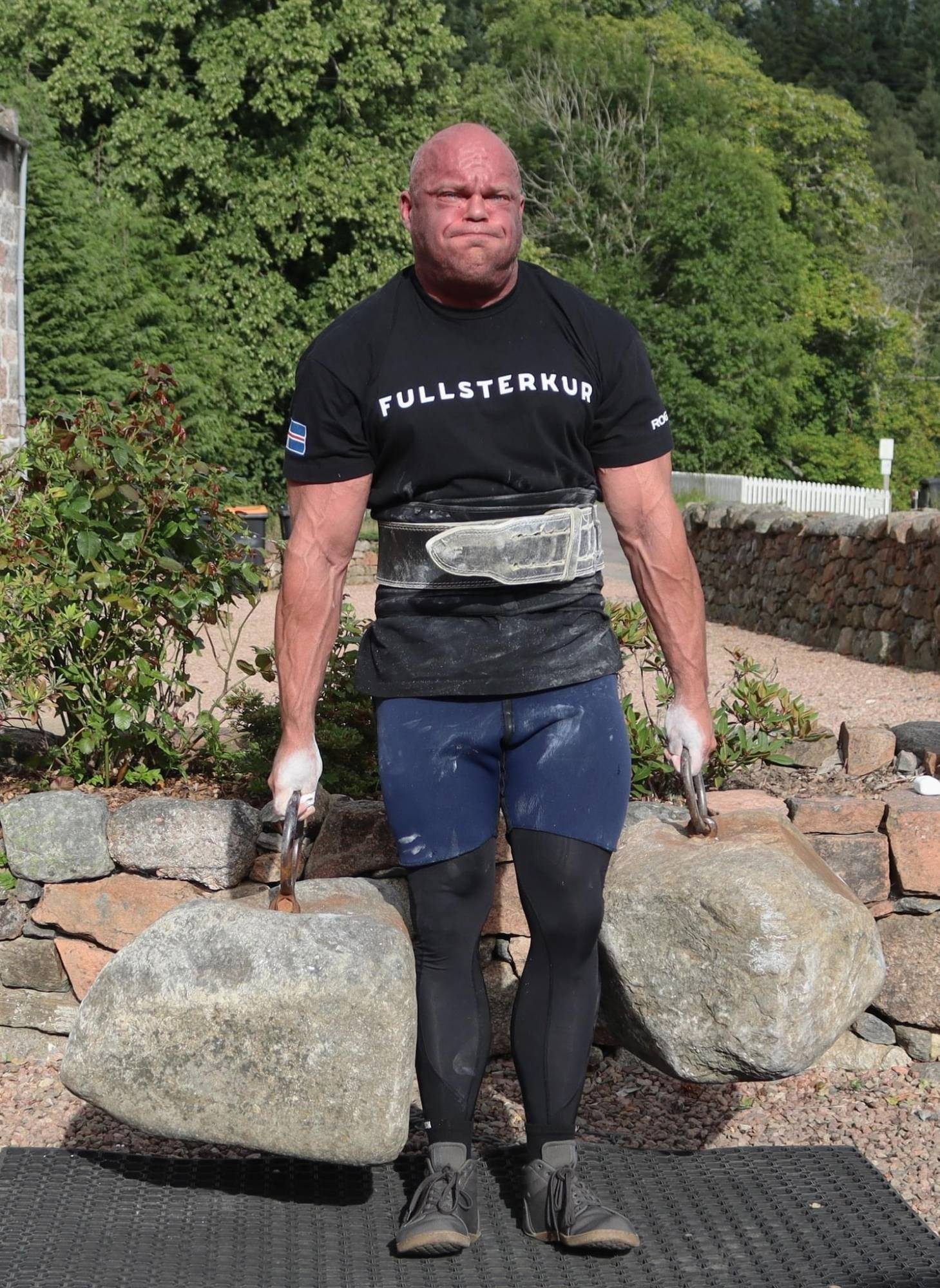
Then I went for the side-by-side lift, with one stone on each side of me – a bit like the start of a farmer's walk. Without the staggered stance, it's a less common way to lift them, and for me it made the day even bigger.
That lift was approved too.
Number 246 – and the first Dane in the register
I was entered in the register as number 246. The name just above mine was Tom Stoltman, the Scottish strongman who has won World's Strongest Man three times.
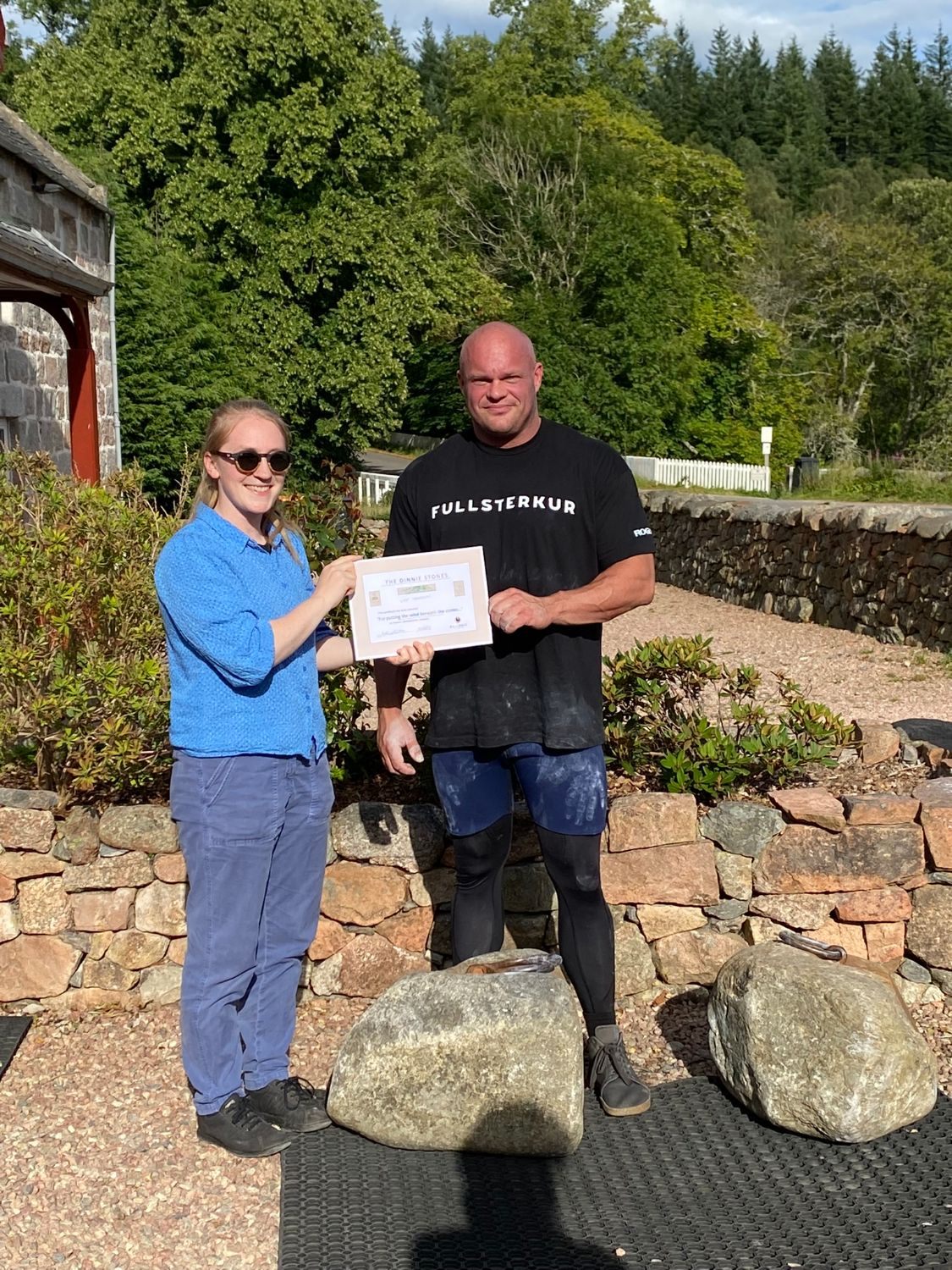
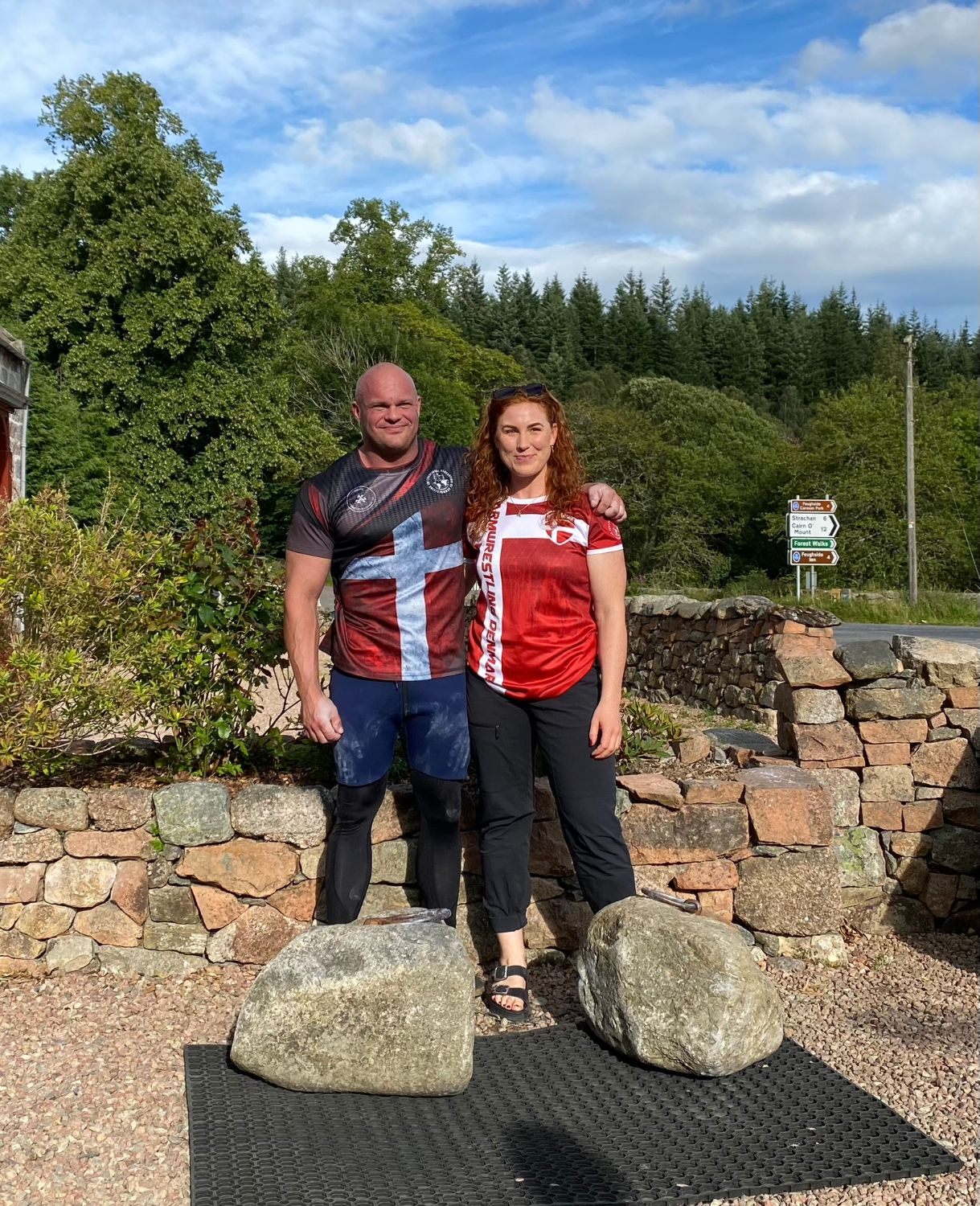
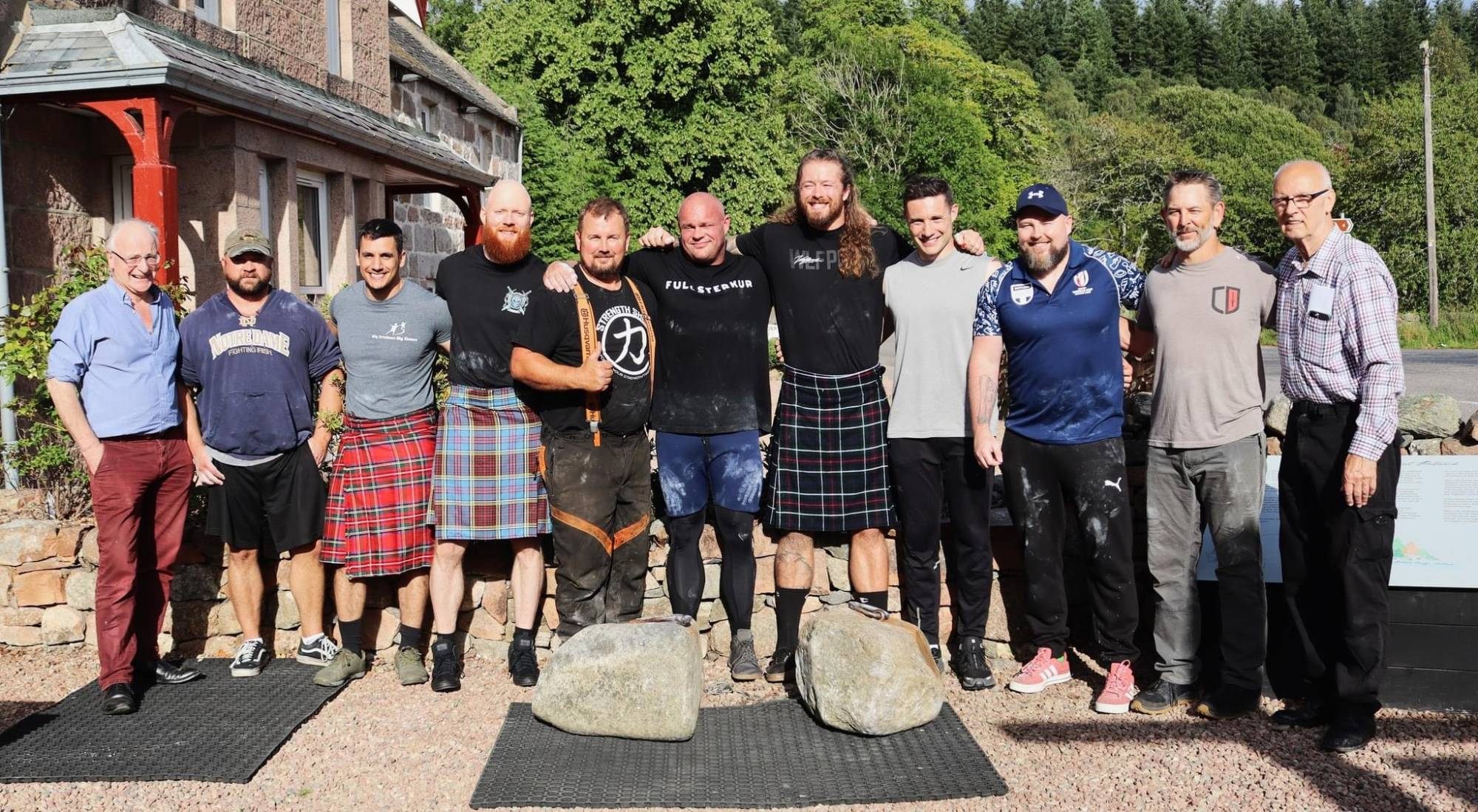
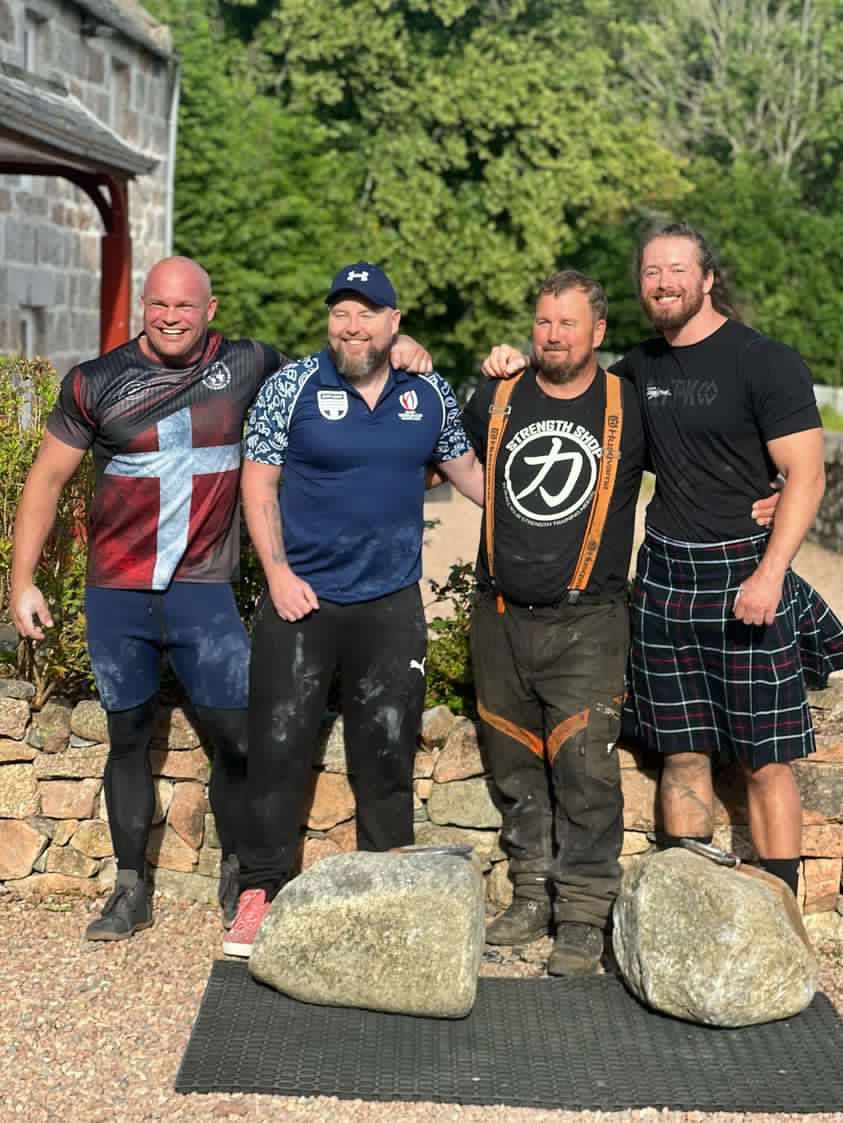
I was the first Dane to be officially registered as having lifted the Dinnie Stones. Afterwards I was handed a certificate, and we took a group photo with the people who were there that afternoon.
Potarch Bridge
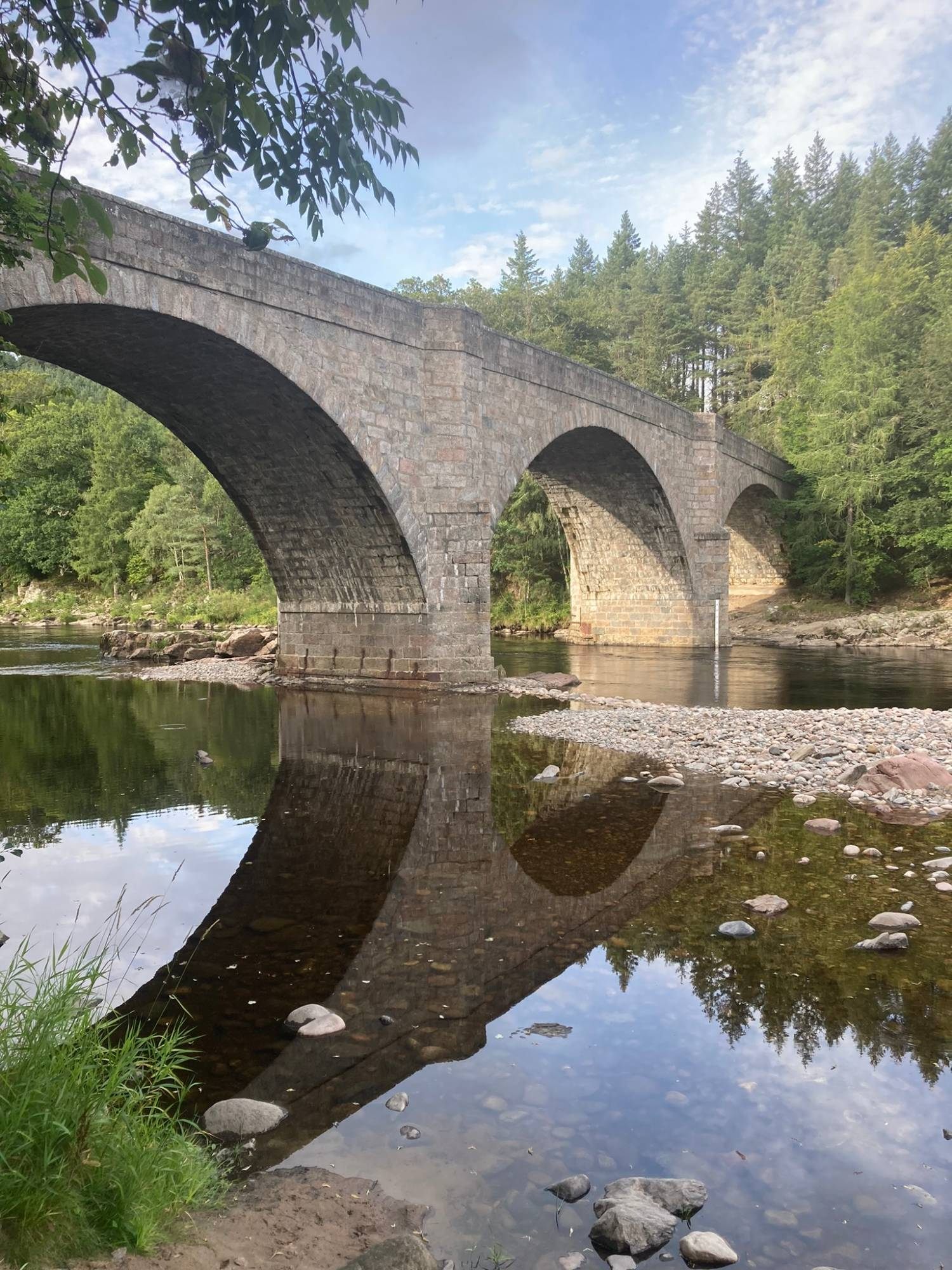
After the lifts we packed up, and around 6pm we walked down to see Potarch Bridge itself. After an afternoon with the stones, it felt right to see the bridge their whole story is tied to.
Celebrating at The Boat Inn, Aboyne
From Potarch we drove on to The Boat Inn in Aboyne, where we'd booked the night through Hotels.com. According to the inn, it has stood on the banks of the River Dee since 1720.
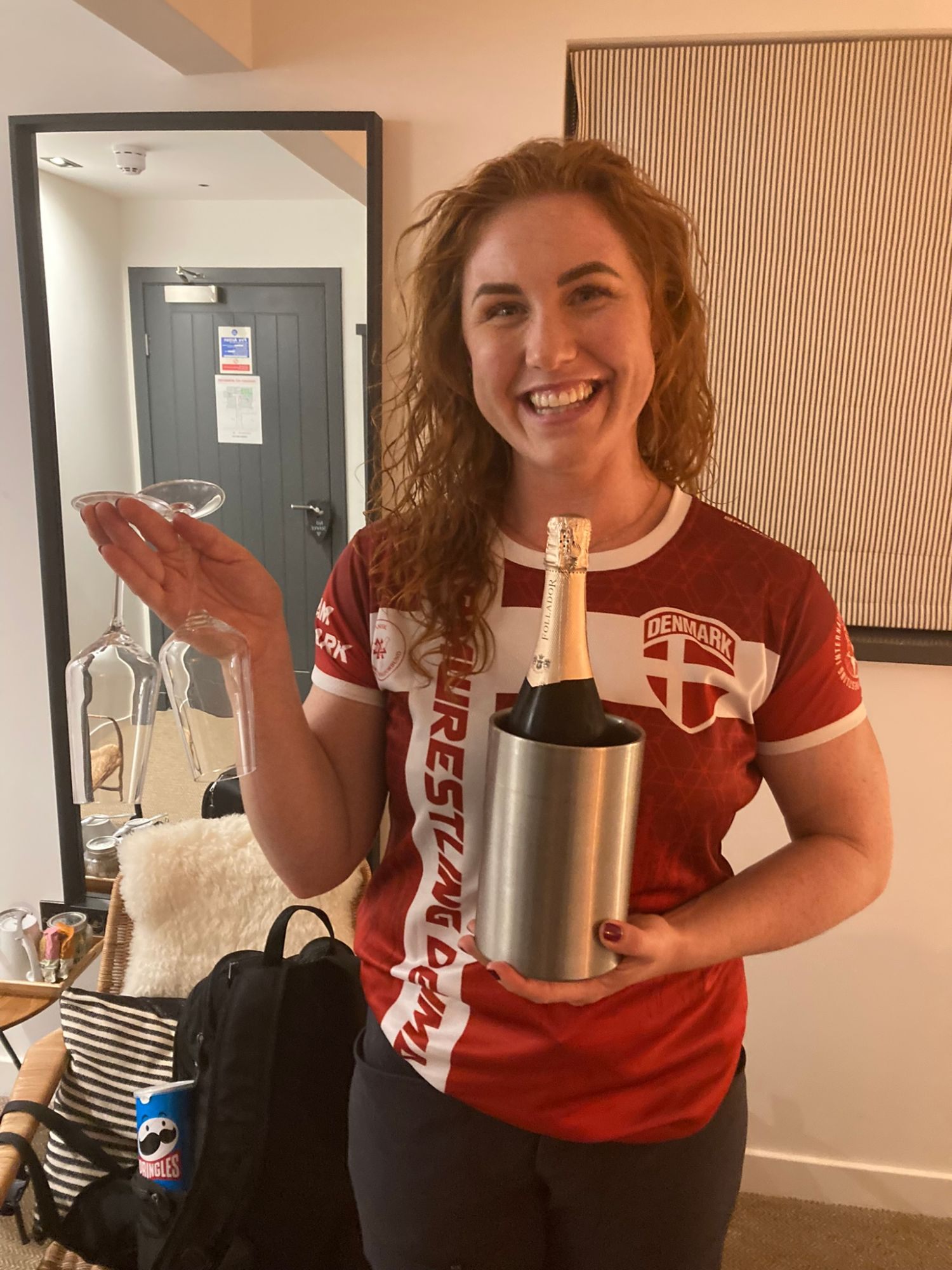
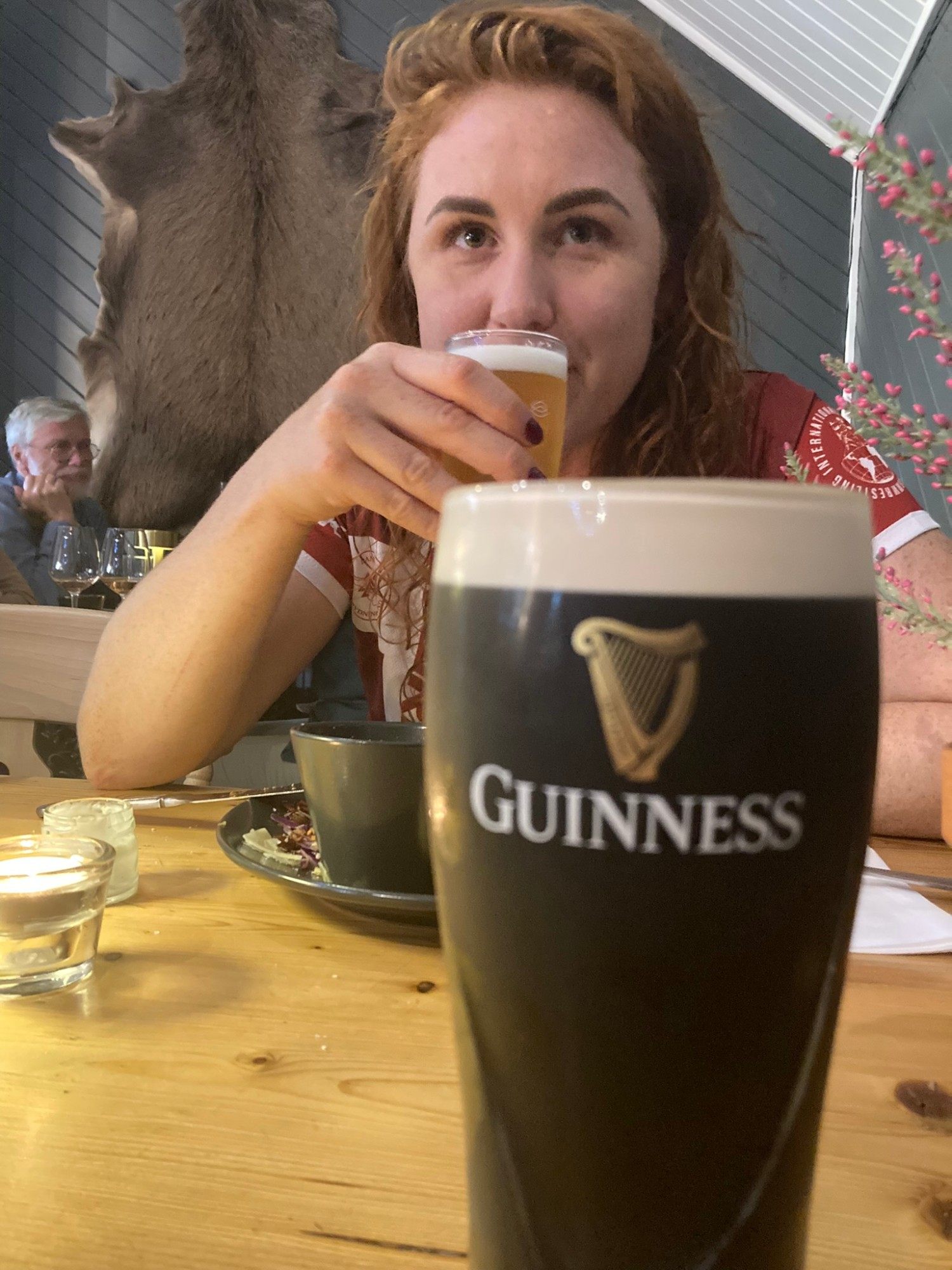
It was the perfect end to a long day: fish and chips, a Guinness and a beer – and Kristine had brought bubbles so we could celebrate the lift. I'd trained for this for a long time, and now both lifts were done and approved.
Practical information
| When | Tuesday 22 August 2023 – day two of our Scotland road trip |
|---|---|
| Flights | Ryanair, Billund–Edinburgh (21 Aug) and Edinburgh–Billund (25 Aug) |
| Car | Nissan Juke from Edinburgh Airport, booked via Rentalcars.com, rented from Enterprise |
| Night 1 | Number 44 Hotel & Bar, Stonehaven – sea view, breakfast included, 922.96 DKK for one night (Hotels.com) |
| Dunnottar Castle | About 5 minutes' drive from Stonehaven; we spent around 1½ hours there |
| Crawton Waterfall | A short drive south of Dunnottar, at the start of the RSPB Fowlsheugh reserve |
| Dinnie Stones | Potarch, by the bridge over the River Dee; 37–40 min drive from the Stonehaven area. Lifts for the register must be arranged in advance via thedinniestones.com |
| Night 2 | The Boat Inn, Aboyne – on the River Dee (Hotels.com) |
Final thoughts
Looking back, it's hard to imagine a better day for what we like to do. A slow morning with the sound of the waves in Stonehaven. A castle on a cliff with seven centuries of history. A waterfall falling off the edge of Scotland into the sea. And then, at the end of it, two old stones that I'd been training for – and the moment both lifts were approved.
Travel, history and strength in one day. That's exactly the kind of story we started Summits & Stones to tell. It was also only the beginning of our road trip in Scotland – more stories from the rest of the trip will follow.