This is the story of our road trip through the Peloponnese, from 2 to 10 September 2026 – told in the order we lived it. We started in Athens, slipped away to the island of Hydra, picked up the pace across the Corinth Canal to Sparta, climbed the highest mountain on the peninsula and slowly worked our way down to the coast around Pylos.
It wasn't a trip of ticking off sights. It was a trip of hikes, swims, wrong turns and small adventures – and a few things we'd do differently next time. Where a stop deserved more than a few paragraphs, we've written a full guide and linked to it below.
Our route at a glance
| Date | Route | Highlights | Overnight |
|---|---|---|---|
| 2 Sept | Arrival | Athens | Athens |
| 3 Sept | Athens | Areopagus Hill at dawn, Acropolis, Plaka, strongman training | Athens |
| 4 Sept | Piraeus → Hydra | Ferry, coastal walk, swimming, sunset | Hydra |
| 5 Sept | Hydra → Piraeus → Sparta | Corinth Canal, ancient Sparta | Toriza |
| 6 Sept | Mount Taygetos | Summit of Profitis Ilias | Toriza |
| 7 Sept | Toriza → Sparta → Kalamata | Langada Pass, Kalamata Castle, harbour | Kalamata |
| 8 Sept | Kalamata → Polylimnio → Pylos | Waterfalls hike & swim | Pylos |
| 9 Sept | Pylos area | Old Navarino Castle, Nestor's Cave, Voidokilia, Methoni | Pylos |
| 10 Sept | Pylos → Athens Airport | Home | – |
Map of our Peloponnese road trip route
2 September – Arriving in Athens
Arriving in the Greek capital – and learning our first lesson about parking.
We arrived in Athens on 2 September and checked in at Romantic Studio under Acropolis, our base for the first two nights.
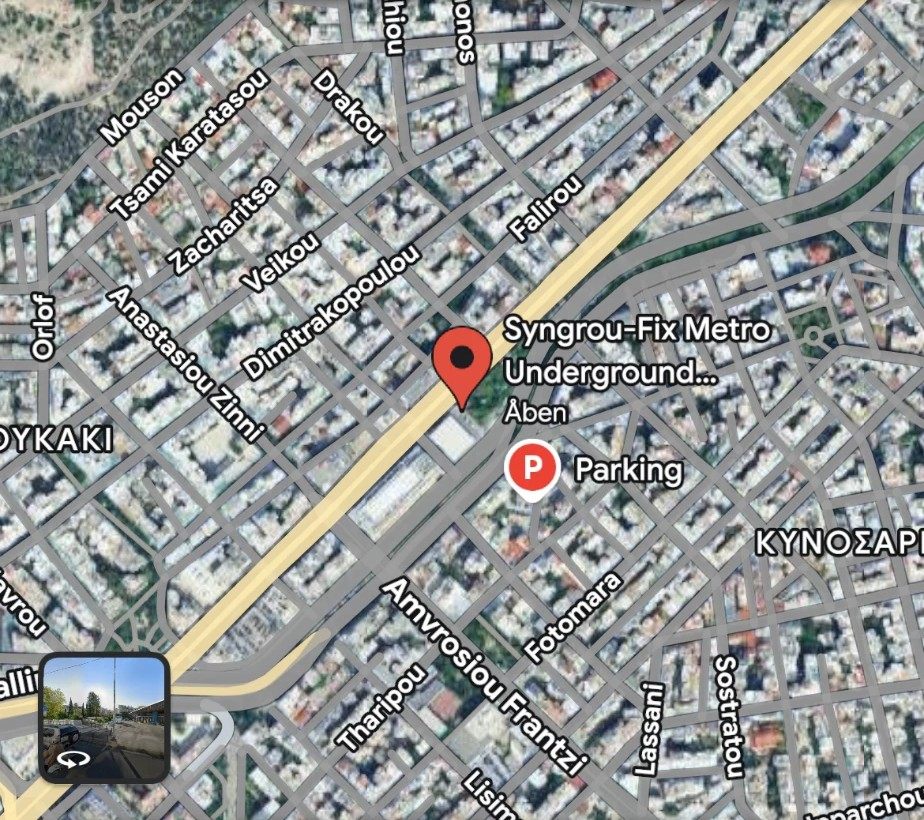
We already had our car, and quickly discovered that street parking in the area was very difficult – even though it had looked like an option beforehand. Instead, we used Syngrou-Fix Metro Underground Parking, by the Syngrou-Fix metro station on Syngrou Avenue – just a 5–6 minute walk from our studio. It worked really well: easy payment, and the car was safe. Google Maps lists it as open 24 hours. If you're driving in this part of Athens, we'd definitely recommend it.
3 September – Areopagus Hill at dawn, the Acropolis and a strongman session
A sunrise on Areopagus Hill all to ourselves, the Acropolis with everyone else, the lanes of Plaka – and a very different kind of Athens workout.
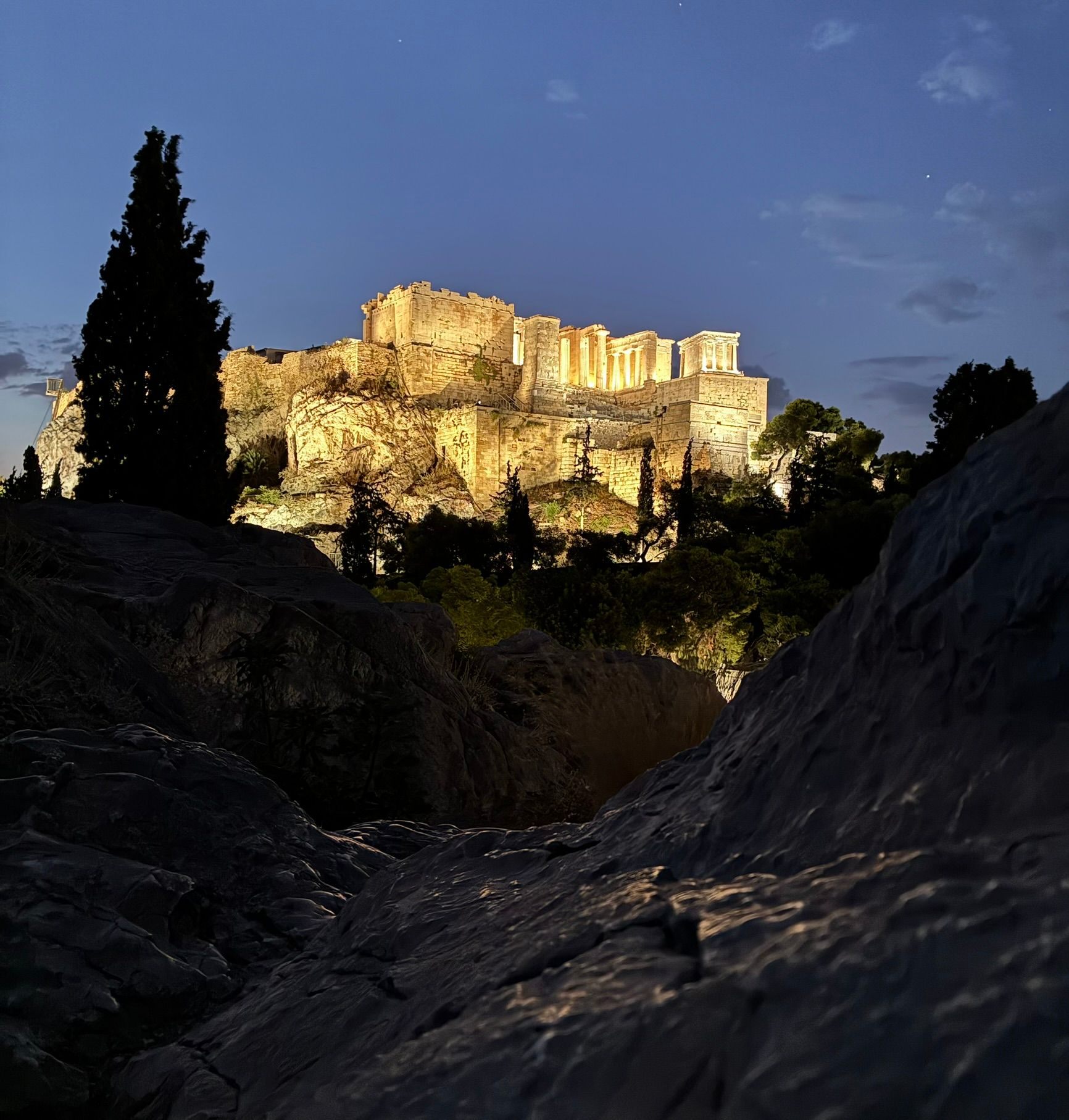
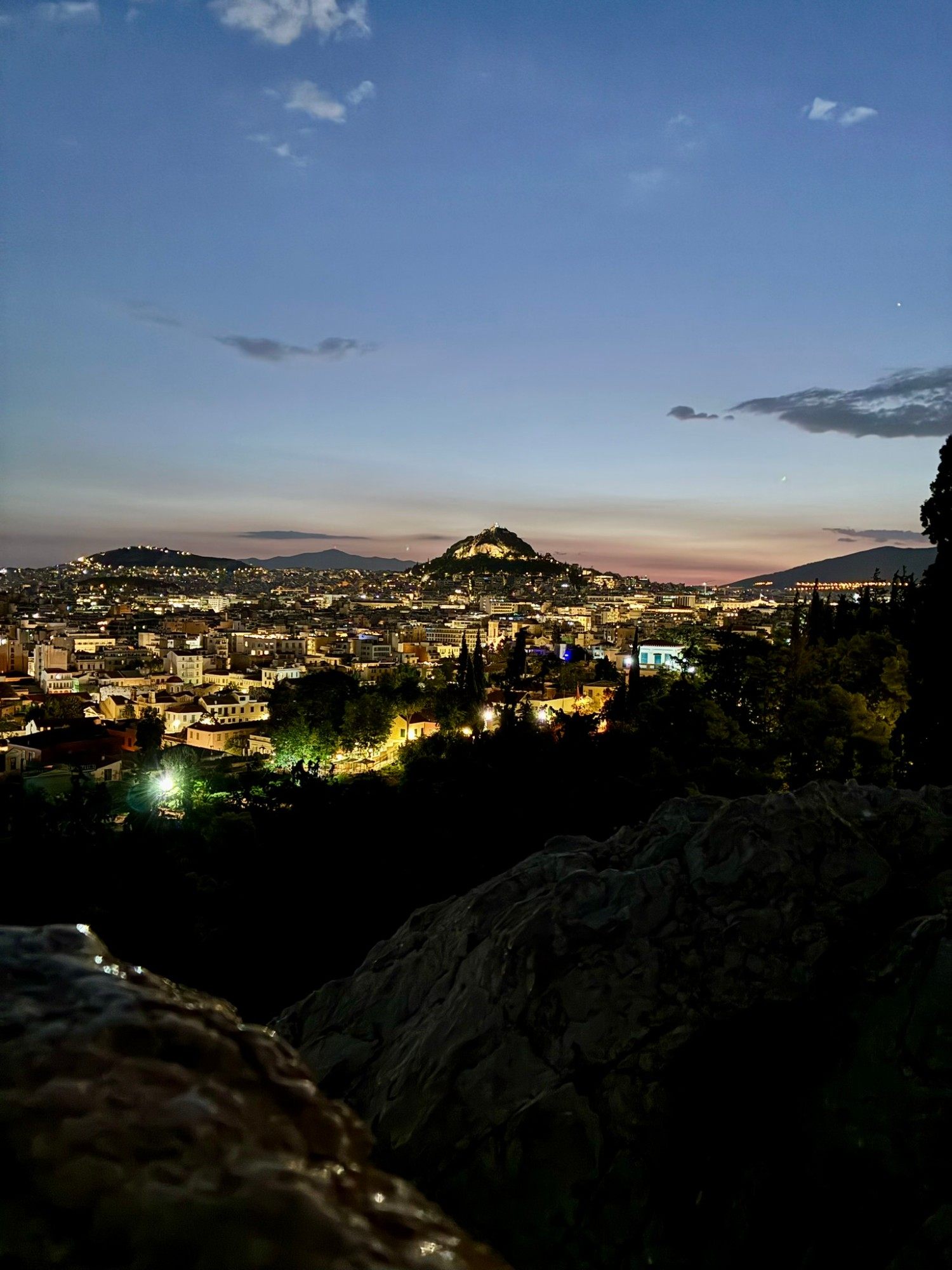
We got up very early. Around 6am we walked up Areopagus Hill, the rocky outcrop right next to the Acropolis – and we had it completely to ourselves.
Standing on the rock in the early-morning darkness and watching the Acropolis appear in the first light turned out to be one of our best moments in Athens. For us, it felt more personal and more authentic than the visit to the Acropolis itself later that morning.
We had bought timed tickets in advance on the official online ticket site, for entry at 8am – €30 each. Even at that hour, the queue was very long – around 200 metres by our estimate. Because we had pre-booked, we got in fairly quickly, but the site was already busy.
The Acropolis is, of course, impressive, and we don't regret going. But it's also a very touristy experience, and we're not big fans of mass tourism. For us, it didn't quite match the atmosphere we'd hoped for – and the quiet sunrise on Areopagus Hill ended up meaning more to us than the visit inside.
Our tip for the Acropolis
Book a timed ticket in advance on the official ticket site – even an 8am slot comes with a queue. And go up Areopagus Hill at dawn, before your visit. It's right next door, and it may well be your favourite moment of the day, as it was ours.
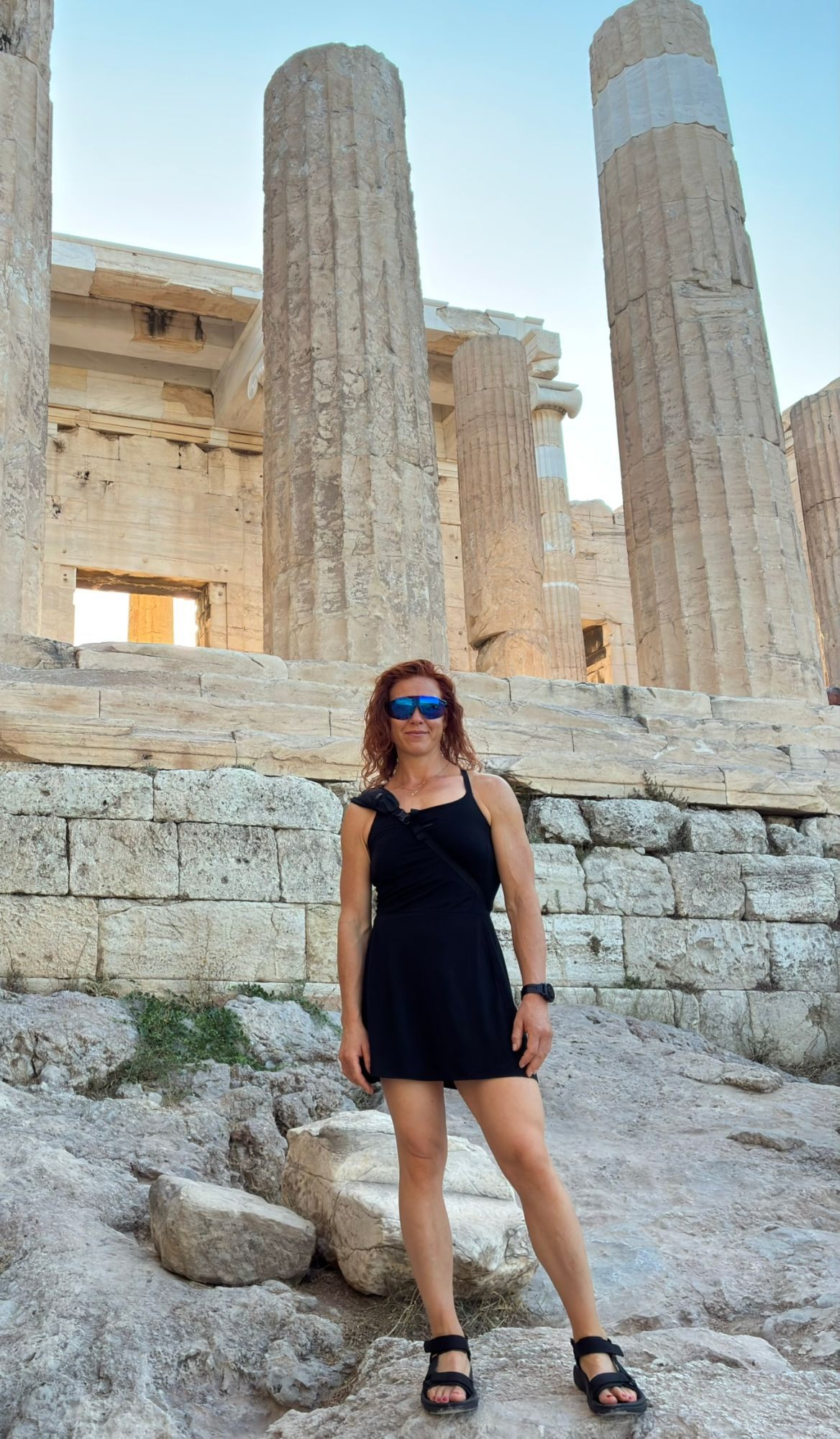
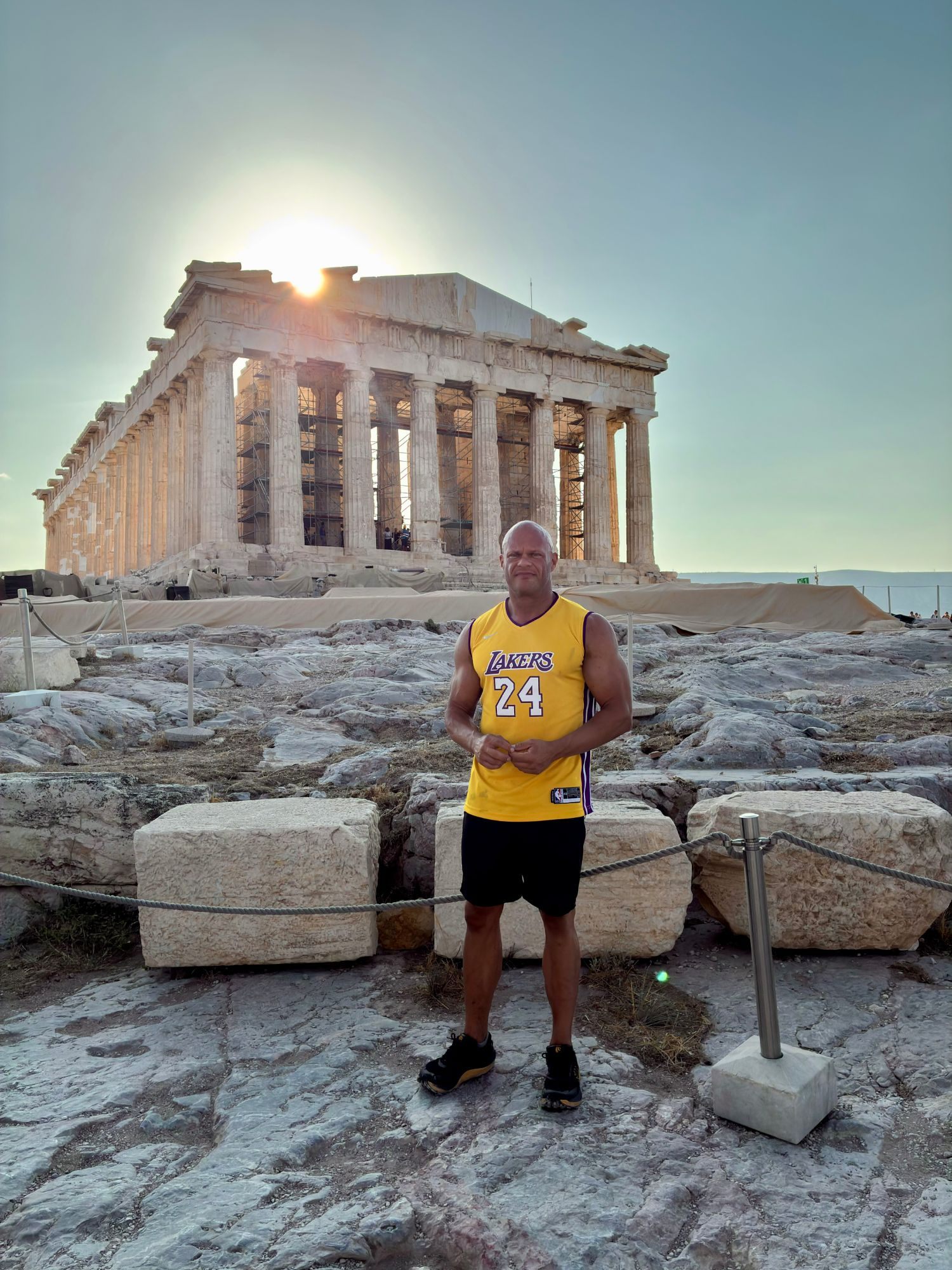
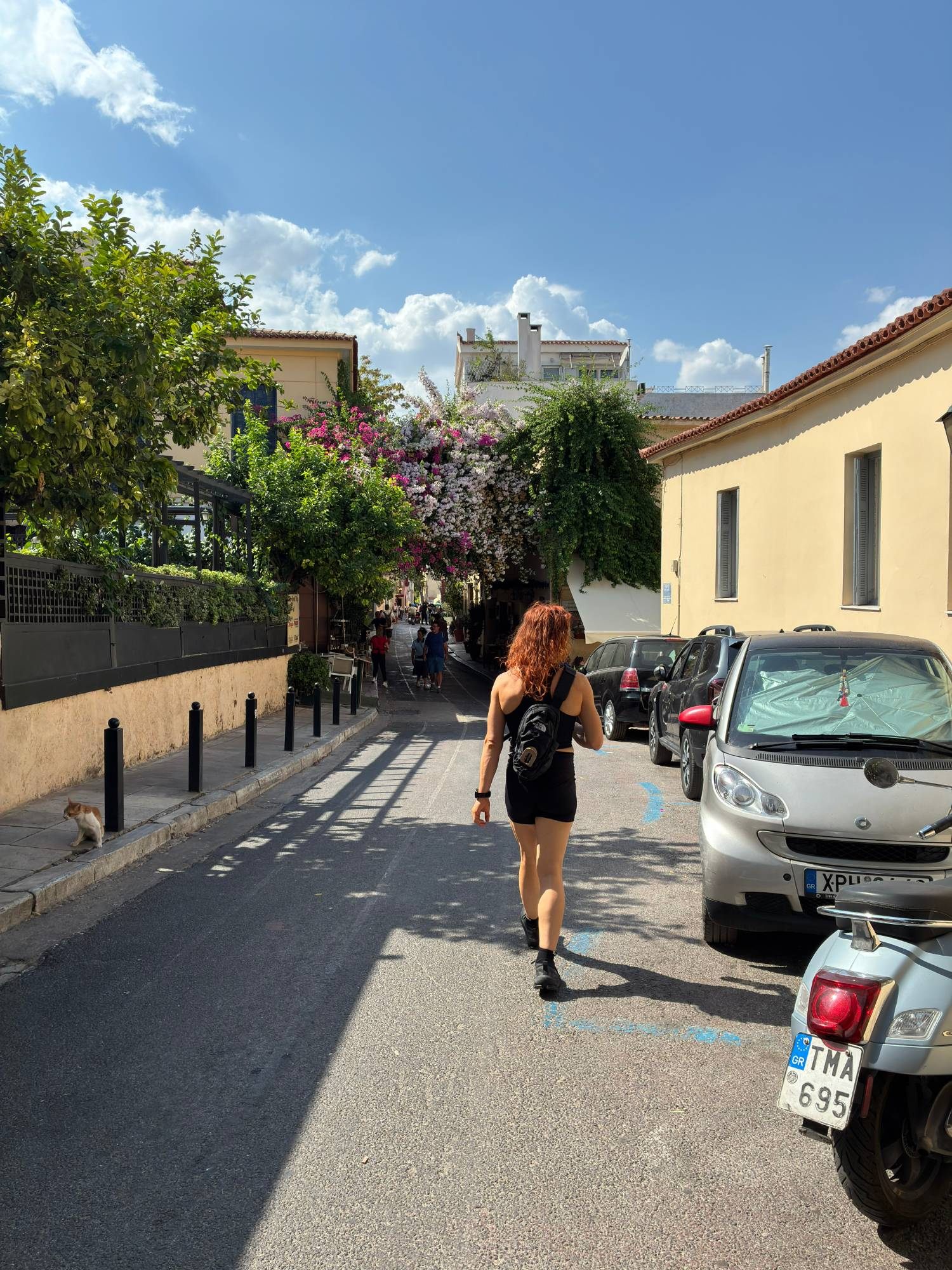
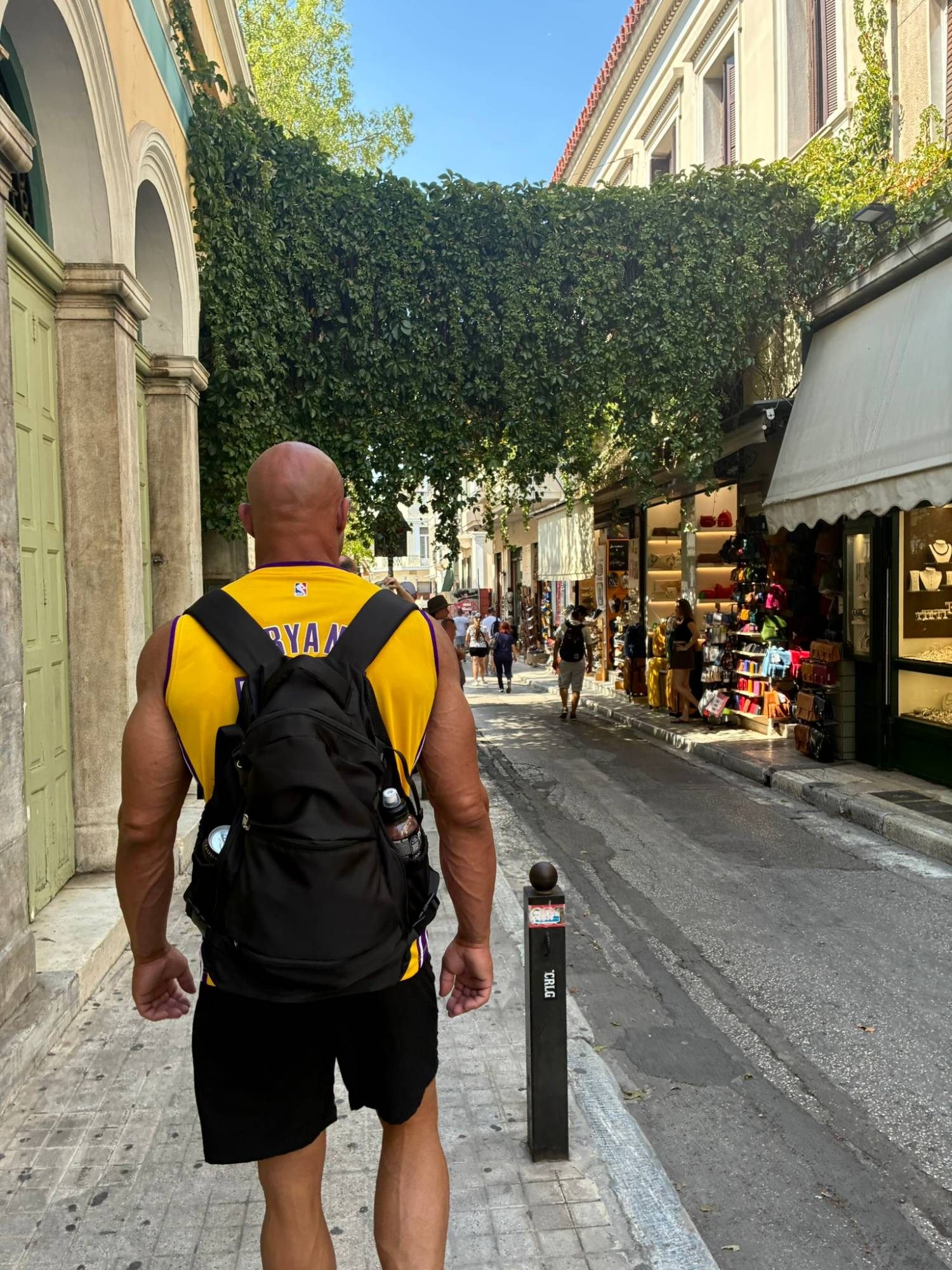
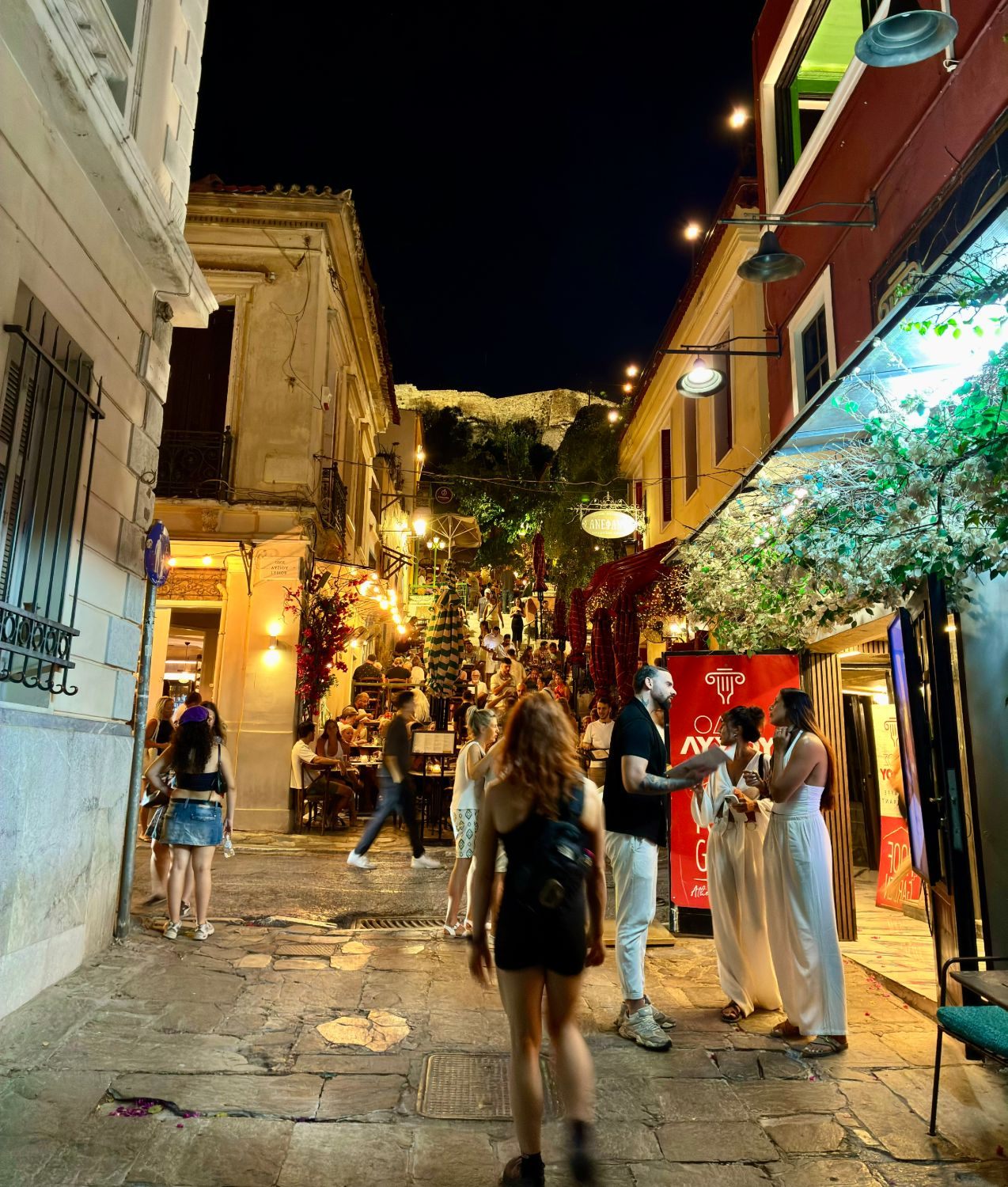
Afterwards, we wandered through Plaka, the old neighbourhood at the foot of the Acropolis, enjoying the narrow streets and the atmosphere.
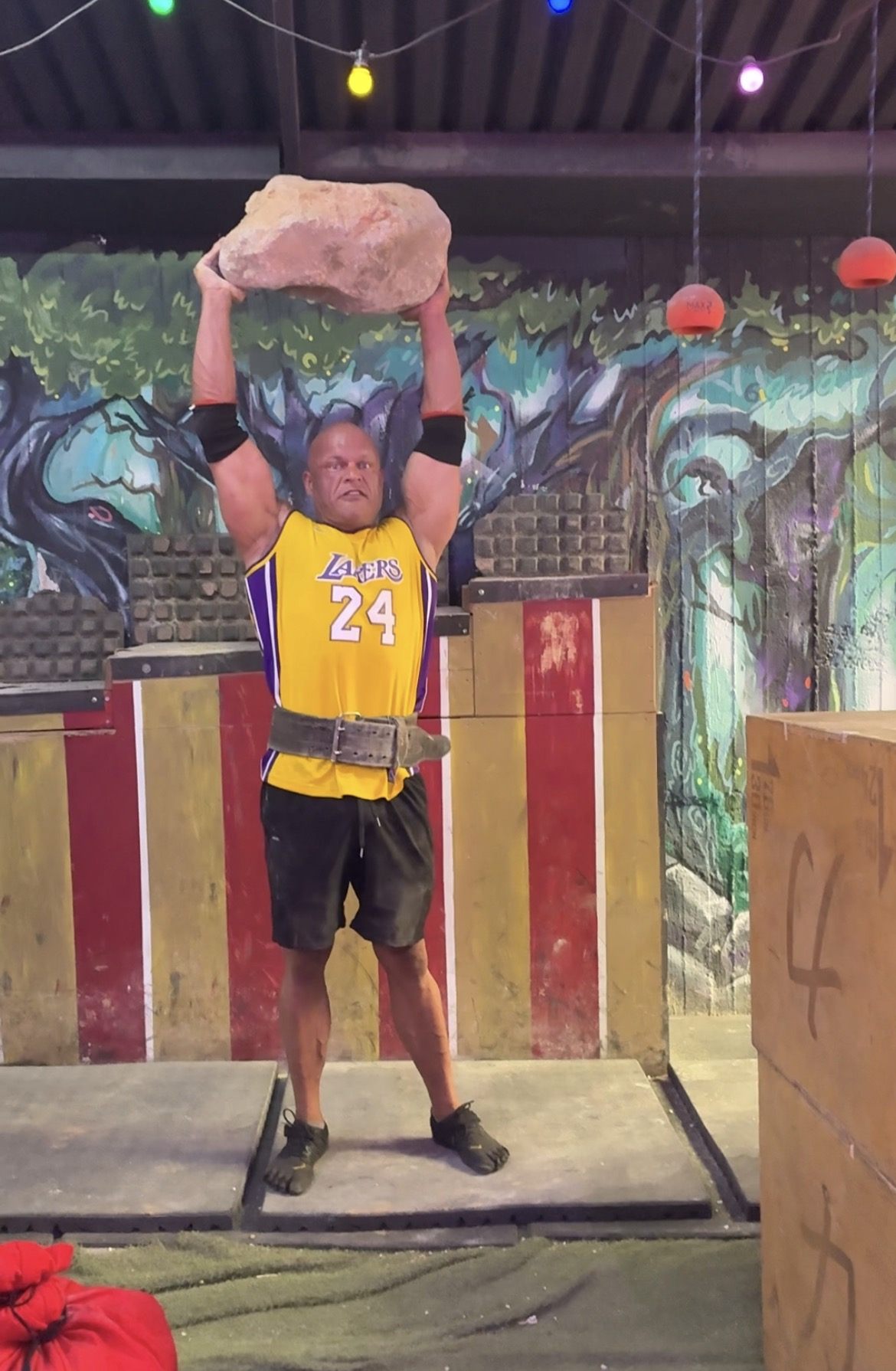
Strongman training in Athens
Later, we took a Bolt to Circus Experiment Strongman Center, where we had arranged a trial training session. It was a fantastic experience – and a part of our Athens story that you won't find in most itineraries.
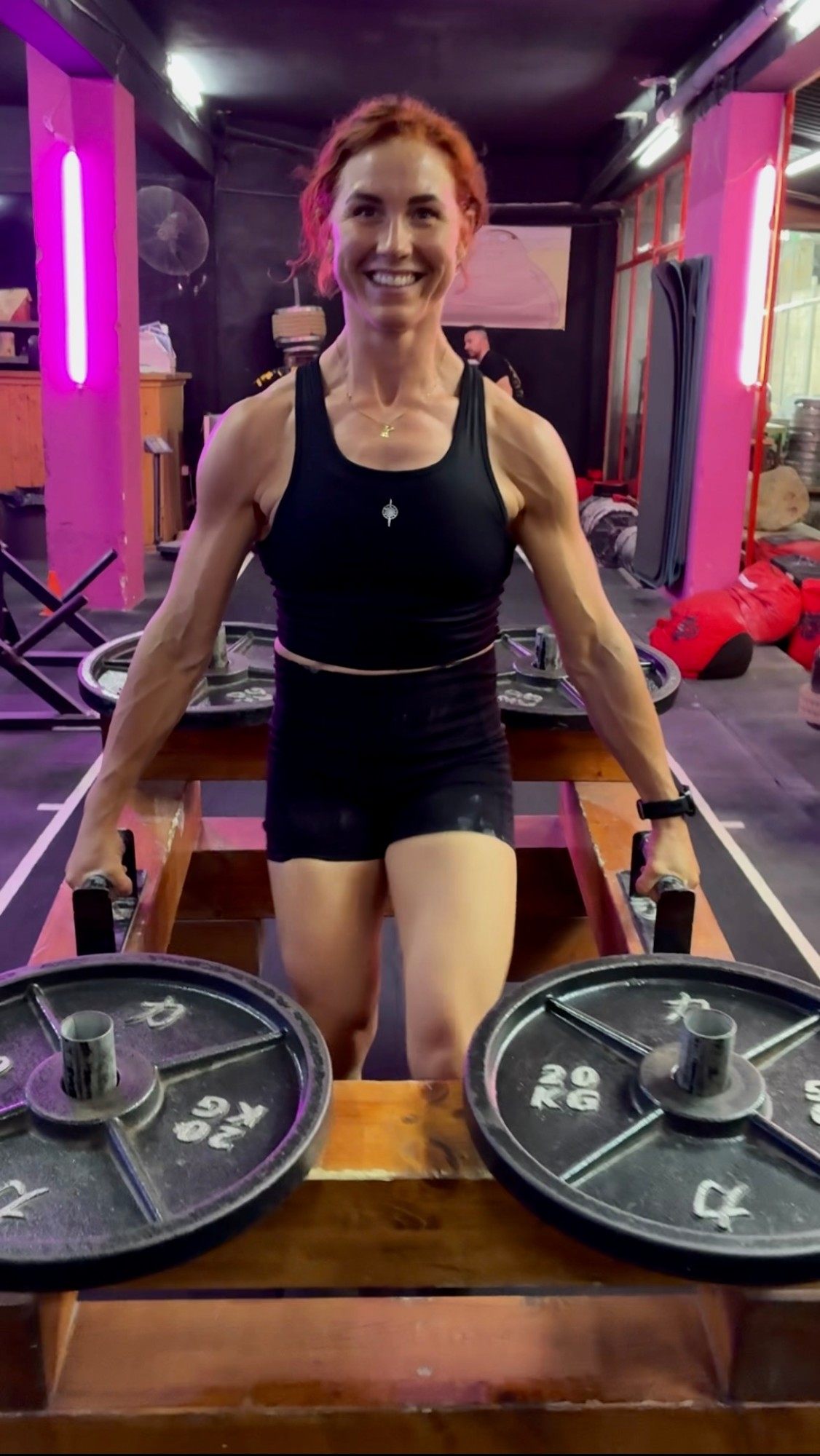
Getting around without the car was easy: Bolt and Uber both worked really well in Athens, and we'd recommend having both apps installed.
In the evening, we walked around the city a bit, did some shopping and headed back to the studio to cook our own dinner. We generally like making our own food, even when we travel – and after a day that started at 6am, a quiet evening in was exactly right.
4 September – Hydra, the car-free island
A morning ferry from Piraeus, a coastal walk, an almost deserted swimming spot and sunset over the harbour.
We drove from Athens to Piraeus and left the rental car in the underground car park at Karaiskaki Square – just a 600-metre walk from the ferry. The Hellenic Seaways high-speed ferry left at 08:30 and had us in Hydra 1 hour and 15 minutes later.
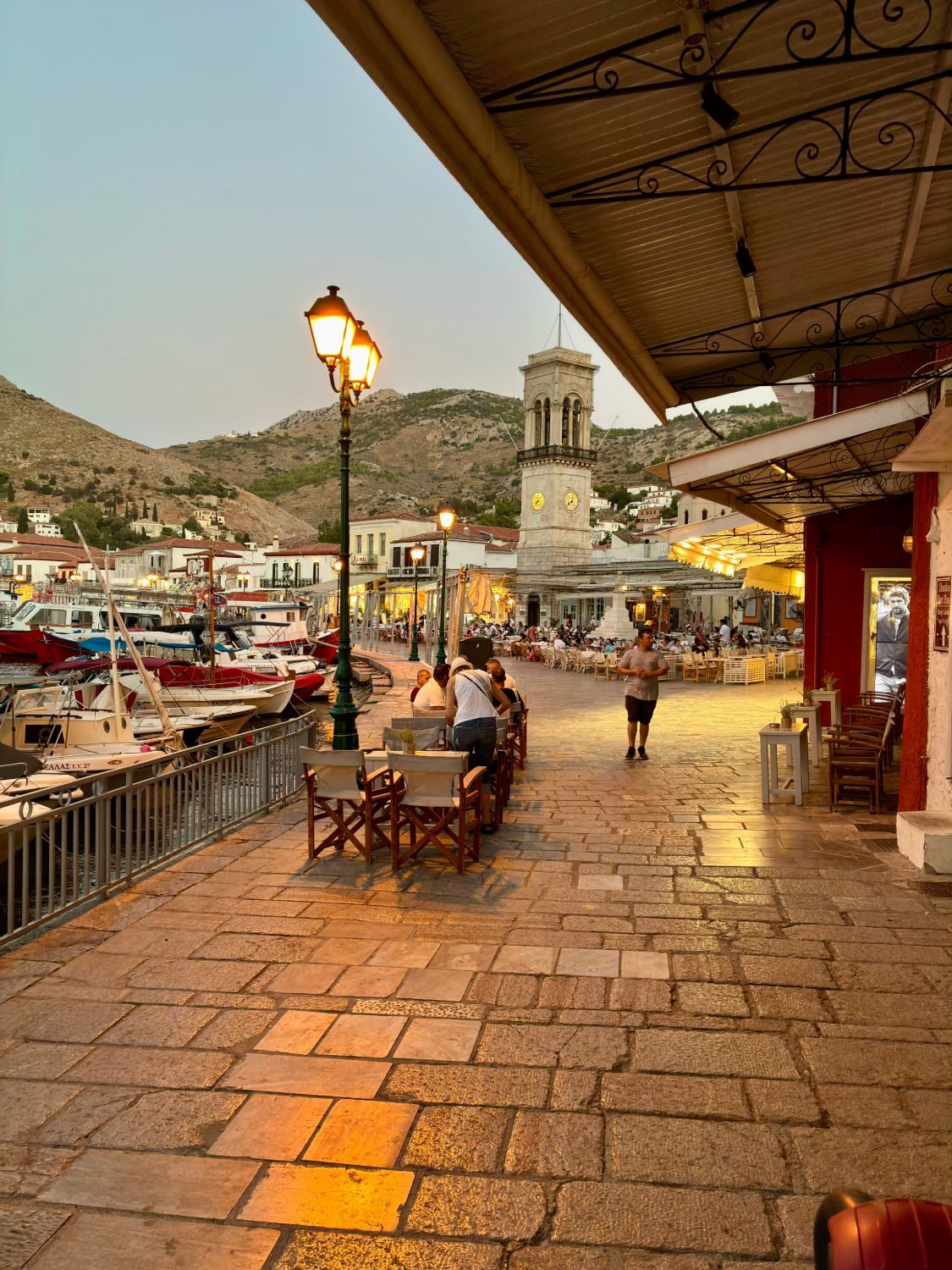
On Hydra, life moves at walking pace: there are no cars, and donkeys carry luggage and goods through the lanes. We walked the coast past Vlychos and kept going until we found an almost deserted swimming spot among the rocks. Lunch was moussaka at Taverna Marina by the water, followed by sunset over the harbour and dinner we cooked ourselves at Haven, high on the hillside.
Read the full story, ferry details and practical tips in our Hydra Travel Guide.
5 September – Corinth Canal and ancient Sparta
Back to the mainland, onto the Peloponnese – and into the land of Leonidas.
The 07:30 ferry brought us back from Hydra to Piraeus by 09:20. We walked back to the underground car park at Karaiskaki Square, picked up the car, and the road trip through the Peloponnese finally began in earnest.
This was mostly a driving day, with two short but worthwhile stops on the way from the islands to the mountains.
Stop 1: the Corinth Canal
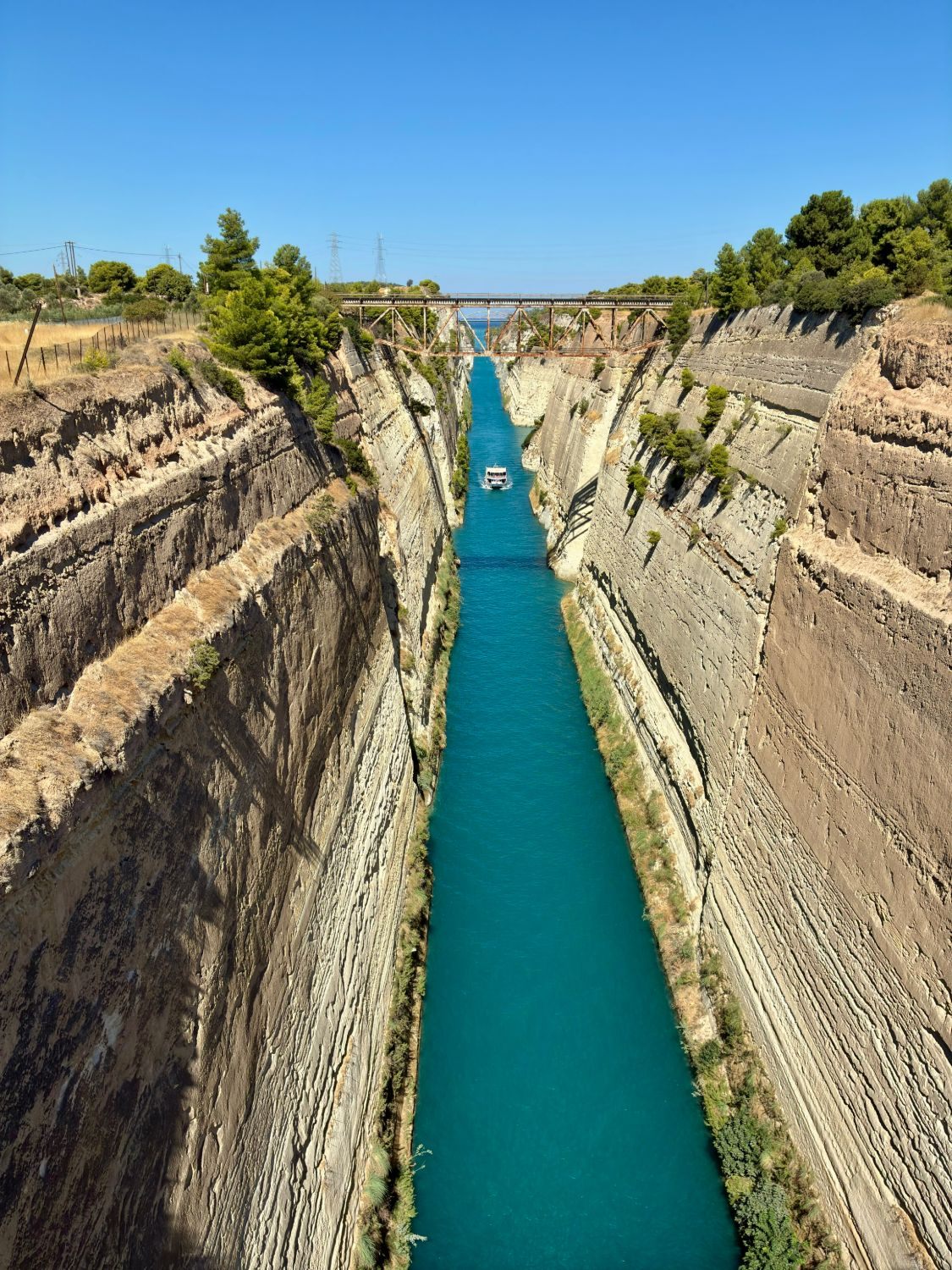
Our first stop was the Corinth Canal, the symbolic gateway to the Peloponnese. Completed in 1893, the canal cuts around 6.4 km through the narrow isthmus, with sheer rock walls dropping to the water far below.
We parked close to the canal, and from there it was only about a two-minute walk to the viewpoint. We spent around 20 minutes looking down into the canal, walking around and taking photos.
In our opinion, it's a perfect road-trip stop: it takes very little time, but it's genuinely impressive. And if you want something more extreme than a photo, you can bungee jump from the bridge – Zulu Bungy has been running jumps here since 2003, with a drop of around 80 metres to the water.
Stop 2: Sparta and the statue of Leonidas
From the canal we drove on to Sparta – a drive of roughly 140 km, or around 1 hour 45 minutes, according to route planners – to see what remains of the ancient city and the places linked to its most famous king, Leonidas.
We parked on the main street close to the Leonidas statue, where there was plenty of parking.
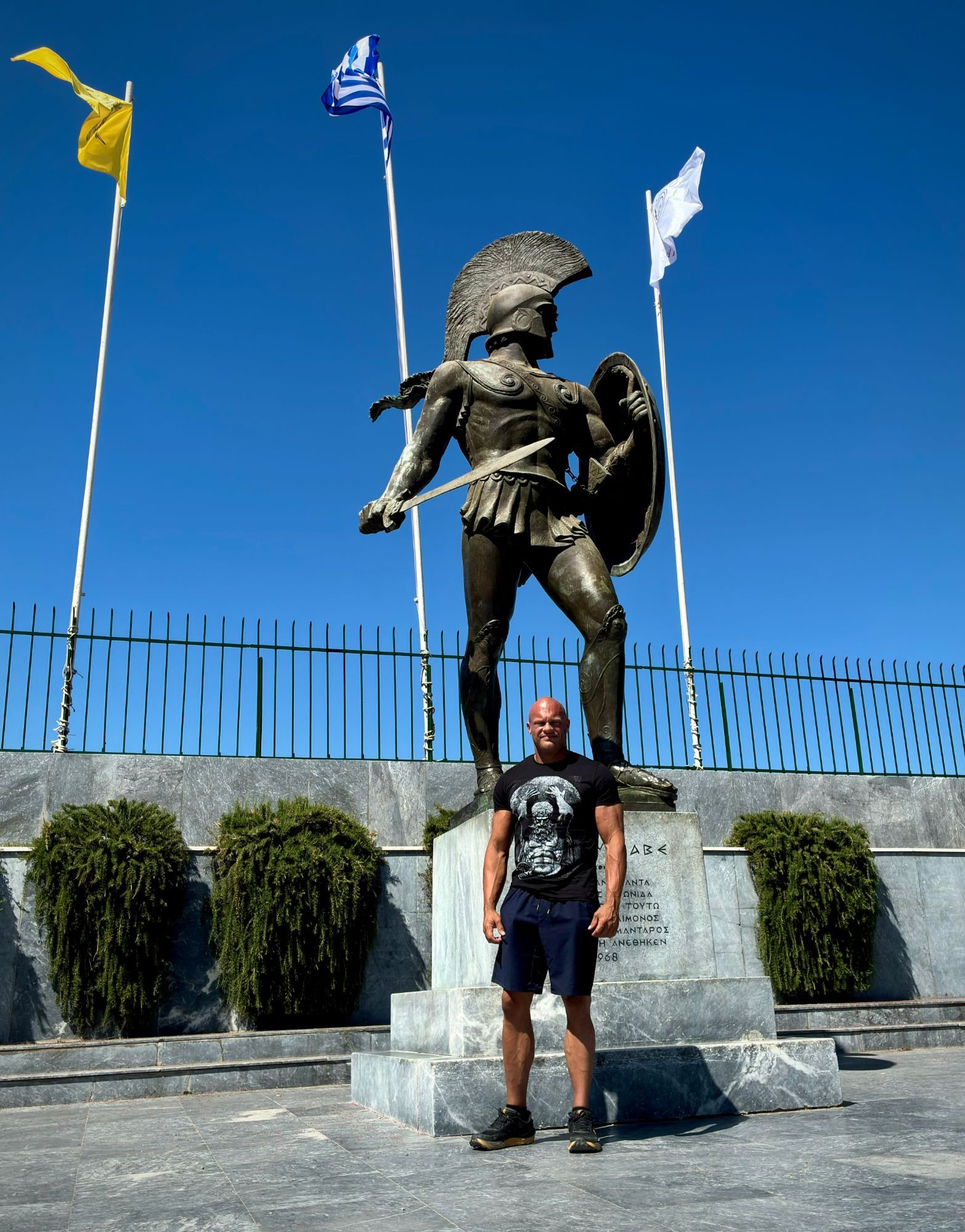
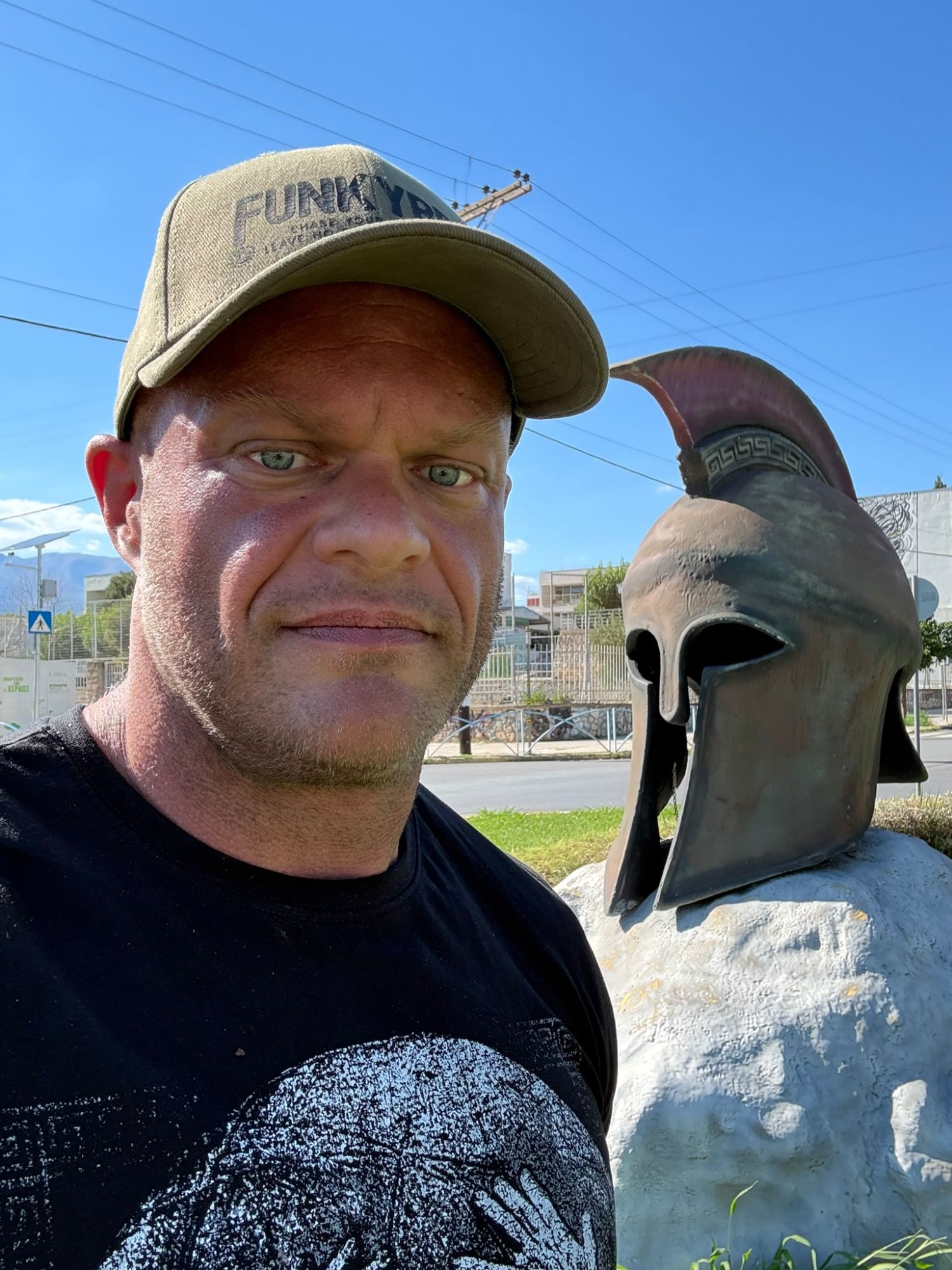
At the northern edge of the modern town stands the bronze statue of Leonidas, sword drawn and shield raised. The inscription on the plinth reads ΜΟΛΩΝ ΛΑΒΕ – "come and take them", the reply Leonidas is said to have given when the Persians demanded the Spartans lay down their arms at Thermopylae – and dates the statue to 1968.
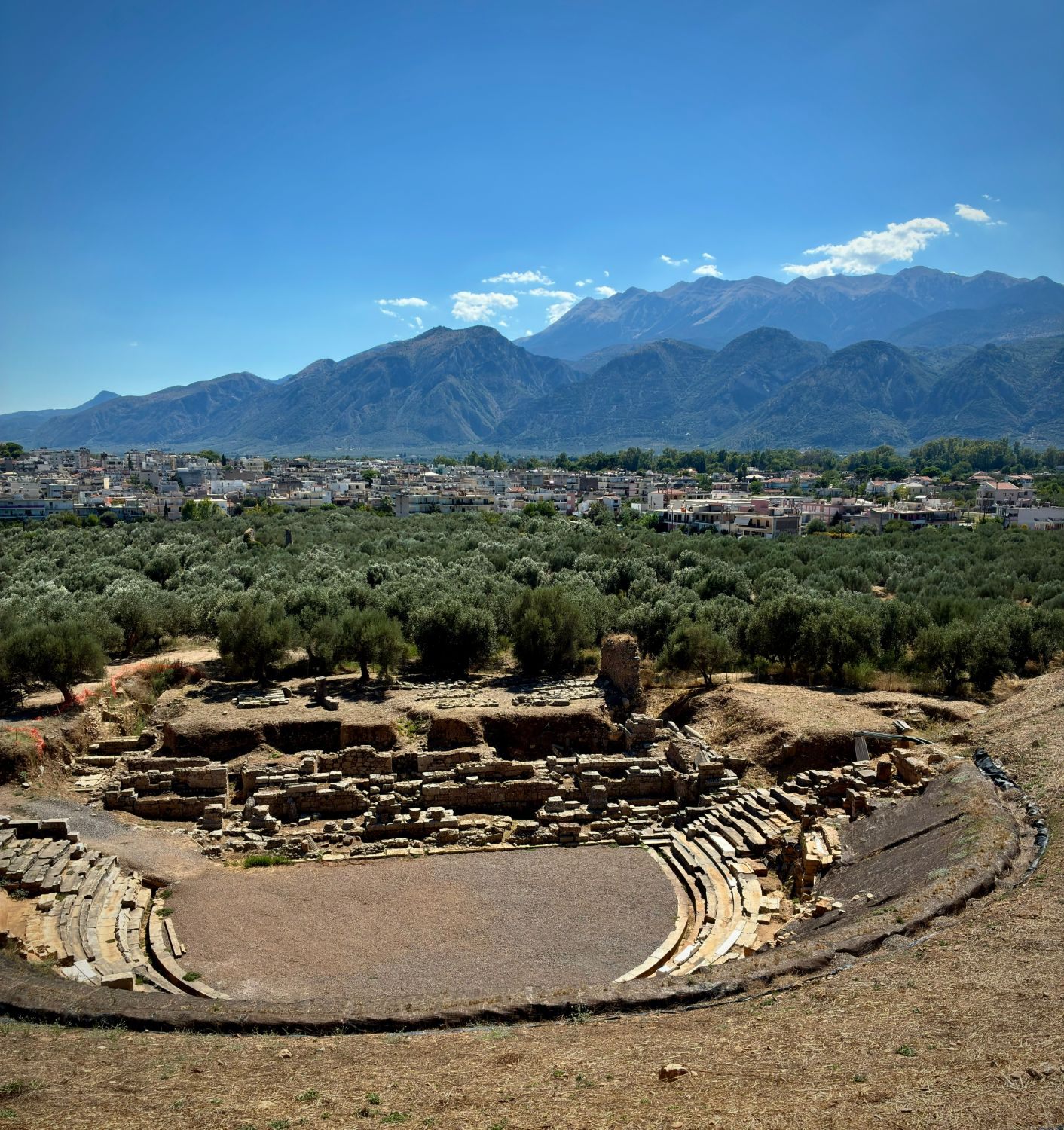
From the statue we walked on to the ruins of ancient Sparta. Behind the statue lie the remains of the ancient acropolis and a large theatre from the Roman period, set among olive groves. From the top of the theatre you look straight across the modern town to the wall of the Taygetos mountains – the range we would be climbing the very next day.
To be honest, Sparta wasn't the most charming town on our trip, and we wouldn't spend long here if history isn't your thing. There isn't a great deal left of the ancient city. But if you're interested in ancient Sparta – or you've seen 300 – it's definitely worth stopping for the Leonidas statue and the ruins. The site is interesting, and the view towards Taygetos makes it a beautiful stop.
Up into the mountains
After Sparta we drove up into the mountains to Ilaeira Mountain Resort in the village of Toriza, around 15 km from Sparta, our base for the next two nights. The hotel sits beautifully in the mountains, and we chose it mainly for its location as a base for the Taygetos hike the next day – just nine minutes' drive from the start of the mountain road.
We had also picked it because our room came with its own kitchen, but the kitchen equipment was more limited than we'd expected. The location, though, was excellent.
6 September – Hiking Mount Taygetos
The big day: 15 km and 1,410 metres of climbing to Profitis Ilias, the highest peak in the Peloponnese.
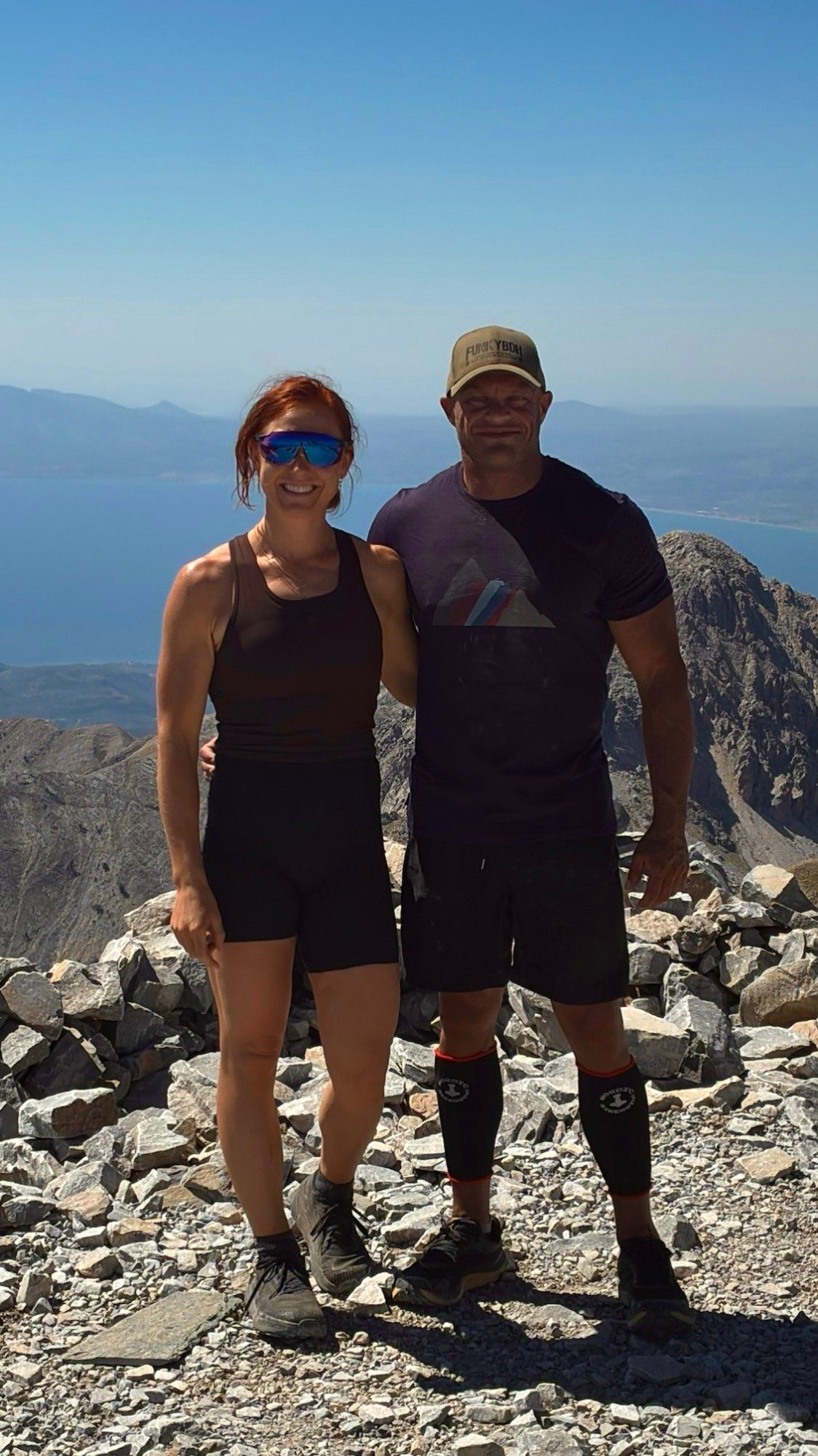
We hiked from Manganiari Spring via the Taygetos Refuge to the summit of Profitis Ilias, around 2,405 metres, crowned by a small stone chapel.
Starting at the spring turned out to be a mistake. We thought you couldn't drive to the refuge – but the road was a good gravel track, and the car park up there was full of ordinary small cars. Starting at the refuge would have saved us around 7.3 km. With Kristine fighting a stomach bug and the upper mountain exposed to the September sun, our day lasted more than ten hours. Reaching the summit, with the whole Peloponnese and the sea spread out below us, was still one of the highlights of the trip.
Read the full story, our recommended route and practical tips in our Mount Taygetos hiking guide.
7 September – A flat tyre, a mountain road and Kalamata
Roadside assistance, a dramatic drive over Taygetos, a great apartment and an evening at the castle and harbour.
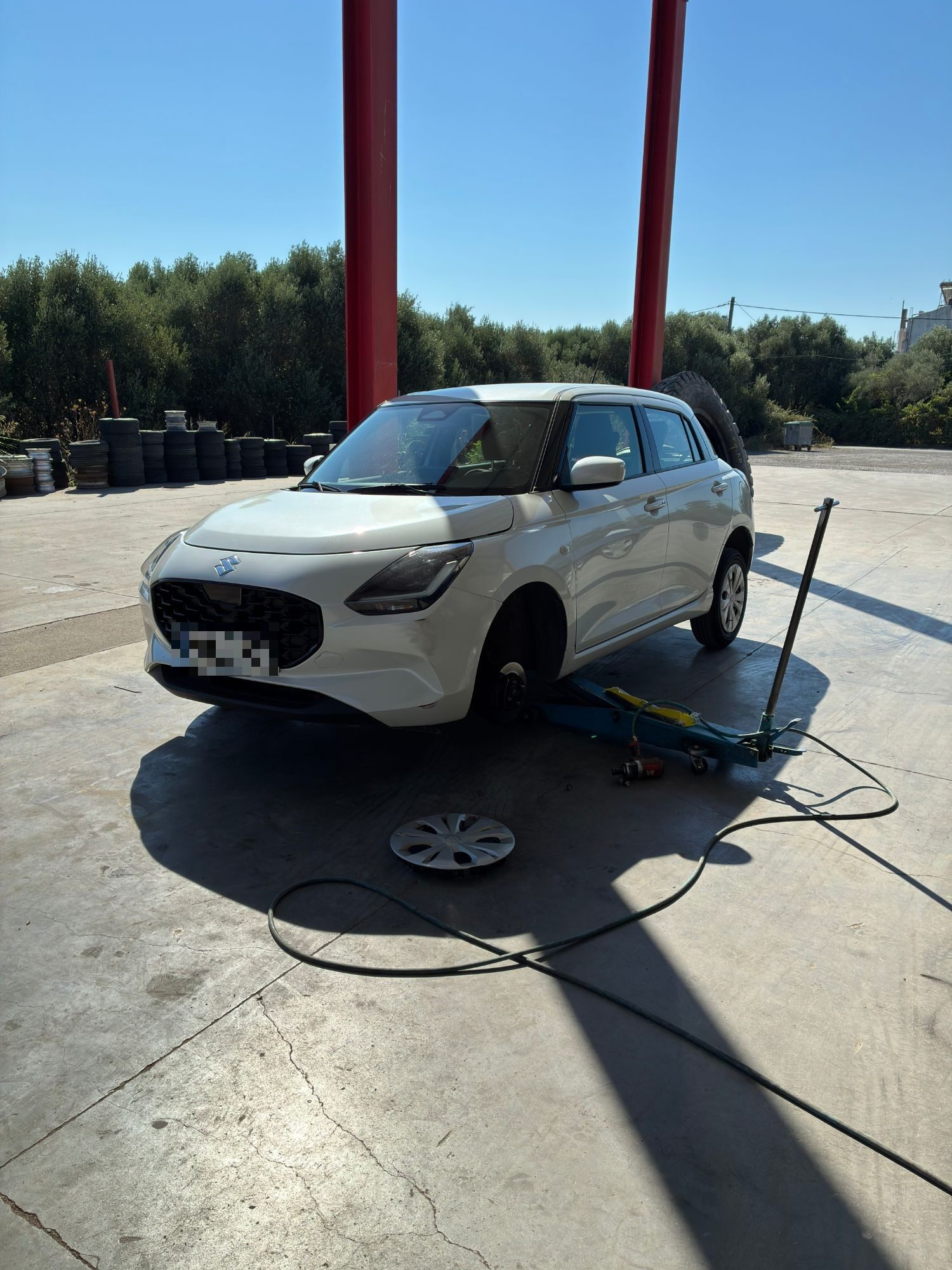
The day started with a flat tyre. We called Enterprise Road Assistance, and about 20 minutes later a tow truck picked up the car and took it – and us – down to a mechanic in Sparta. The assistance itself was free; the repair of two tyres cost us around €40. Annoying, but impressively quick.
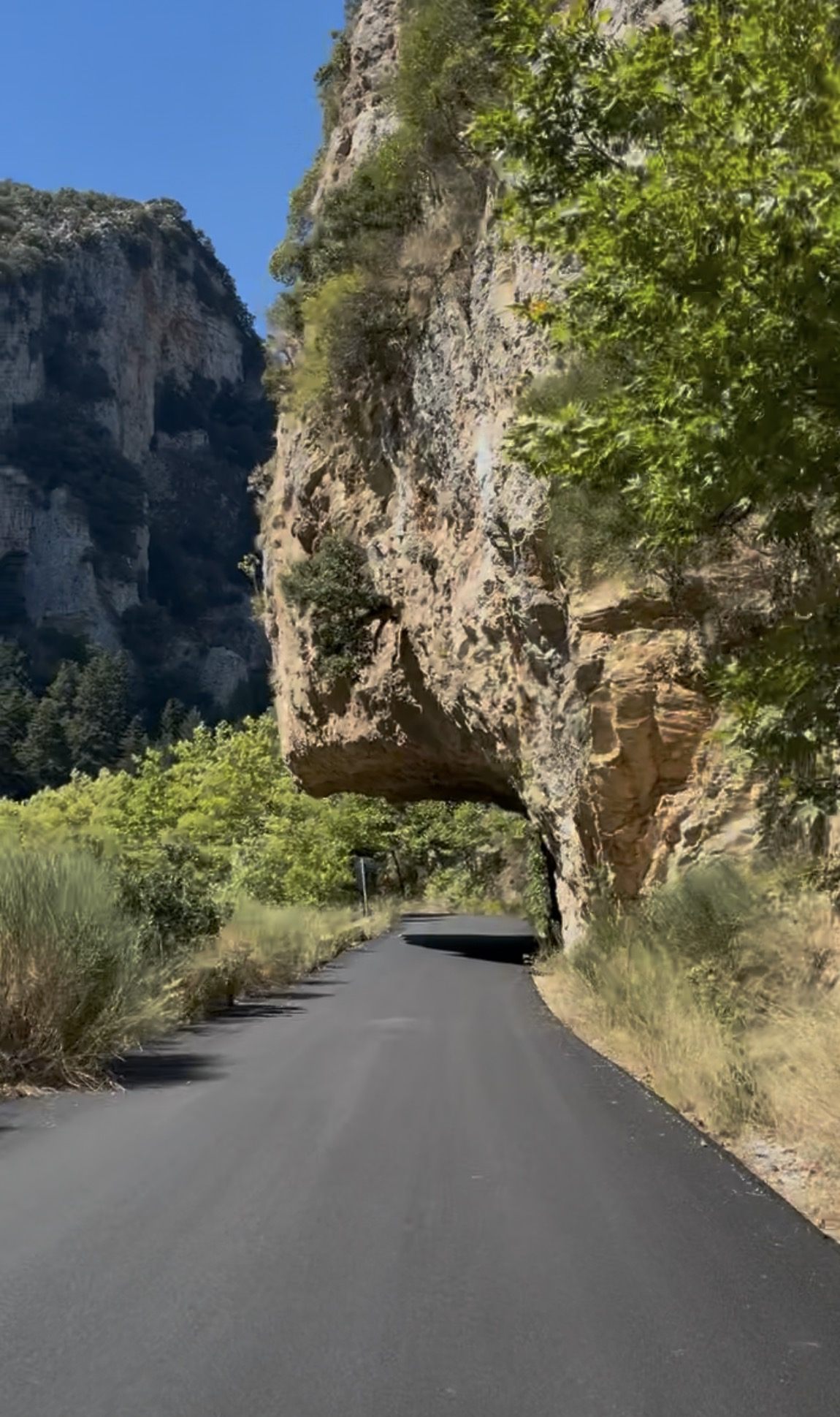
From Sparta we took the mountain road over Taygetos – National Road 82 through the Langada Pass – a beautiful, winding drive of around an hour or a little more. After a stop at the supermarket, we checked in at Eleon Apartments, just north of Kalamata: spacious, with a really good kitchen, and exactly what we needed after the mountains.
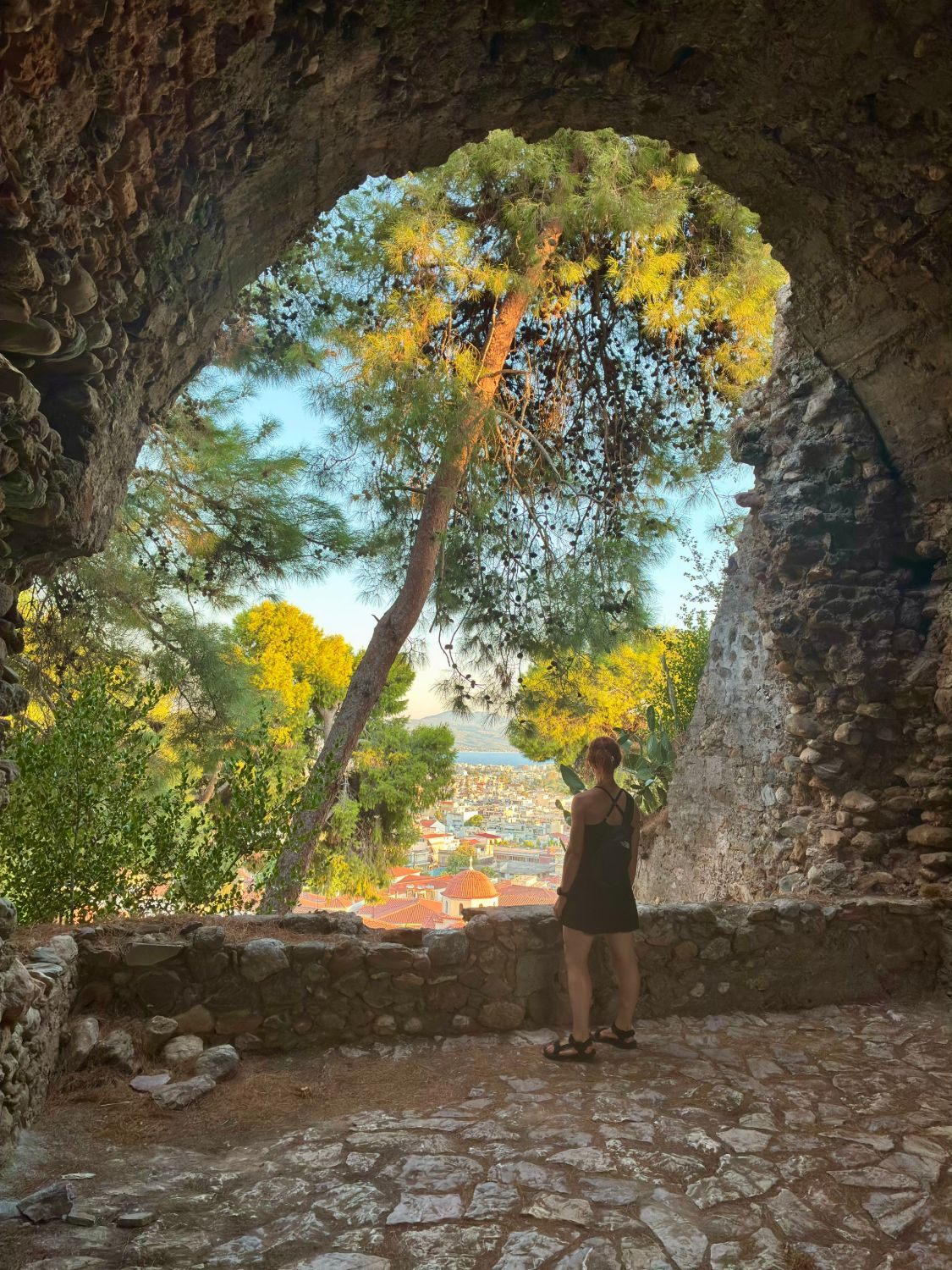
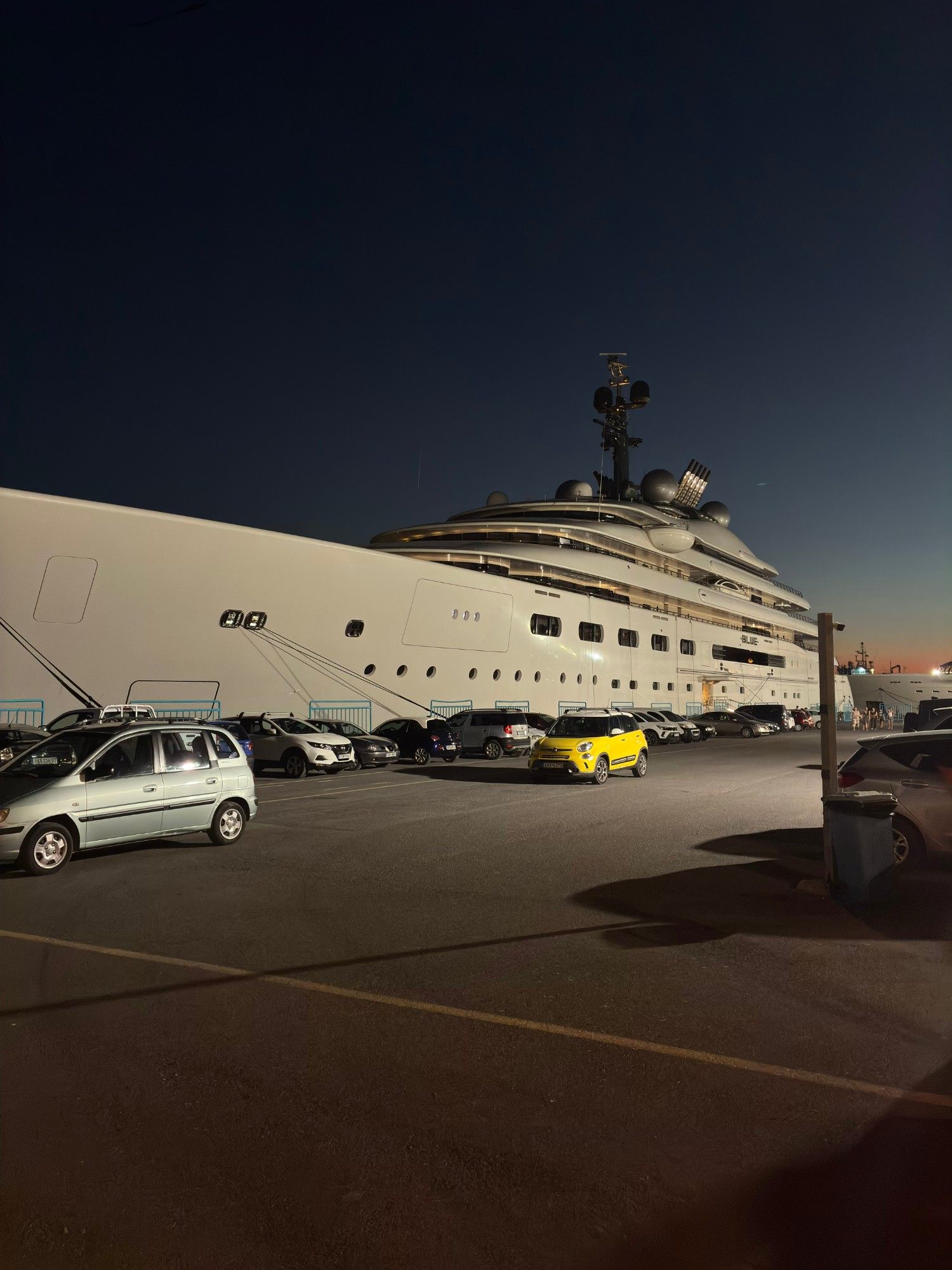
In the evening we visited Kalamata Castle – small, but with a great view over the city – and walked along the harbour promenade, where two huge superyachts were moored. Kalamata turned out to be bigger and livelier than we'd expected, so one night was enough for us. But as a base between Taygetos and Polylimnio, it worked perfectly.
Read more in our Kalamata guide.
8 September – Polylimnio Waterfalls and on to Pylos
A morning of scrambling and swimming at the Polylimnio Waterfalls, then west to Pylos.
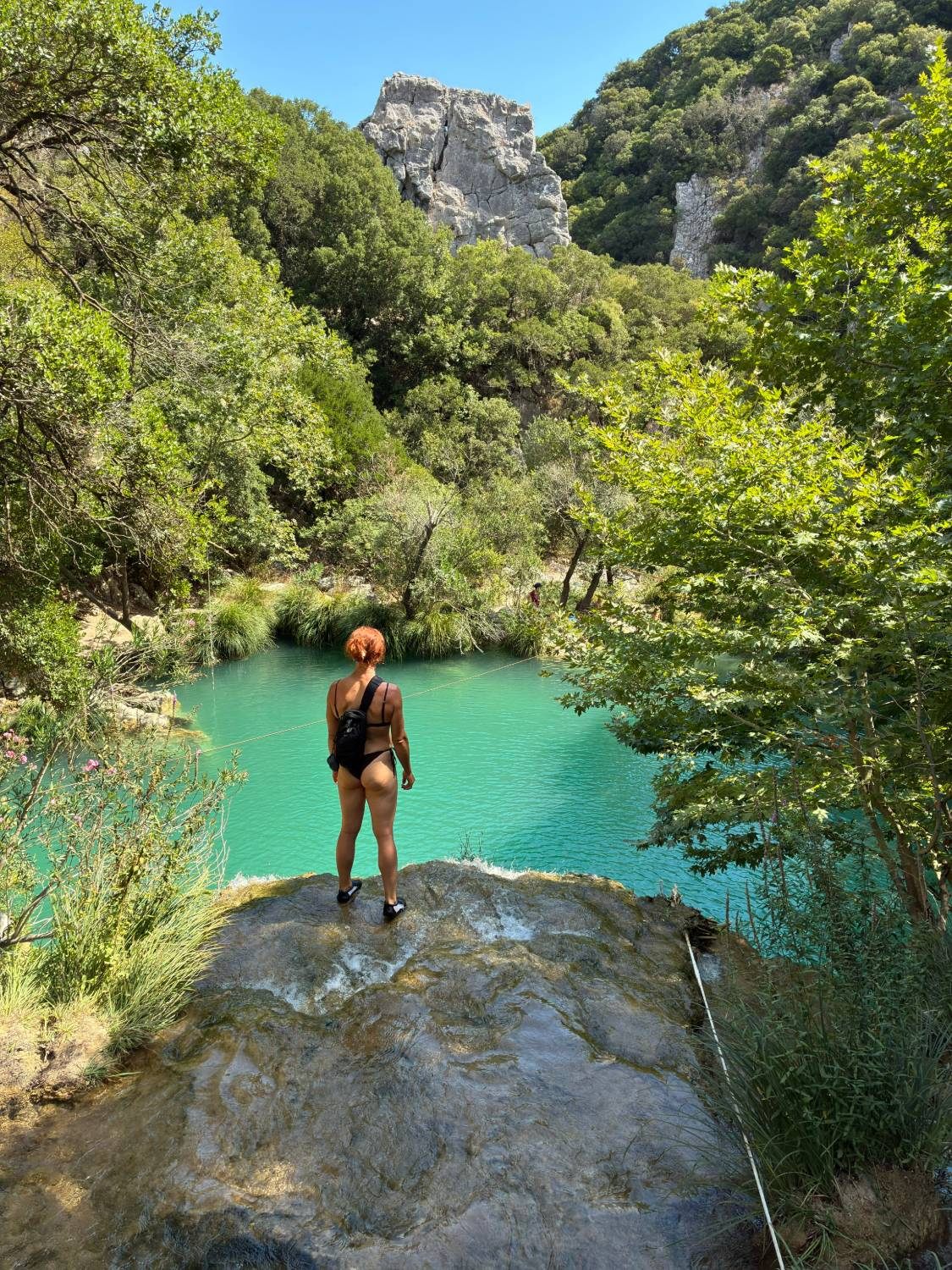
Half an hour from Kalamata, near the village of Charavgi, lies Polylimnio – "many lakes" – a chain of waterfalls and pools in a ravine. We parked at Kadi Café around 9am and walked down the steep path to the stream.
Many visitors seemed to stop at the first big waterfall by Lake Kadoula. We kept going: over rocks, across the stream, up ropes and metal grips, past Kadi Waterfall and its zipline, and on through damp forest to a small final pool where we were completely alone. The hike itself was under 3 km, but with all the swimming we stayed until 2:30pm.
Read the full story and what to wear in our Polylimnio Waterfalls guide.
Arriving in Pylos
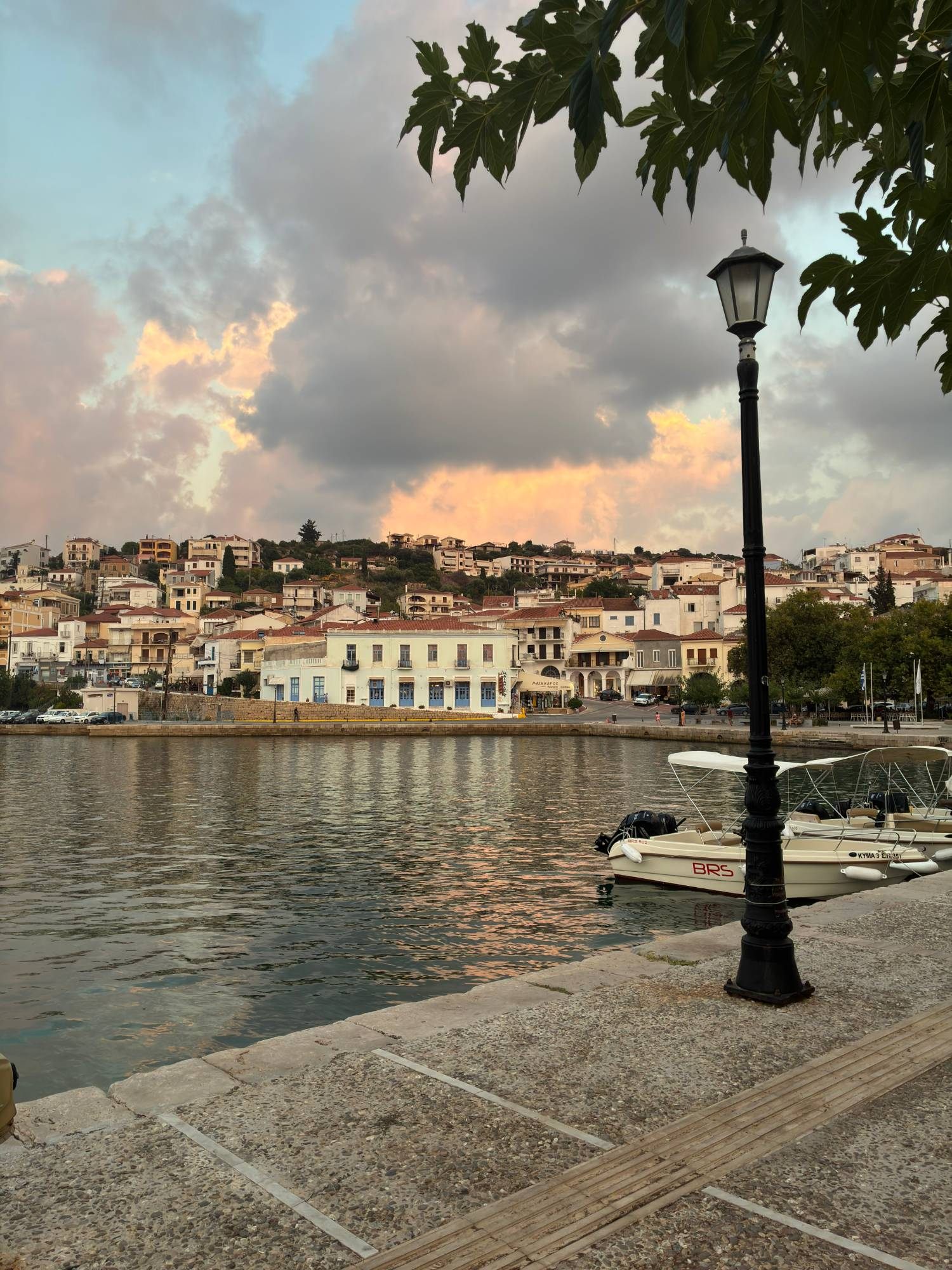
We left the waterfalls around 2–3pm and drove on to the coast. In Pylos we stayed at Hotel Miramare, a small, cosy hotel right on the water – fridge but no kitchen, breakfast included and a fairly low price. Perfect as a base for the last days of the trip.
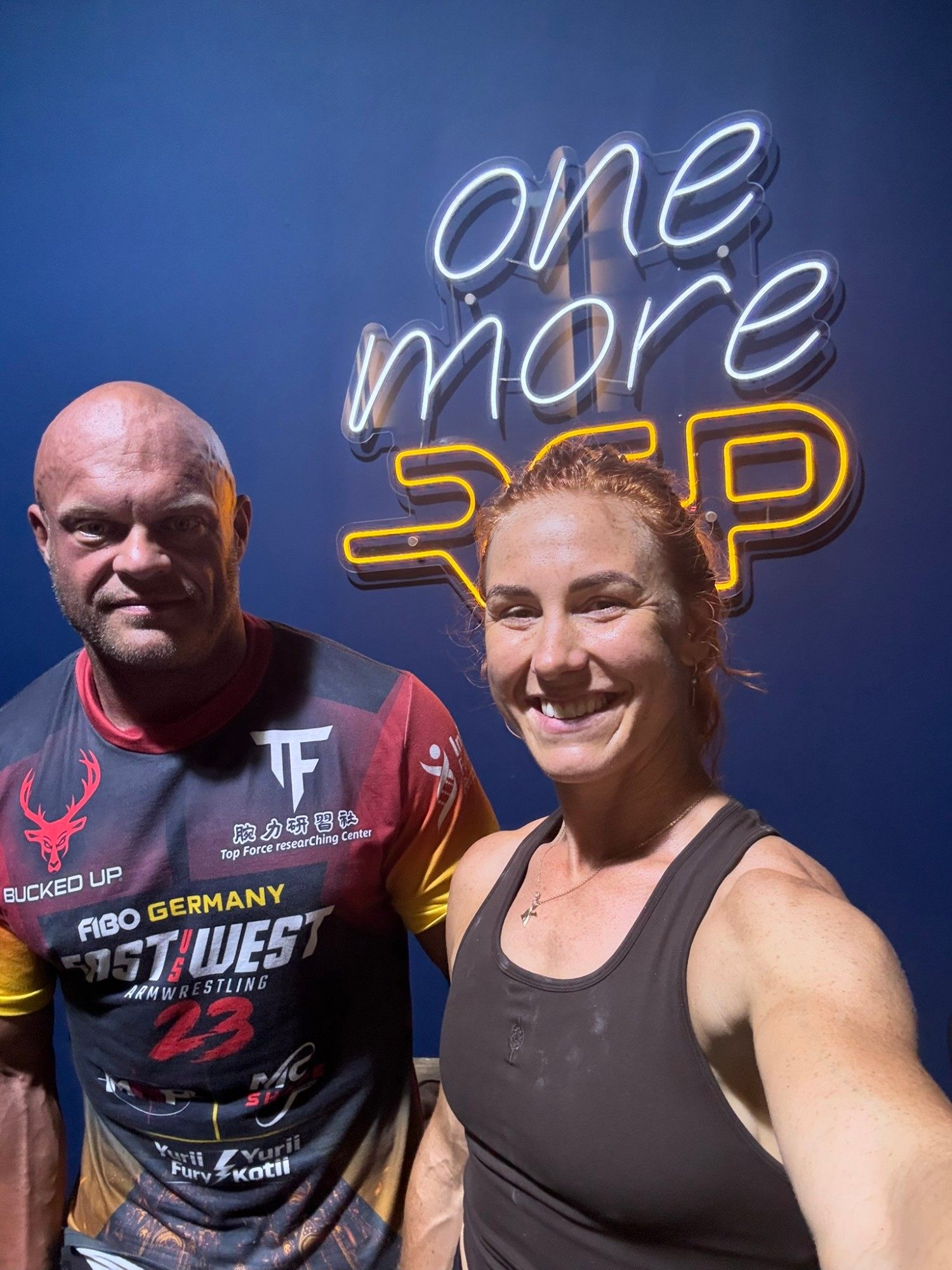
Pylos turned out to be one of the towns that suited us best: small, relaxed and beautifully set on Navarino Bay. We didn't do much sightseeing – we did some shopping, relaxed, and in the evening trained at a small local gym, One More Rep (around €12 each). Then an early night, because the next morning we had an early start.
More in our Pylos guide.
9 September – Old Navarino Castle, Nestor's Cave, Voidokilia and Methoni
A morning loop of castle, cave, beach and lagoon – and an evening at a sea castle.
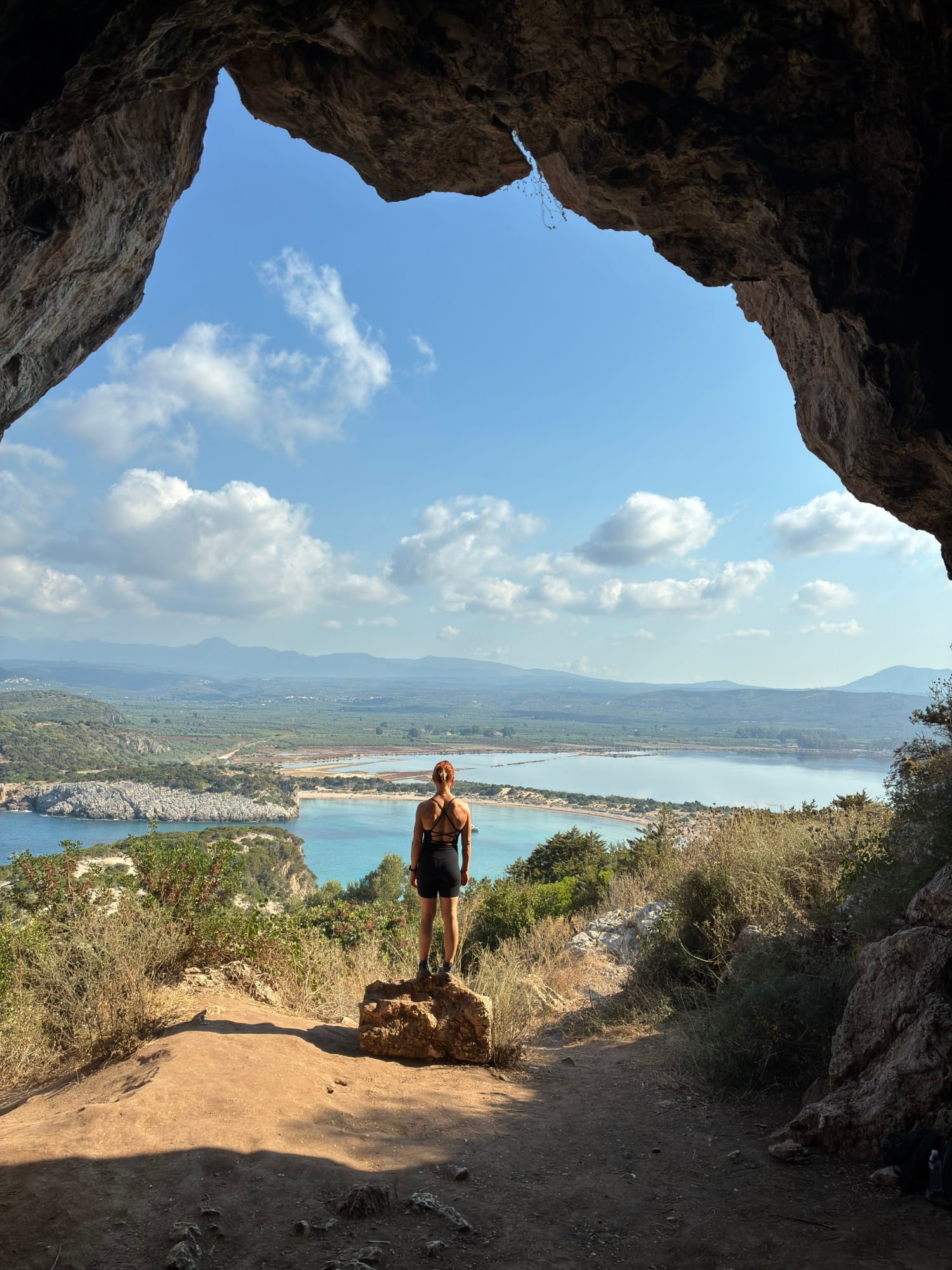
We drove 20 minutes from Pylos and started walking around 8am, while it was still quiet. The path climbed to Old Navarino Castle (Palaiokastro), a raw, unpolished Frankish ruin from the late 13th century, with a stunning view over the omega-shaped bay of Voidokilia and Gialova Lagoon.
From there we went down to Nestor's Cave, linked by legend to King Nestor of Pylos – and the cave where Christopher Nolan filmed the Polyphemus scenes for The Odyssey. Then it was down to Voidokilia Beach for a swim in the clear, calm water, and back past the lagoon. Just over 3 km of walking, but we'd allow around three hours.
Note that both the castle and the cave are officially closed to visitors – read more, along with the full story, in Old Navarino Castle, Nestor's Cave & Voidokilia Beach.
Evening at Methoni Castle
After the hike we drove back to the hotel in Pylos, and later in the afternoon we headed to Methoni Castle – only about 12 minutes' drive south. You can park very close to the castle, which makes it an easy stop.
Methoni is a huge fortress on a peninsula jutting into the sea. The town flourished under Venetian rule from the early 13th century until the Ottomans took it in 1500, and much of the massive fortification dates from that era.
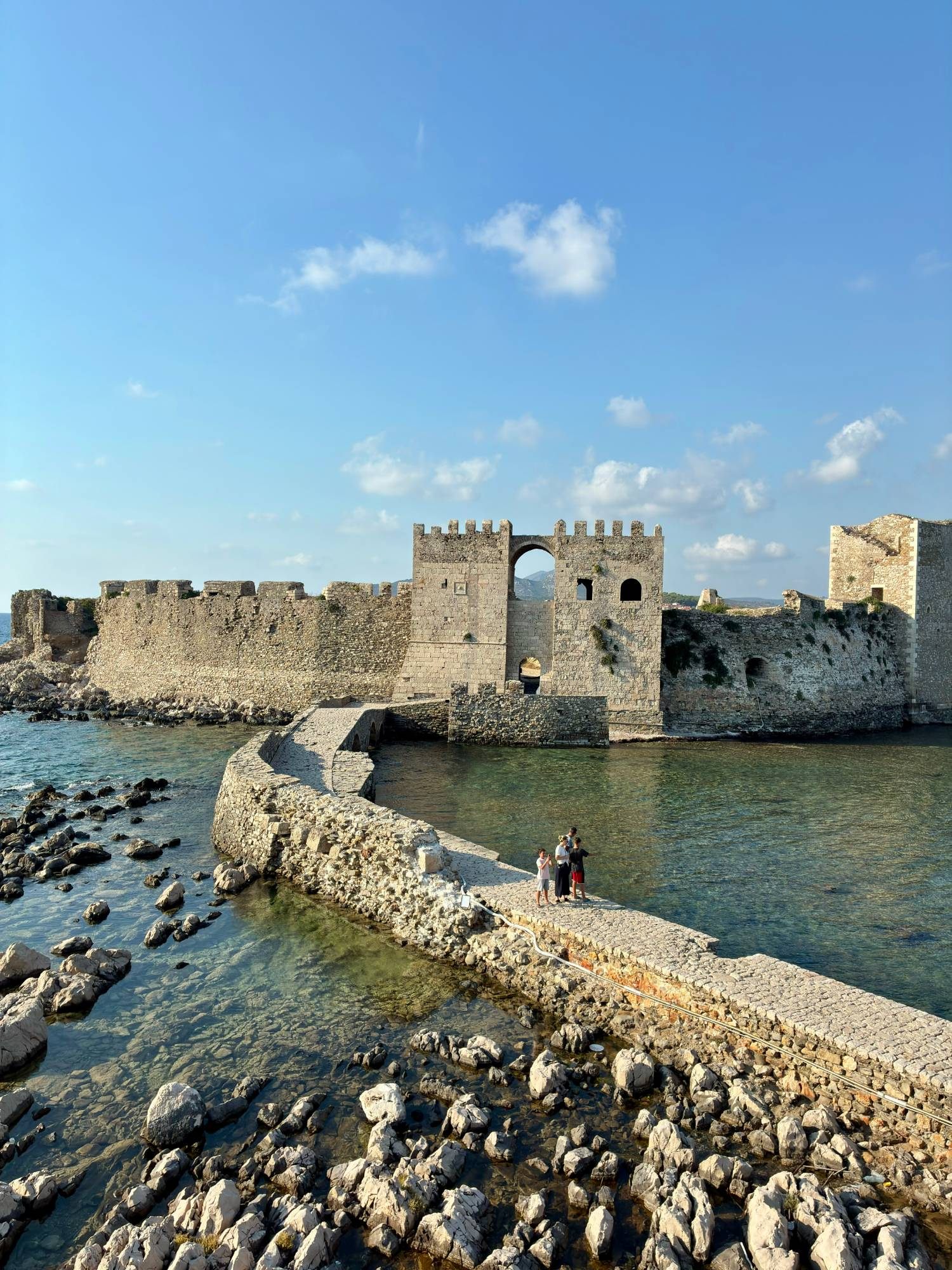
The site is large, and you can walk all the way through the fortress to its far end, where a stone causeway leads out to the Bourtzi – a small octagonal tower on a rocky islet, built by the Ottomans in the 16th century. It's Methoni's most iconic view, and the one thing we really wanted to see.
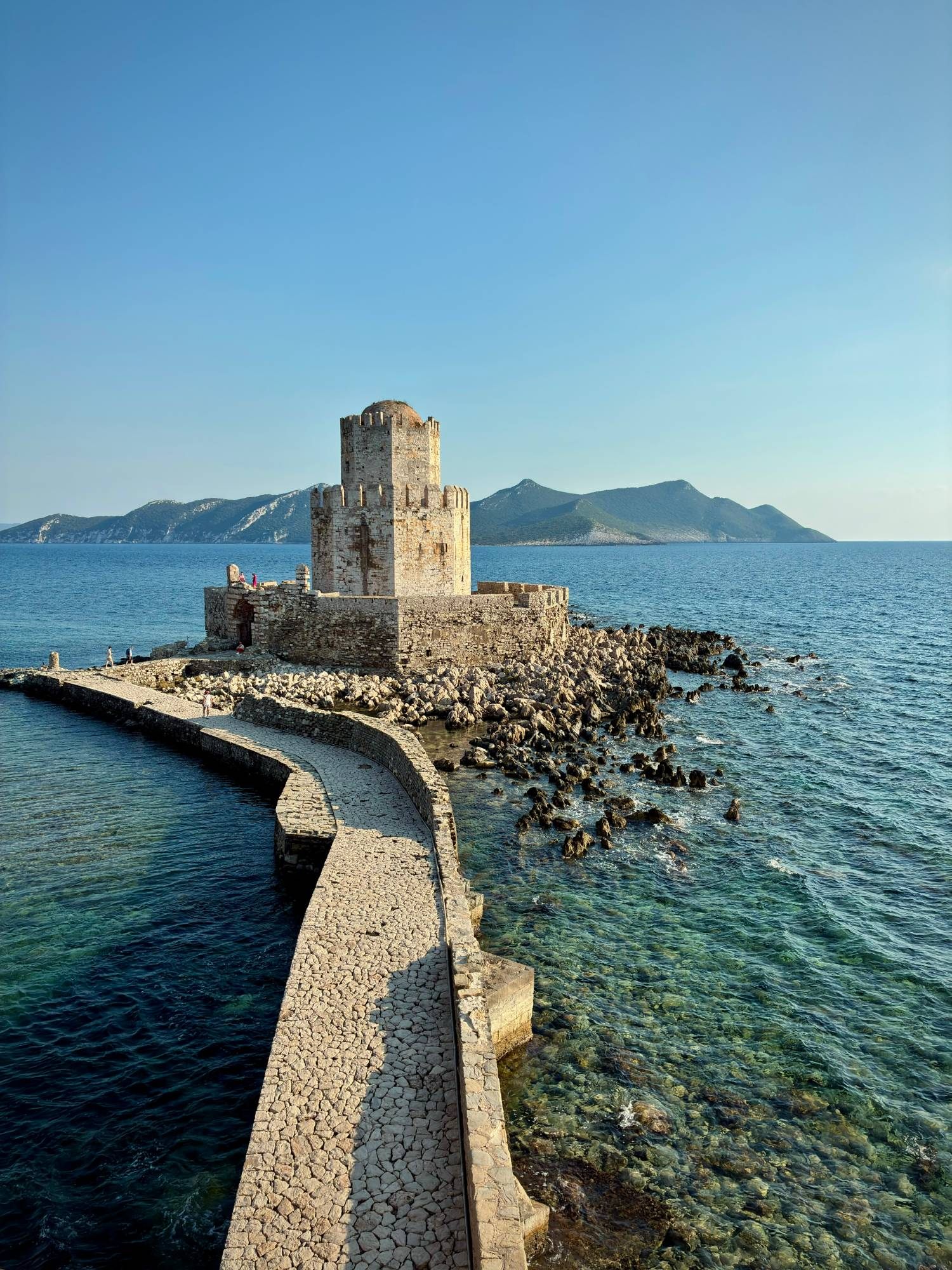
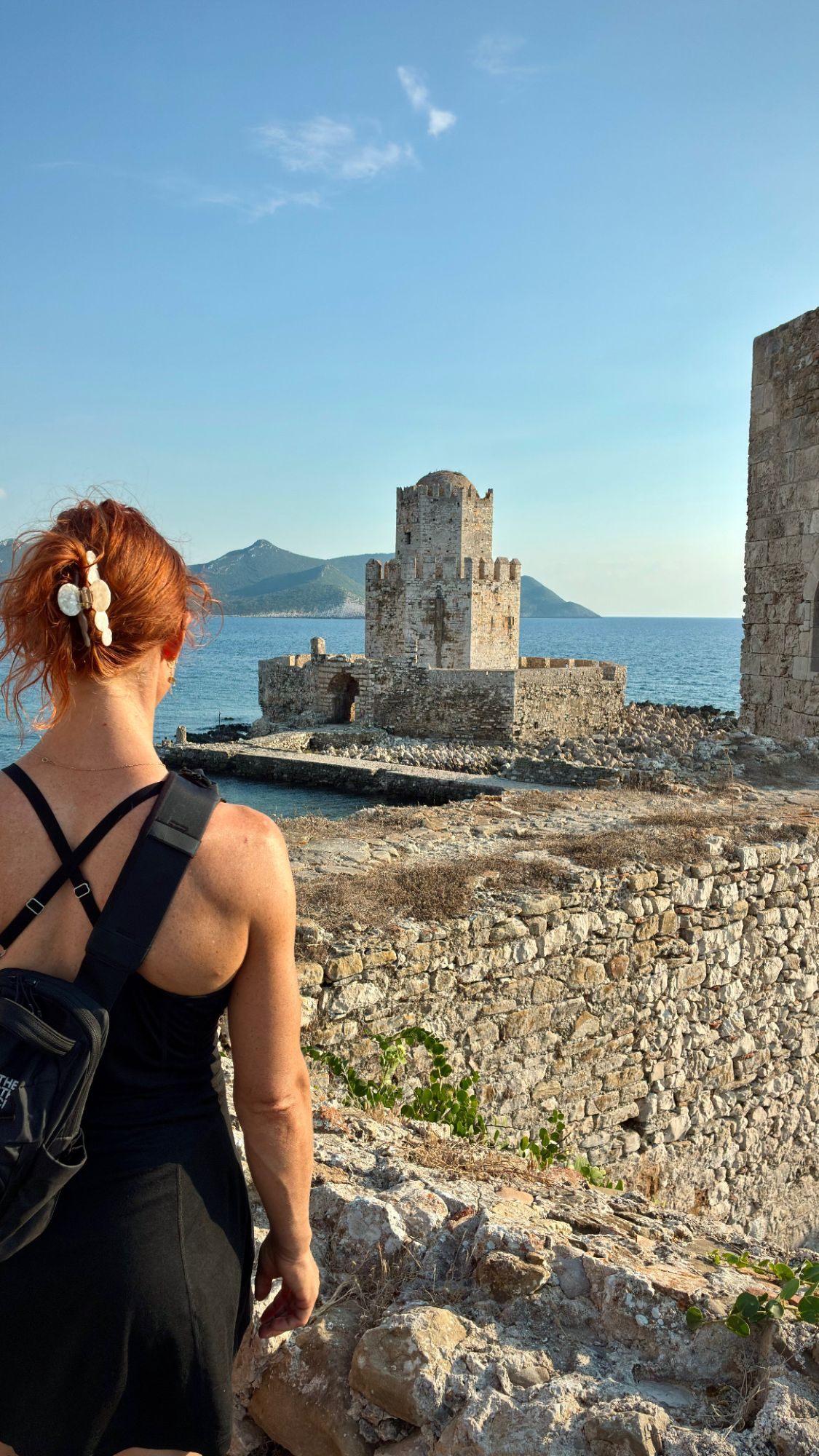
We spent about an hour and a half walking around, looking at the ruins and taking photos. The castle felt authentic and historically fascinating. It was a little busier than Old Navarino Castle and Nestor's Cave that morning – but far from crowded.
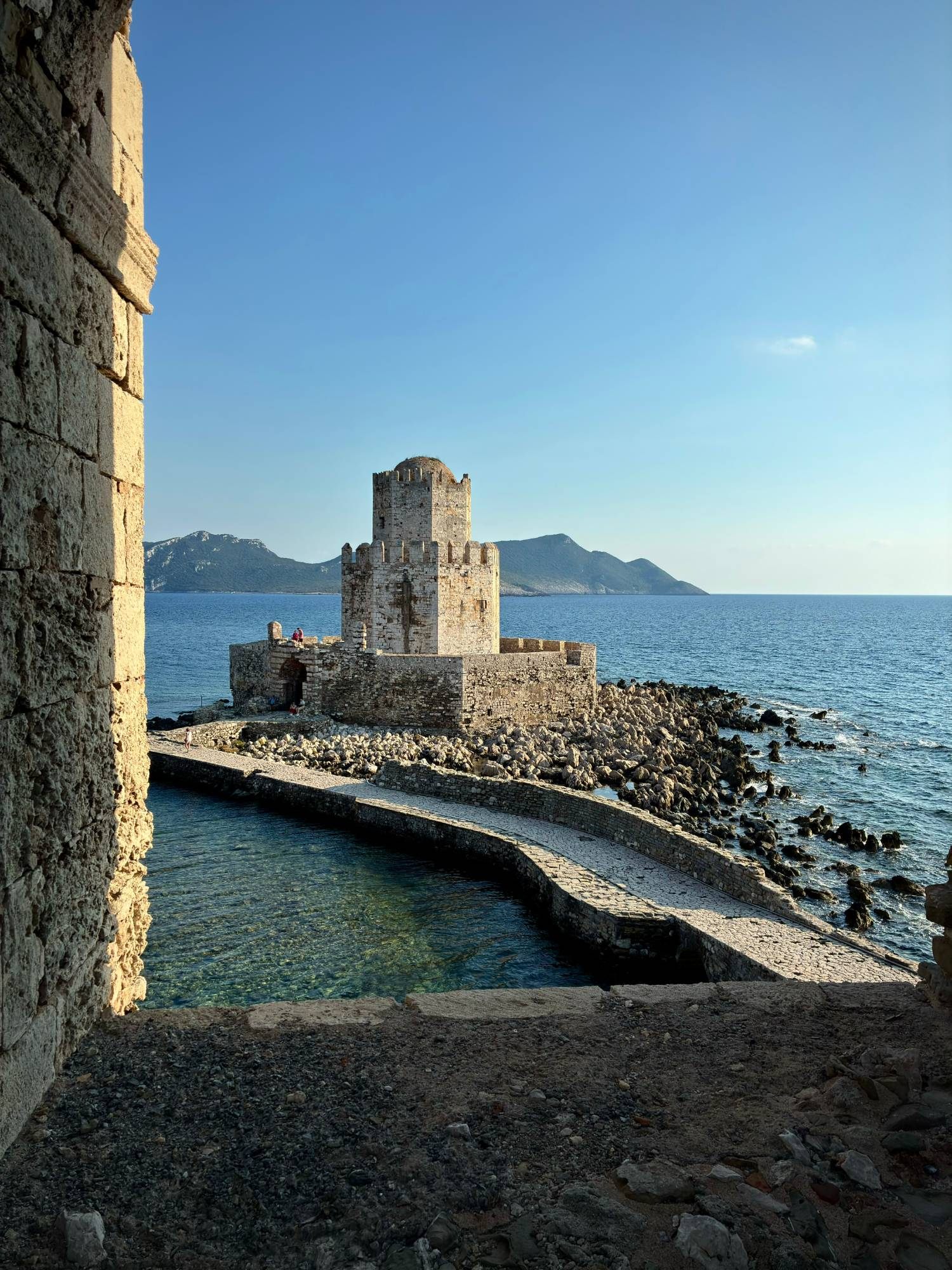
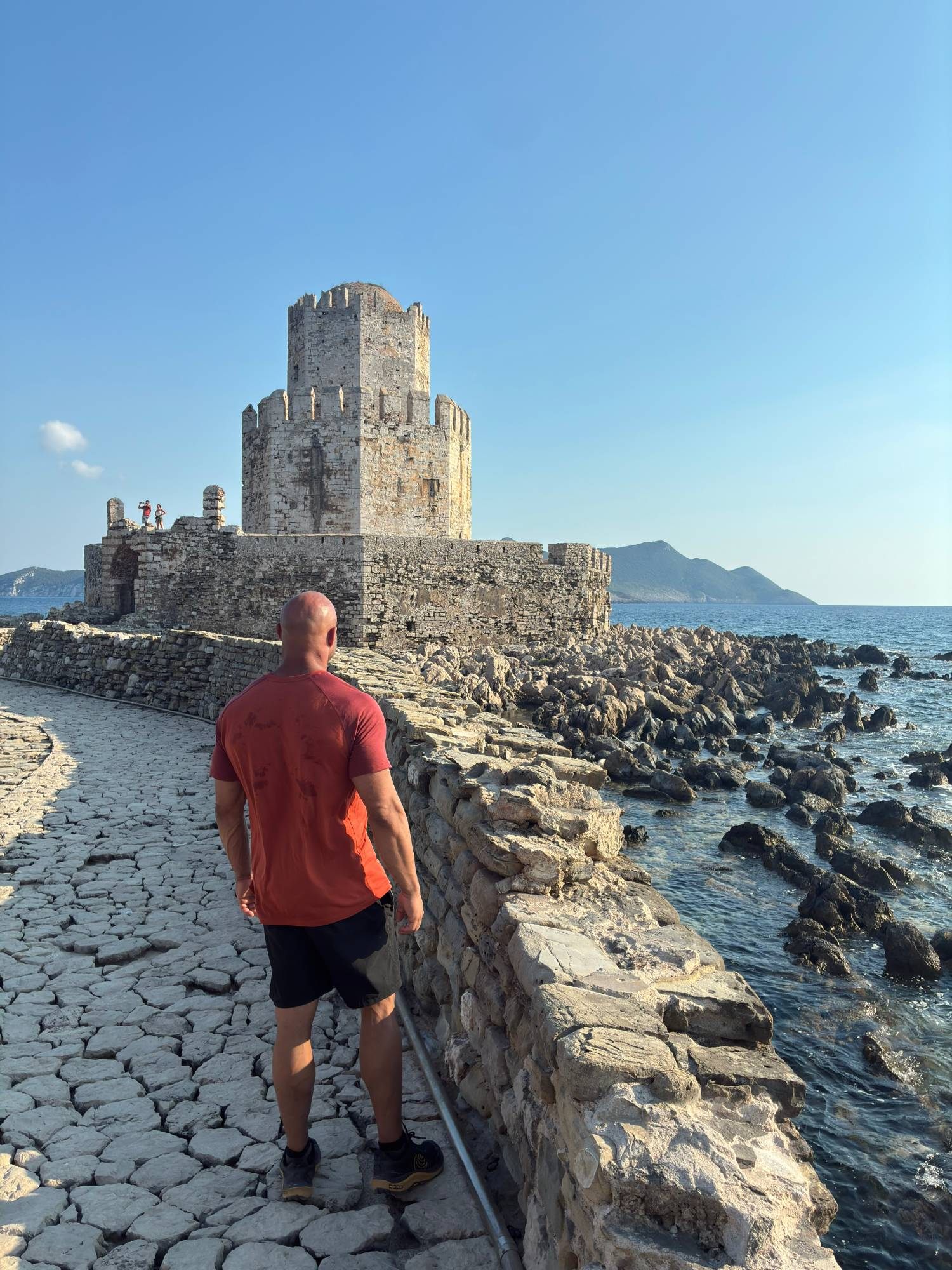
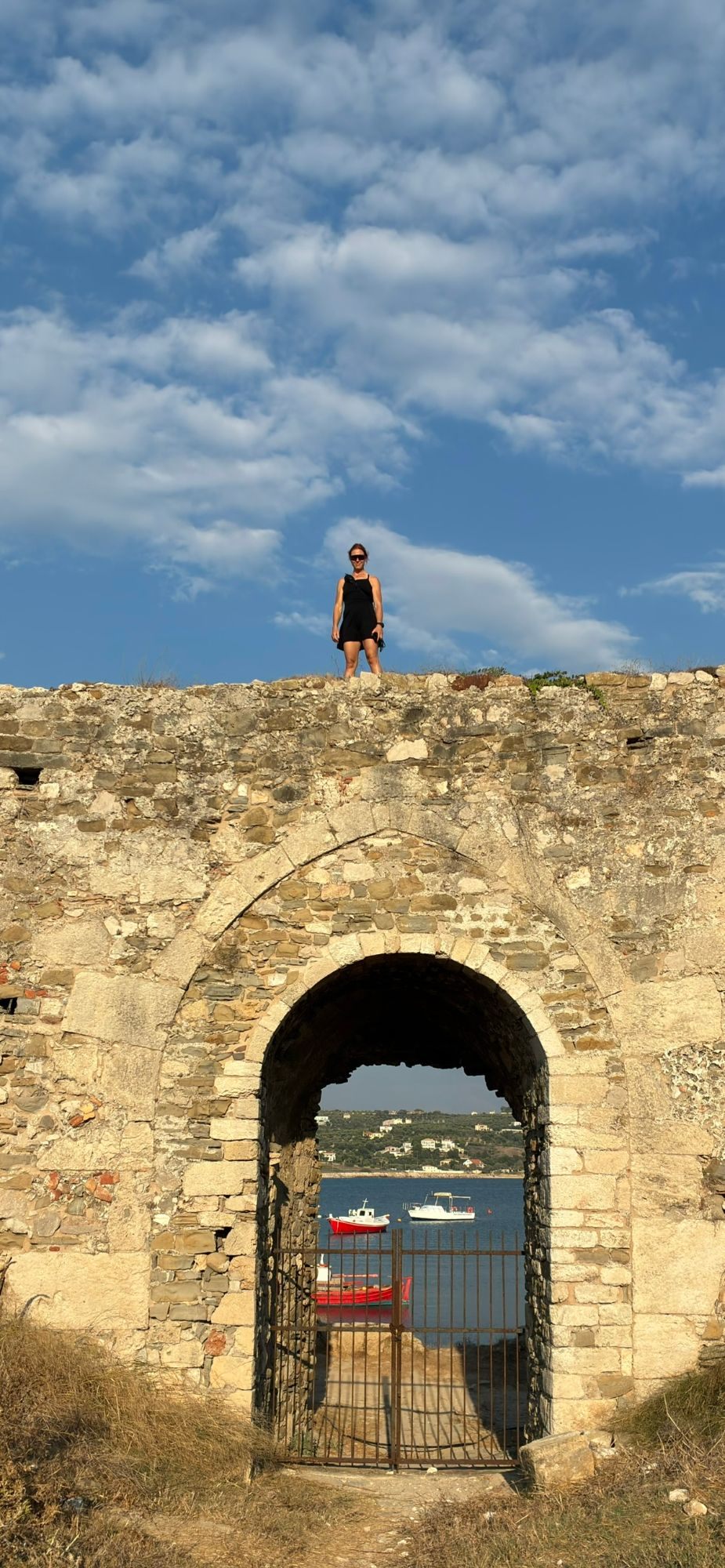
We arrived a little too early for the sunset. In our experience, about half an hour later would probably have given us even better light – so if you visit late in the day, it may be worth timing it around sunset.
Visiting Methoni Castle
Entry is €5 (€2.50 reduced) according to the Greek Ministry of Culture. Opening hours vary by season, and the site is closed on Tuesdays – check before you go, especially if you're planning a sunset visit.
For us, Methoni Castle was definitely worth it, and a beautiful end to our time in the south-western Peloponnese. Afterwards we drove back to Pylos and had dinner down by the water.
10 September – Back to Athens Airport
The long drive back and the flight home.
On our last day we got up, packed and drove from Pylos back to Athens Airport – around 310 km and roughly 3 hours 40 minutes on mostly good motorway, according to route planners.
There were no big sightseeing stops – it was mainly a travel day. After a long, full road trip, that felt like a fine and simple way to end it.
Training on the road
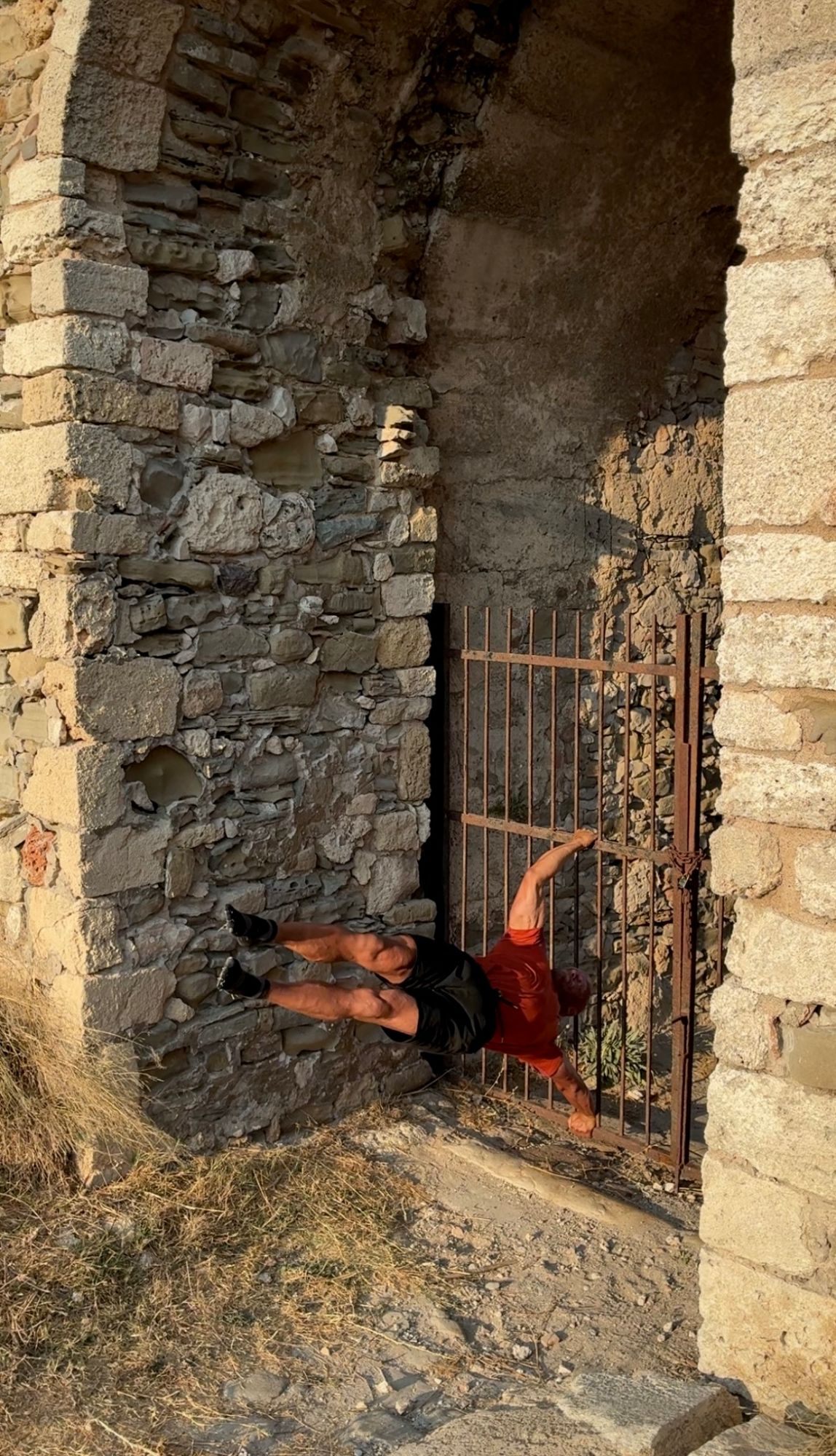
For us, a holiday is no reason to stop training – it just moves the gym. On this trip that meant a strongman session at Circus Experiment in Athens, a drop-in workout at One More Rep in Pylos, arm wrestling on the summit of Taygetos and a human flag on an iron gate at Methoni Castle.
Most towns of any size in Greece have a gym that takes drop-in visitors, and it's a great way to meet locals and break up the long driving days. Here's how it looked:
Where we stayed
| Dates | Place | Where we stayed | Booked via |
|---|---|---|---|
| 2–4 Sept 2 nights | Athens | Romantic Studio under Acropolis | Hotels.com |
| 4–5 Sept 1 night | Hydra | Haven – hillside, approx. 1 km from the harbour | Booking.com |
| 5–7 Sept 2 nights | Toriza (near Sparta) | Ilaeira Mountain Resort – great location for Taygetos | Hotels.com |
| 7–8 Sept 1 night | Kalamata | Eleon Apartments | Booking.com |
| 8–10 Sept 2 nights | Pylos | Hotel Miramare – small hotel on the water, breakfast included | Booking.com |
What we'd do differently
- Drive to the Taygetos Refuge instead of starting at Manganiari Spring – it saves around 7.3 km of hiking.
- Start early, everywhere. Our best mornings – Areopagus Hill at 6am, Navarino at 8am, Polylimnio at 9am – were quiet and cool. September was still hot.
- Don't count on street parking in central Athens. Go straight for an underground car park.
- Save your rental company's roadside assistance number. When we got a flat tyre, help arrived in about 20 minutes.
- Pack shoes that can get wet. At Polylimnio, grip matters far more than waterproofing.
Practical information
Renting a car
A car is essential for this route – public transport to places like the Taygetos trailheads, Polylimnio and the coast around Pylos is limited. We had the car from the start in Athens, parked it at Syngrou-Fix Metro Underground Parking near our studio, and left it at Karaiskaki Square in Piraeus while we were on Hydra.
We rented a small car (a Suzuki Swift) through Enterprise. It handled everything on this route, including the mountain roads and the gravel road up to the Taygetos Refuge. When we got a flat tyre, Enterprise Road Assistance arrived within about 20 minutes and the assistance was free – we only paid around €40 for the tyre repairs.
In Athens itself you don't need the car: Bolt and Uber both worked well for us.
Tolls and fuel
The motorways from Athens towards Sparta, Kalamata and Pylos have toll stations, so budget for tolls on top of fuel.
When to go
We travelled in early September: warm enough to swim everywhere, but still hot on the exposed hikes. Starting early in the day made a big difference.
What the trip cost us
We tracked every expense for the two of us. Our total for the whole trip came to DKK 16,444 for two – that's DKK 8,222 (about €1,100) per person, all in.
That includes everything on the ground: accommodation, the rental car, fuel, tolls, parking (including airport parking at home), ferries, entrance fees, food, drinks, cafés, groceries and gym drop-ins. The only thing not included is the flights to and from Greece, since those depend entirely on where you're travelling from.
| Expense (for two) | DKK | ≈ EUR |
|---|---|---|
| Romantic Studio under Acropolis, Athens – 2 nights | 1,971 | €264 |
| Haven, Hydra – 1 night | 1,106 | €148 |
| Ilaeira Mountain Resort, Toriza – 2 nights | 1,820 | €244 |
| Eleon Apartments, Kalamata – 1 night | 650 | €87 |
| Hotel Miramare, Pylos – 2 nights (breakfast incl.) | 1,375 | €184 |
| Accommodation, 8 nights | 6,922 | €928 |
| Rental car (Enterprise, 9 days) | 1,982 | €266 |
| Ferries Piraeus – Hydra – Piraeus | 1,160 | €155 |
| Acropolis tickets | 448 | €60 |
| Everything else: food, drinks, groceries, fuel, tolls, parking, other entrance fees, gyms, tyre repair | 5,932 | €795 |
| Total for two (excl. flights) | 16,444 | ≈ €2,200 |
| Per person | 8,222 | ≈ €1,100 |
Euro amounts are converted at roughly DKK 7.46 per euro and rounded. Prices are from September 2026.
How we kept it affordable
- We cooked a lot ourselves. Studios and apartments with kitchens – plus supermarket shopping – kept our food costs down.
- We stayed slightly outside the centre. On Hydra, staying up the hill was cheaper than by the harbour.
- The best experiences were free. Areopagus Hill, the Taygetos hike, Polylimnio and Voidokilia cost nothing but fuel.
Accommodation averaged around DKK 865 (≈ €116) per night for the two of us.
Book your trip
Final thoughts
Looking back, the moments we remember most aren't the big-ticket sights. They're Areopagus Hill at dawn with no one else around, the swimming spot on Hydra we found because we kept walking, the summit of Taygetos after a much longer day than planned, the empty pool at the far end of Polylimnio, and standing inside Nestor's Cave at eight in the morning, and the Bourtzi at Methoni glowing in the evening light.
The Peloponnese rewards going a little further than the obvious stop. That's what this road trip taught us – and it's why we'd do it again.