Some hikes are about distance. This one is about how much you can fit into three kilometres. In one morning near Pylos, we climbed to a 13th-century fortress, looked down on one of the most famous beaches in Greece, stood inside the cave where Christopher Nolan filmed Polyphemus for The Odyssey, swam at Voidokilia and walked back past a lagoon full of birds.
It was 9 September, near the end of our Peloponnese road trip, and one of the mornings we talk about most.
Check before you go: access to the castle and the cave
Old Navarino Castle is officially closed to visitors because of the danger of falling stonework – a sign on site says so, even though there's no fence or guard. Nestor's Cave is also not officially open, and the area around it is considered hazardous because of falling rocks.
In this article we describe what we did in September 2026, including walking among the ruins and entering the cave. That's our experience – not a recommendation to ignore the signs. Access rules can change, so check current local guidance before you go. Voidokilia Beach and the lagoon are open, and both the castle and the cave entrance can be seen from outside.
Our hike in numbers
Recorded on our own hike, September 2026, following the AllTrails route "Old Navarino Castle". At the time, AllTrails listed it as a moderate loop of about 3.2 km with around 151 m of elevation gain.
From Pylos to the trailhead
We were based in Pylos, and the drive took about 20 minutes. We headed for the southern side of the area between Voidokilia and Gialova Lagoon, where the last stretch turns into a small gravel road. At the end of it is the parking area where we left the car.
We started walking around 8am – and it was a great decision. There were hardly any people, it was calm and cool, and the morning light over the bay was beautiful.
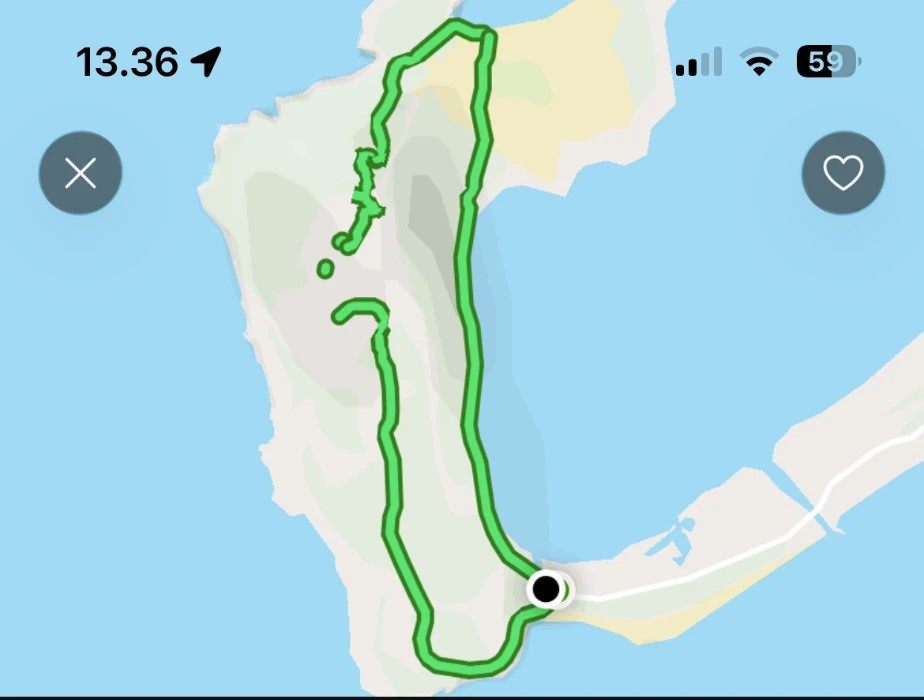
The hike up to Old Navarino Castle
From the parking area, the path first curves round to the left and then starts to climb. It's not a long hike, but the first part is clearly uphill.
It's a beautiful ascent. With every few minutes the view opens up a little more – the lagoon, the bay, the sea – and you get that feeling of being on your way up to something.
Exploring Old Navarino Castle
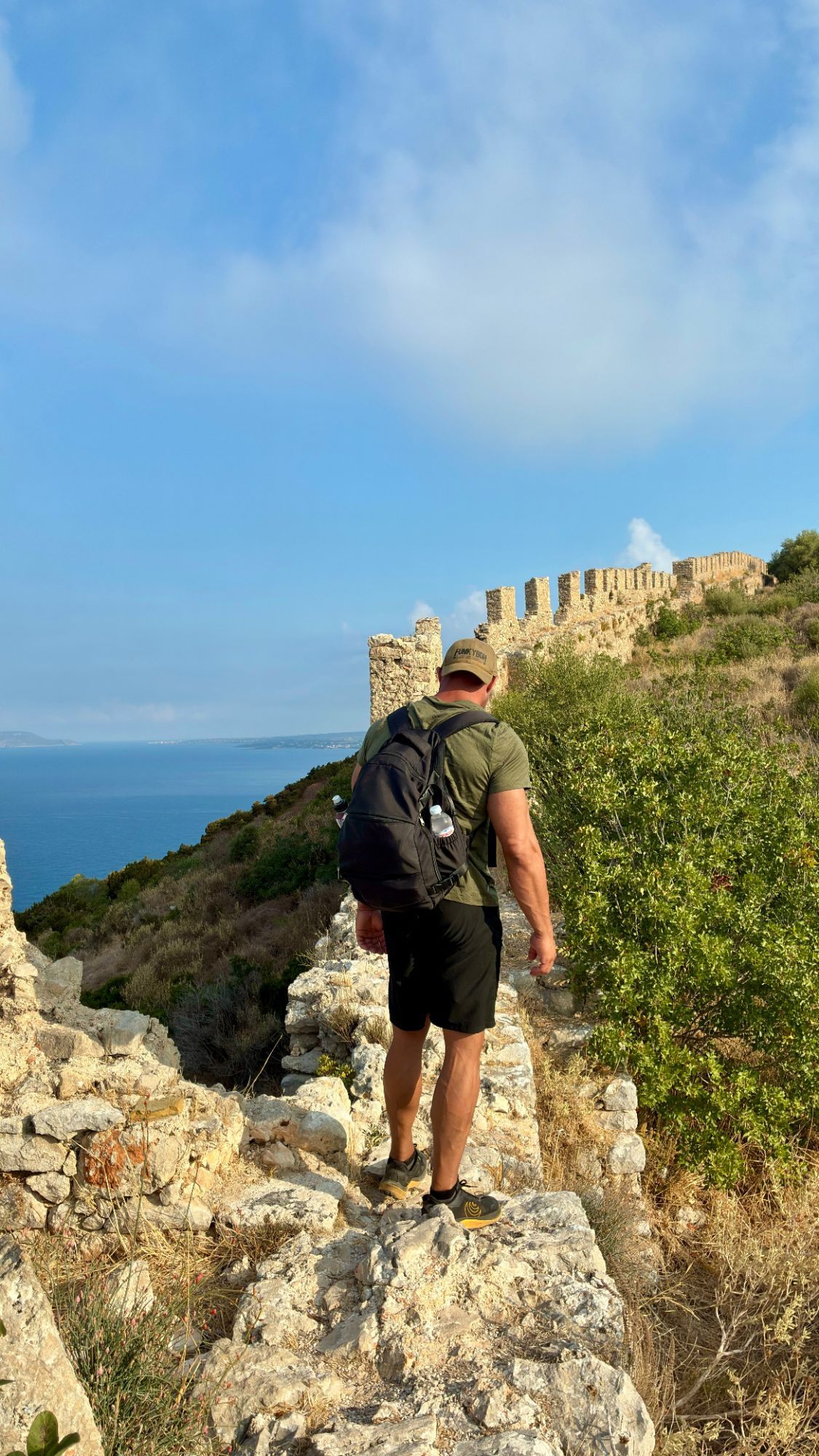
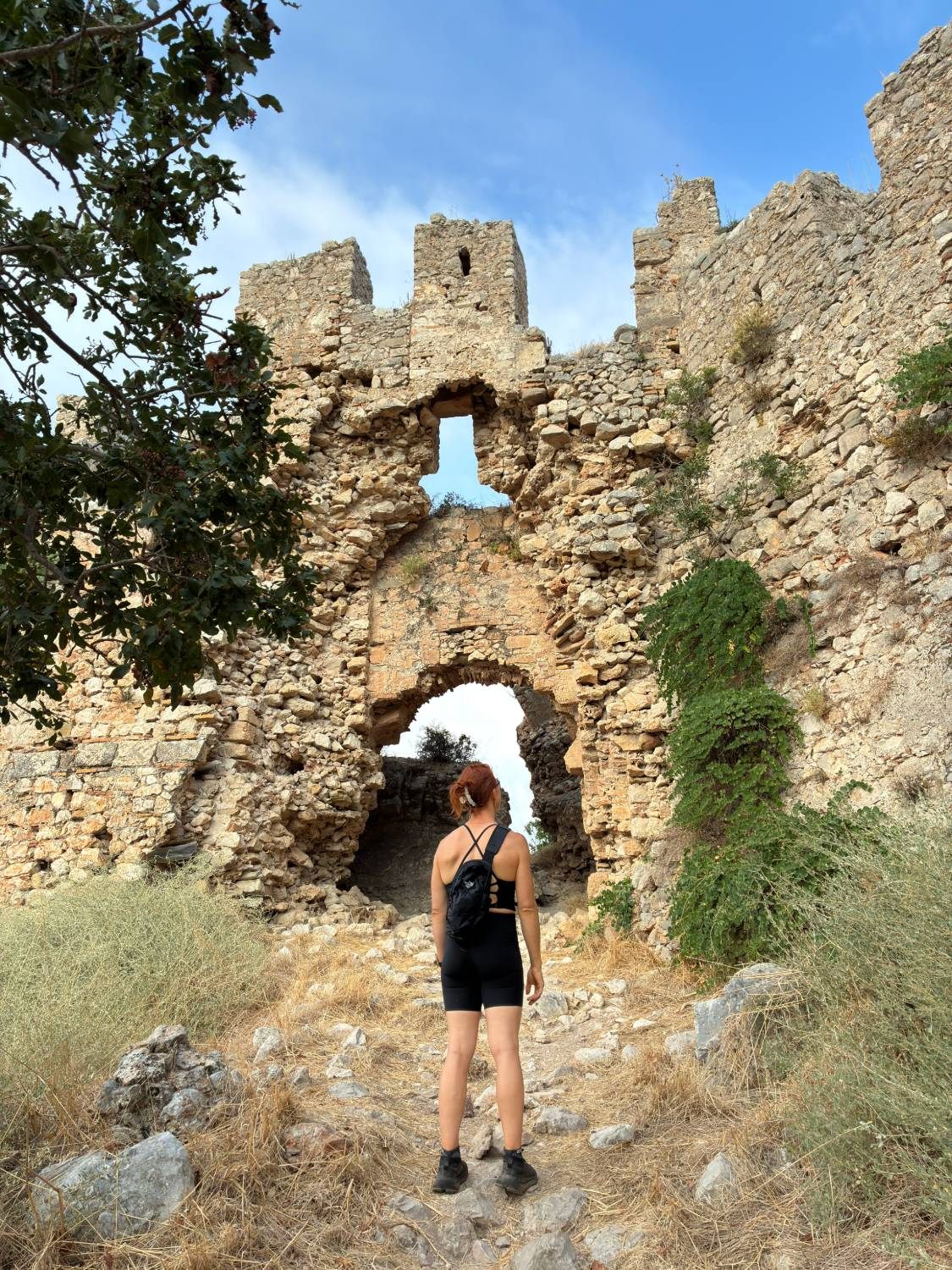
At the top, the ruins of the old fortress appear: Old Navarino Castle, known in Greek as Palaiokastro (also spelled Paliokastro) – "the old castle".
What struck us most was how authentic it felt. This isn't a polished tourist attraction. There's no visitor centre, no rows of information boards, no souvenir stands, no tour groups. Just crumbling walls, gateways and towers on a rocky headland above the sea.
During our visit we walked among the ruins and along parts of the old walls. It was easy to imagine what the place must have been like when it was still guarded – and that rawness is exactly what made it special for us.
Be careful, though. The castle is officially closed precisely because the walls are unstable, stones can fall and the ground is loose underfoot. Don't climb on anything that feels unsafe.
A short history of the castle
The castle sits on the Koryphasion headland, a rock formation of around 200 metres guarding the northern entrance to Navarino Bay. People had used this hill long before the castle: in 425 BC, during the Peloponnesian War, the Athenians built a fort here in the Battle of Pylos.
The castle you see today was built by the Franks, who ruled much of the Peloponnese after the Fourth Crusade. According to the medieval Chronicle of the Morea, it was most likely built by Nicholas II of Saint-Omer around 1287–89. Western sources called it Port-de-Junch; locals knew it as Zonklon.
Over the following centuries it changed hands – from the Franks to the Navarrese Company, the Venetians and, in 1501, the Ottomans. In 1572–73 the Ottomans built a new fortress, Niokastro, at what is now Pylos, with a better water supply and a stronger defensive position. The Frankish castle was left behind – and became Old Navarino, Palaiokastro.
The view over Voidokilia Beach
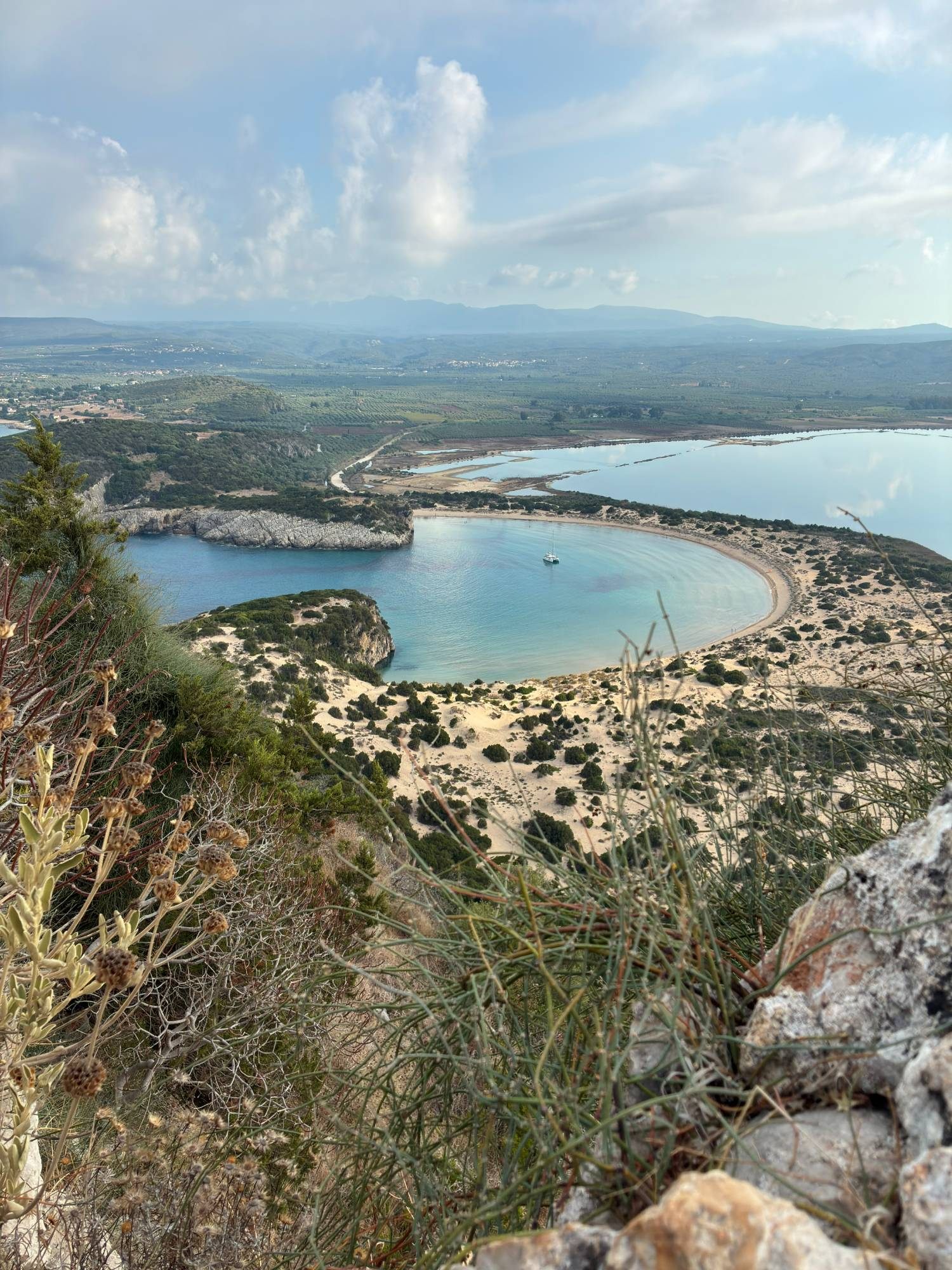
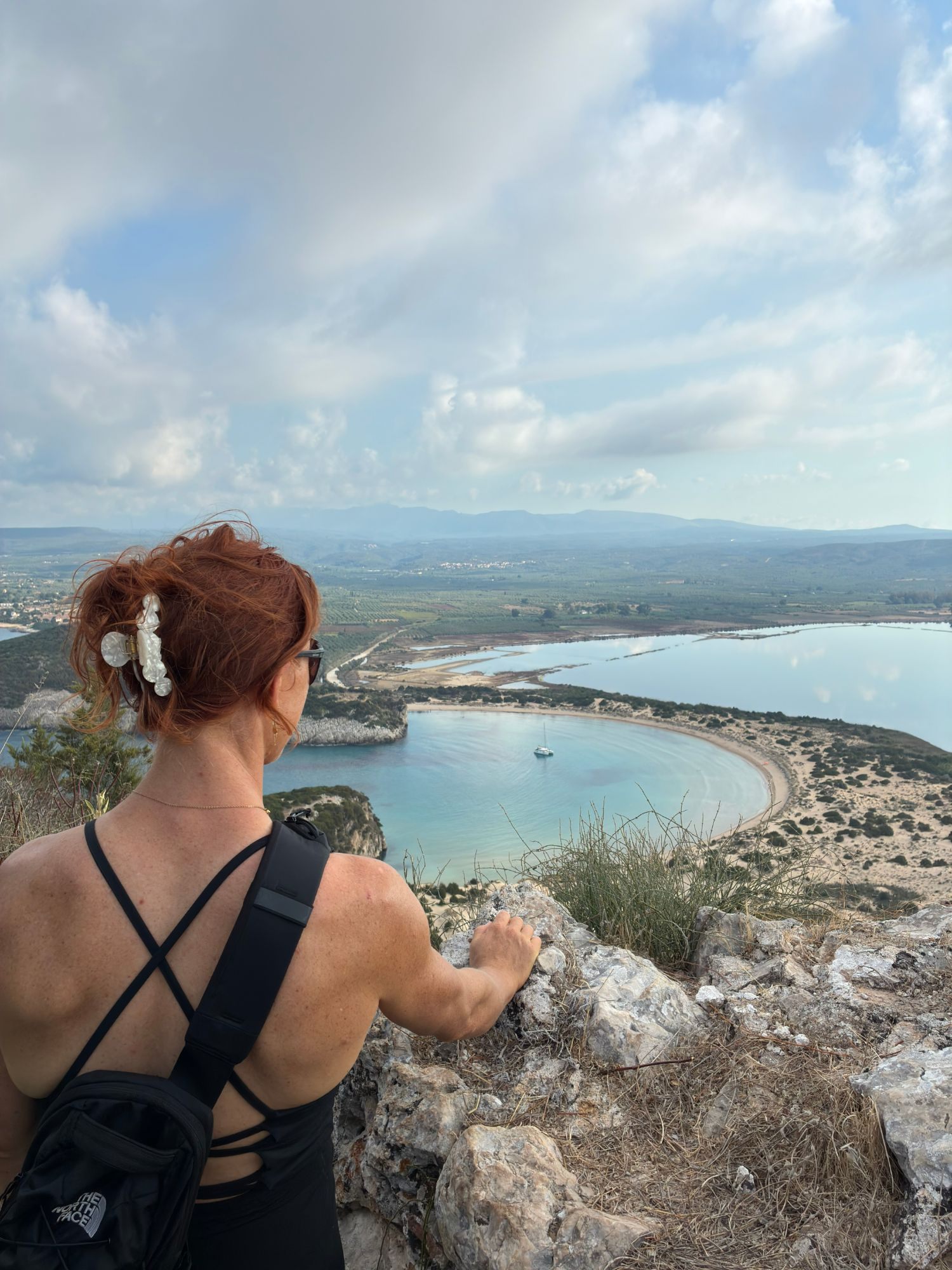
And then there's the view. From the castle, you look straight down on Voidokilia Beach: a near-perfect curve of pale sand around a bay of clear turquoise water, shaped like the Greek letter omega (Ω). Behind the beach are the dunes, and behind them the flat, shallow expanse of Gialova Lagoon.
It's one of those places where the whole landscape suddenly makes sense – sea, beach, dunes and lagoon, all laid out below you.
Down to Nestor's Cave
After exploring the castle, we followed the path down towards Nestor's Cave, which lies below the fortress on the slope above Voidokilia. It's a natural continuation of the morning: from the medieval walls down to a cave that people were using thousands of years earlier.
The path becomes rockier and more natural here, and there are a few places where you need to watch your footing. But it isn't long or extreme – it's a short adventure route where the variety is the whole point.
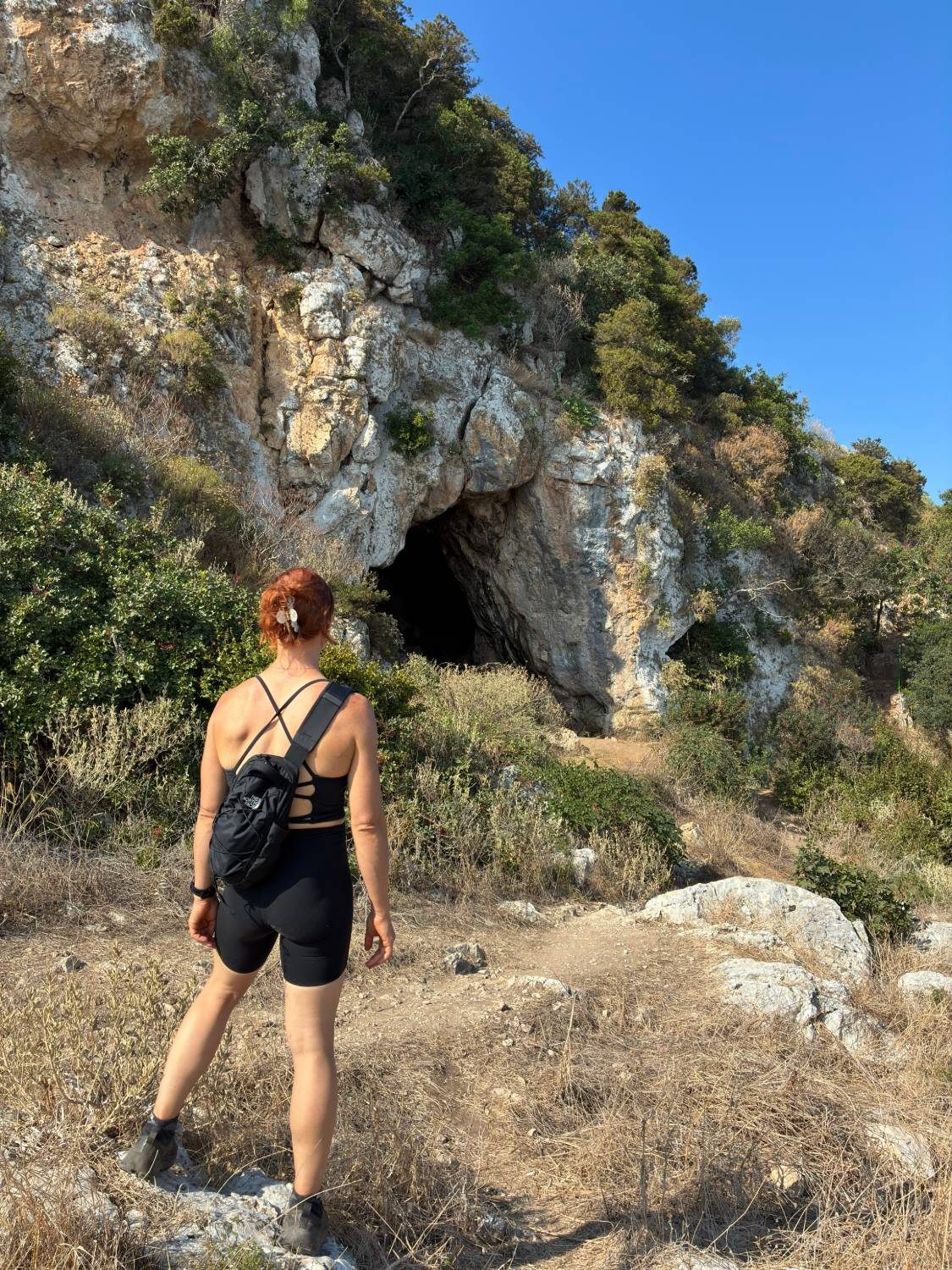
Nestor's Cave – myth and history
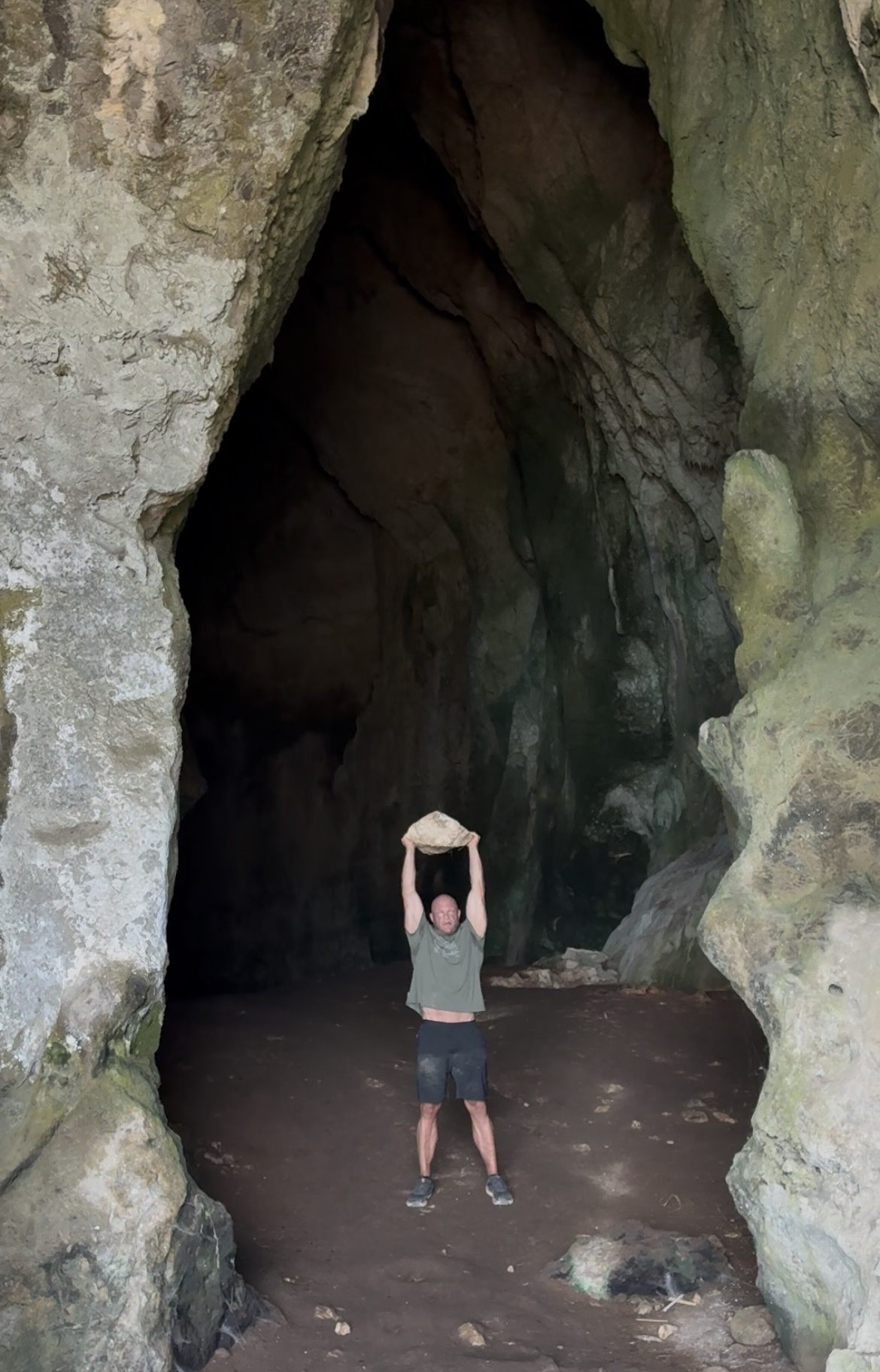
Nestor's Cave was one of the big highlights of the morning. The opening is huge, and standing inside, the space feels enormous – the main chamber has a vaulted ceiling around 20 metres high, though the cave isn't especially deep.
The myths: Nestor was the wise old king of Pylos in Homer's epics, and tradition says he and his father, Neleus, kept their cattle in this cave. Another myth tells how the young god Hermes hid stolen cattle here.
The archaeology: The stories are old, but the human history is older still. Pottery found in the cave shows it was first used in the Neolithic period, in the 6th and 5th millennia BC, with more intensive use in the Mycenaean era in the 2nd millennium BC.
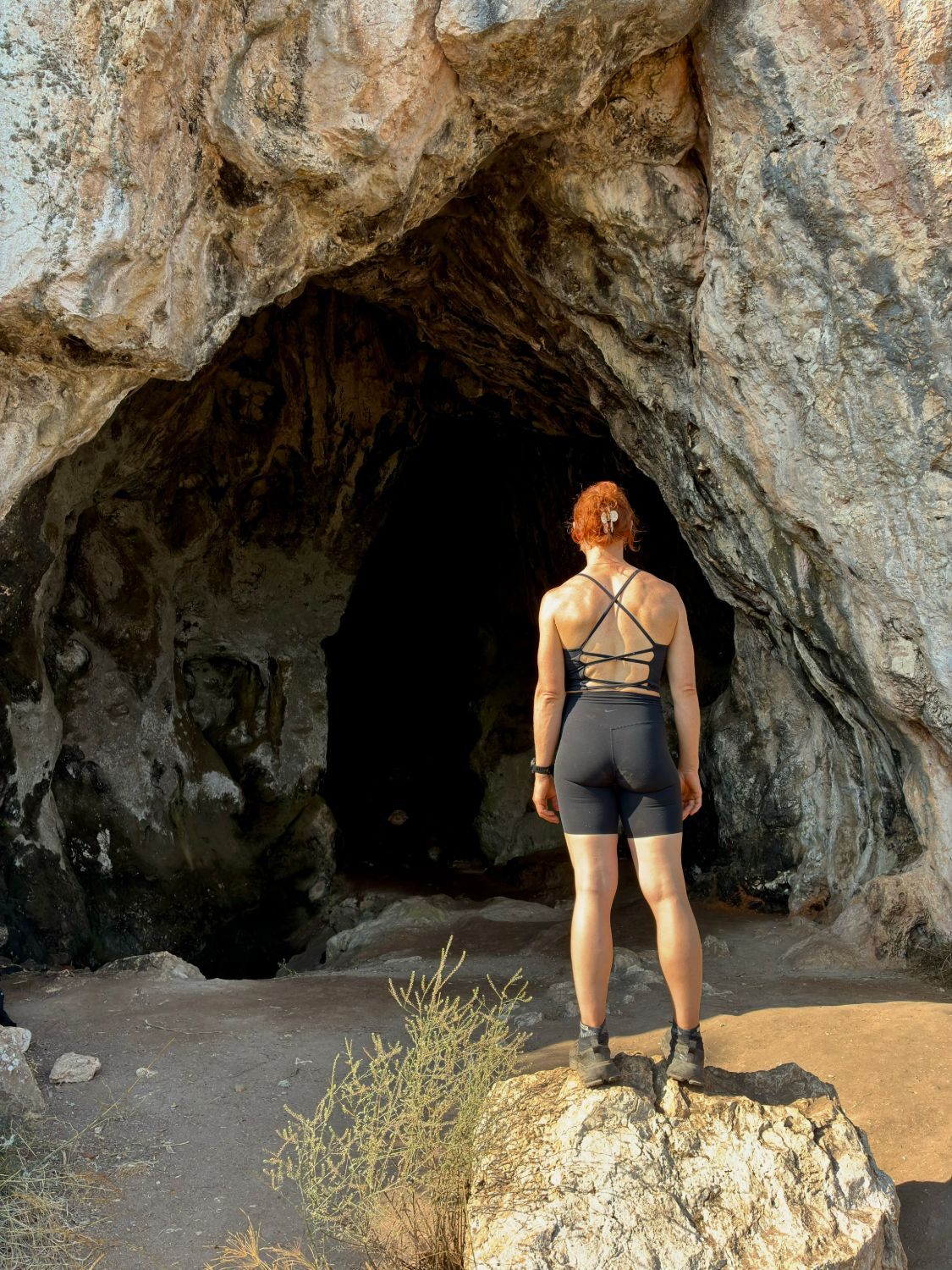
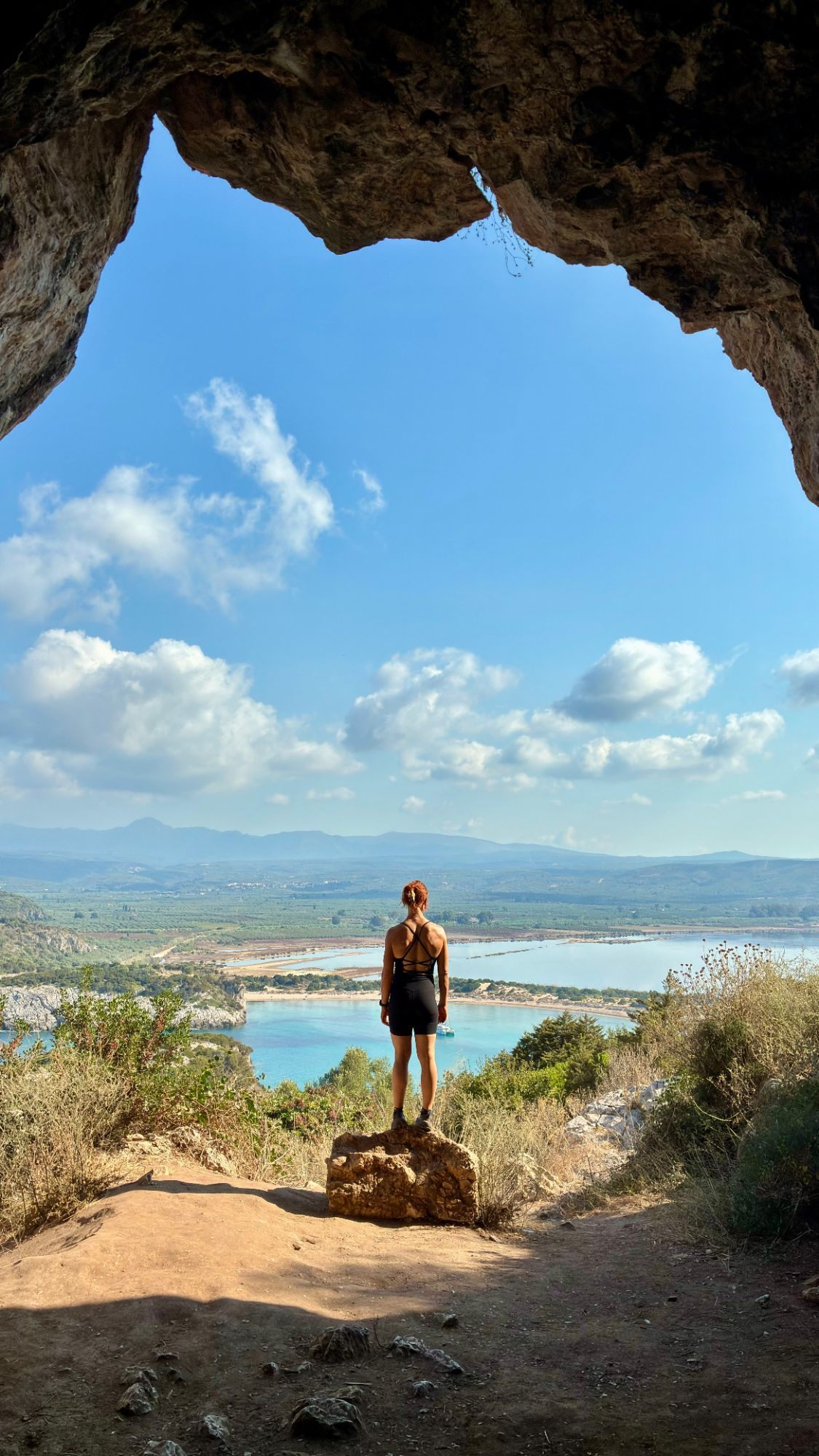
Standing inside Polyphemus' cave
And then there's the film.
In Homer's Odyssey, Odysseus and his men land on the island of the Cyclopes and end up trapped in the cave of the one-eyed giant Polyphemus. Odysseus eventually blinds the Cyclops and they escape, clinging to the bellies of his sheep.
For Christopher Nolan's The Odyssey (2026), the Polyphemus scenes were filmed here, in the real Nestor's Cave. And Voidokilia Beach, right below, played the Island of the Cyclopes.
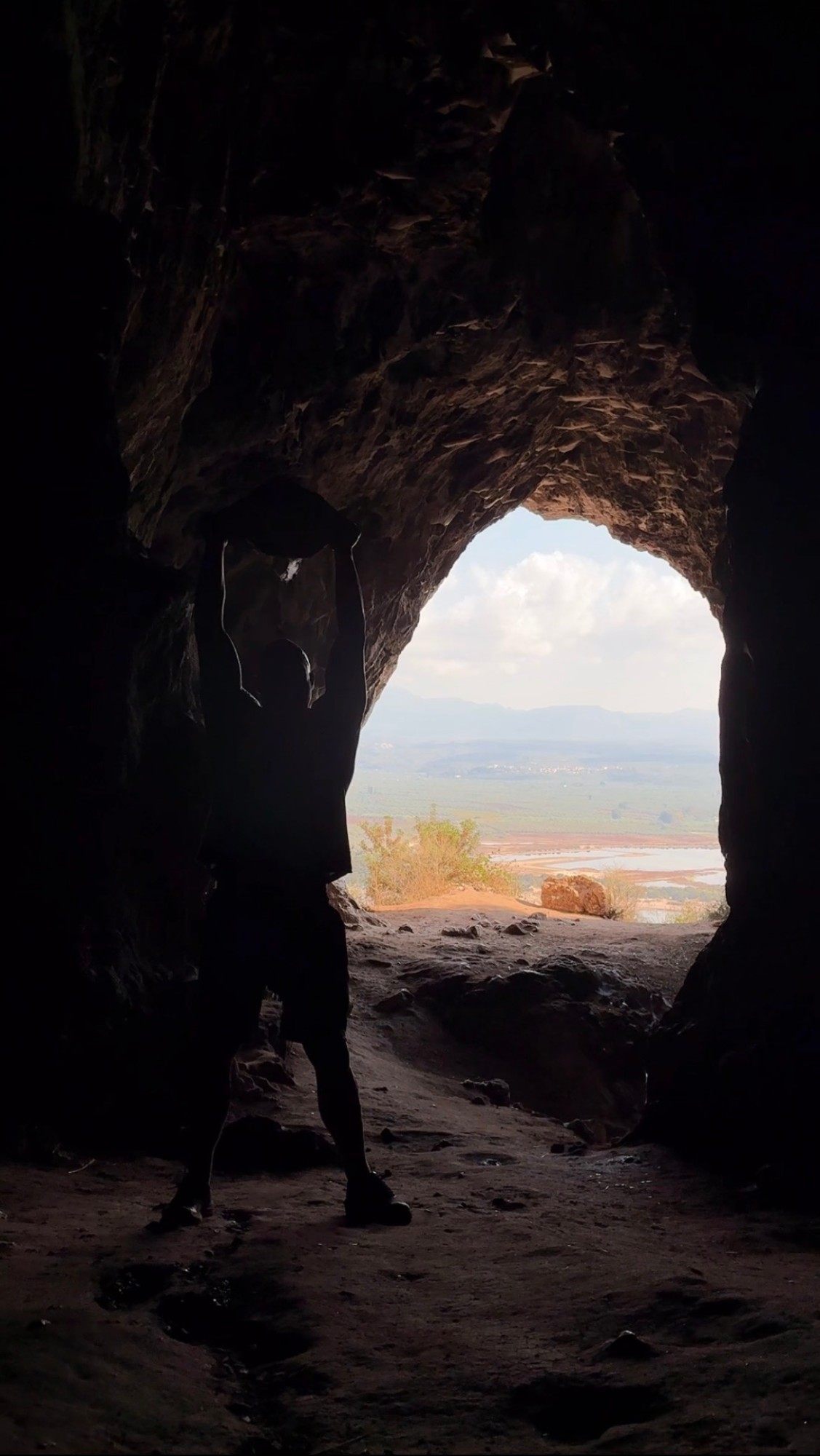
We had followed the film, and being there afterwards was a strange and brilliant feeling. We could recognise the surroundings from the screen. The darkness, the raw rock, the huge opening, the light pouring in from outside – it's easy to see why the cave works as Polyphemus' lair.
Standing inside Nestor's Cave, knowing that Nolan had filmed Polyphemus here, made the place feel completely different.
You don't need to have seen the film to appreciate the cave. But if you have, it's a real bonus.
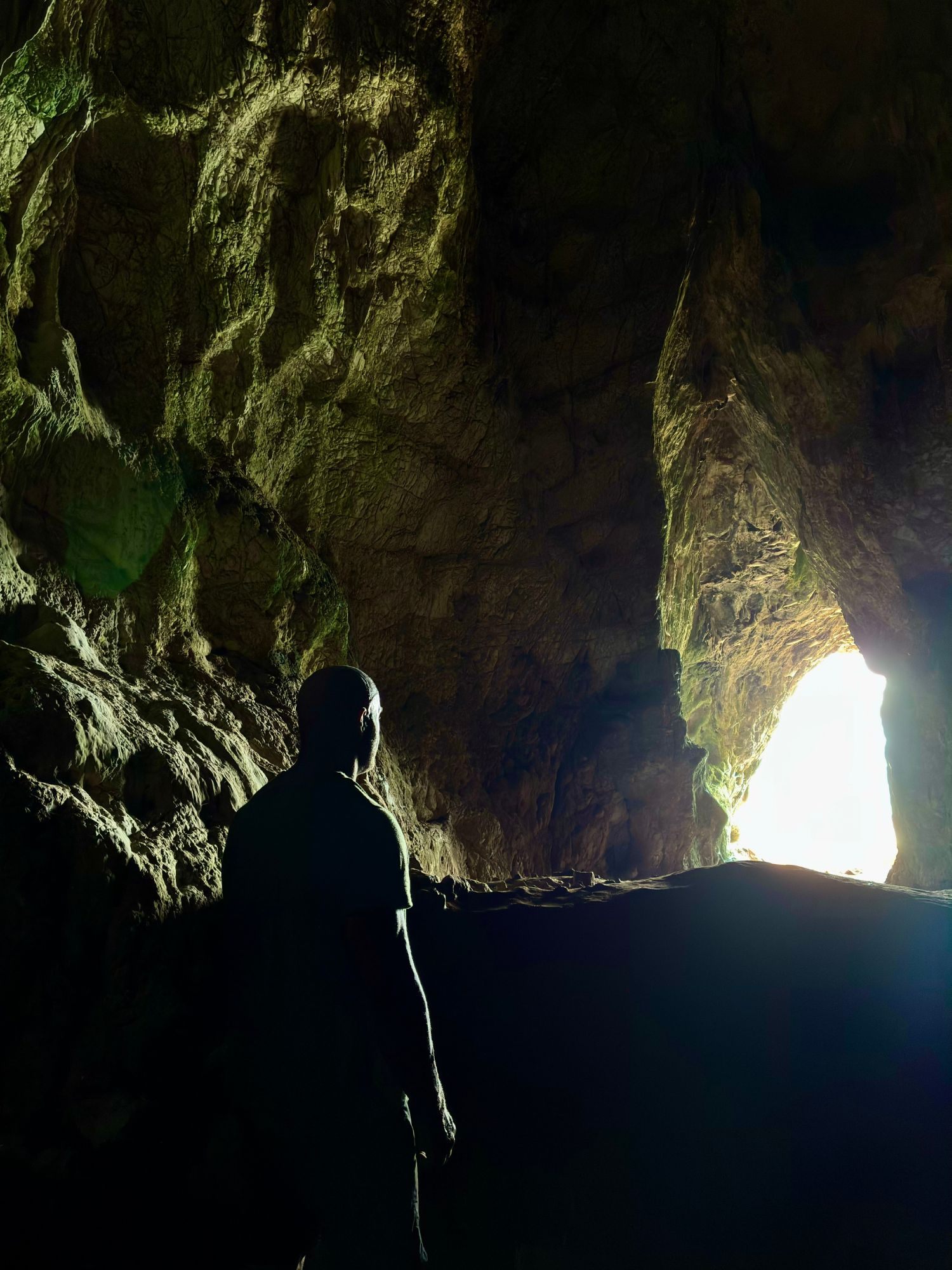
Our own Odyssey moment
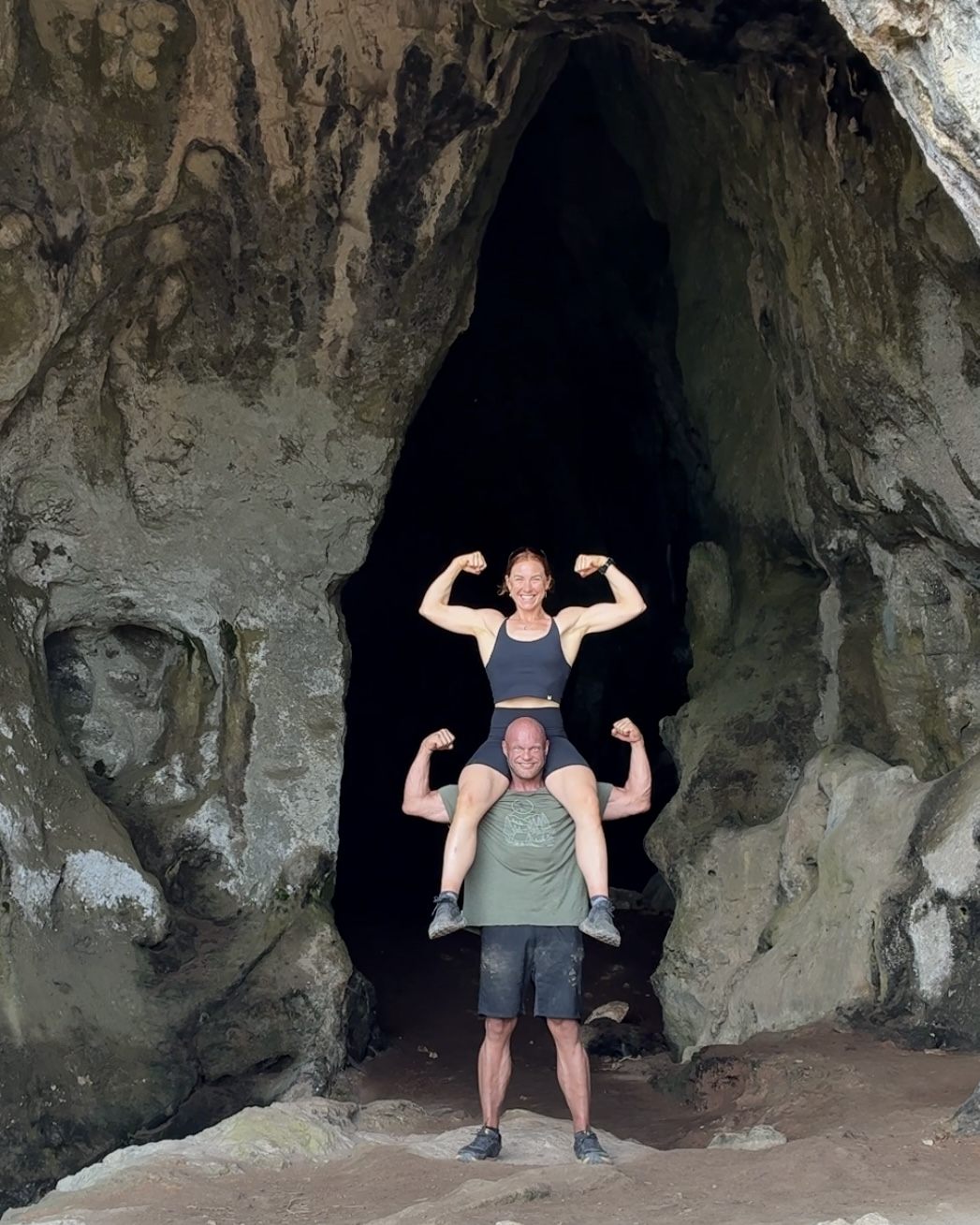
Of course, we couldn't resist. Inside the cave, we tried our own (very loose) recreation of the scene – heroic poses included. It's not an official still from the film, just the two of us having fun in a place we'd seen on the big screen.
A note on access to the cave
During our visit we were able to enter the cave. But Nestor's Cave is not officially open to visitors, and the area is considered hazardous because of falling rocks. Check current local guidance before attempting to go in – the entrance is also impressive seen from outside.
From the cave to Voidokilia Beach
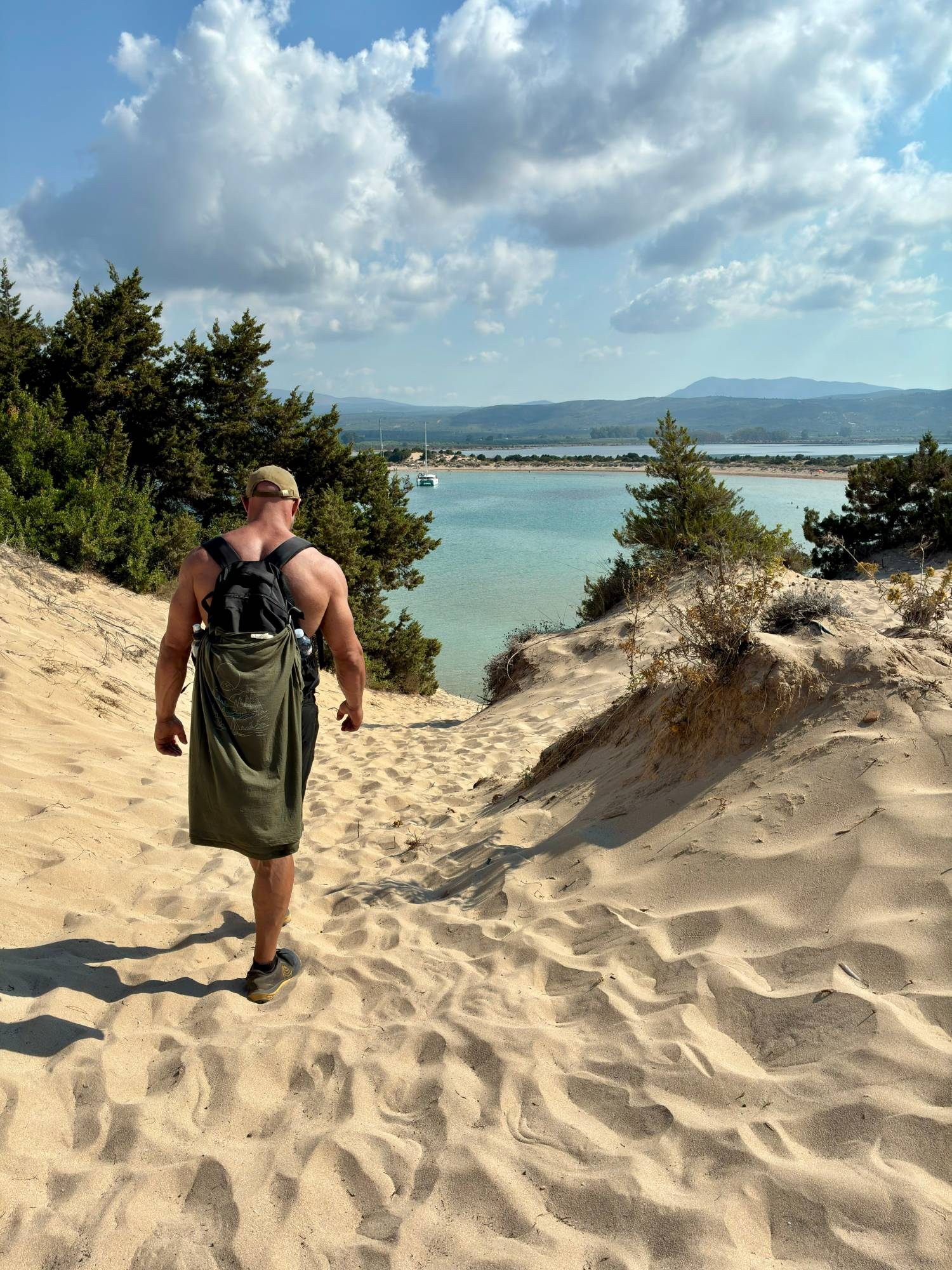
From Nestor's Cave, it's only a short walk down to the beach itself – Voidokilia.
The name is usually explained as coming from the Greek words for "ox" (bous) and "belly" (koilia), after the rounded shape of the bay. This is also thought to be Homer's "sandy Pylos", where Telemachus, searching for his father Odysseus, was welcomed by King Nestor.
Swimming at Voidokilia
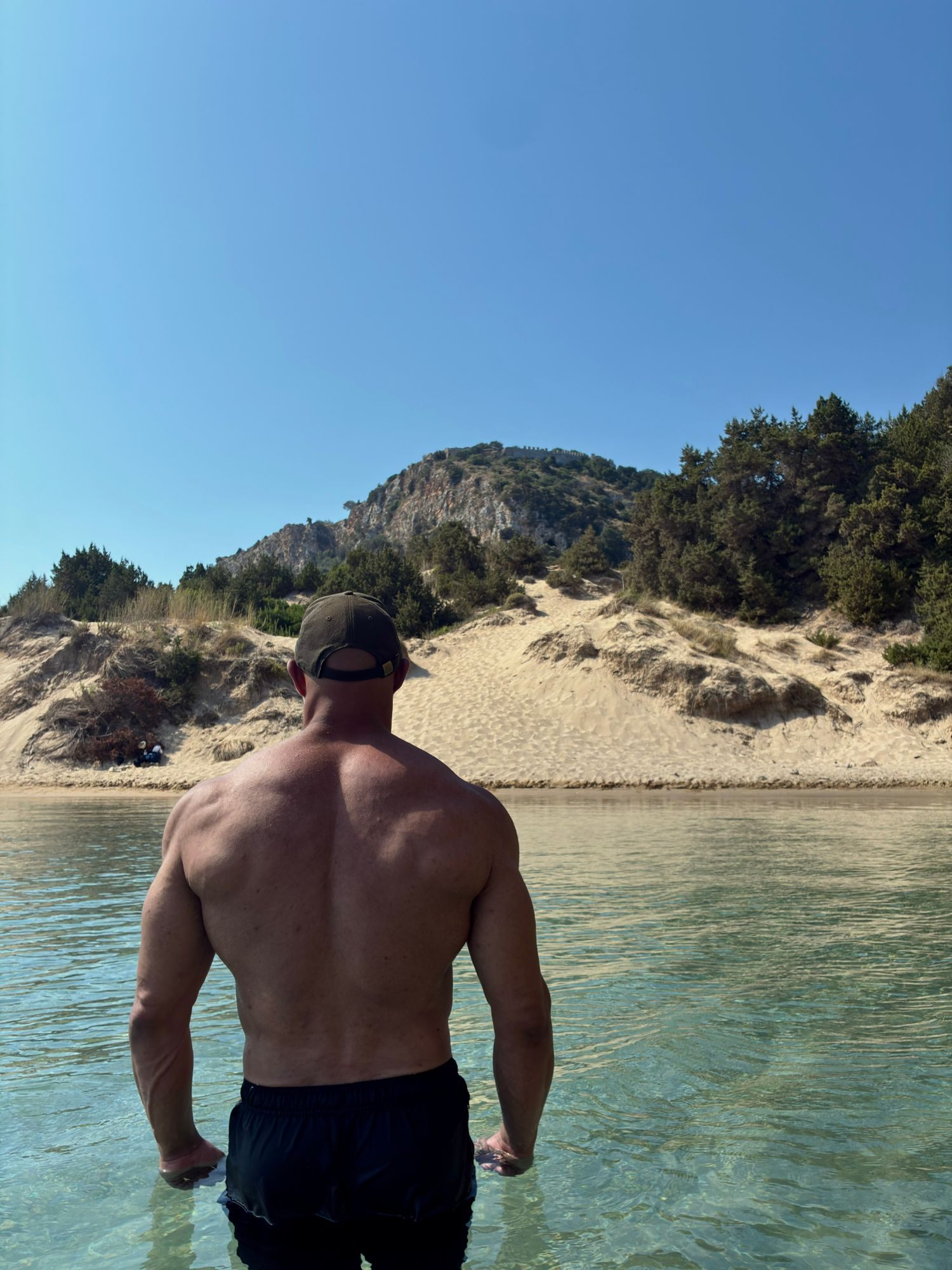
Down on the beach, there were more people than up at the castle and the cave – but in September, mid-morning, there was still plenty of space. A few boats were anchored in the bay, some people were swimming, and that was about it.
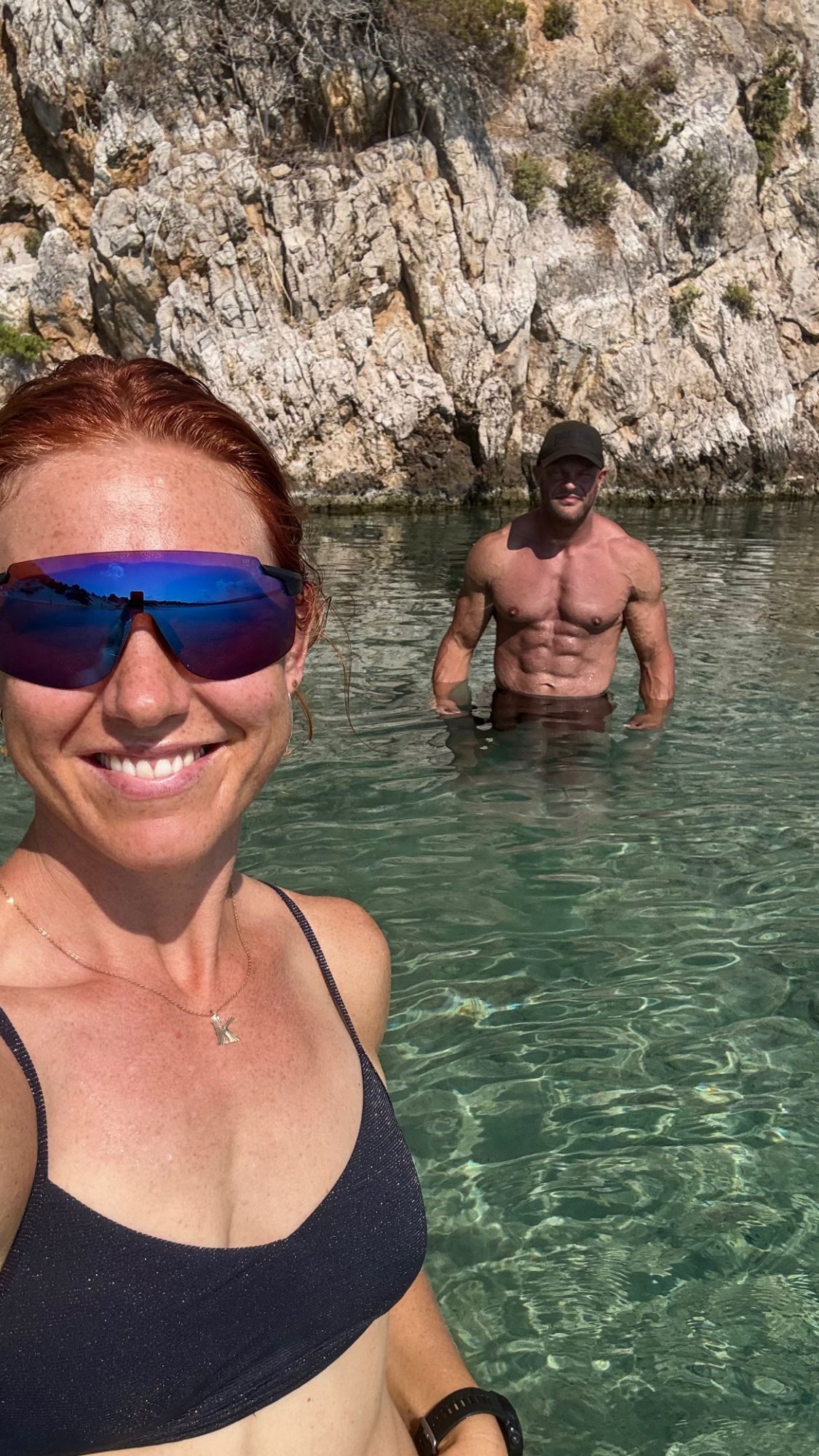
The water was clear and lovely, and very easy to swim in. When we were there, it got deeper gradually, so you could walk calmly out into the bay. It also looked like a relaxed spot for families with children – though conditions can of course vary.
We spent a good while in the water. After the climb, the ruins and the cave, it was the perfect way to finish the hike.
The walk back past Gialova Lagoon
After our swim, we walked back along the path behind the beach, past Gialova Lagoon – known locally as Divari.
The last part of the loop has a completely different character from the start. After the fortress, the rocks and the cave, you're now walking along a flat wetland with water and birds. The lagoon is part of the Natura 2000 network and one of the most important bird habitats in Greece, with more than 250 bird species recorded – many of them migrants on the route between Europe and Africa.
Spotting birds along the way was part of the experience for us, and it rounded off a remarkably varied loop: castle, view, cave, beach, lagoon.
How long do you need?
The walking itself is short – our recording shows 3.08 km in 1 hour 36 minutes. But we'd set aside around three hours.
Not because the hike takes three hours, but because you shouldn't rush it. You'll want time to look around the castle, take in the view, take photos, see the cave and swim at Voidokilia.
Why go early
Starting around 8am worked perfectly for us. There were very few people at the castle and the cave, the light was better, and we reached Voidokilia before it got busier. It's also cooler – there's little shade on the climb.
How difficult is it?
We wouldn't call it hard. AllTrails rated the route as moderate when we used it, and the distance is short. But the first part up to the castle is a steady climb, and the ground around the ruins and down towards the cave is uneven and rocky in places.
It's less a long hike and more an experience route – you get a lot for very few kilometres.
Practical information
| Location | Near Pylos, Messinia, Peloponnese, Greece |
|---|---|
| Getting there | About 20 minutes' drive from Pylos; last part on a small gravel road |
| Start | Southern parking area at the end of the gravel road |
| Route | AllTrails "Old Navarino Castle" loop – listed at about 3.2 km and 151 m when we used it |
| Our hike | 3.08 km, 140 m elevation gain, 1 h 36 min |
| Recommended time | Around 3 hours with the castle, cave and a swim |
| When we started | Around 8am in September 2026 – quiet, cool and great light |
| Facilities | No shops along the route – bring what you need |
| Castle access | Officially closed due to danger of falling stonework (sign on site) |
| Cave access | Not officially open to visitors; falling-rock hazard |
What to bring
- Good hiking shoes – the paths are rocky and uneven
- Water and sunscreen – there's little shade
- Swimwear and a towel for Voidokilia
- Your phone with an offline map
- A camera – you'll use it
Our verdict
If you only come for the castle, you get a beautiful piece of history. If you only come for Voidokilia, you get a fantastic beach. If you only come for Nestor's Cave, you get myth and a film location.
But put them together, and you get a perfect morning.
For us, it was the rawness of the old castle and the moment of standing in Nestor's Cave that made it special – and the connection to Nolan's The Odyssey made it even better. It was only about three kilometres of hiking, but it felt much bigger than the distance.
If you're anywhere near Pylos: start early, bring water, good shoes and swimwear – and give yourself the whole morning.
Continue the journey
We used Pylos as our base for this hike. On the way there, we stopped at the Polylimnio Waterfalls – another short hike with a lot of adventure packed in. See the whole route in our 9-day Peloponnese road trip itinerary.