On 4 September 2024 we climbed Gerlachovský štít, the highest mountain in Slovakia – and in the whole Carpathian range – at 2,655 metres. We did it with a mountain guide, Marek Biskupič, starting from Horský Hotel Sliezsky Dom in the High Tatras at 5.30 in the morning.
We're not the typical picture of mountaineers. We're Danes from strength sports: strongman and strongwoman, armwrestling, stone lifting. We're used to training hard and moving heavy things. That turned out to be a very different skill from moving calmly across steep, exposed rock with a long drop beneath your feet. Gerlach was far more demanding than either of us had imagined – and one of the best days of our whole road trip.
The short version
Gerlachovský štít, 2,655 m, guided, from Sliezsky Dom (about 1,670 m) – so roughly 1,000 metres of height to climb. We met our guide at 5.30am, reached the summit at 9.47am and were back at the hotel around 2.30pm. Helmets, harnesses and ropes; demanding scrambling and climbing on the way up; and an even more exposed descent that pushed us both. You can't climb it on your own unless you're an experienced climber in a recognised alpine club – see the practical notes at the end.
A 5.30am start at Sliezsky Dom
We'd spent the night at Horský Hotel Sliezsky Dom, a big mountain hotel by Velické pleso, the lake at the head of the Velická valley. The location is the point: you wake up at around 1,670 metres, and the climb starts at the front door.
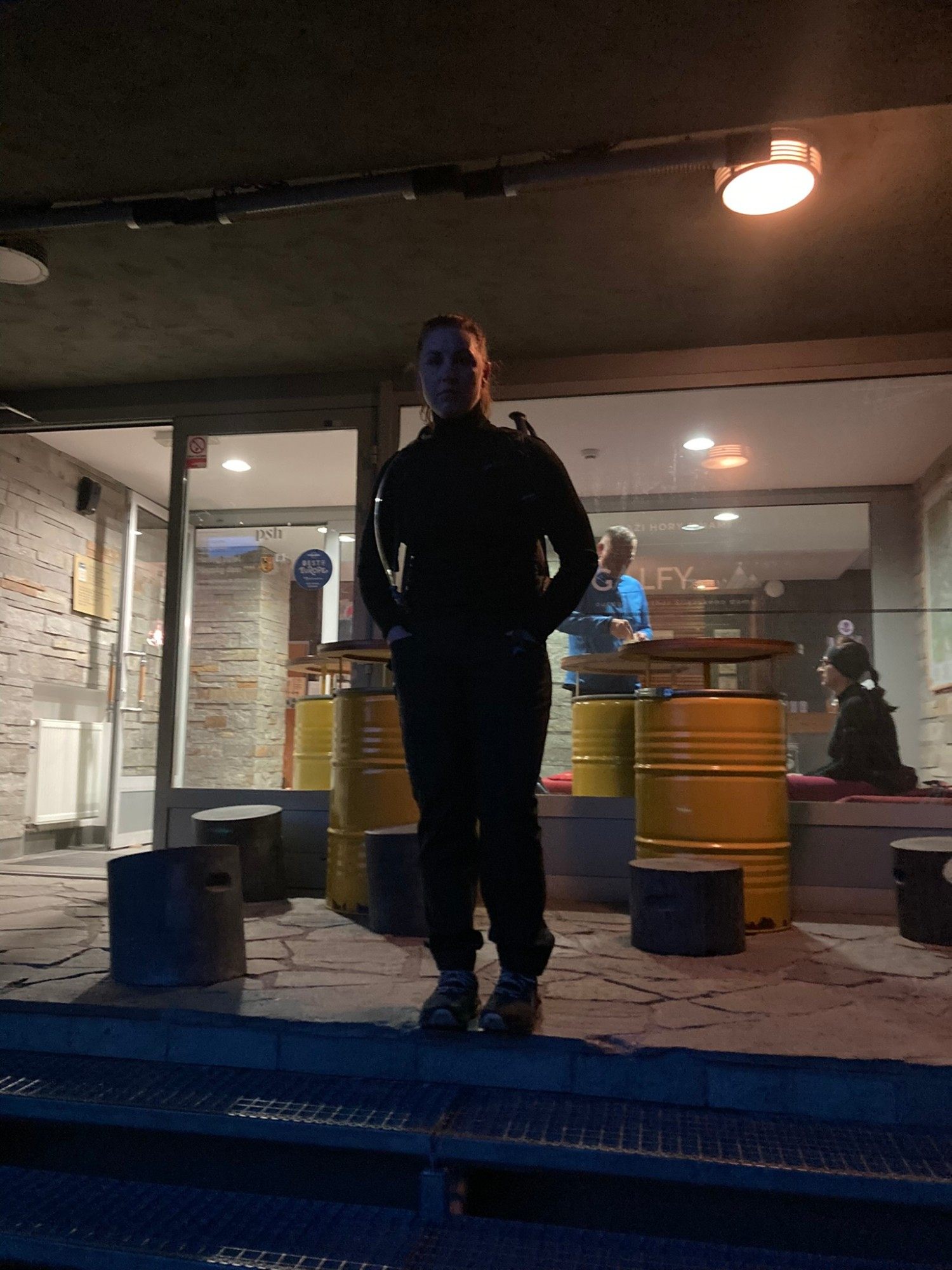
Marek met us outside. He carried the technical gear – ropes, harnesses, helmets. We had our own CamelBaks with water, snacks and the rest of our personal kit. Then we started walking up into the dark.
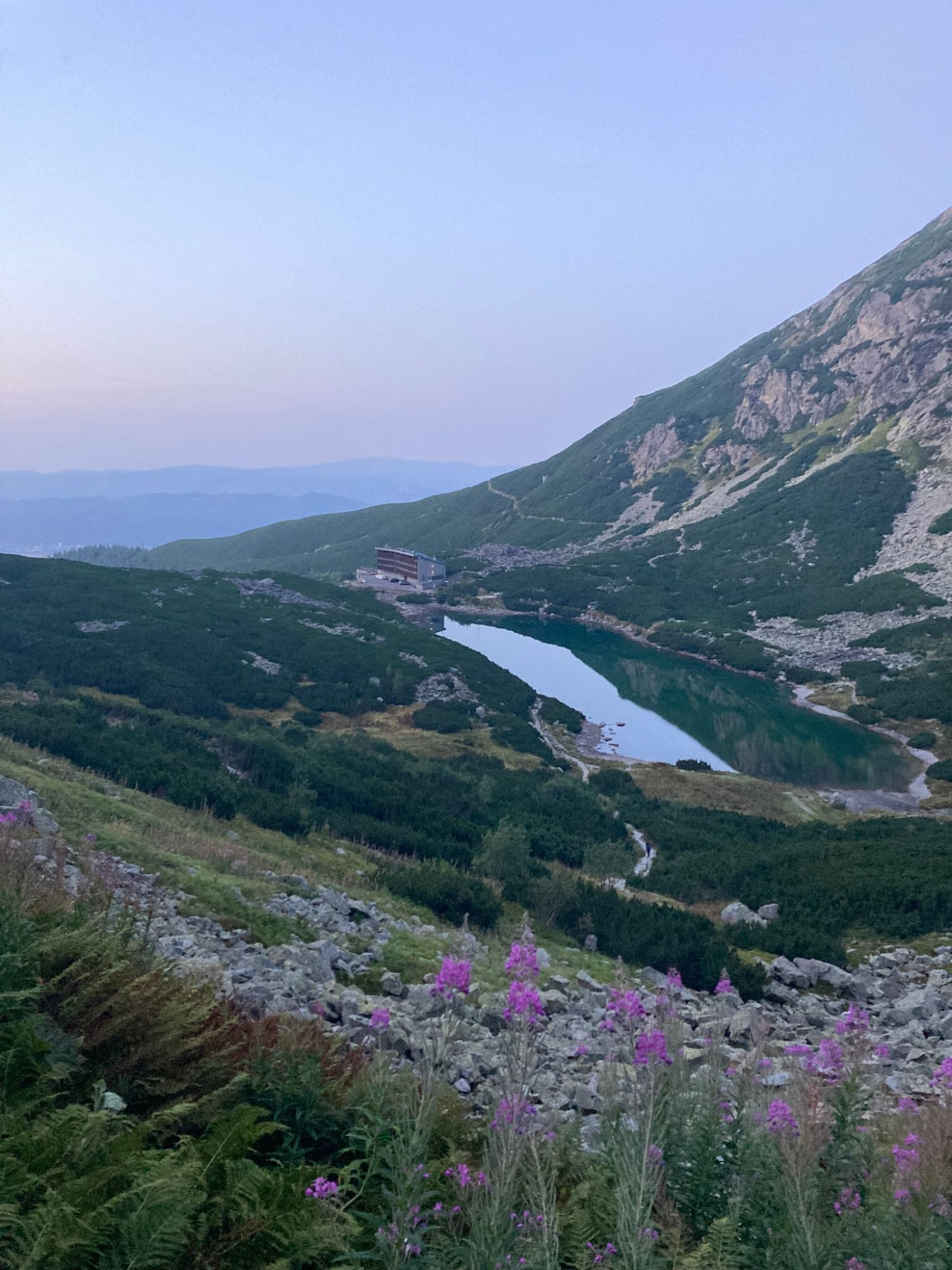
The first 40 minutes – a test
The first stretch goes steeply up through boulders and stony ground. For about 40 minutes we pushed hard, and our pulse went up fast. We had a feeling Marek was using this part to size us up: can they keep up, have they got the stamina, can they move sensibly over this kind of terrain? Nobody said it out loud. But it felt like a test – and we were quietly pleased to pass it.
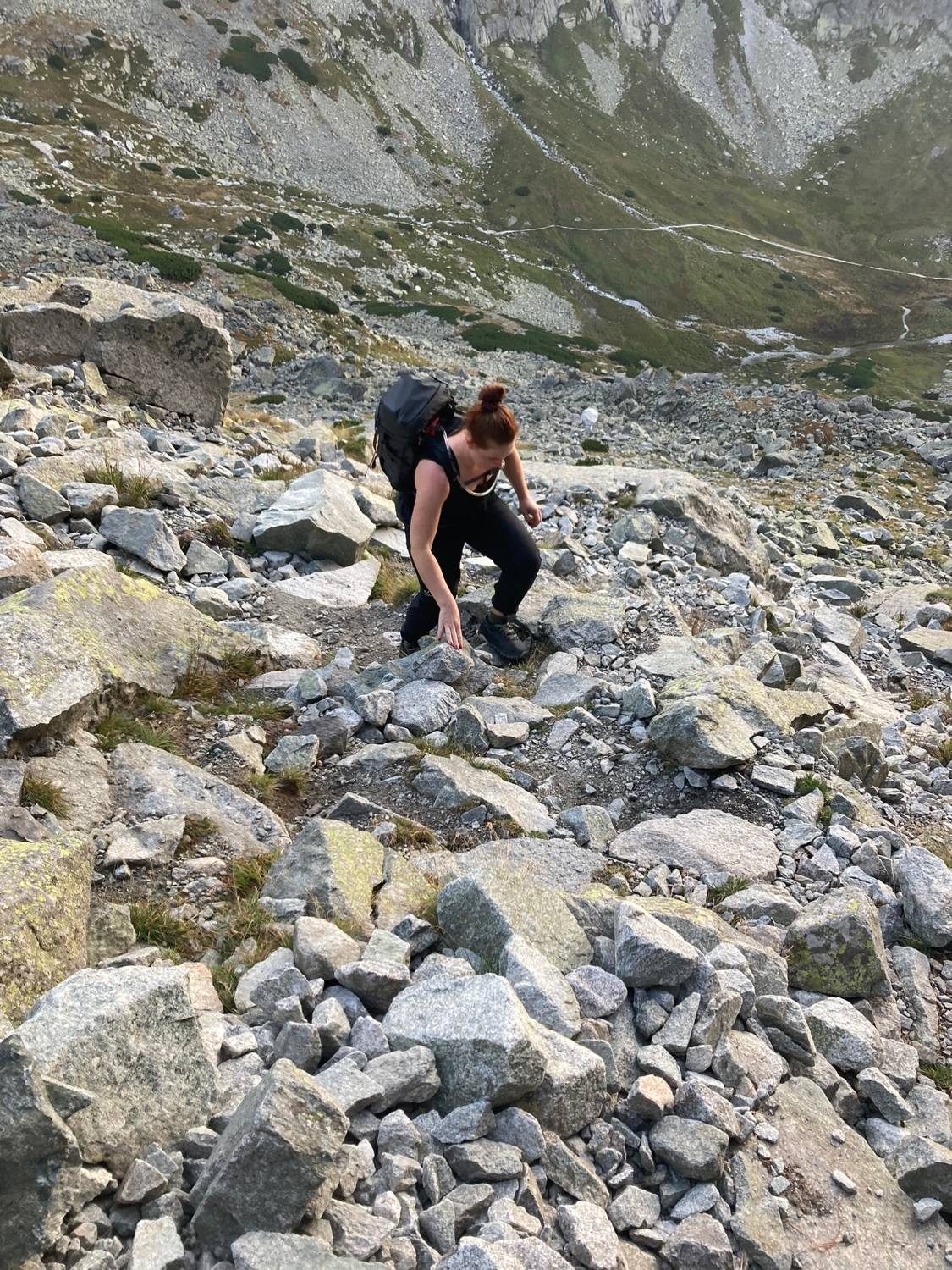
While we climbed, we could hear rescue helicopters in the area. Later we were told they were searching for three Czech hikers who had gone missing the evening before and had spent the night out on the mountain. We didn't know any of that at the time – only that the helicopters were there. But it was an early reminder that this isn't an ordinary hike.
Harnesses on – the real climbing begins
After the first section we stopped, put on harnesses and helmets, and Marek roped us up. From there the character of the day changed. Steeper rock, gullies and ledges, where every hand and every foot has to go in the right place.
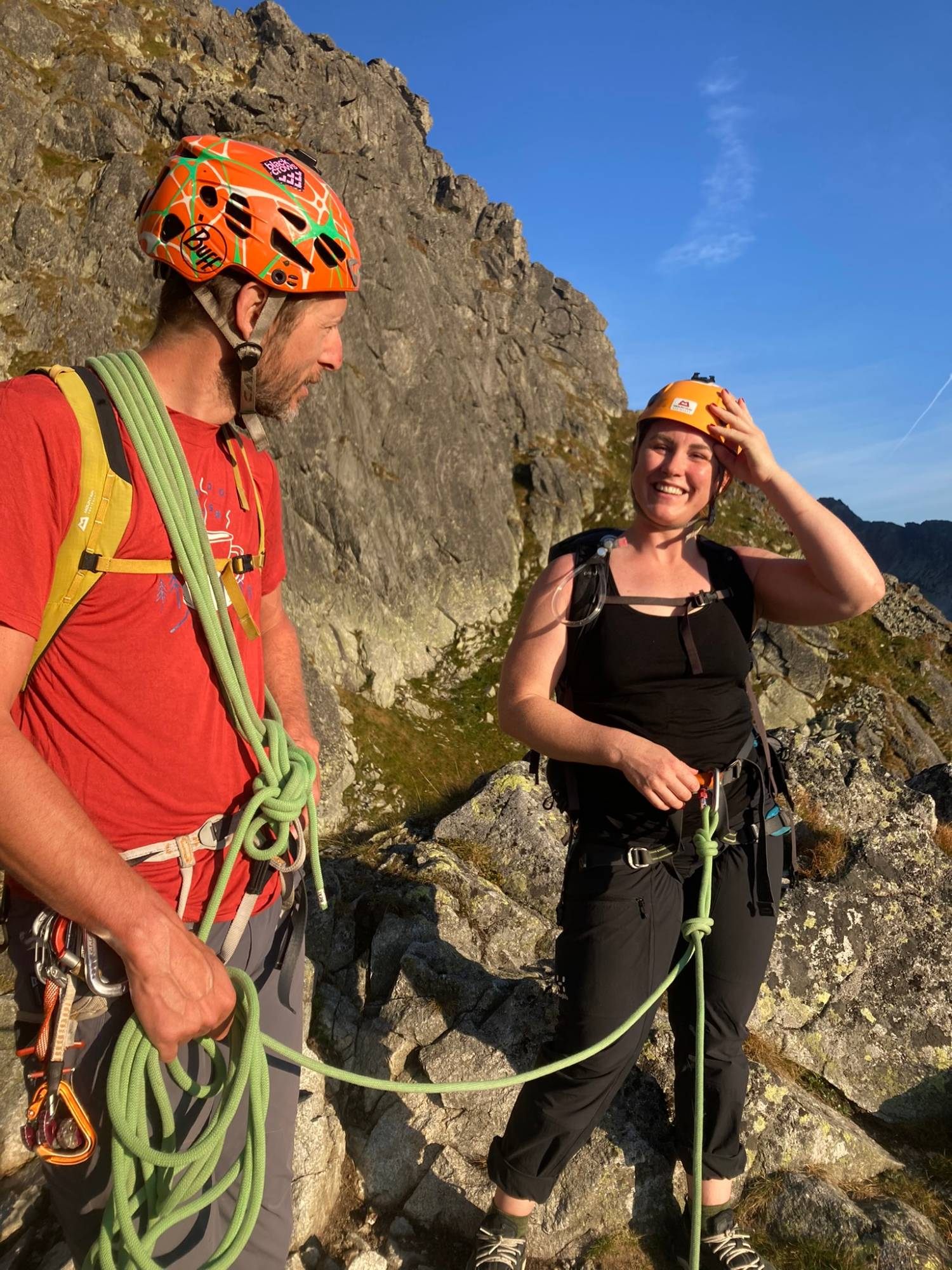
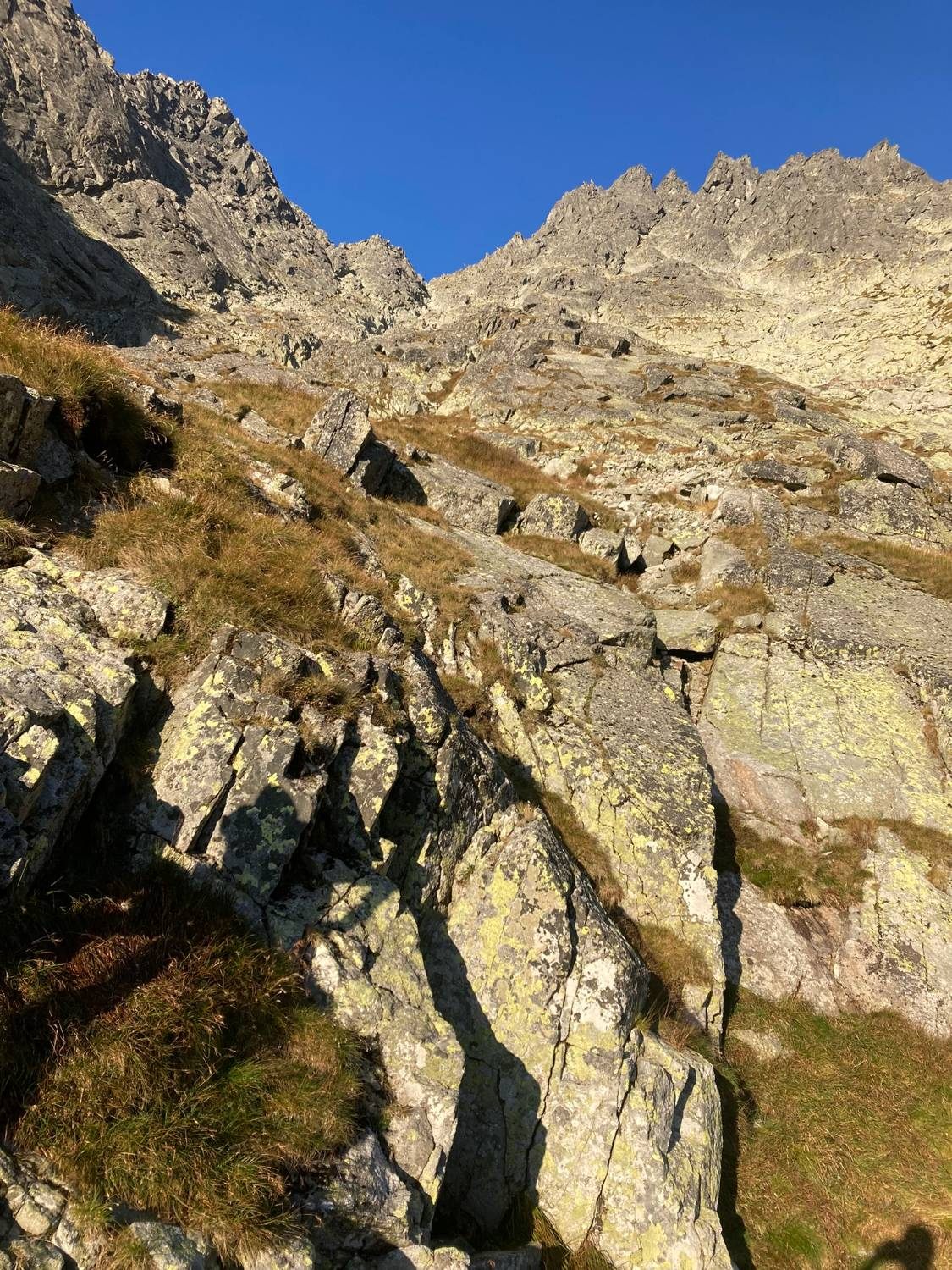
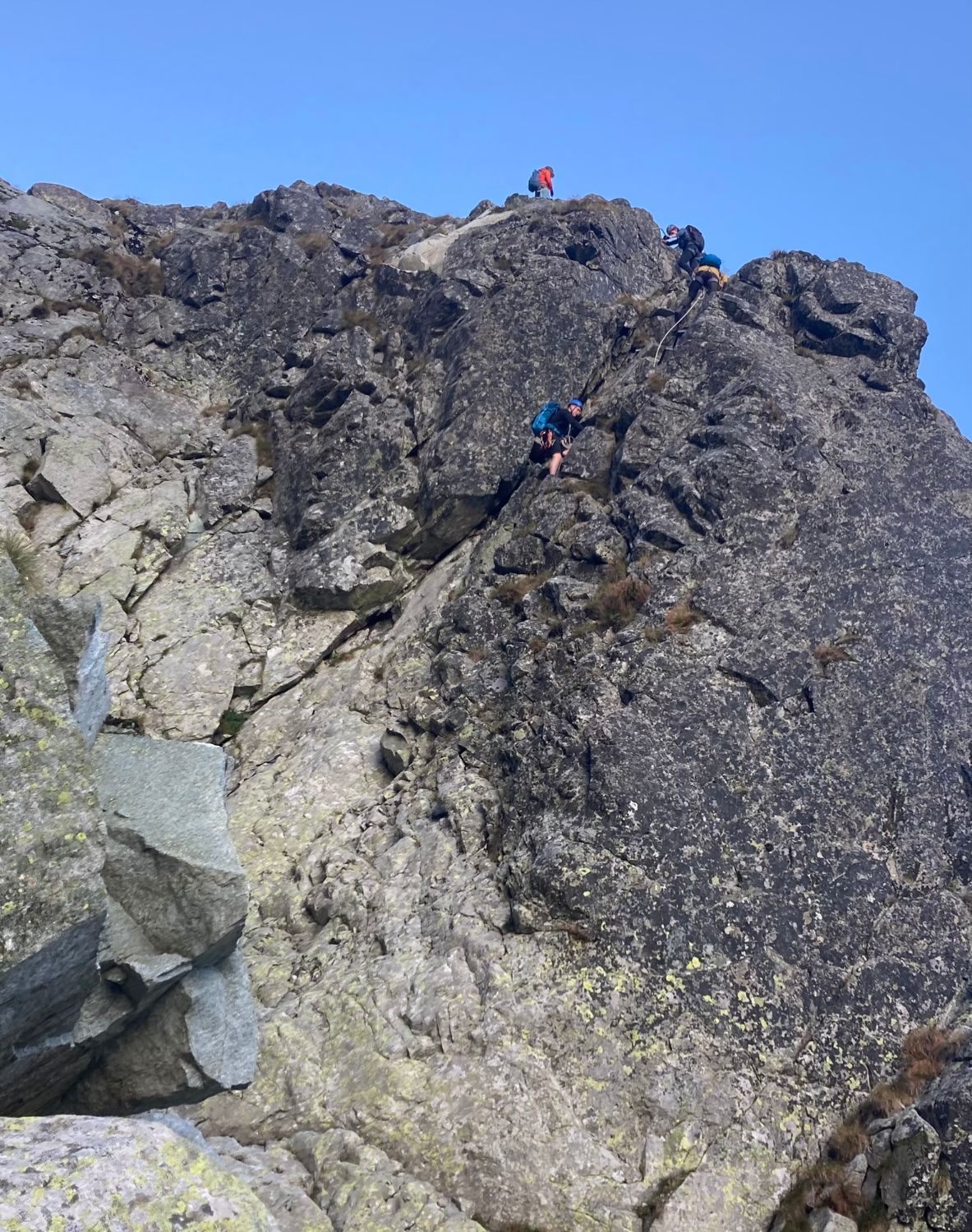
Marek went first and talked us through it. He was a genuinely good guide – technically, obviously, but also as a teacher. He'd tell us exactly where to put a foot, which hold to use, when to move and when to wait. He never made us feel stupid, and he never rushed us.
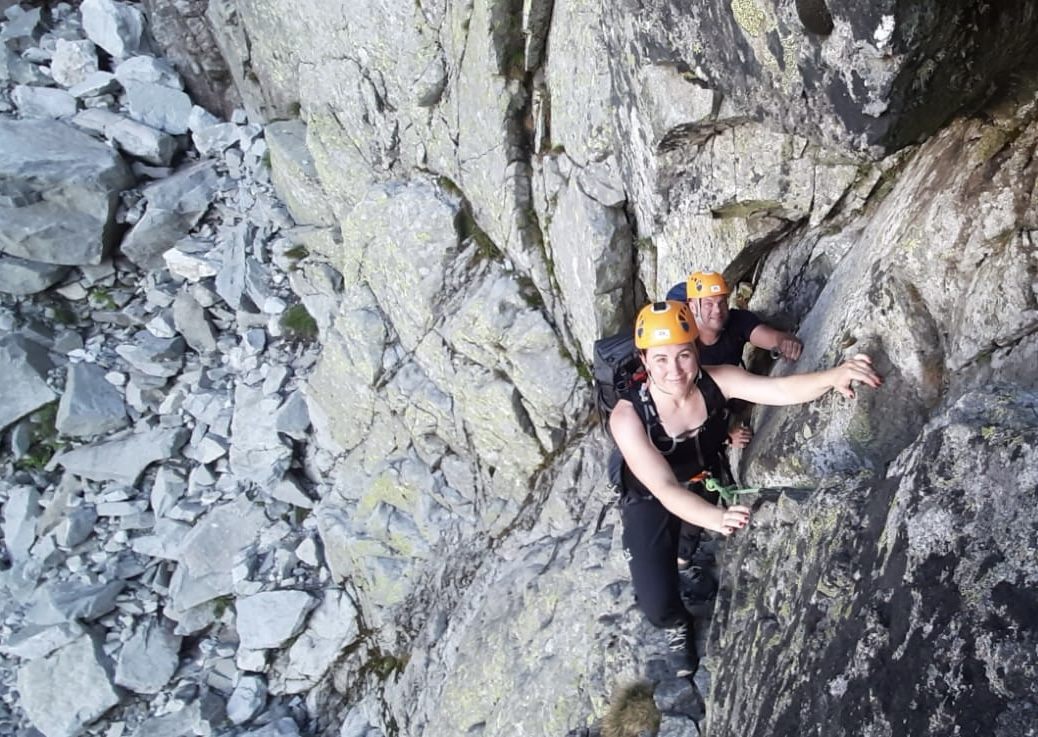
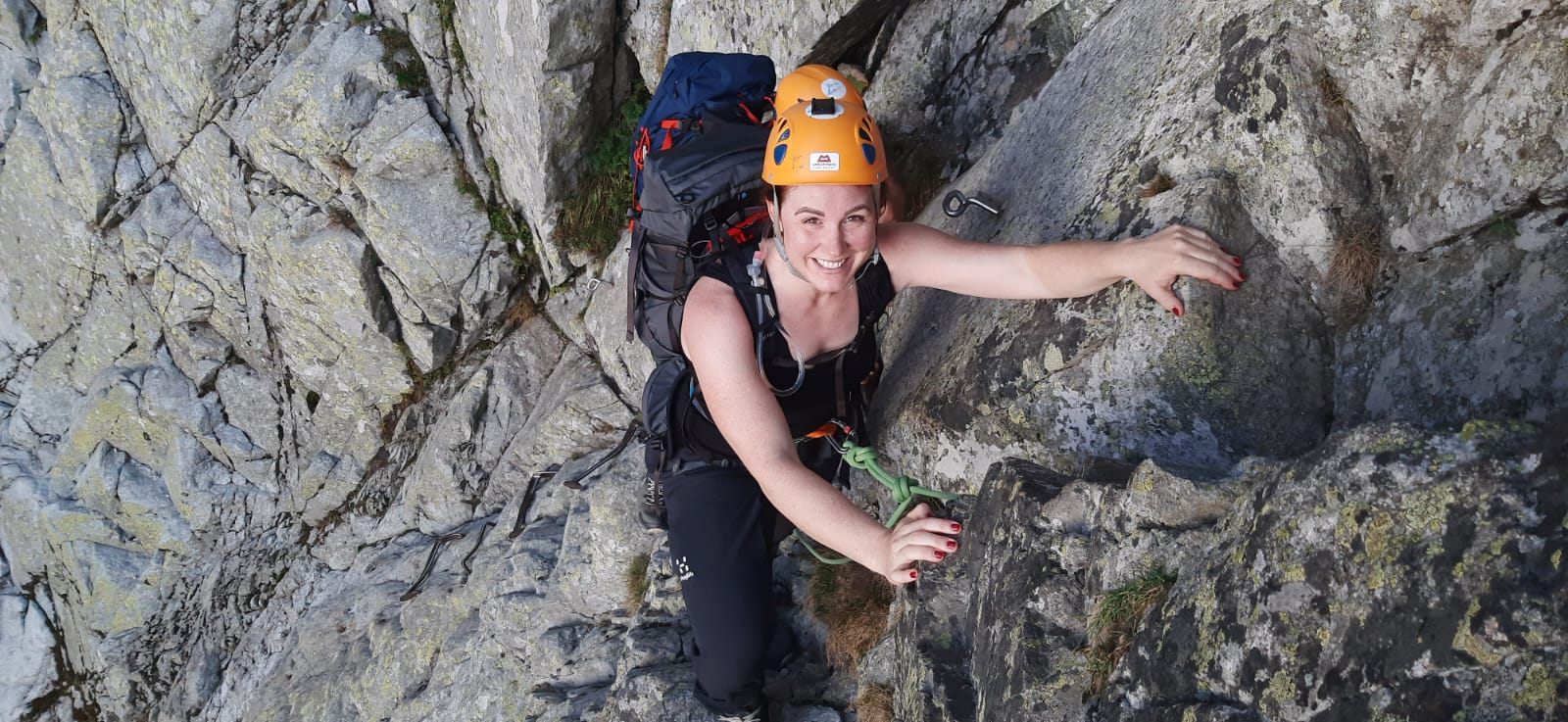
This is where the difference between gym strength and mountain confidence became obvious. Being strong helps – you can pull yourself up, and you don't tire quickly. But strength doesn't tell you whether a foothold will hold, and it doesn't take away the feeling of air beneath you. The hard part was the concentration: one move at a time, trusting Marek, trusting the rope, and not looking down more than necessary.
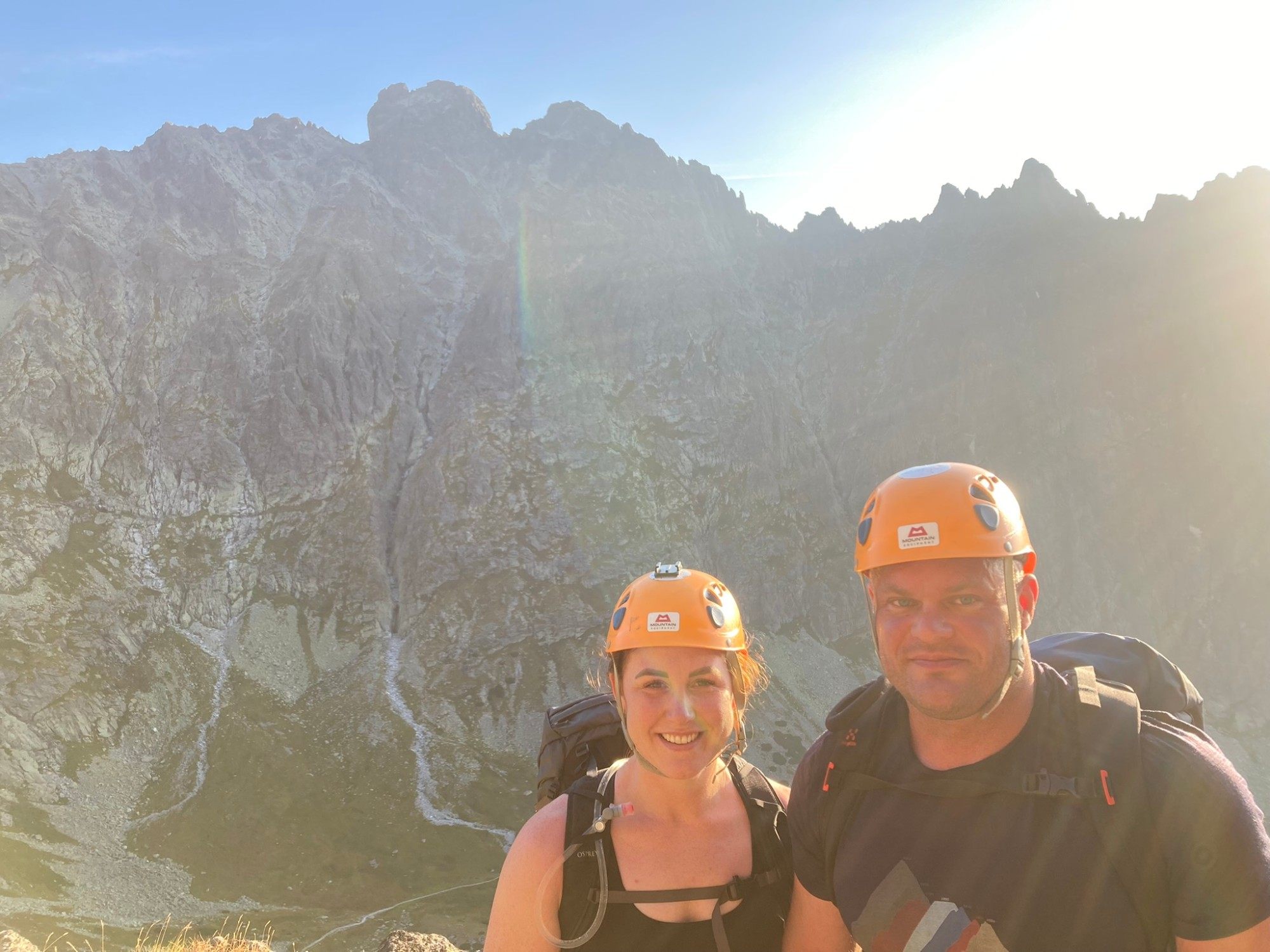
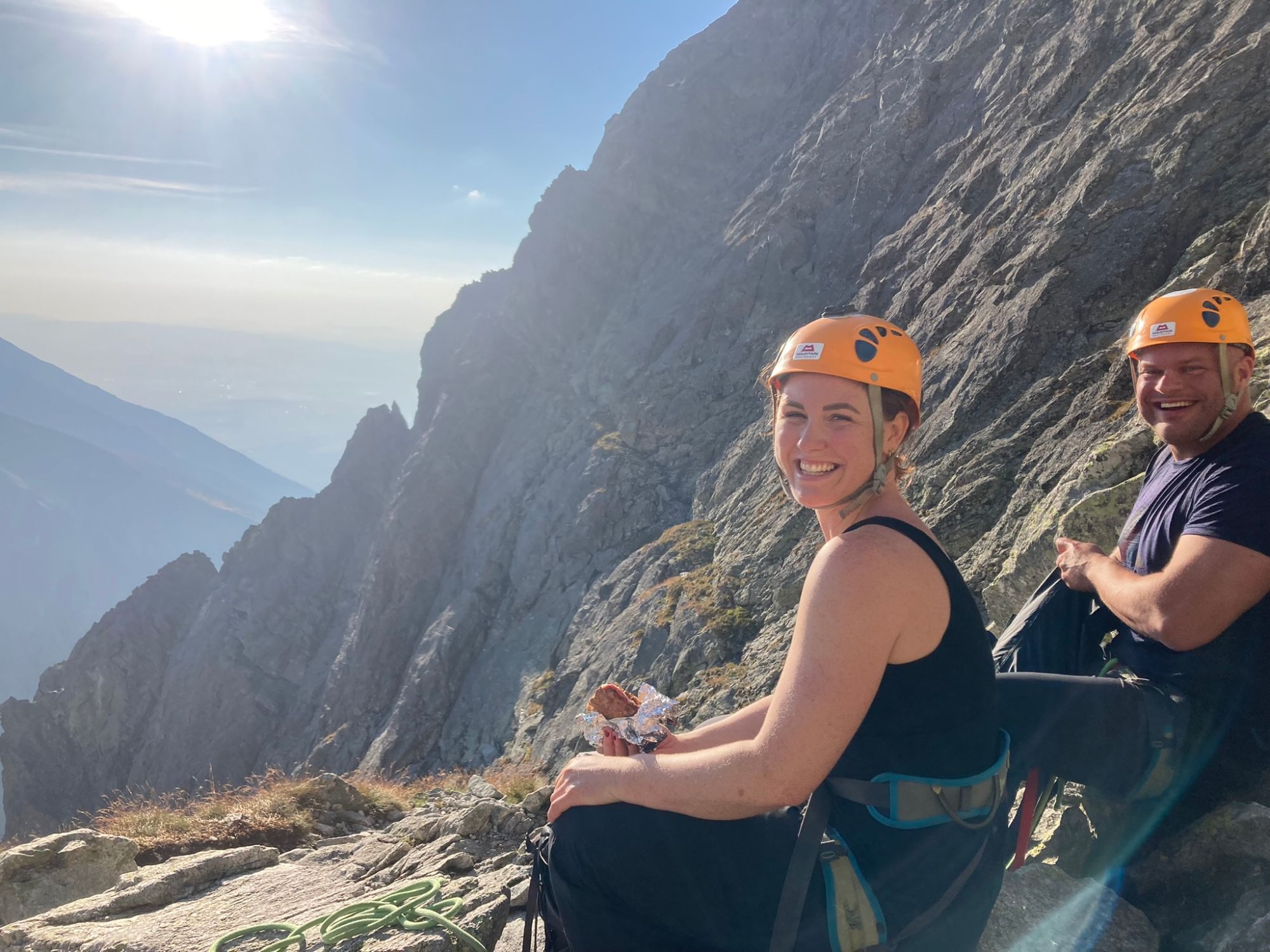
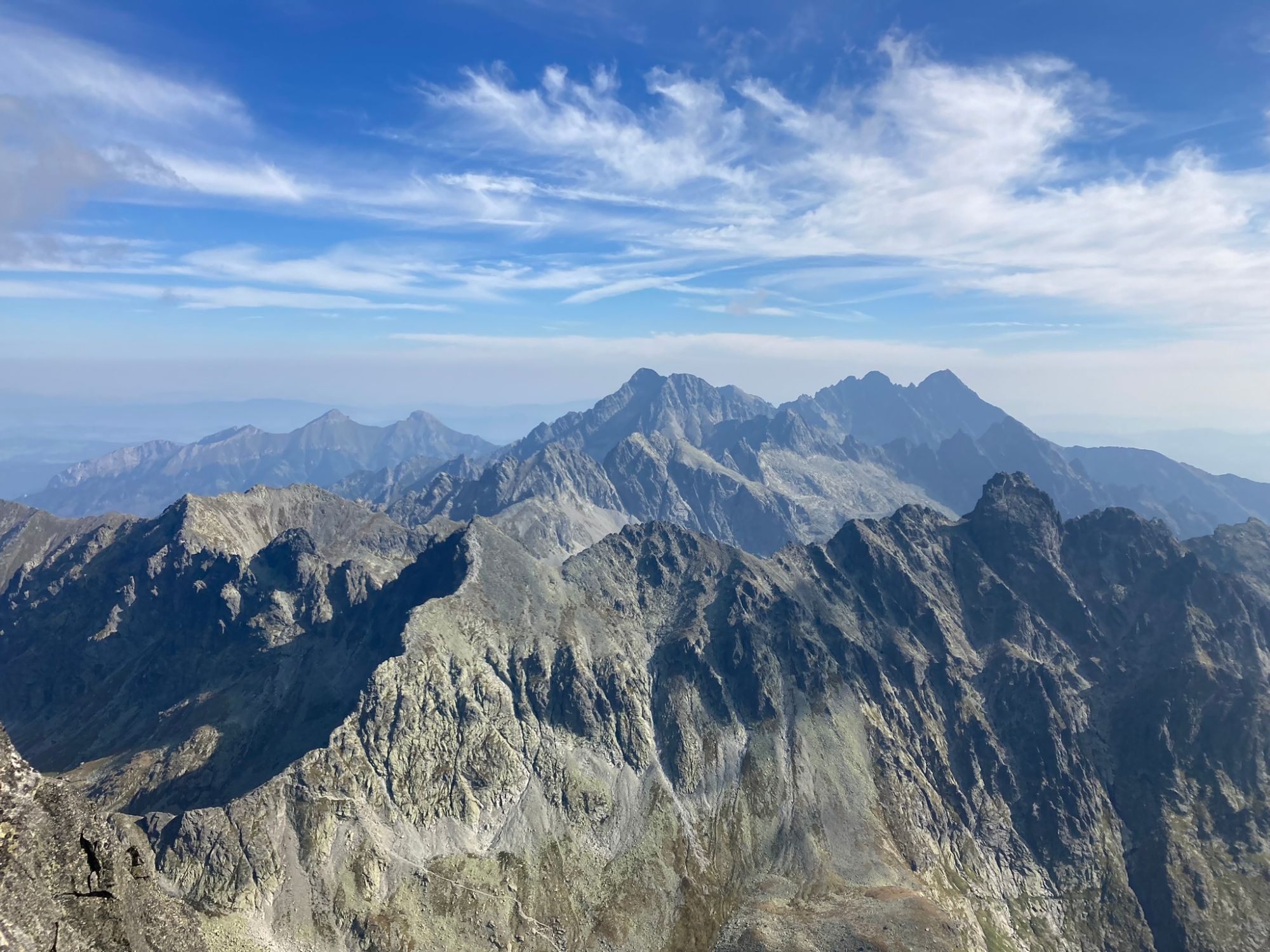
Higher up, the ridges of the High Tatras opened up around us, layer after layer in the morning haze.
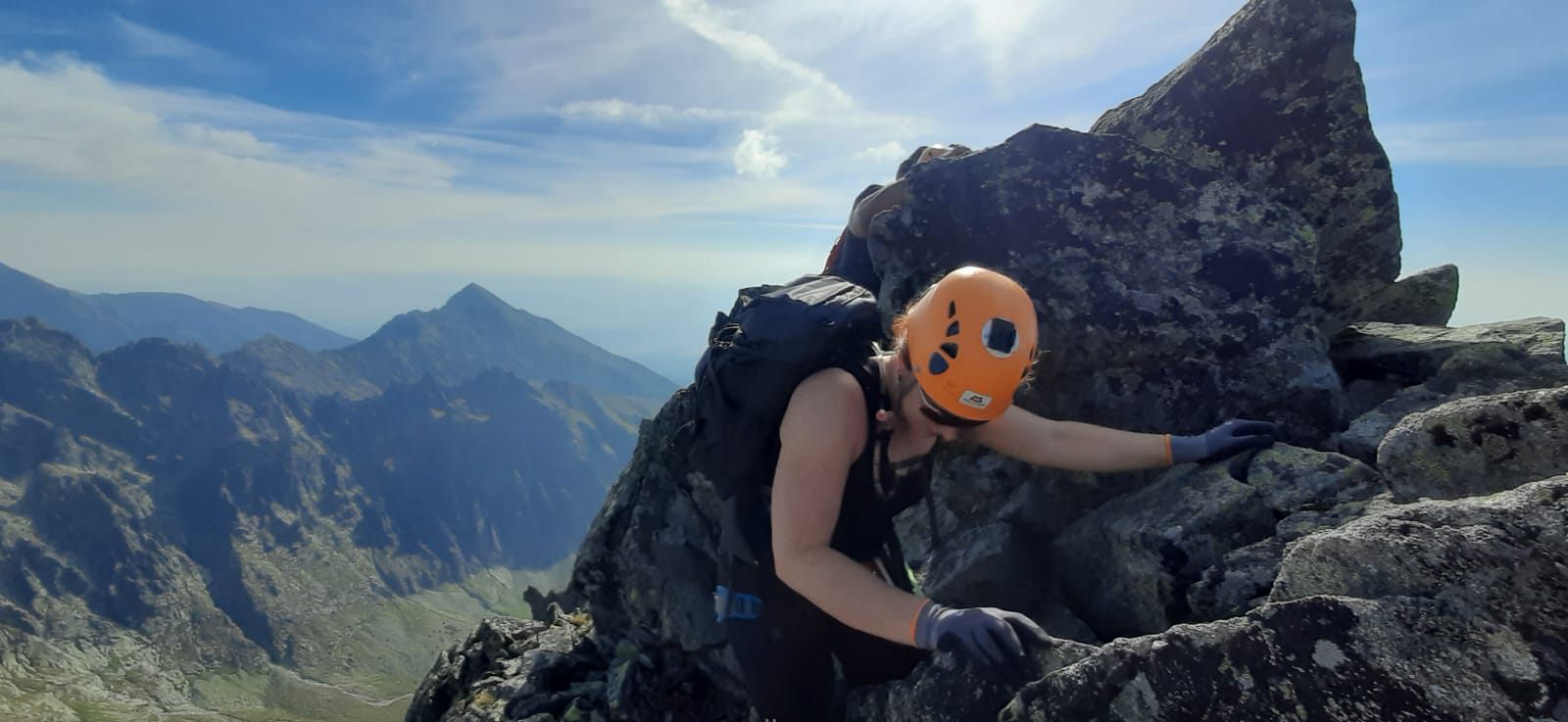
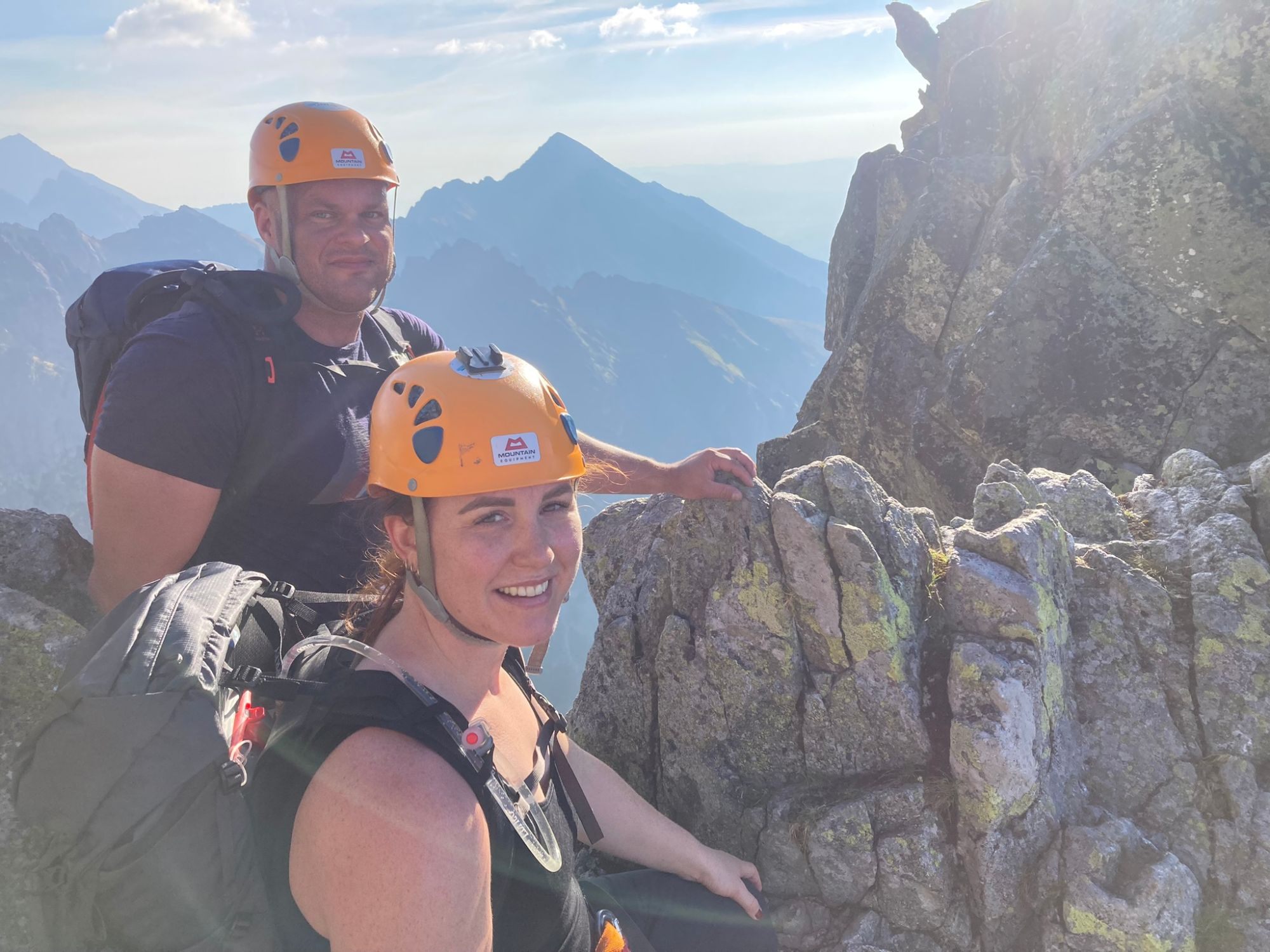
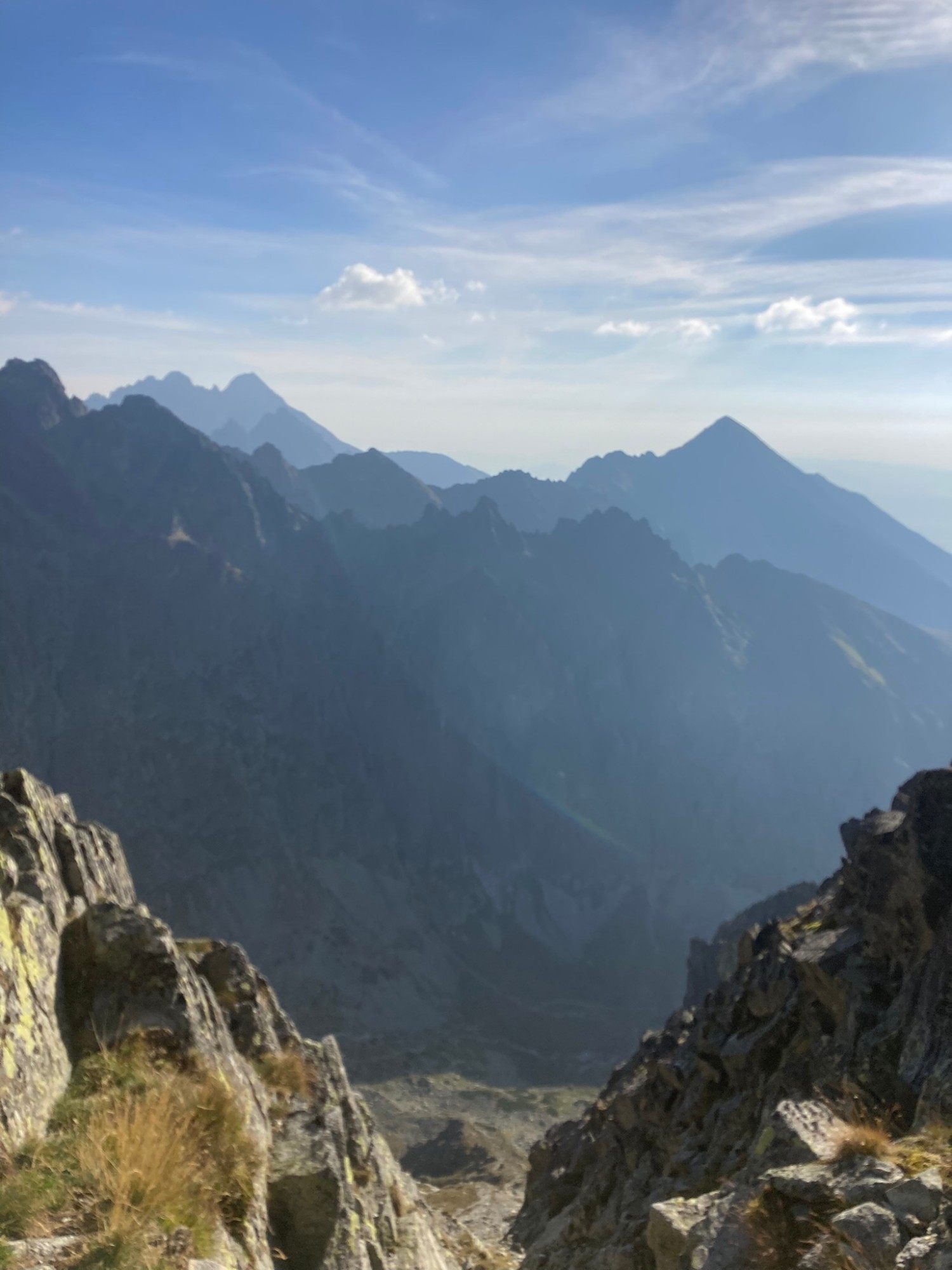
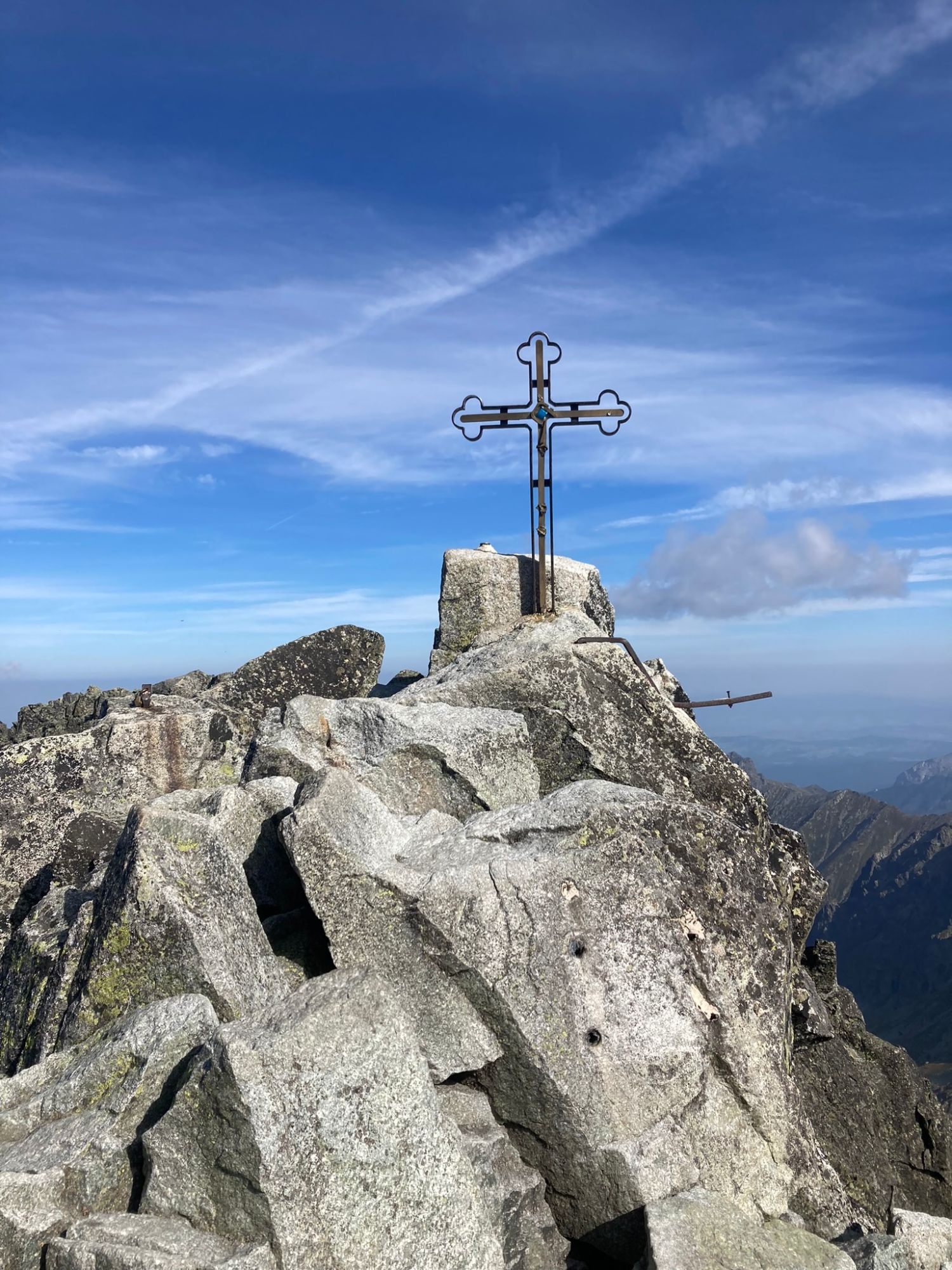
9.47am: the summit of Gerlachovský štít
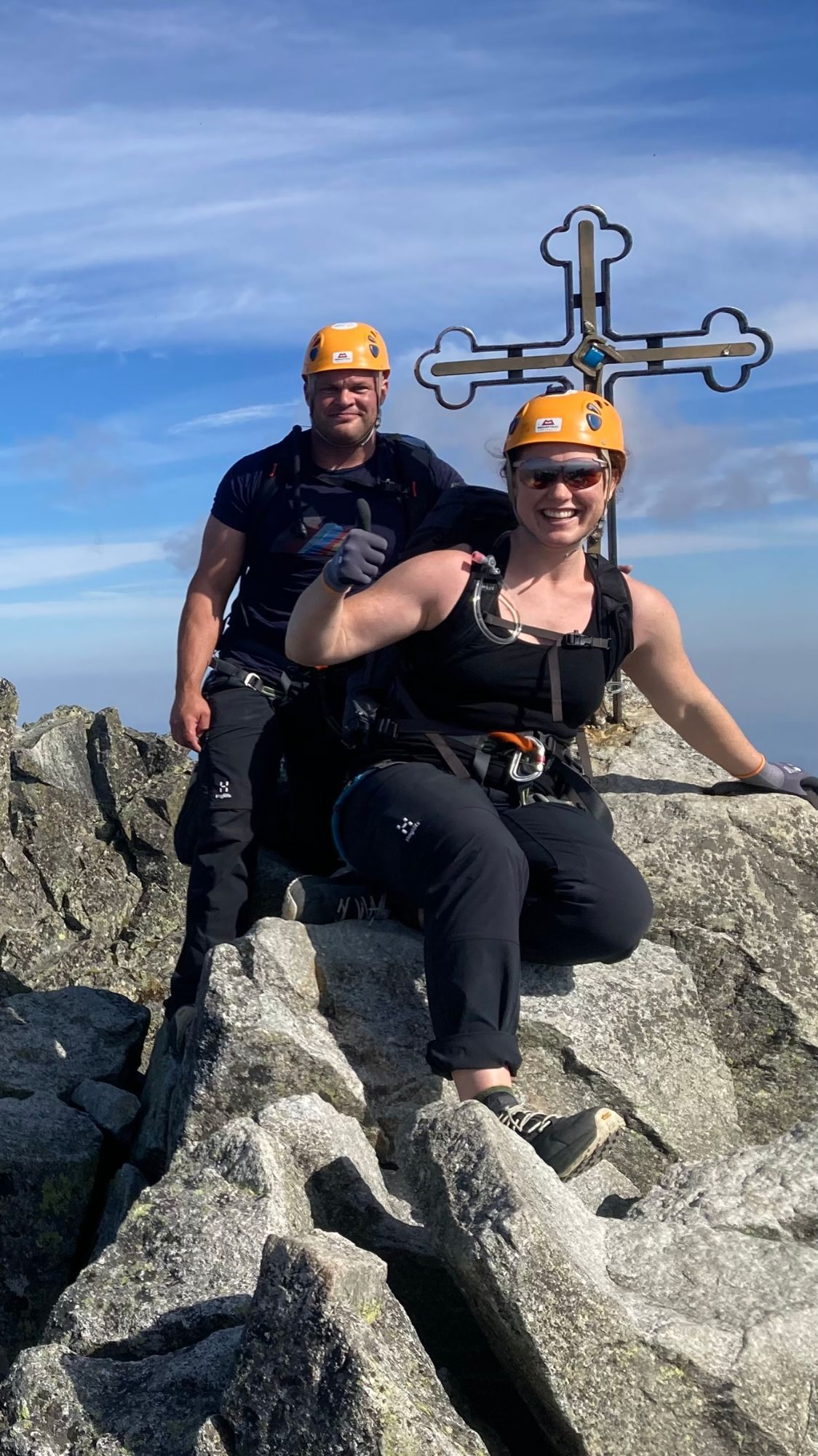
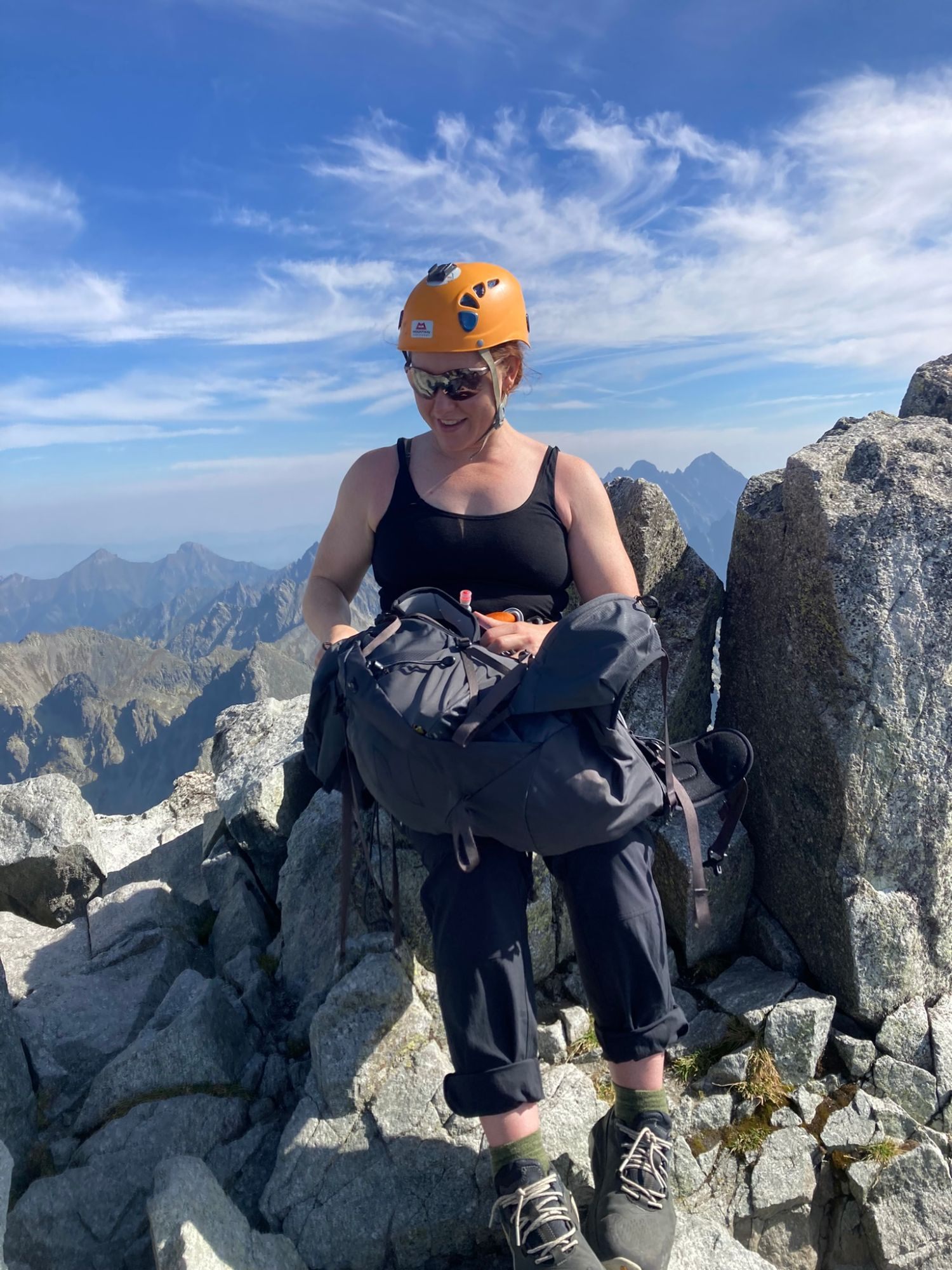
At 9.47am we stood on the top of Gerlachovský štít, 2,655 metres, next to the iron summit cross. Clear sky, thin clouds, and the whole High Tatras range spread out around us.
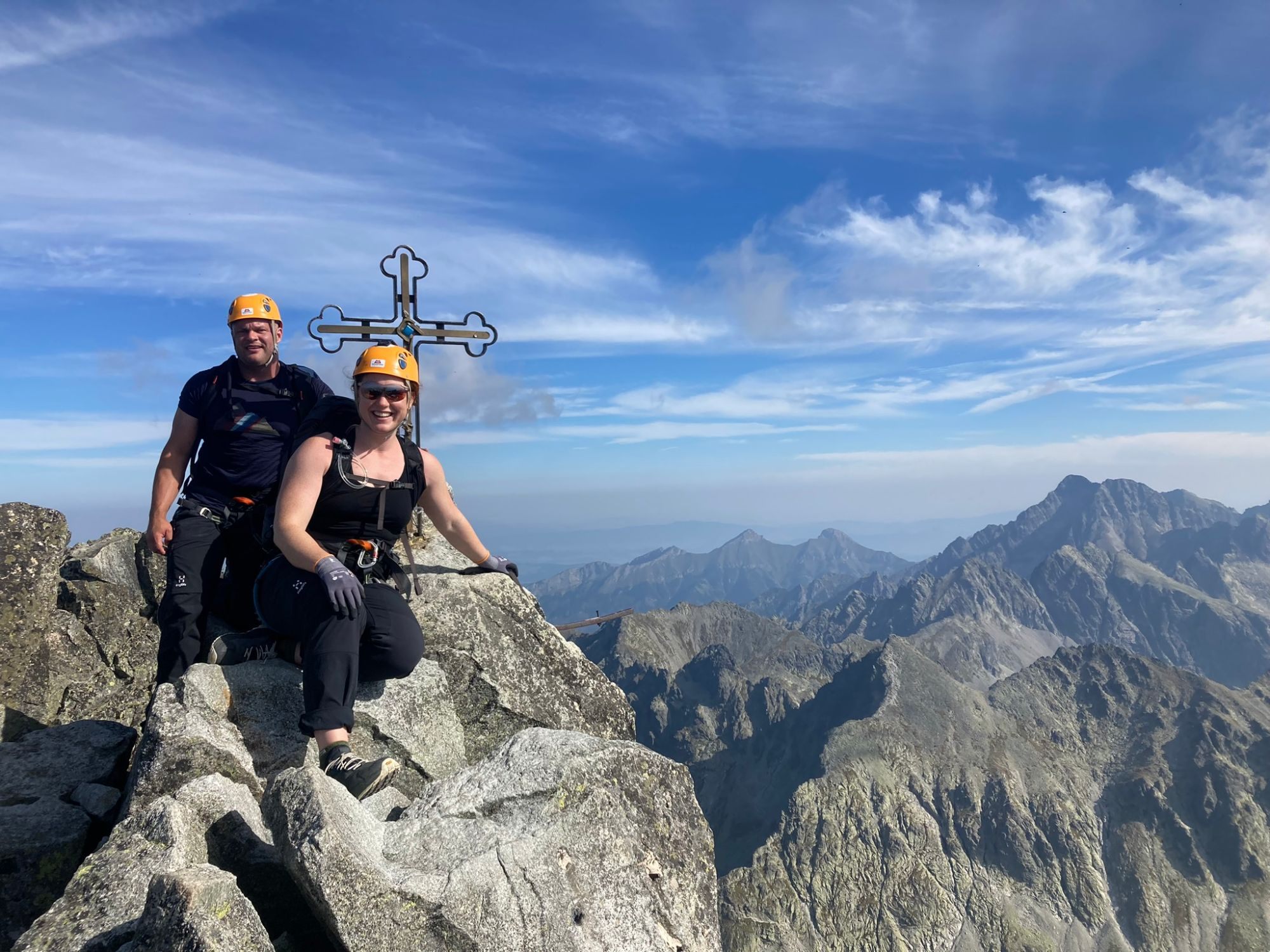
I have a certain fear of heights. Several times on the way up I'd asked myself why I'd signed up for this. That didn't make the summit less special. It made it more.
An armwrestling match at 2,655 metres
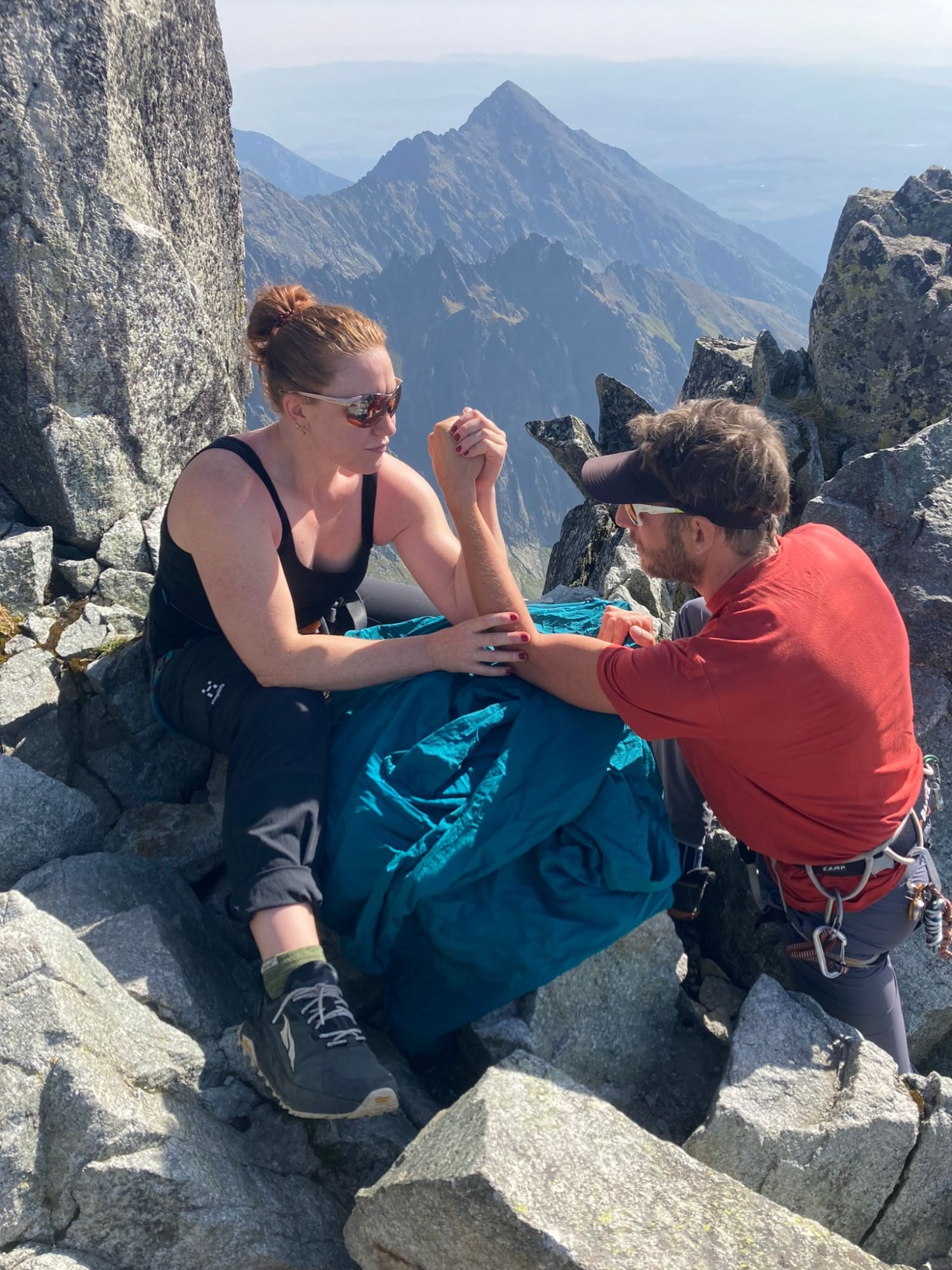
On the way up, the jokes had been flying: Marek the professional mountain guide, and us, the muscly Danes from strength sports. Kristine had agreed in advance to armwrestle him on the summit – so she did.
Marek has long fingers and a forearm that looks made for armwrestling. Kristine won anyway.
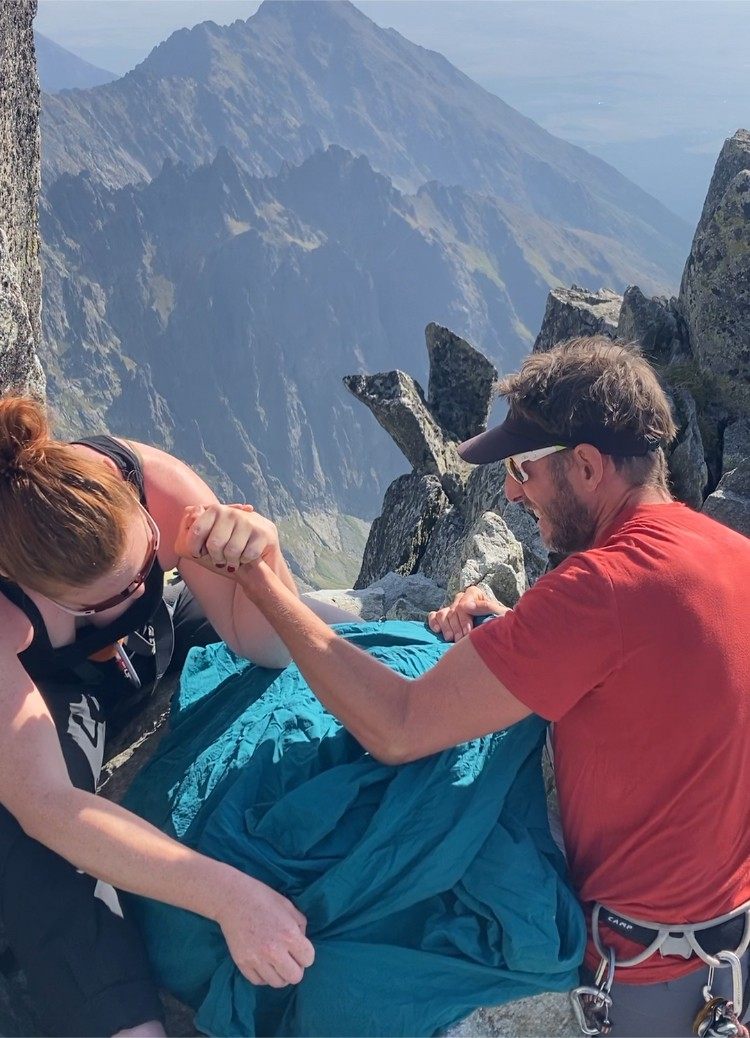
When someone suggested I should have a go too, Marek said very quickly that he would not be armwrestling me. Fair enough.
The descent: the hardest part of the day
If you think the summit is the end of the hard part, Gerlach will correct you. For us, the descent was the real test.
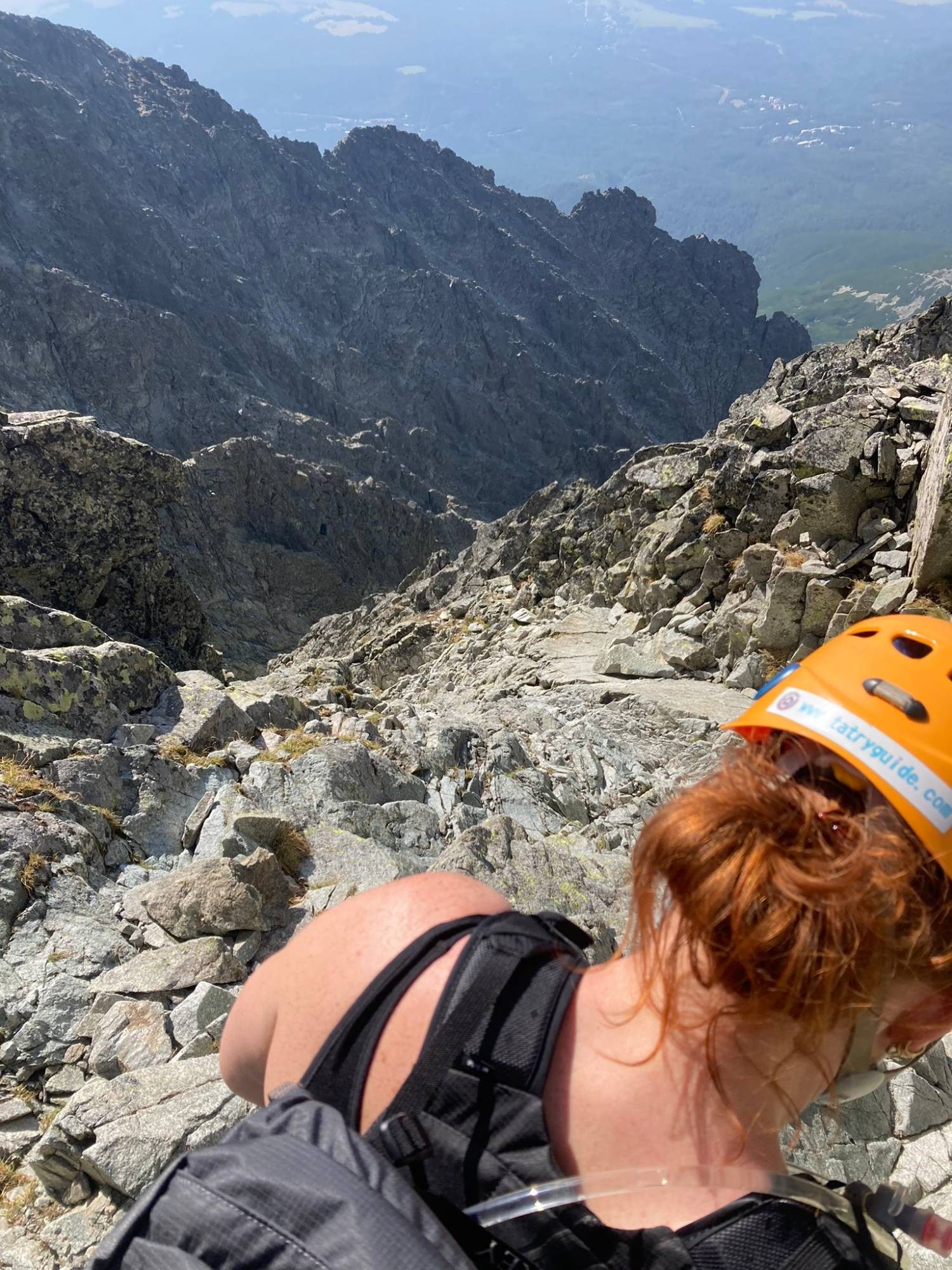
There's one passage I remember above everything else: very exposed terrain with small holds and small footholds, and a steep drop underneath. Kristine was at the bottom, I was in the middle, and Marek was above me, so he could help and secure me through it.
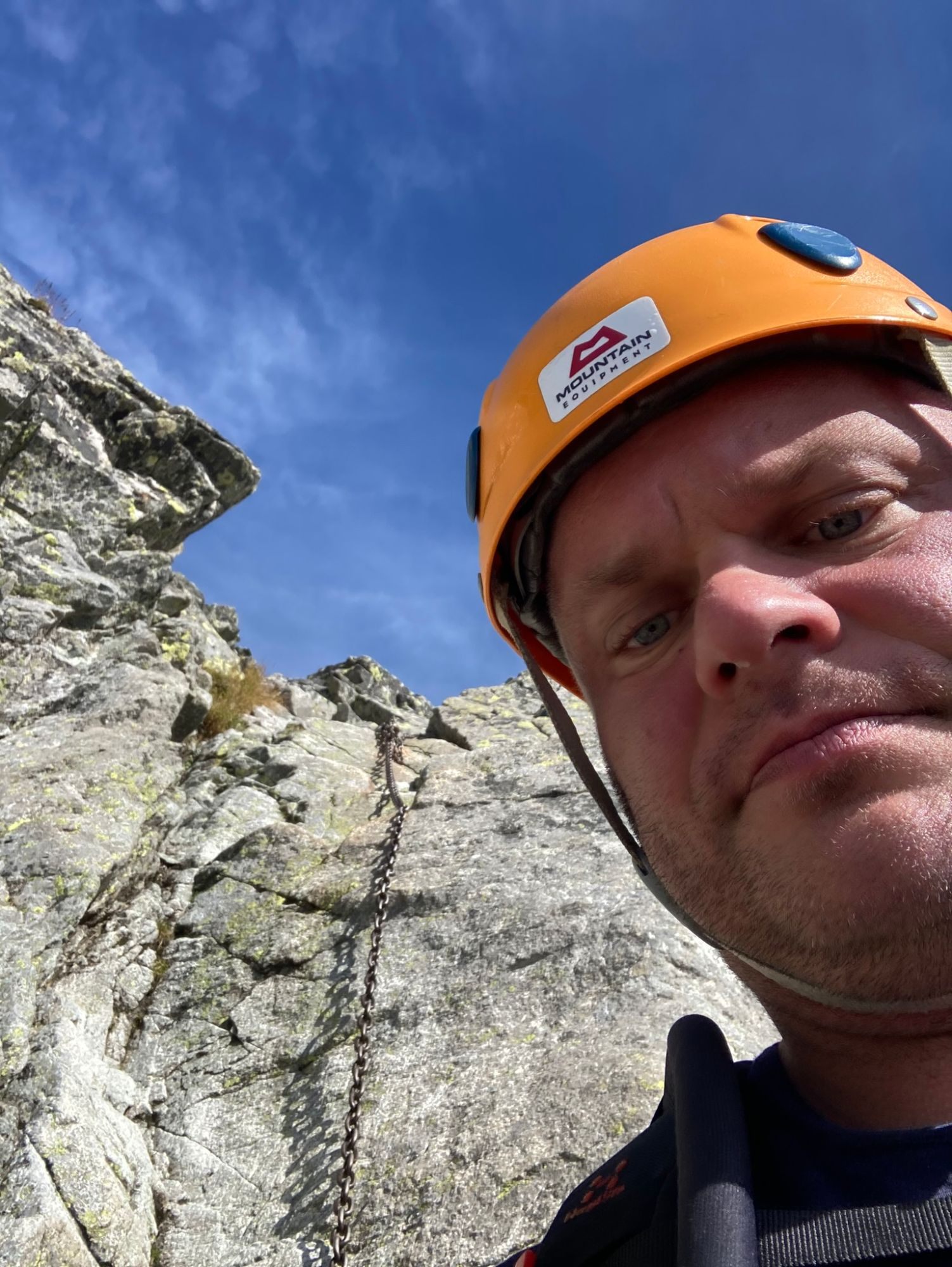
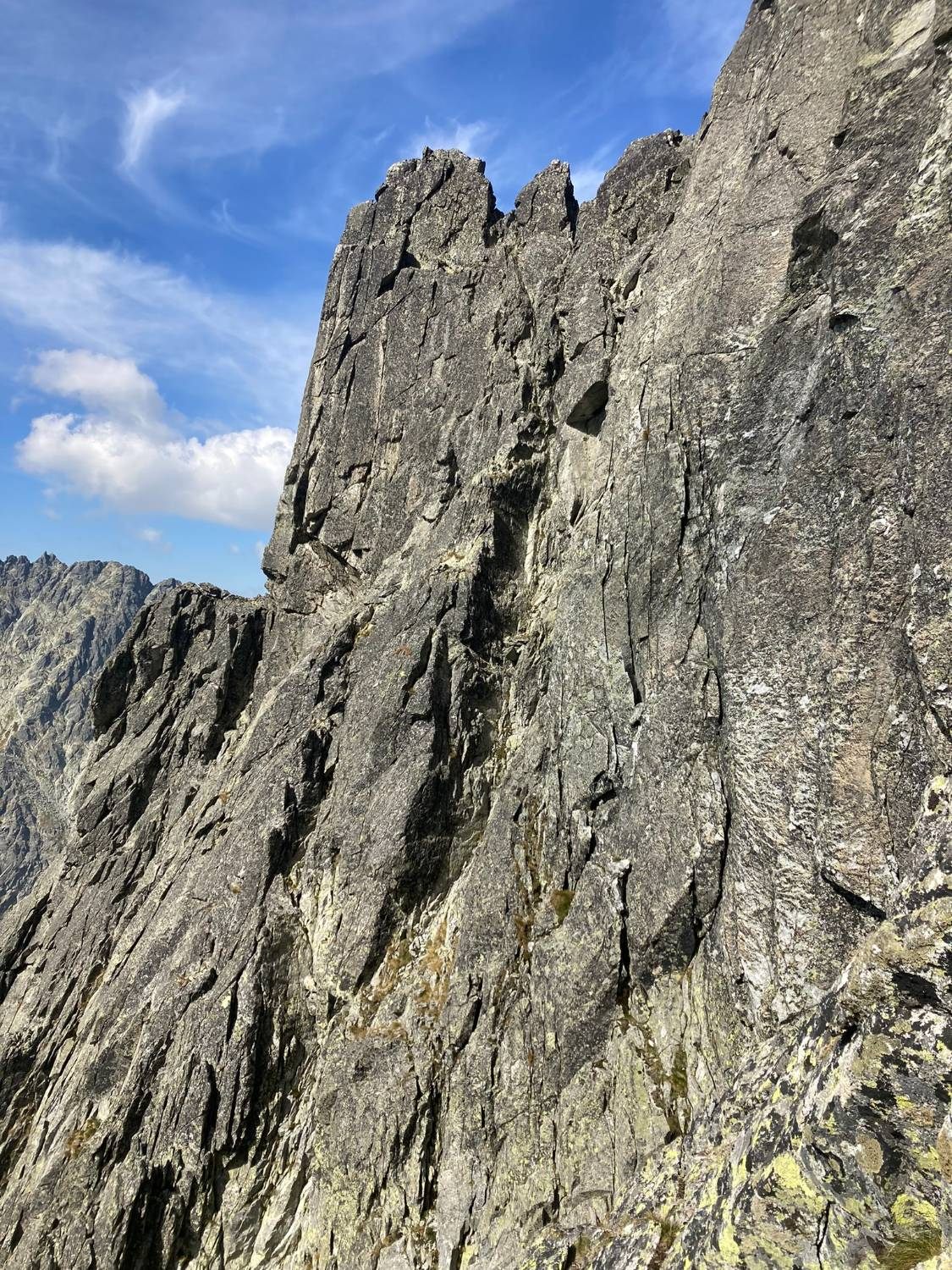
This is where my fear of heights came out. I was completely focused on where my hands and feet were going, and on staying calm.
Kristine is normally very comfortable with height – she has walked across a bridge in Italy with open steps, around 175 metres above the ground, wearing a harness, without it bothering her at all. But this was something else, and she came close to panic. At one point she couldn't reach the next foothold or hold below her.
I was hanging above her, holding on to a very small hold, and the thought in my head was my hook grip from strength training: I know I can hold 200 kg in one hand with that grip, so I can hold on here. It's a strange thing to think halfway down a mountain, and to be clear – a gym grip doesn't make an exposed passage safe. The rope and Marek did that. But it helped me stay calm.
We talked Kristine down until she was calm again. In the end she had to lower herself the last 20 centimetres or so onto the next place she could stand safely. Then we carried on, slowly, one step at a time. The relief when that section was behind us was enormous.
That passage is what I take with me from Gerlach. We were both pushed – just in different ways. I had to handle a fear I already knew I had. Kristine, who never worries about height, found out how physically and mentally hard an exposed descent can be.
Down to Batizovské pleso
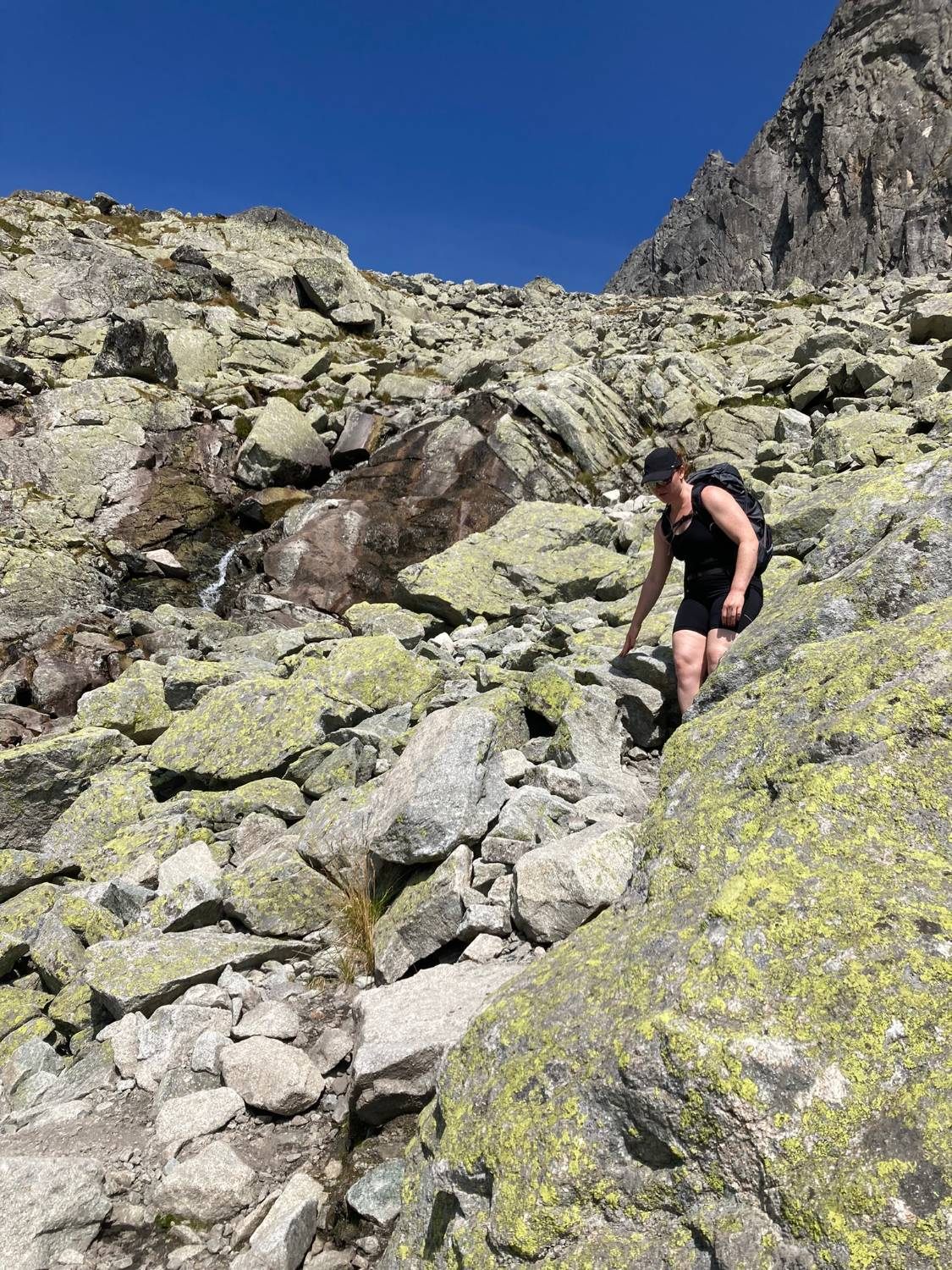
Around 12.00–12.30 we took off the harnesses. The hardest climbing was behind us, but there was still a long way to go over boulders and rocky paths. We came down past Batizovské pleso, a lake at 1,884 metres according to the park sign, from where the signpost said one hour back to Sliezsky Dom.
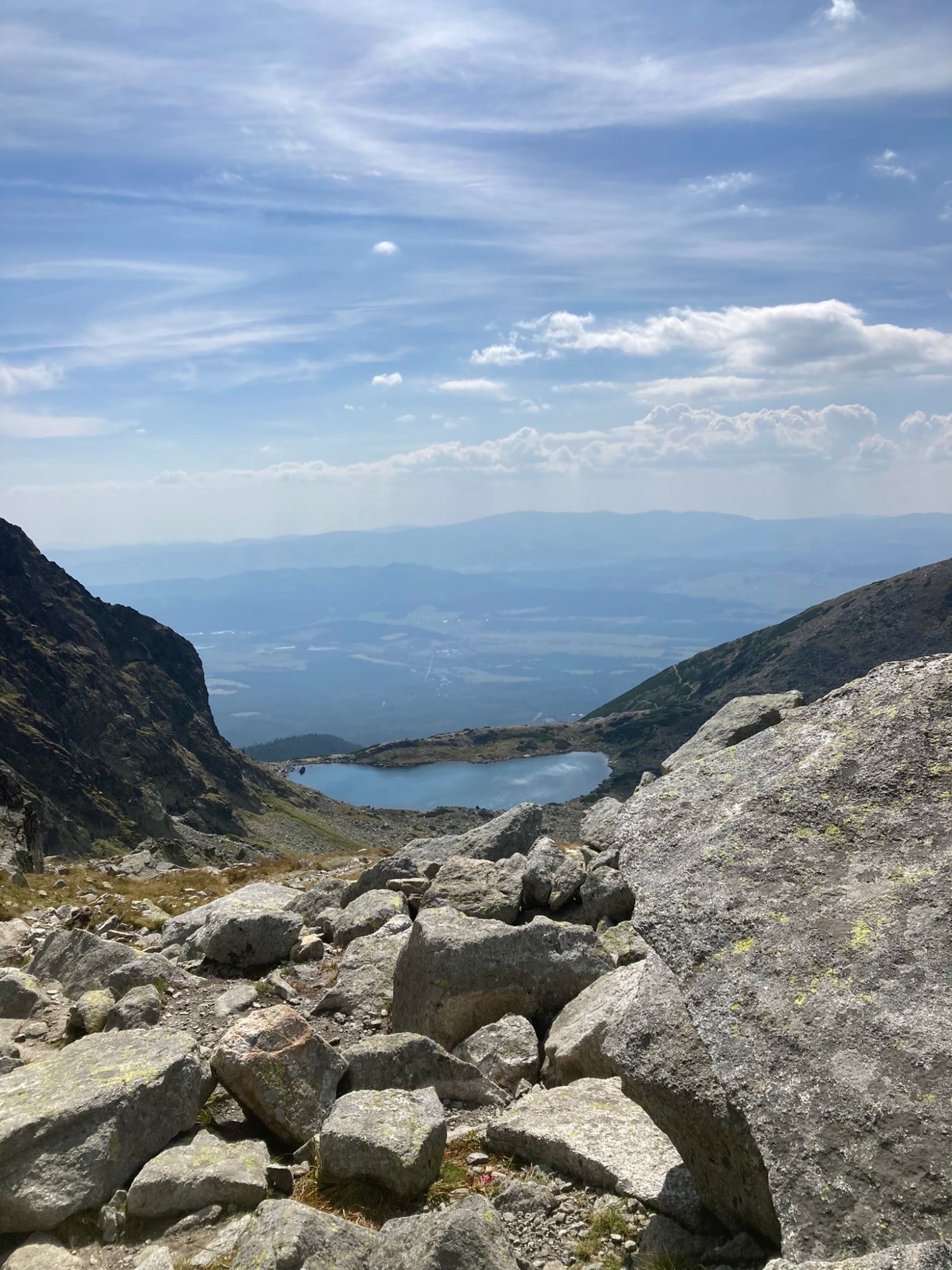
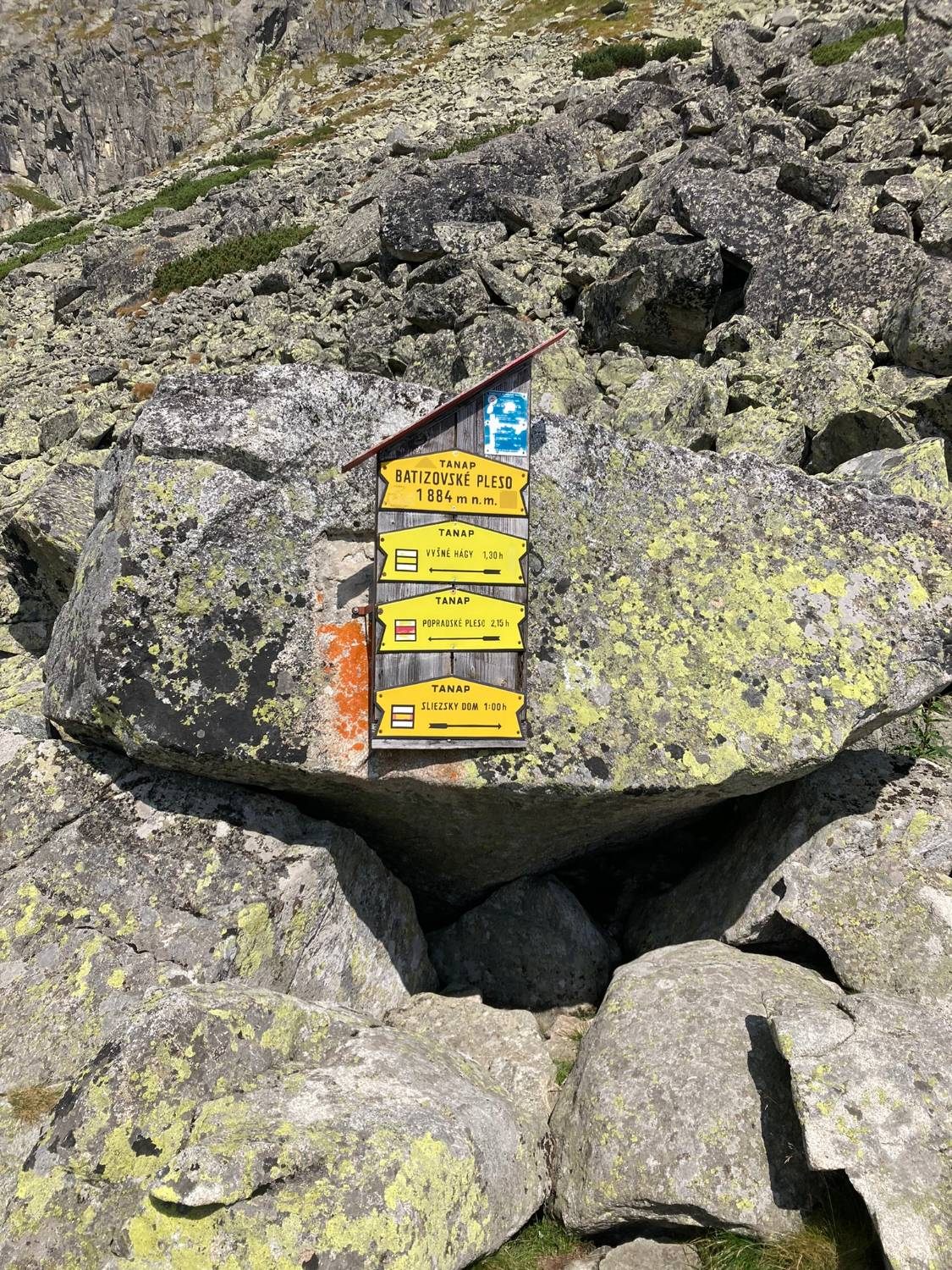
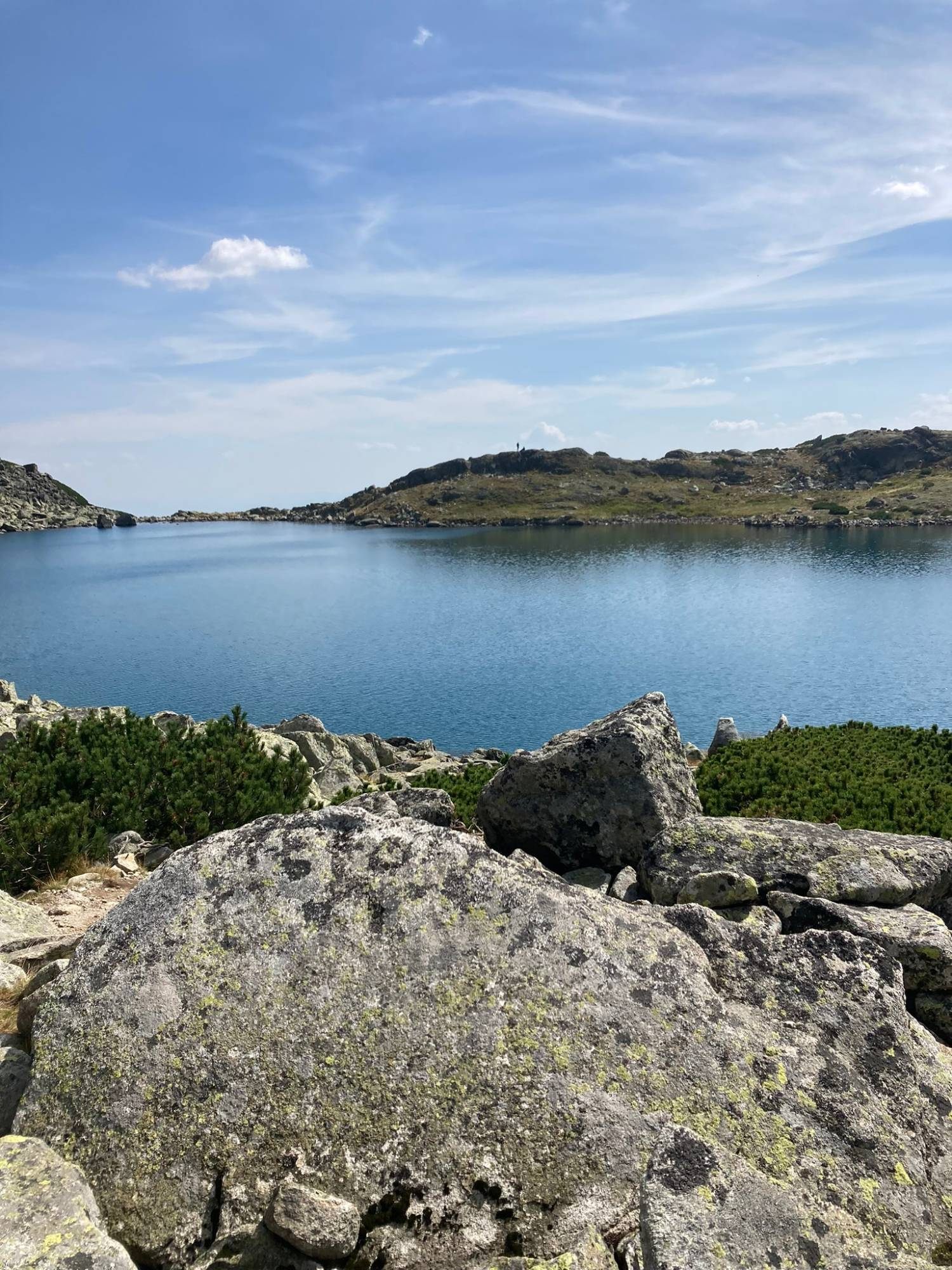
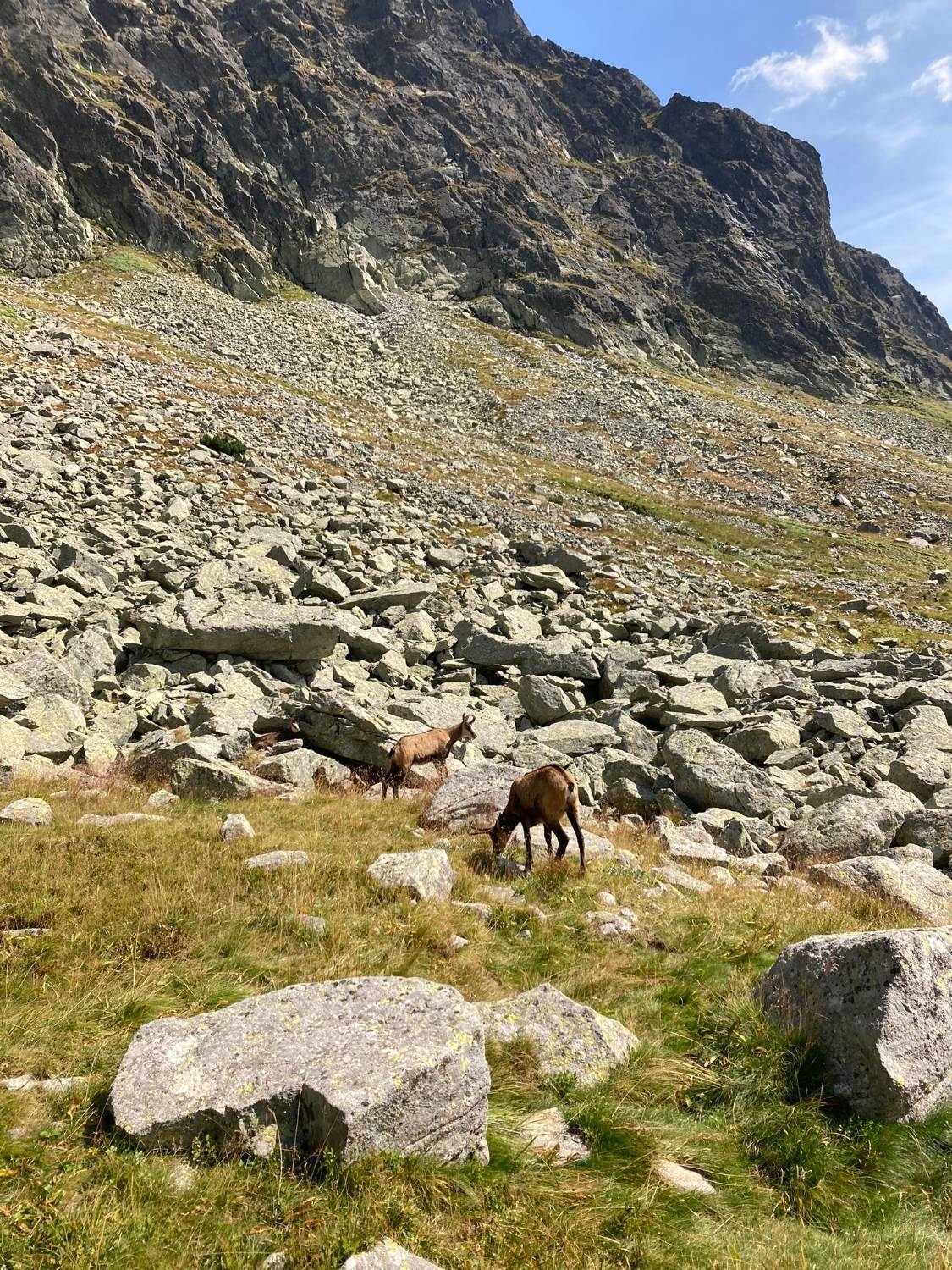
On the way we passed a few chamois grazing below the cliffs, completely unbothered by us.
Bears in the High Tatras: what our guide told us
On the last part of the walk we saw something on the path that looked like bear droppings. Later, closer to the hut, we noticed several hikers with bear bells on their packs.
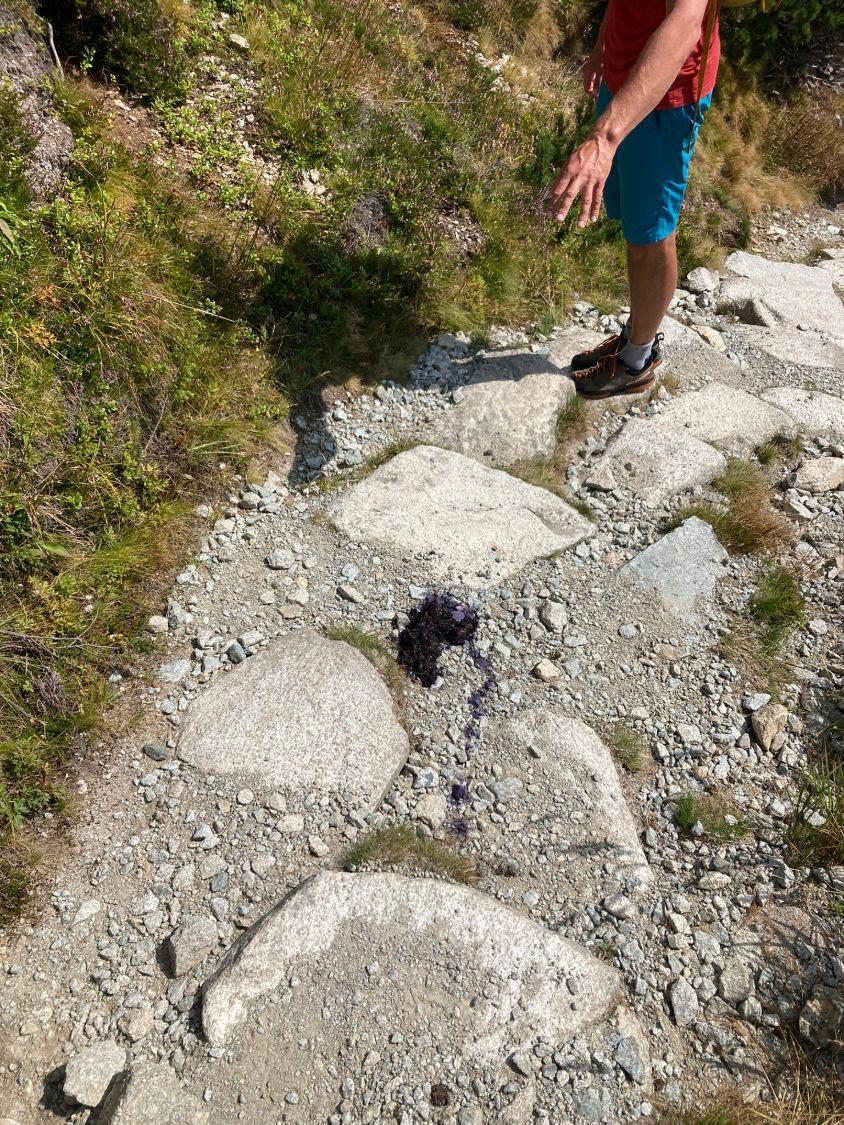
That led to a conversation with Marek about bears in Slovakia, and about two serious incidents from March 2024.
On 15 March 2024, a 31-year-old woman from Belarus died in the Demänovská valley in the Low Tatras. According to Slovak public broadcaster STVR, she and her companion were scared by a bear and ran in different directions; police said she apparently fell from a height and suffered a fatal head injury.
Two days later, on 17 March, a bear ran through the streets of Liptovský Mikuláš and injured five people, aged between 10 and 72. Marek told us that his brother was one of them: according to Marek, his brother was out cycling while his son rode an electric scooter, the bear knocked him off the bike and injured him, and people nearby stepped in before he went to hospital. That part is Marek's account, not something we've checked independently.
We didn't see a bear ourselves – just what looked like droppings and a lot of bear bells. But it's a reminder that these mountains are wild, and it's worth reading up on how to behave if you meet one.
Sources: Radio Slovakia International (STVR), The Guardian, Sky News.
Back at Sliezsky Dom
Around 2.30pm we were back at Horský Hotel Sliezsky Dom. Tired, full of adrenaline and very happy. We'd done a climb that was far harder than we'd expected, with a guide we'd go back to any day.
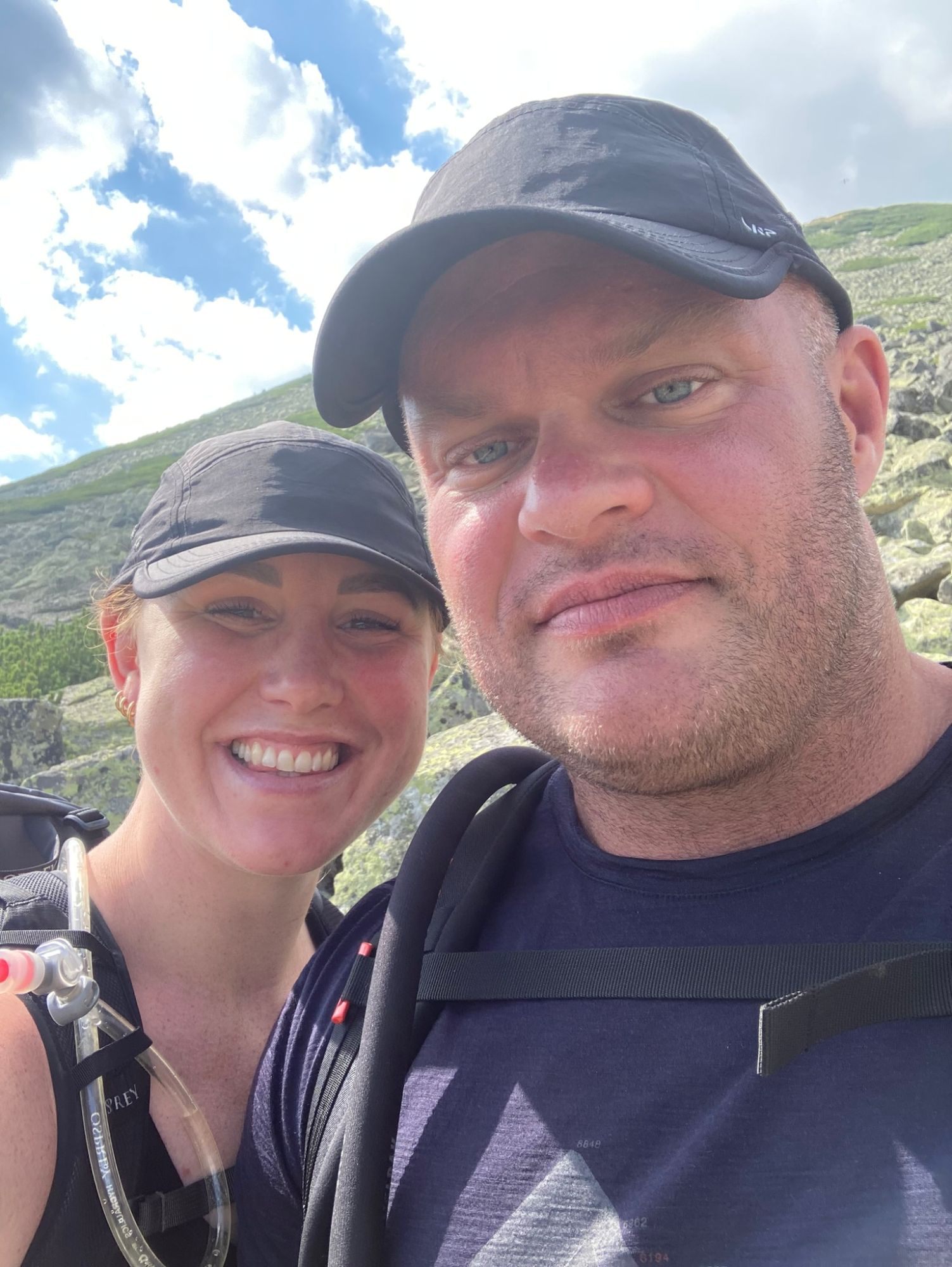
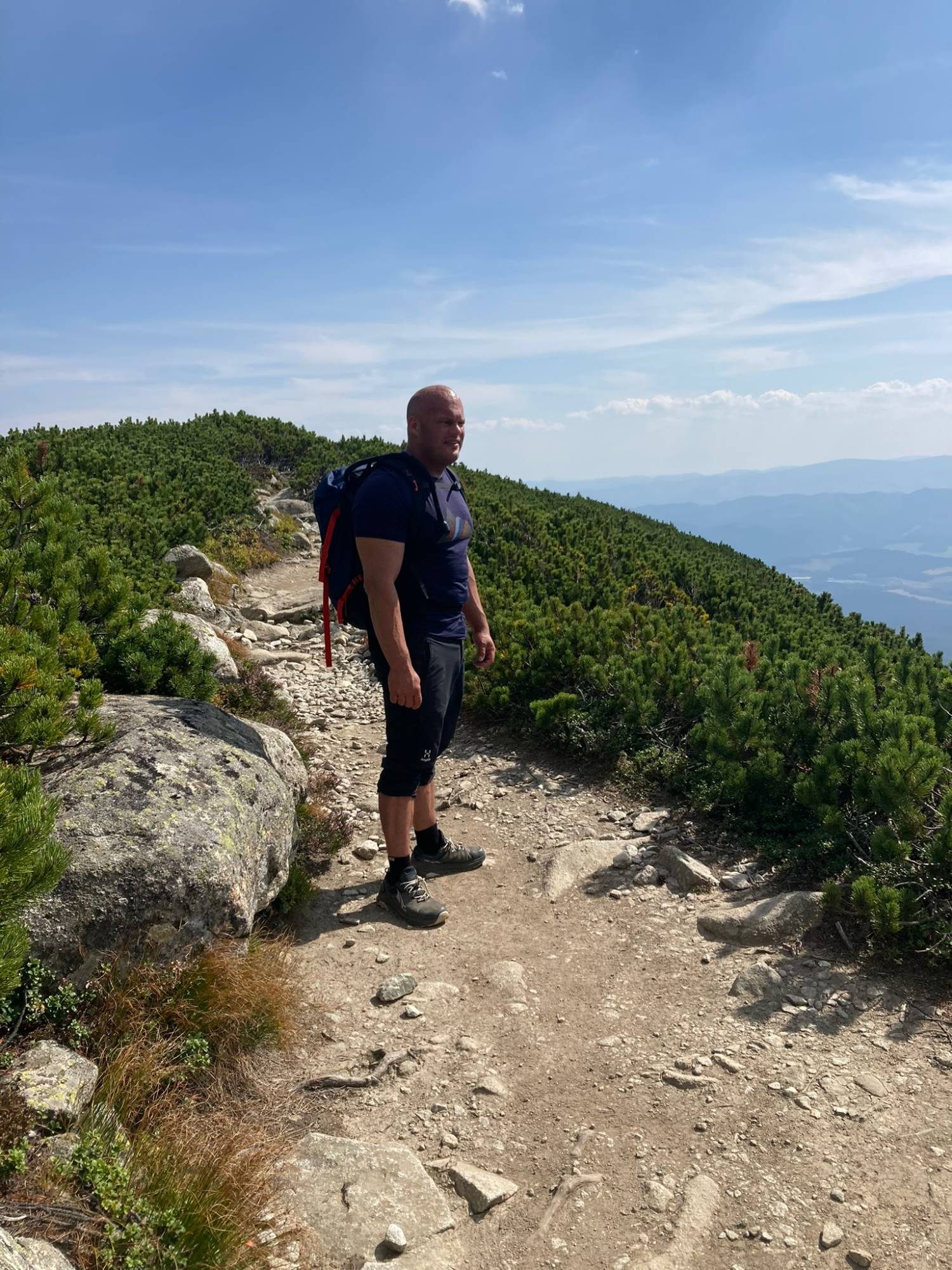
From Sliezsky Dom we were driven down the mountain road in a van, about six kilometres, to the car park where our own car was waiting. From there it was a 15–20 minute drive to our next stay, Penzión Snežienka.
An unpleasant check-in
We'd booked Penzión Snežienka because it was cheap. The experience wasn't good. When we arrived, we couldn't get in through the self check-in system. We tried to sort it out ourselves and in the end called the owner. On the phone he sounded very drunk, and the conversation was rude and frustrating. It took somewhere between half an hour and an hour before we got in – we sat outside, relaxed a bit and filmed some stories while we waited for him to call back.
Eventually we got the door open, dropped our bags and could finally relax. Based on our own experience, we wouldn't recommend it. It was cheap – but that's all we can say for it.
Burgers and beer – the end of a long day
Once we were settled, we went into town for something to eat. Around 7pm we were sitting at Humno in Tatranská Lomnica with burgers and fries, a plate of sausages on sauerkraut, and a well-earned beer.
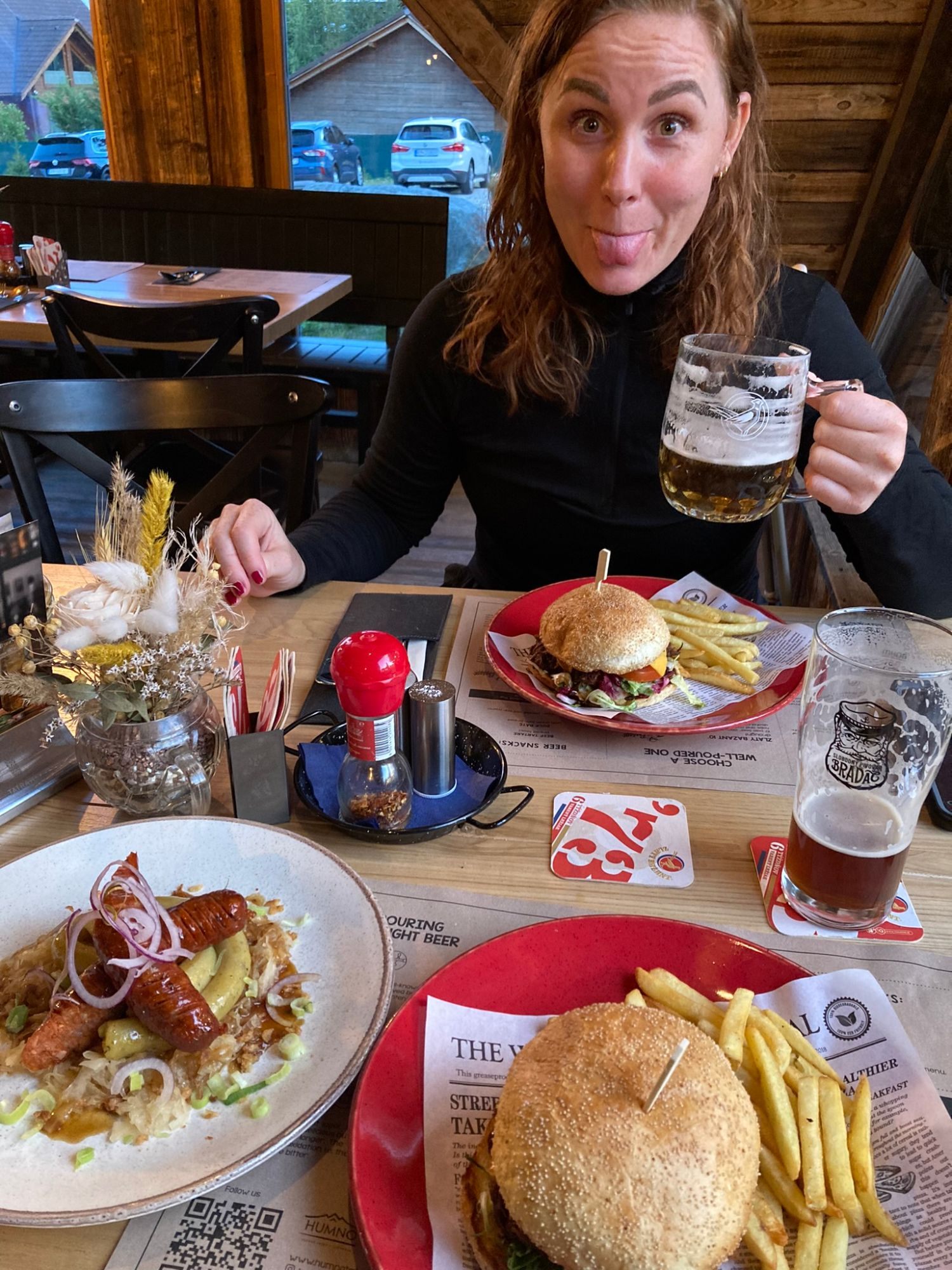
Then bed. The physical effort was one thing; the hours of concentration were another. We were both completely empty – and both very pleased.
What we learned from climbing Gerlachovský štít
- Gerlach is not a hike. It's scrambling and climbing on exposed rock, with helmets, harnesses and ropes. Fitness gets you up the approach. It doesn't make the exposure easier.
- Strength is not the same as mountain skill. Being strong helped. Knowing where to put your feet – and staying calm while you do it – mattered more.
- The descent can be the crux. Save energy and focus for the way down.
- A good guide makes the day. Marek's calm instructions are the reason we got through the hard bits safely and still enjoyed them.
- Start early. We met at 5.30am and were back by mid-afternoon, with good weather the whole way.
We both climbed Gerlach in the Altra Olympus 5 Hike Low GTX. We mainly hike in Altra and Topo Athletic because of their wide toe boxes, which give our toes room to spread naturally – I have very wide feet, and finding shoes that fit hasn't always been easy. You can see the current Altra range at Outnorth. (Affiliate link.) More about how we chose our shoes.
Adventures aren't only about reaching the top. Sometimes they're about being tested in ways you didn't see coming – and finding out you can handle it.
Practical information
| When | 4 September 2024 |
|---|---|
| Mountain | Gerlachovský štít, 2,655 m – the highest peak in Slovakia and the Carpathians (some sources give 2,654 m) |
| Route | Start and finish at Horský Hotel Sliezsky Dom, about 1,670 m, by Velické pleso. TatryGuide describes the route as up via the Velická próba and down via the Batizovská próba to Batizovské pleso (1,884 m), then back along the main trail: about 12 km and 1,000 m of ascent, graded UIAA I–II. |
| Our times | Start 5.30am, summit 9.47am, harnesses off ~12.00–12.30, back at Sliezsky Dom ~2.30pm |
| Guide | Marek Biskupič, TatryGuide. We found the trip through Explore-Share. The guide provided ropes, harnesses and helmets. We can't remember exactly what we paid – check TatryGuide's current prices, which depend on group size. Rescue insurance is not included in their price. |
| Do you need a guide? | Yes, in practice. There is no marked trail to the summit. Unless you're a member of a climbing club recognised by the UIAA, you need a licensed mountain guide. Check the current rules with the Tatra National Park (TANAP) or a local guide before you go. |
| Stayed | Horský Hotel Sliezsky Dom (night before), booked through Hotels.com. Penzión Snežienka afterwards – not recommended, based on our check-in. |
Background: tatry.sk – Ascent to Gerlach and SummitPost – Gerlachovský štít. Rules and routes can change; this is how it was for us in September 2024.