The morning after lifting the Dinnie Stones, we were back on the road. Our next stop was another piece of Scotland's stone-lifting history: the Barevan Stone, a 105 kg granite boulder lying in the grounds of an old ruined church in the Highlands.
It turned into one of the fullest days of the whole trip – an overhead lift in a medieval churchyard, an old bridge over a waterfall, the Jacobite steam train crossing Glenfinnan Viaduct and a shipwreck on the shore of Loch Linnhe. It also taught us something about planning a Scottish road trip.
The short version
23 August 2023: The Boat Inn in Aboyne – the Barevan Stone, where I pressed the 105 kg stone overhead – Invermoriston Bridge and Falls – Glenfinnan Viaduct and the Jacobite train – the Old Boat of Caol – Coire Glas Guest House near Spean Bridge. Google Maps puts the route at about 188 miles and just over five hours of driving. Every stop was worth it. We just tried to fit too much into one day.
Driving north through the Highlands
We checked out of The Boat Inn in Aboyne and headed north-west through the Highlands towards Nairn and the Barevan Stone. This wasn't a sightseeing stop for me. The Dinnie Stones had gone well the day before, and the Barevan Stone was a different test – a single round stone, lifted the old way, in a completely different setting.
The Barevan Stone: a 105 kg historic lifting challenge
We arrived around midday and spent about an hour and a quarter at the site. You go through an old iron gate in a stone wall into what's left of St Barevan's Church: roofless walls, grass, old trees – and, at the foot of a stone sarcophagus, an oval granite stone of about 105 kg (231 lb).
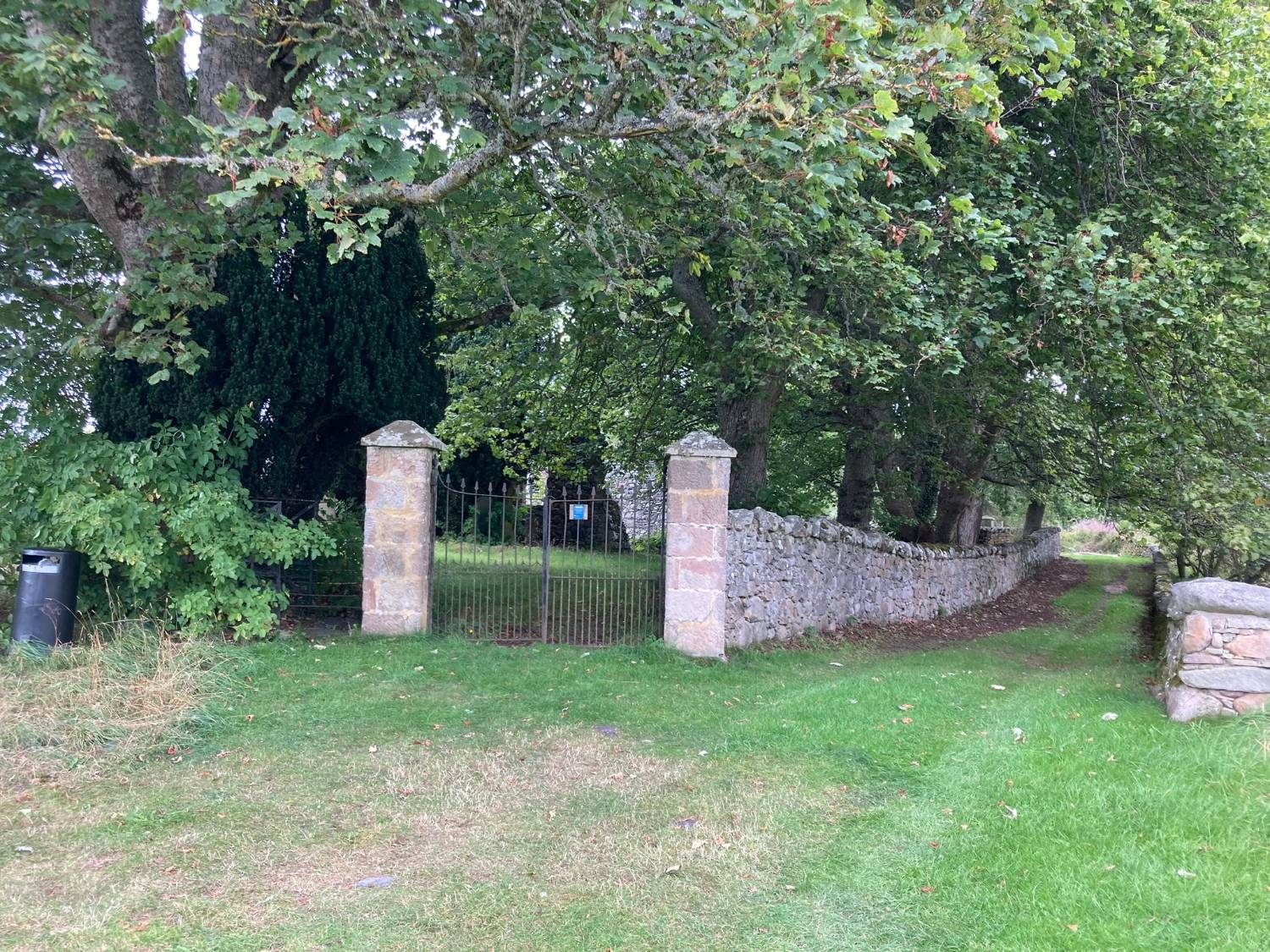
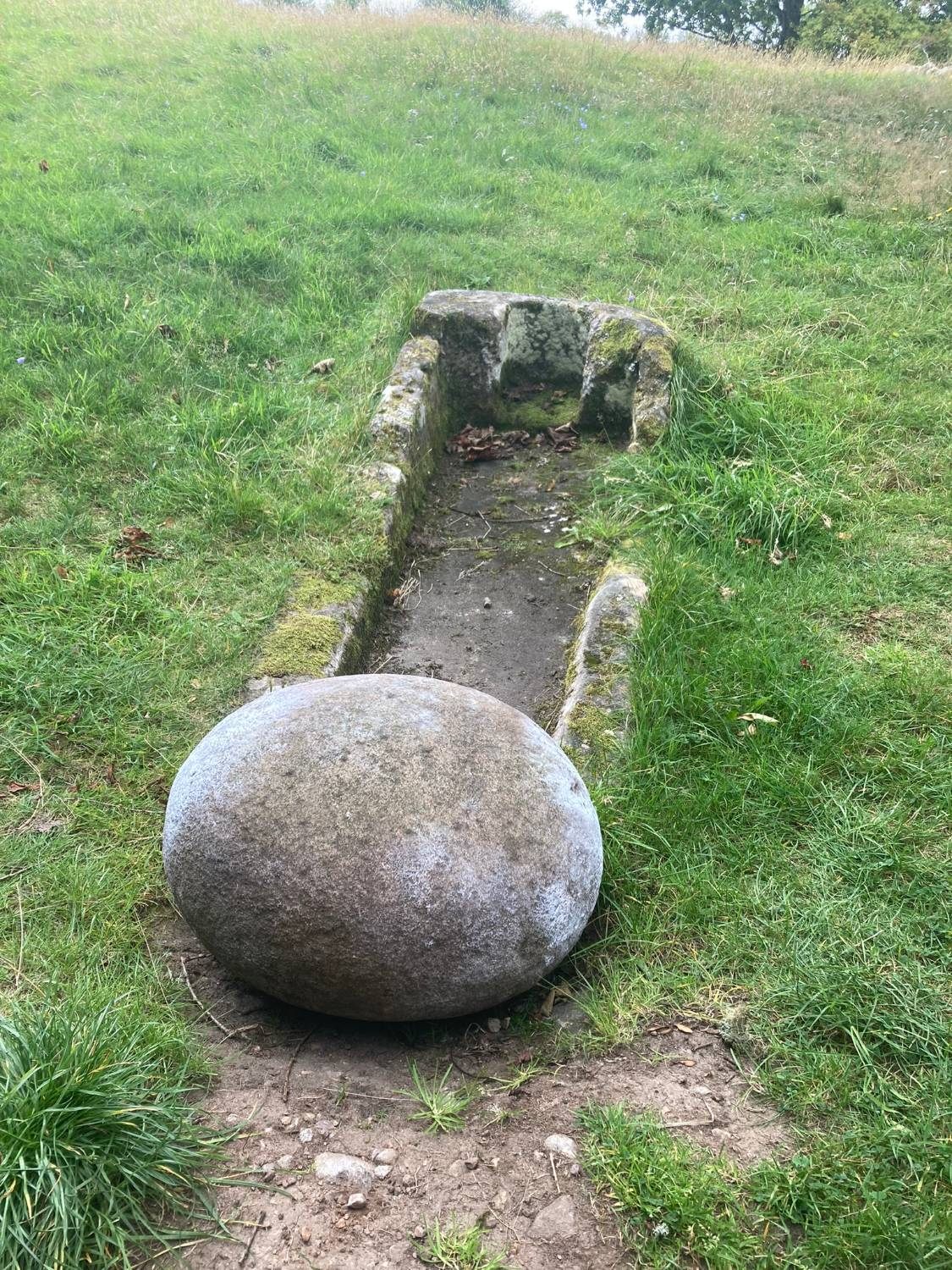
That setting is the whole appeal. It isn't a strongman gym or a modern platform – it's an old stone in an old churchyard that people have tested themselves on for a long time.
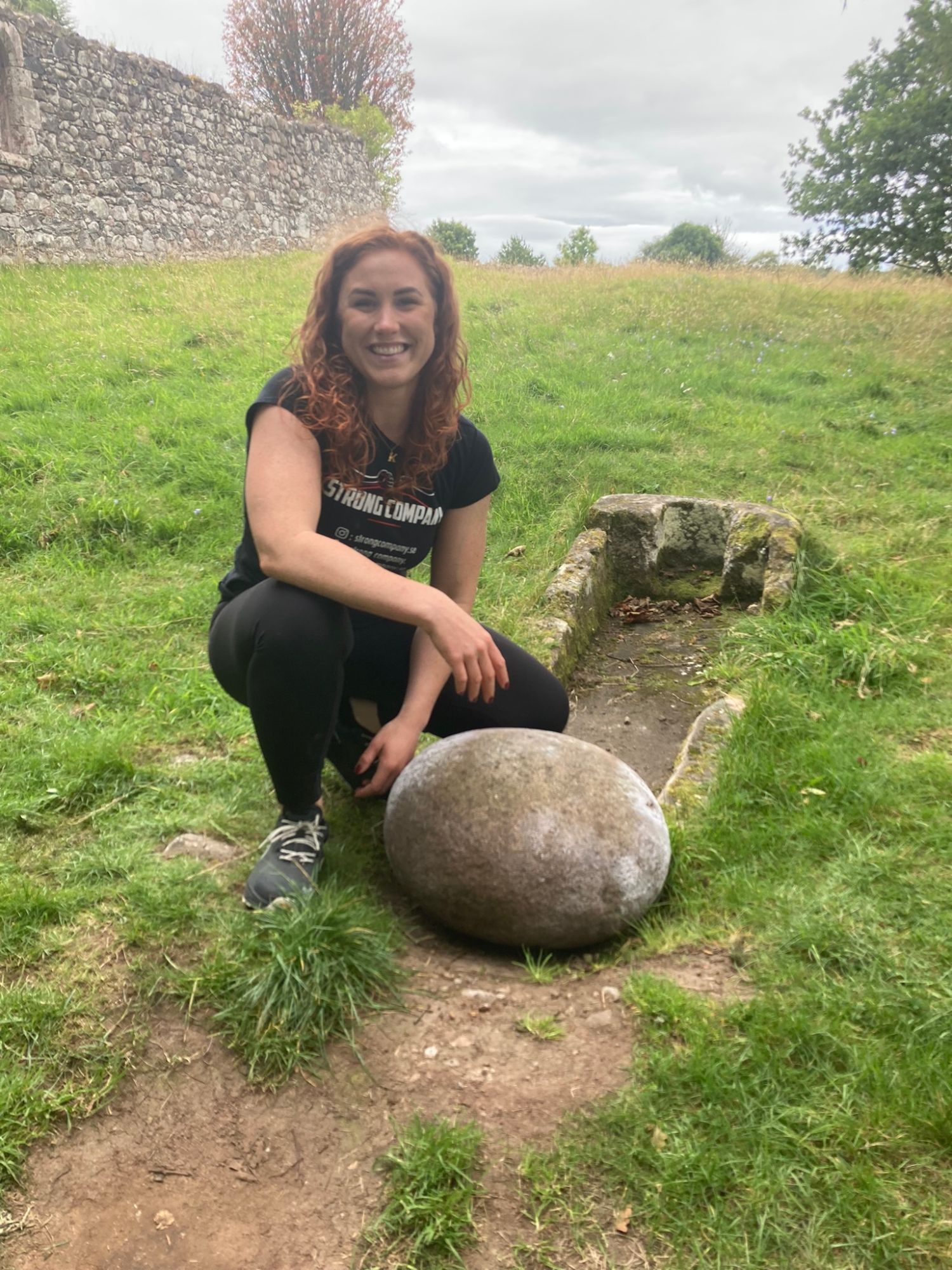
Five stages – I went for the fifth
The Barevan Stone has five traditional stages:
- Break the ground – get the stone free of the ground.
- Bring it to waist height.
- Bring it to the chest.
- Bring it to the shoulder.
- Press it overhead.
I wanted the fifth. First I got the stone up onto my shoulder – where Kristine grabbed a selfie of us – and then I pressed it overhead.
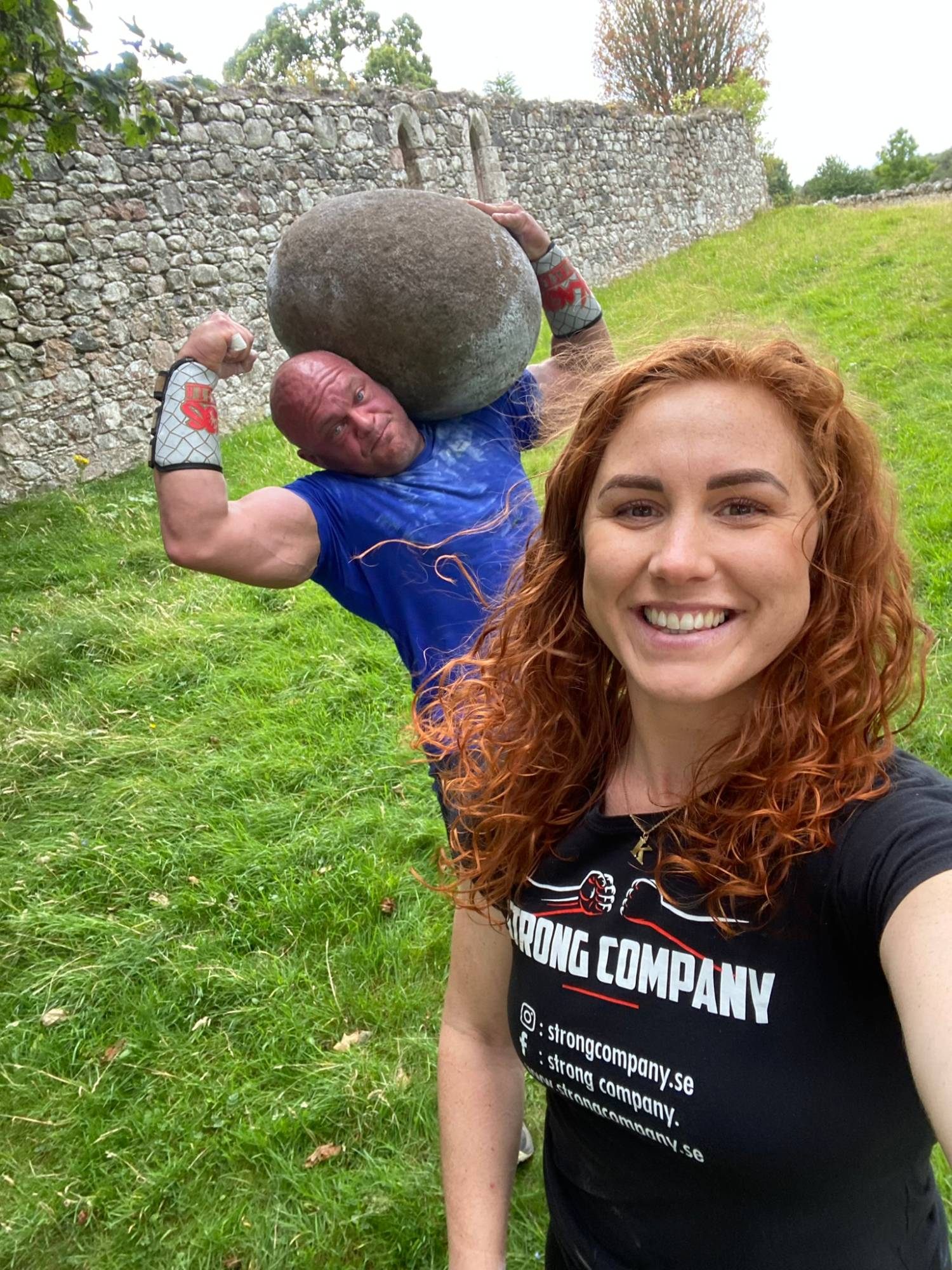
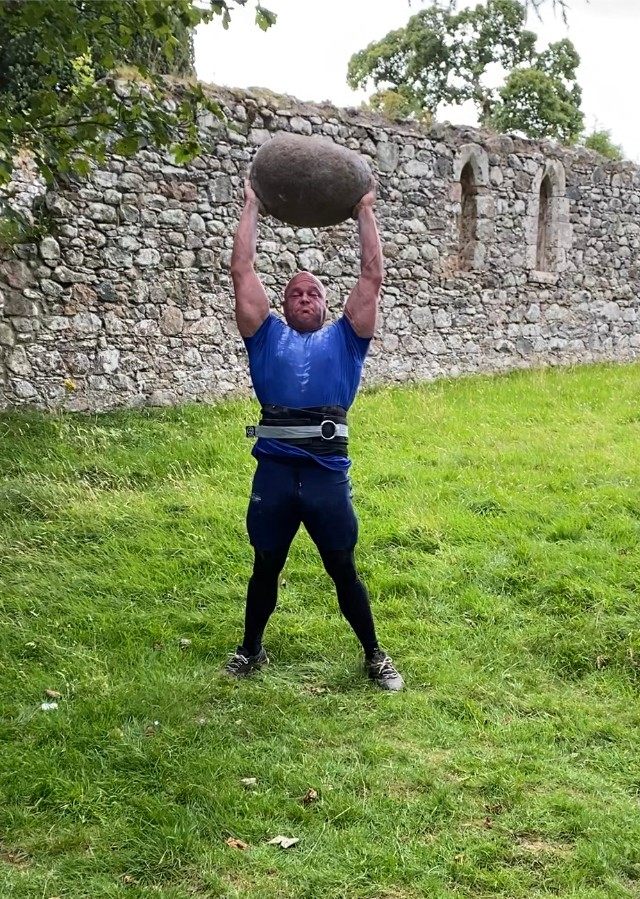
A natural stone is nothing like a barbell. There's no handle and no knurling, the shape is uneven and the balance shifts as it moves. Getting it to the shoulder is one thing; pushing it from there to locked-out arms is the hardest of the five stages. Finishing that, a day after the Dinnie Stones, was a big moment for me.
The story behind the stone and the churchyard
St Barevan's was a medieval church, and services there ended more than 400 years ago. The Barevan Stone itself is old enough to have been described as a traditional test of strength long before modern strongman existed.
The stone sarcophagus is the strange part. One interpretation is that it wasn't used for burials at all, but as a form of punishment: an offender would be enclosed under a heavy slab, and the Barevan Stone may have been placed on top to stop them getting out. That's a theory, not documented fact – but standing next to it, it's hard not to think about.
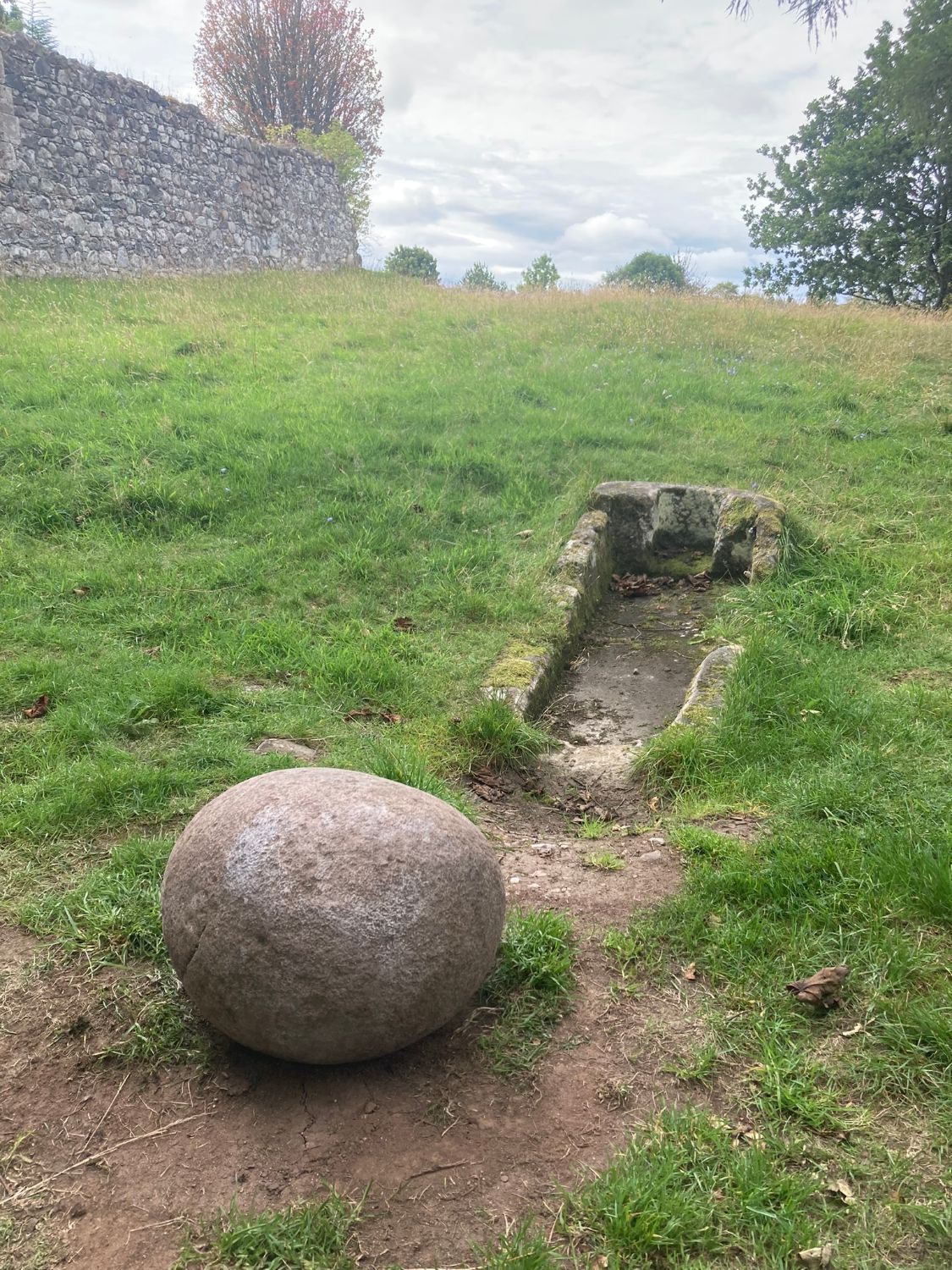
The site is protected. Liftingstones.org asks lifters to move the stone away from the sarcophagus before lifting, and never let it touch the stone structure. If you go, please do the same.
Source: liftingstones.org – the Barevan Stone.
A short stop at Invermoriston Bridge and Falls
From Barevan we headed south-west down the Great Glen. Our first stop was Invermoriston, where an old stone bridge crosses the River Moriston right above the falls. We parked nearby, walked over the bridge and looked down at the water rushing over the rocks.
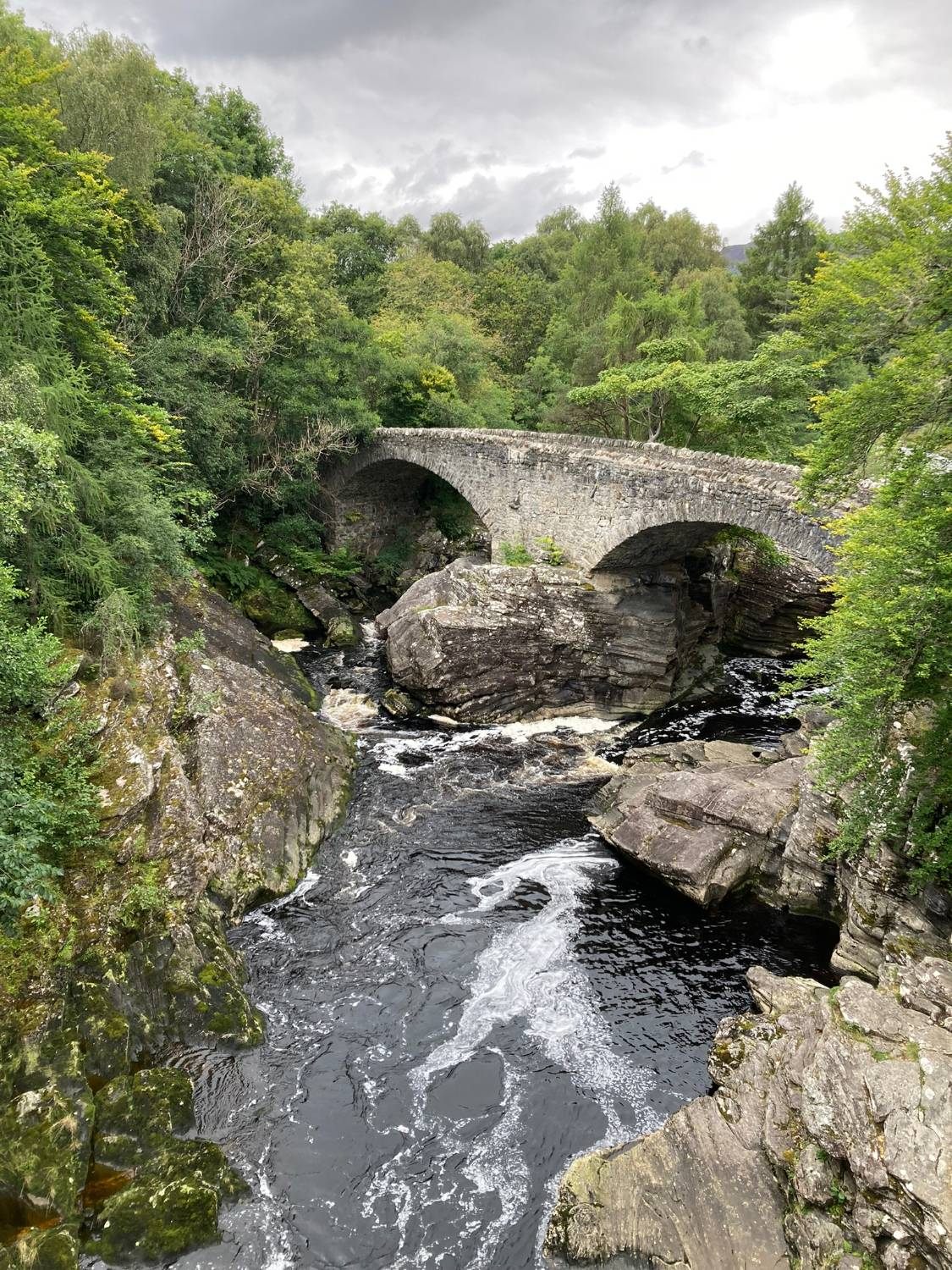
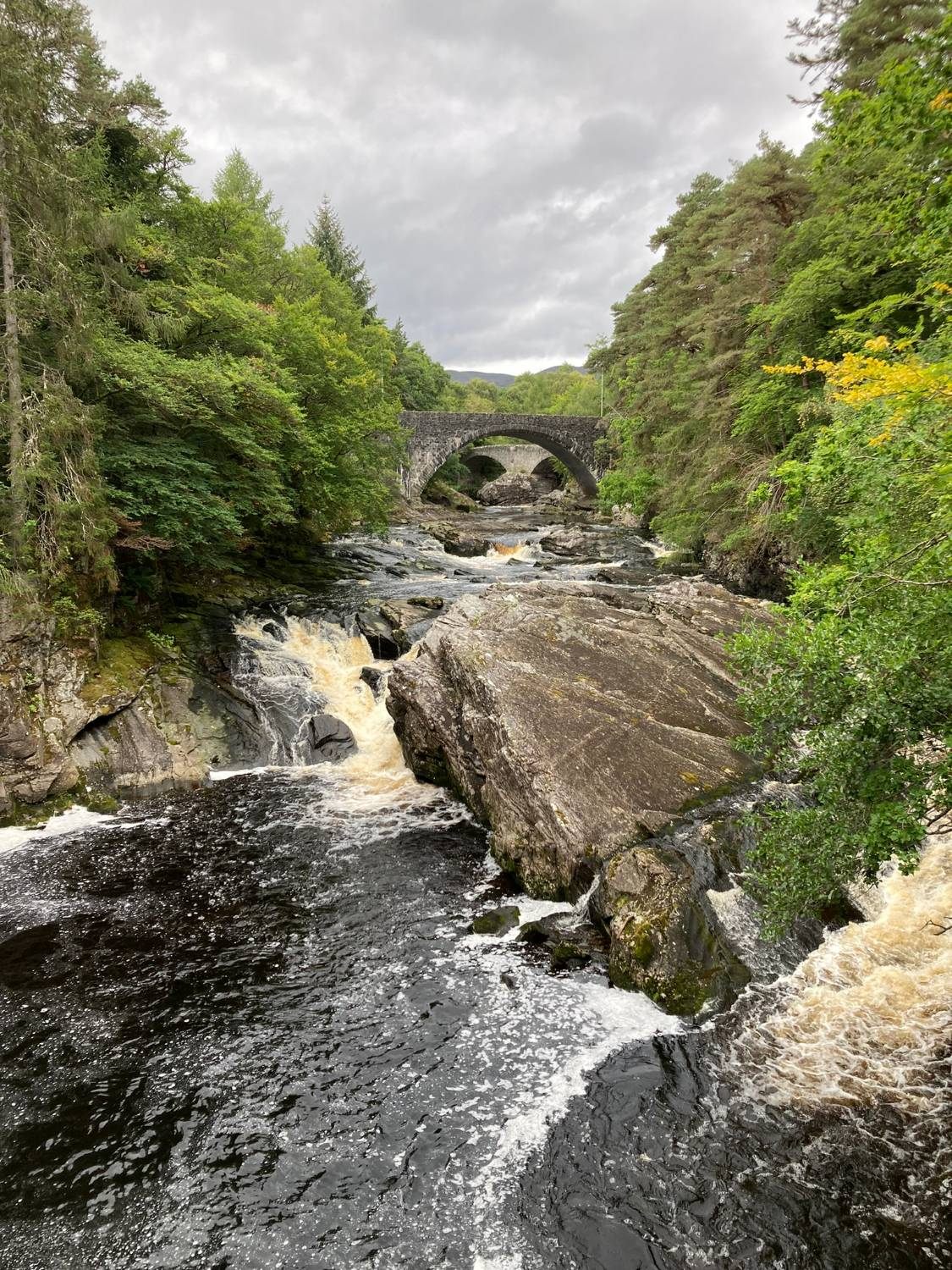
The bridge dates from 1813 and was part of the old main road between Drumnadrochit and Fort Augustus until a new bridge replaced it in the 1930s. There's a small stone hut on the riverbank with a pointed window that frames the falls perfectly – we both had to sit in it.
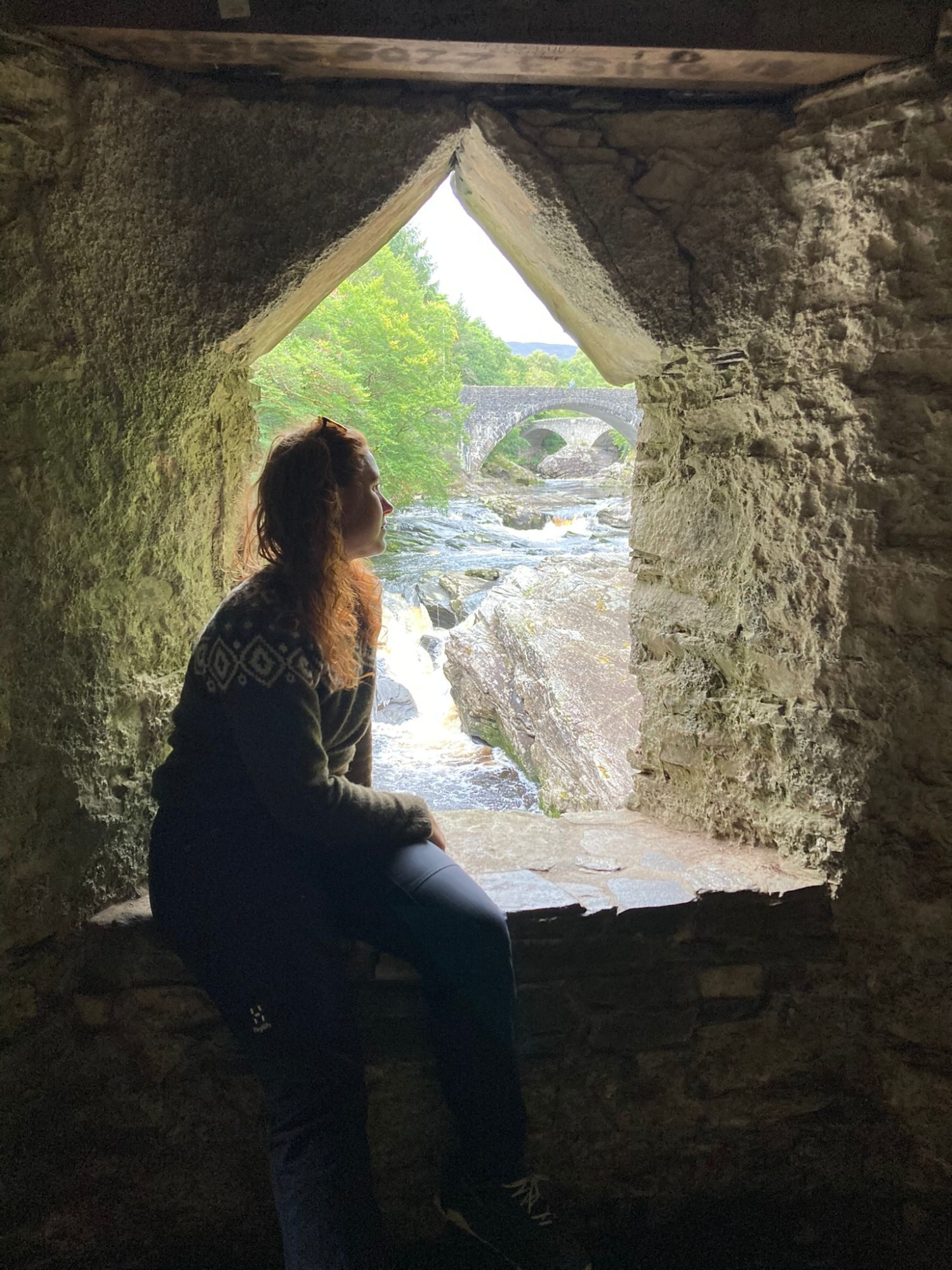
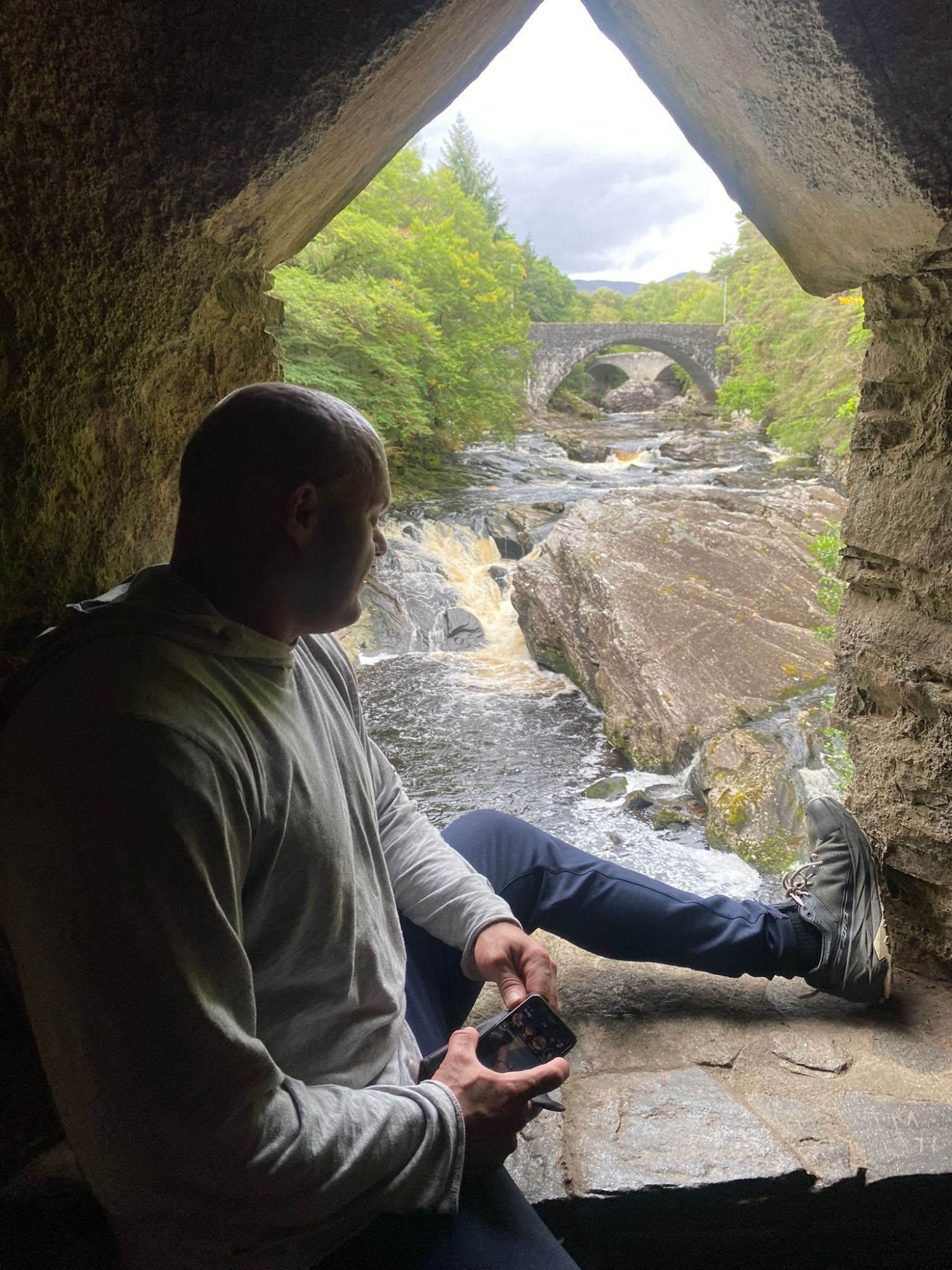
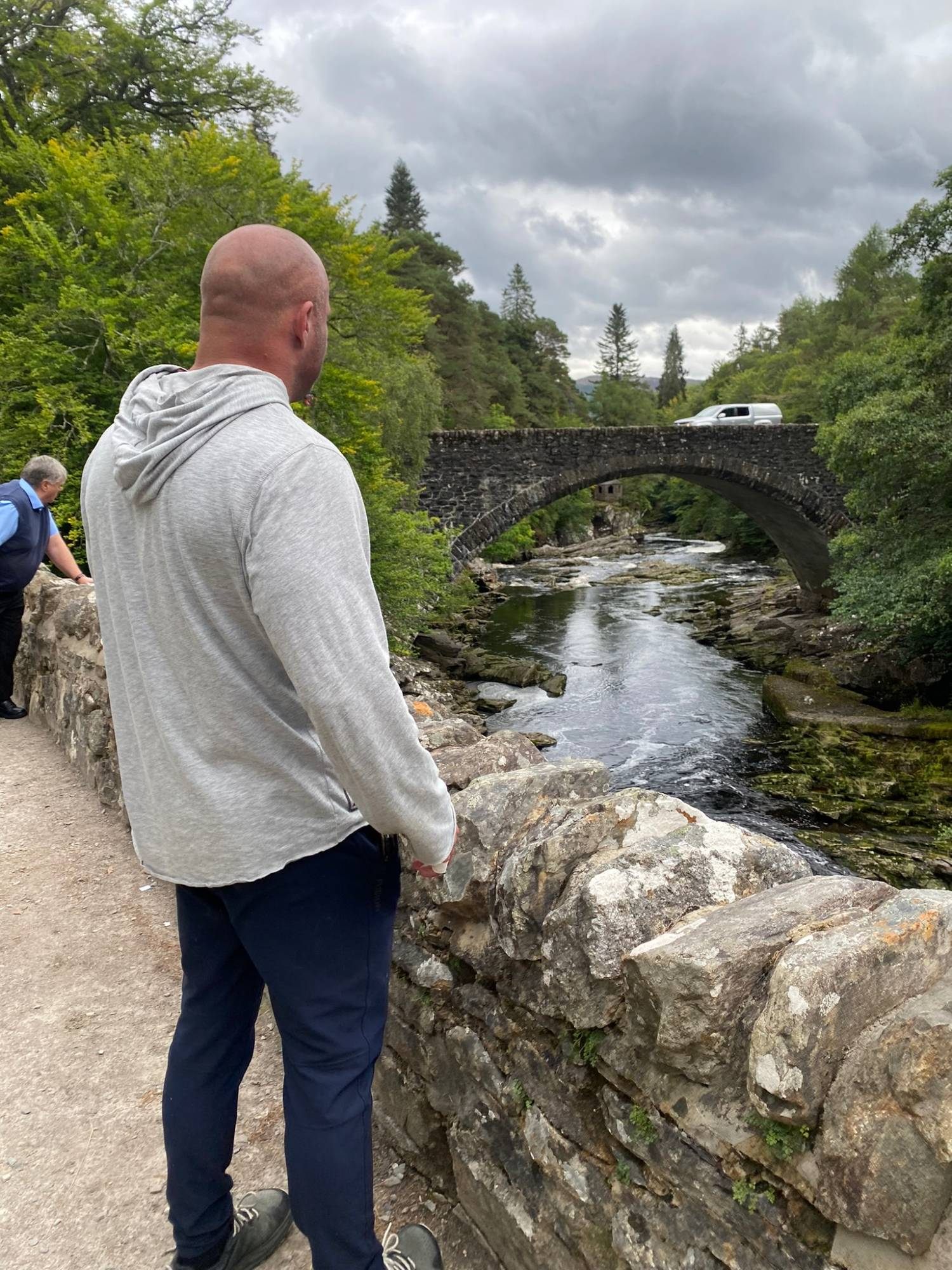
It was a short stop, not a hike – but a welcome chance to get out of the car.
Source: Visit Inverness Loch Ness.
Past Loch Ness
The road runs along Loch Ness, and honestly, it wasn't the highlight of the day for us. That says more about how we saw it than about the loch: from a car window, with a long way still to go, even a famous place doesn't leave much of a mark. With more time we'd have stopped. That's the lesson of the whole day.
Glenfinnan Viaduct and the Jacobite steam train
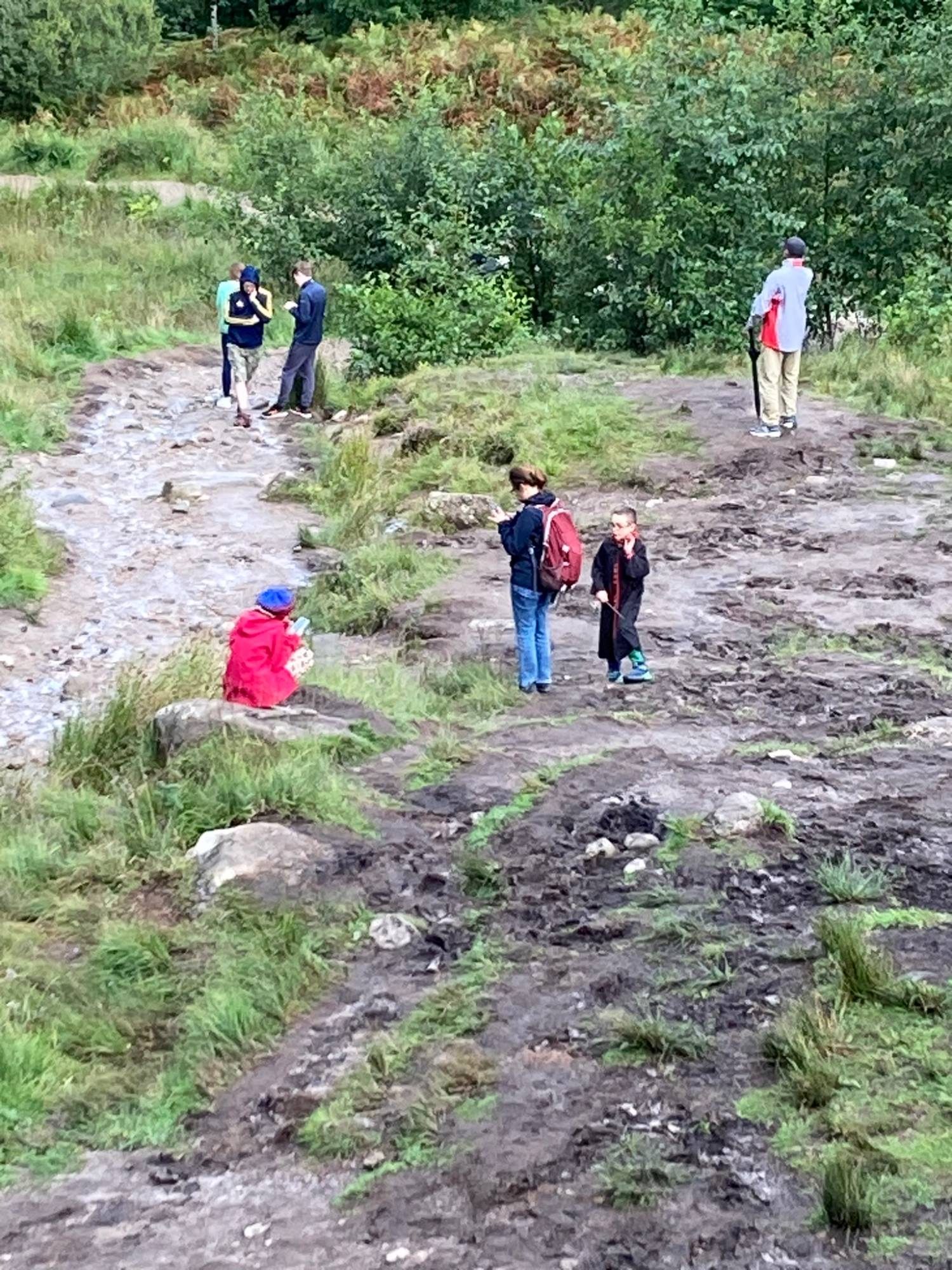
We reached Glenfinnan at around 6pm. There were other visitors, but plenty of space to walk from the parking area towards the viaduct and take it in.
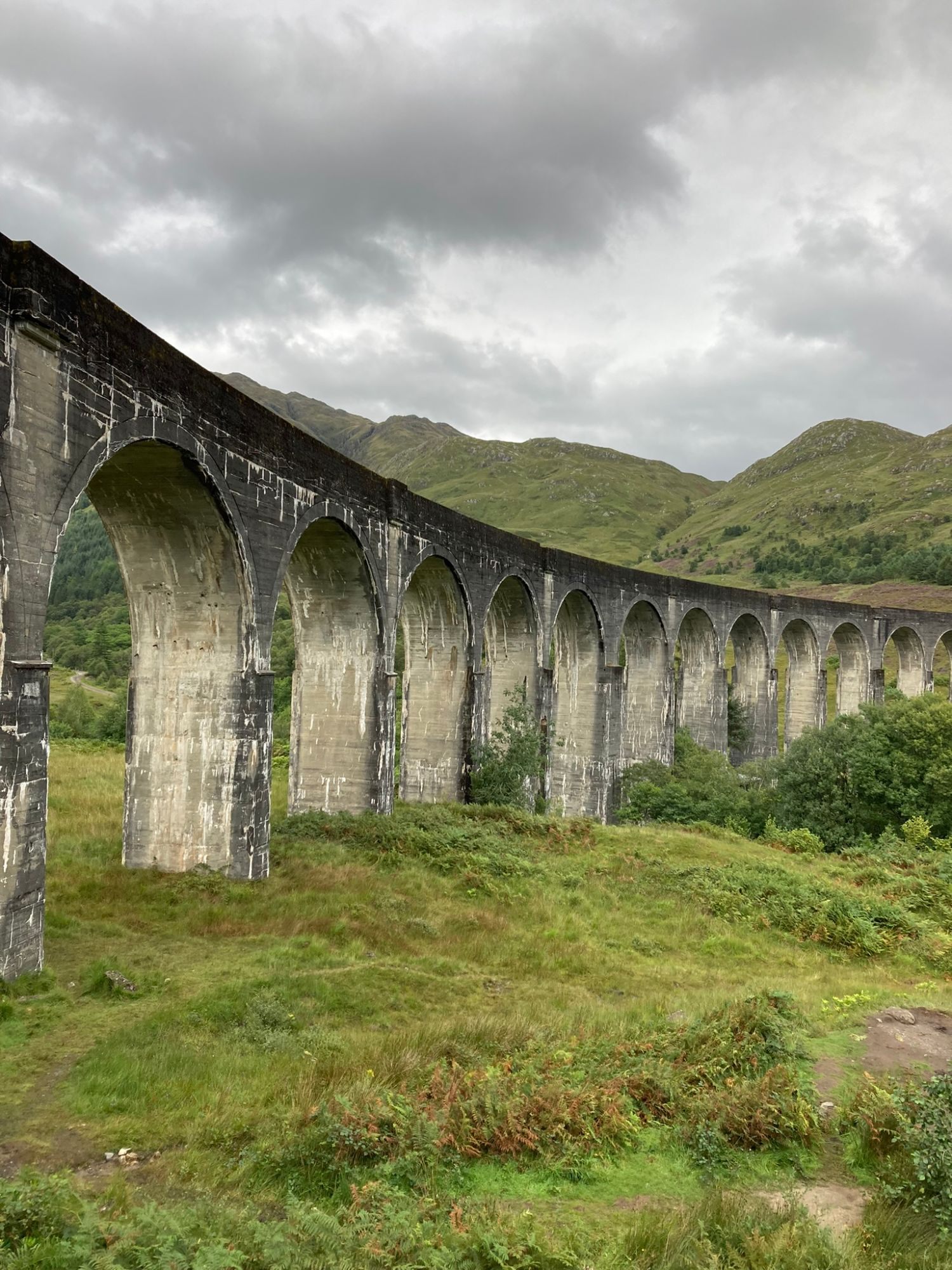
The viaduct carries the West Highland Line in a long curve of 21 arches, and it became world-famous through the Harry Potter films, where the Jacobite steam train crossing it stands in for the Hogwarts Express. The train you see here is the real Jacobite, run as a heritage steam service.
We were lucky: the train came over while we were there, steam and all.
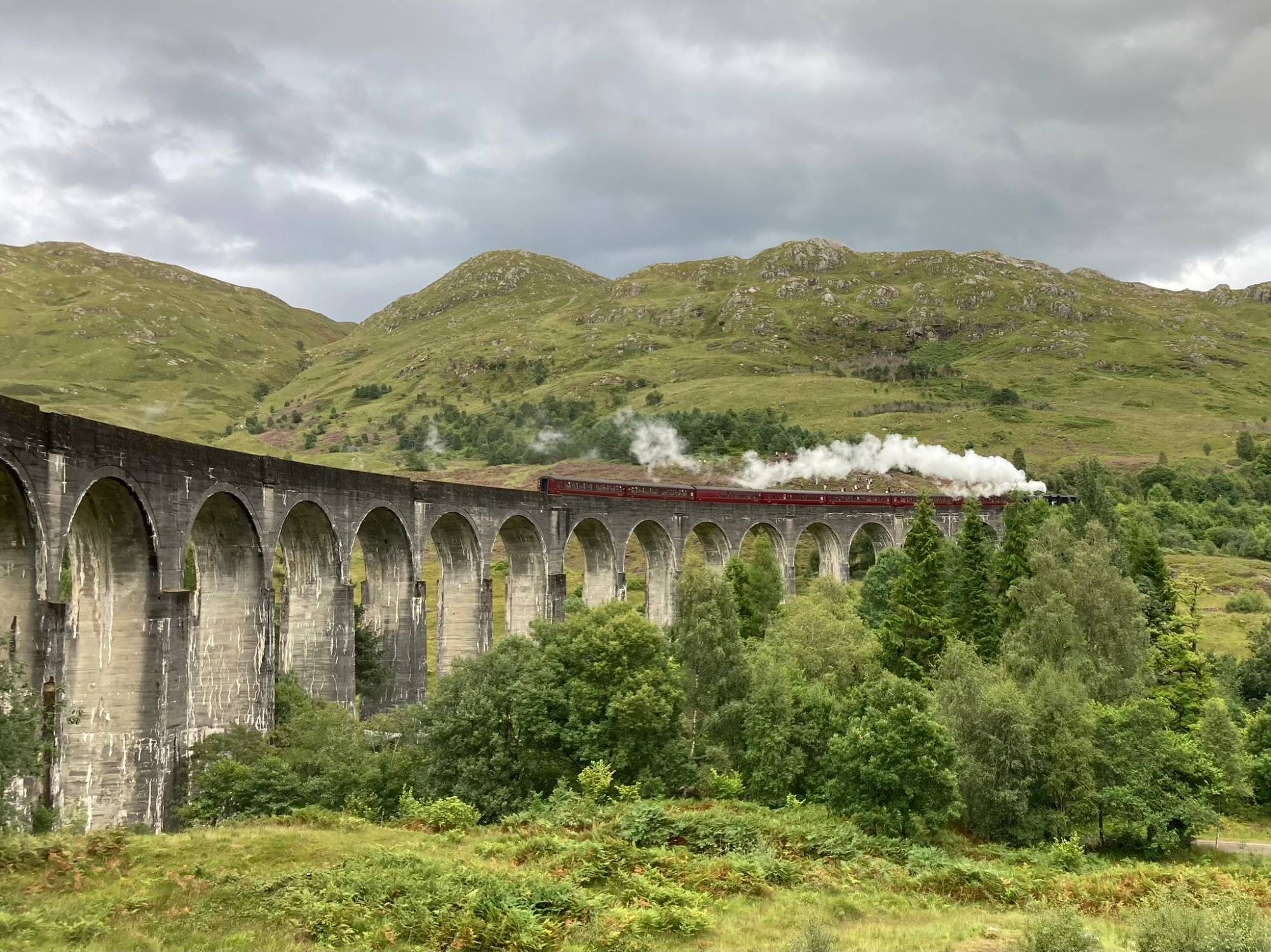
Here's the funny part: we'd tried watching the Harry Potter films before the trip and didn't make it through them all. They're just not our thing. Glenfinnan was absolutely worth it anyway – the landscape, the size of the viaduct, and that train coming round the curve.
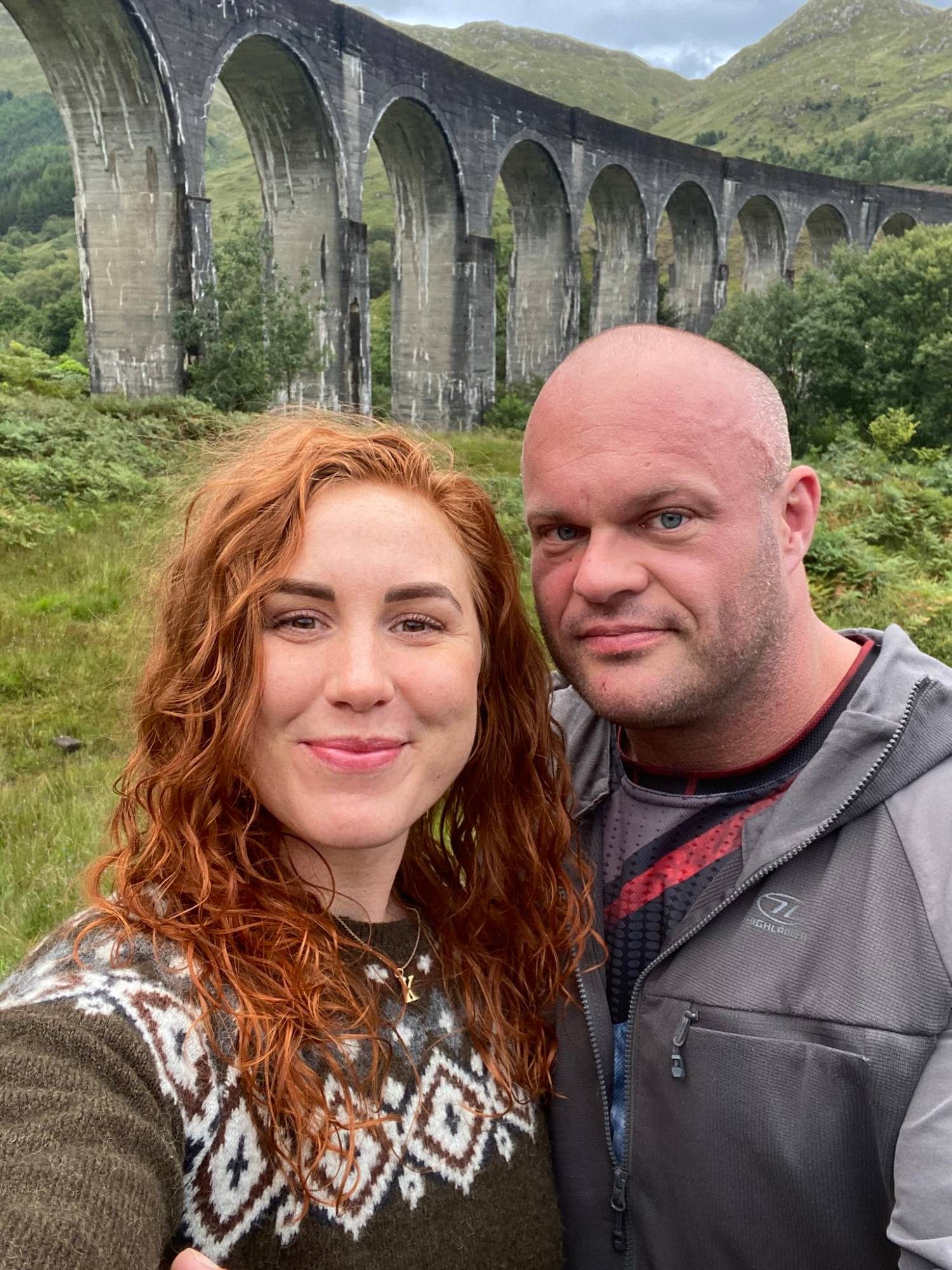
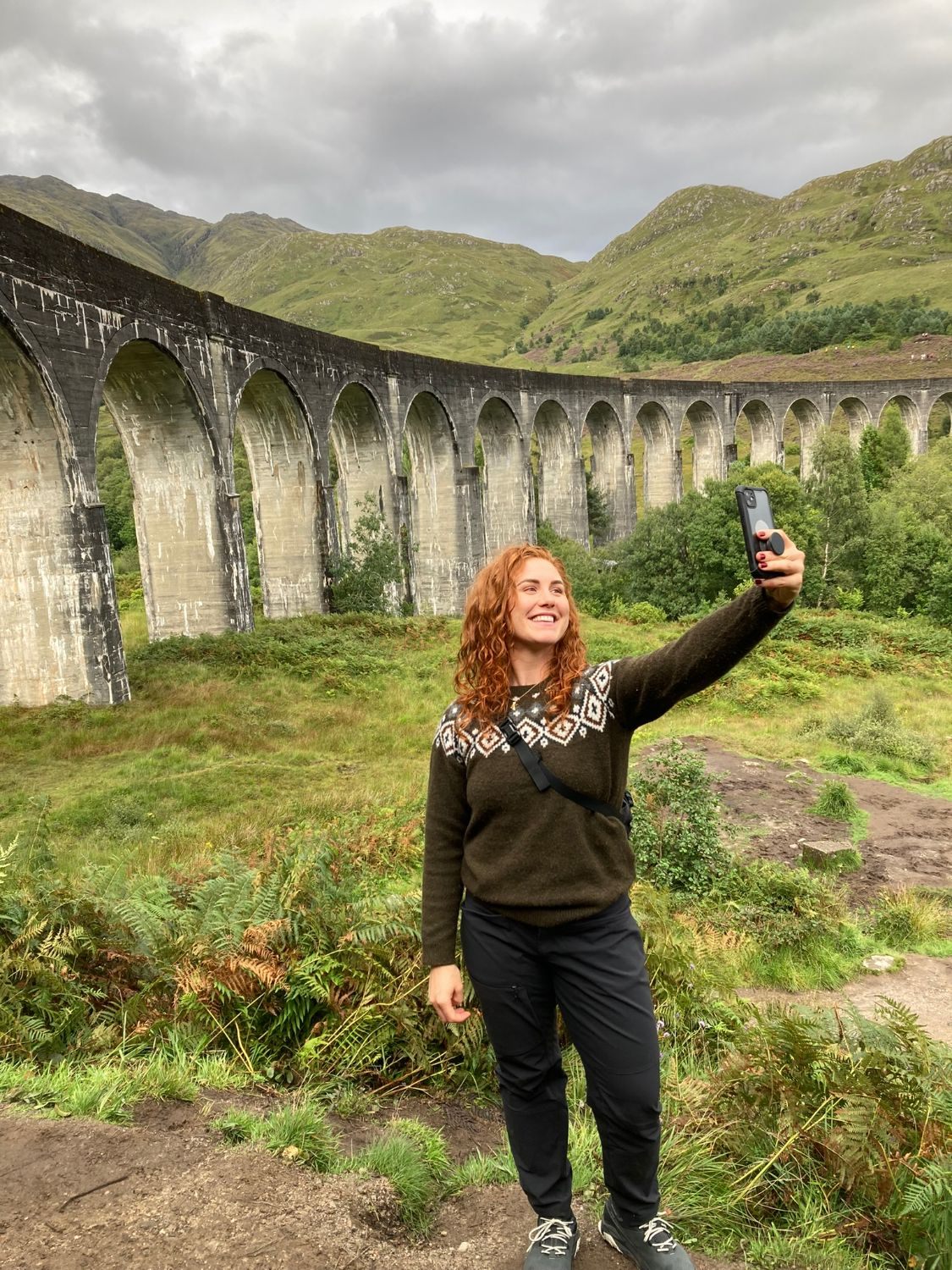
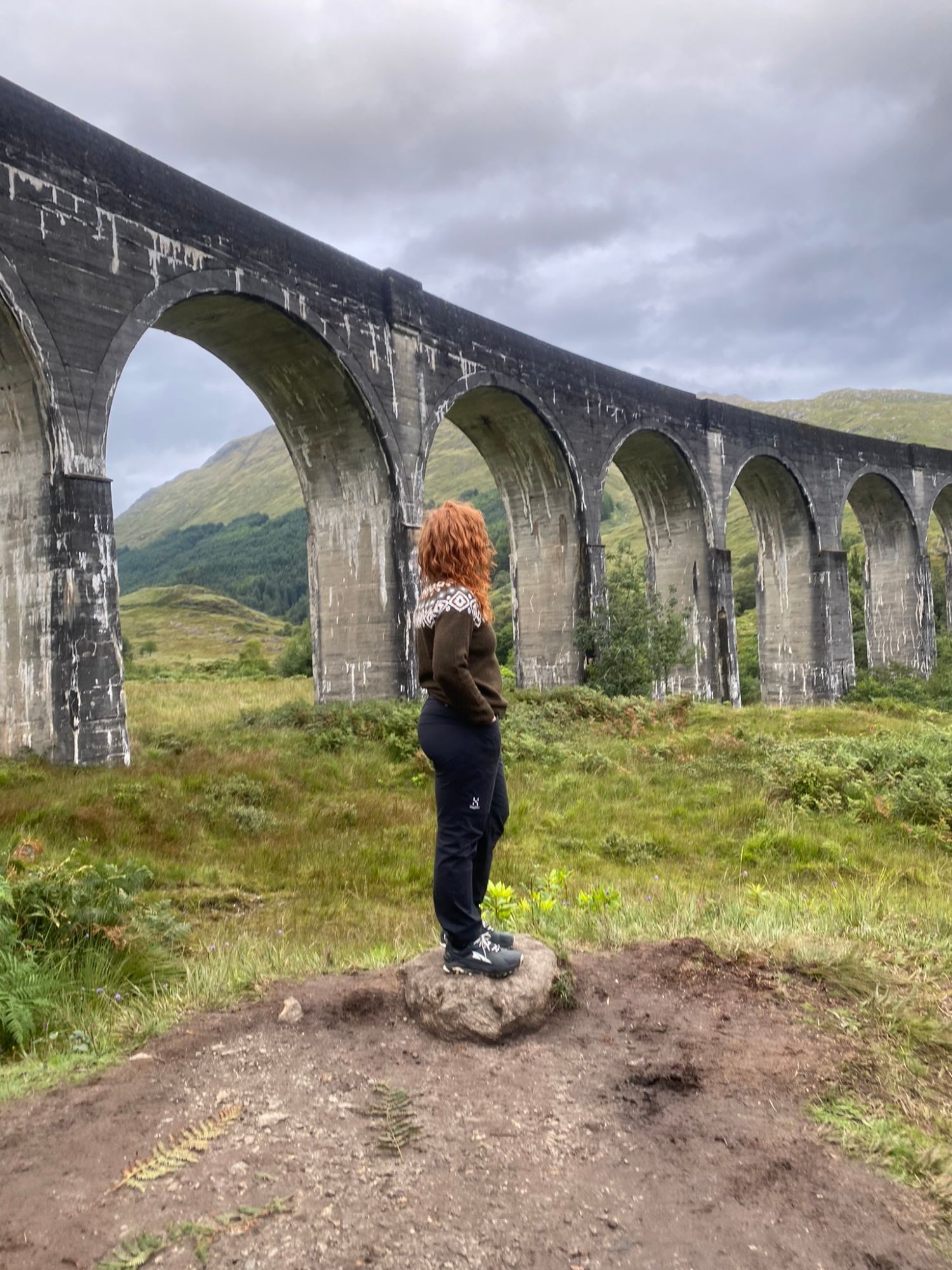
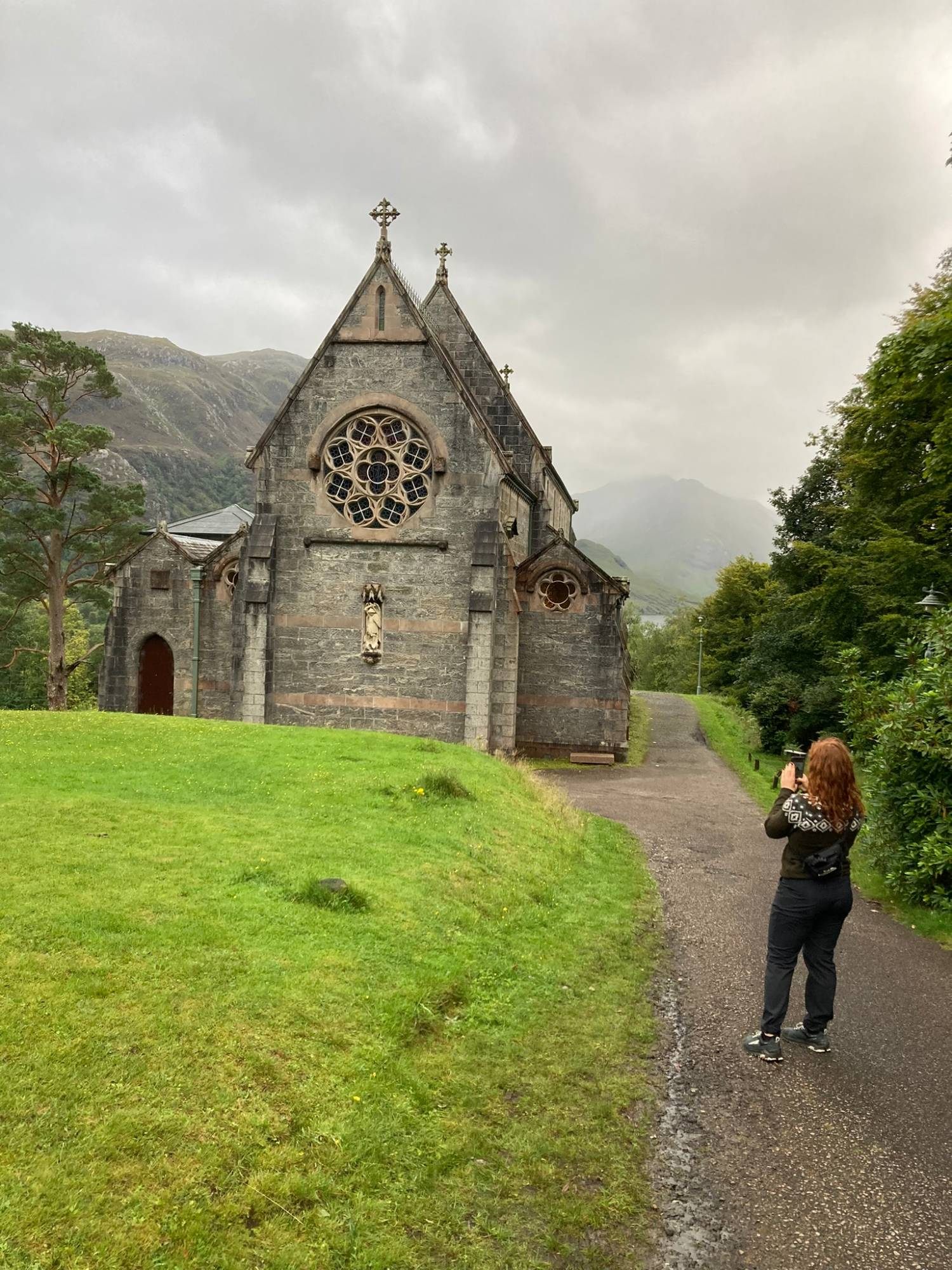
Before leaving Glenfinnan we also stopped at the church of St Mary and St Finnan, a grey stone church with a big rose window above the head of Loch Shiel.
A brief stop at the Old Boat of Caol
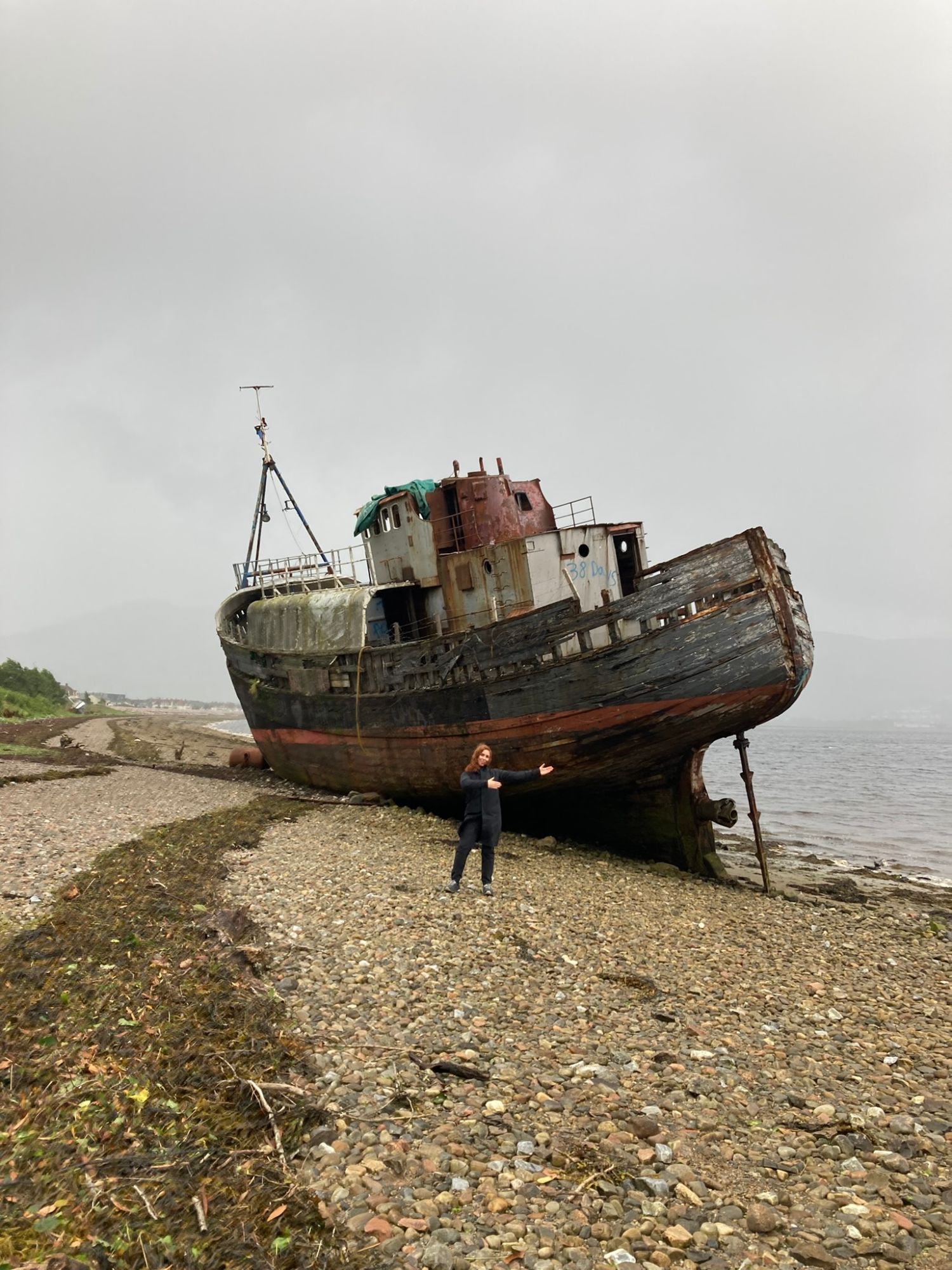
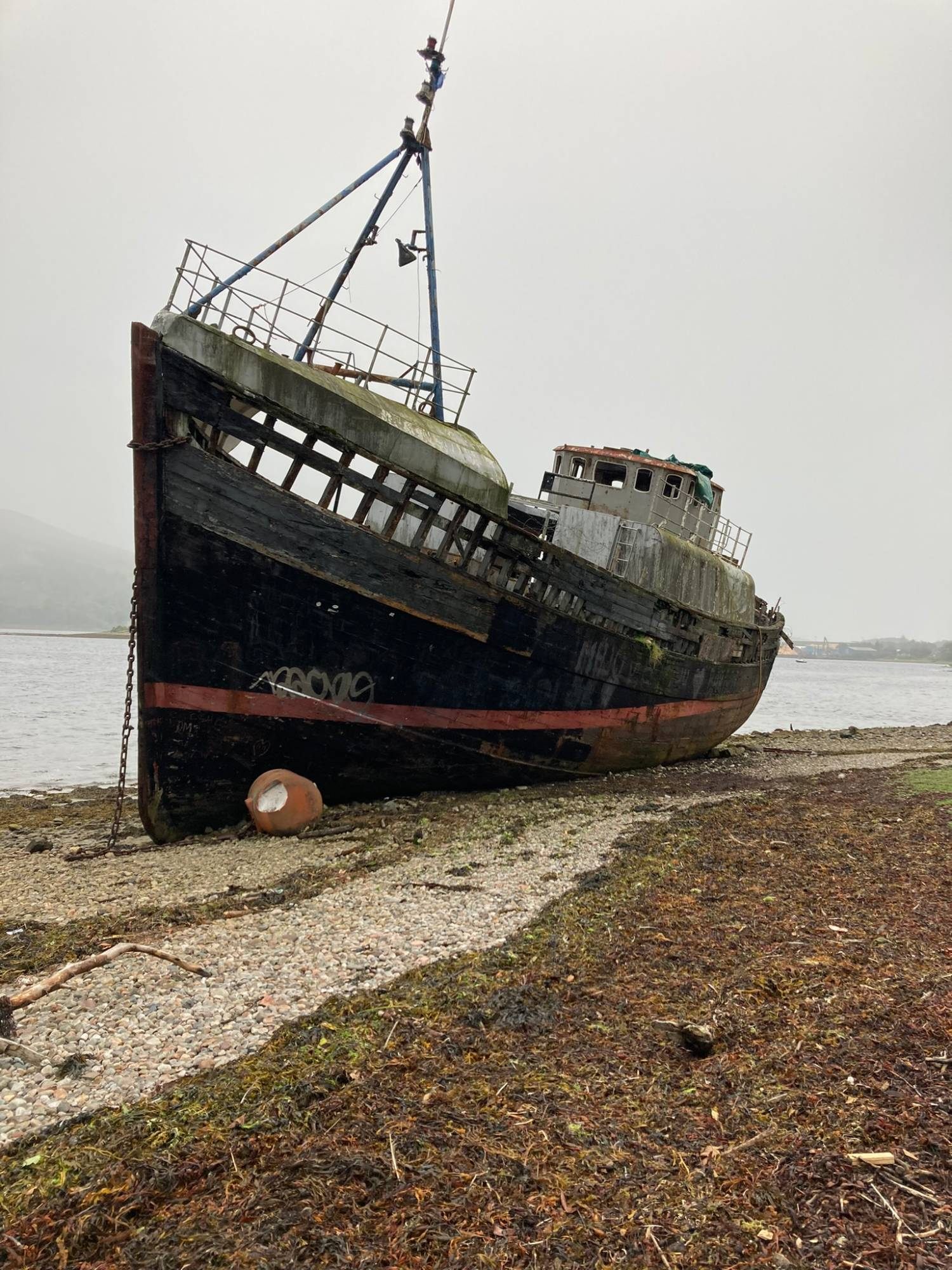
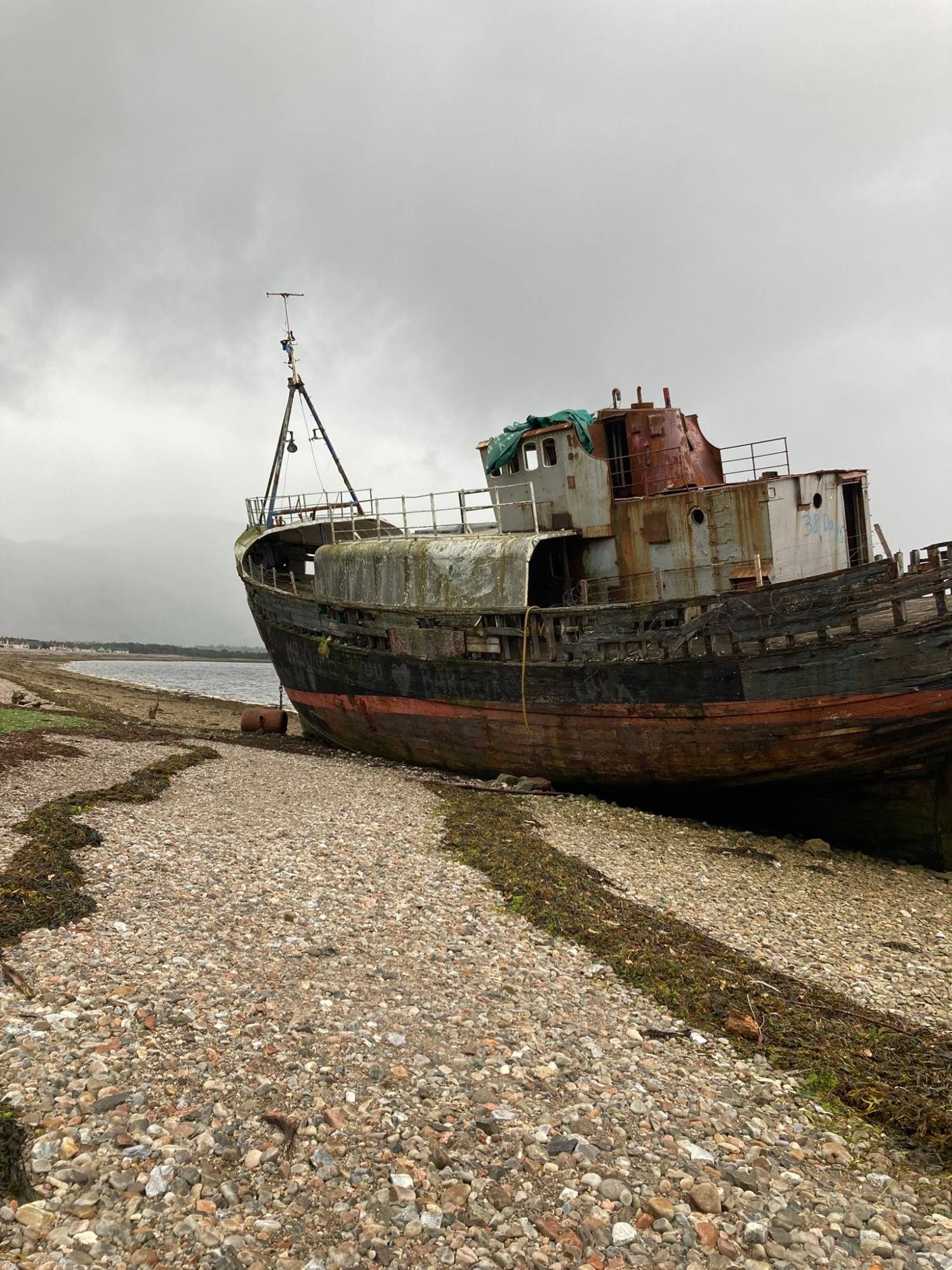
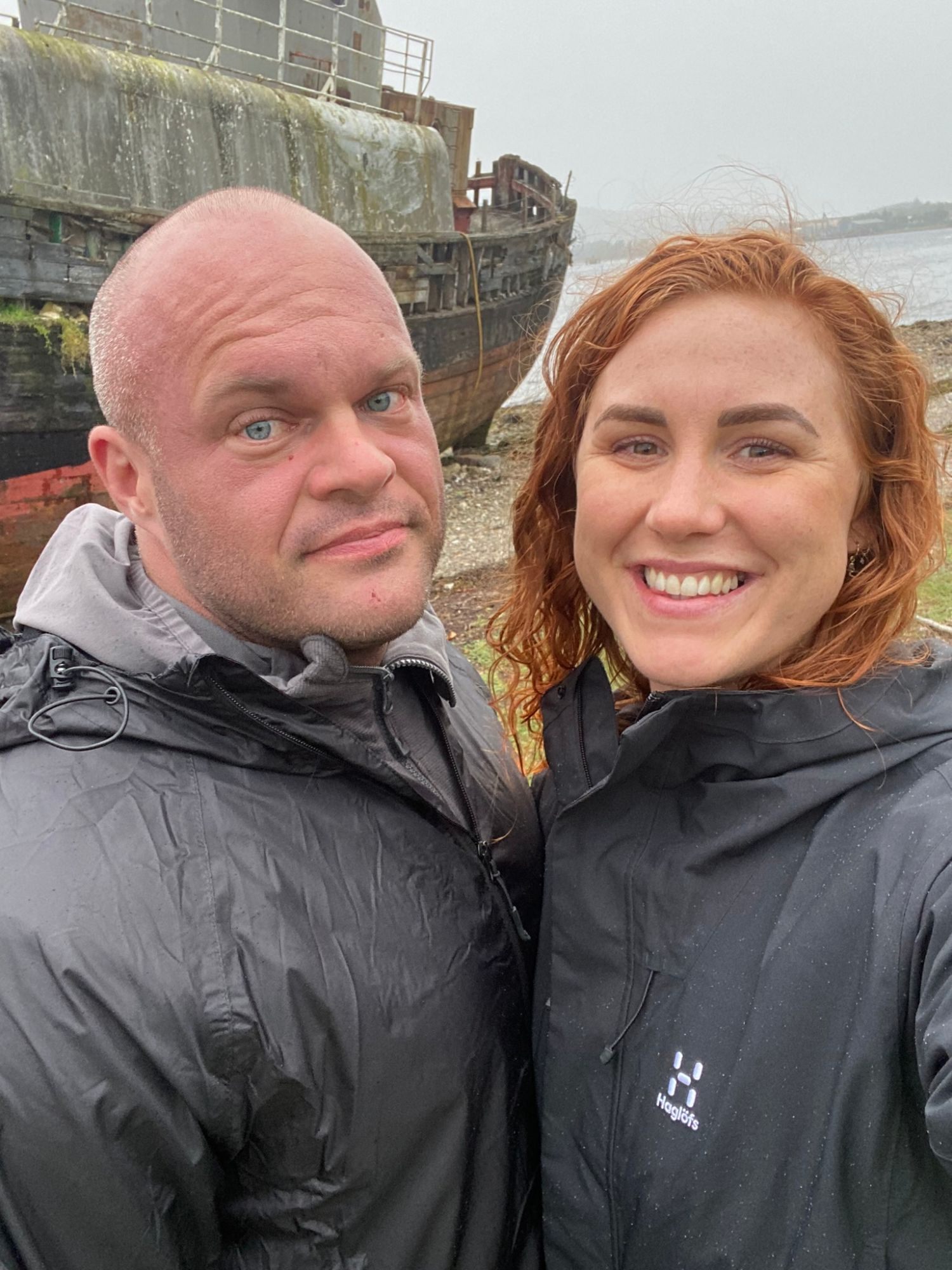
Heading back towards Fort William, we stopped at the Old Boat of Caol, also called the Corpach Wreck: an old fishing boat lying on the stony shore of Loch Linnhe. It's widely identified as the MV Dayspring, which came ashore in a storm in December 2011. We walked down, looked at it from the beach, took a few photos in the drizzle and moved on. Worth ten minutes if you're passing.
Checking in at Coire Glas Guest House
Our bed for the night was Coire Glas Guest House in Spean Bridge, north-east of Fort William. We chose it because it's well placed for Ben Nevis, which was the plan for the next day. It was nicer – and more expensive – than most of our stays on this trip: we paid 1,424.01 DKK for the night, booked through Hotels.com in August 2023.
What we'd do differently
It was a great day. I pressed the Barevan Stone overhead, we stood in a medieval churchyard, sat in a window above the Invermoriston falls, saw the Jacobite cross Glenfinnan Viaduct and walked down to a shipwreck – and still got to our guest house in time to get ready for a mountain.
But it was a lot of driving: about 188 miles and more than five hours behind the wheel, on top of the stops. If we did it again, we'd break the drive with a night along the way, and we'd book two nights at Coire Glas instead of moving on the day after Ben Nevis. We don't regret any of the places we saw. We just learned that the Highlands reward a slower pace.
The next morning, the trip changed character completely: from stones and sightseeing to Ben Nevis, the highest mountain in Britain. That story is coming soon.
Practical information
| When | Wednesday 23 August 2023 |
|---|---|
| Route | Aboyne – Barevan Stone (near Nairn) – Invermoriston – Glenfinnan – Caol/Corpach – Spean Bridge: about 188 miles, 5 h of driving (Google Maps) |
| Barevan Stone | About 105 kg; five stages from breaking the ground to overhead. Move the stone away from the sarcophagus before lifting. |
| Glenfinnan | We arrived around 6pm and saw the Jacobite cross – check the timetable if the train matters to you |
| Stayed | Coire Glas Guest House, Spean Bridge – 1,424.01 DKK for one night (Hotels.com) |