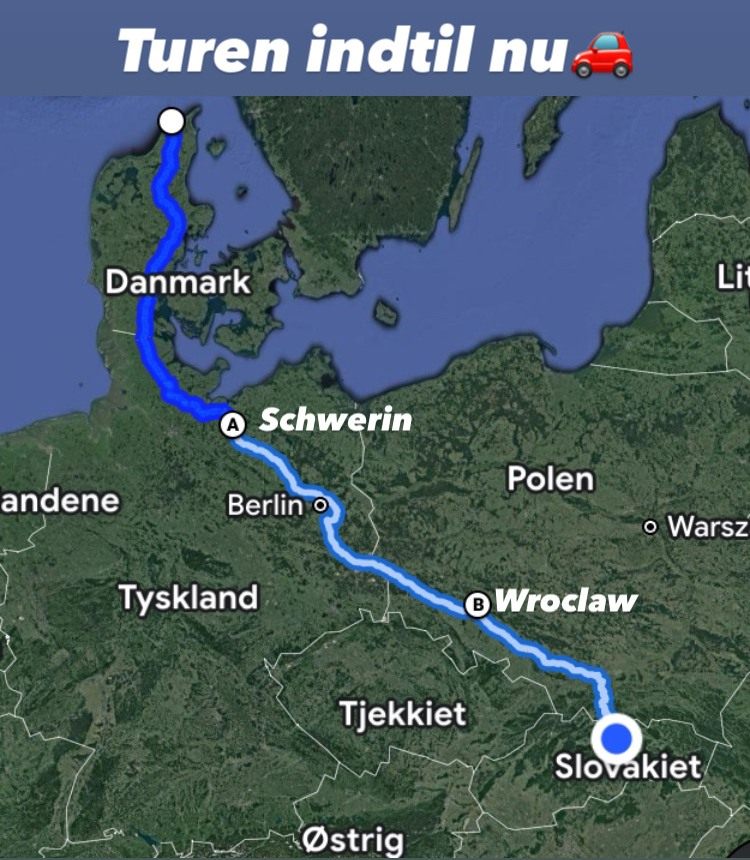
On 1 September 2024 we packed the car and a cool box full of food and drove south from Denmark. Twelve days and 4,299 kilometres later we had been through Germany, Poland, Slovakia and Austria – from a fairy-tale castle on a lake to the summit of Slovakia's highest mountain, and on into the Alps.
This is the whole trip, day by day. Some stops have their own detailed story; others were simply good places to stretch our legs, eat and sleep. We'll tell you honestly which was which.
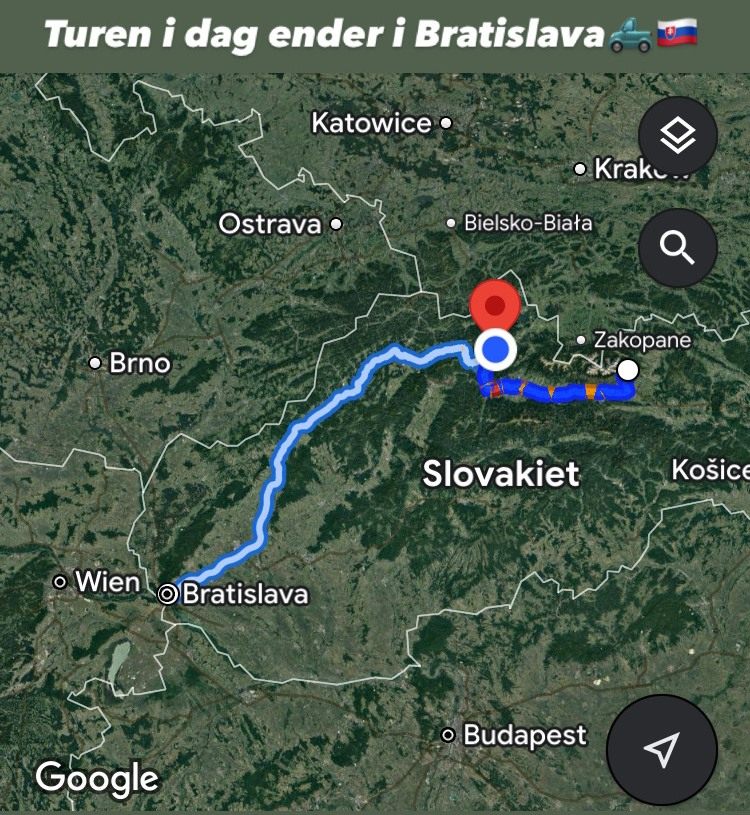
Map of our Central Europe road trip
1 September – Schwerin and its castle on the lake
A quiet Sunday, a closed town – and a castle that looks like it came out of a storybook.
Our first stop was Schwerin in northern Germany. We arrived at Pension am Schloss around 3pm, checked in and went straight out to see the town.
It was Sunday, and that was obvious. Most shops in Germany are closed on Sundays, and Schwerin felt very quiet and shut. A useful tip if you're planning a road trip through Germany: don't count on doing your shopping on a Sunday. Stock up on Saturday – or bring a cool box, like we did.
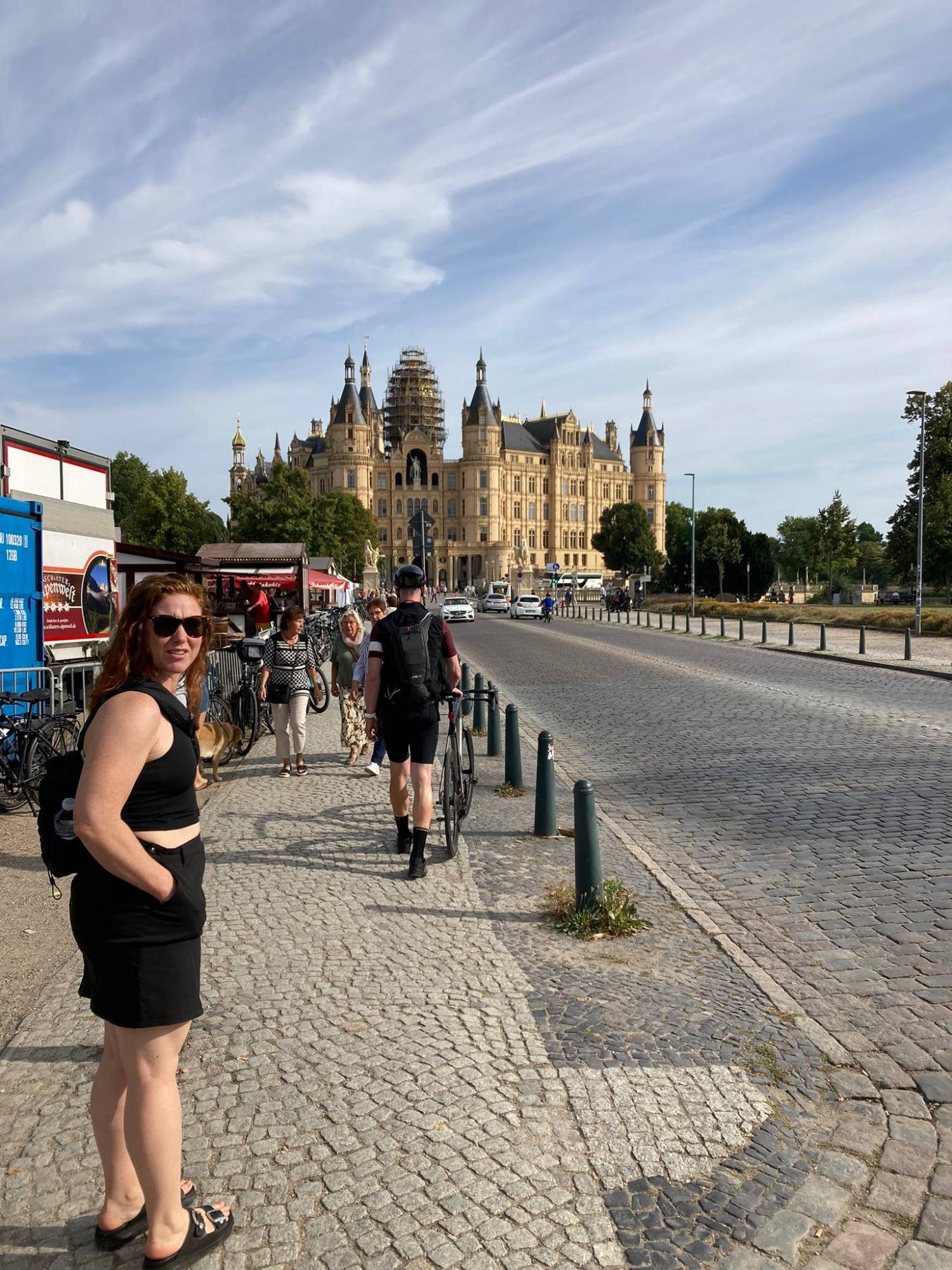
The reason to come here is Schwerin Castle (Schweriner Schloss). It sits on an island in the lake, surrounded by gardens and parkland, with towers, spires and gilded domes in every direction. There have been fortifications on the island for many centuries – the castle's foundations rest on the remains of a 10th-century Slavic rampart – but most of what you see today dates from the 19th century, when Grand Duke Friedrich Franz II had the old castle rebuilt as the residence of the grand dukes of Mecklenburg-Schwerin. Today it houses the state parliament of Mecklenburg-Western Pomerania and a museum.
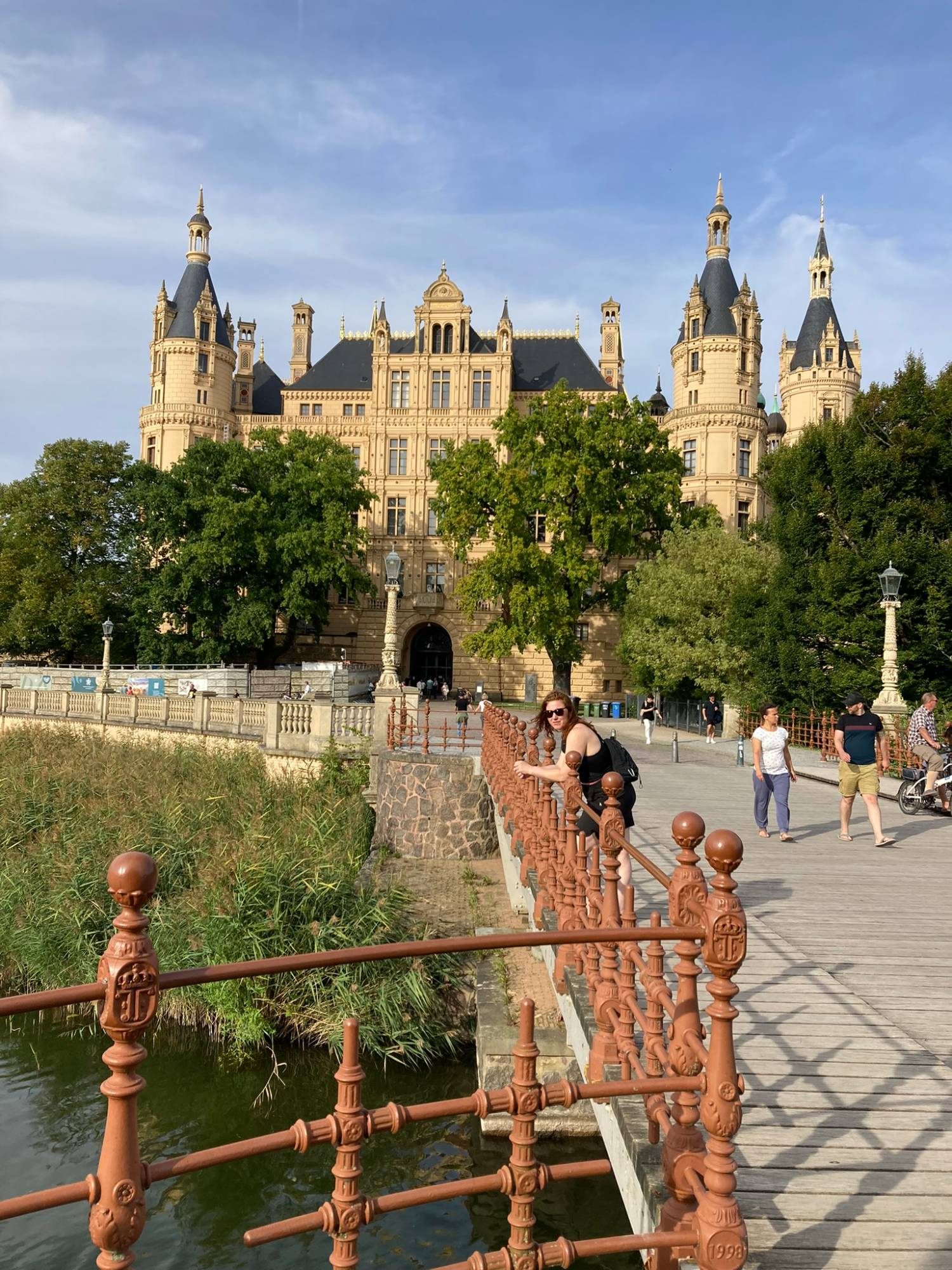
In July 2024 – just weeks before our visit – the Schwerin Residence Ensemble was added to the UNESCO World Heritage List. The castle is the centrepiece, together with more than 30 other buildings and the palace gardens.
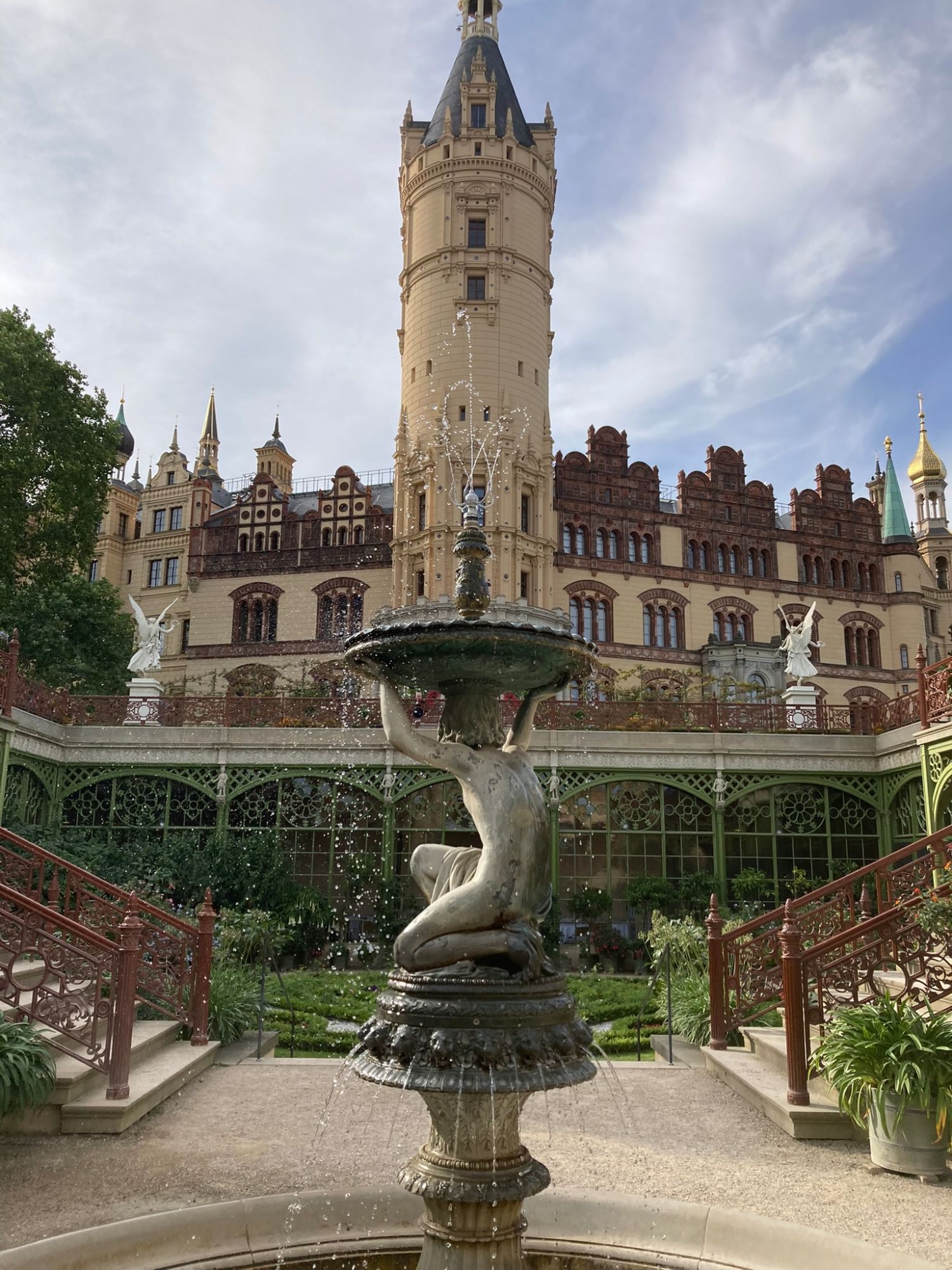
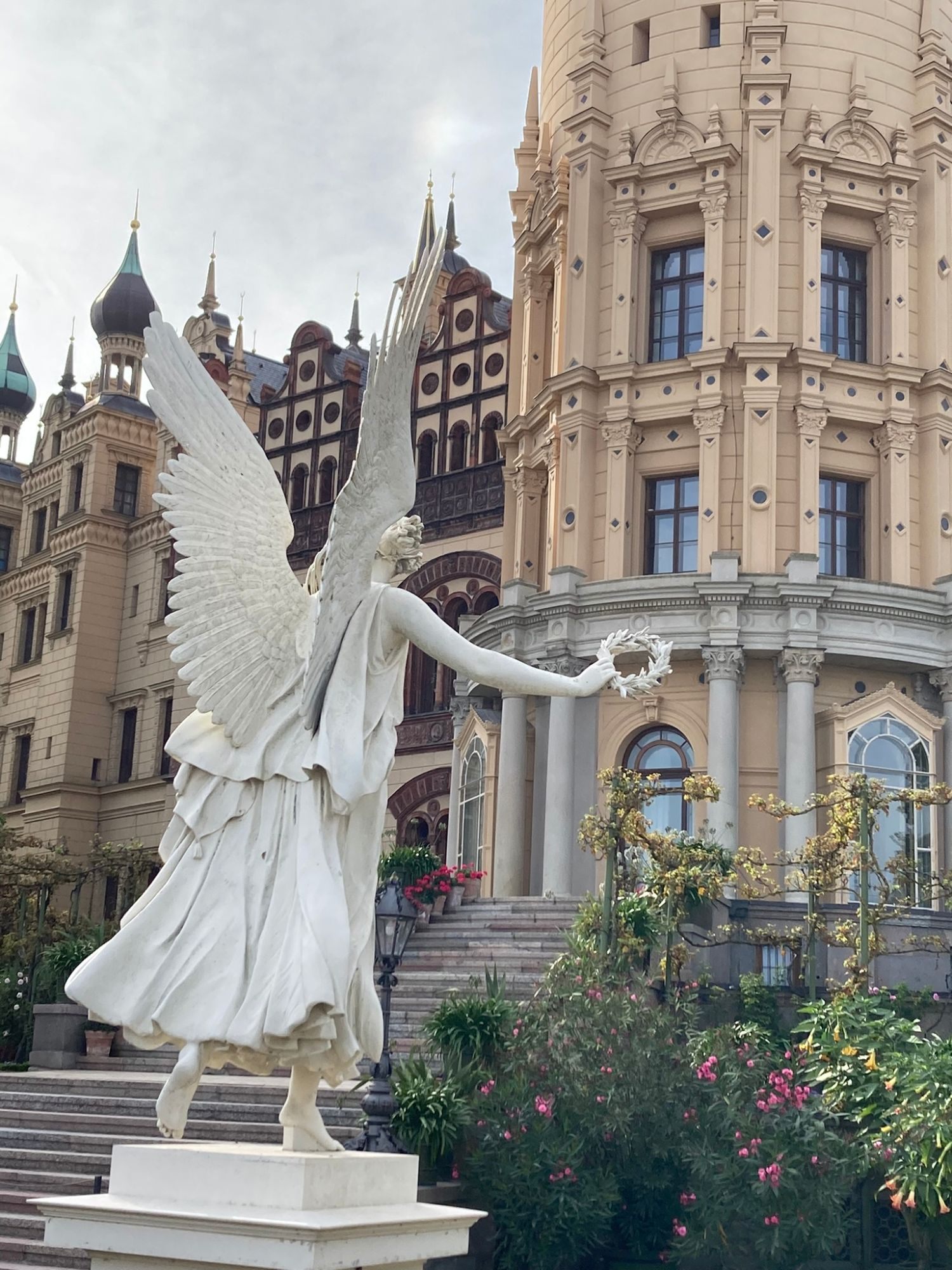
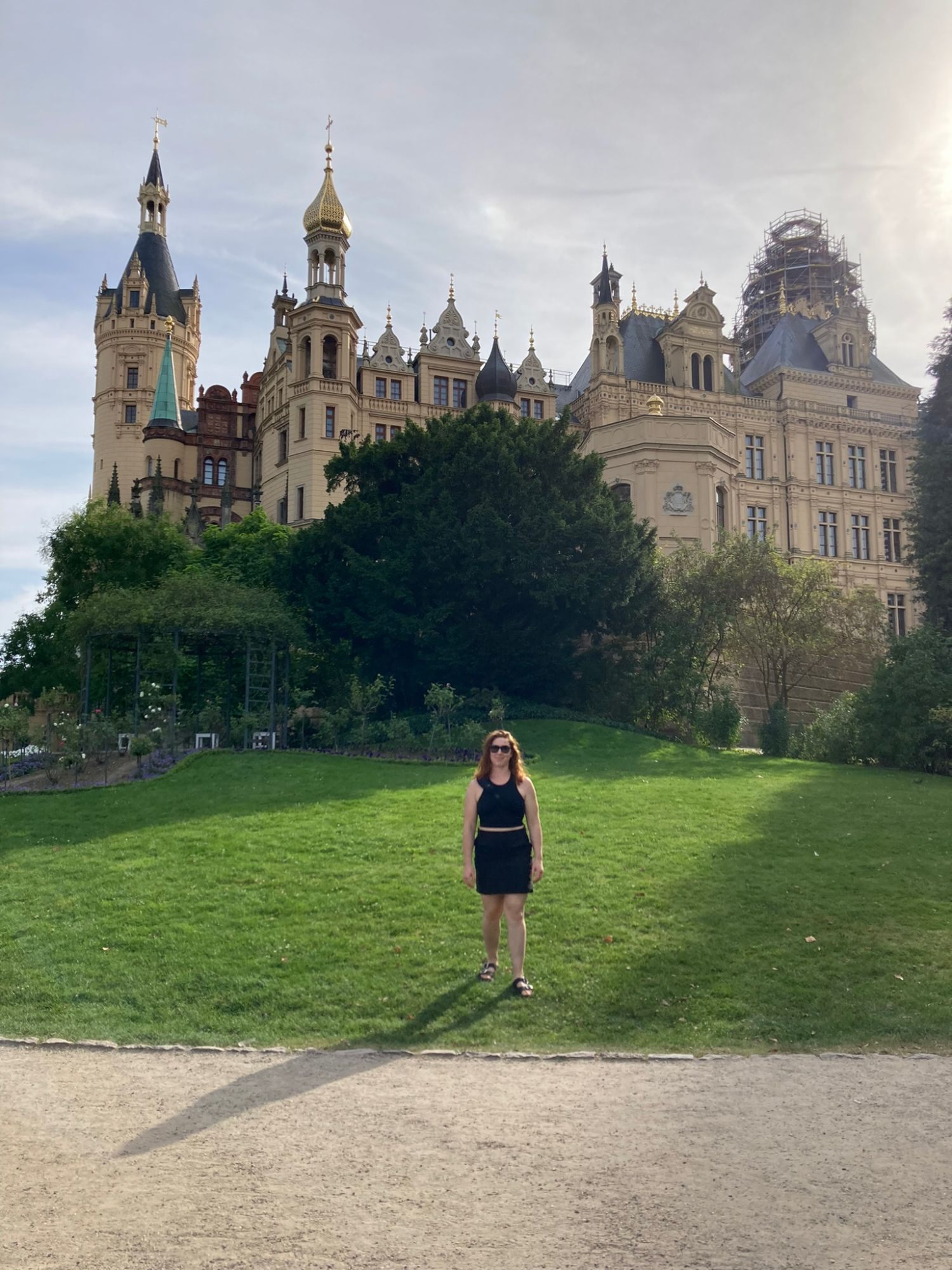
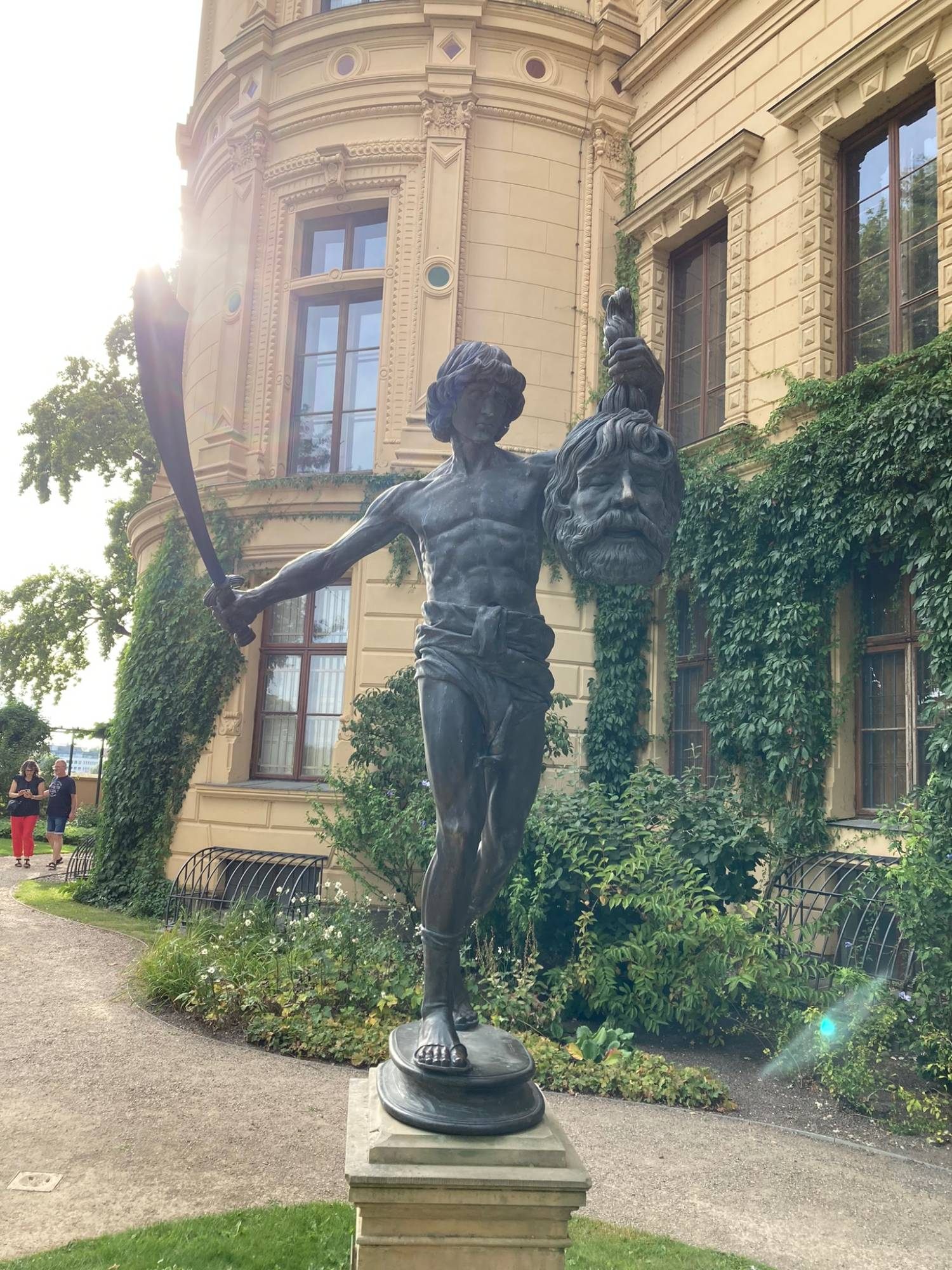
Our verdict: it's a beautiful castle and a lovely place to walk around. If you're already in Schwerin or driving past, stop and see it. We wouldn't plan a whole trip – or a big detour – around it alone. For us it was the perfect gentle start to a long road trip.
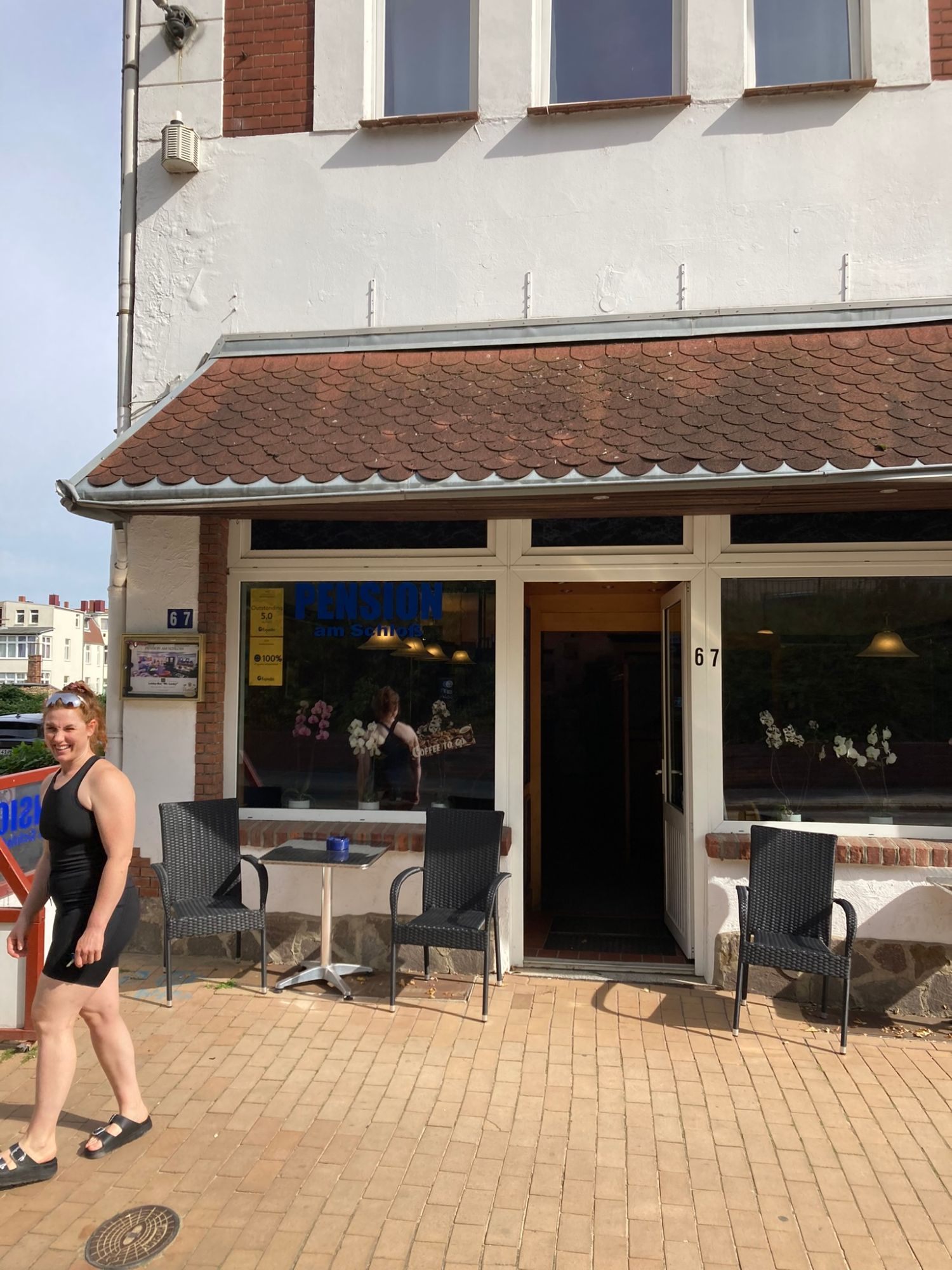
Pension am Schloss did the job for one night: simple, close to the castle and fine for what we needed.
Sources: City of Schwerin – facts and history, German Commission for UNESCO – Residenzensemble Schwerin.
2 September – Into Poland: Wrocław and its dwarfs
Sandwiches from the boot, a long drive east – and a treasure hunt for tiny bronze dwarfs.
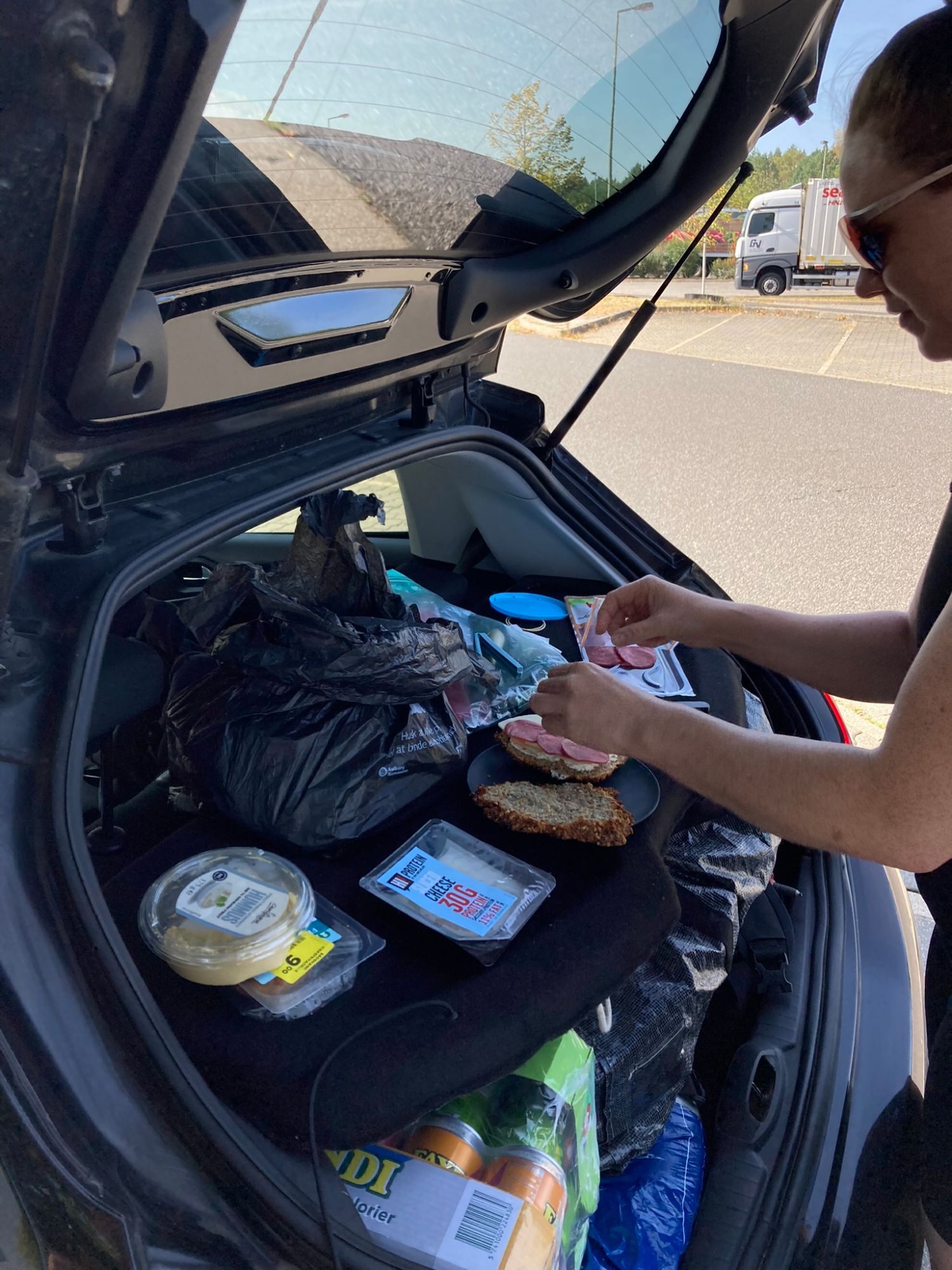
We travel with a cool box in the car, so we usually make our own lunch on the road instead of eating out for every meal. At around 10.45 we pulled over for a break, opened the boot and made sandwiches. Cheap, quick, and you can stop wherever suits you.
In the afternoon we reached Wrocław in south-western Poland and checked in at Kamienica Pod Aniołami. No problems at all – a fine place to sleep for a night.
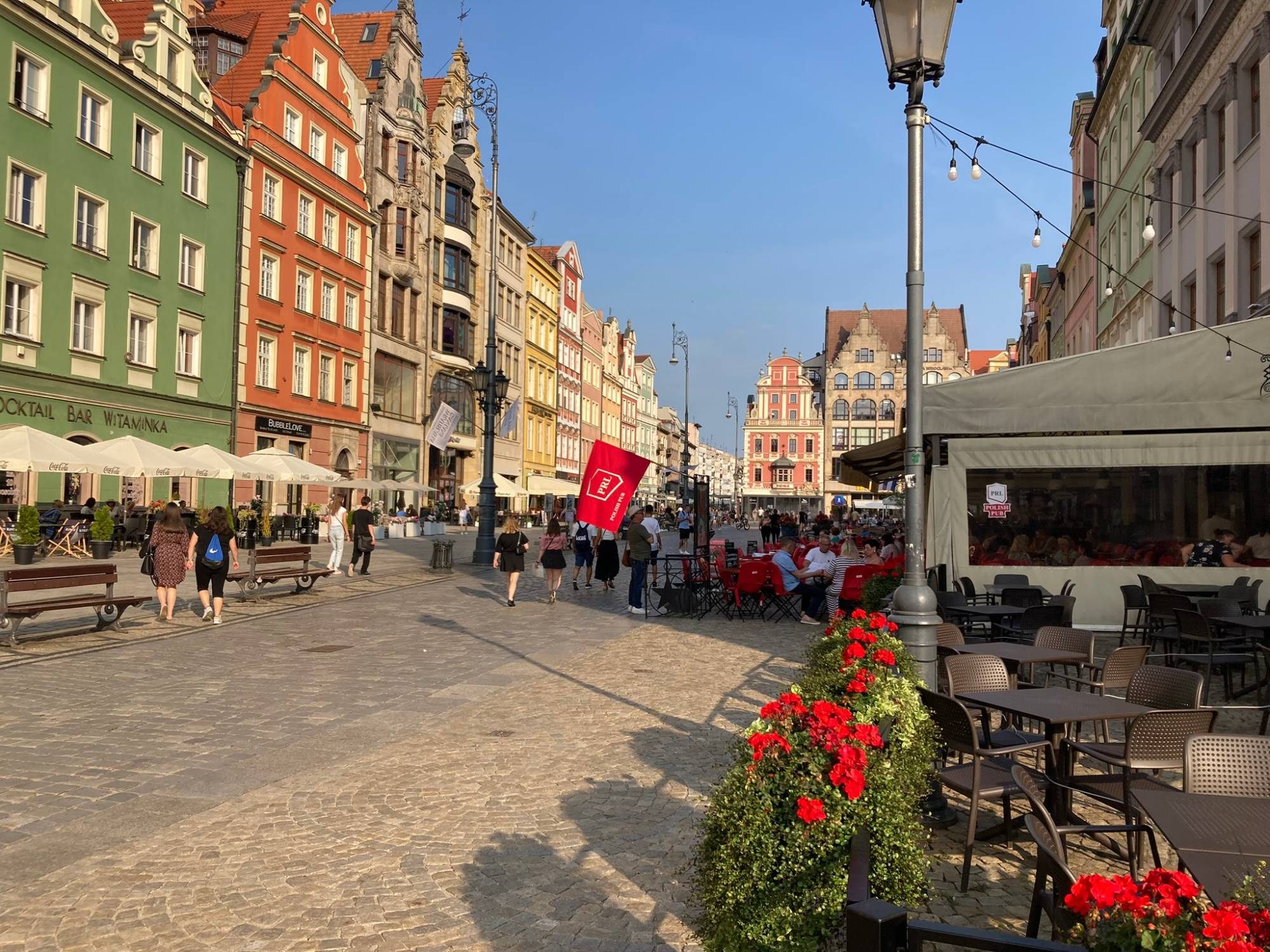
Then we walked. Wrocław's Old Town is a cosy place with colourful merchants' houses, cobbled squares and a lot of detail to discover on foot. To us it felt a bit like Kraków. We found the old town more charming than the one we saw in Warsaw, though we wouldn't quite put it on the same level as Gdańsk – that's our personal impression, not a ranking of Polish cities. Half a day is a good amount of time to wander, look at the buildings and soak up the atmosphere.
Hunting for Wrocław's dwarfs
The best thing about Wrocław, for us, was the dwarfs. Small bronze figures – krasnale in Polish – are hidden all over the city: on pavements, by doorways, on window ledges and in corners you'd walk straight past. We started looking for them and it quickly turned into a treasure hunt.
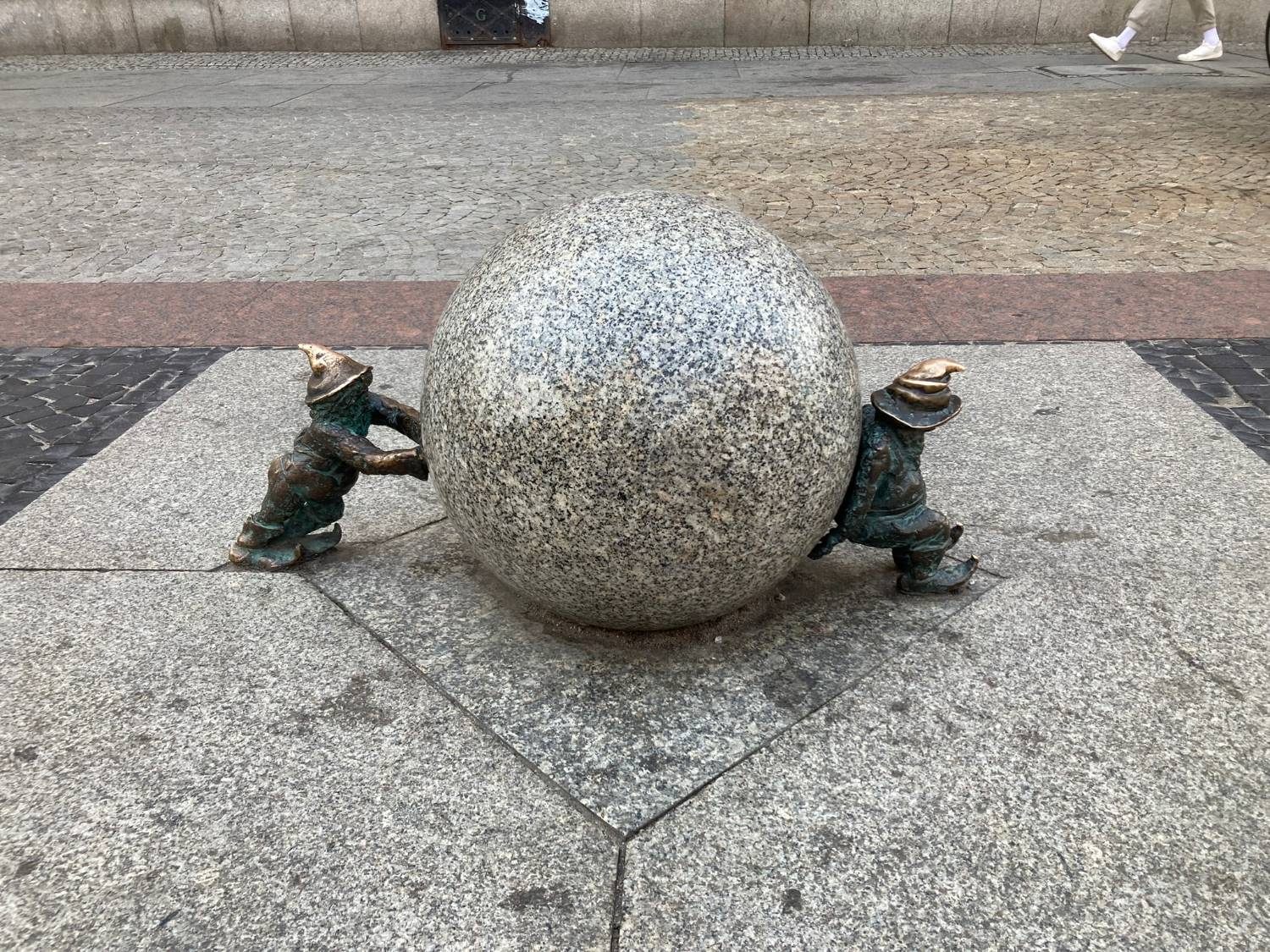
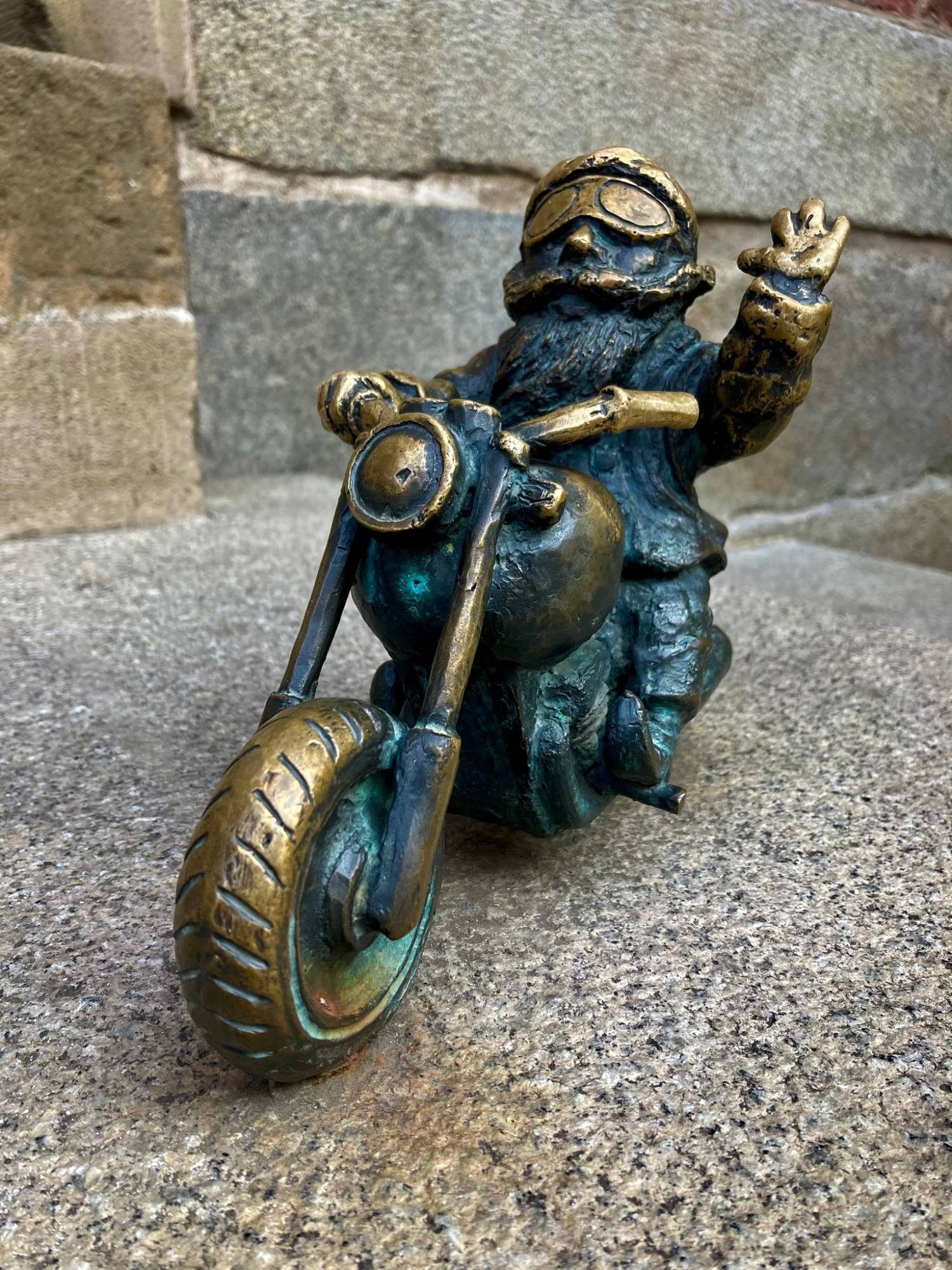
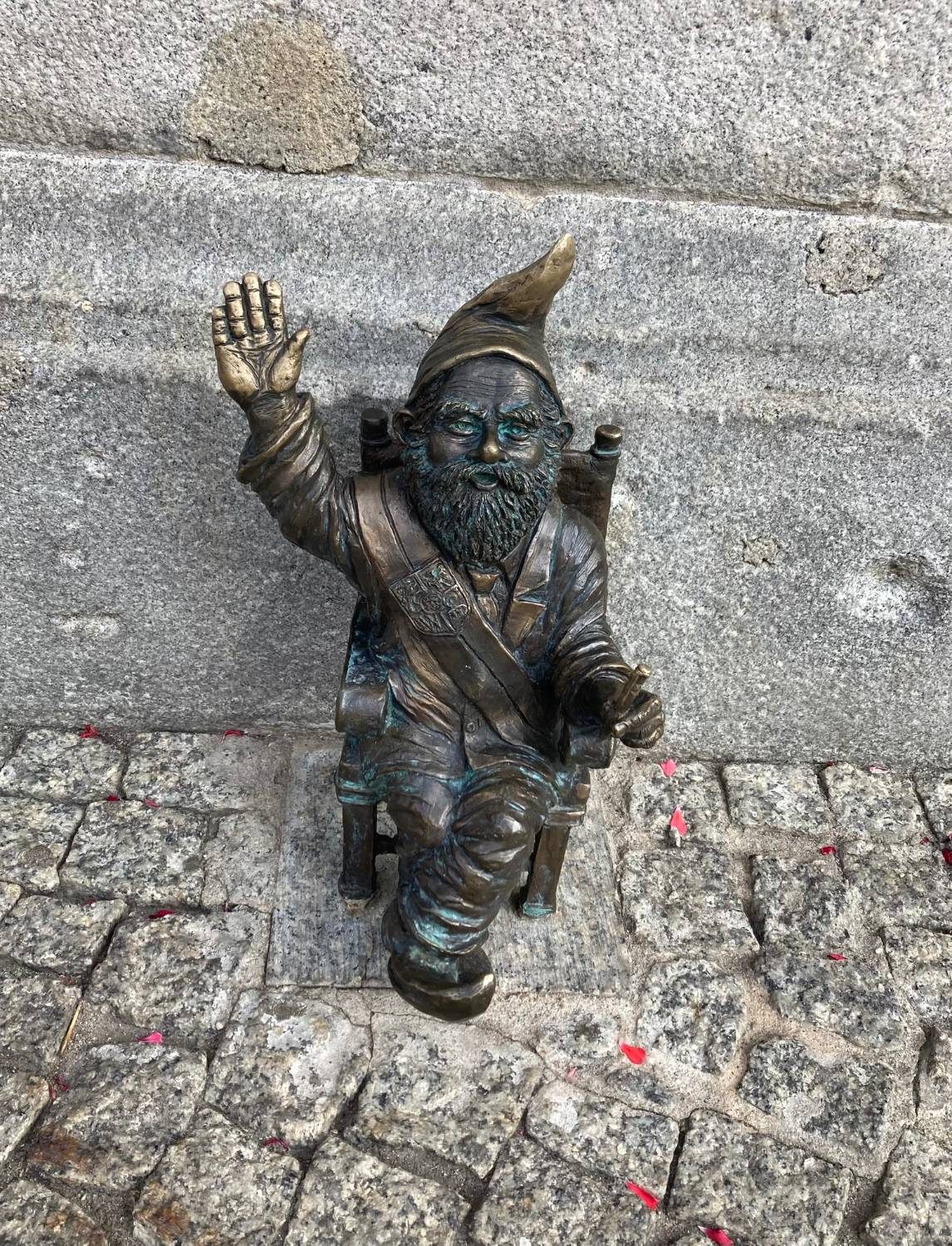
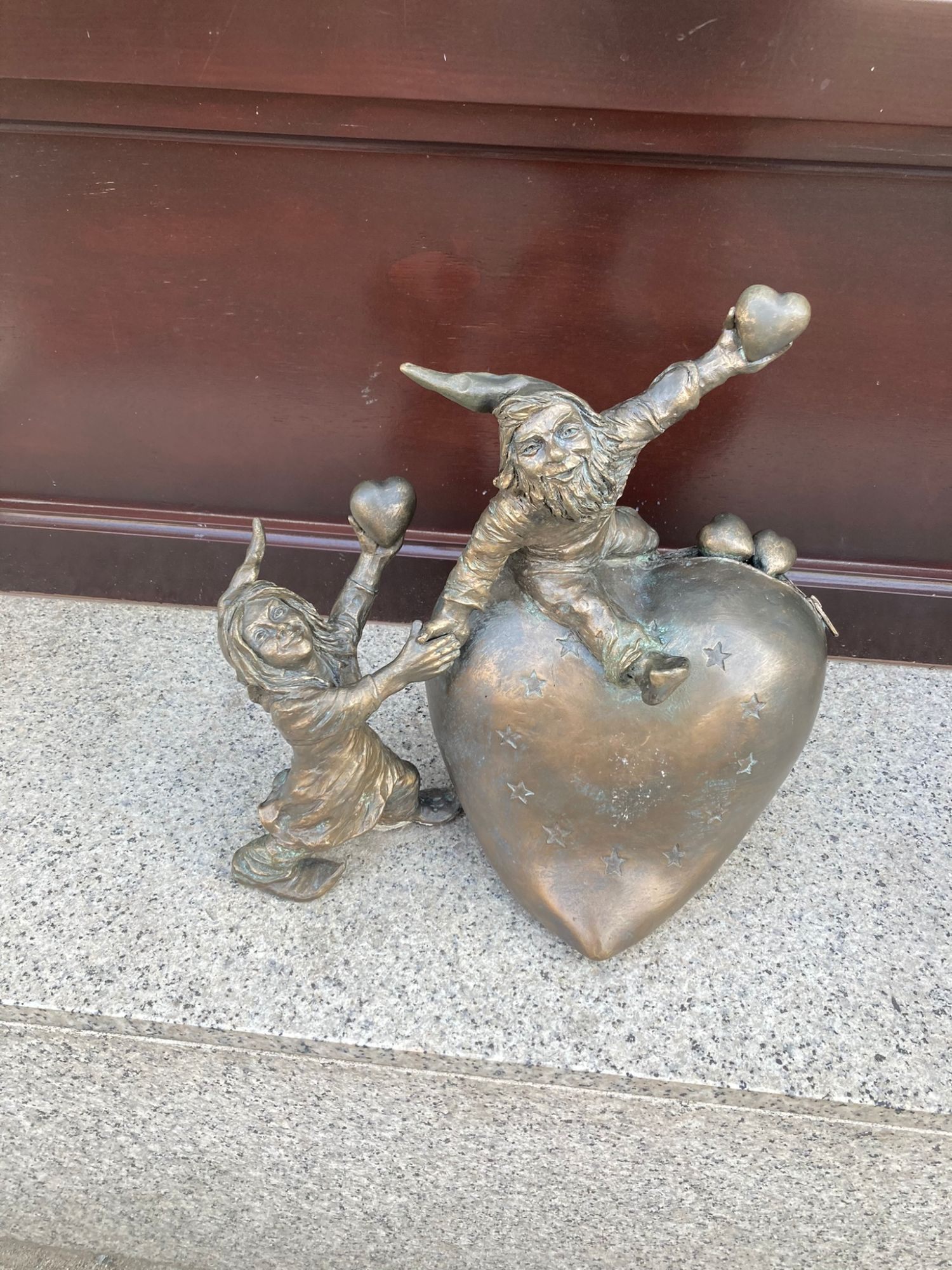
It's a gimmick – but a fun one. You don't need a plan for every sight; just keep your eyes on the ground and count how many you find. New dwarfs keep appearing, so we won't give you a number. The city's tourist office has a map and database of them if you want to plan your own route: visitwroclaw.eu – Wrocław dwarves.
Some of the figures are a long way above the street. The two brick towers of St Mary Magdalene's Church are joined high up by a small footbridge – the Penitents' Bridge, also called the Witches' Bridge – and you can climb the stairs inside one of the towers to reach it. On the bridge stand two little witch figures, and the view over the Old Town is excellent.
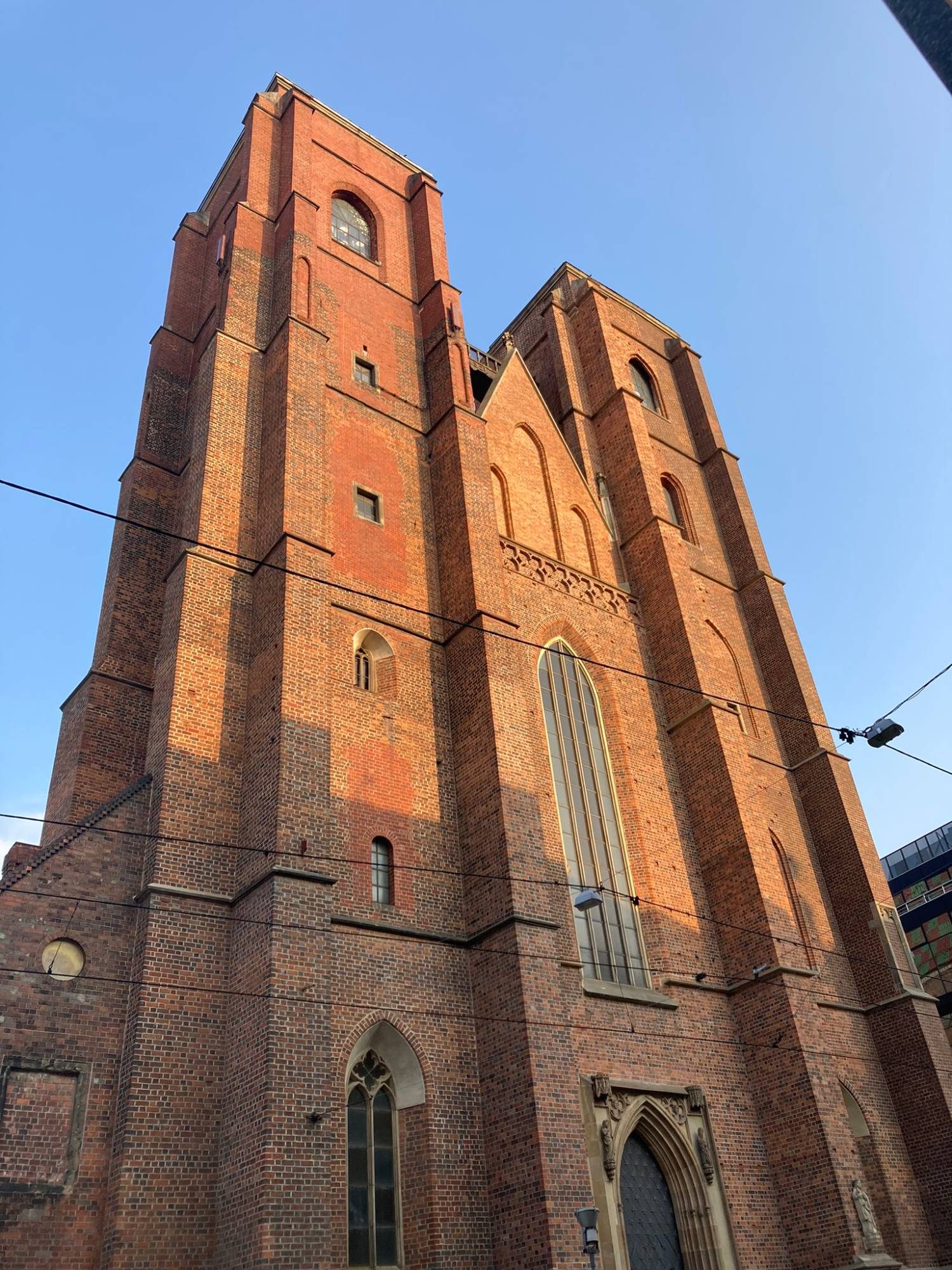
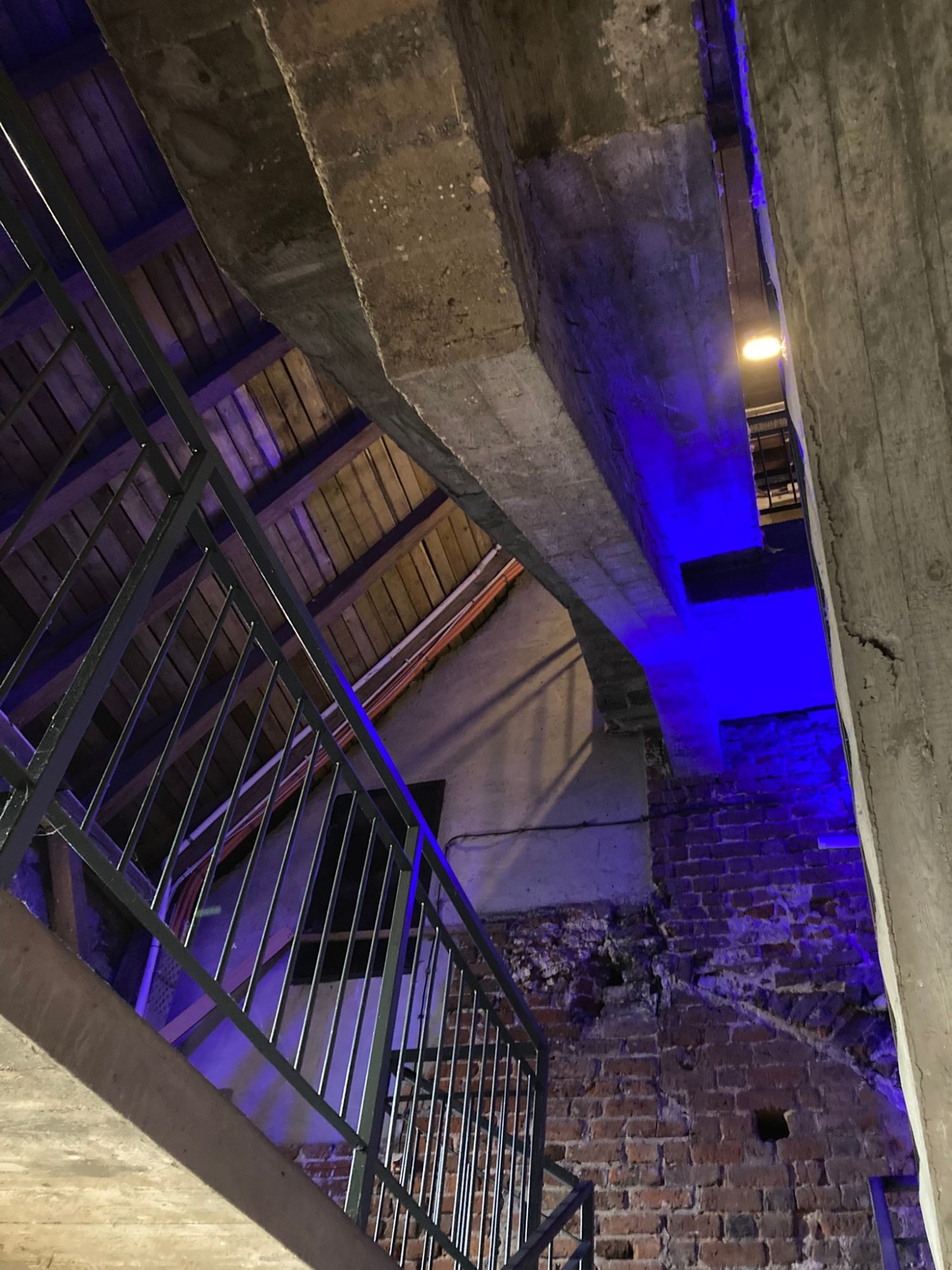
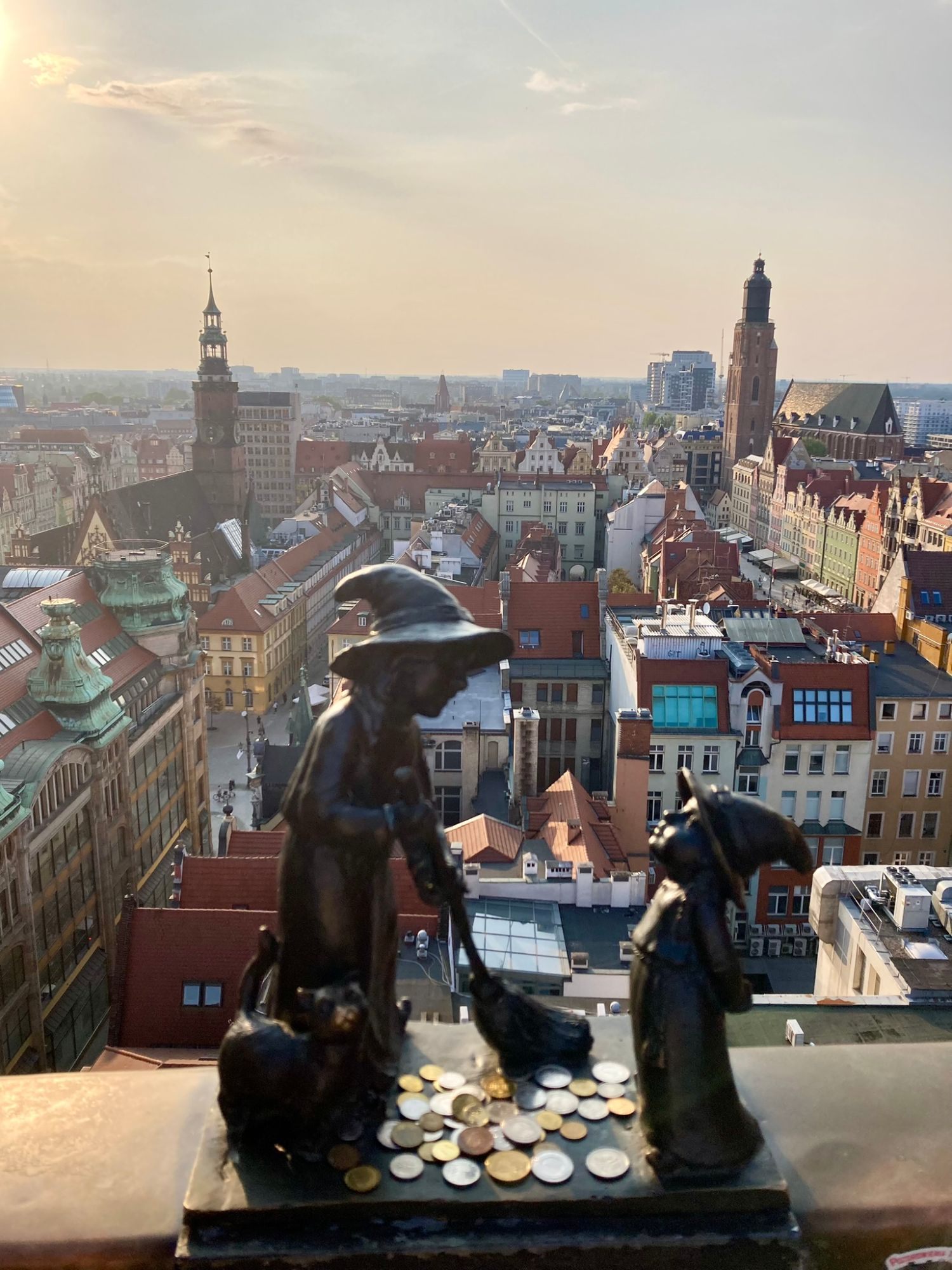
Background: In Your Pocket – Penitents' Bridge.
An evening in the Old Town
In the evening we found somewhere to eat close to the square: pork knuckle with roast potatoes and sauerkraut, meat in a mushroom sauce with dumplings, and a beer each. Then we walked back through the Old Town after dark, when the lamps were lit and the terraces were full.
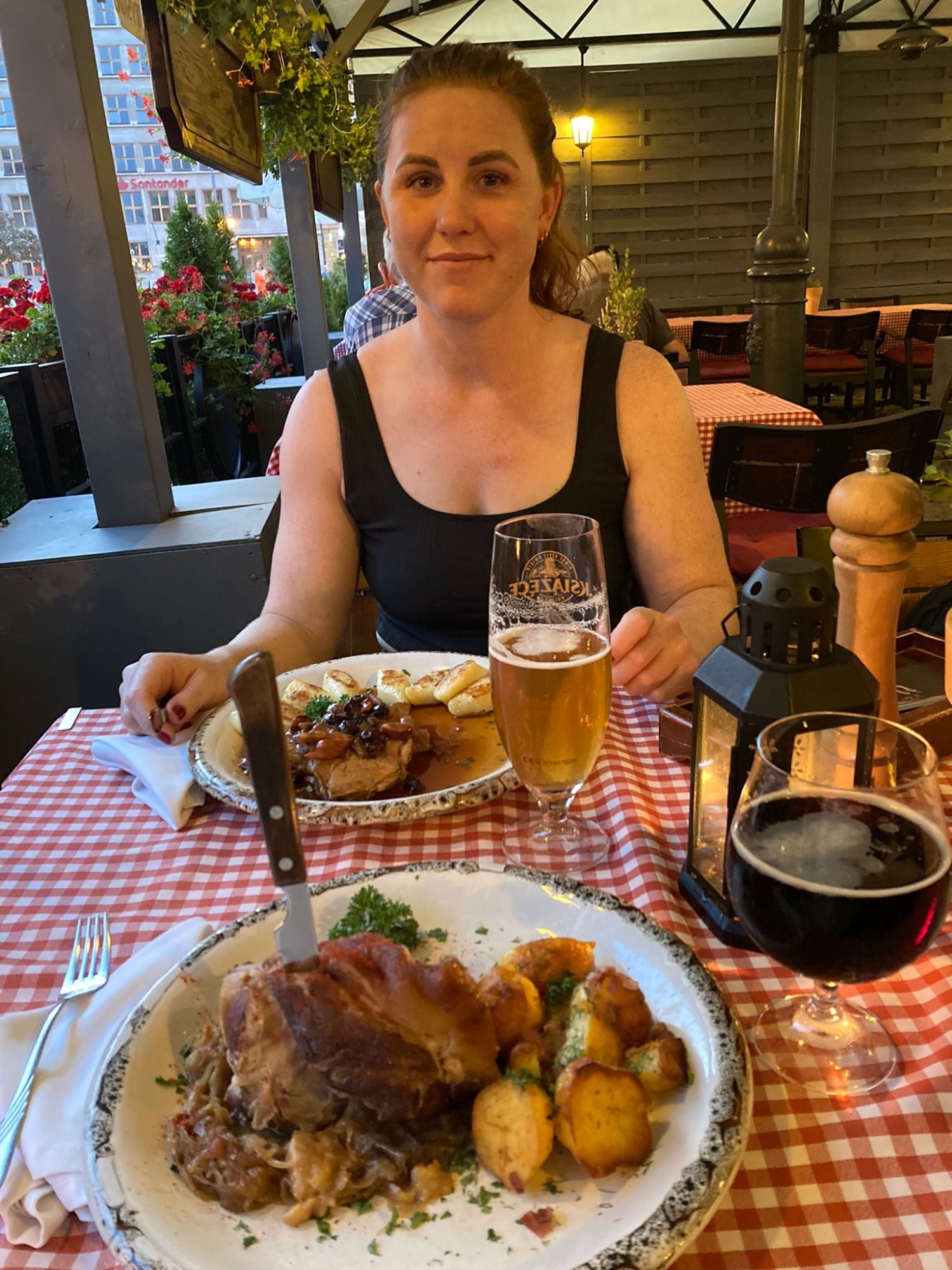
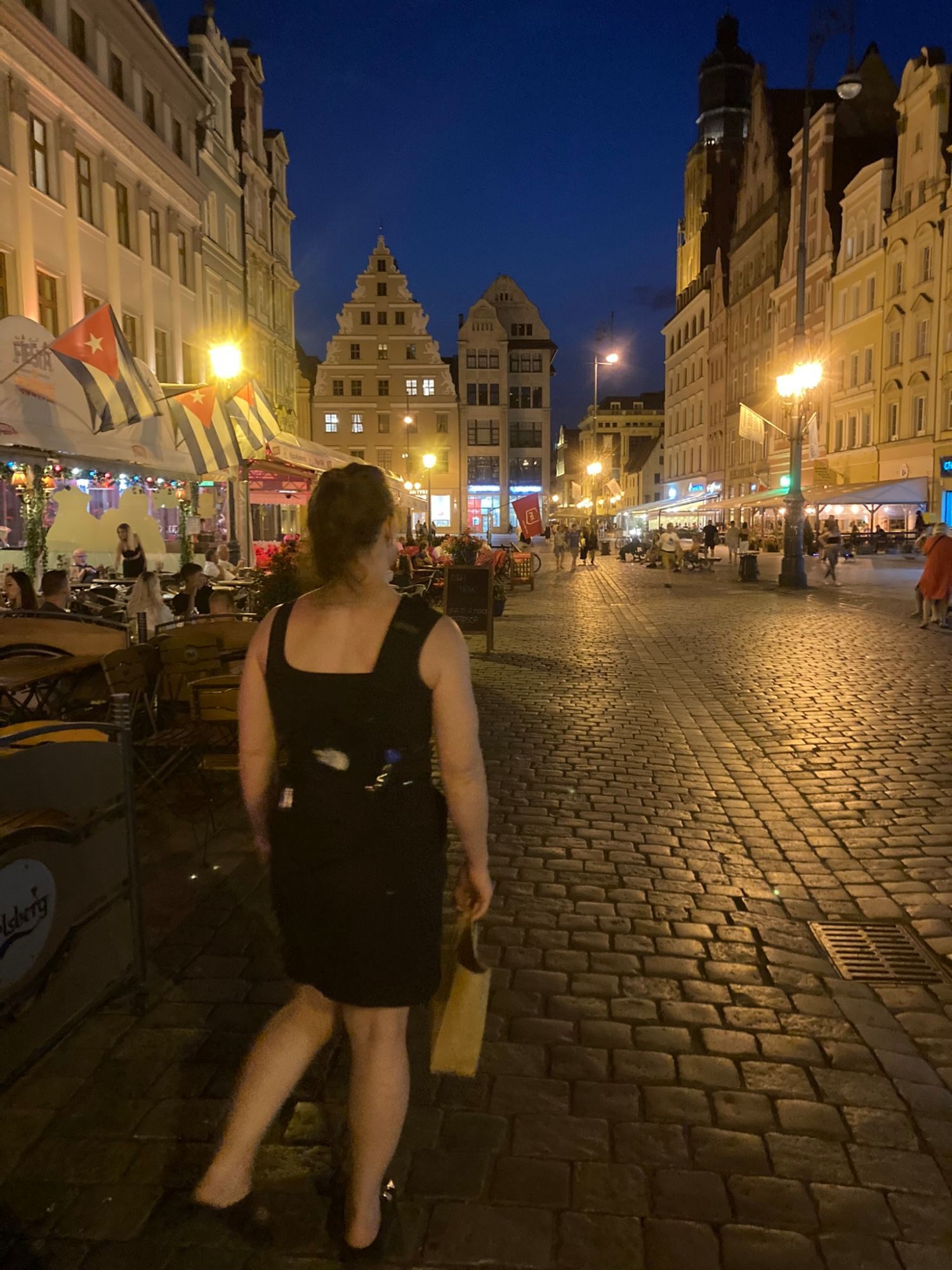
Wrocław was a good stop: a friendly city where we could stretch our legs, eat out and get a bit of city life before heading for the mountains.
We hunted for the dwarfs on our own, but if you'd like the stories behind them, there are guided walks around the Old Town that combine the dwarfs with Wrocław's communist-era history. We haven't tried any of them and can't vouch for a particular tour:
3 September – To the High Tatras and Sliezsky Dom
From Polish motorways to Slovak mountains – and a hotel you can't drive to.
We left Wrocław and drove on through Poland towards Slovakia. Slowly the landscape changed. We crossed the border, and at some point the Tatra Mountains appeared on the horizon – the first real mountains of the trip, and the reason we'd come this way.
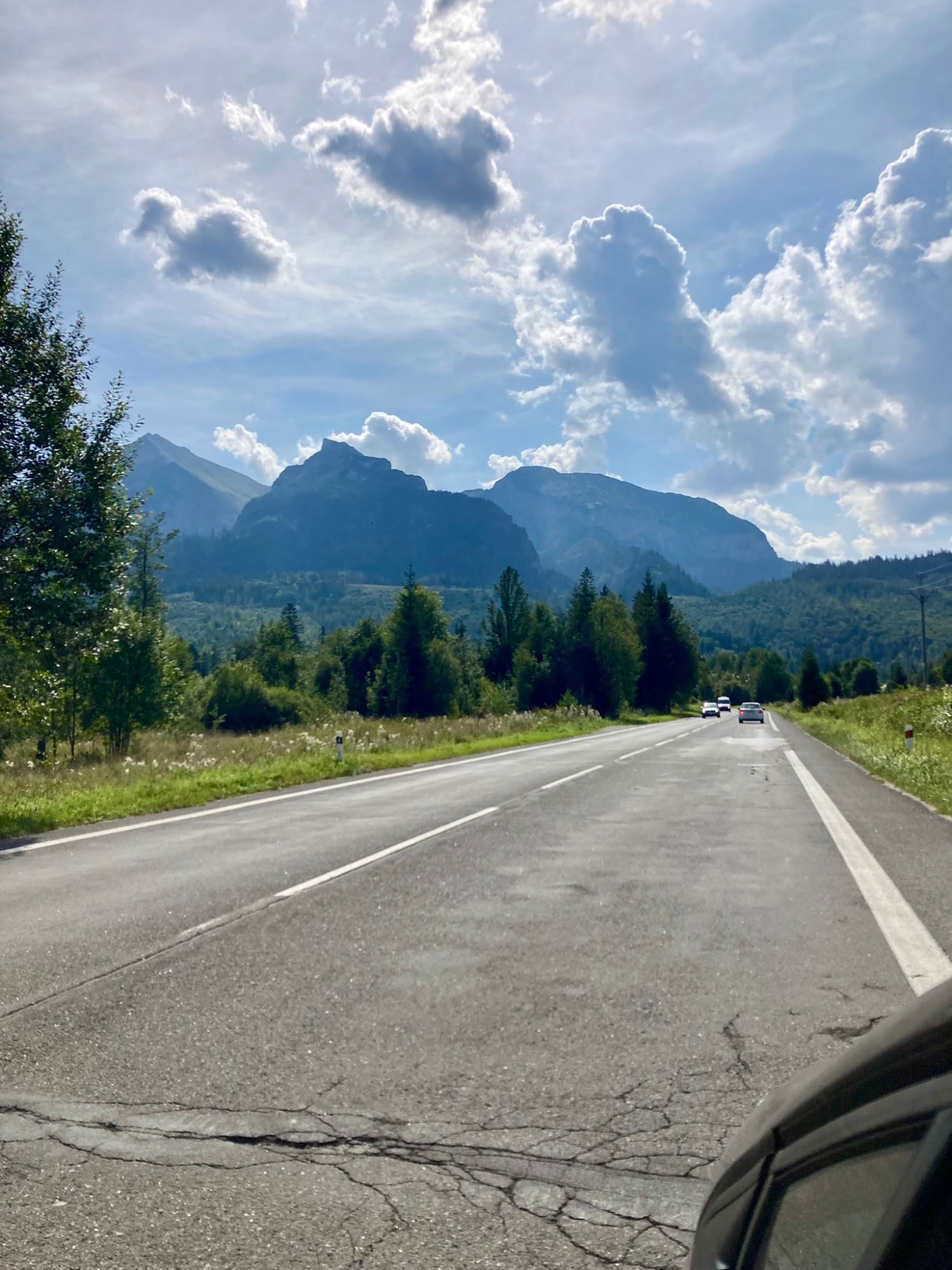
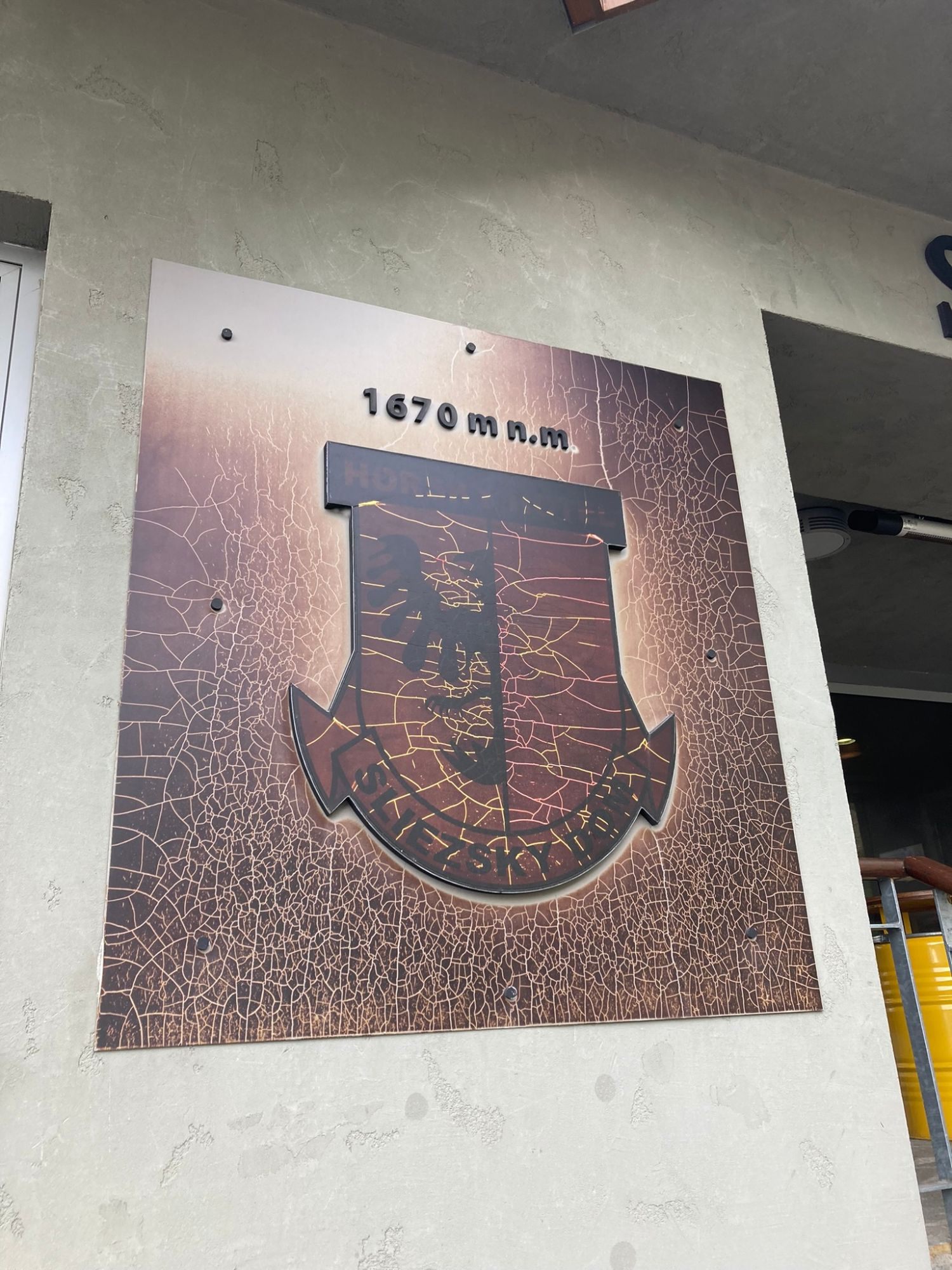
Our goal for the night was Horský Hotel Sliezsky Dom, at about 1,670 metres in the Velická valley in the High Tatras. You can't simply drive up in your own car. We parked below and, as arranged with the hotel, were picked up by the hotel's van, which took us about six kilometres up a narrow mountain road. Leaving the car behind and being driven the last stretch makes the hotel feel far more remote than a normal roadside stop.
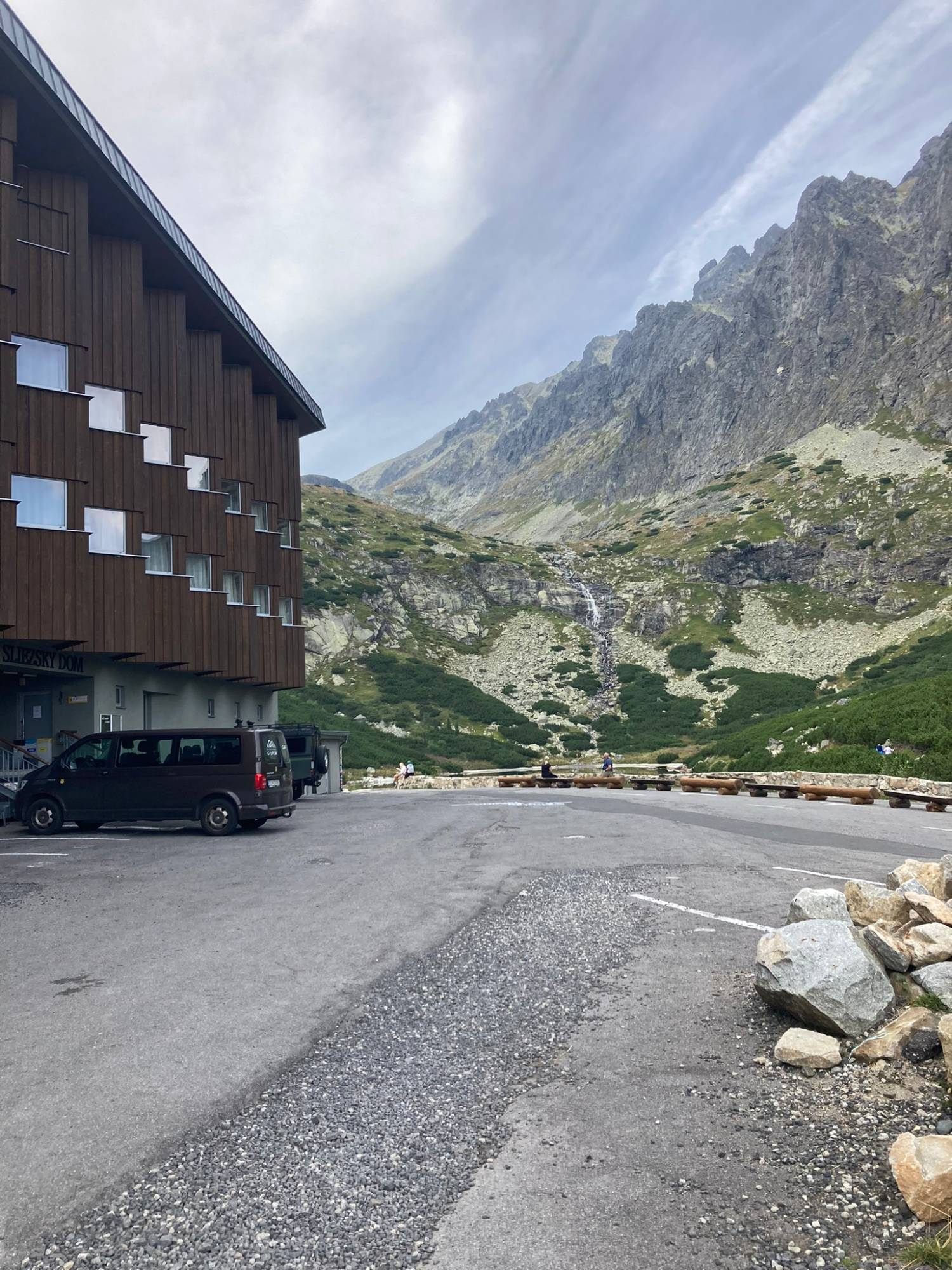
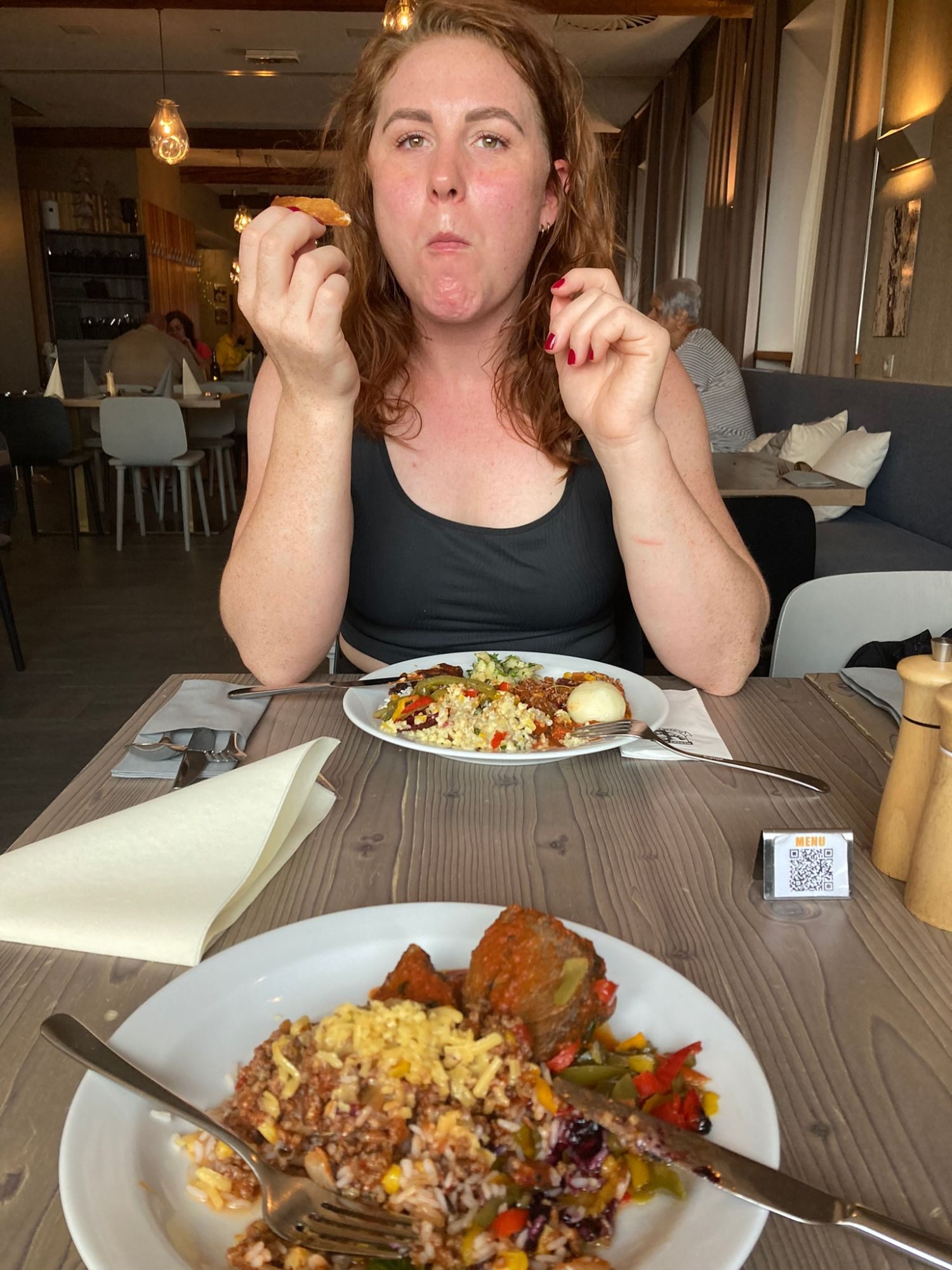
We arrived, had dinner at the hotel and then went for a short walk outside. The hotel stands right by Velické pleso, a mountain lake, surrounded by steep rock walls. It's a beautiful place to arrive after a long day in the car.
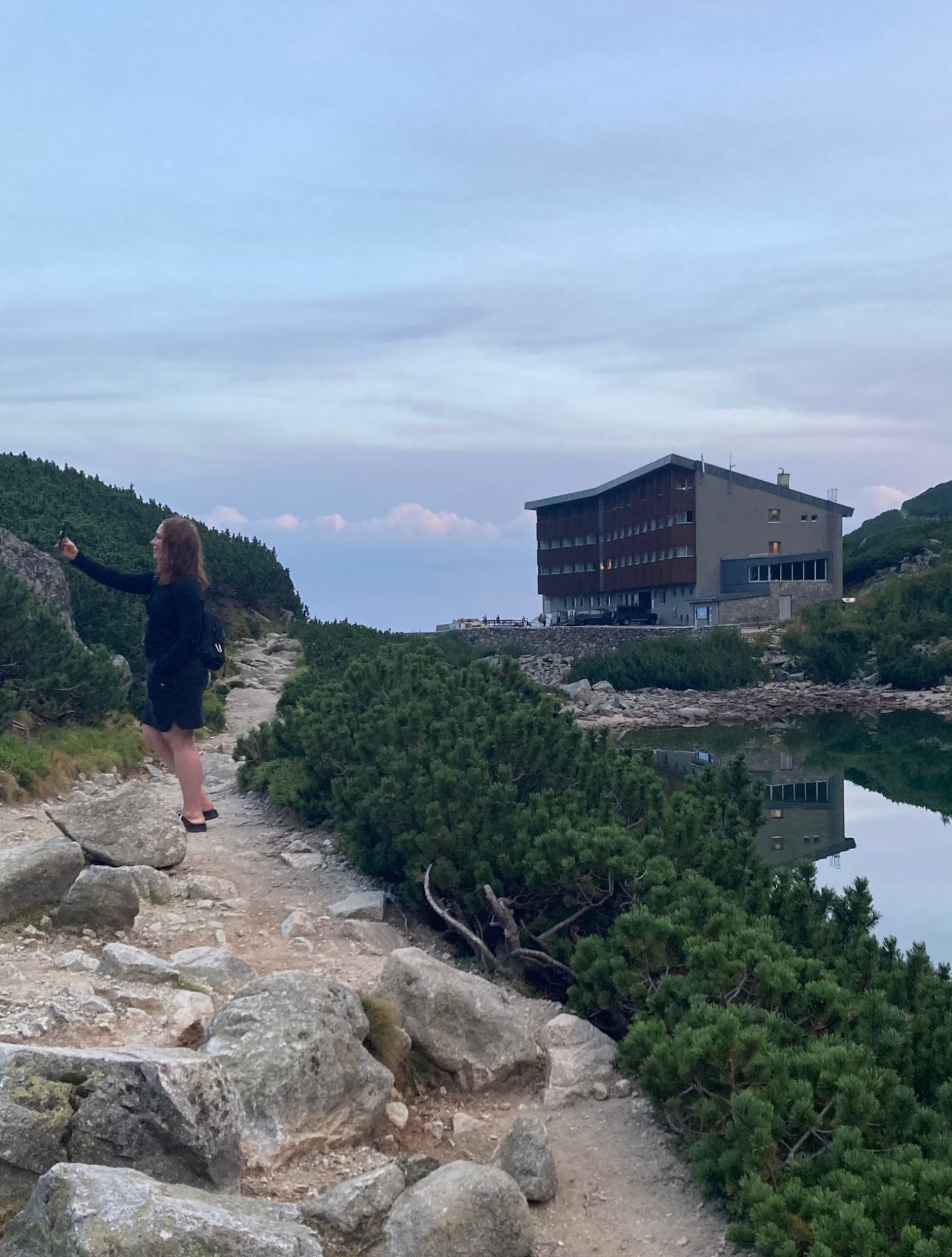
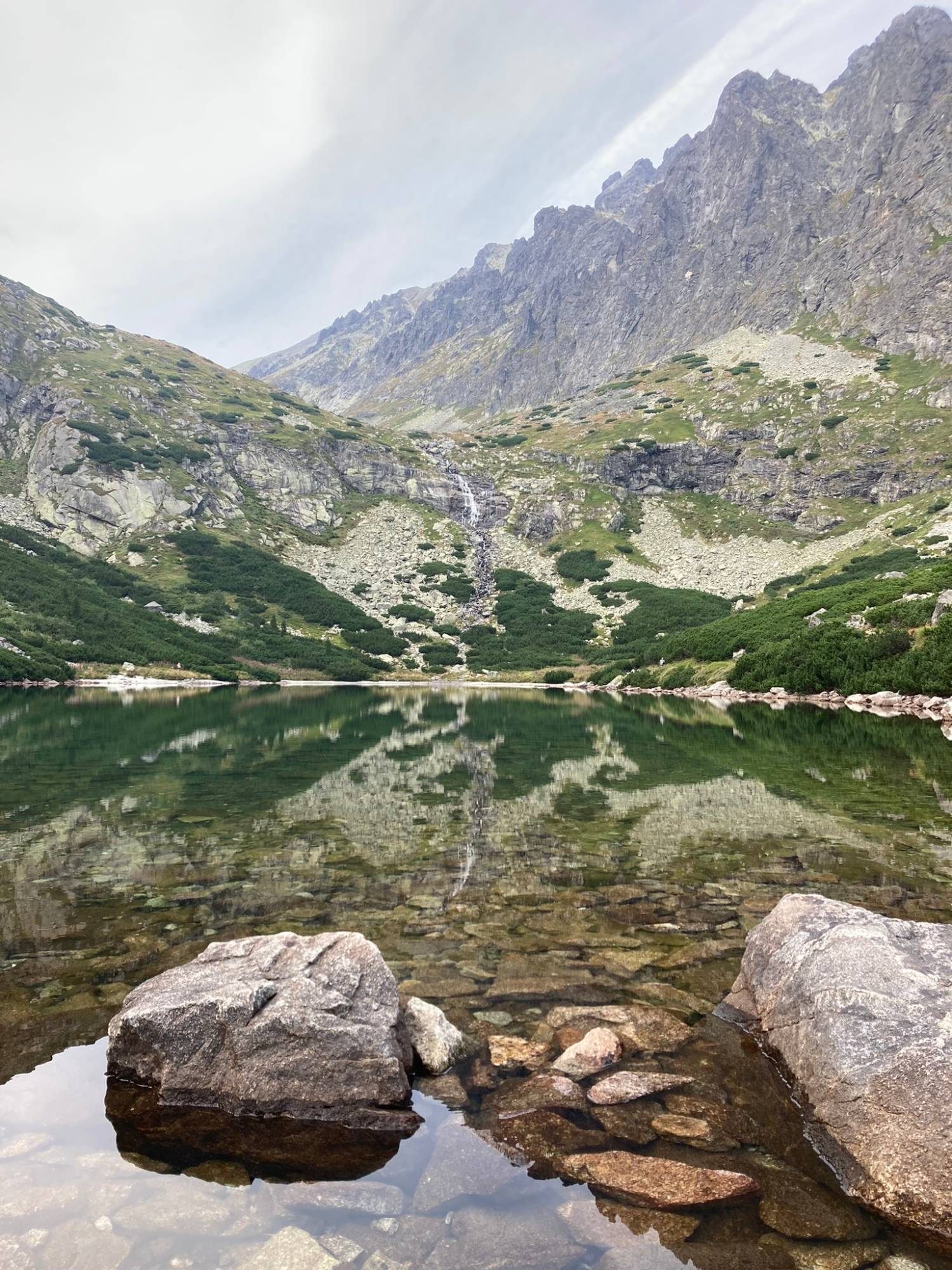
We'd definitely recommend considering a night at Sliezsky Dom if you want to experience the High Tatras and wake up high in the mountains – the location is a big part of the experience. One practical note: when we visited, guests parked at the collection car park in Tatranská Polianka and the hotel ran its own transfers at set times. Access to the road can change, so check the current arrangements with the hotel when you book.
We booked our own mountain guide for the next day (more on that in the Gerlach story). For other trips in the High Tatras – hikes, lakes and day tours – there are options on GetYourGuide too, but we haven't tried them ourselves:
We went to bed early. The next morning, at 5.30, a mountain guide would be waiting for us outside the door.
4 September – Climbing Gerlachovský štít
The big one: a guided climb of Gerlachovský štít, at 2,655 metres the highest mountain in Slovakia – an armwrestling match on the summit, and a descent that tested us both. The whole story is in its own article: Climbing Gerlachovský štít: Our Adventure on Slovakia's Highest Mountain.
5 September – A treetop walk and mountain carts at Bachledka
A quieter day after the climb – one attraction that didn't do much for us, and one that made the whole trip up worthwhile.
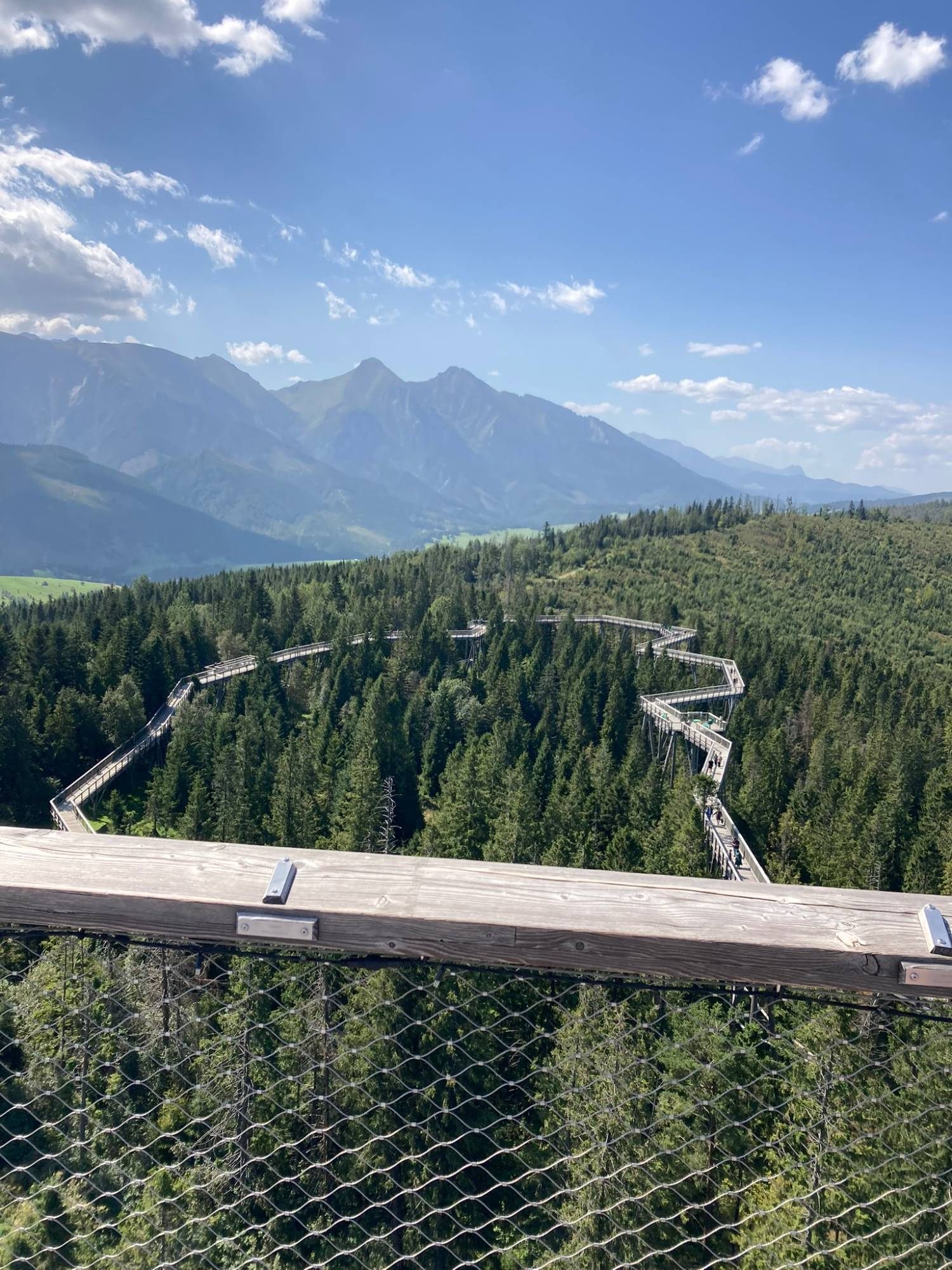
We woke up at Penzión Snežienka after the frustrating check-in the night before. After Gerlach we needed an easier day, but we still wanted to get out and see something. We chose the Bachledka Treetop Walk, a wooden walkway through the treetops with a tall lookout tower at the end, on the Spišská Magura hills north of the High Tatras.
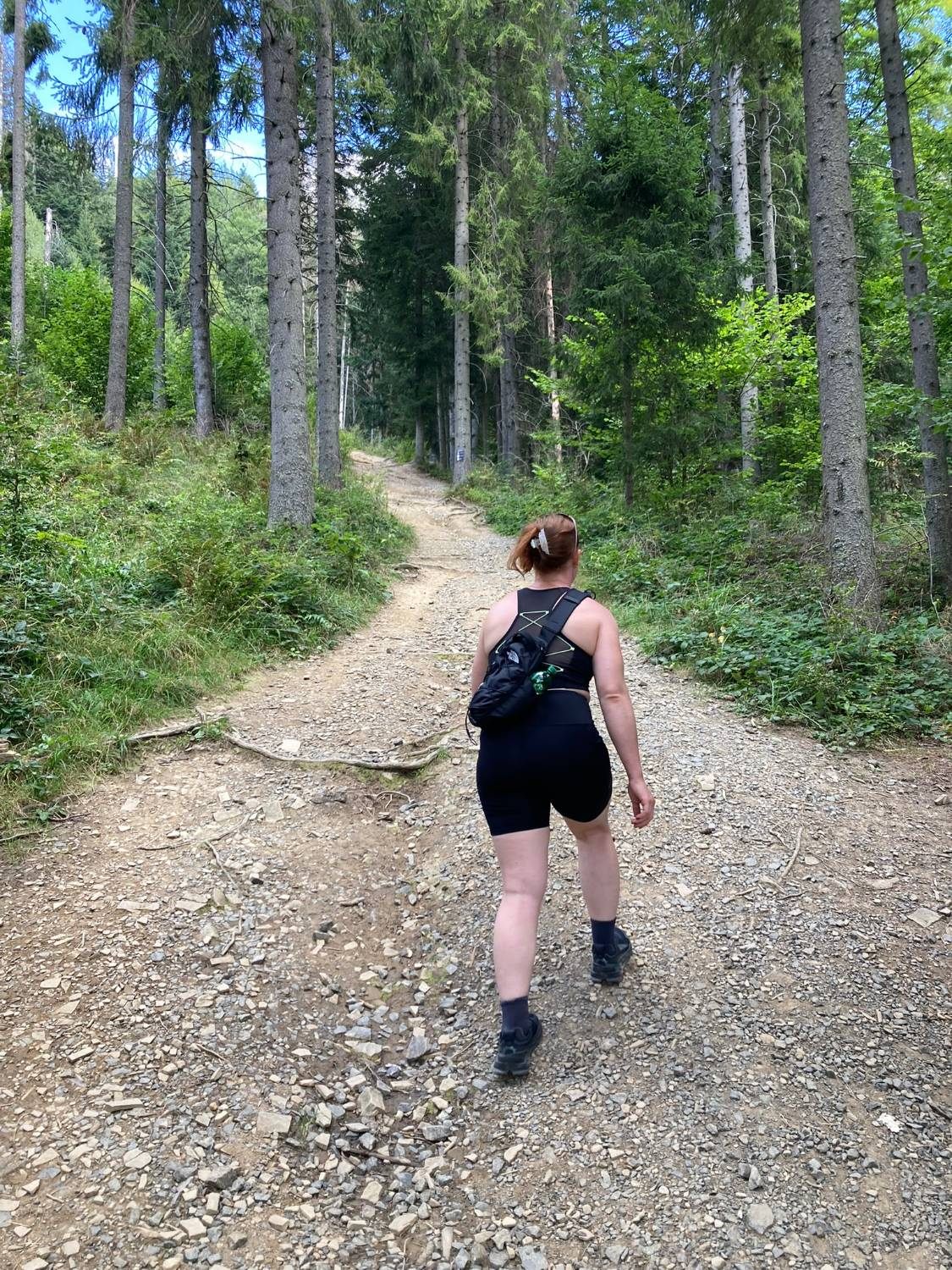
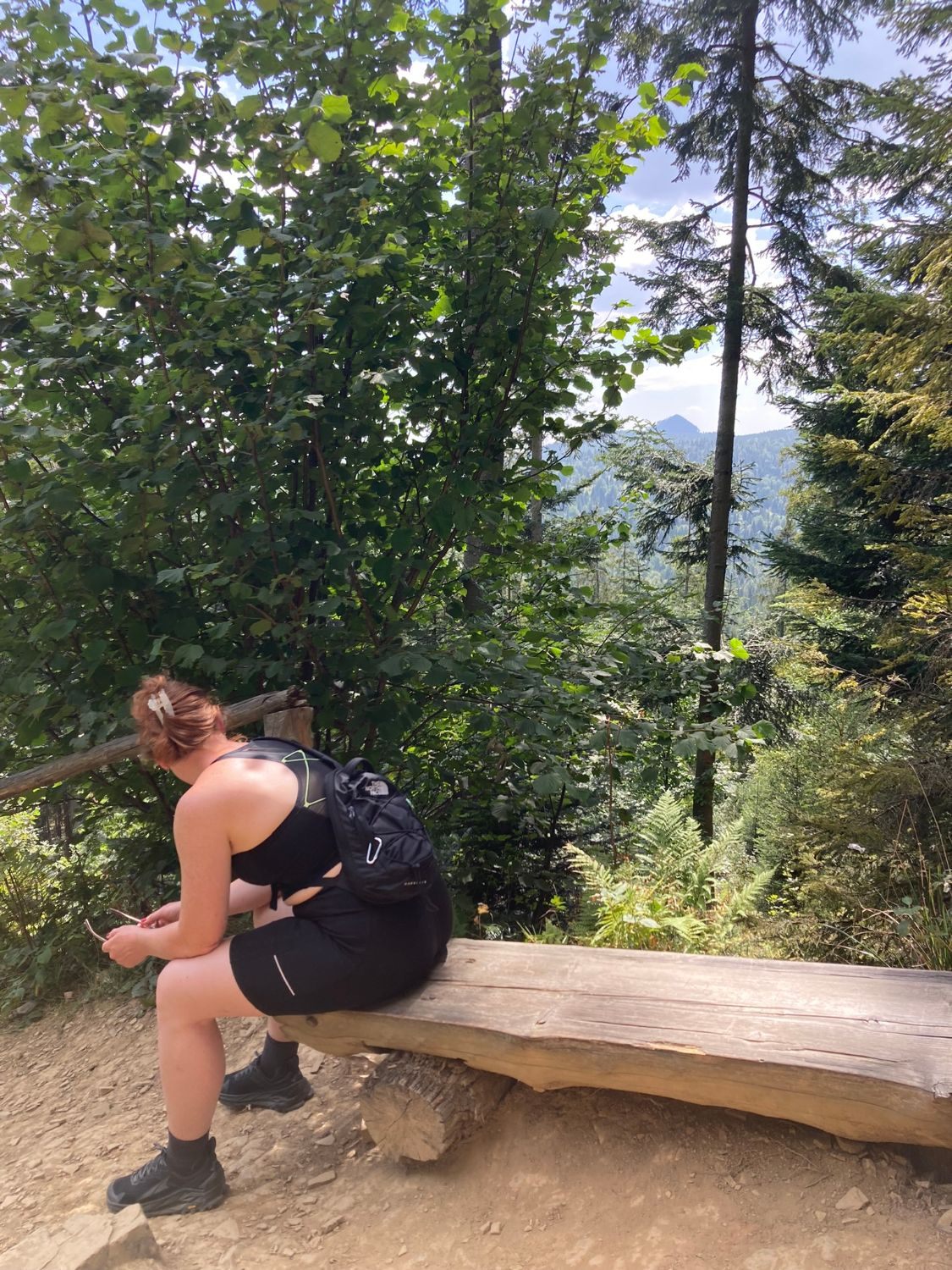
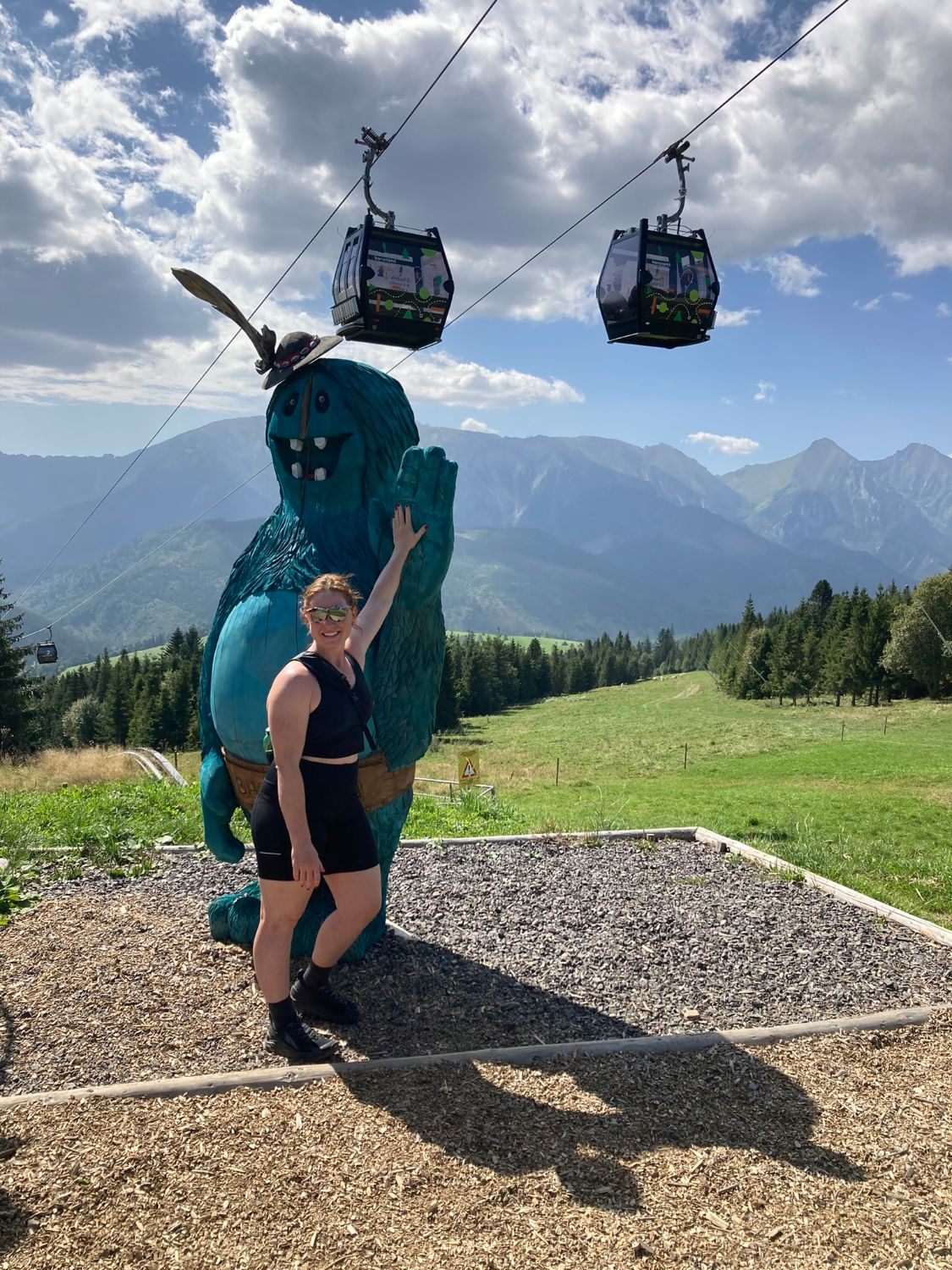
We left the car below and walked up instead of taking the cable car – roughly 2.5 km uphill, as we remember it. With Gerlach still in our legs, it felt harder than it should have. Kristine took a short break on a bench on the way up.
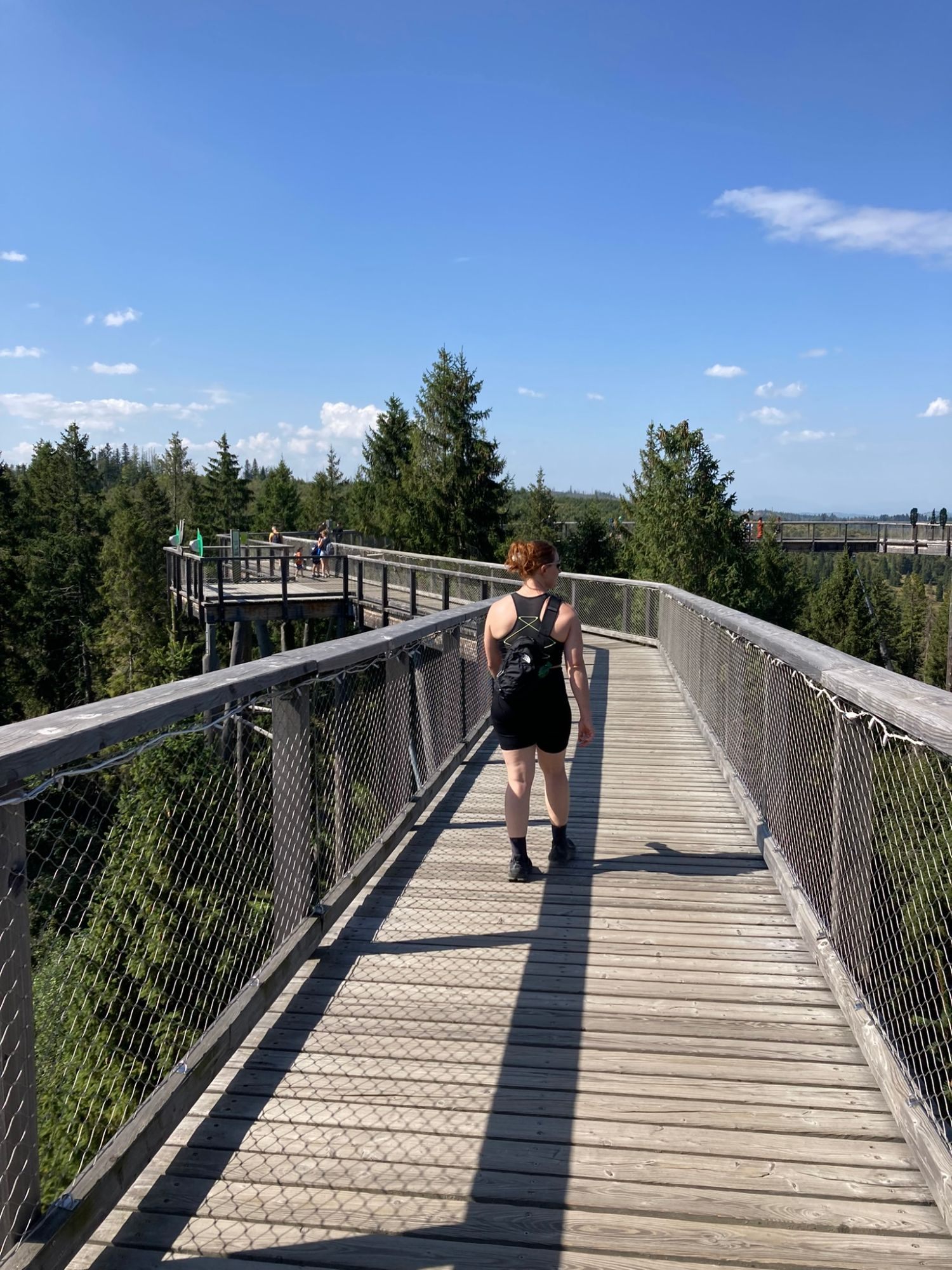
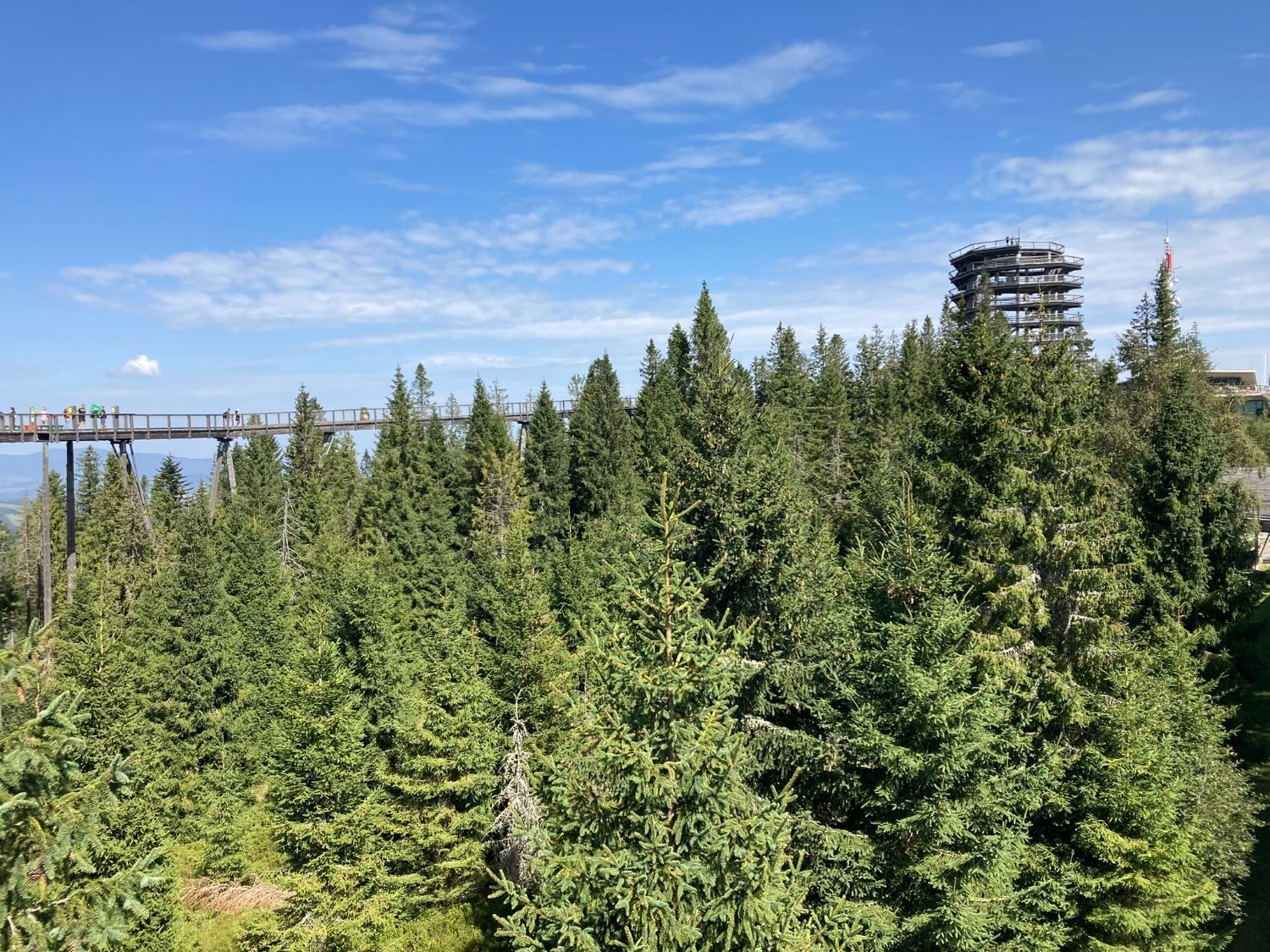
At the top we walked the wooden walkways through the treetops and climbed the lookout tower – 32 metres high – for a view over the forest and the mountains. It's well made, and we can see why families with children like it. For us, though, it wasn't anything special. It's fine if you're already in the area and want something easy to do, but it isn't something we would drive far for.
Mountain carts – the best part of the day
What we really remember is the ride down. We each rented a mountain cart – a low, three-wheeled gravity cart with big tyres – put on helmets and rolled about 2.5 km down a gravel road back towards the car park.
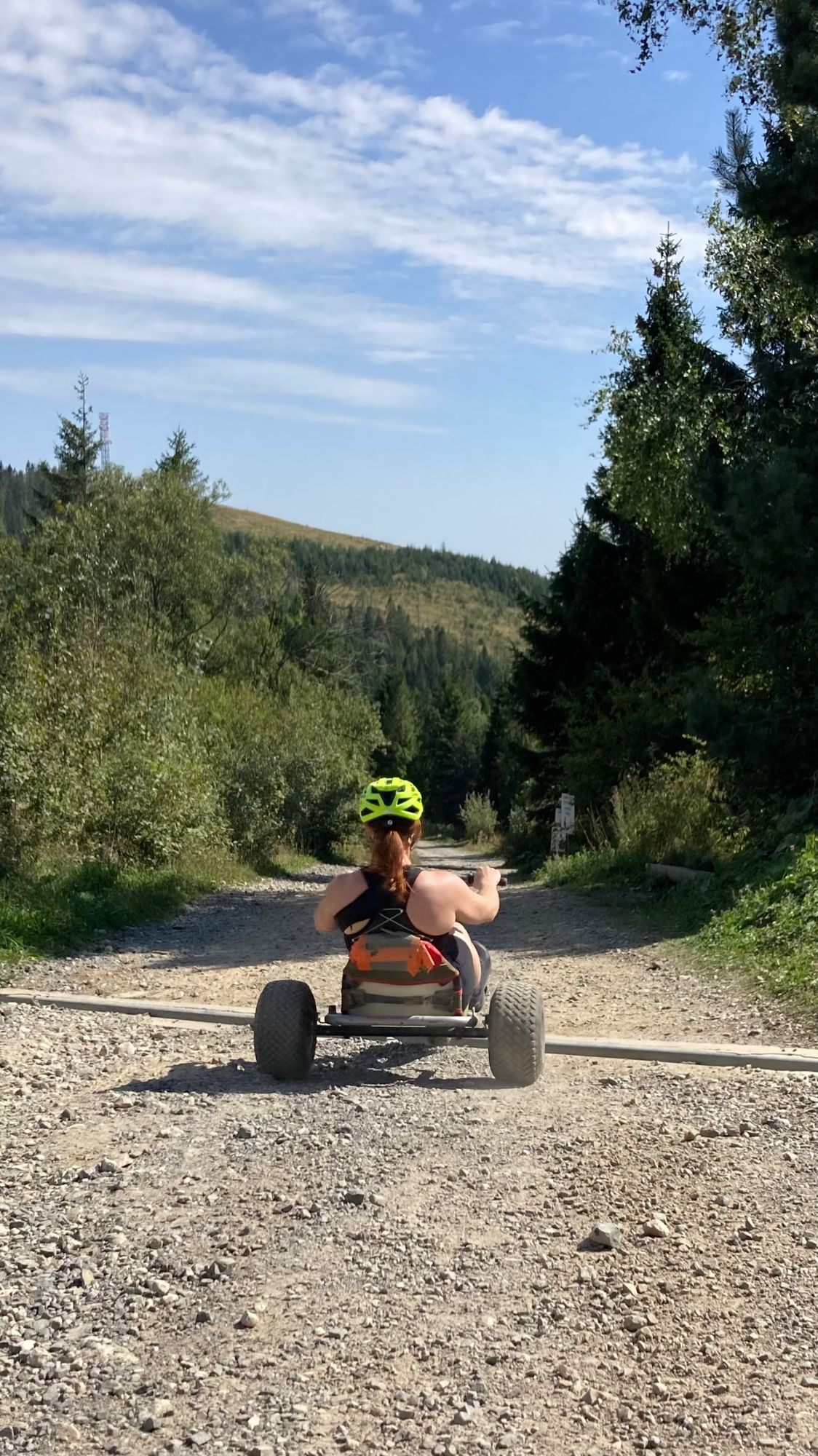
It was a completely different experience from the walkway: fast, bumpy, active and a lot of fun. On a day when we'd only planned to take it easy, it turned out to be the highlight. If you only do one thing at Bachledka, skip the walk up and ride the carts down.
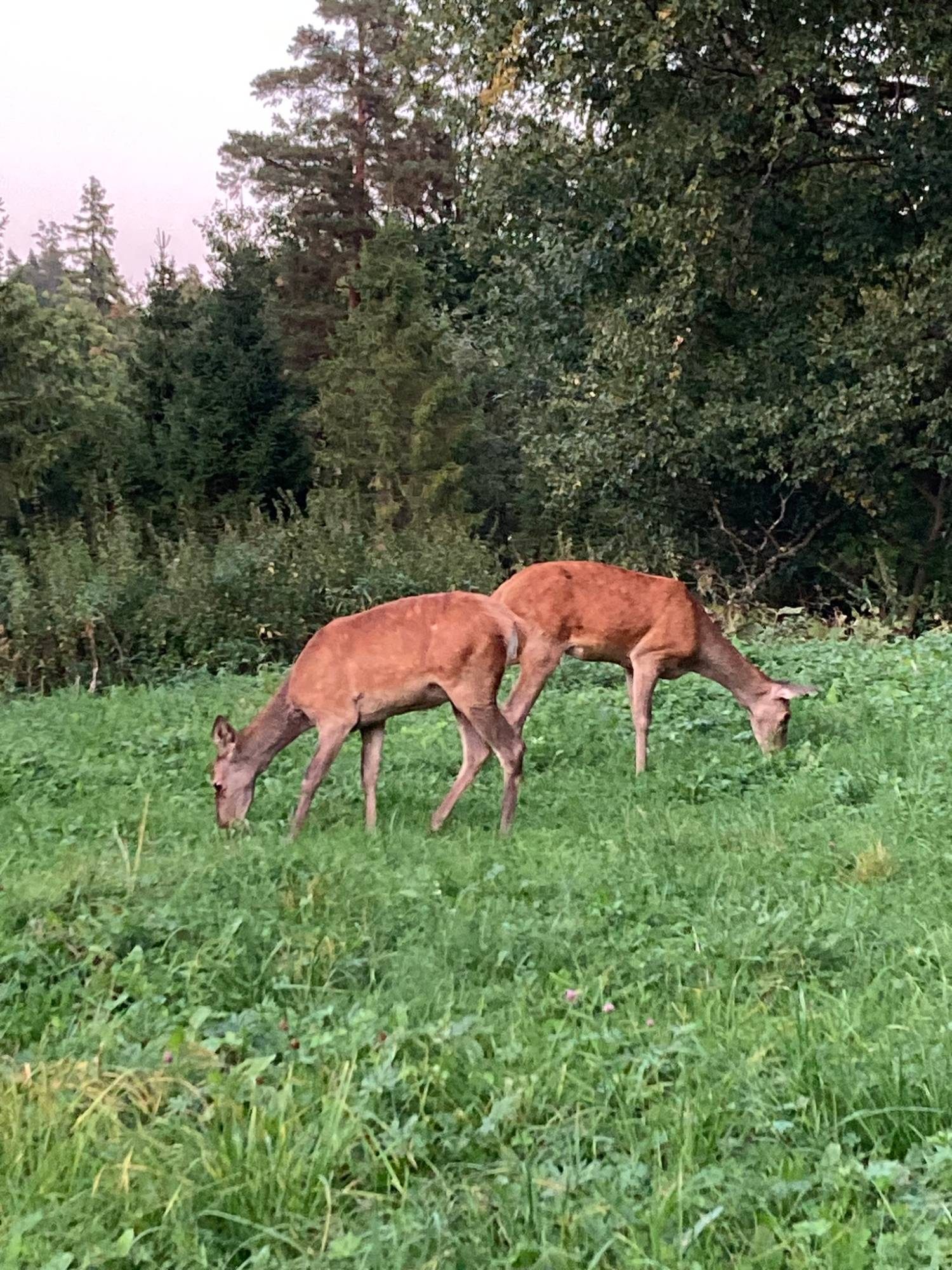
Overall it was a good recovery day. Not everything lived up to our expectations, but we got some fresh air, a bit of exercise and one activity that was much more fun than we'd expected. The rest of the day we took it easy. When we drove back to Penzión Snežienka in the evening, two red deer were grazing on a meadow at the edge of the forest – a nice end to the day.
Official information: Bachledka – Treetop Walk, Bachledka – mountain carts. Opening times, prices and routes change, so check before you go.
6 September – Orava Castle and an evening in Bratislava
Nosferatu's castle in the morning, ice cream with Hans Christian Andersen in the afternoon.
On Friday 6 September we left the High Tatras – and Penzión Snežienka – behind, and we weren't sorry. Our first stop was Orava Castle (Oravský hrad) in northern Slovakia. We arrived around 9.30 and bought tickets at the visitor centre below the castle.
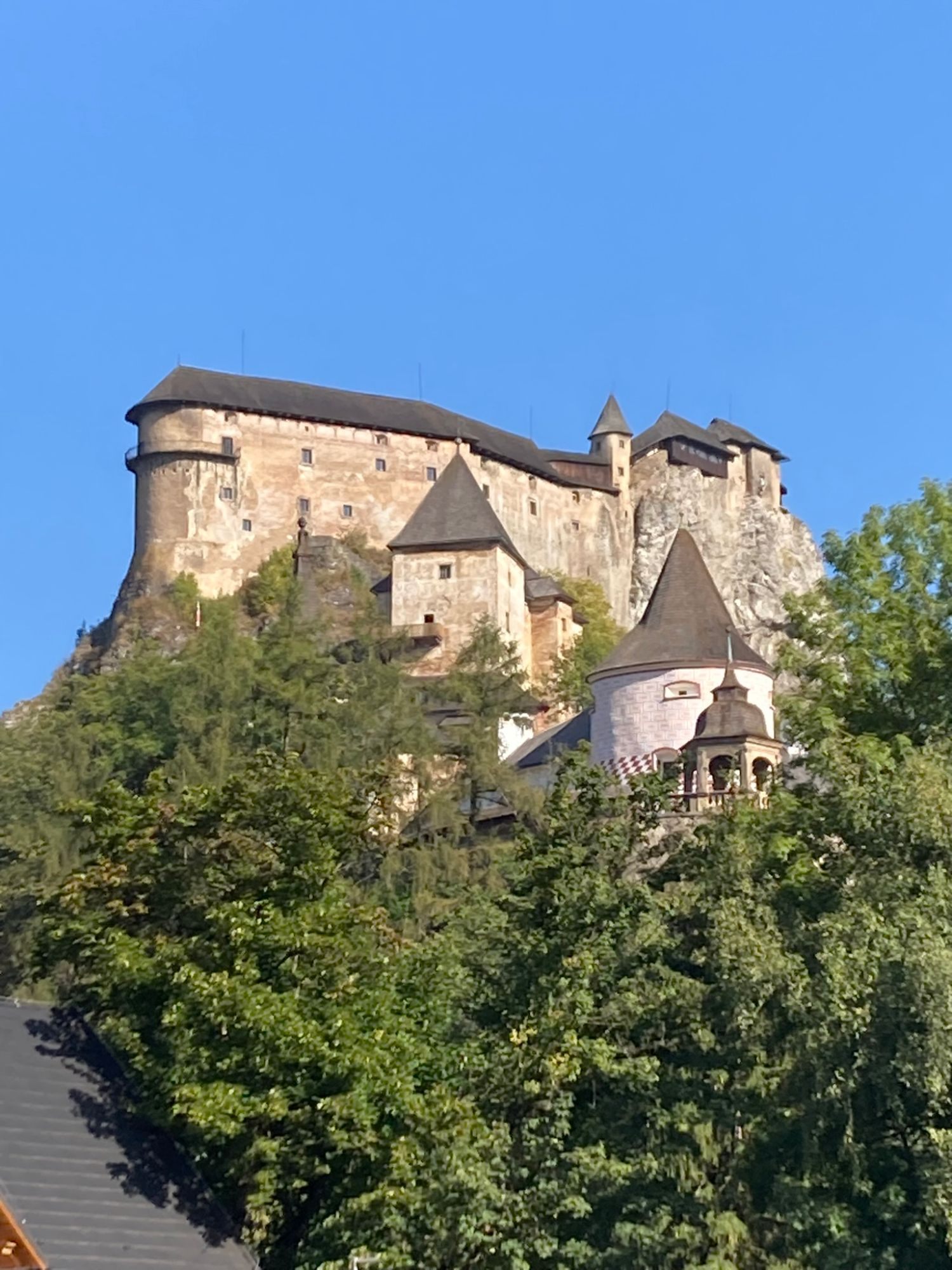
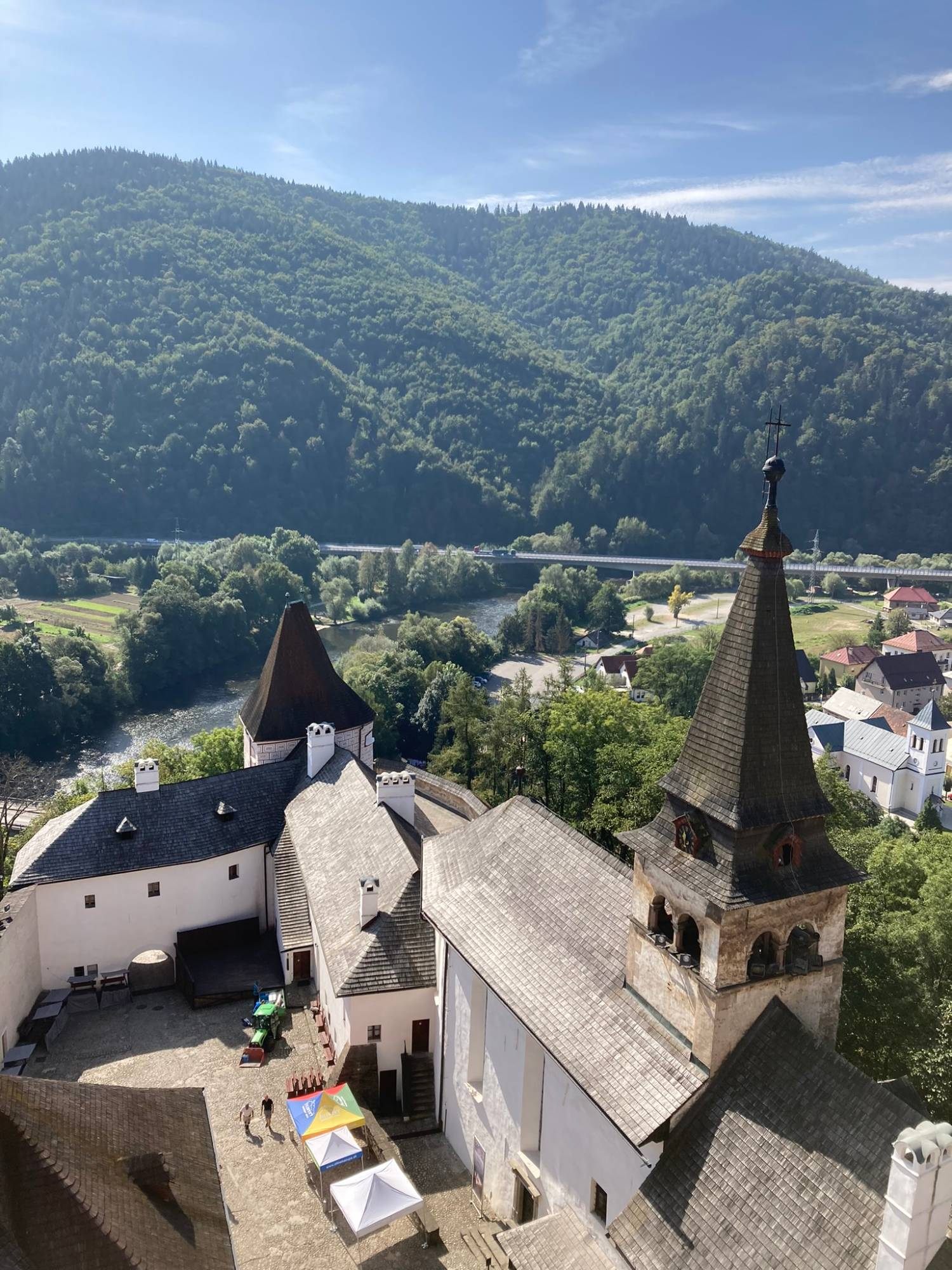
Even from the car park the castle is impressive. It sits high on a steep rock above the Orava river, with towers and walls stacked up the cliff, and a silhouette that looks almost unreal. Seeing it from the outside is a big part of the experience.
It was built on the site of an older wooden hillfort after the Mongol invasion of 1241, and grew over the centuries into a large complex with buildings from several periods. For a long time it was the seat of the county administration for the whole Orava region.
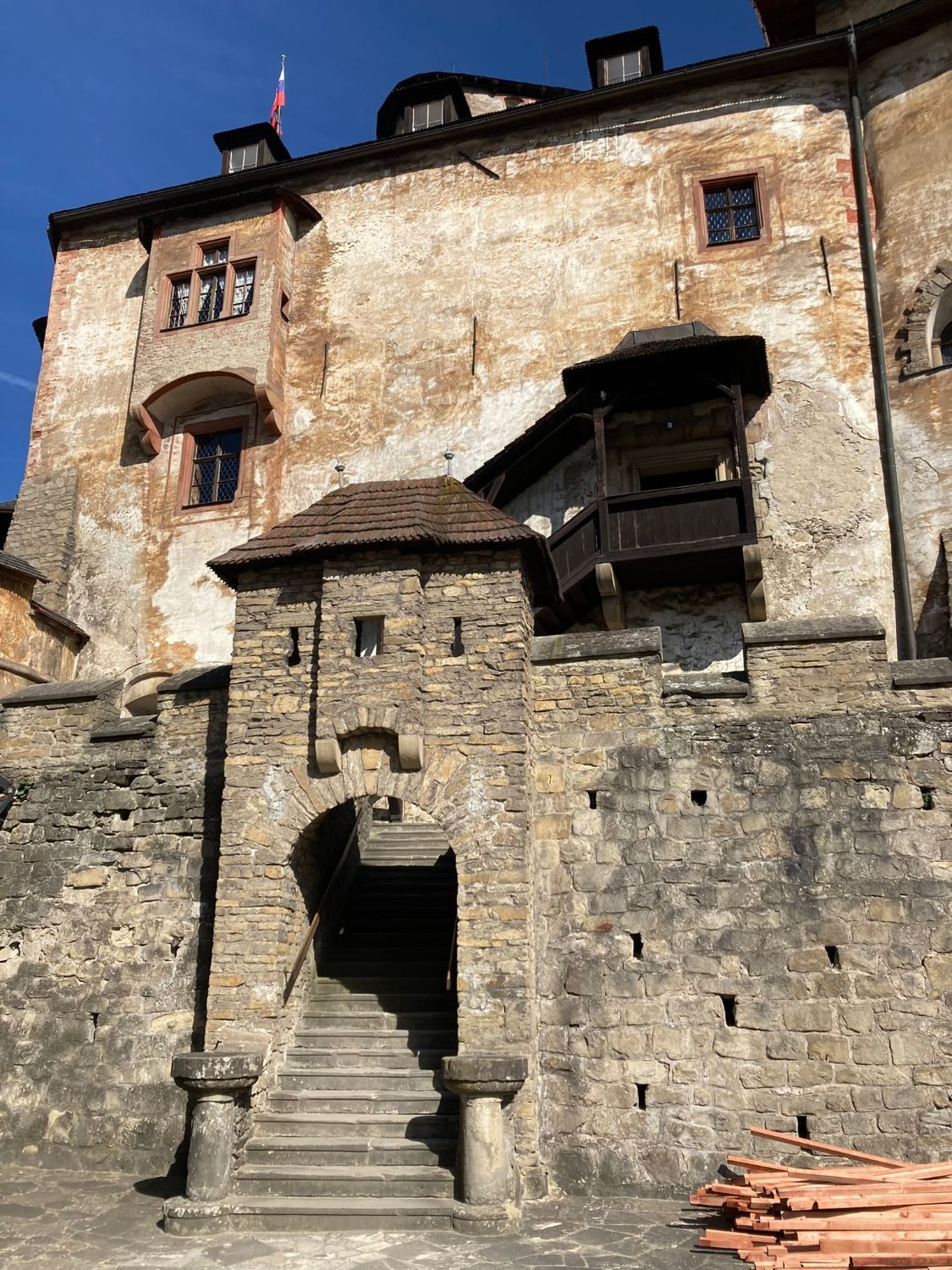
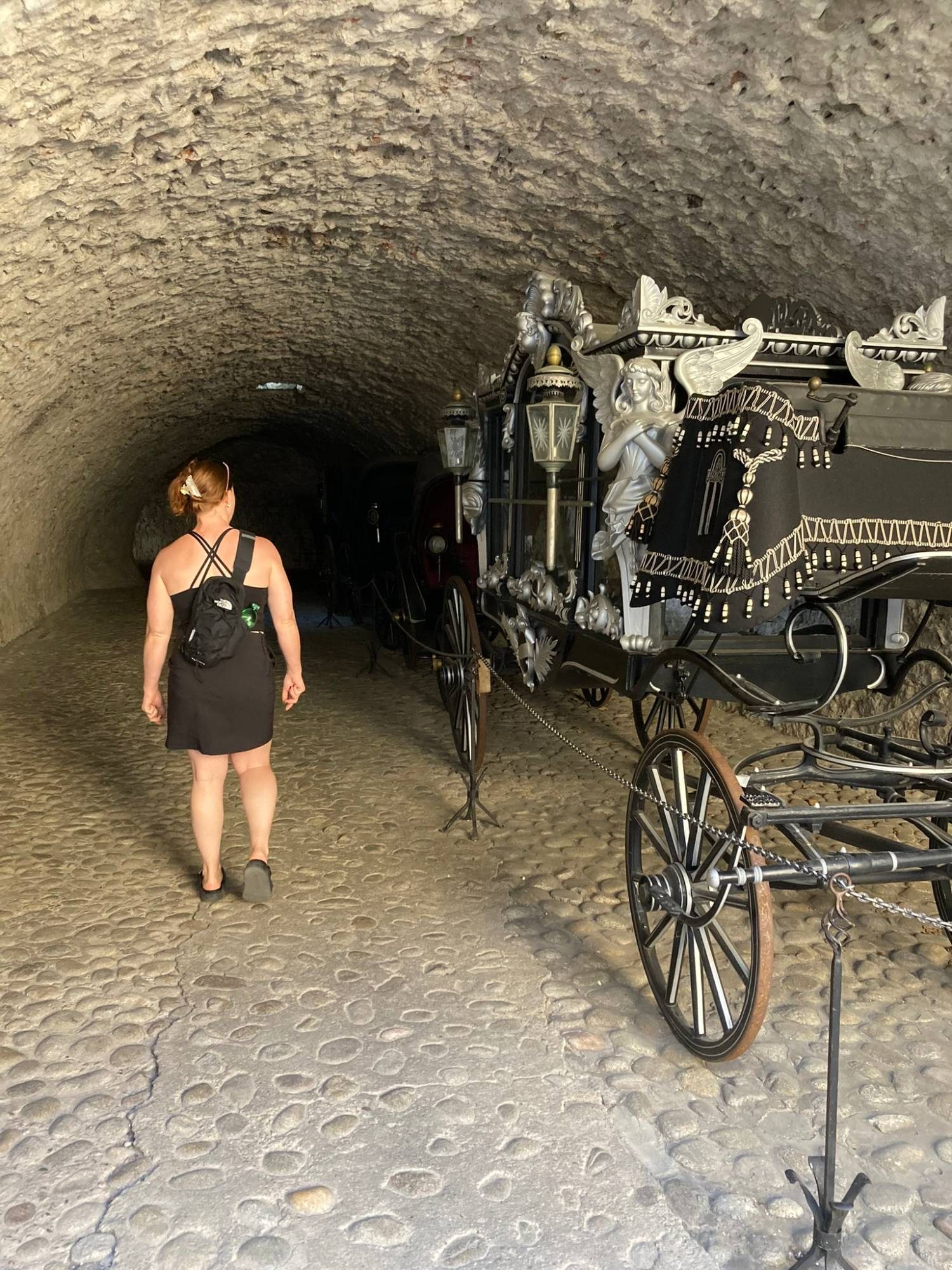
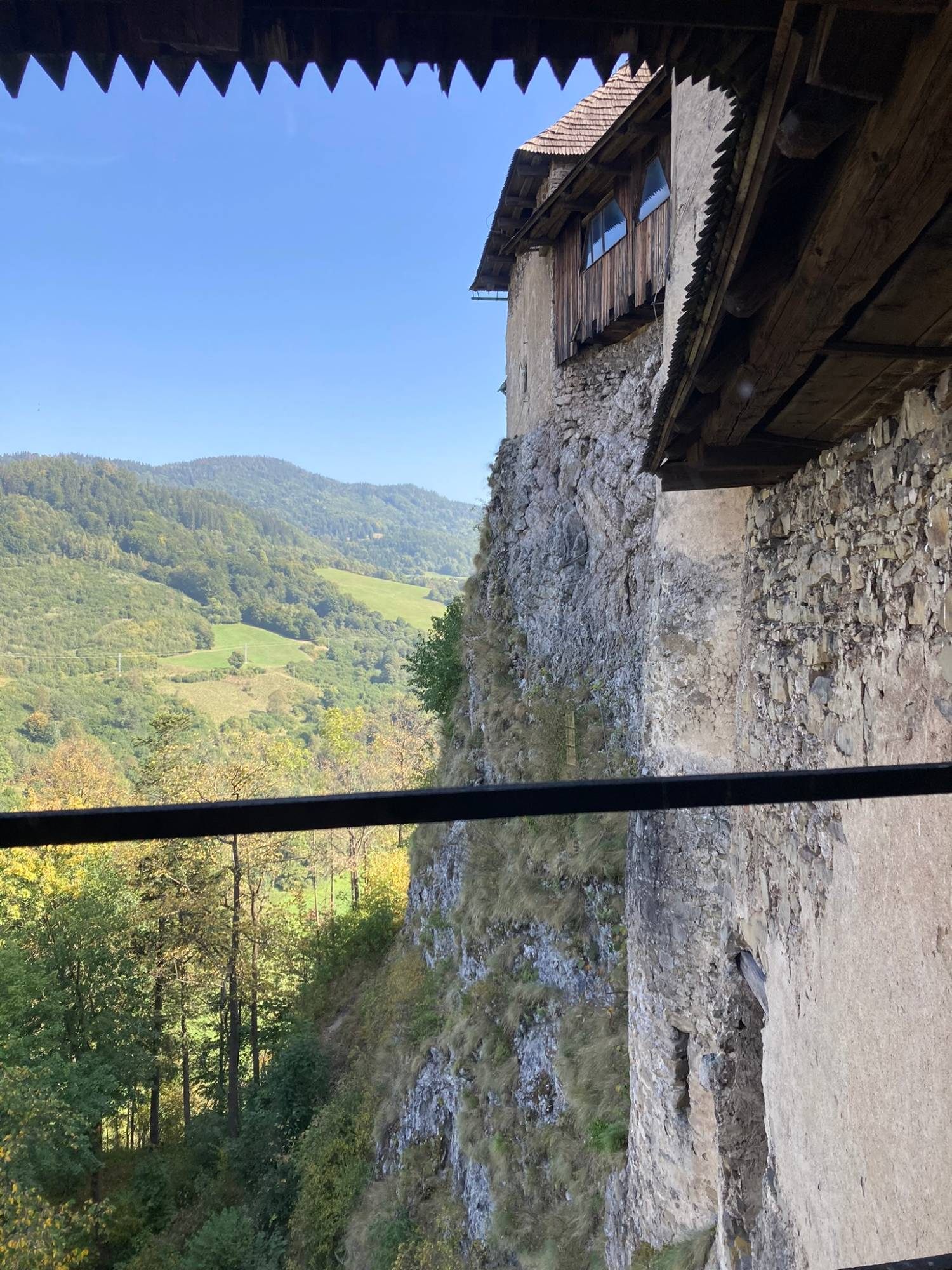
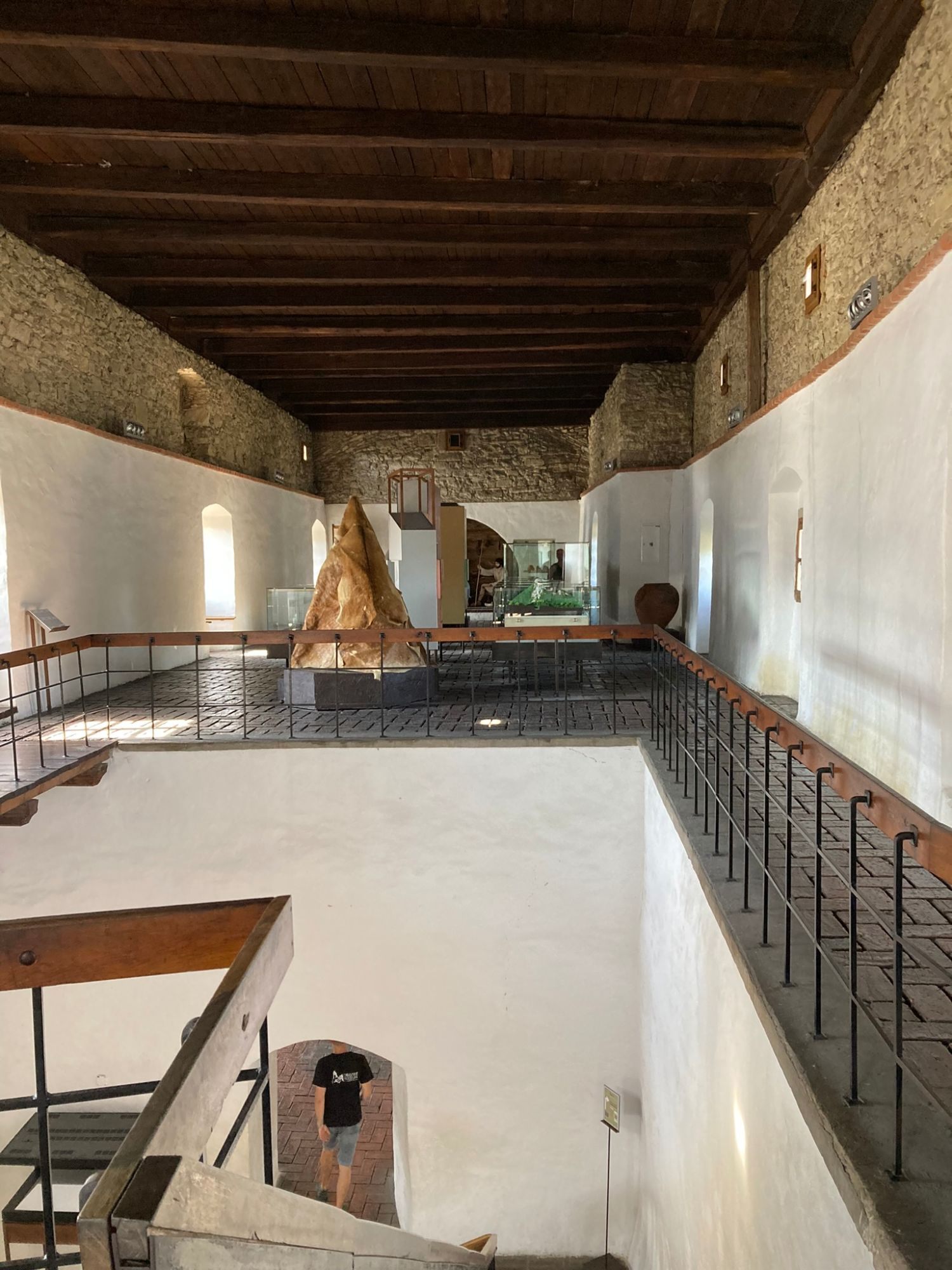
We spent about an hour and a half inside, and it was time well spent: courtyards, staircases, wooden galleries hanging off the rock, exhibitions and views down over the river and the village below.
Nosferatu's castle
We knew an old vampire film had been shot here, and once you've seen the place, it's easy to understand why. Orava Castle was one of the filming locations for Nosferatu – A Symphony of Horror, F. W. Murnau's silent film from 1922 – an unauthorised adaptation inspired by Bram Stoker's Dracula. The castle stood in for the home of the vampire, Count Orlok: the gate, a tower, wooden galleries and the courtyard all appear in the film. Not every scene was filmed here, but the castle is a big part of the film's look. Inside there's a small exhibition about it.
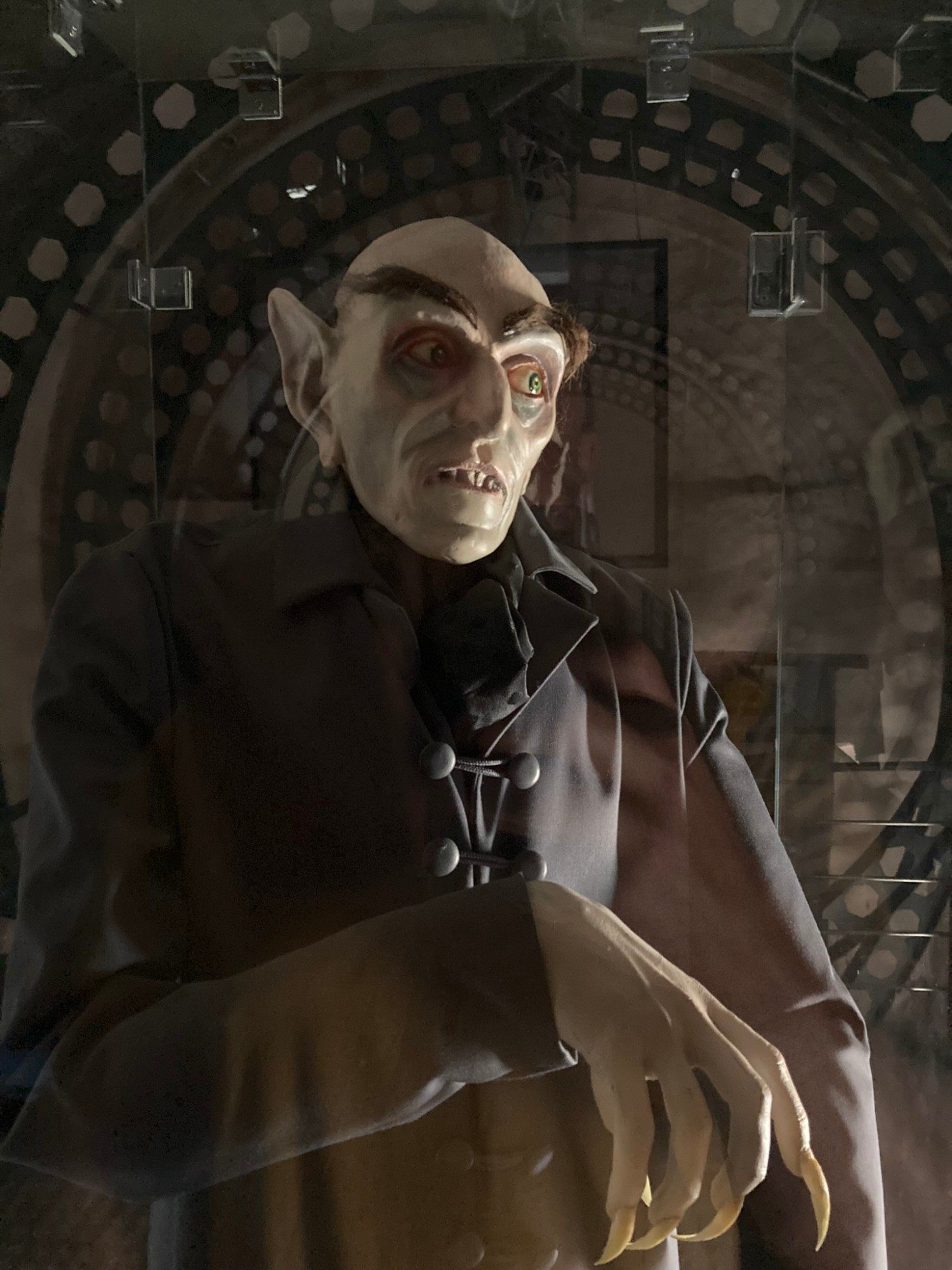
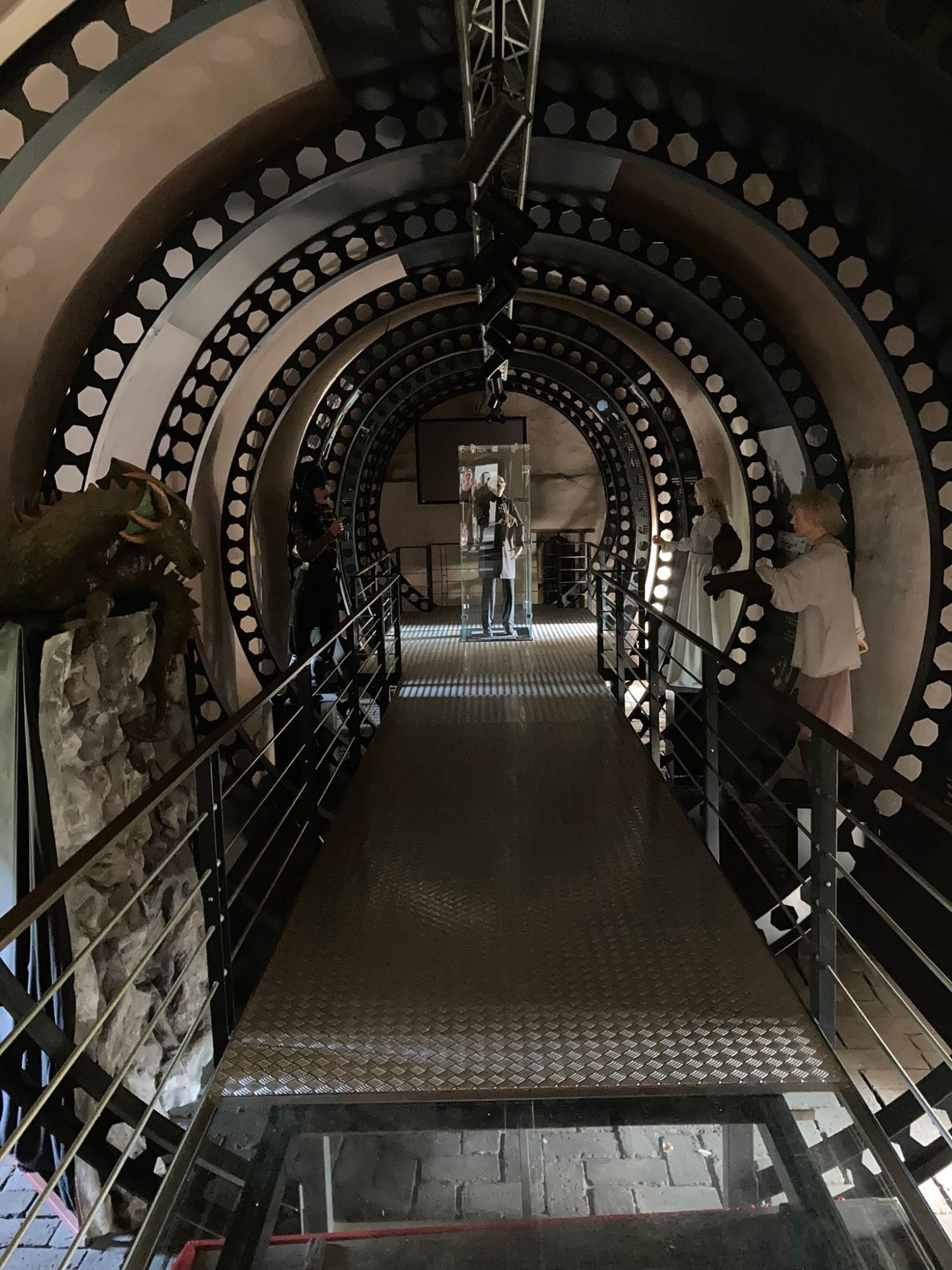
Our verdict: Orava Castle is beautiful and genuinely interesting, and well worth an hour and a half if you're in the area. We wouldn't travel all the way to Slovakia just for it – but if you're within an hour and a half's drive, we'd definitely make the detour. It's exactly the kind of stop that works on a road trip: it breaks up the drive and gives you a proper experience without taking the whole day.
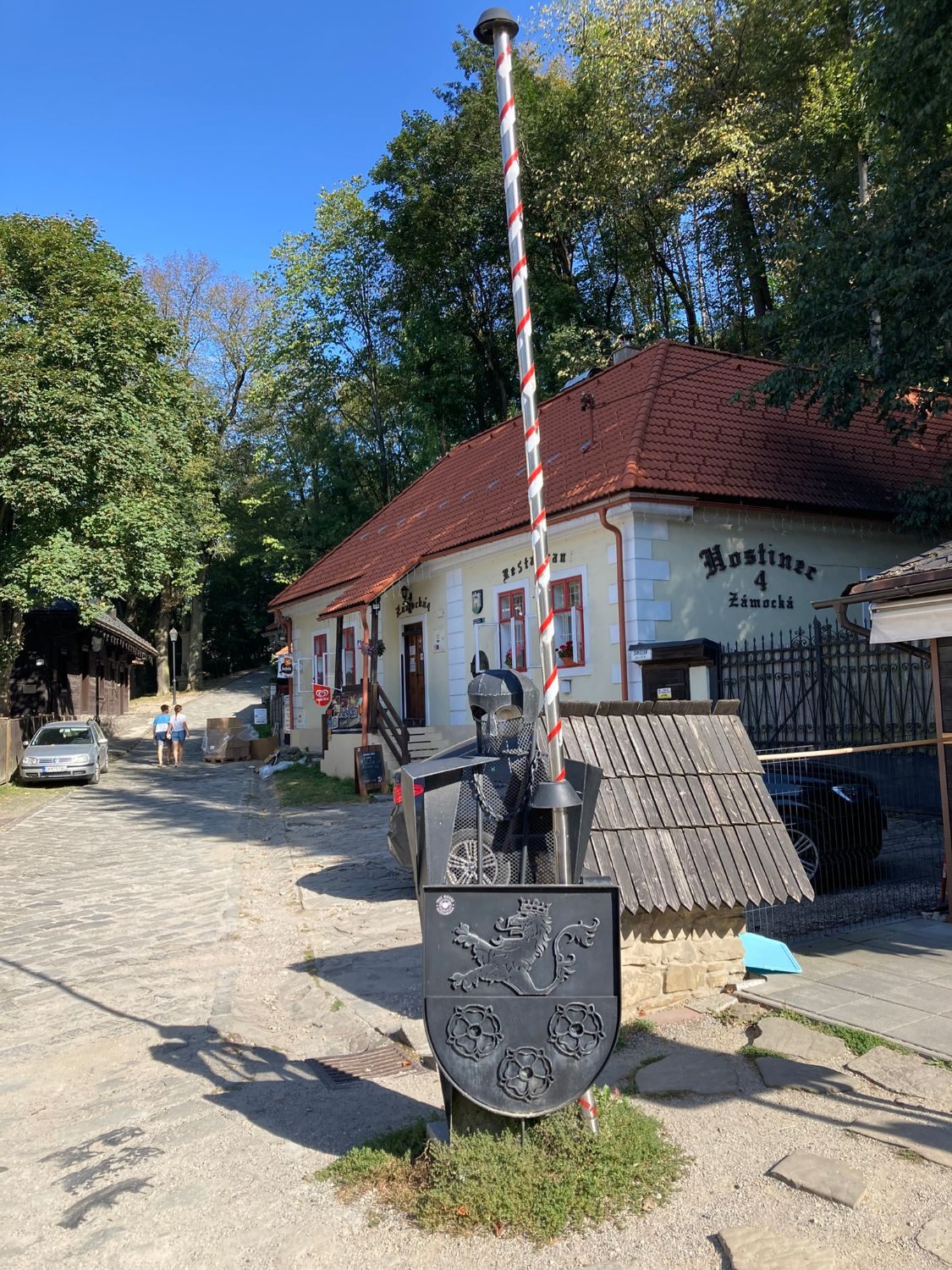
Sources: Orava Museum – Orava Castle, Orava Museum – 100 years of Nosferatu (Slovak). For current tours and prices, see the official price page.
On to Bratislava
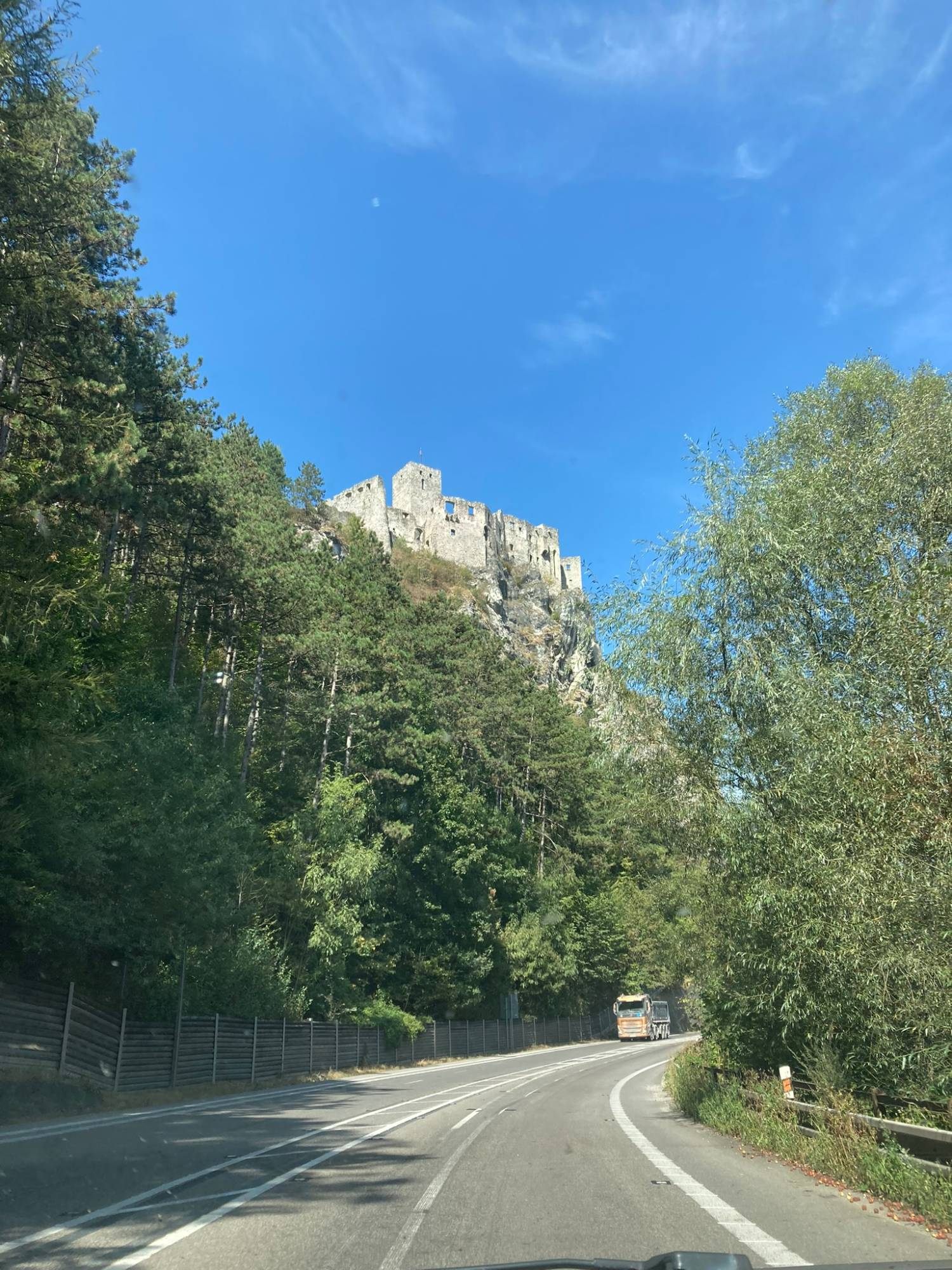
From Orava we drove south towards Bratislava, Slovakia's capital, past a castle ruin high on the rocks above the road.
We stayed at the BlueBell Hotel, and it turned out to be a really good choice. The location is excellent – by our own estimate only about 150 metres from the centre – our room had air conditioning, and we could park the car in an underground garage. Parking cost us €17, an extra expense, but worth it to leave the car safely and explore on foot. For the location, the hotel was cheap, and after Snežienka it was a very welcome contrast. If you want a central base in Bratislava and you're travelling by car, we'd happily recommend it.
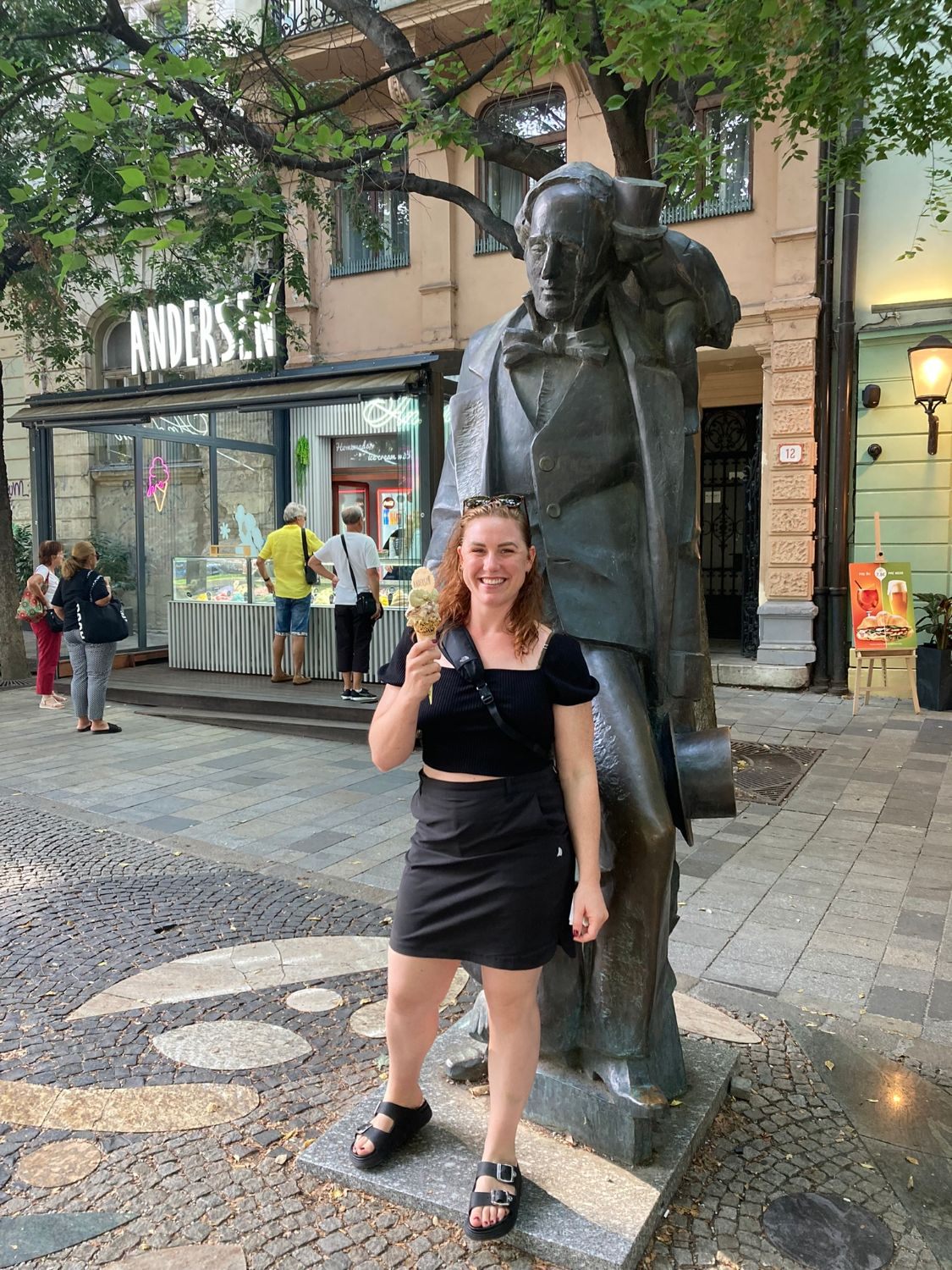
Because the hotel was so central, we went straight out. One of the first things we found was a statue of Hans Christian Andersen on Hviezdoslav Square – unveiled in 2006 to mark his visit to the city in 1841 – with an ice cream shop right next to it. Two Danes, a Danish fairy-tale writer and an ice cream: an obvious photo.
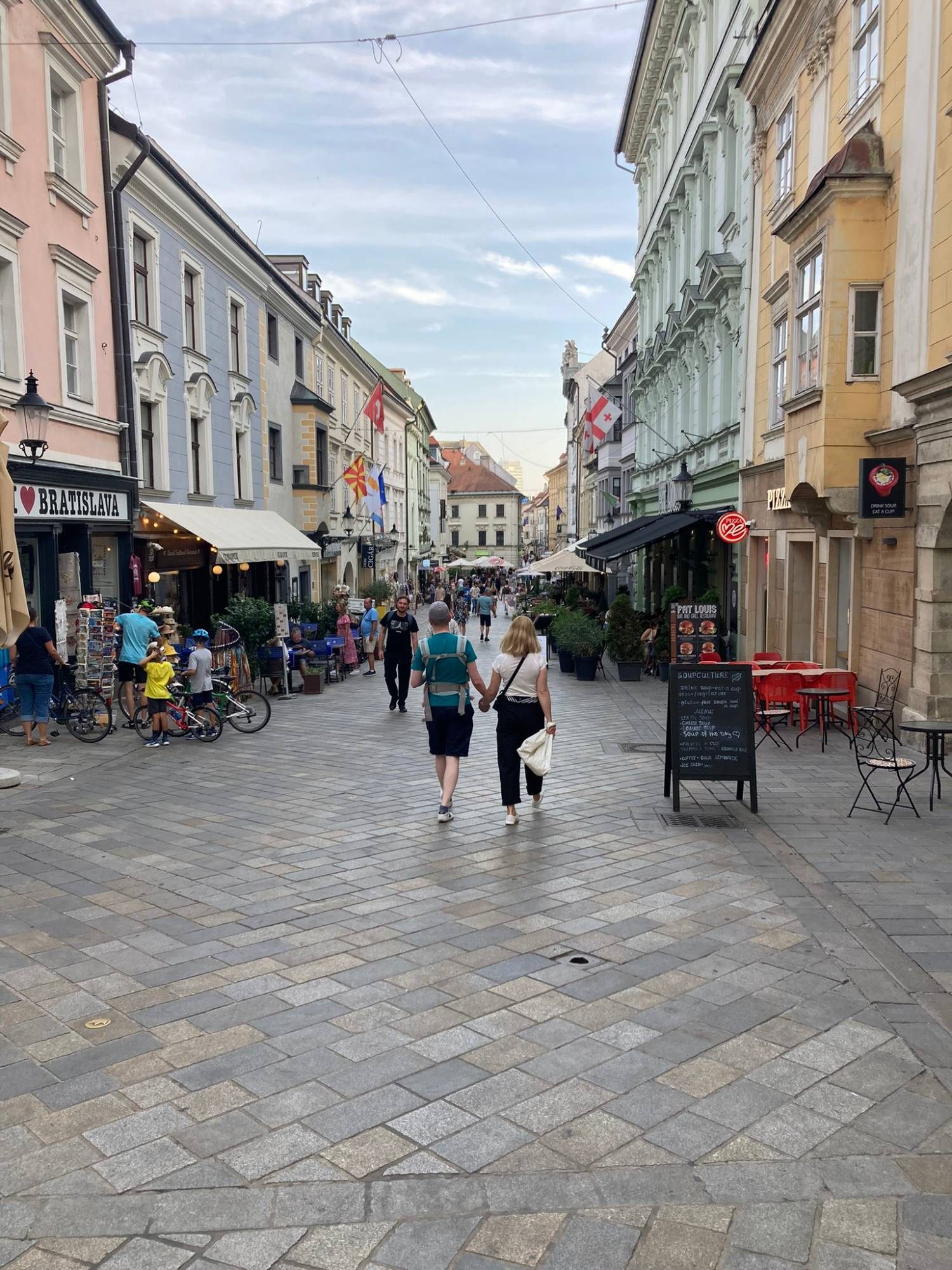
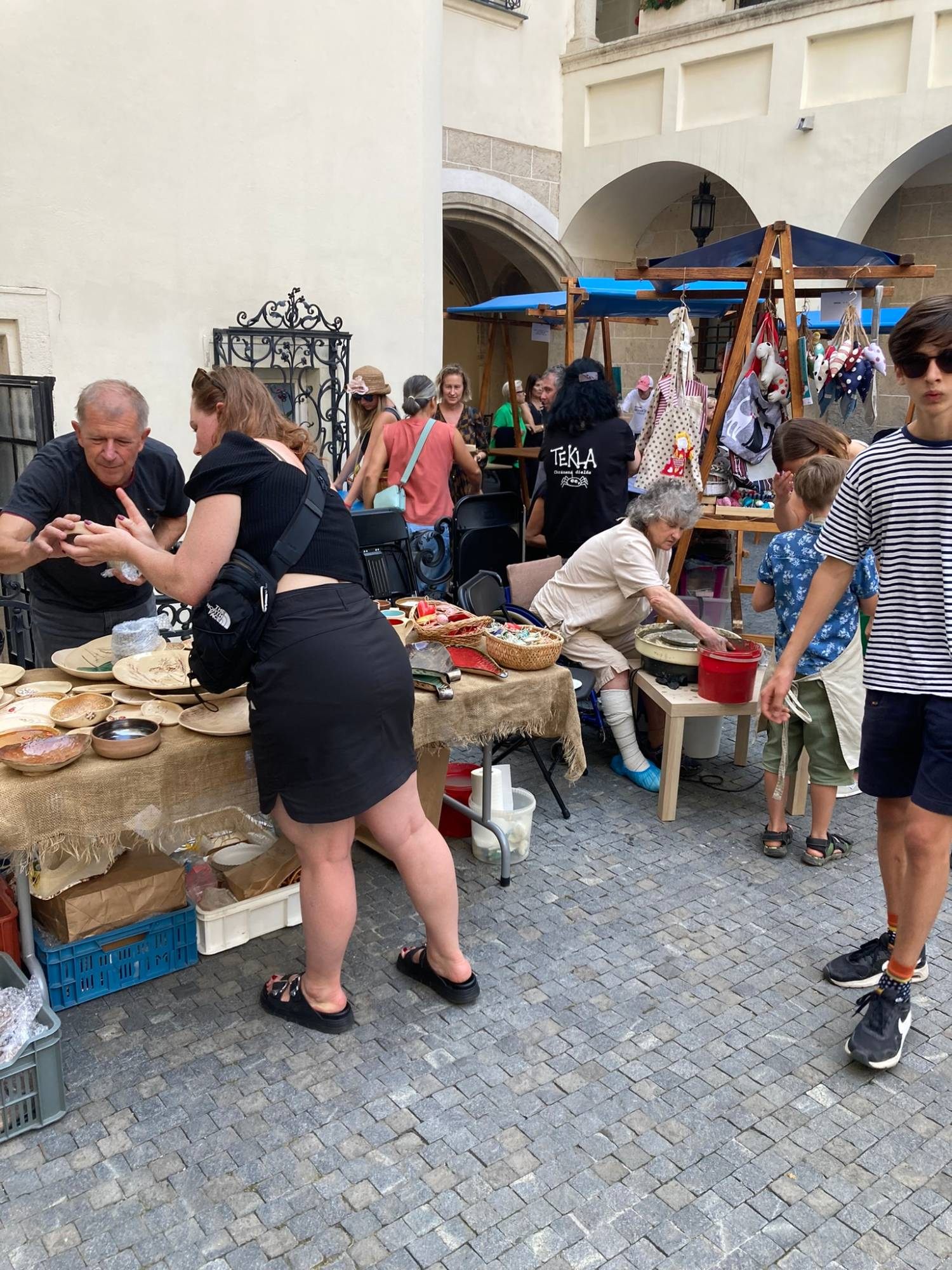
We wandered through the Old Town: historic buildings, cobbled streets, café terraces and a small craft market in a courtyard. It's a compact, friendly old centre that suits an afternoon on foot. We found something to eat and carried on walking into the evening.
After dark we walked up towards Bratislava Castle, which stands white and floodlit above the city. We only saw it from the outside and didn't go in – but the view from the castle hill over the Danube and the lit-up bridges was worth the walk on its own.
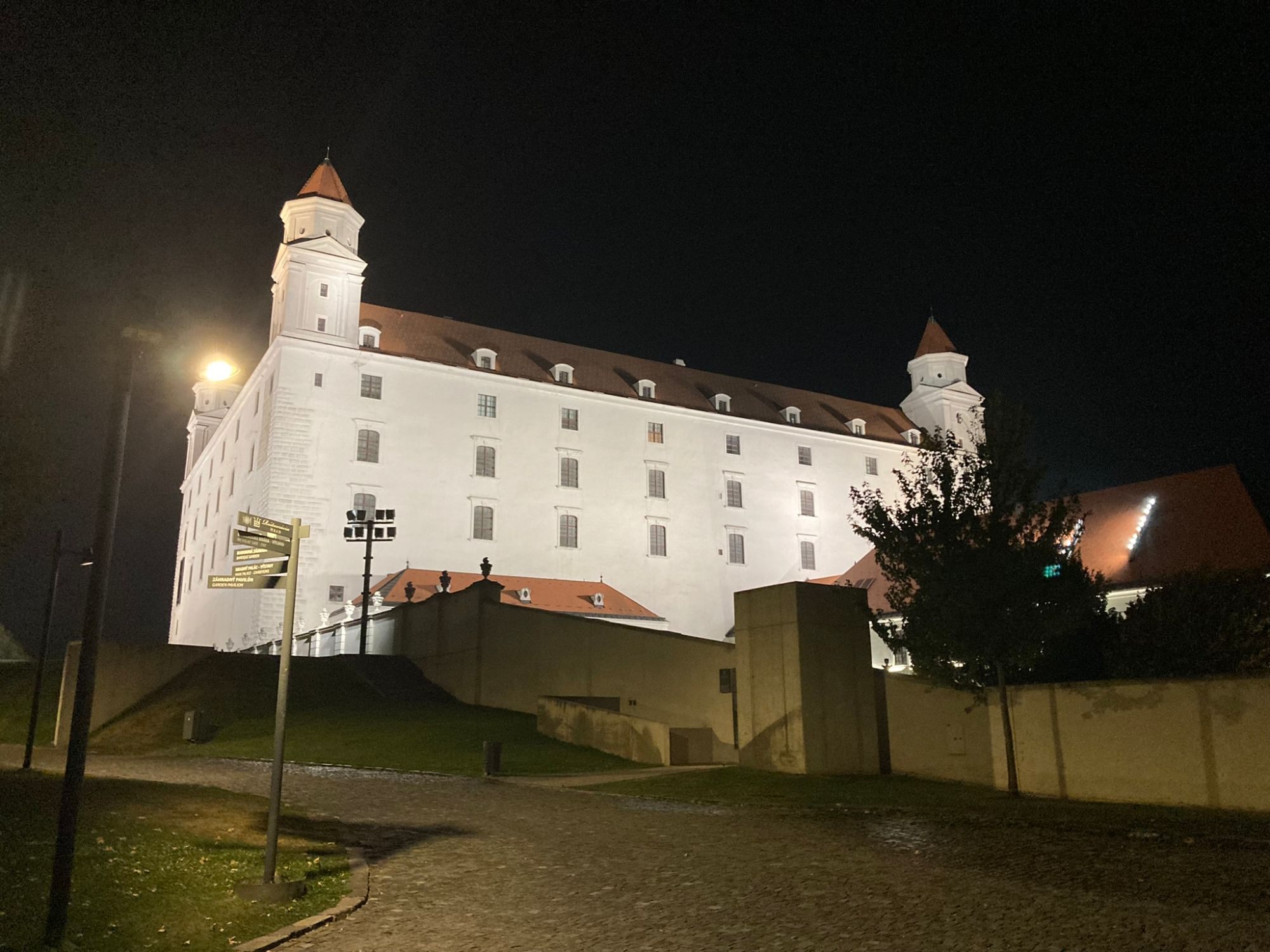
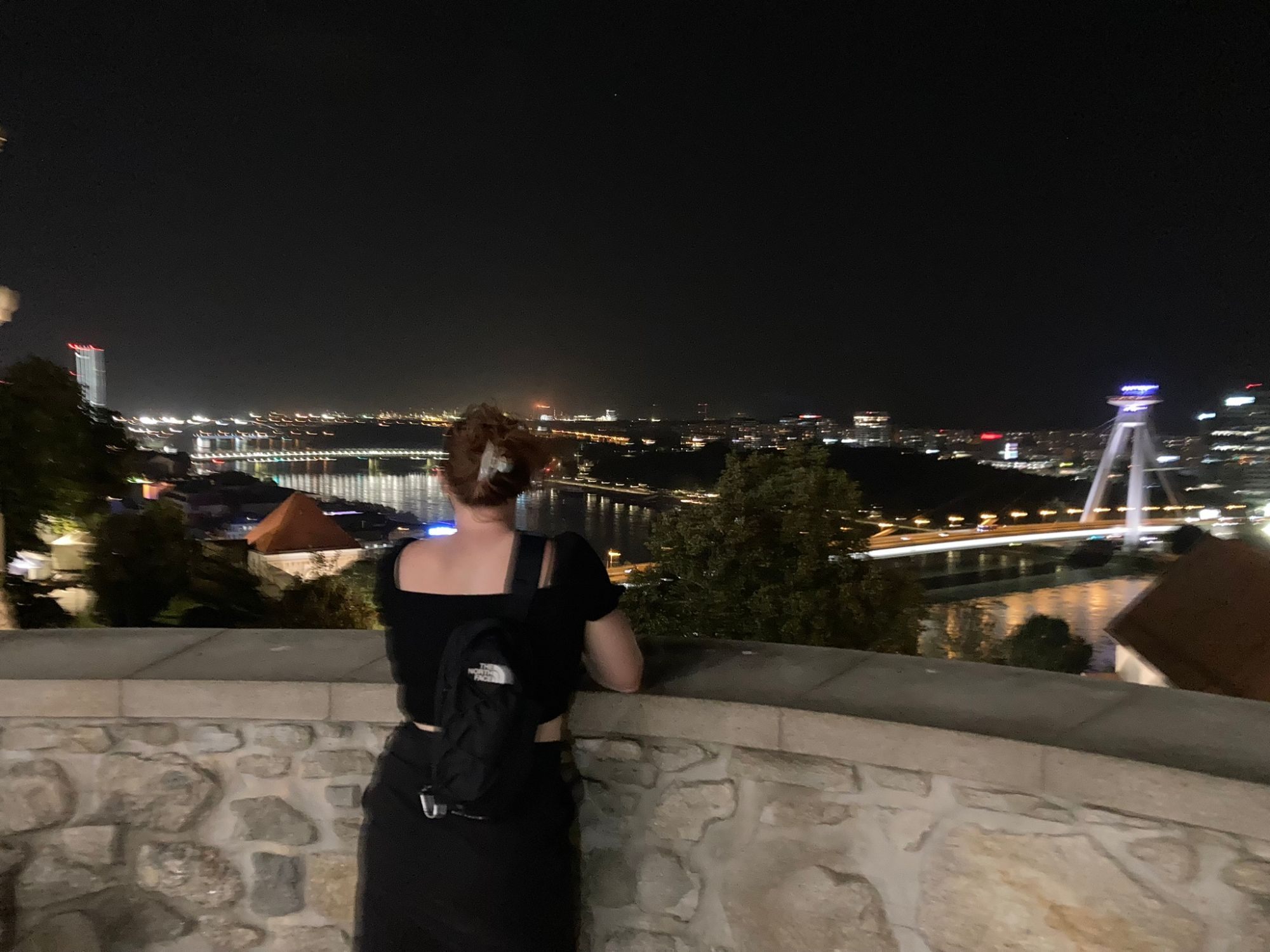
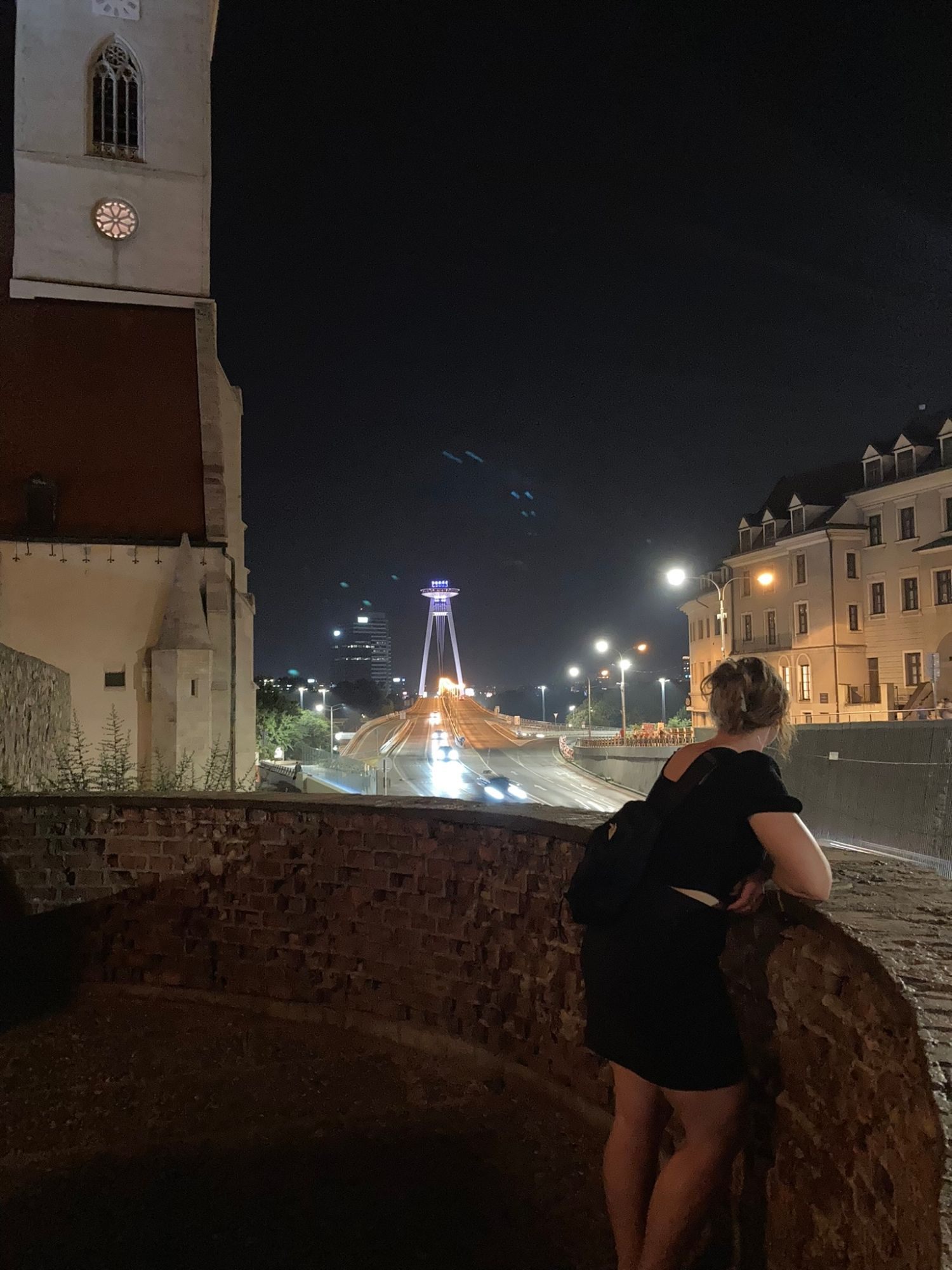
Our honest take: Bratislava is a nice city, but we're not people who need several days in a capital. We travel for nature, challenges and adventure. An afternoon and an evening was the right amount for us – the Old Town, a market, dinner, and the castle and the Danube from the outside. We actually liked Bratislava more than Vienna, where we went the next day – our personal comparison, not a claim that it's the better city. As a stop on a road trip, it worked very well.
We explored on our own, but if you'd like to see more of Bratislava than we did – a guided walk, the castle or a trip on the Danube – there are tours on GetYourGuide. We haven't tried any of them:
7 September – Vienna: beautiful, but not really us
One hour in the car, a hot and hectic capital, a quiet park bench – and a Wiener Schnitzel.
After a good night at the BlueBell Hotel we drove on to Vienna. It's only about an hour between the two capitals, and we arrived around 11.30.
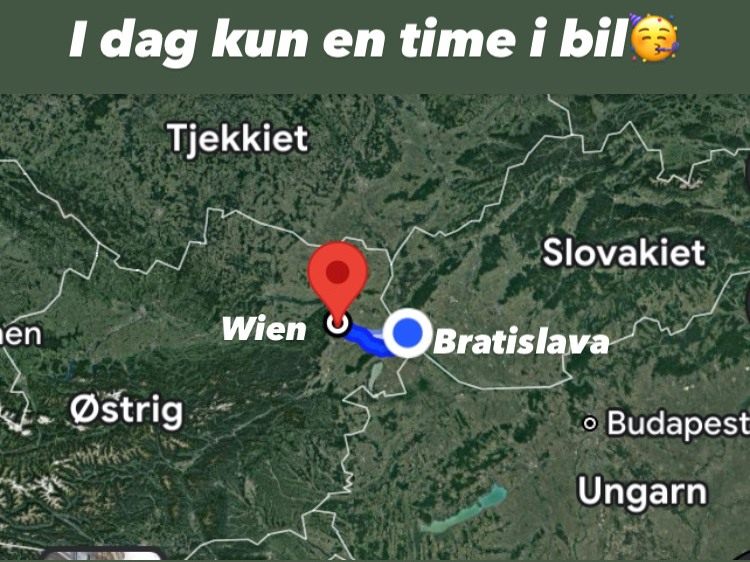
We felt straight away that Vienna is a completely different kind of city from Bratislava. Around two million people live in the city itself, and on top of that come the visitors. It was around 32 degrees that day, and there were tourists everywhere, traffic, noise and big cars – busy and hectic, a sharp contrast to the relaxed evening we'd had the day before.
One thing in particular bothered us: the horse-drawn carriages. In that heat we watched horses pulling carriages full of tourists through the streets, while the passengers sat filming the city on their phones. We saw water being sprayed on the carriages, but to us it didn't look like the horses were being properly cooled. We don't know how these particular horses are looked after or what the city's rules are – but it was a sight we didn't like, and it coloured our impression of the day.
Stunning architecture – just not our style
We walked around the centre from about 11.30 to 2.45. To be clear: Vienna is not an ugly or boring city. The architecture is impressive – huge historic buildings, grand facades and monumental squares. St Stephen's Cathedral with its patterned tiled roof, the Hofburg and the Parliament are all spectacular.
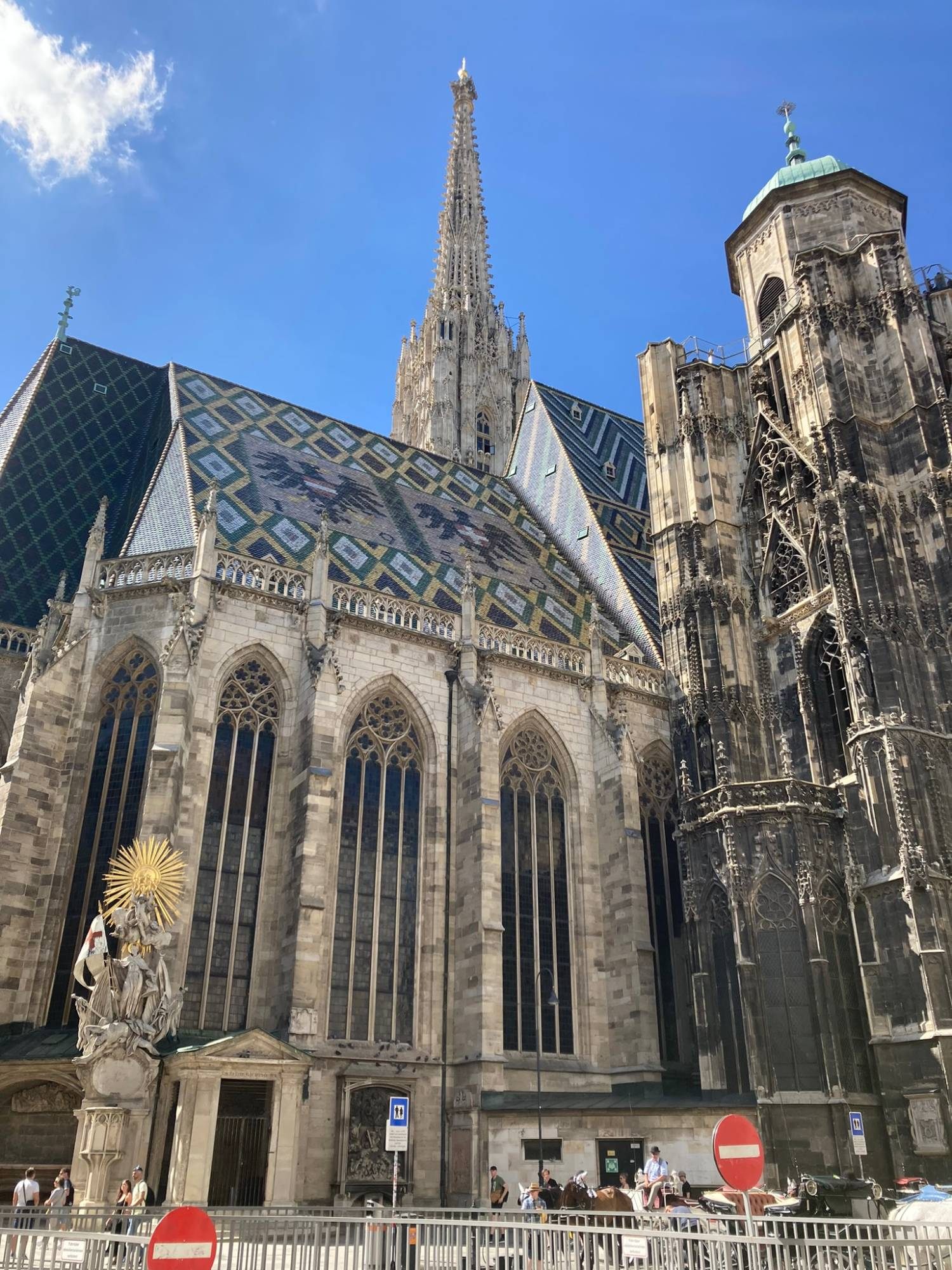
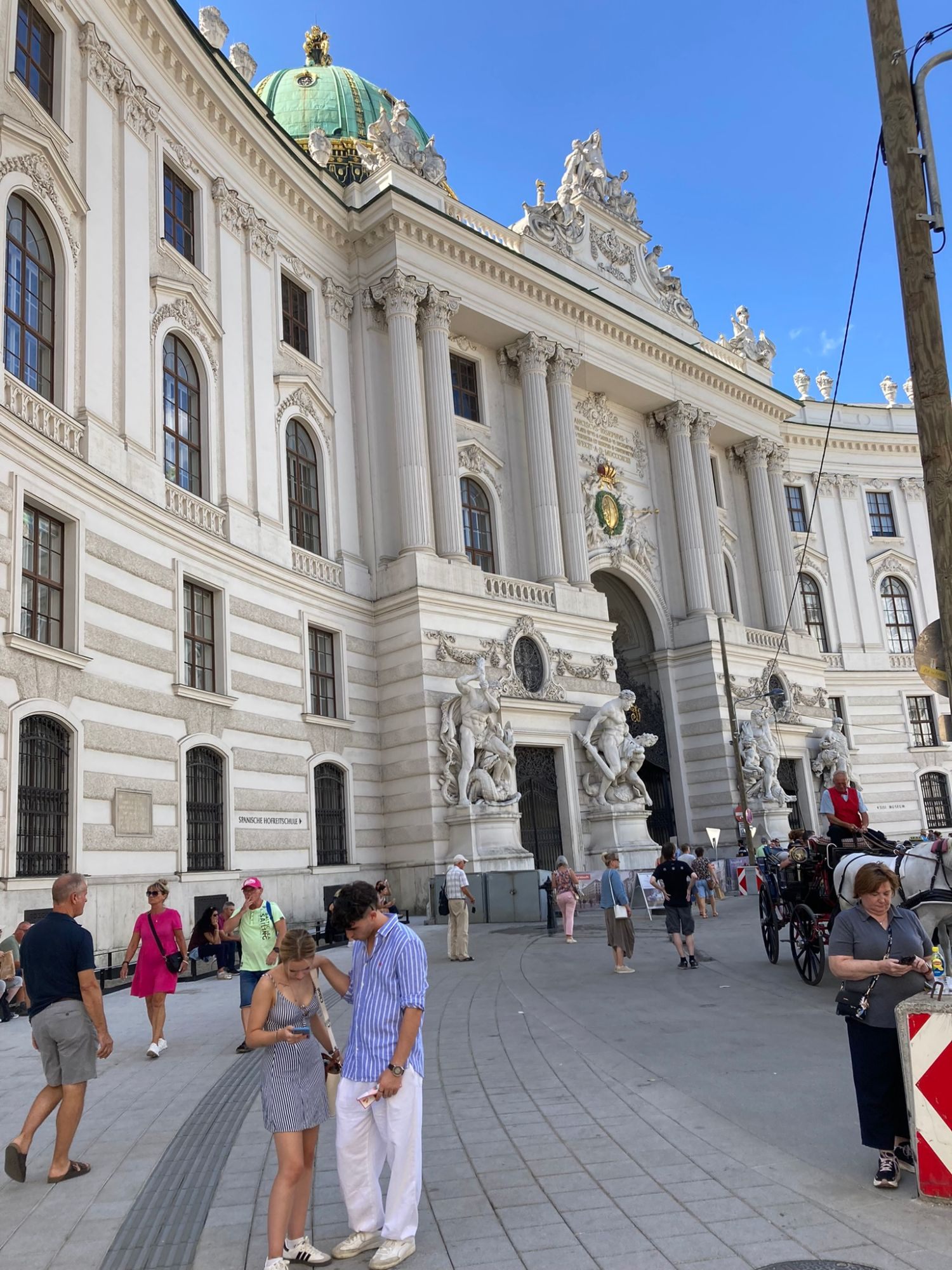
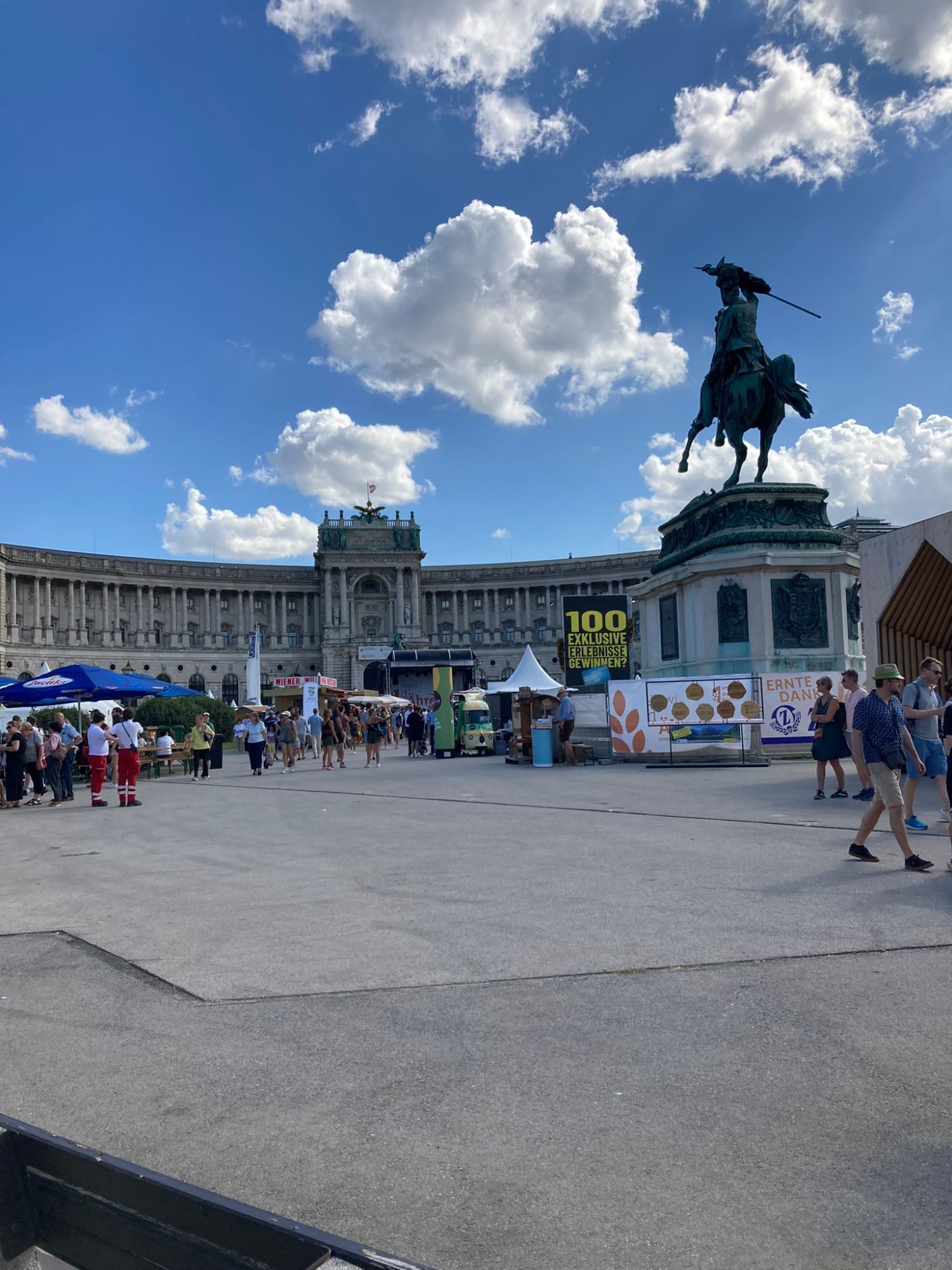
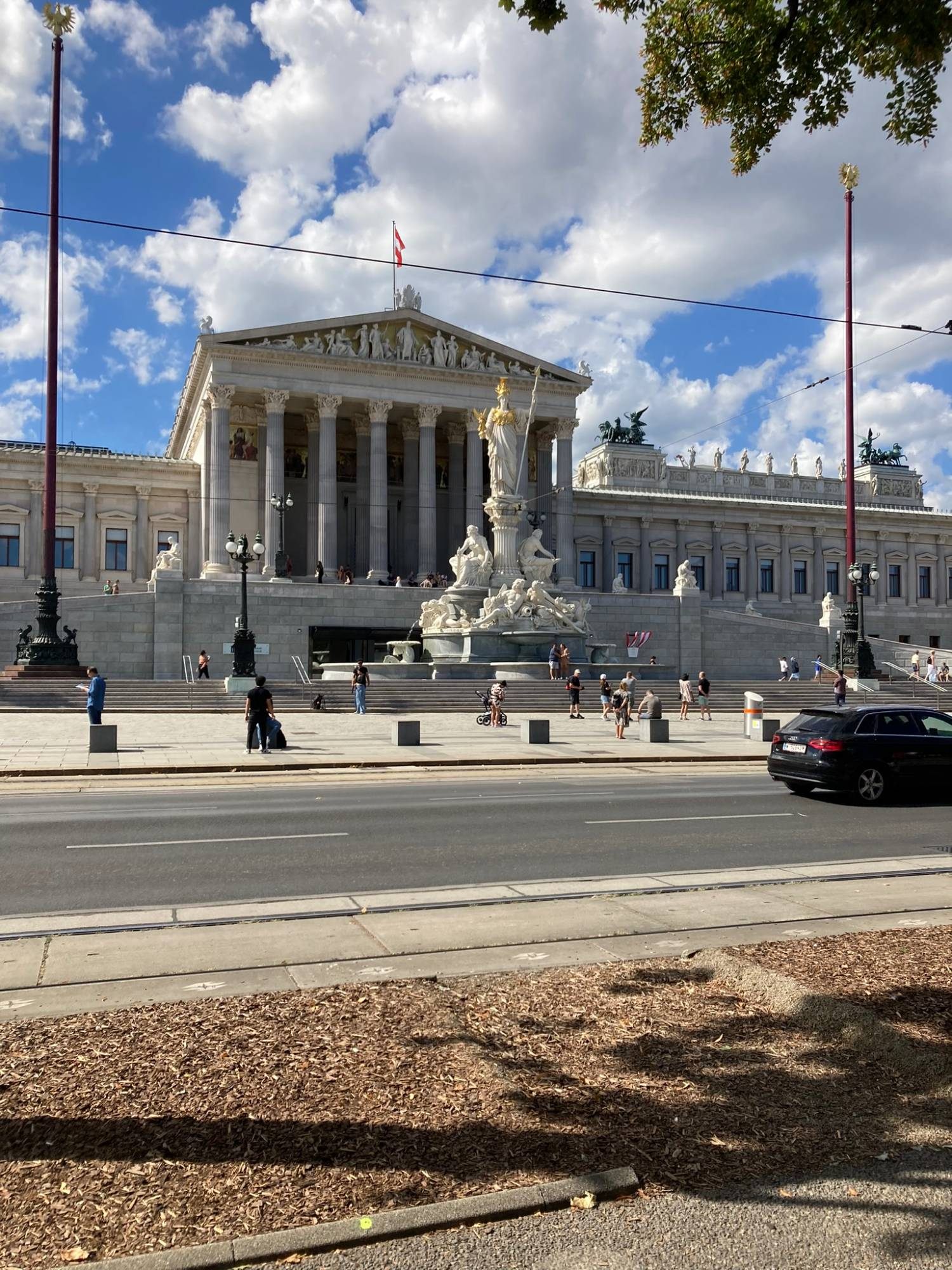
But beautiful as it is, Vienna isn't really our style. We prefer older, medieval towns with cobbled lanes, small squares and a slower pace. Vienna felt polished, refined and glamorous to us – lots of tourists, expensive cars and a very upmarket atmosphere. Plenty of people will love exactly that. We travel mainly for nature, adventure and physical challenges, and we rarely need much time in big cities.
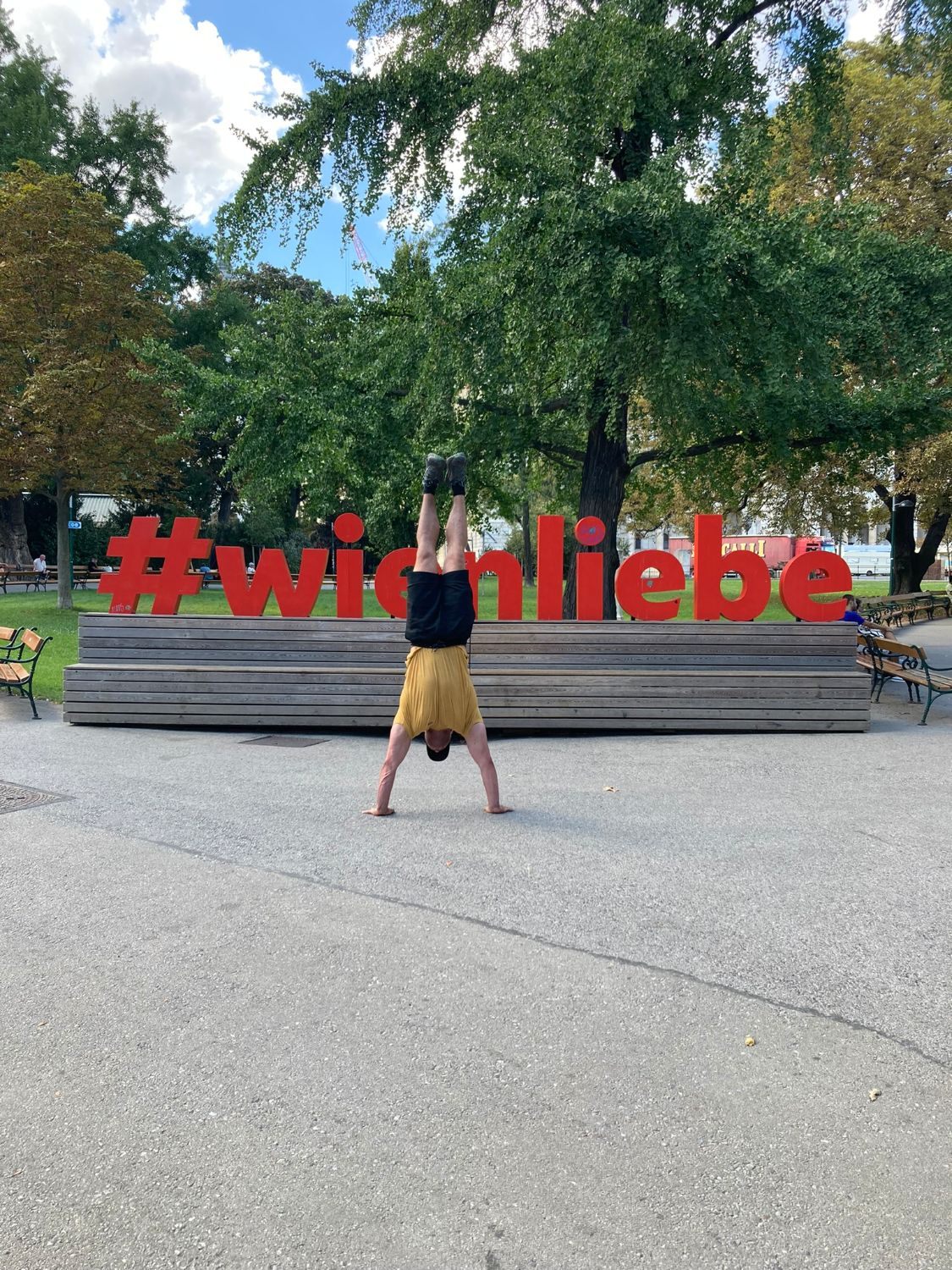
A quiet bench in the shade
In the afternoon we bought something to eat at a small kiosk and found a quiet spot in a park, away from the noise, the traffic and the crowds. Sandwiches in the shade – our way of finding a bit of calm in the middle of a big city.
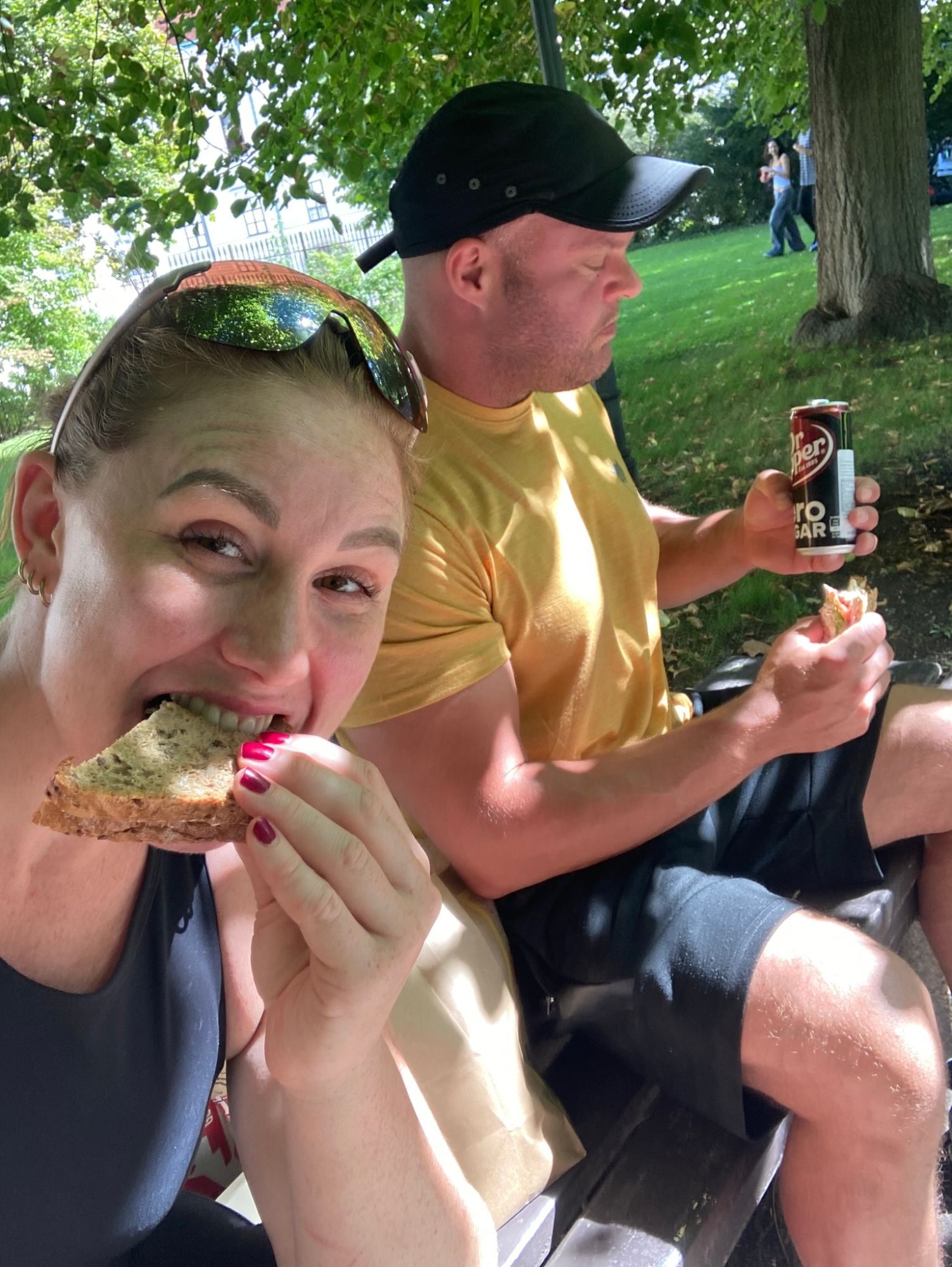
A nap and a Wiener Schnitzel
After a few hours in the city we went back to our hotel, myNext – Hotel Leo, for a long break of about three hours – and a nap – before heading out again in the evening. In Vienna you obviously have to try a Wiener Schnitzel, so that's what we did. It was fine, but it didn't turn into a particularly memorable meal for us. We'd tried the classic – and that was that.
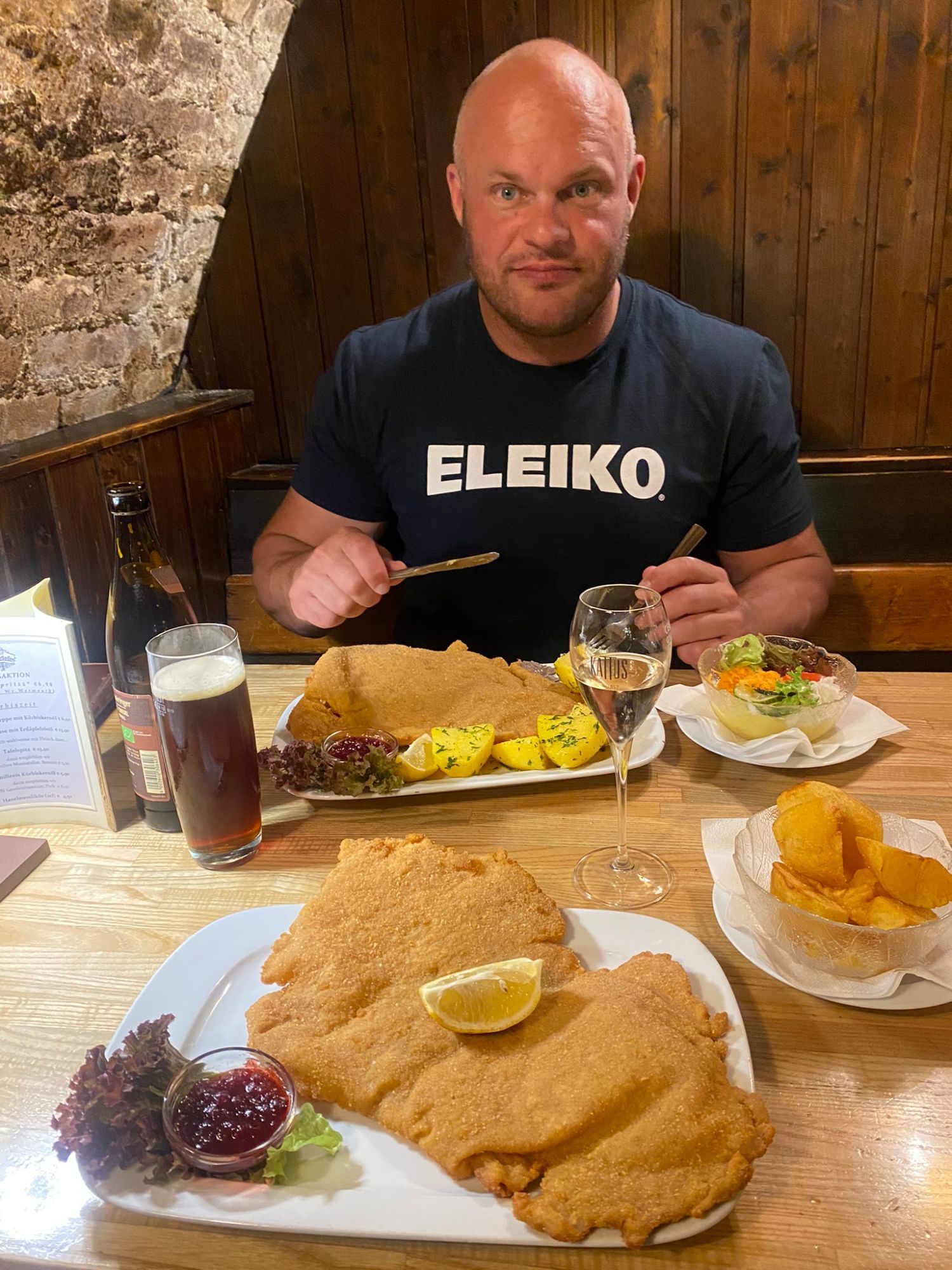
We're glad we saw Vienna, but we didn't feel any need to stay longer. An afternoon and a short evening was plenty for us. Personally, Bratislava had made a bigger impression the day before – it felt more manageable and closer to our taste. And we were already looking forward to the next morning, when we'd head for Hallstatt and a very different side of Austria.
Vienna just wasn't for us – but if you want to experience it differently, there's plenty on GetYourGuide: Schönbrunn Palace, a classical concert, a bike tour along the Danube or a guide who knows the city's quieter corners. We haven't tried any of these ourselves:
8 September – Hallstatt, a swim in the lake and a wrong turn in the Alps
Vienna → Hallstatt → south of Salzburg. No parking, a swim instead – and the most famous village view in Austria.
We left Vienna in the morning and drove into the Salzkammergut. We'd booked a night at B&B HOTEL Salzburg-Süd, but the stop we were looking forward to was Hallstatt.
No parking – so we went for a swim
We reached Hallstatt around midday and quickly found out how hard it is to park there. We drove through, looked for a space and found nothing. In the end we carried on past the village to the other side of the lake, near Camping Park am See, and decided to do something else instead of circling around.
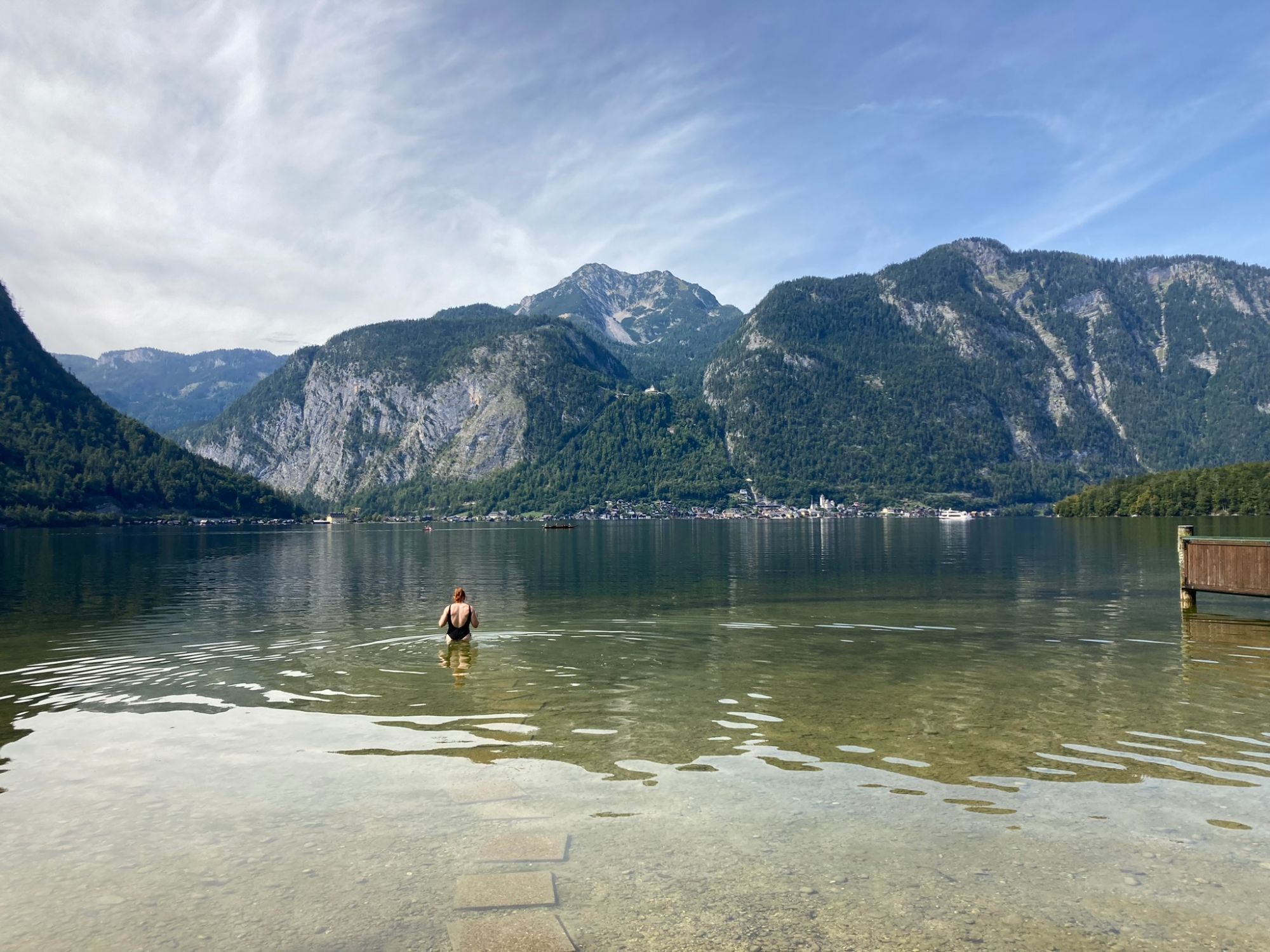
Around 1pm we walked down to Hallstättersee and went for a swim. It was a spontaneous decision and a really good one: clear water, mountains all around and a proper break after the city. We even considered walking all the way into Hallstatt from there, but decided to try again with the car later in the afternoon. We're glad we didn't just give up after the first attempt.
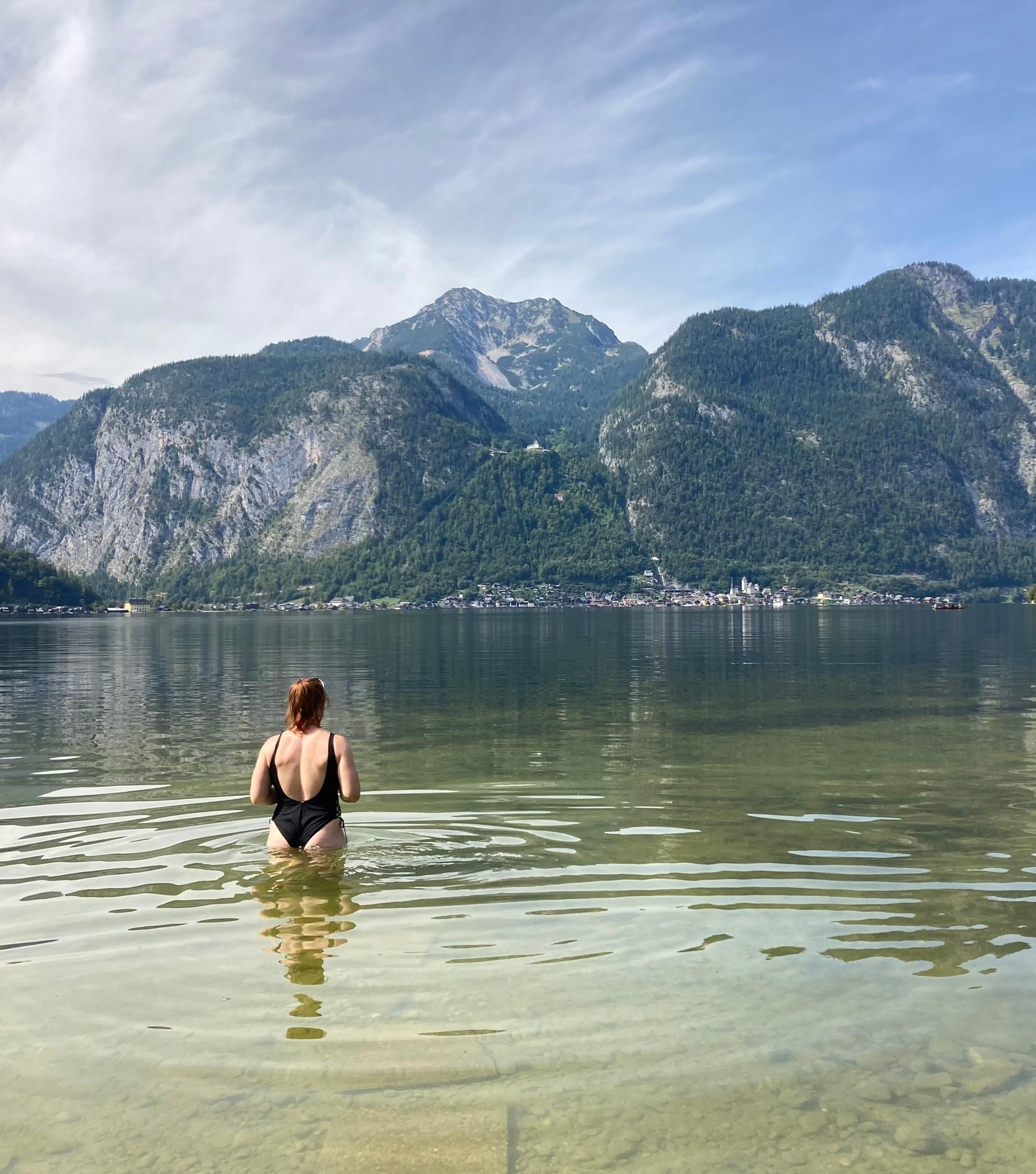
Into Hallstatt at last
At about 3.30pm we tried again, and this time we found a parking space. Then we walked into the village.
Hallstatt is very touristy – no surprise, as it's one of the most famous places in Austria. There were a lot of visitors, from all over the world, and plenty of signs asking people to be considerate and keep the noise down. Despite the crowds it still felt pleasant. We weren't expecting to discover anything unknown here – but we were surprised by how much we enjoyed it.
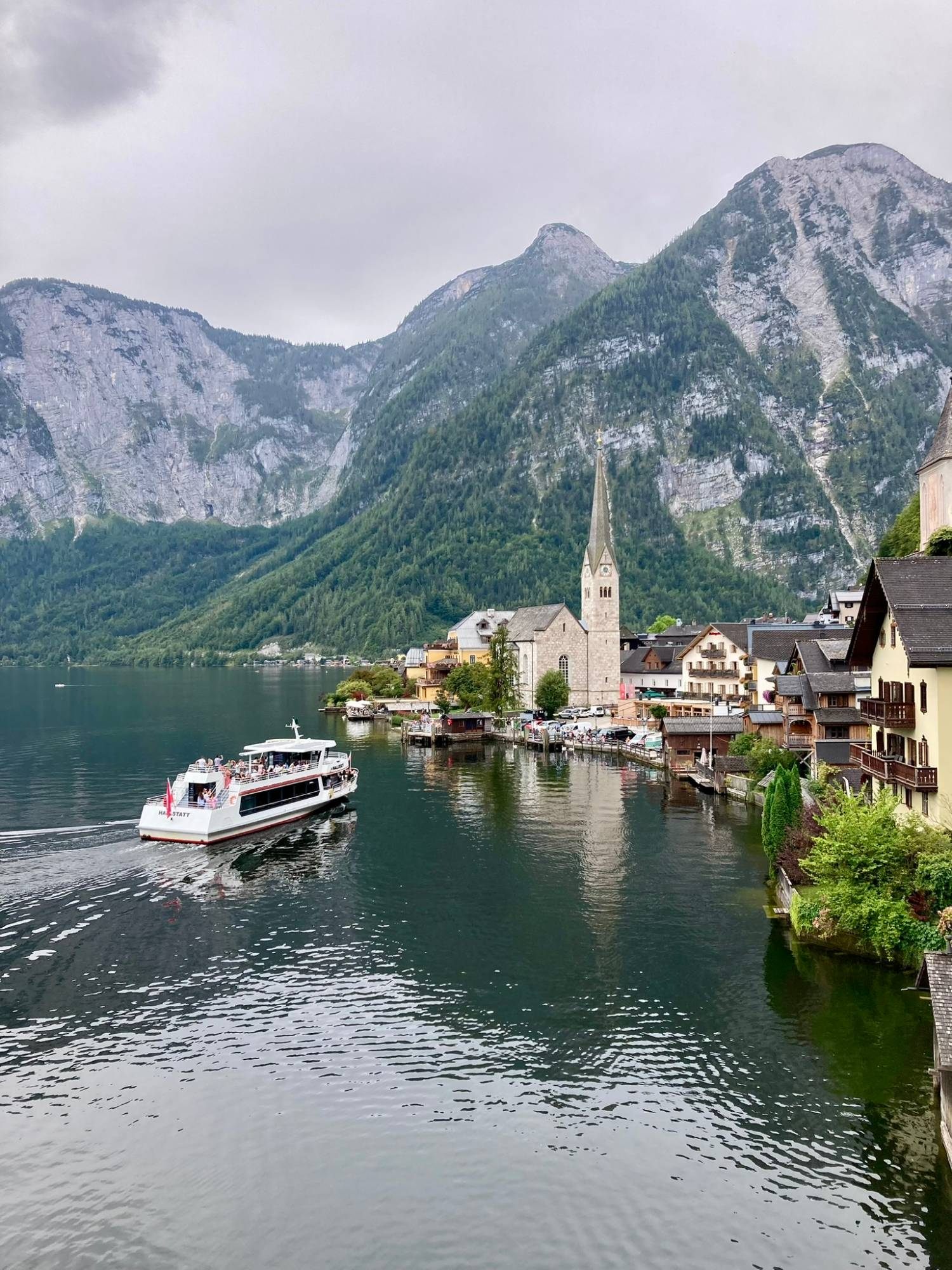
Hallstatt is more than a photo stop. It sits on Hallstättersee in the Salzkammergut, and together with the surrounding landscape it was added to the UNESCO World Heritage List in 1997 as the Hallstatt-Dachstein/Salzkammergut Cultural Landscape. Salt has been mined in the mountain above the village since prehistoric times, and that salt made the region wealthy. The village even gave its name to the Hallstatt culture of the early Iron Age, an important chapter in European archaeology. Much of the centre burned in 1750 and was rebuilt in late Baroque style.
Old streets, the market square and the postcard view
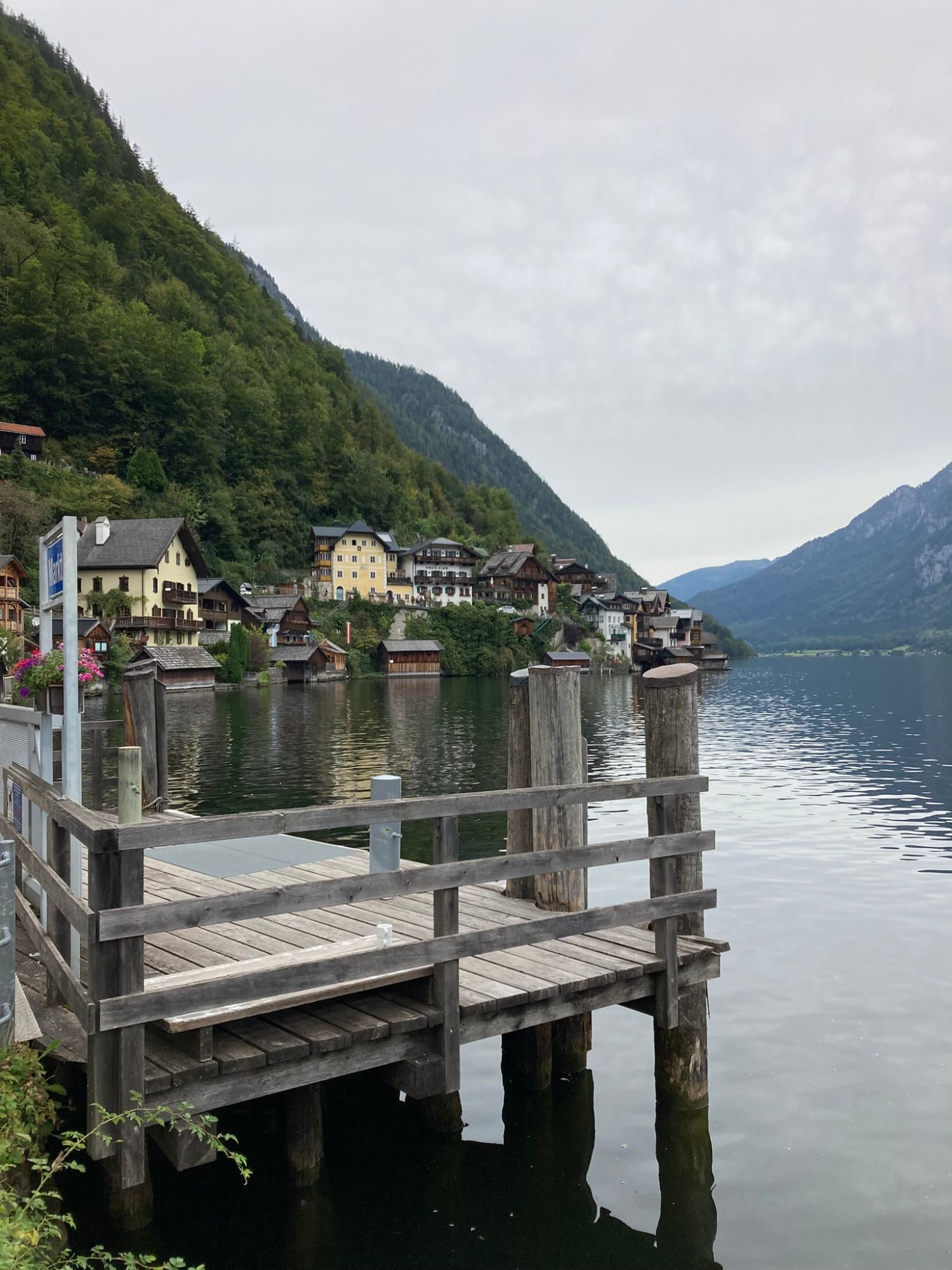
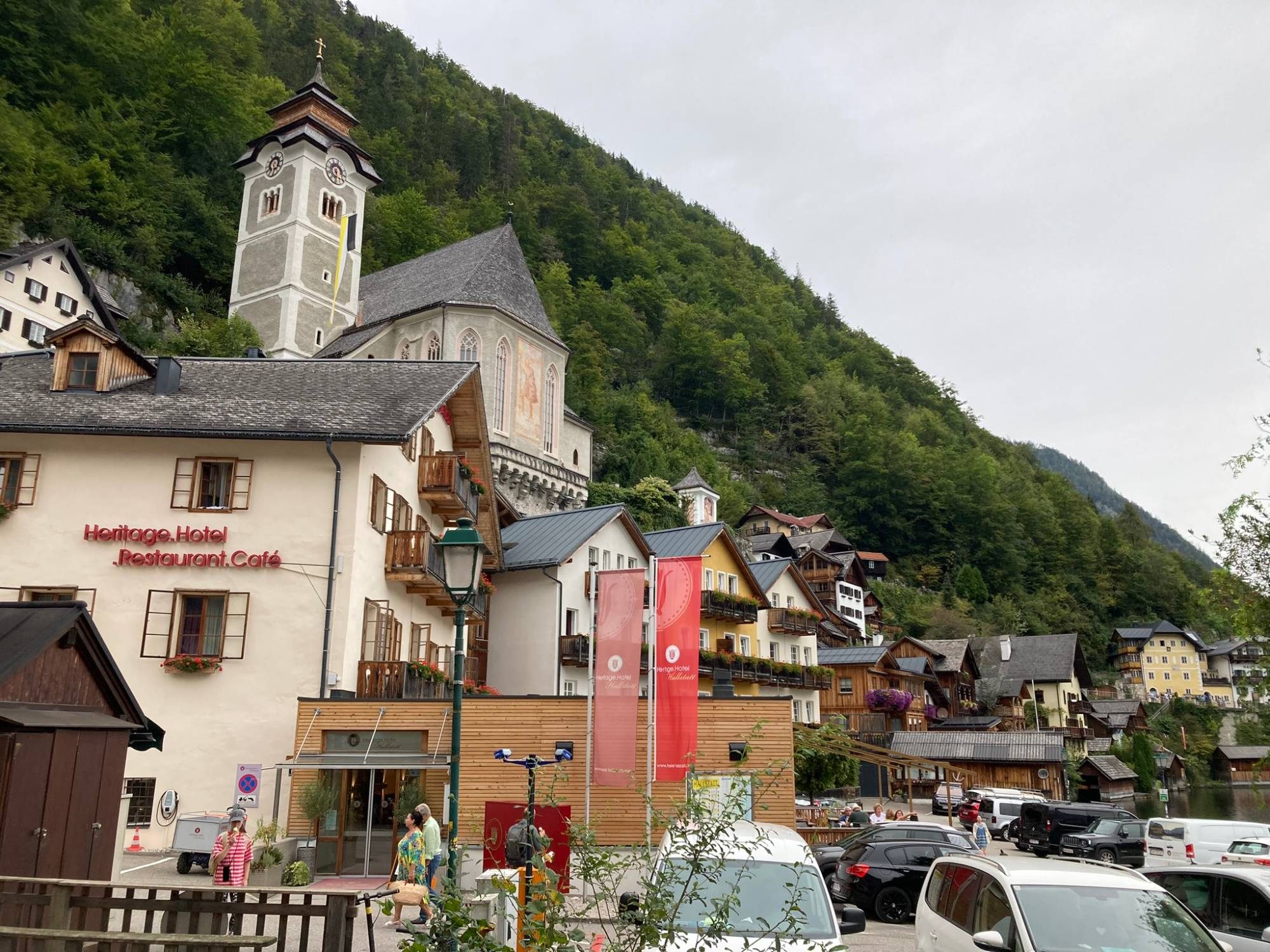
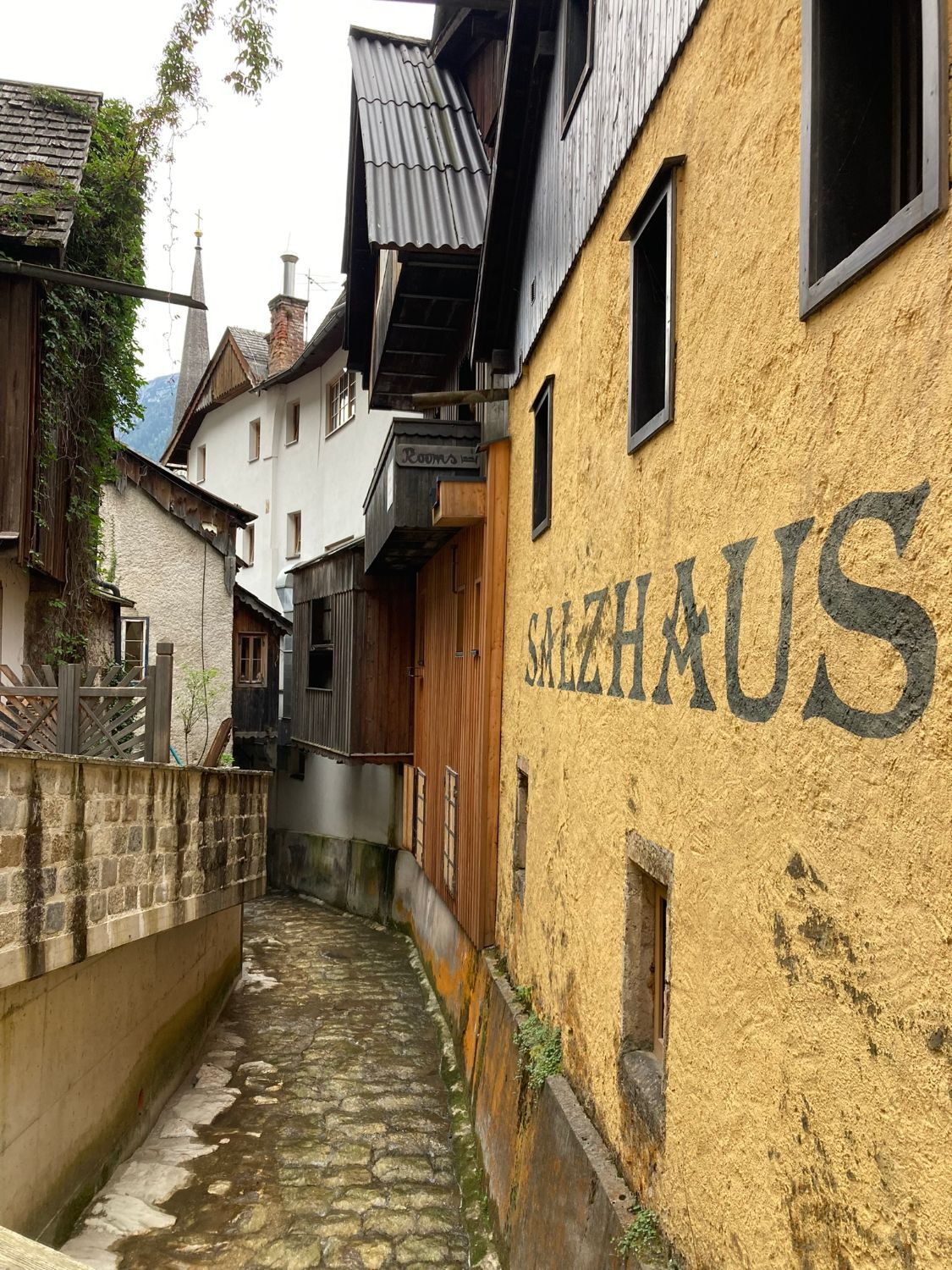
We walked through the old streets, across the market square, down to the water and up towards the salt mine area to see the village from above. (We didn't go into the salt mine itself.)
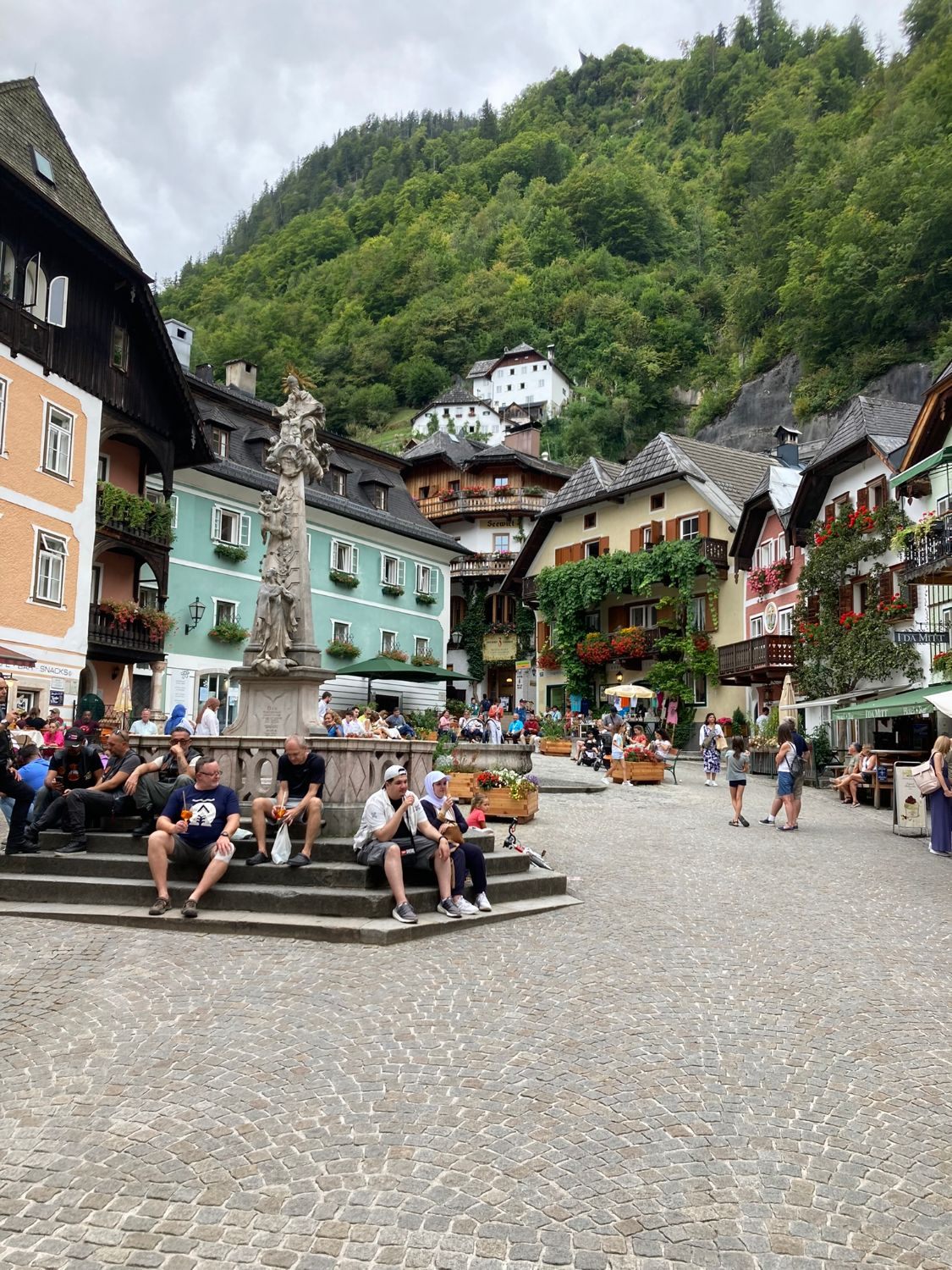
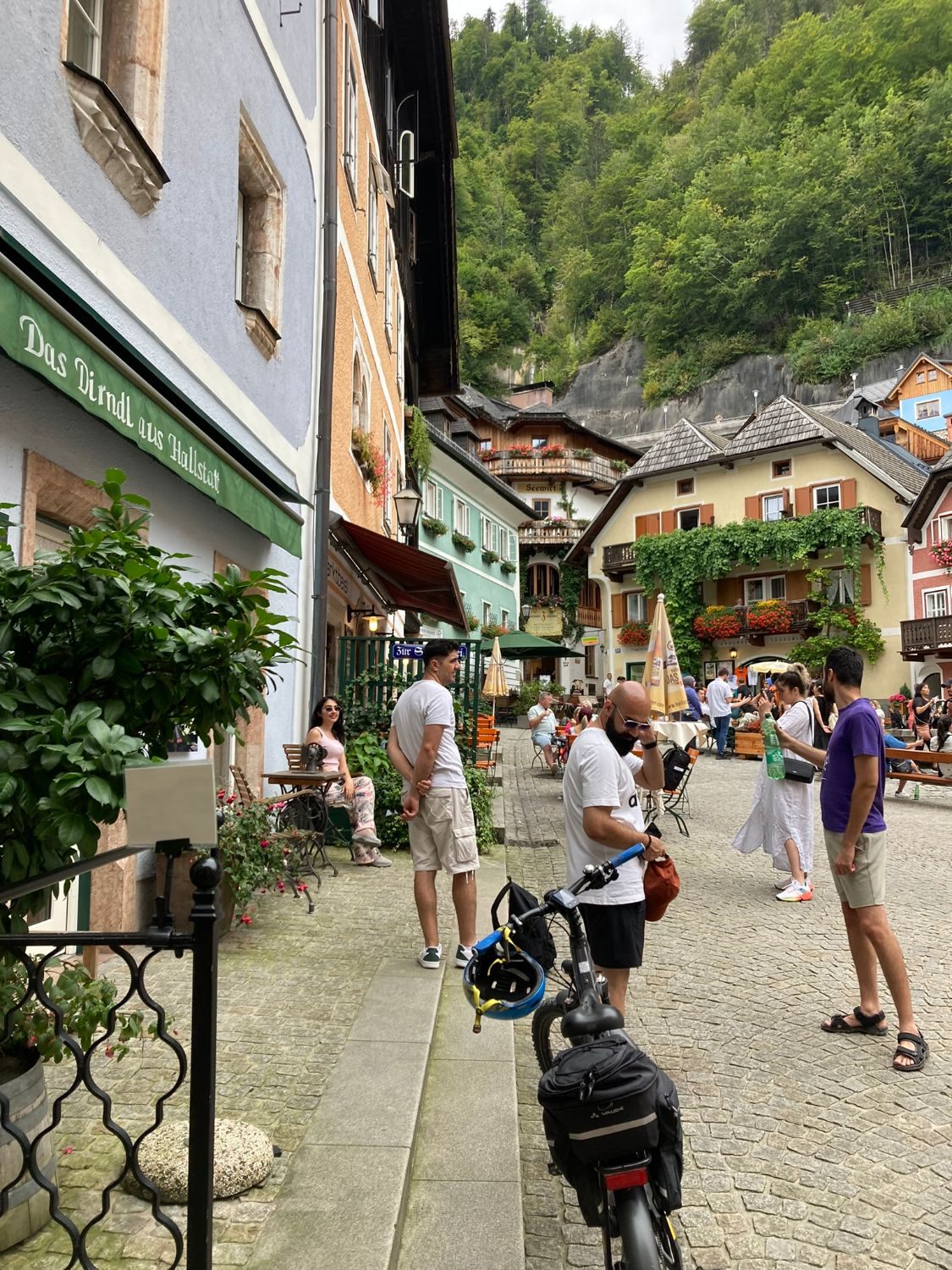
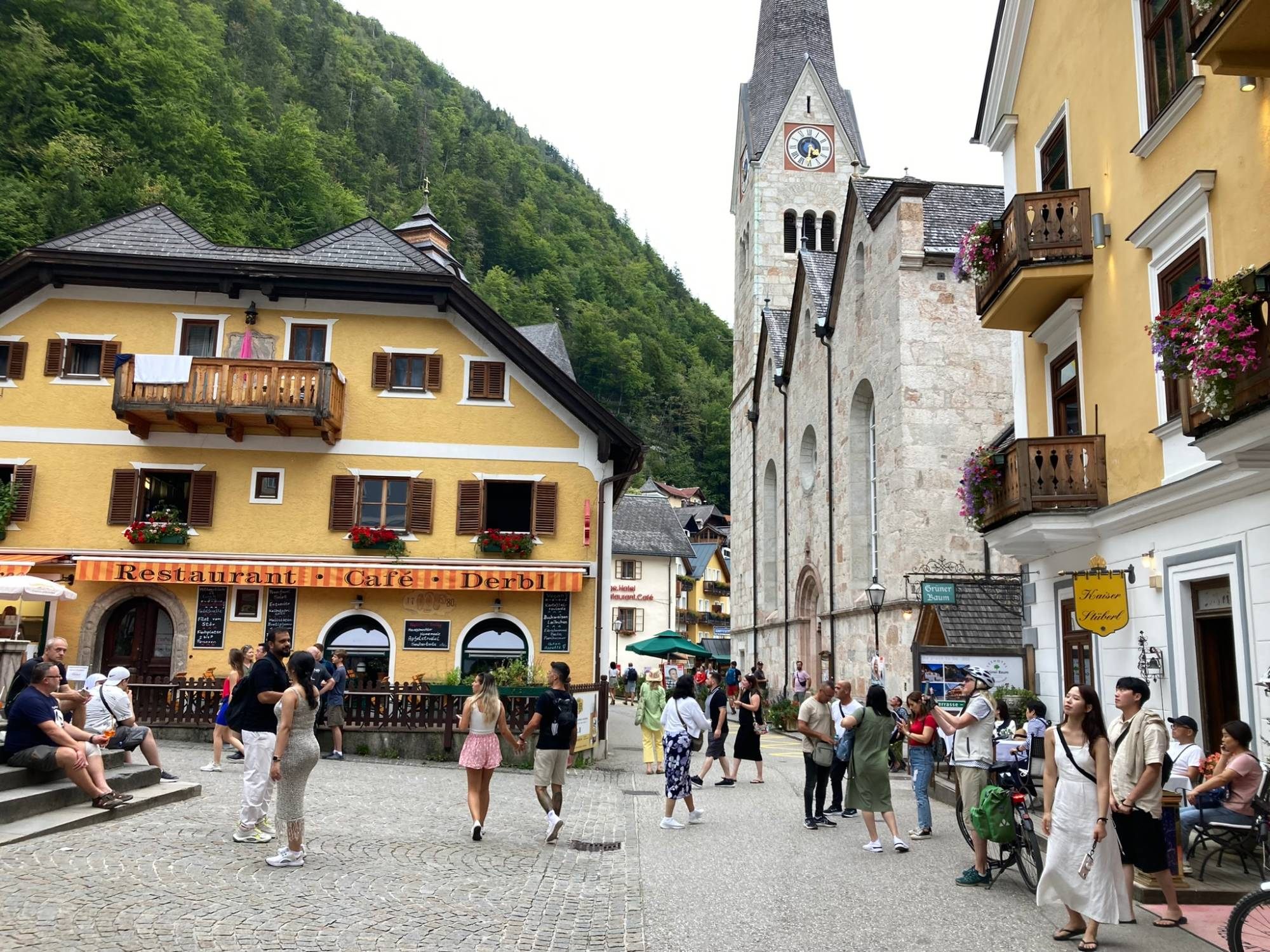
This is where Hallstatt really got us. After Vienna – impressive, but not our style – this was exactly the mix we love: historic houses and traditional Alpine architecture, narrow lanes, mountains, a lake and a relaxed atmosphere. The view changes every time you turn a corner or climb a few steps.
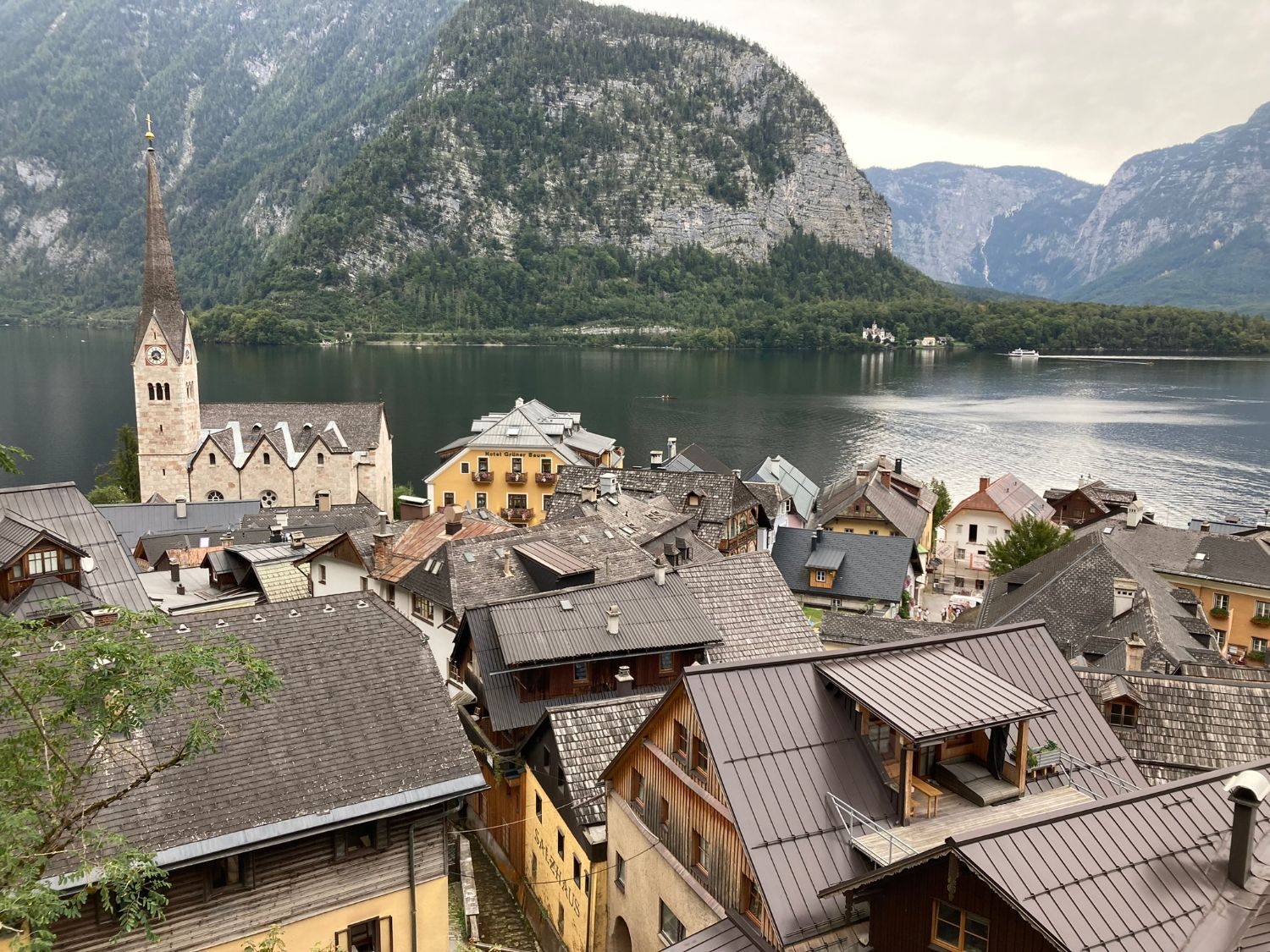
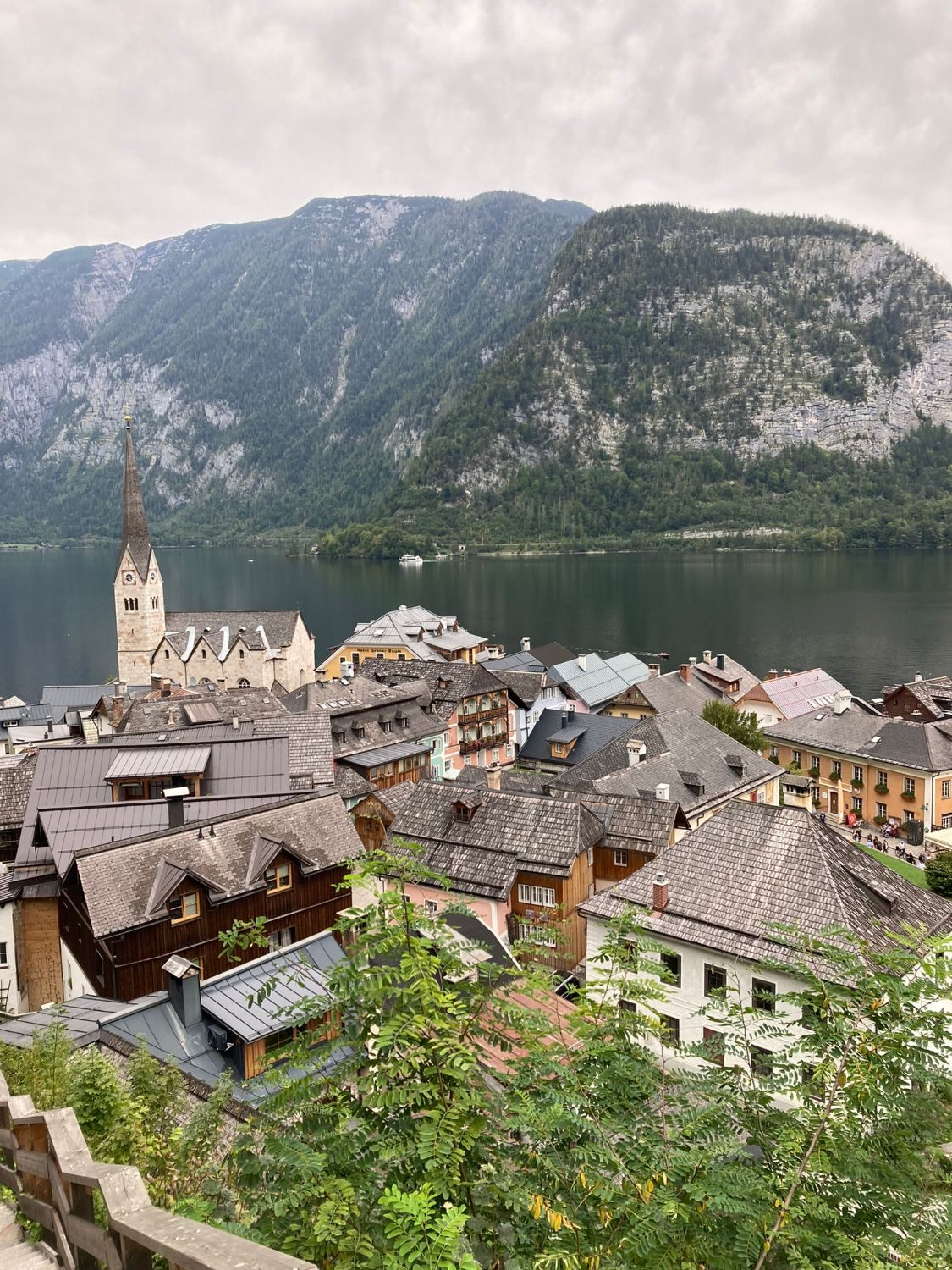
And of course we took the classic postcard photo too. Everyone does – but it's so beautiful that it doesn't feel like a box to tick. It's genuinely worth it. Hallstatt is so famous that a copy of it was built in China: a residential development in Huizhou, Guangdong, modelled on the village centre, which opened in 2012.
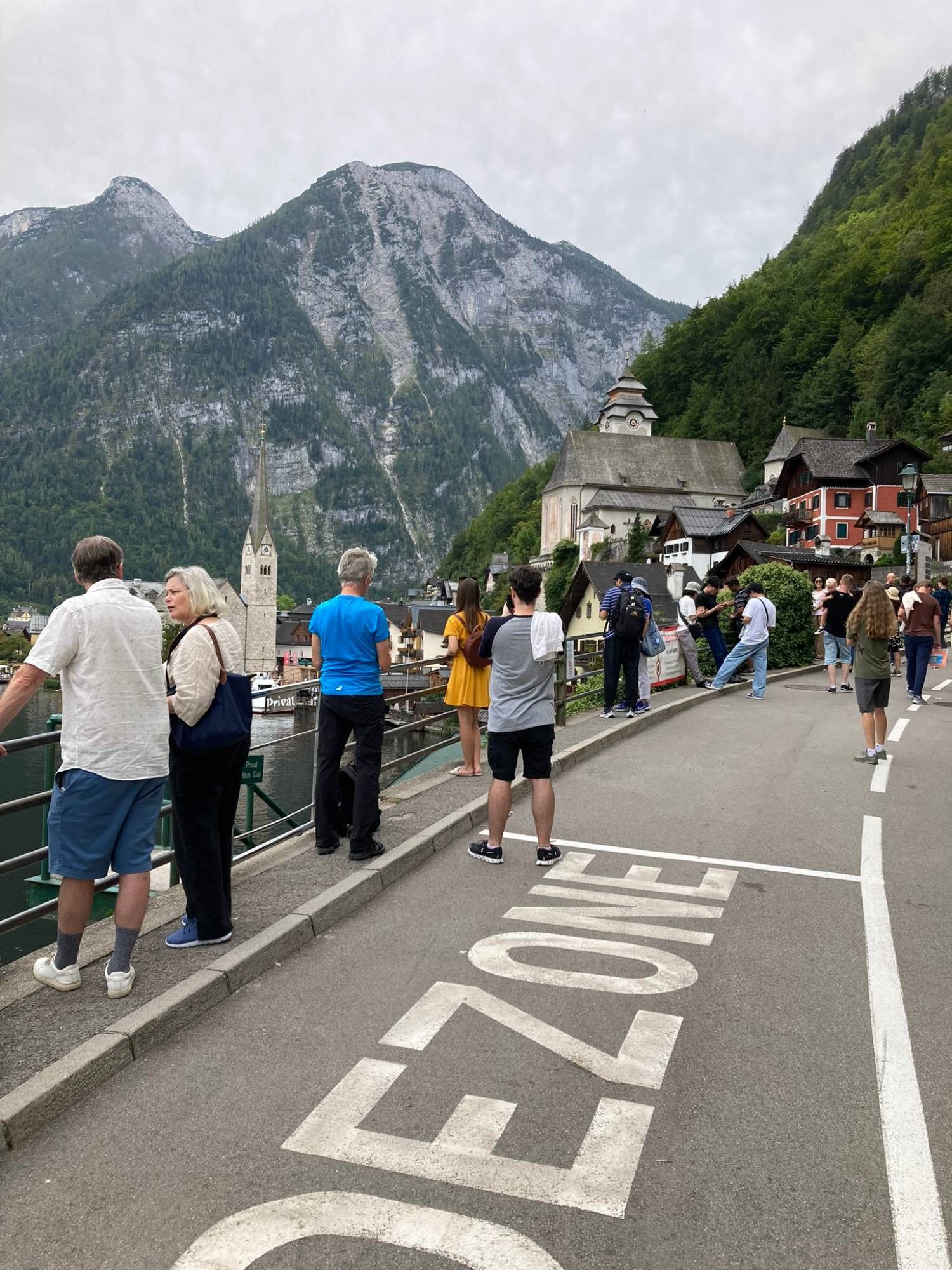
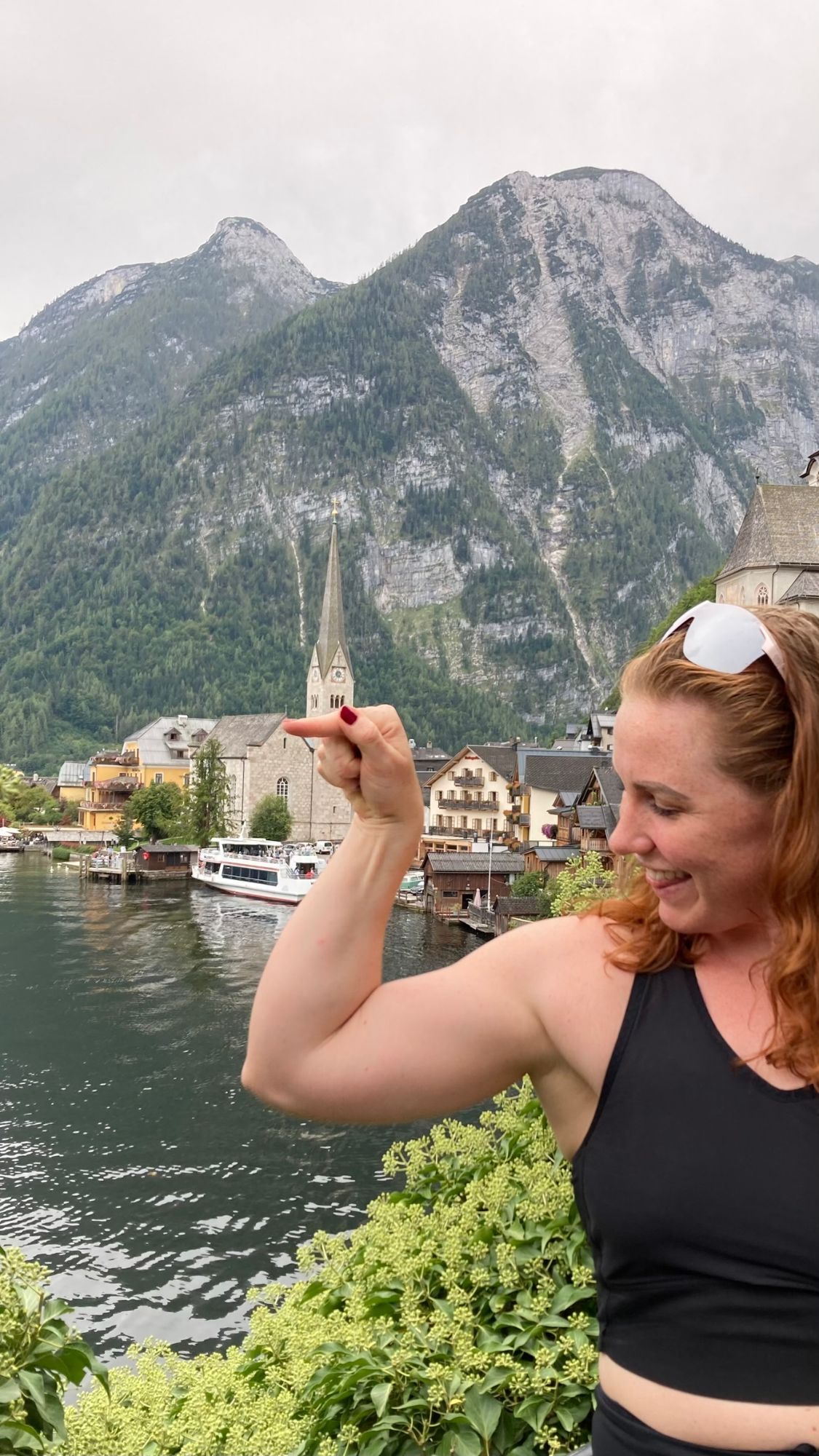
Our verdict: Hallstatt is very touristy, and we can see why. We were glad we came in September rather than at the height of summer – we imagine it could be a lot less pleasant with even more people in those small lanes and at the viewpoints. If you can choose, go outside the busiest season. Even with the crowds, it was a fantastic experience for us. And if the weather allows, a swim in the lake is a lovely extra – it was for us, at least.
Parking was our biggest headache. If you're based in Salzburg and don't want to deal with it, half-day trips from Salzburg to Hallstatt take care of the driving – we haven't tried one ourselves:
Sources: UNESCO – Hallstatt-Dachstein/Salzkammergut Cultural Landscape, Hallstatt – history. Parking rules change; see parking in Hallstatt.
A wrong turn through the Alps
We left Hallstatt around 7pm and headed for our hotel near Salzburg. On the way the rain came in, and we took a wrong turn – which, instead of being annoying, led us to a lake we hadn't planned to see, emerald green with mist lying on the water below jagged peaks. Another reminder of how beautiful Austria is.
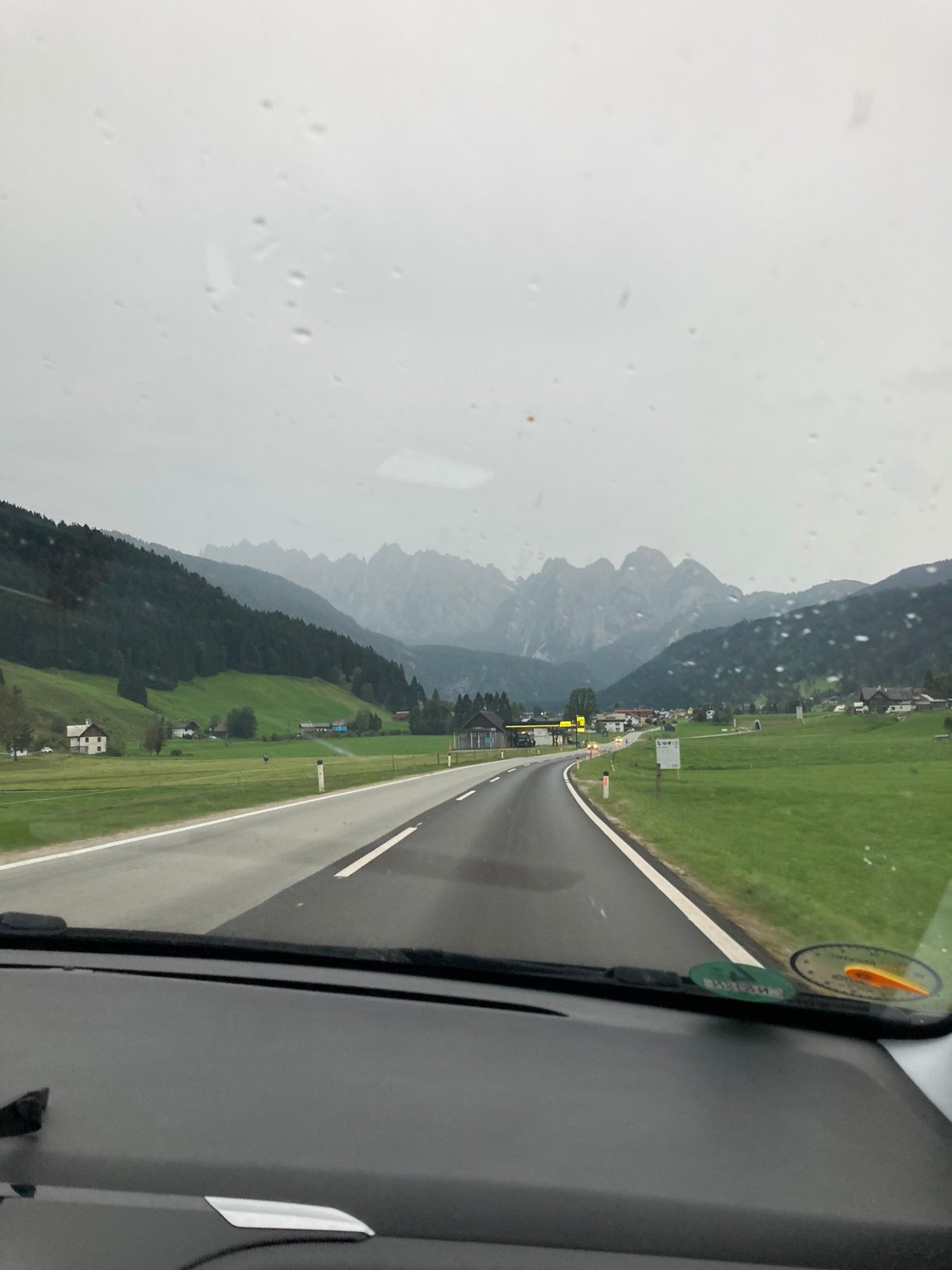
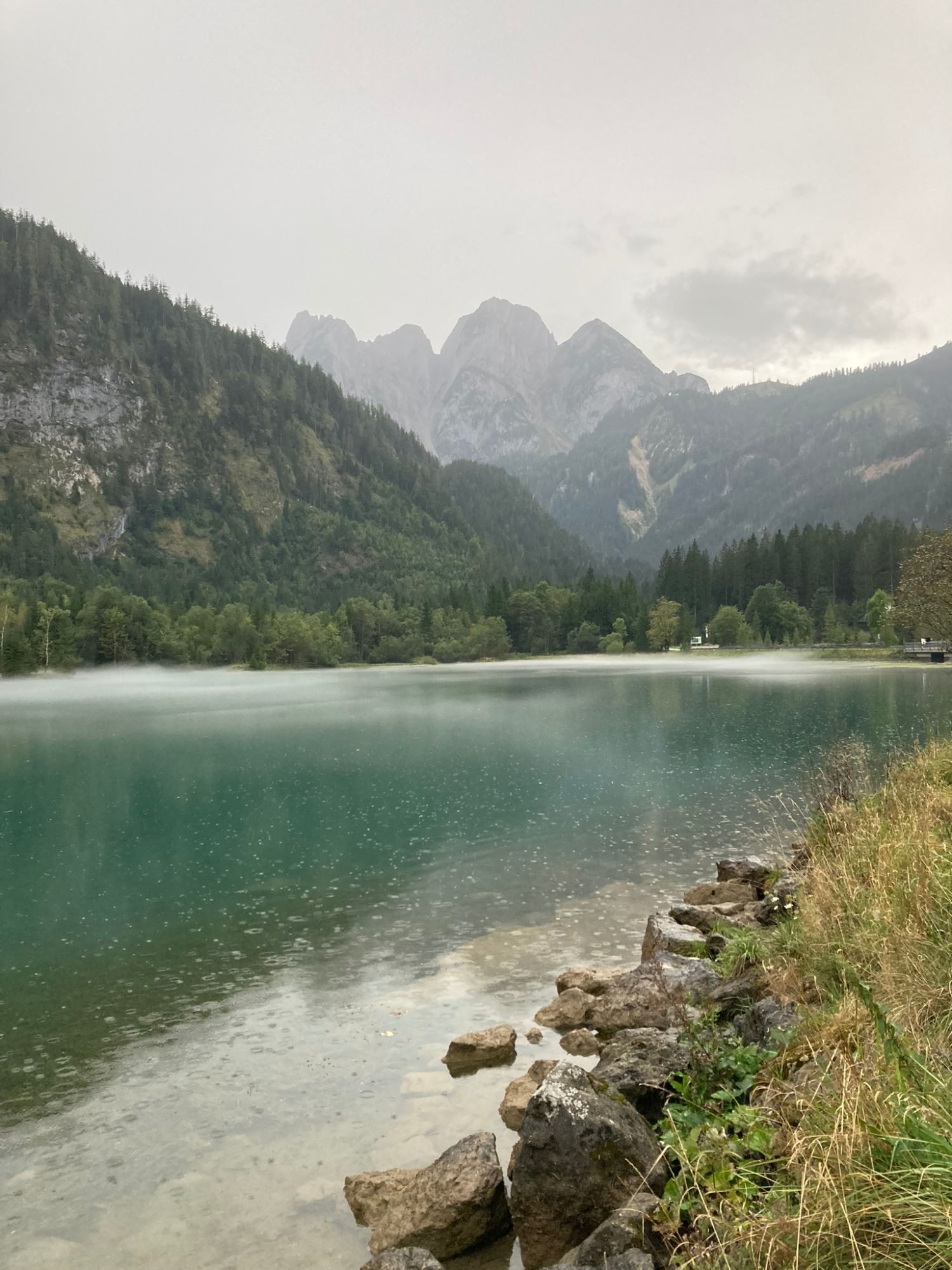
This was where we really noticed the difference between the Tatras and the Austrian Alps. We'd loved the Tatras, but Austria had a different feel – more idyllic, almost like a fairy tale, with lakes, wooden houses and flower boxes everywhere. Some of the best moments on a road trip aren't on the plan at all.
Later that evening we arrived at B&B HOTEL Salzburg-Süd – a practical, perfectly fine base for one night. Tomorrow: the Eagle's Nest.
9 September – Eagle's Nest: an incredible location, but a disappointing historical experience
A tunnel and a brass lift that lived up to the history – and a summit that smelled of fries. Then on into the Austrian Alps.
On the morning of 9 September we drove from our hotel south of Salzburg across the border to Eagle's Nest – the Kehlsteinhaus – above Berchtesgaden in Bavaria. We'd been looking forward to it because of its history. The house was built in 1937–38 as a reception house for the Nazi leadership; it wasn't Hitler's headquarters, and he is said to have come up only rarely. We expected a place where that history would feel tangible.
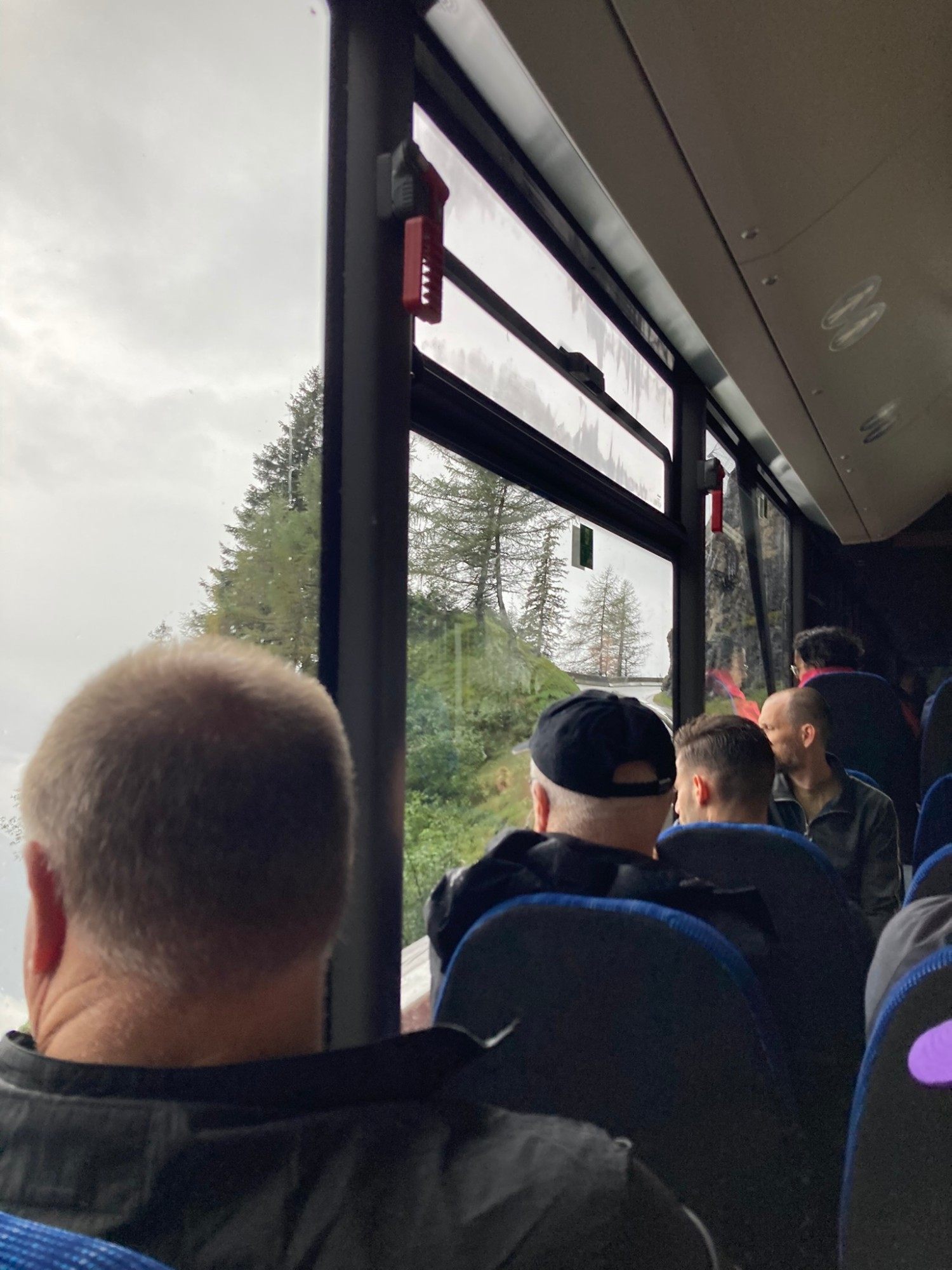
We had two tickets, paid for parking at the machine, and took one of the special buses up the mountain at 9am. On the bus we got talking to an American father and son who were just as excited as we were. About ten minutes later we were at the top of the road.
The tunnel and the lift: the best part of the visit
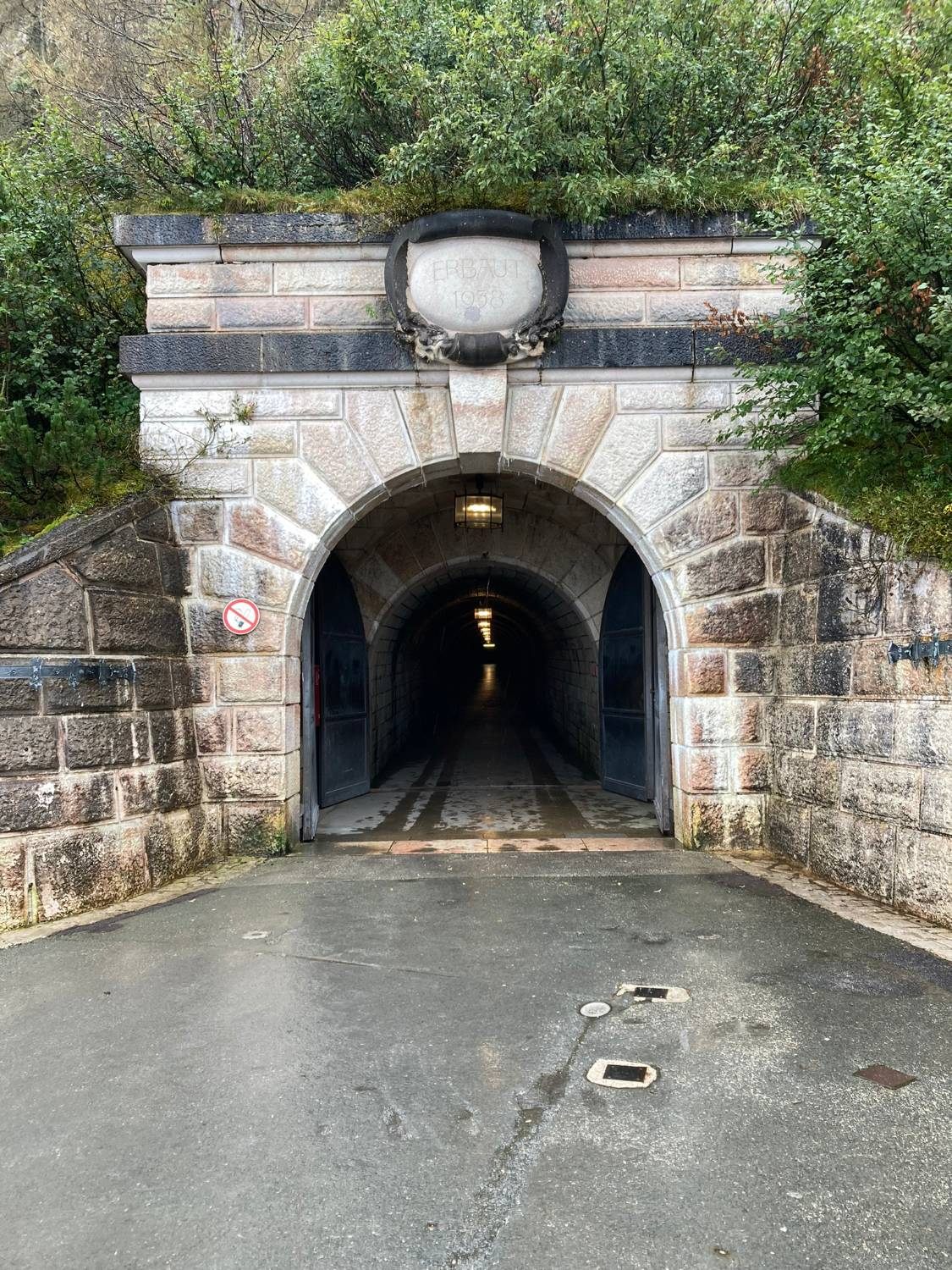
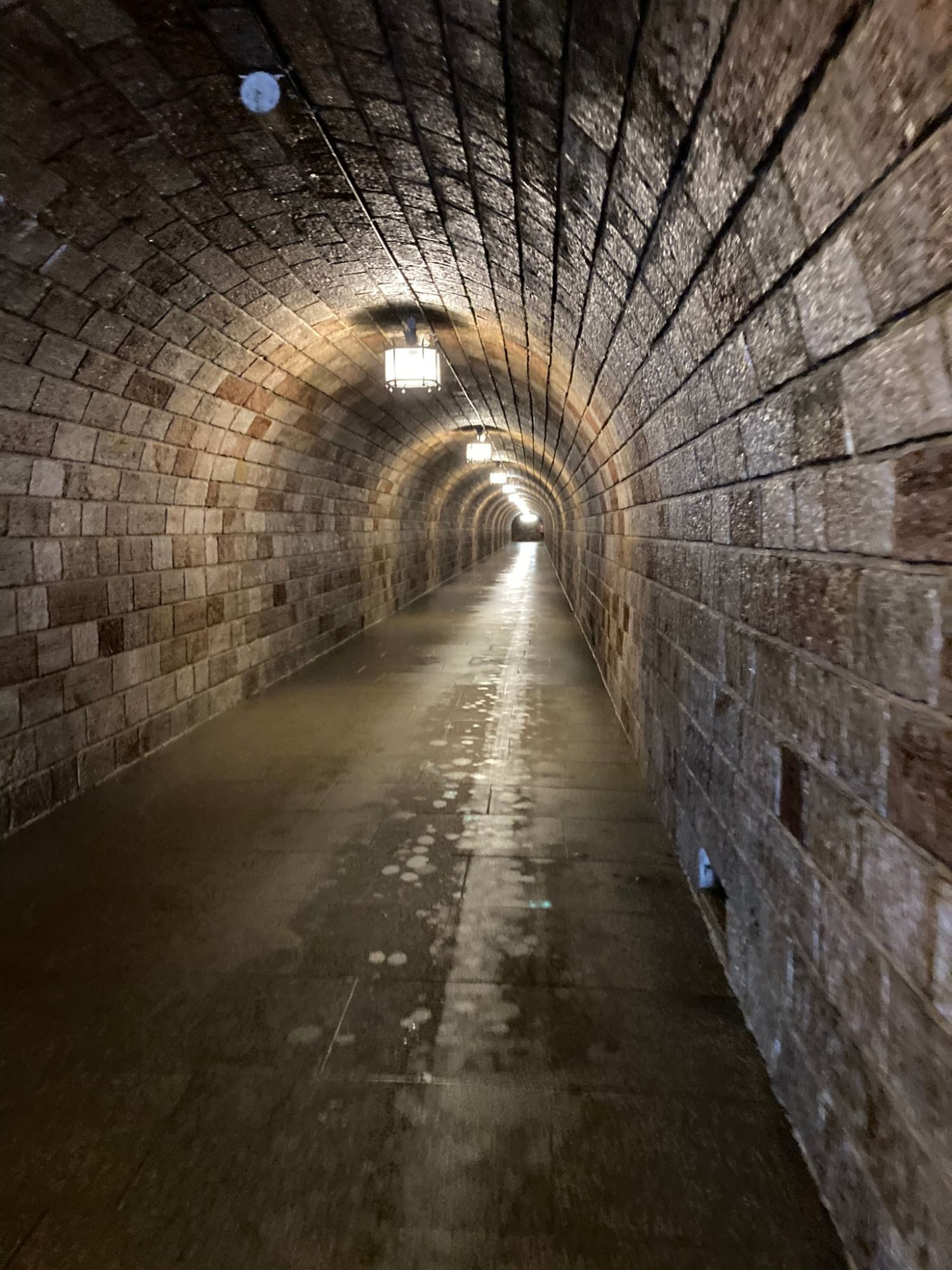
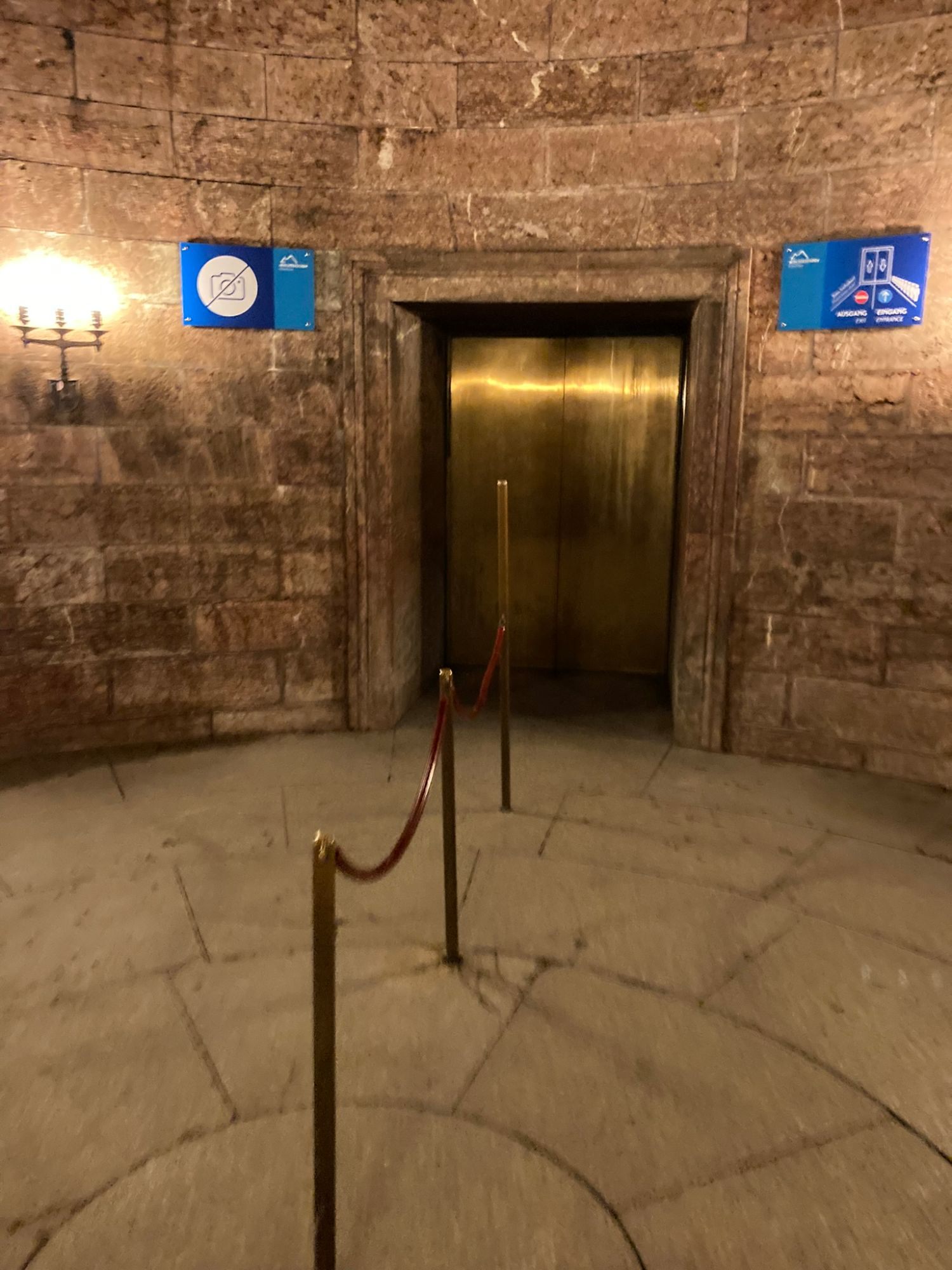
At first it was everything we'd hoped for. A heavy stone portal marked Erbaut 1938 opens into a tunnel of just over 120 metres, lined with stone and lit by old lanterns, running straight into the rock. At the end is a round, domed waiting room and the famous brass lift, which carries you up through the mountain to the house. It felt solid, unusual and genuinely connected to the history of the place.
The doors opened – and the history disappeared
When the lift doors opened, the contrast was immediate. Lino on the floor, a view straight into what looked like an industrial kitchen, and the smell of fries. That was the moment the historical atmosphere vanished for us.
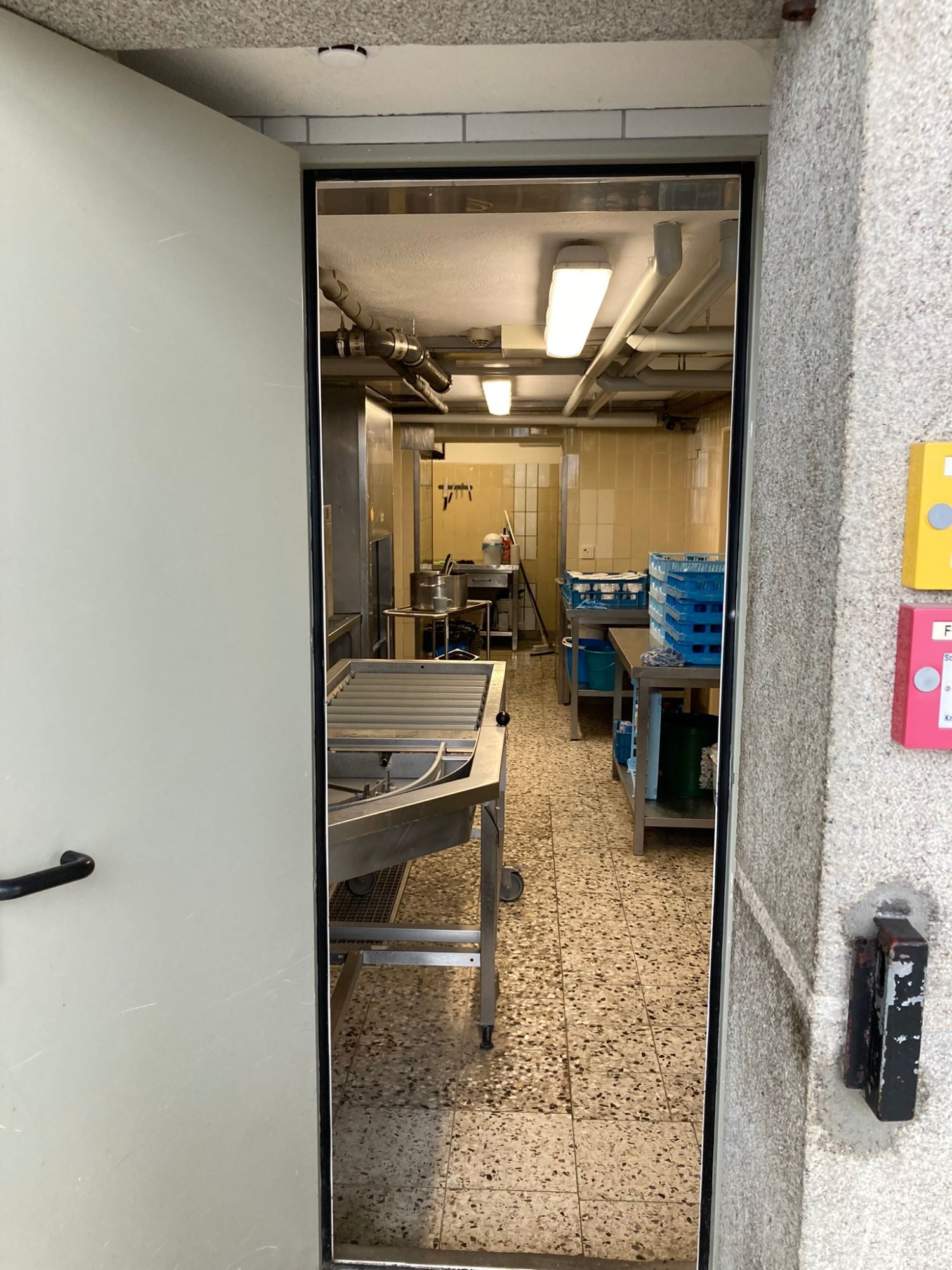
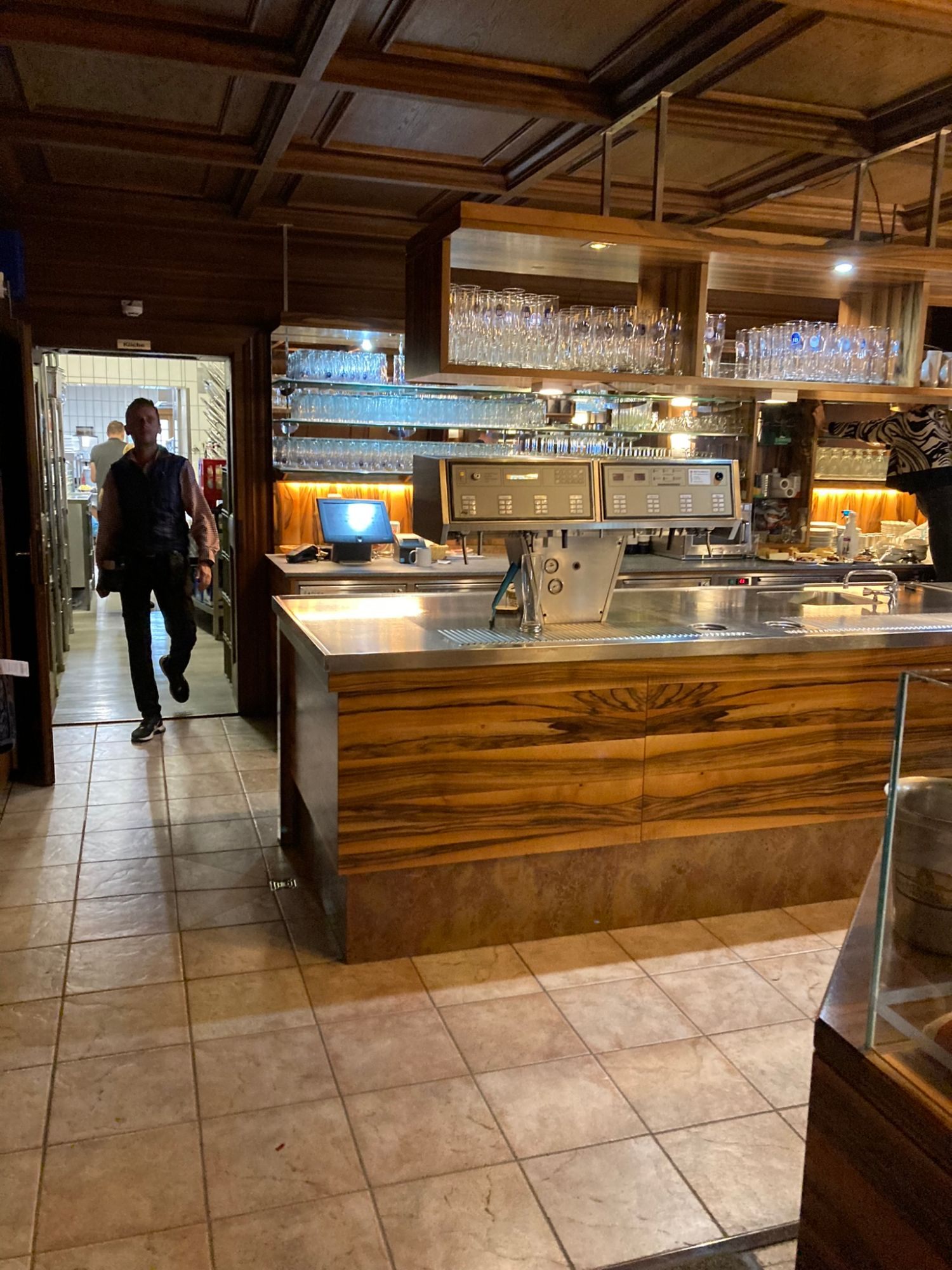
The building's structure still has its historical character in places – the heavy stone walls, the arches – but the way it's used made it feel like a tourist restaurant rather than a historical site. Counters, tables and parasols everywhere; hot dogs, fries and the usual refreshments. Everything seemed designed around feeding and moving large numbers of people. We weren't expecting a building frozen in the 1930s – we knew it had been a restaurant for decades – but we had hoped for more care in how its history is preserved and presented.
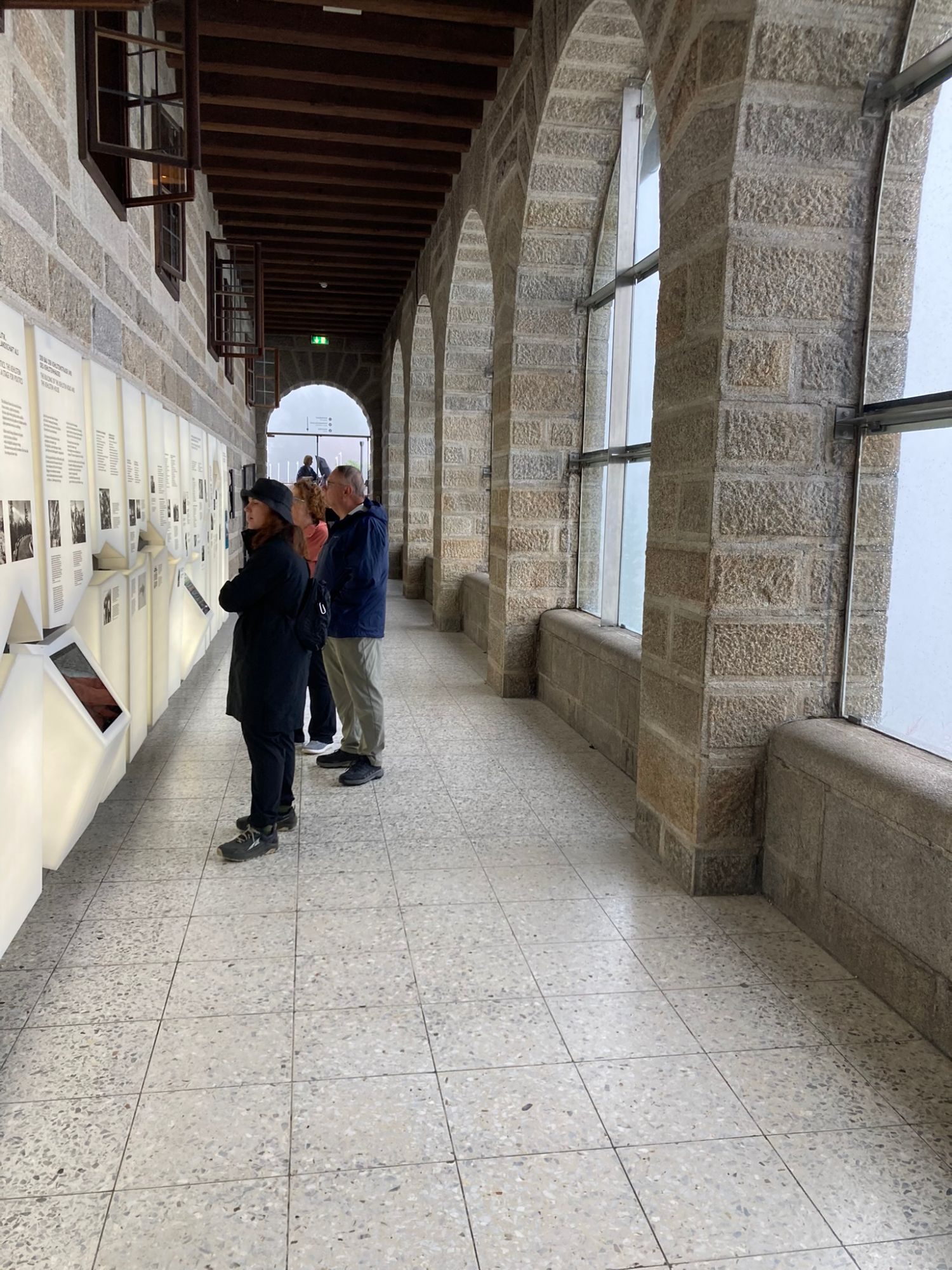
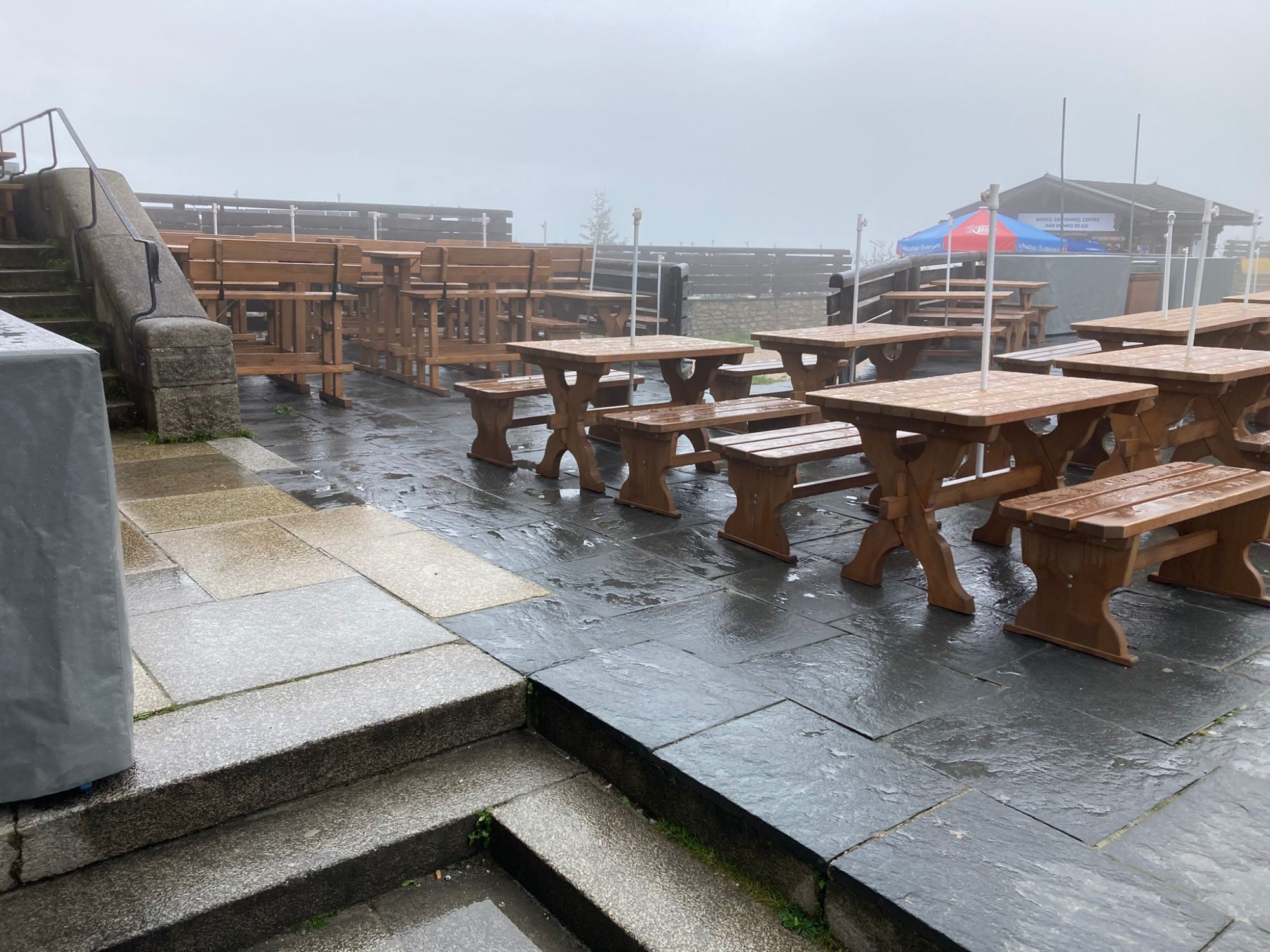
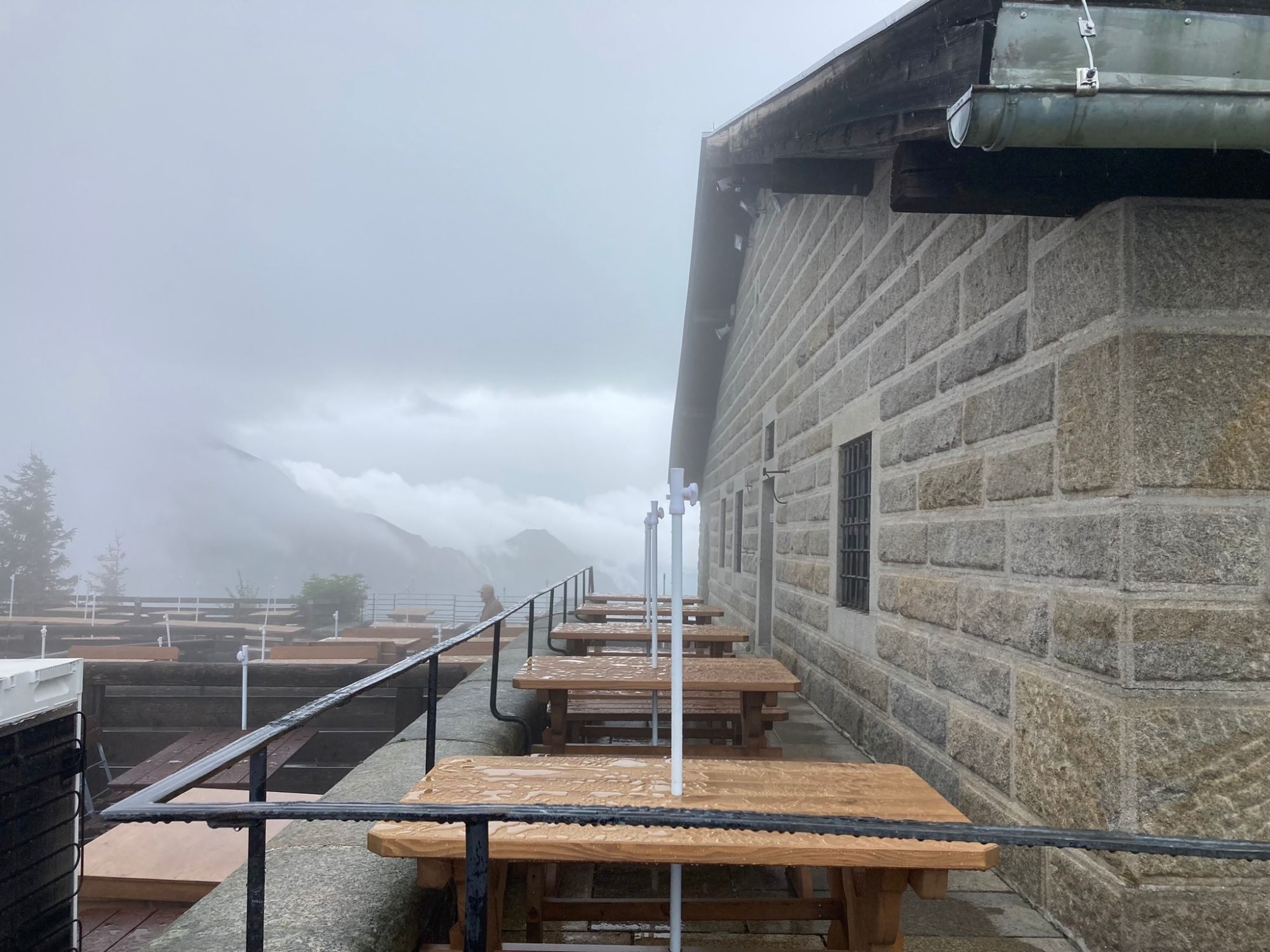
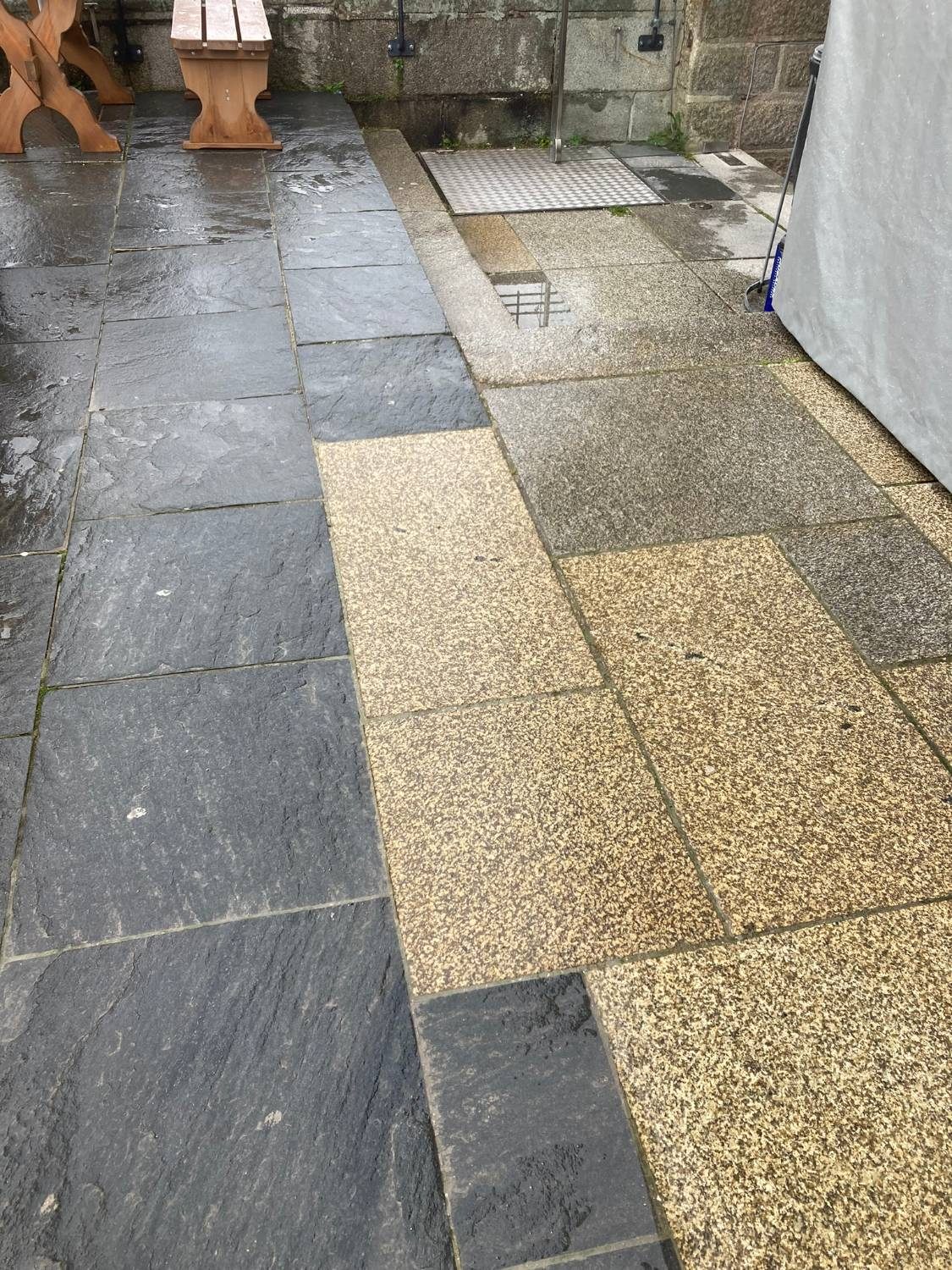
Outside, on the terrace, it got worse for us. This is the terrace many people know from old photographs and popular depictions of Eagle's Nest. It has been extended over the years, and the old arches have been glazed in to keep out the wind. Rows of wet wooden tables and benches fill the space. To our eyes the newer materials – right down to the mismatched paving – don't sit comfortably with the historic building.
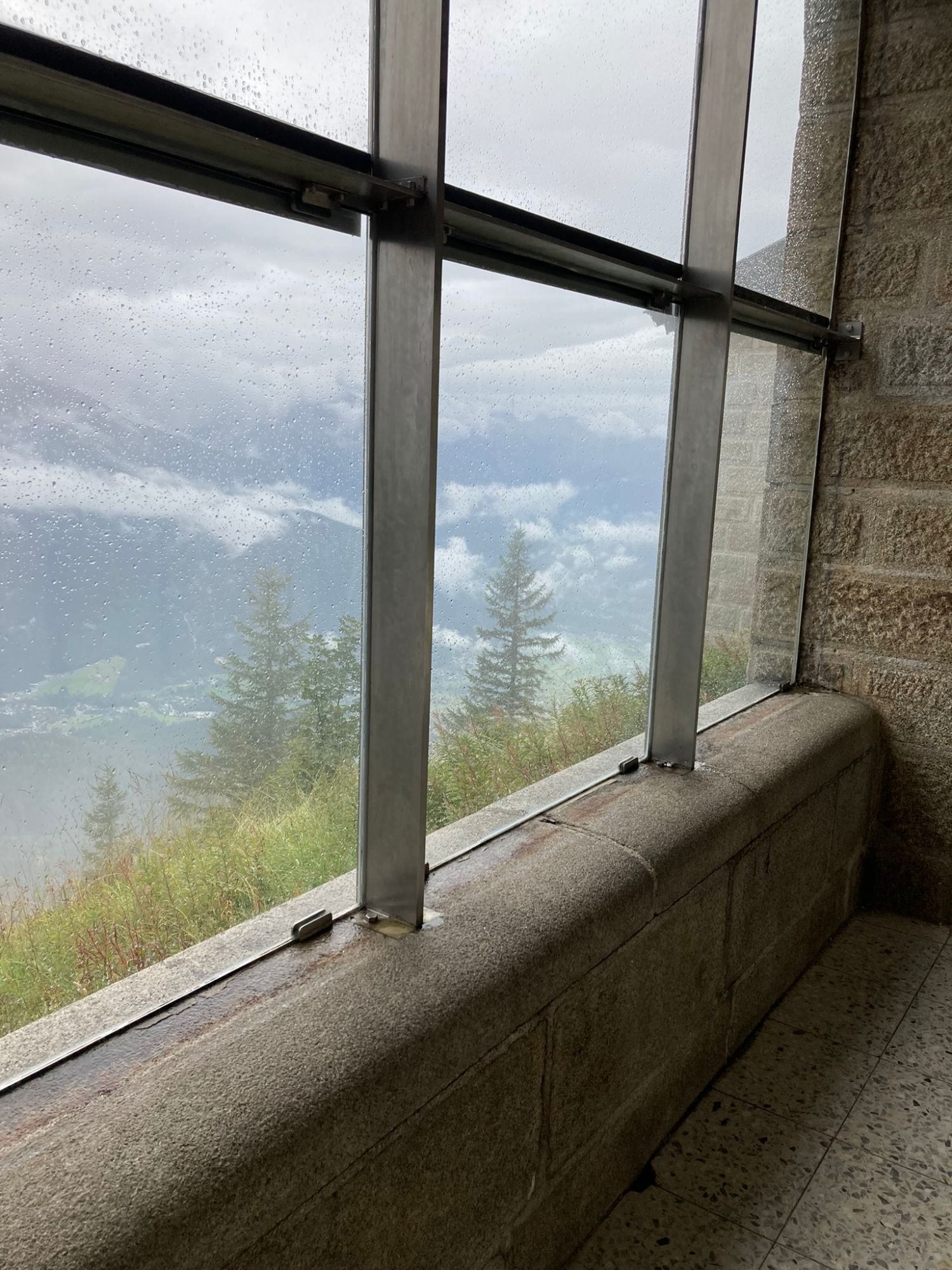
Fog, Ben Nevis-style
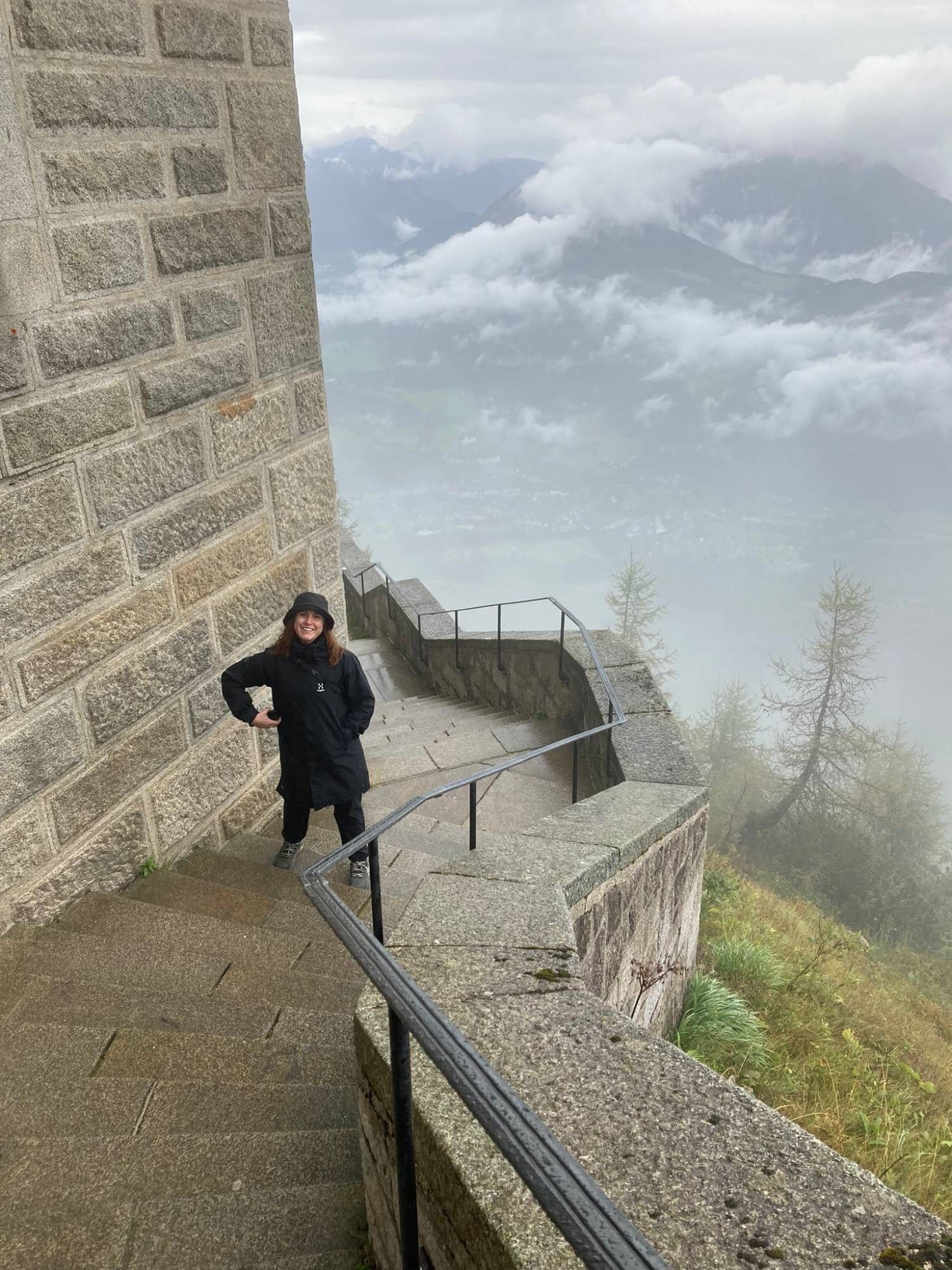
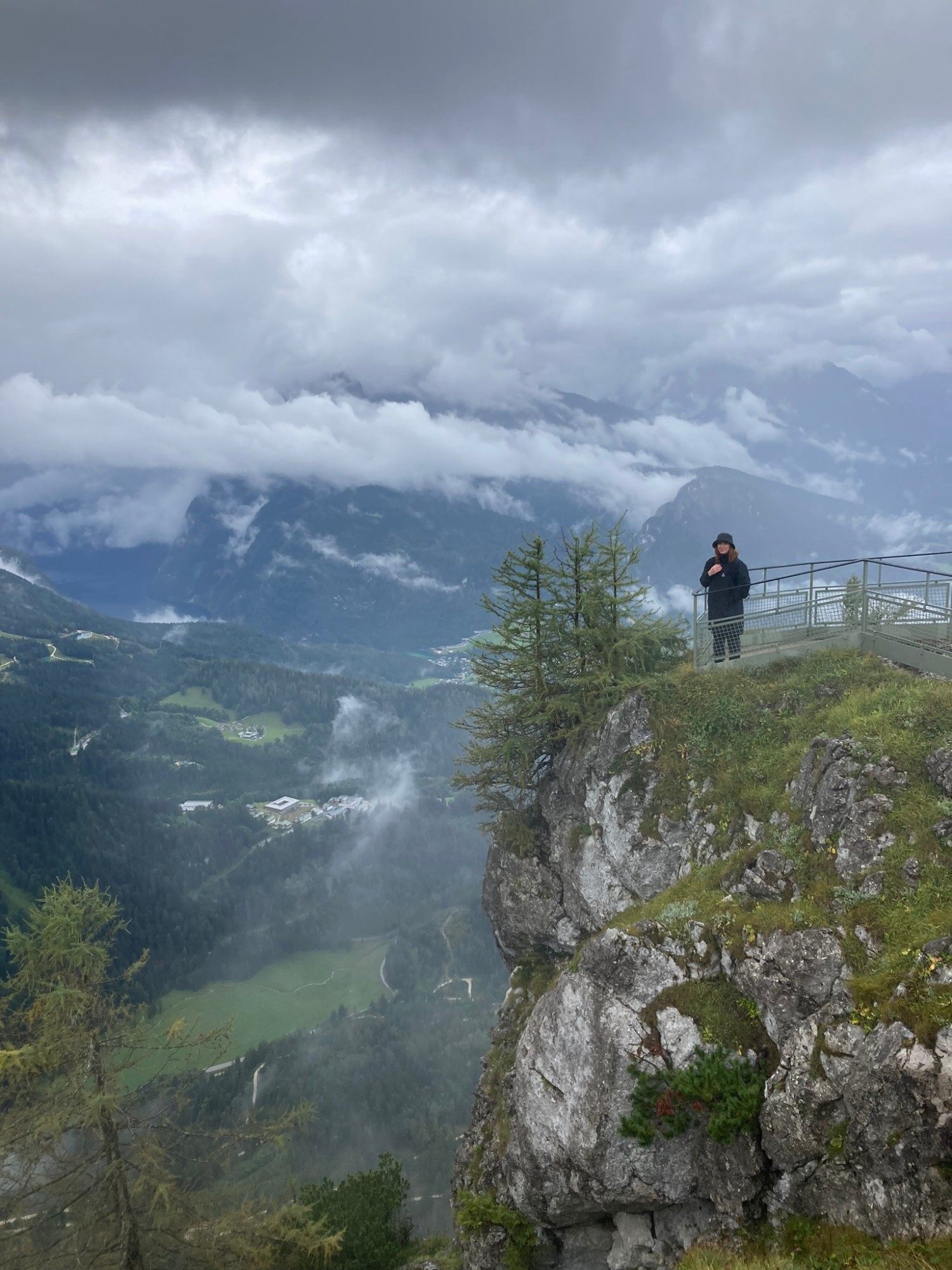
The weather didn't help. It was foggy – it reminded us of the top of Ben Nevis – and for most of the time the surrounding mountains were hidden in cloud. When the cloud lifted for a moment we caught glimpses of the valleys far below, and it's easy to see why this spot was chosen. The location is spectacular. On a clear day the views must be enormous; we just didn't get them.
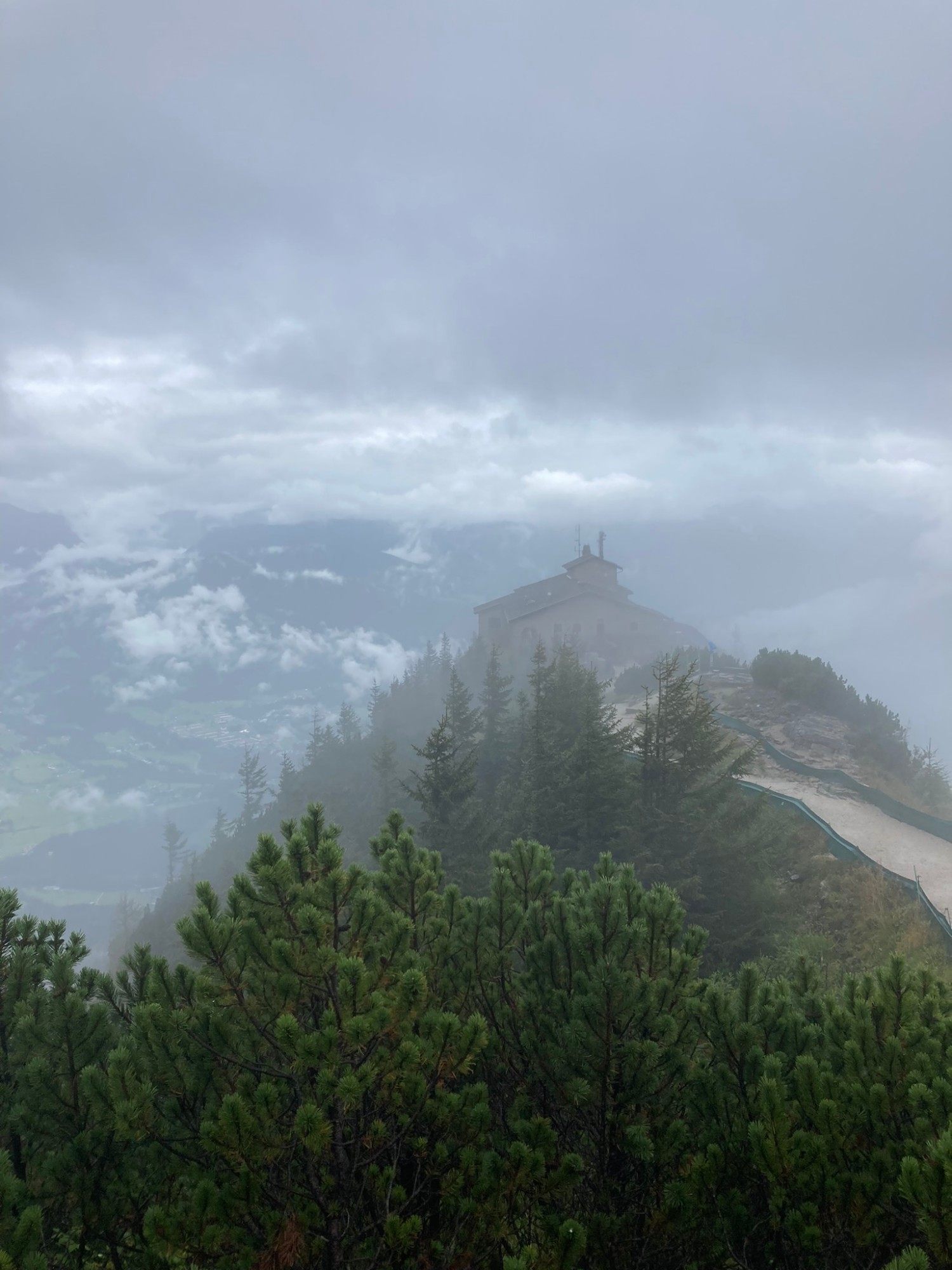
Our verdict
We would not recommend Eagle's Nest if your main reason for going is to feel the history of the place. The tunnel and the lift are genuinely impressive, and the setting is dramatic, but once we reached the top it felt like a busy mountain restaurant that happens to be in a historic building. We spent about 45 minutes there in total, without rushing – and didn't feel any need to stay longer. That says a lot.
If you mainly want a famous landmark, impressive engineering and – with luck – a big view, you may well see it differently. Our disappointment was specifically about how little of the historical atmosphere survives in the visitor experience.
Background: Kehlsteinhaus historical guide – tunnel and elevator and the Kehlsteinhaus today. For tickets, buses and opening times, see the official visitor information.
Into Austria and on to Gerlos
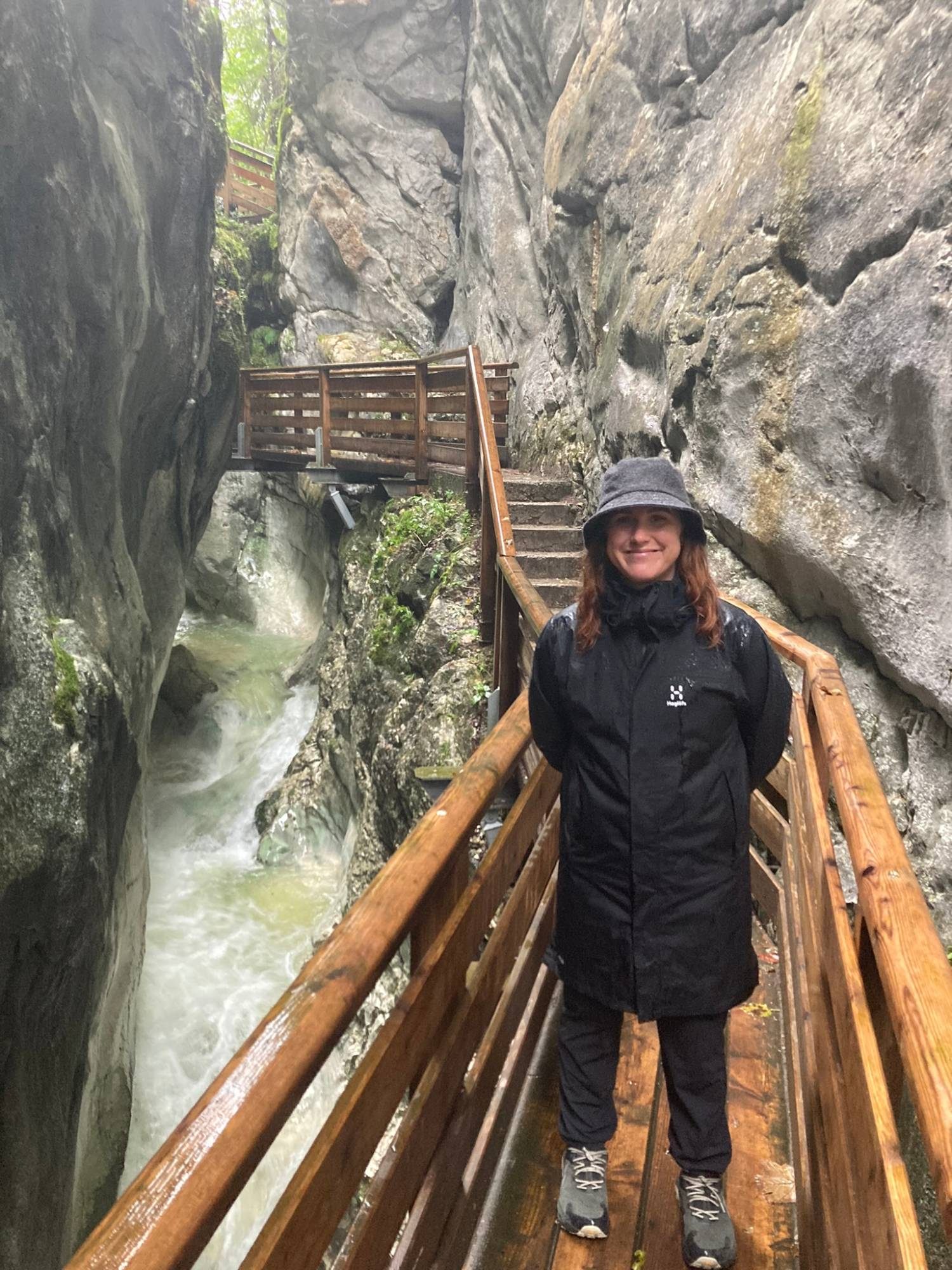
From the car park we drove a couple of hours back into Austria towards Gerlos. Around 12.30 we stopped at the Innersbachklamm, a short gorge between Lofer and Unken, where a wooden walkway runs along a roaring stream between rock walls – a quick, wet break from the car. Later we drove past the Krimml Waterfalls, which we planned to hike the next morning. Seeing them from the road after a day of fog and fries made us even more excited.
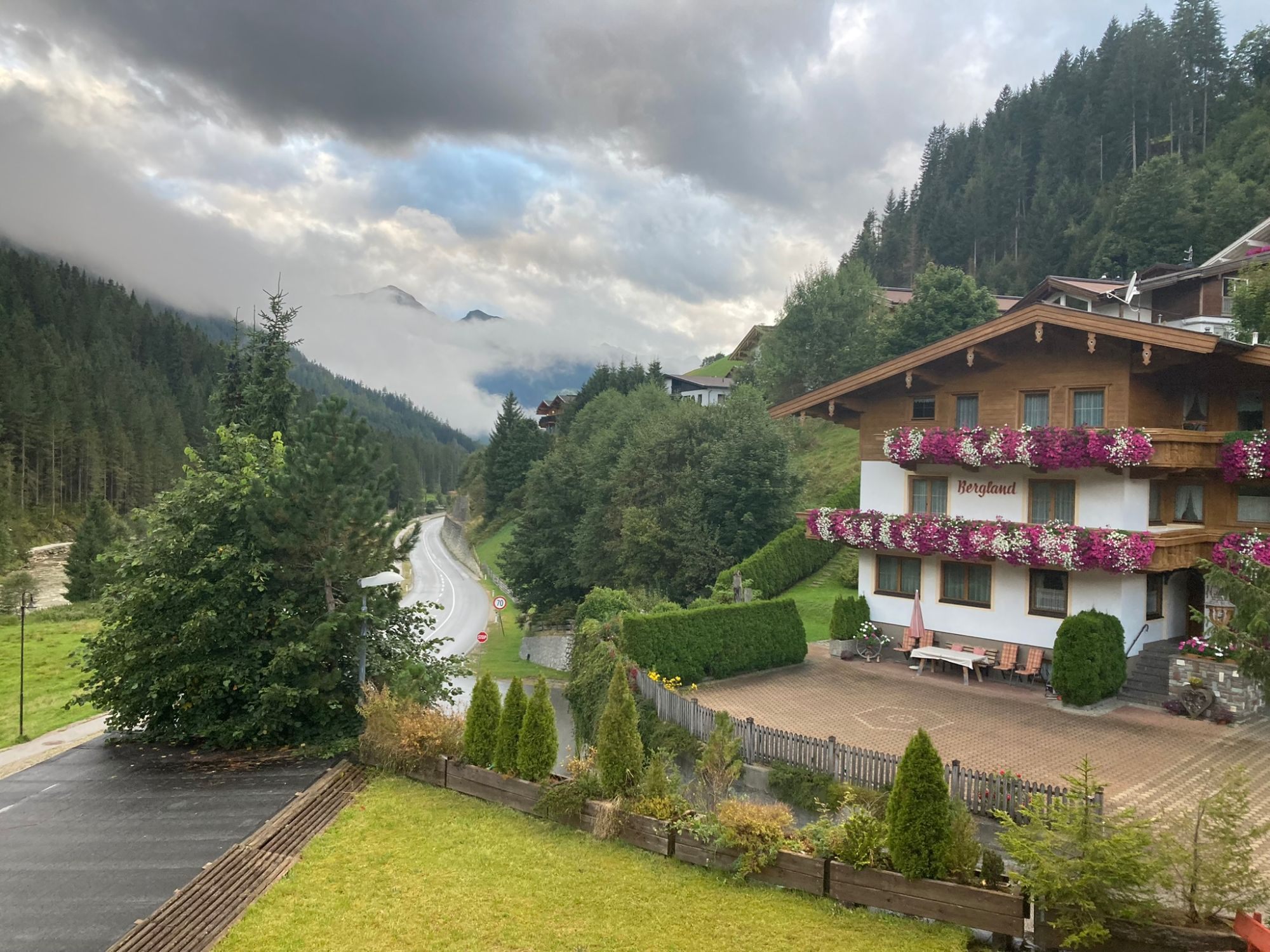
In Gerlos we checked into Alpenhotel Tirolerhof for two nights and got ready for an early start. Tomorrow would be about nature, not history.
10 September – Hiking the Krimml Waterfalls before the crowds
After the fog and fries at Eagle's Nest, a morning where nature was the whole point.
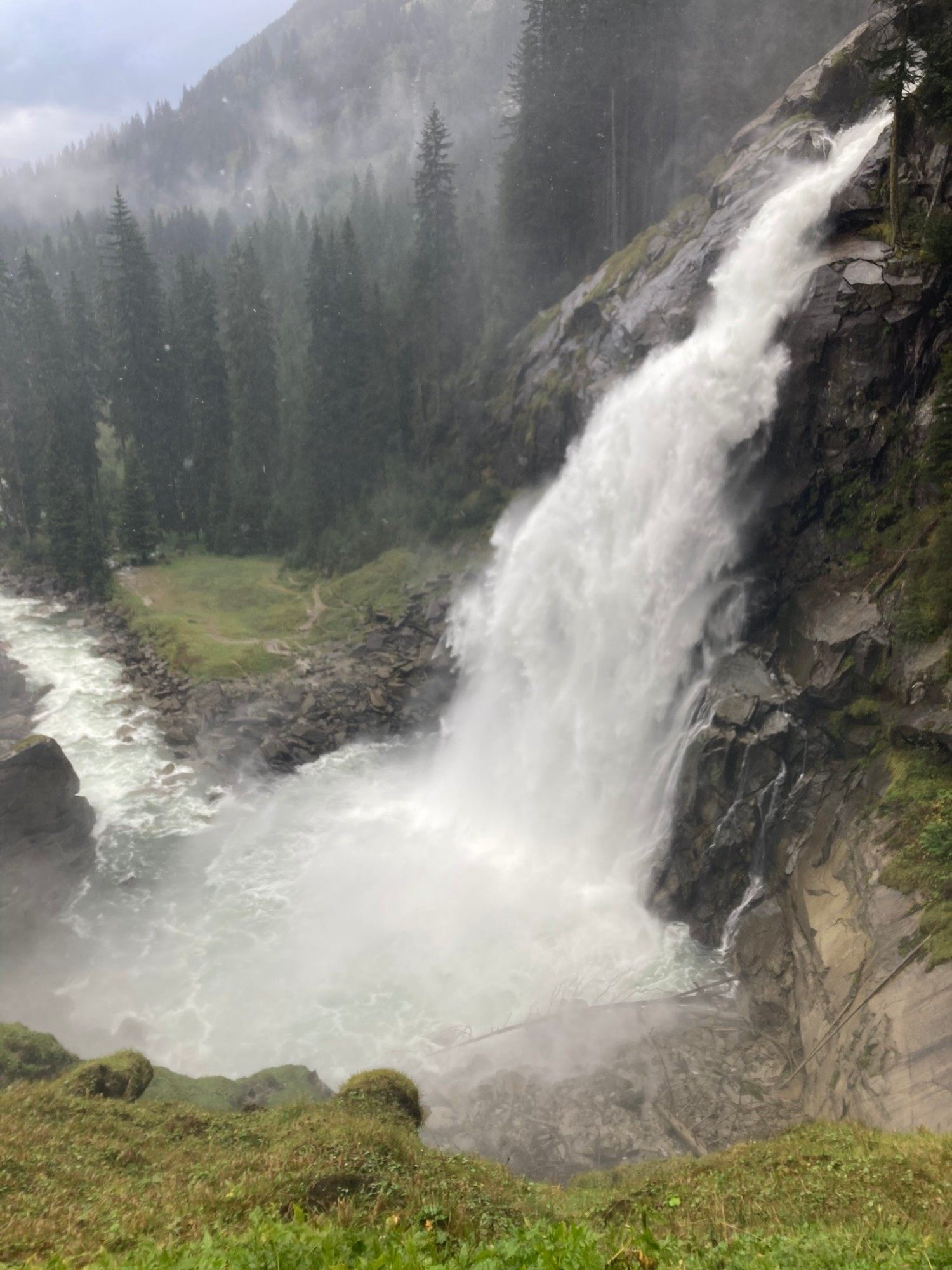
We left Gerlos early and were at the Krimml Waterfalls just before 7am – before the shops opened and long before the crowds. We walked the waterfall trail from the lower fall up through the forest to the Schettbrücke viewpoint near the upper fall: about 8.4 km out and back with around 423 metres of ascent on our saved route. It took us roughly 2.5 hours up, with plenty of stops for photos, and an hour back down. For most of the climb we met just one other hiker. By the time we were back at the lower fall around 11, it was packed with umbrellas.
The falls were one of the great nature experiences of the whole trip – the noise, the spray and the views changing at every switchback. Our main advice: come early. The full story, with practical tips, is here: Krimml Waterfalls hike: chasing Austria's spectacular waterfalls before the crowds.
11 September – Rafting, Highline179 and a very long drive north
White water in the morning, a 406-metre suspension bridge in the evening – and far more hours in the car than we'd planned.
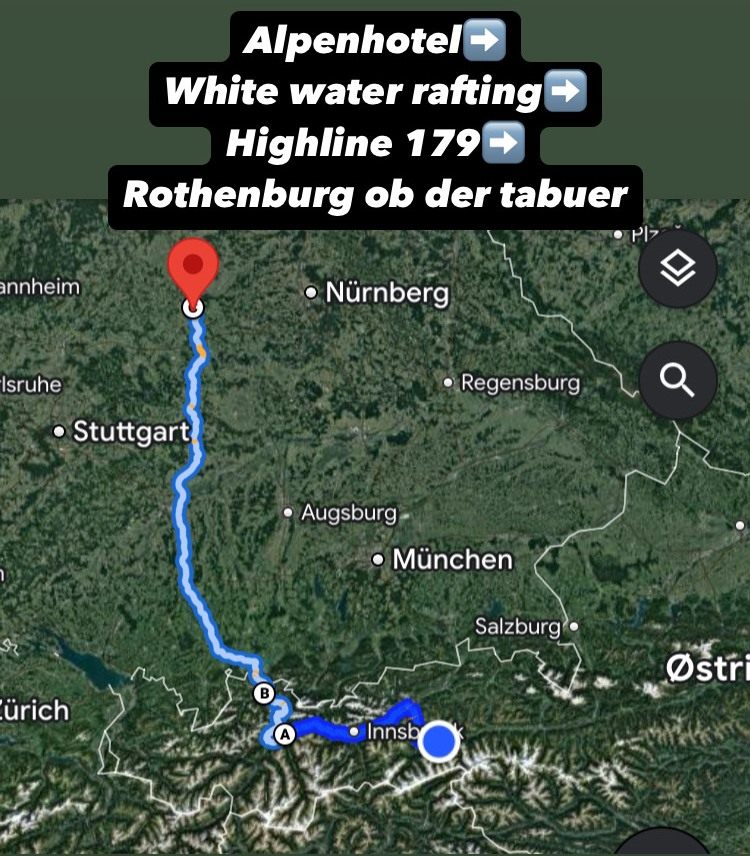
After breakfast in Gerlos we headed north. In practice it was a transport day – Rothenburg ob der Tauber in Germany was a long way off – but we'd planned two proper stops along the way: white-water rafting and Highline179.
Tyrol from the car
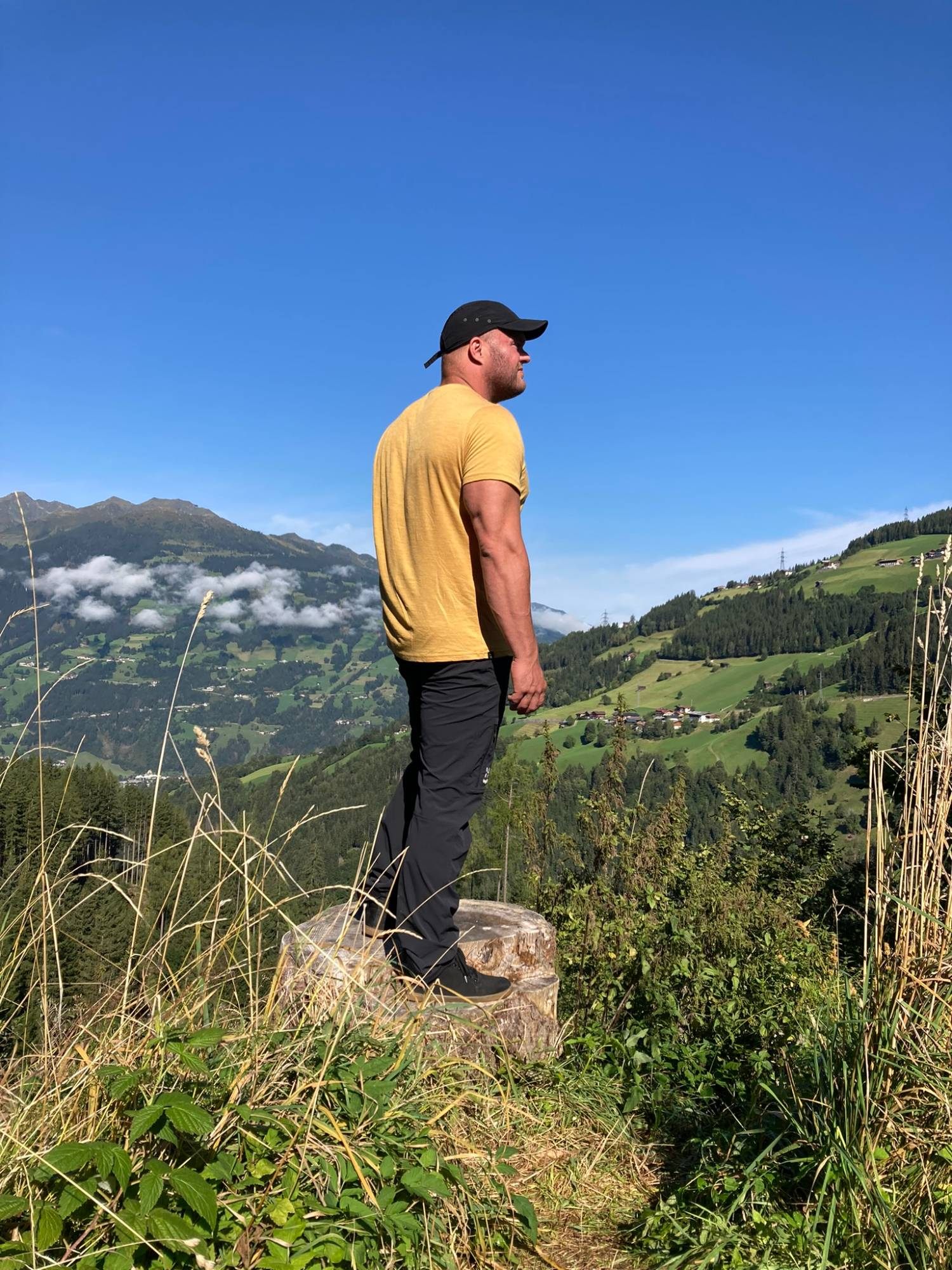
Even as a transport day, driving through Tyrol is a pleasure: green slopes, small villages, forest and mountains rising on both sides of the road. We pulled over at a little viewpoint simply because the view asked us to. Not every good stop needs a name.
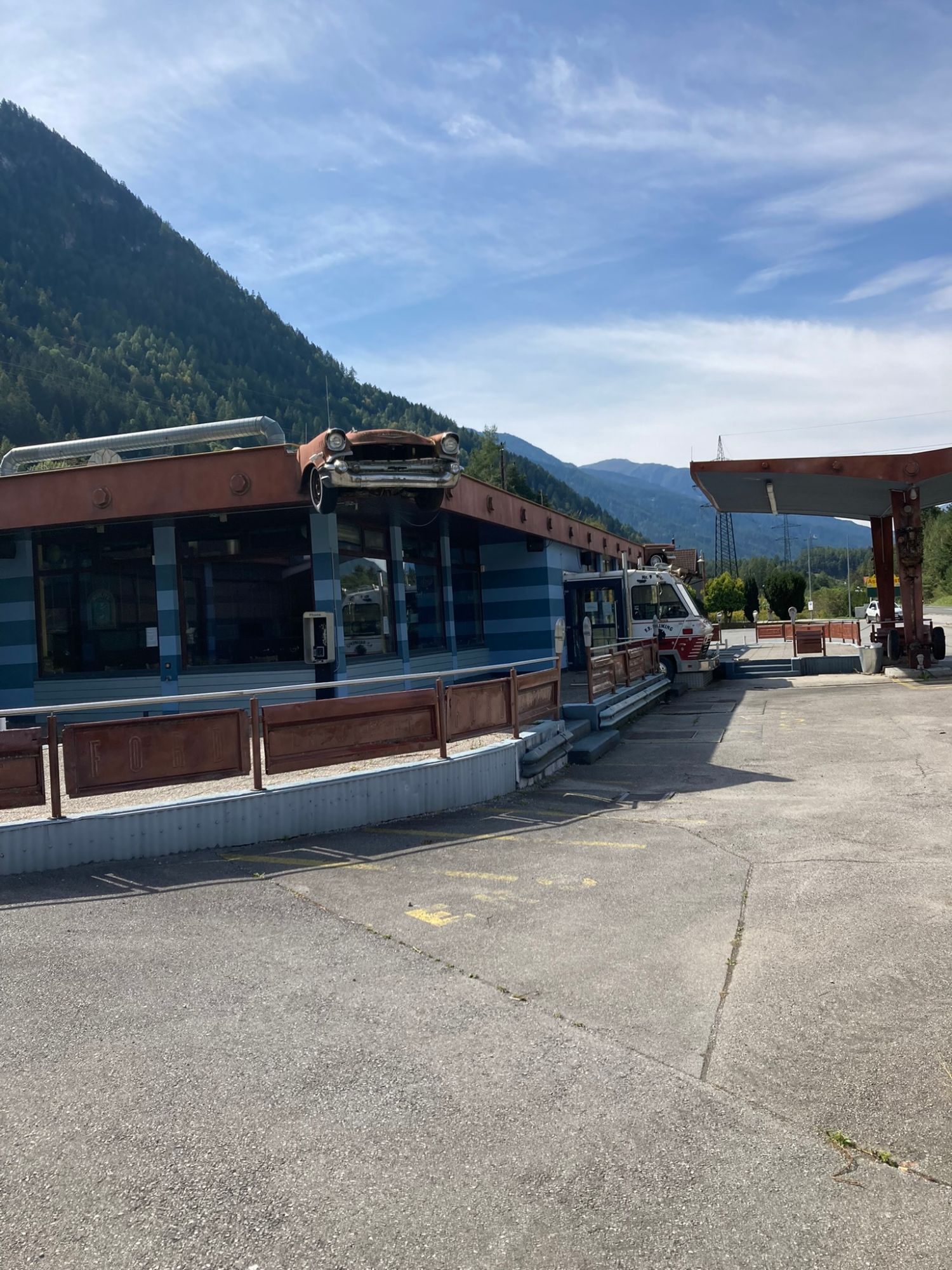
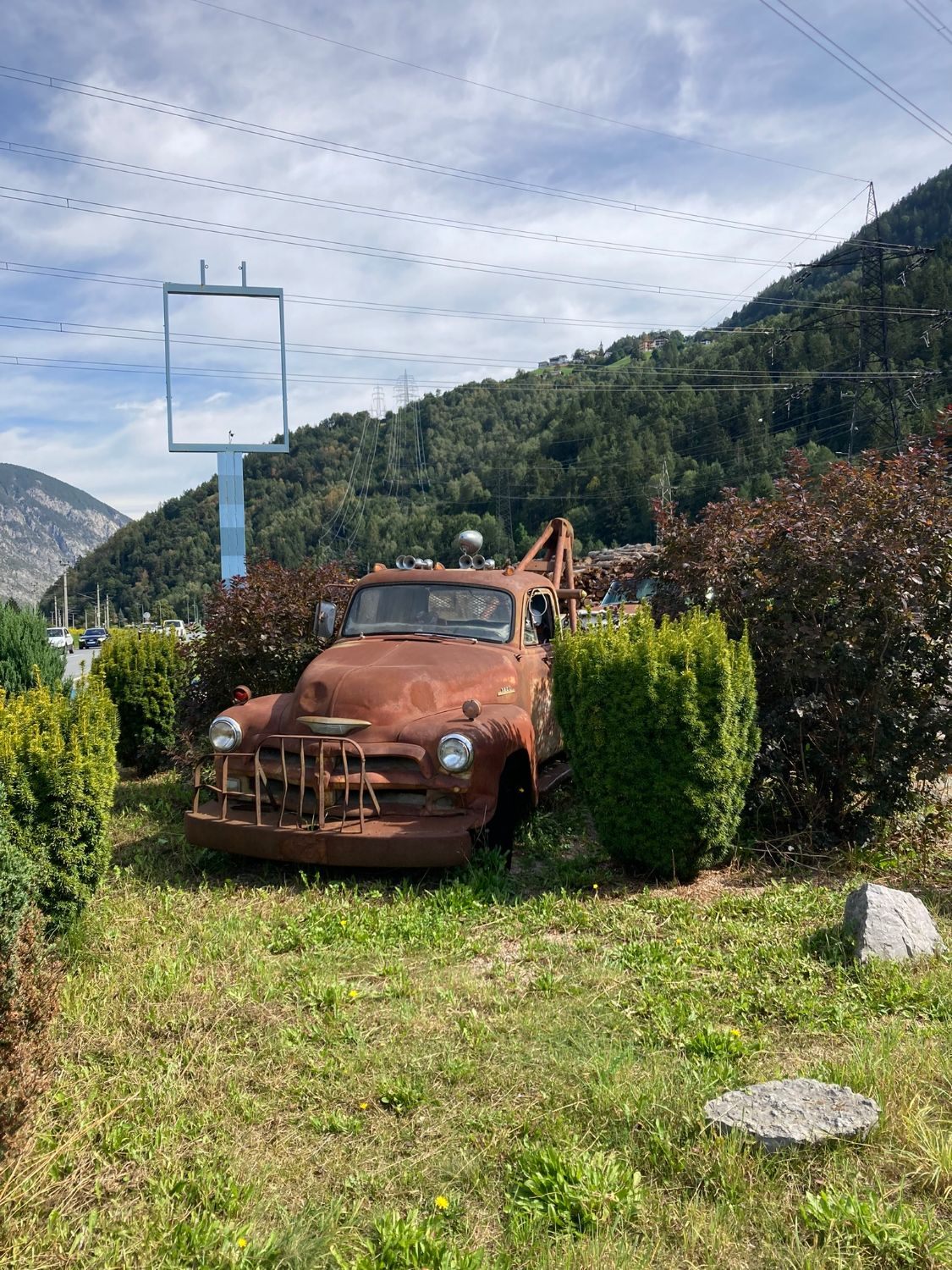
Further on we passed what looked like an old American-style roadside diner, with a rusty old truck parked in the bushes out front. It was permanently closed – a shame, because it looked like it would have been fun.
White-water rafting with Cankick
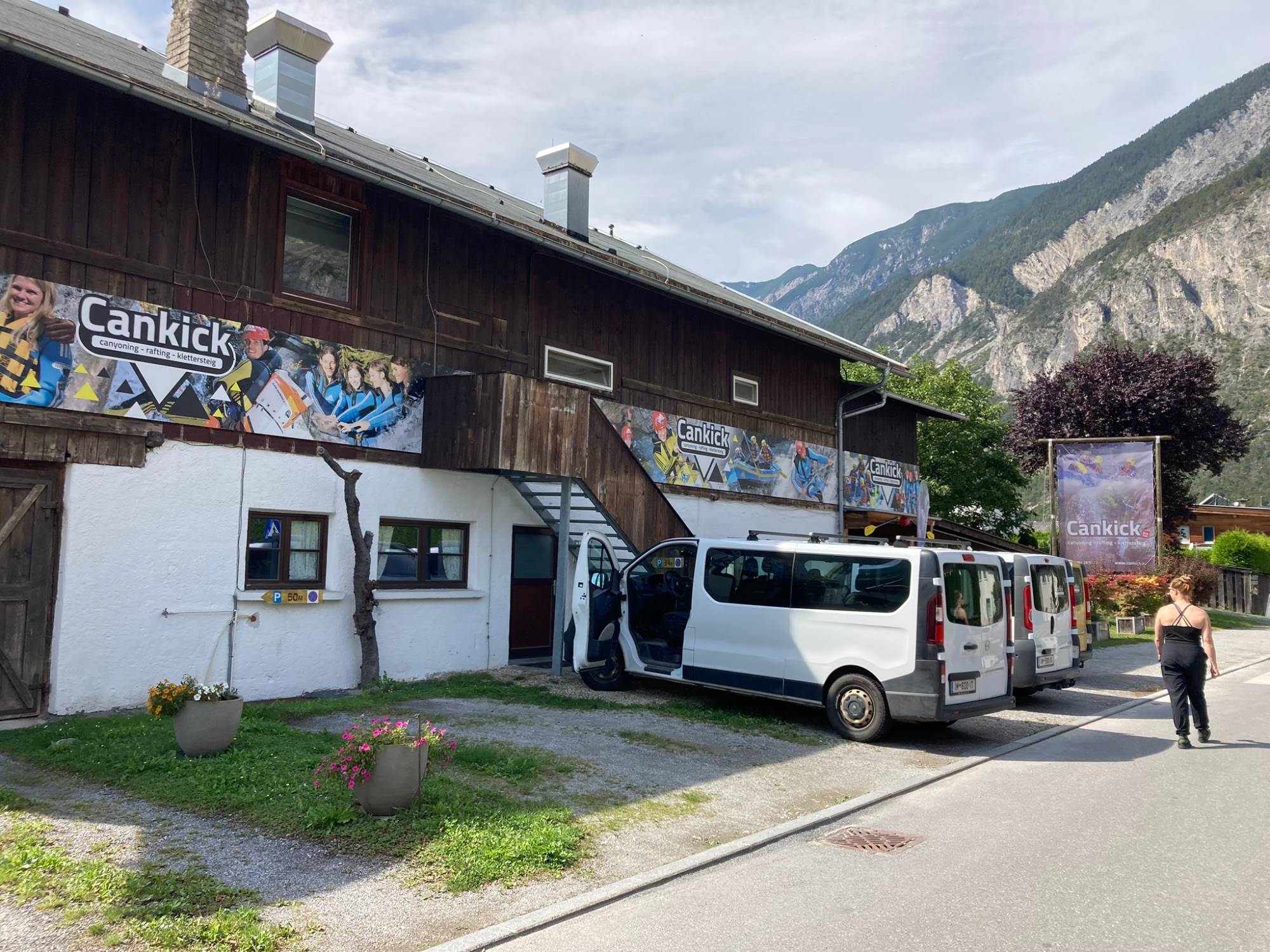
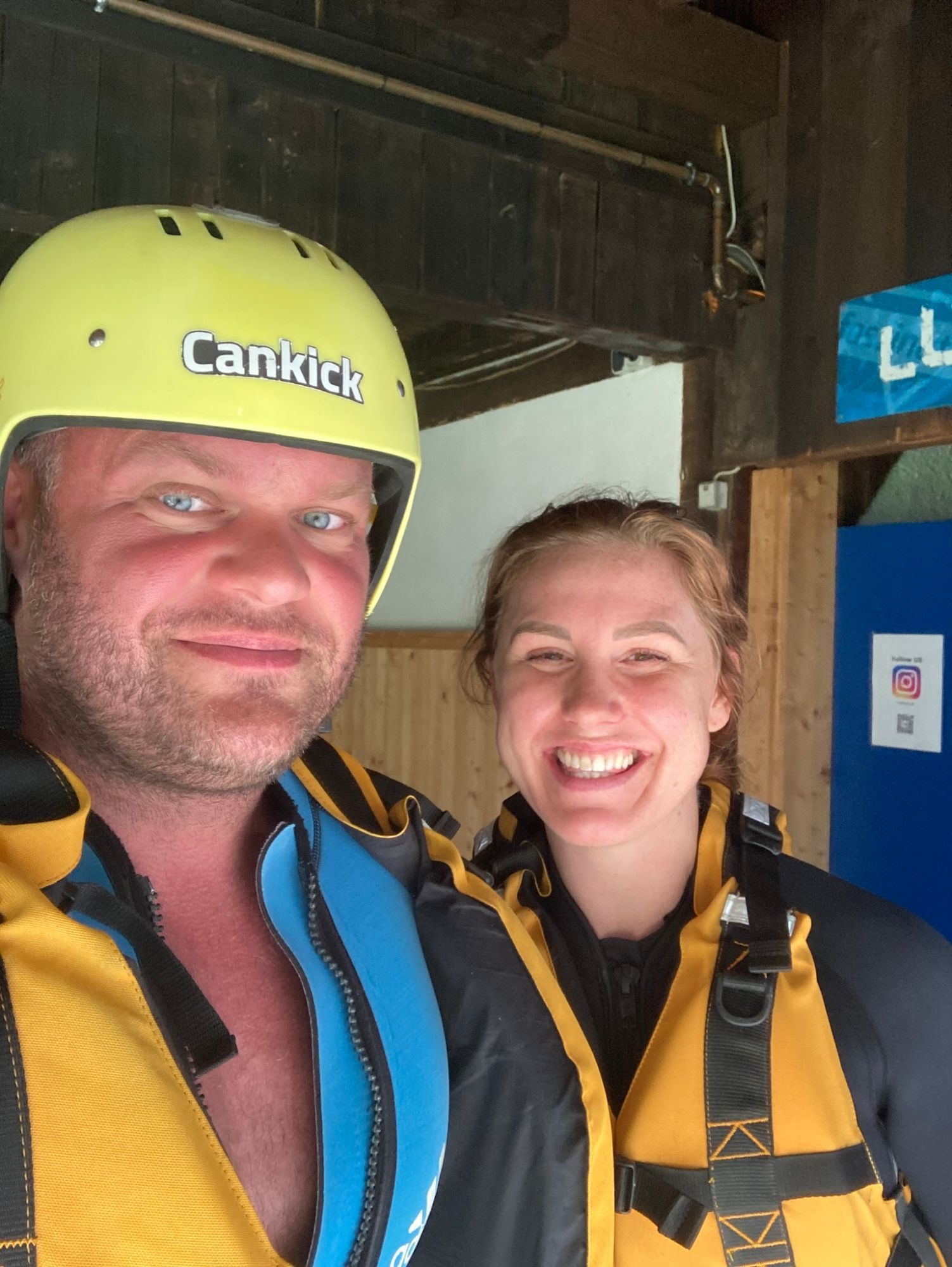
Our first real stop was Cankick, an outdoor centre in Haiming in the Inn valley. We'd found the trip online and booked it through GetYourGuide – we remember paying around 516 DKK each, but that was 2024, so check the current price. At the centre we were given wetsuits, life jackets and helmets, and were then driven to the river for the trip down the Inn through the Imster Schlucht gorge.
We shared the raft with a few other people and a guide. This wasn't a passive boat ride: we paddled, worked with the current and followed the guide's commands through the rapids. At one point on our trip we were even allowed out of the raft to float and swim with the current, under the guide's instructions – which added a whole new dimension.
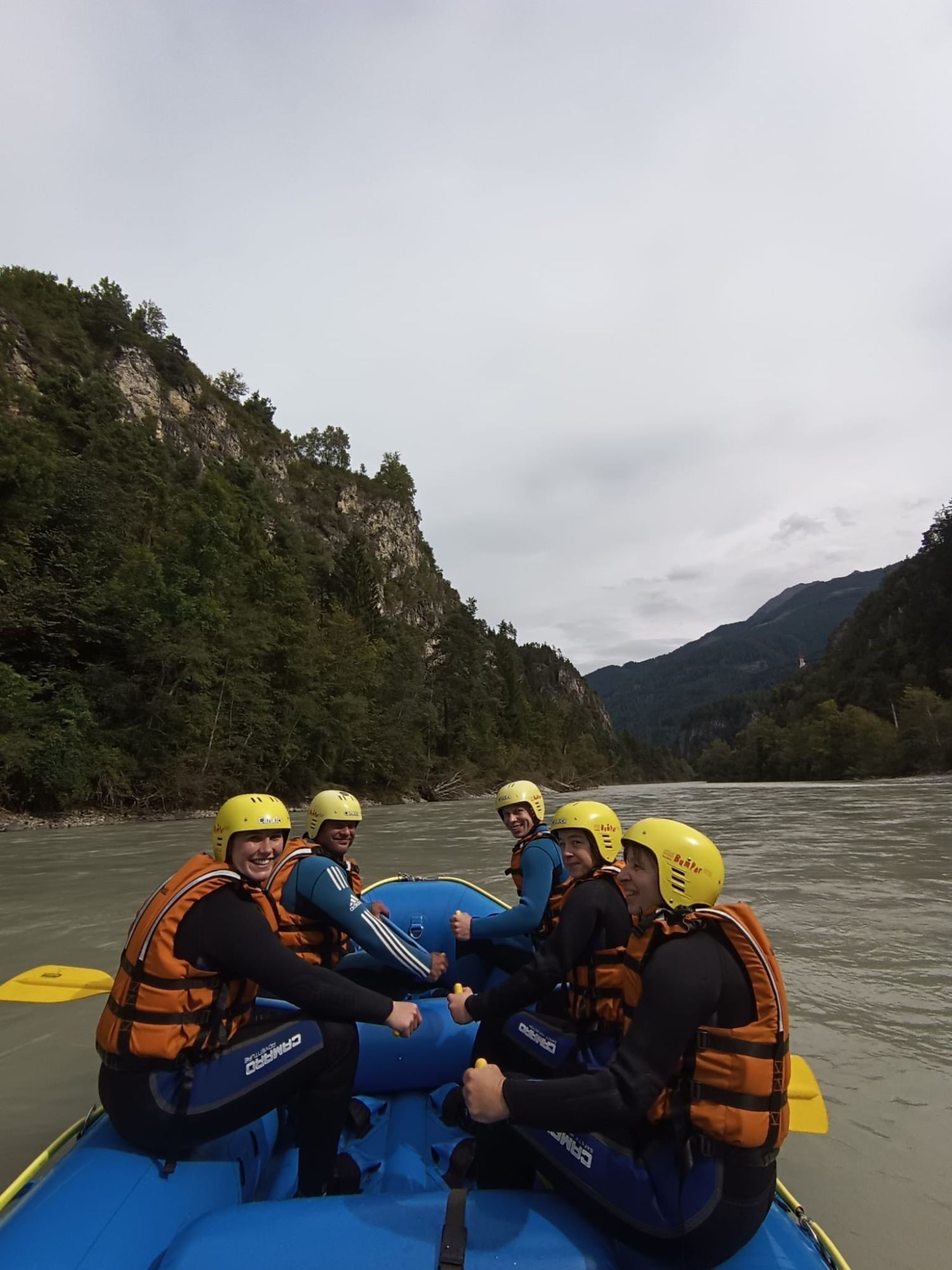
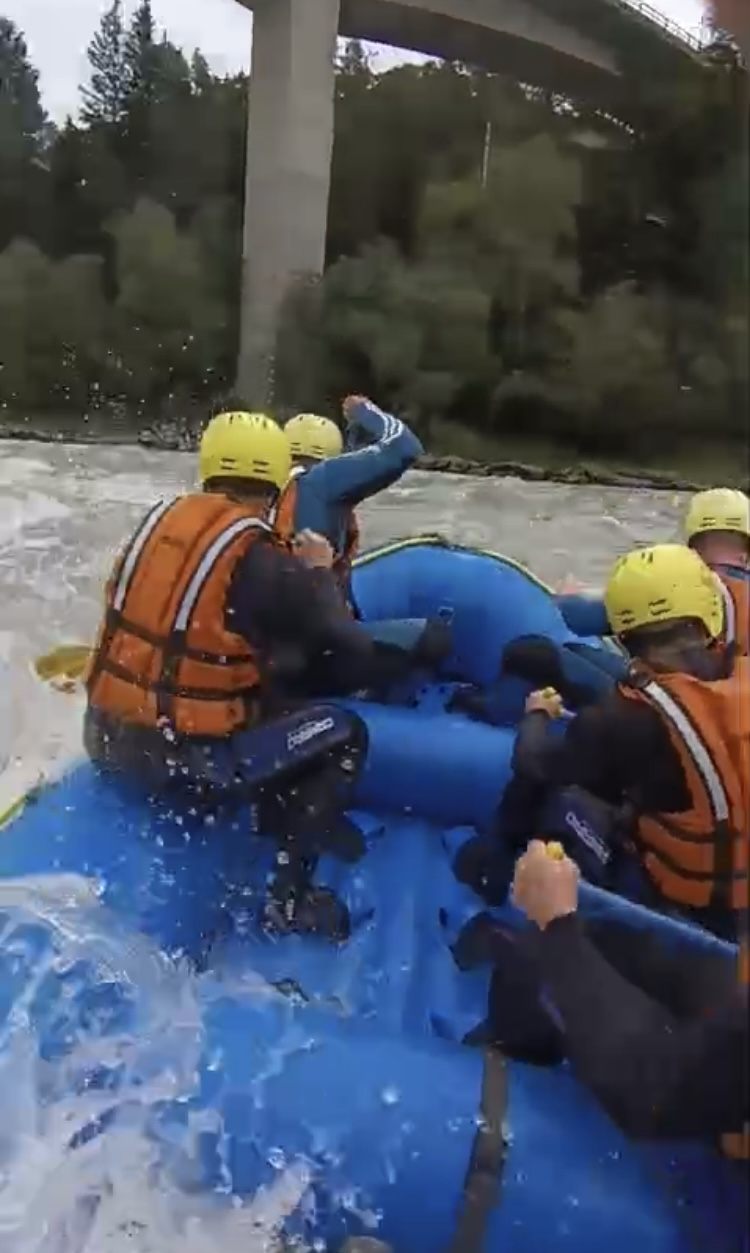
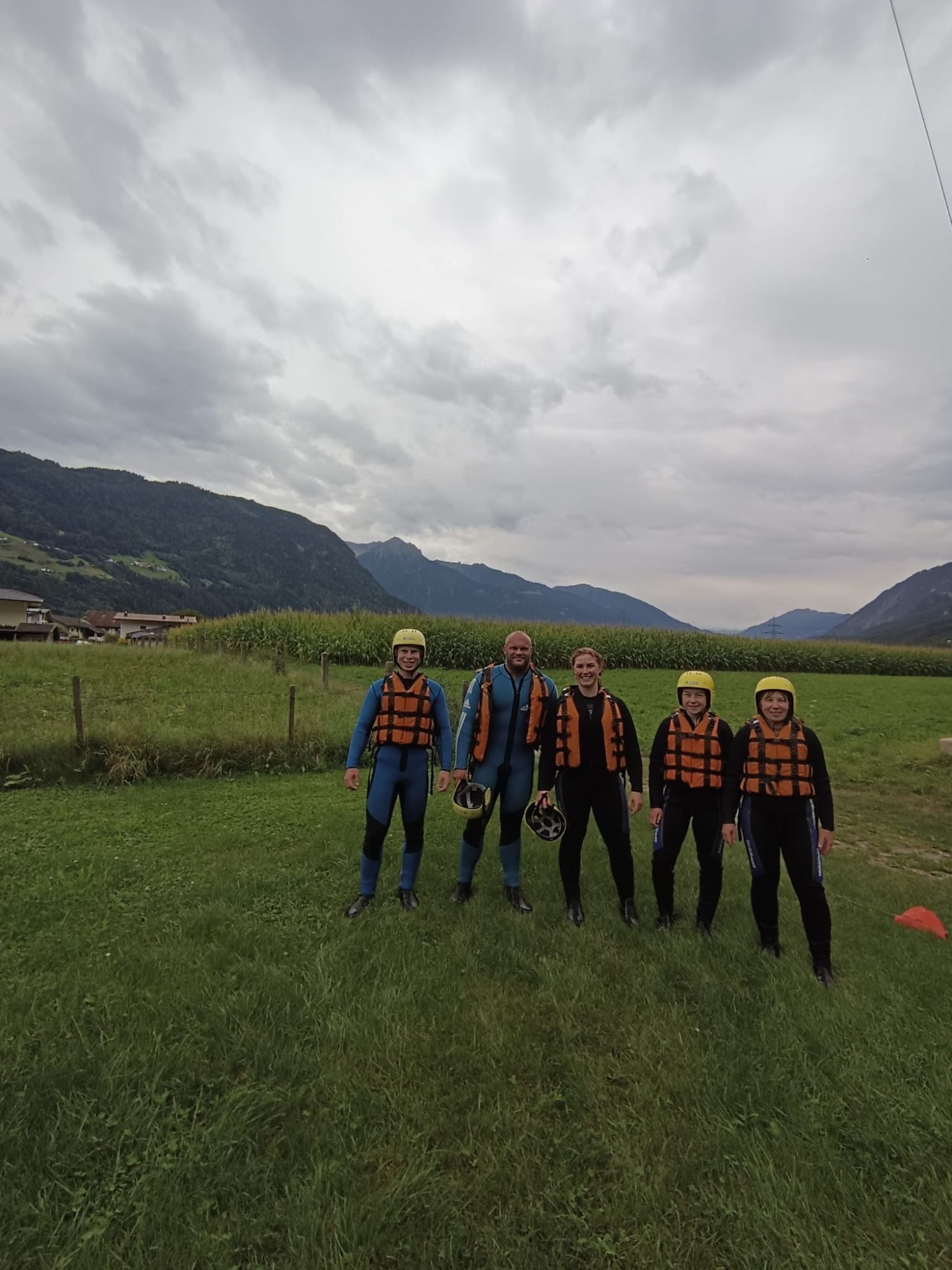
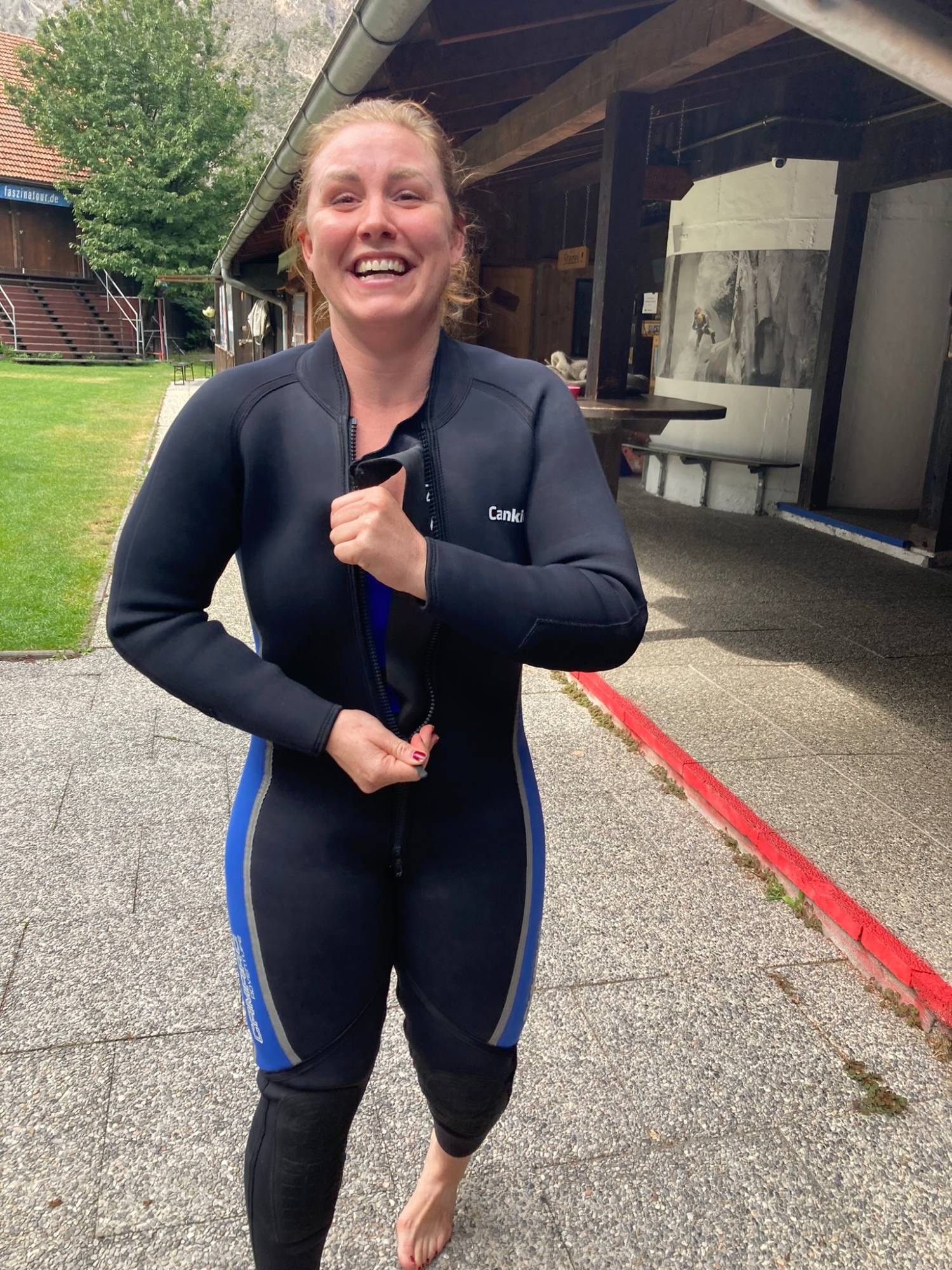
We had a great time. The whole thing took about three hours as we remember it, including kitting up and transfers. You don't need to be an athlete – normal fitness felt fine for us – but check the operator's requirements for age, health and swimming before you book. Would we travel to Austria just for rafting? Probably not. But if you're in the area or driving past, it's a brilliant way to break up a day on the road.
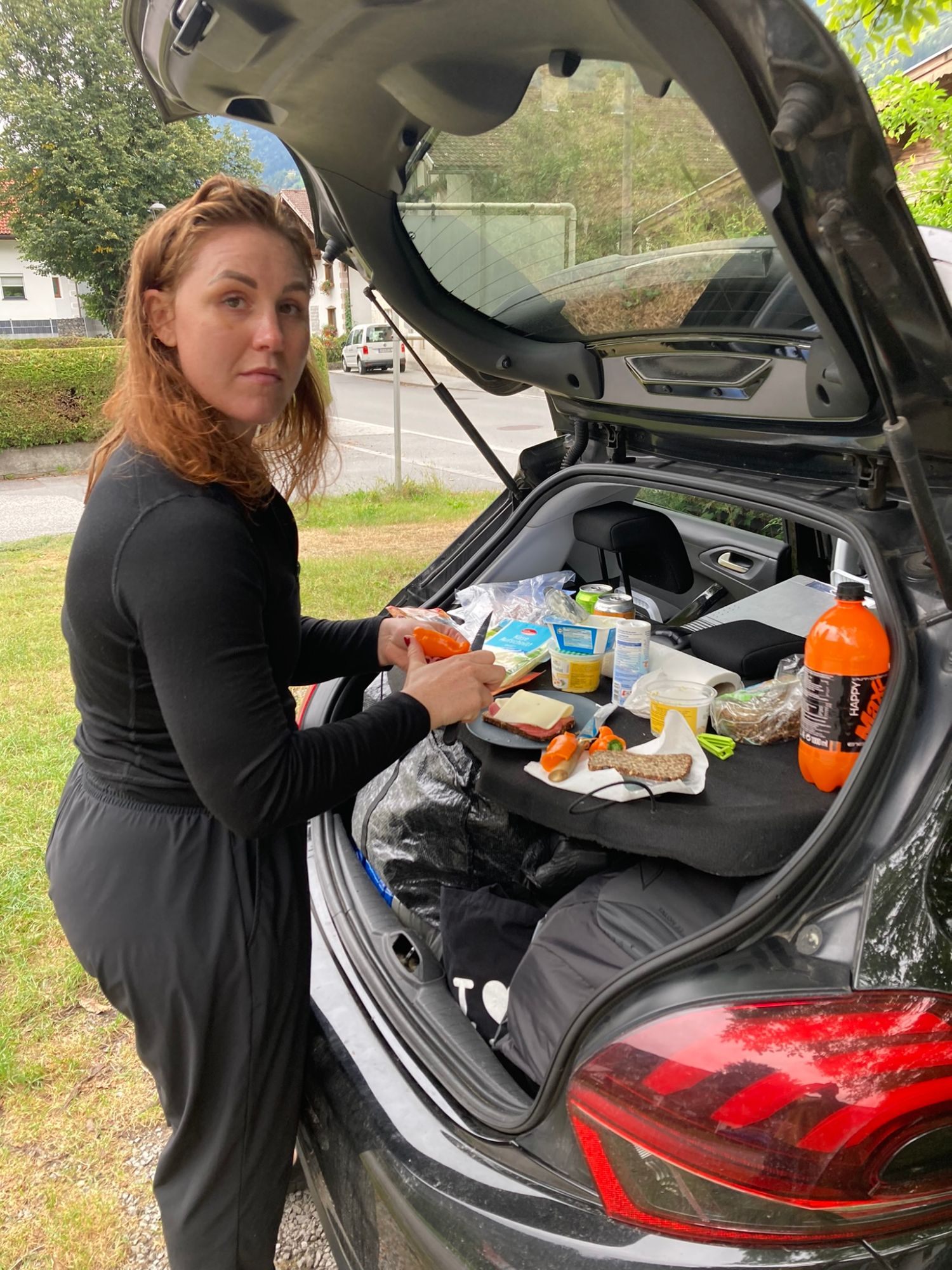
Afterwards we made lunch from the boot in the car park, as we did so often on this trip. Cheap, quick and no need to hunt for a restaurant.
Highline179 – and my fear of heights
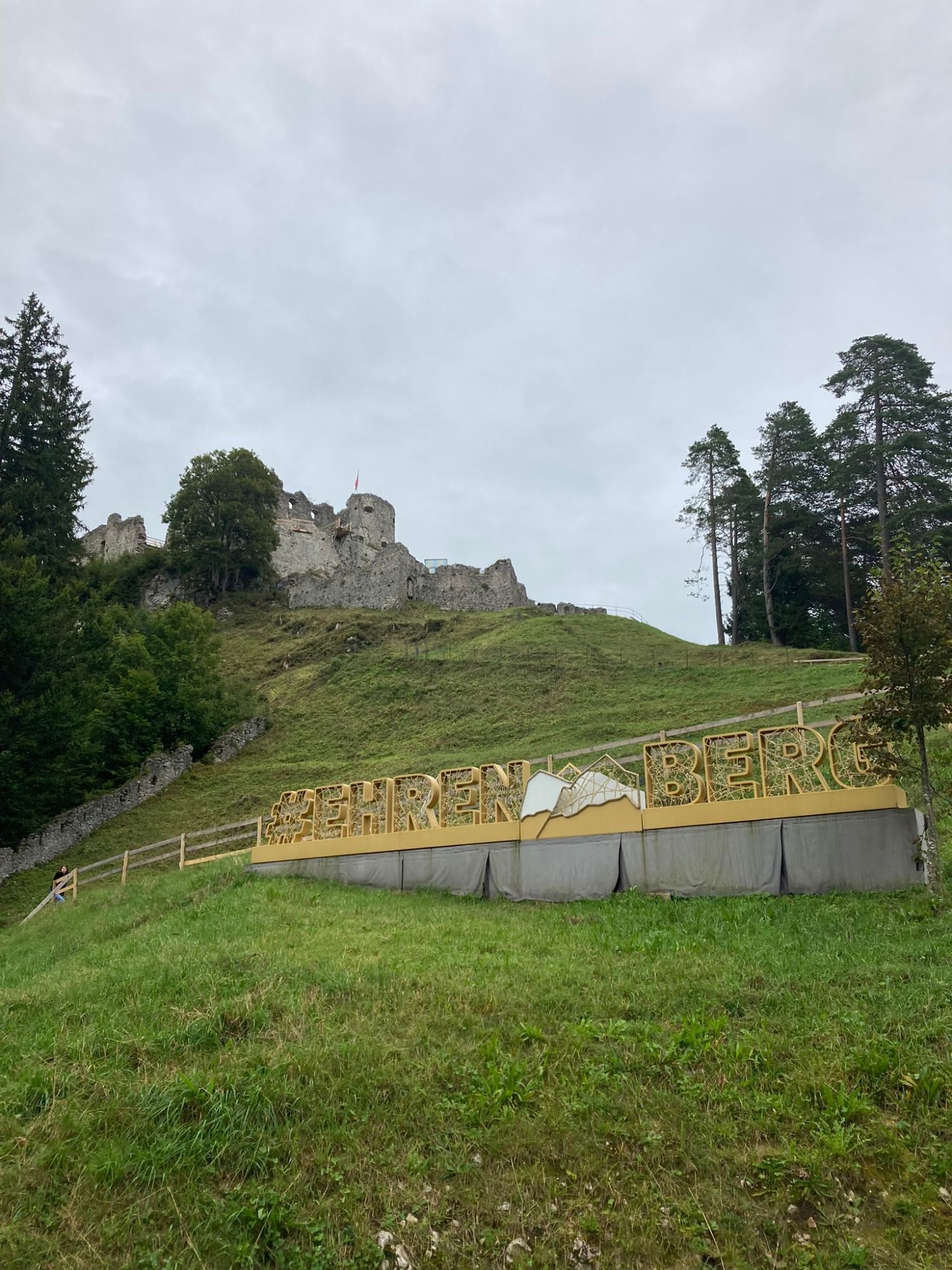
Around 6pm we reached Highline179 near Reutte. It's a Tibetan-style pedestrian suspension bridge, 406 metres long and 114.6 metres above the ground, slung between the ruins of Ehrenberg Castle and Fort Claudia across the valley. There's a walk up from the car park before you reach the bridge itself. We paid around €10 each, as we remember it.
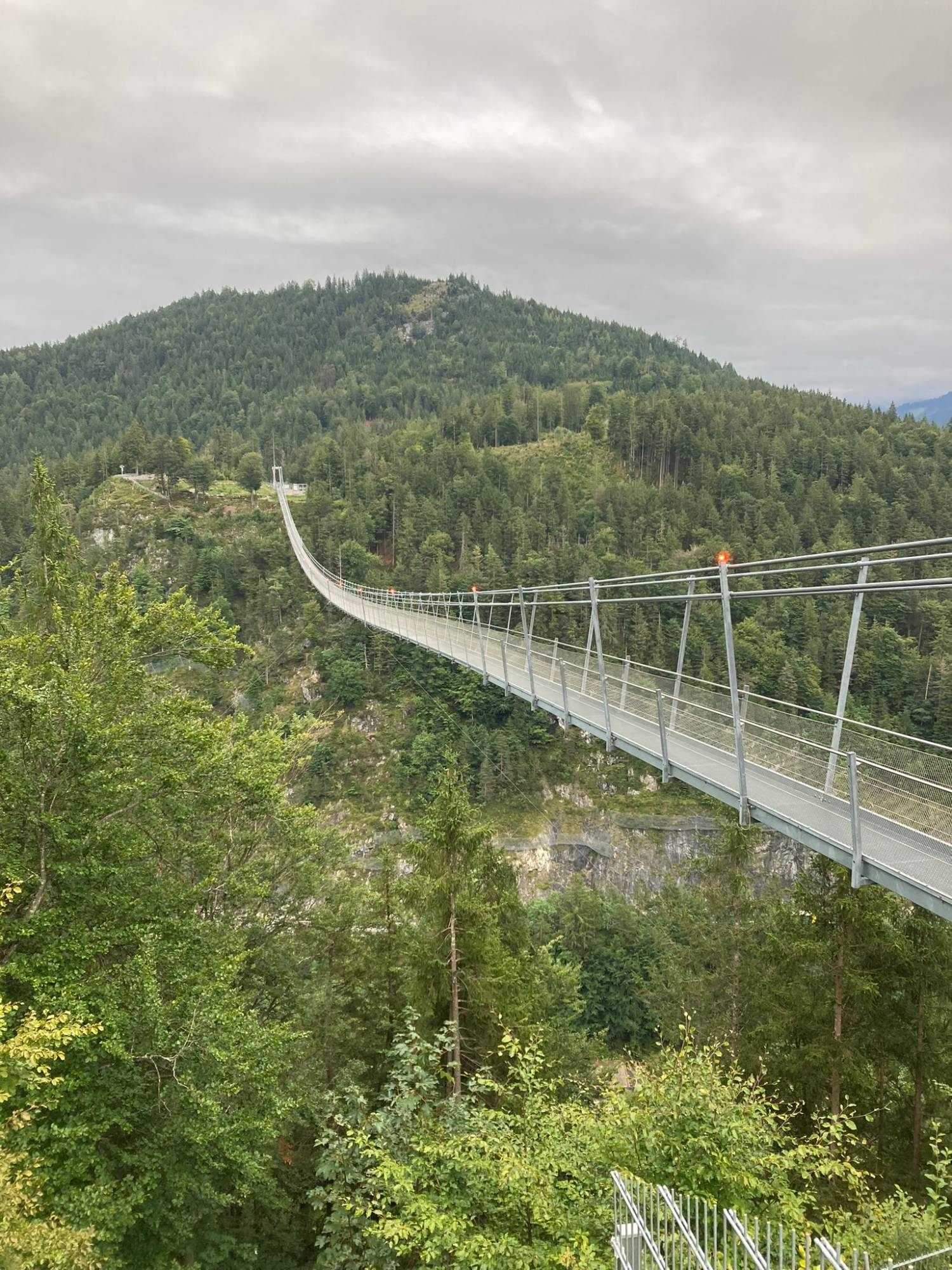
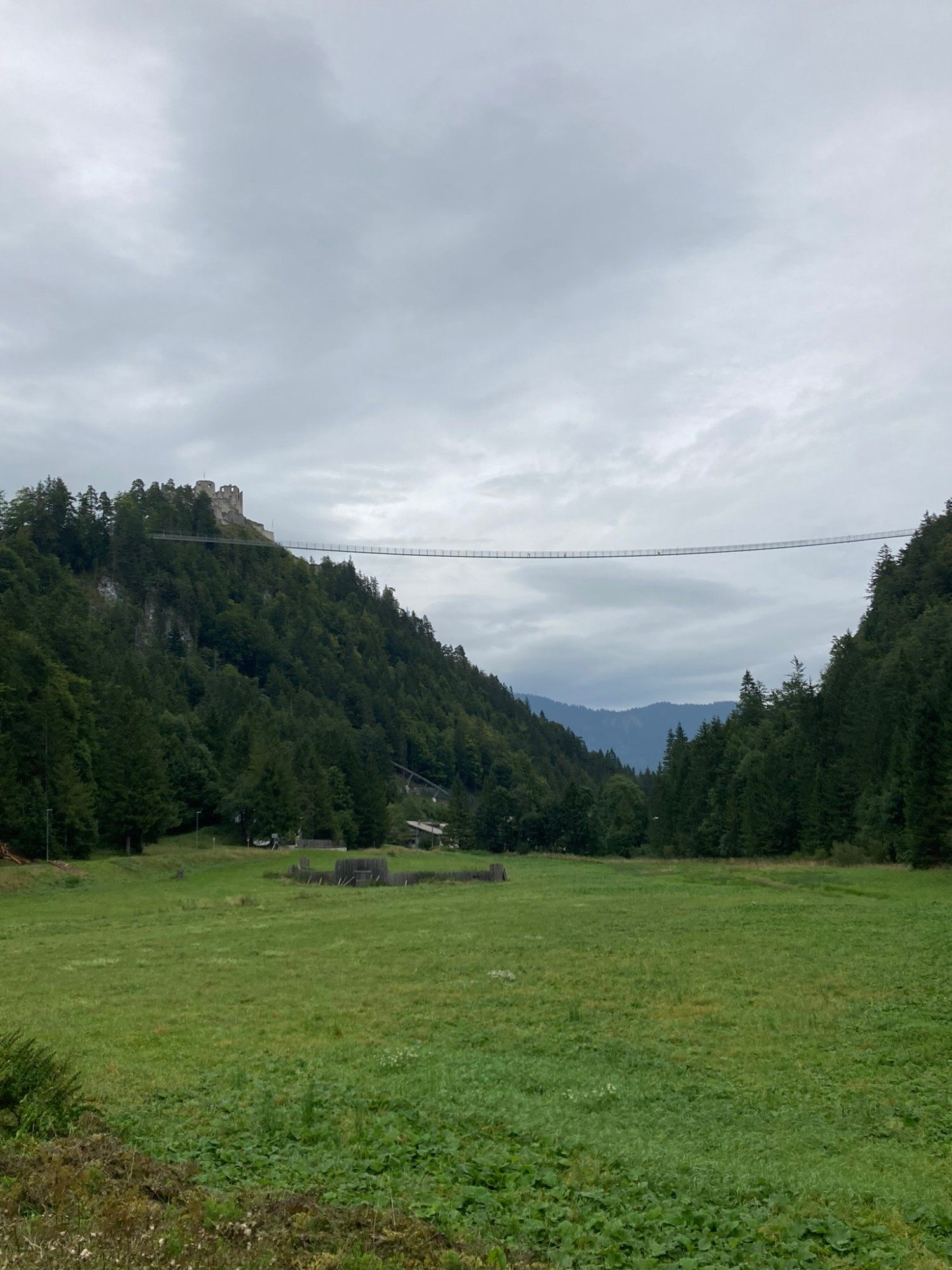
This is where my fear of heights caught up with me. After Gerlach, I almost thought I'd left it behind. On the mountain I had to concentrate on every hand and foothold – there was no room to let my thoughts run away. On the bridge it was the opposite. I knew perfectly well it was built to be safe, but with an open steel grating under my feet and the valley more than 100 metres below, I had all the time in the world to think about the height and look down. I nearly ran across. I just wanted to be on the other side.
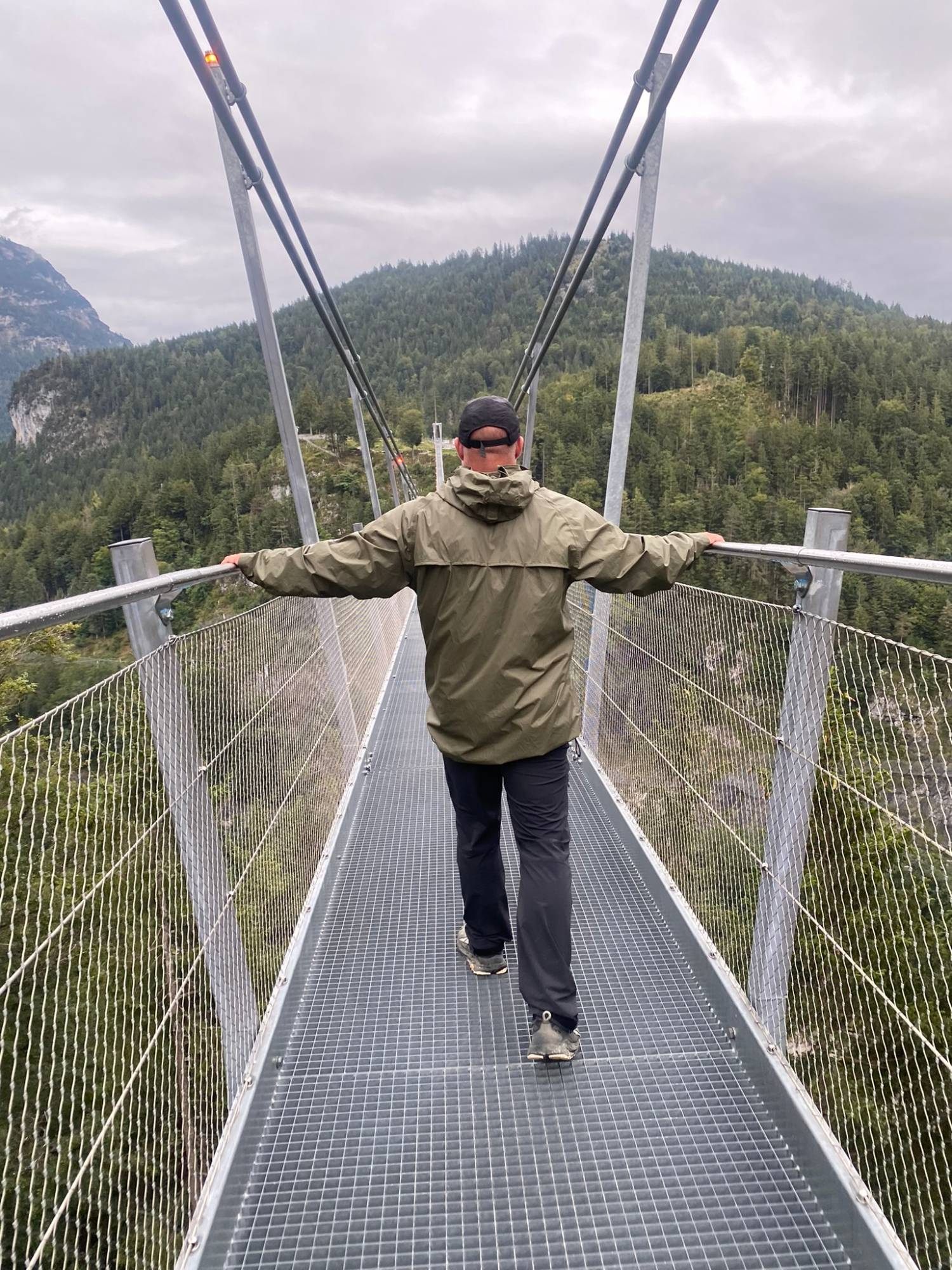
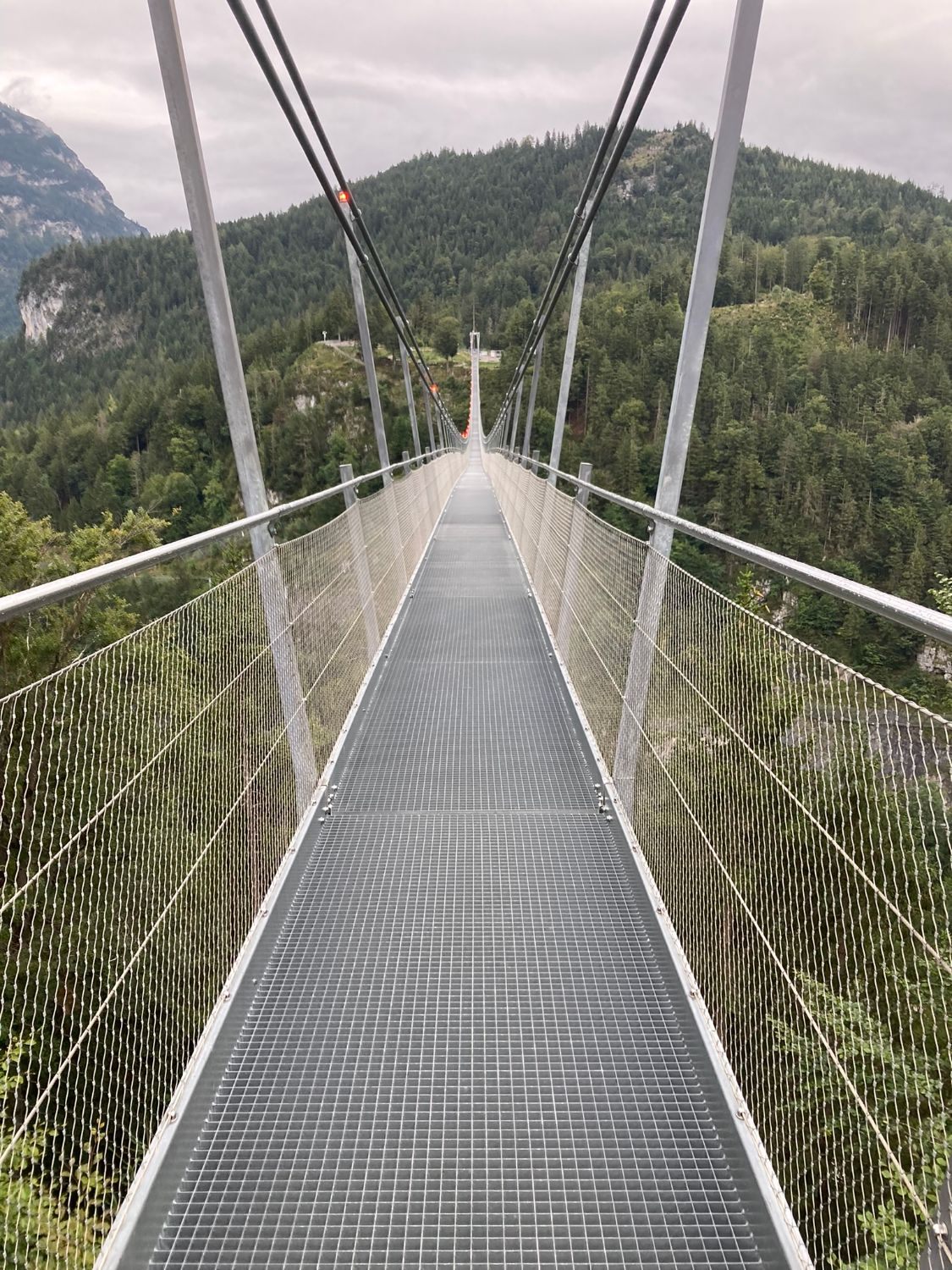
Kristine was a different story. She strolled across, enjoying the view and filming down through the grating into the valley. On that bridge, she was clearly the hardcore one.
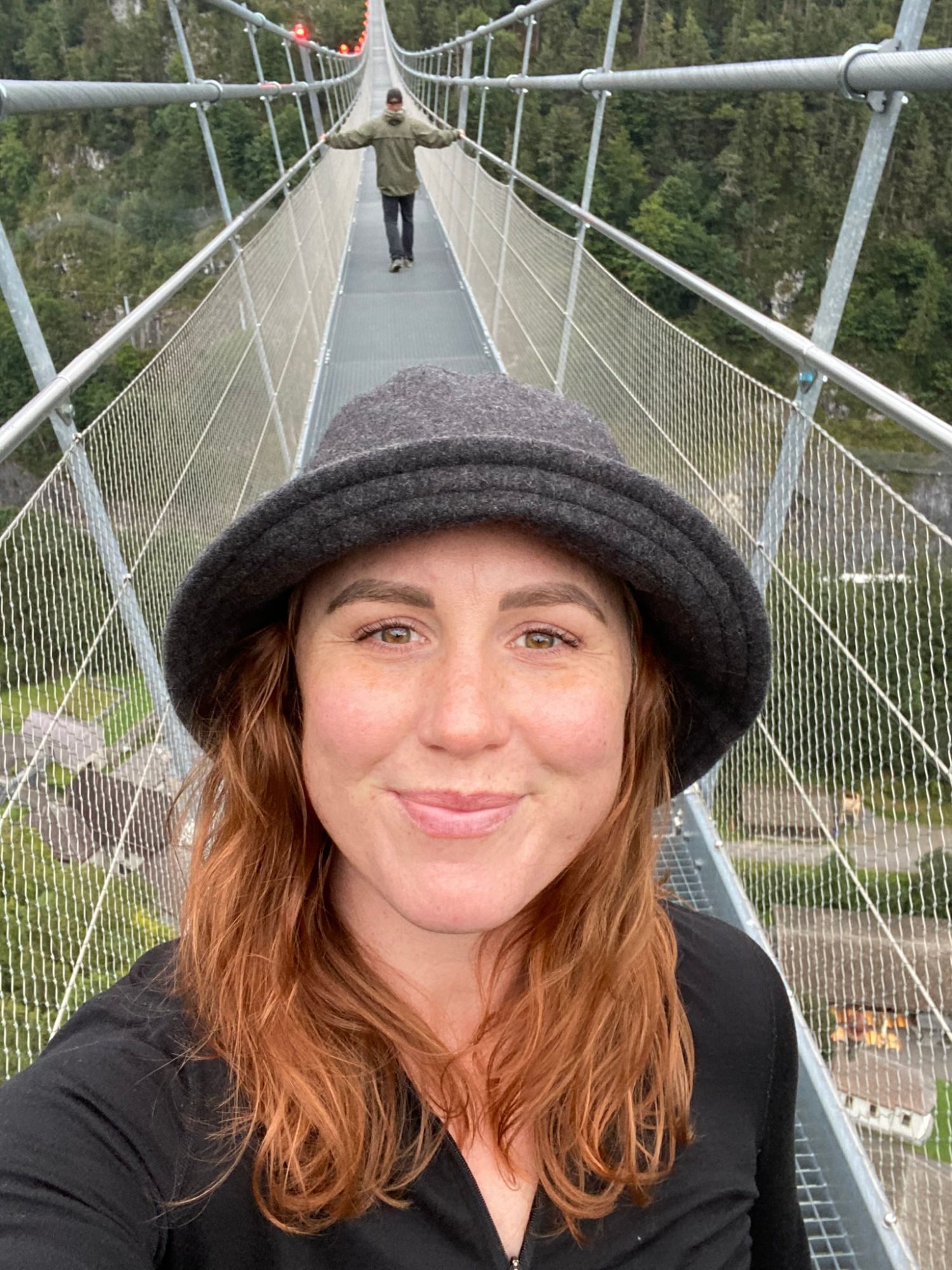
Was it worth the money? Yes. It's an unusual experience in a dramatic setting between two old fortifications. In December 2014 it was awarded a Guinness World Record as the longest Tibetan-style pedestrian suspension bridge – longer bridges have been built since, so it no longer holds the title.
Source: Highline179 – the bridge. Check current prices and opening times there.
A quick photo stop at Neuschwanstein
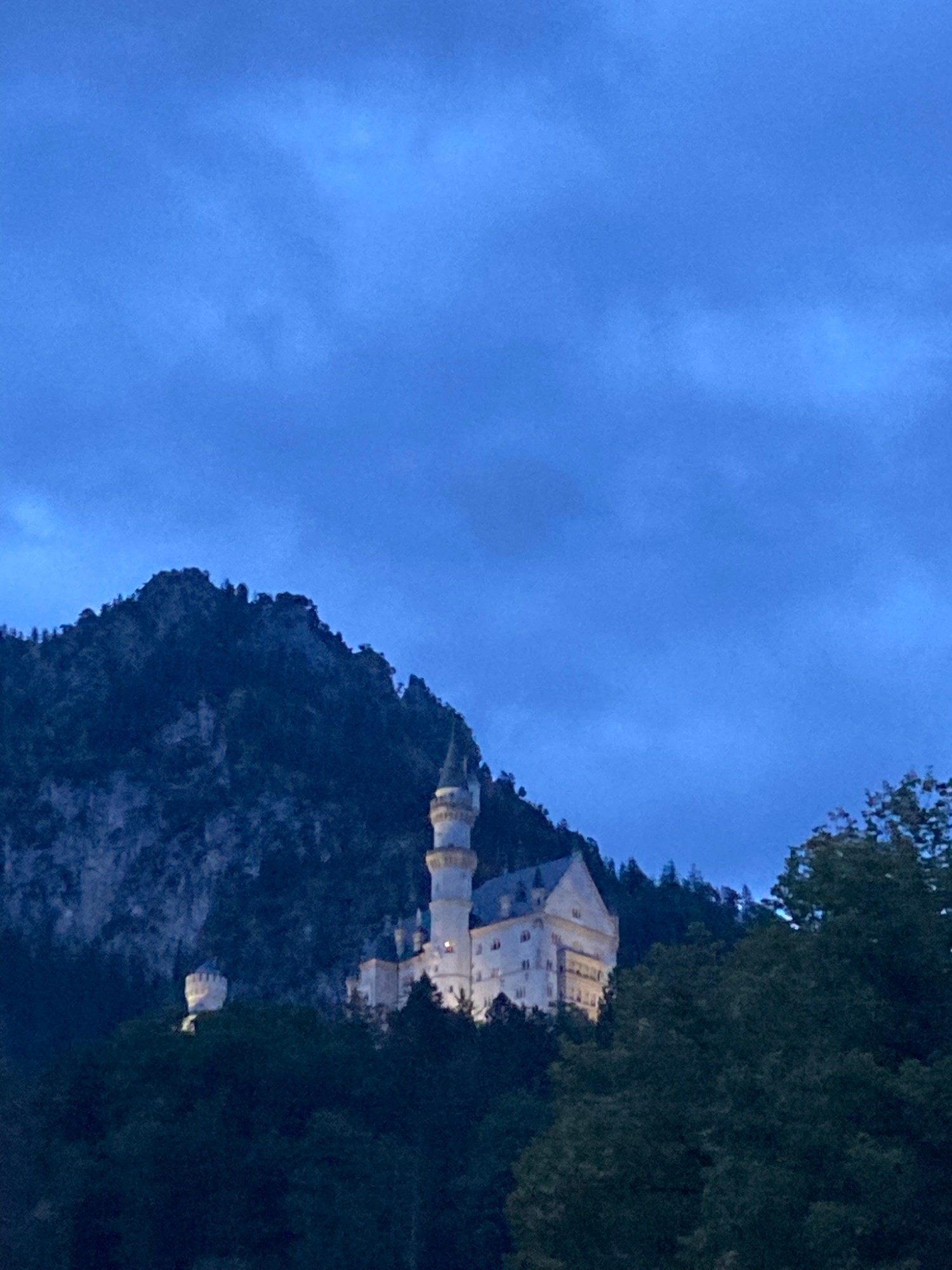
Heading north we passed Neuschwanstein Castle and stopped briefly to photograph it from below, floodlit against the evening sky. We didn't go inside. (We came back to this corner of Bavaria in May 2026 – see our Lechfeld-Cup story.)
Roadworks, detours and the long drive to Rothenburg
On the map the drive to Rothenburg ob der Tauber looked manageable – about two and a half hours, as we remember it. In reality there were roadworks and detour after detour, and the satnav sent us through small towns and back roads. It took us around four and a quarter hours. That's a lesson for anyone planning a similar trip: distance and normal driving time don't always tell the whole story, so check the roads before you set off. It was a long day – not because of one big hike, but because of everything in between.
We finally reached Hotel Rothenburger Hof, tired, and ready for the last stop of the trip.
12 September – Rothenburg ob der Tauber, and the long drive home
A medieval town that felt real rather than staged – and the perfect last walk of the trip.
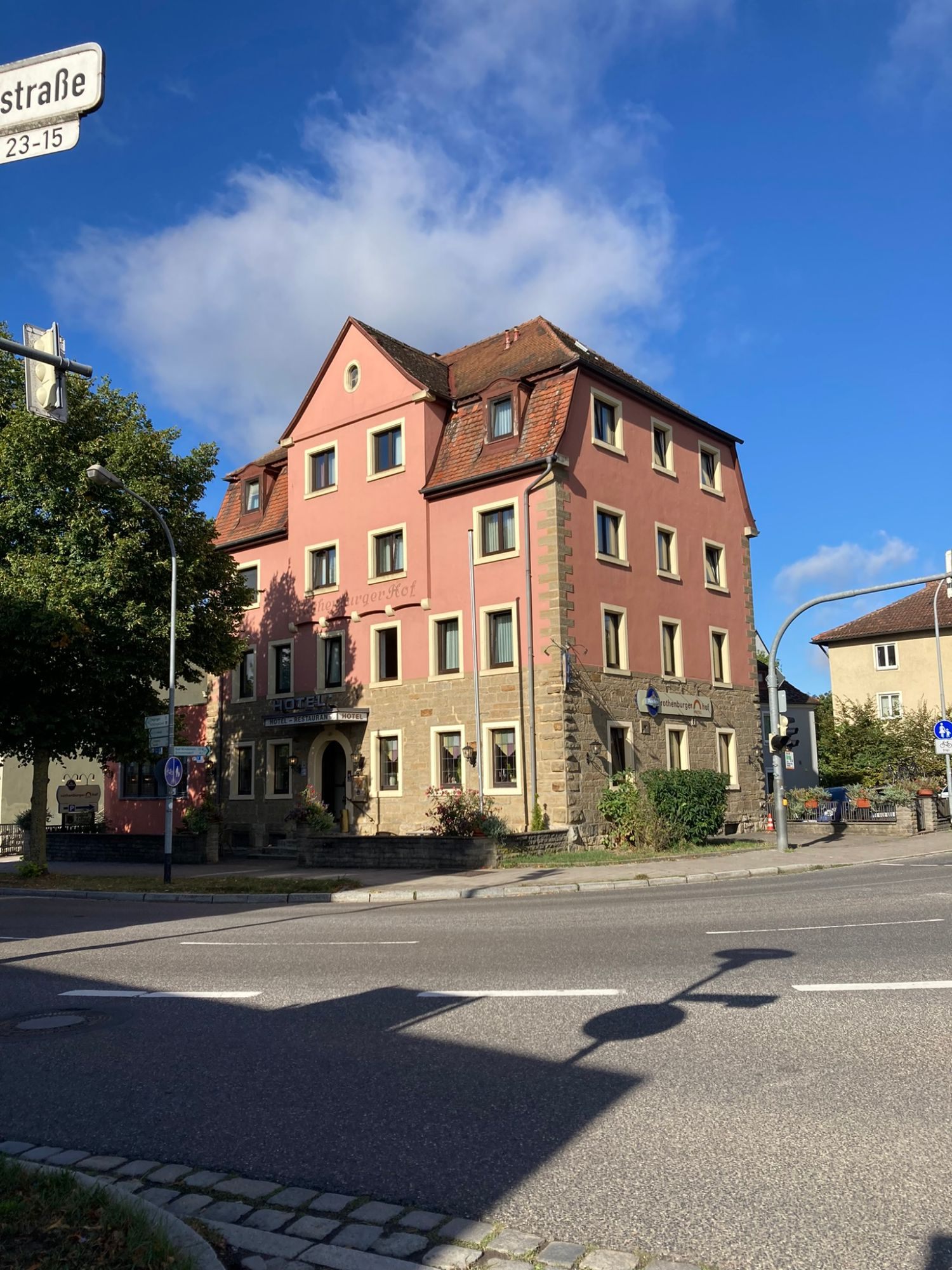
After the long drive from Austria we'd spent the night at Hotel Rothenburger Hof, a simple, fairly cheap hotel by the station, a short walk from the old town. We had free parking at the hotel. We were very glad we'd chosen to sleep here rather than just drive past – Rothenburg lies conveniently close to the A7, the main motorway between Denmark and the south, which makes it an easy stop on a long drive through Germany.
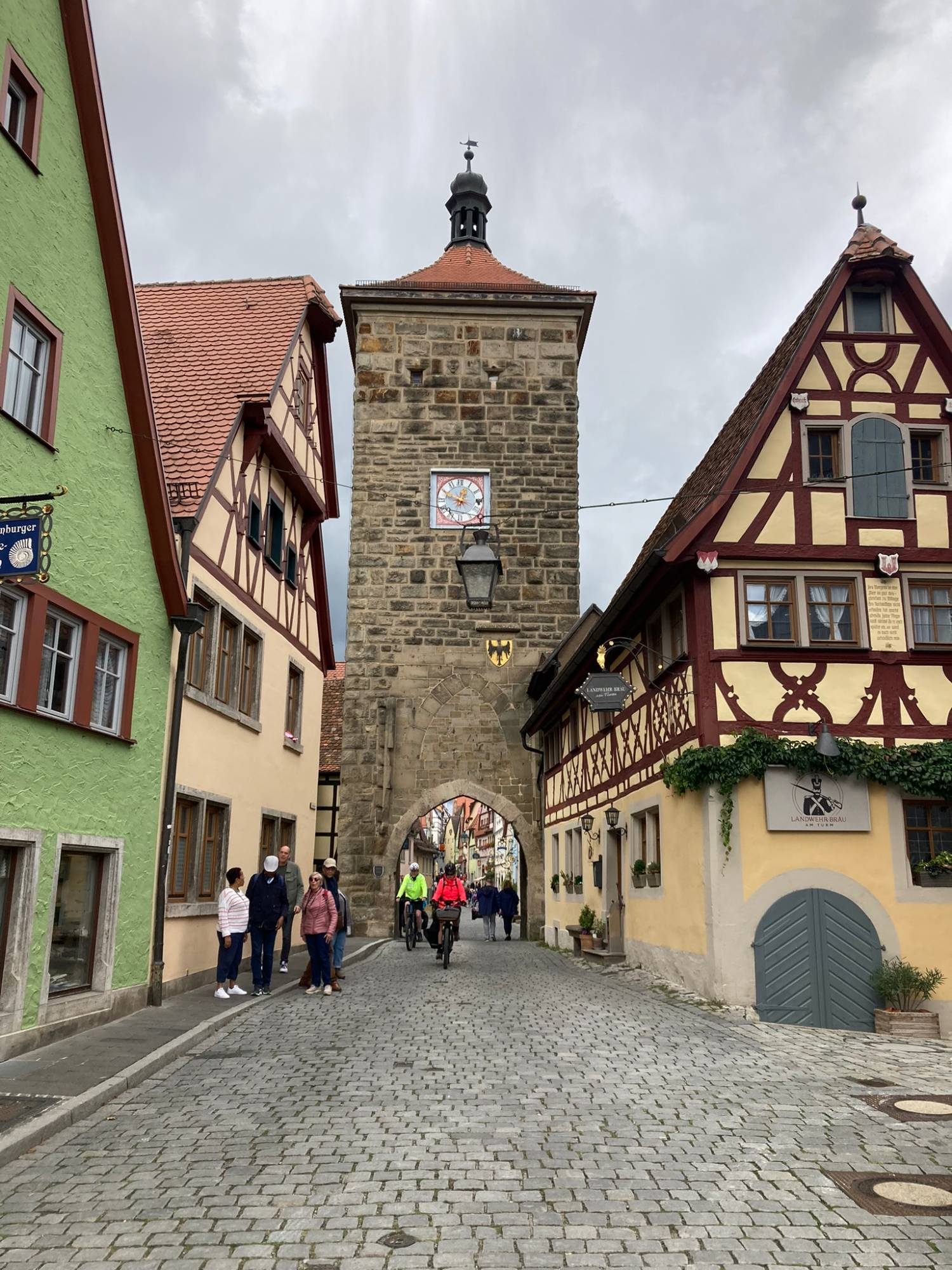
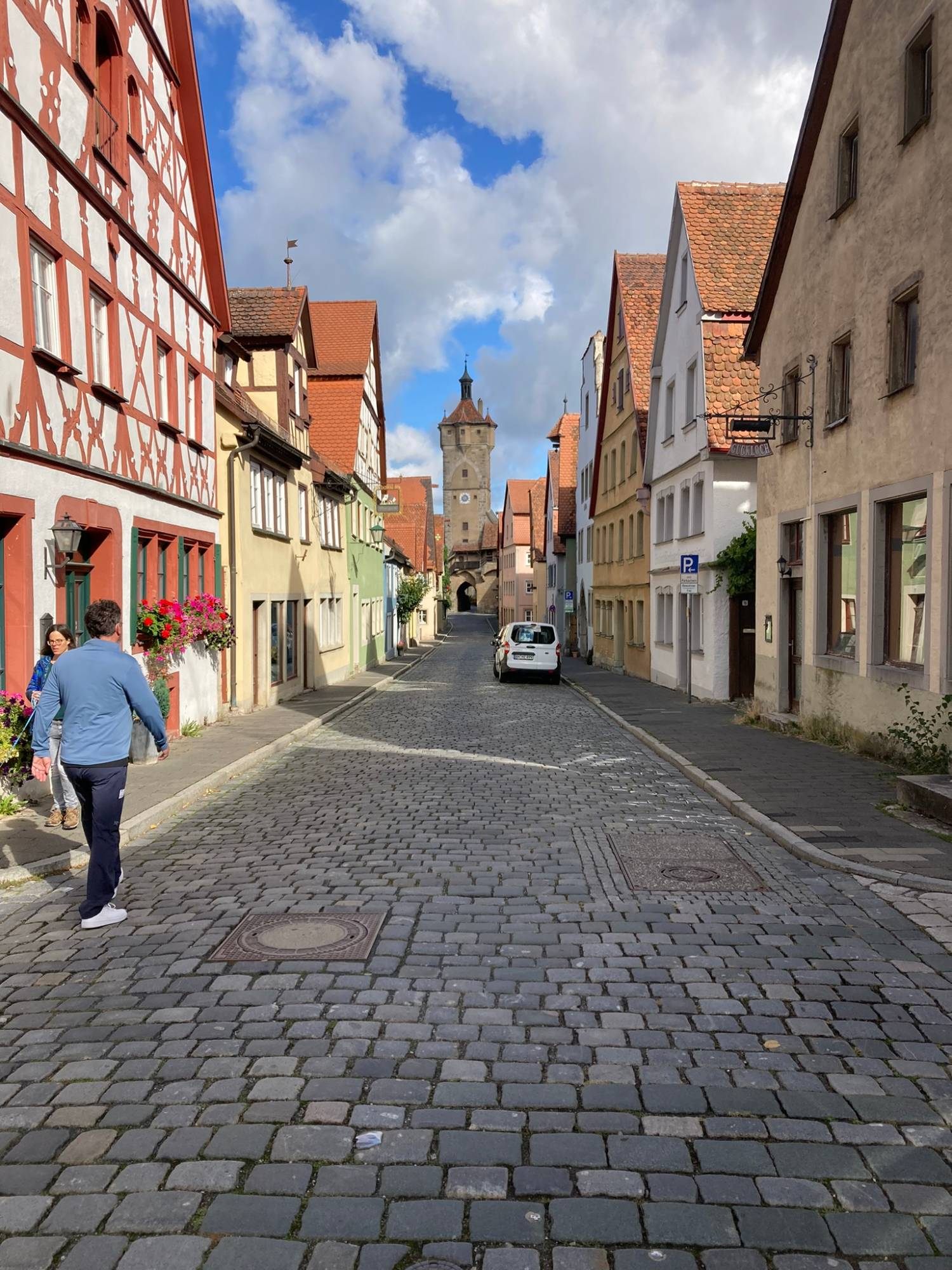
We walked into town around 9–10am and spent a few hours exploring on foot before leaving around 2pm. What struck us most was the atmosphere. Rothenburg feels like a well-preserved historic town where the old streets, the wall and the buildings are still part of everyday life.
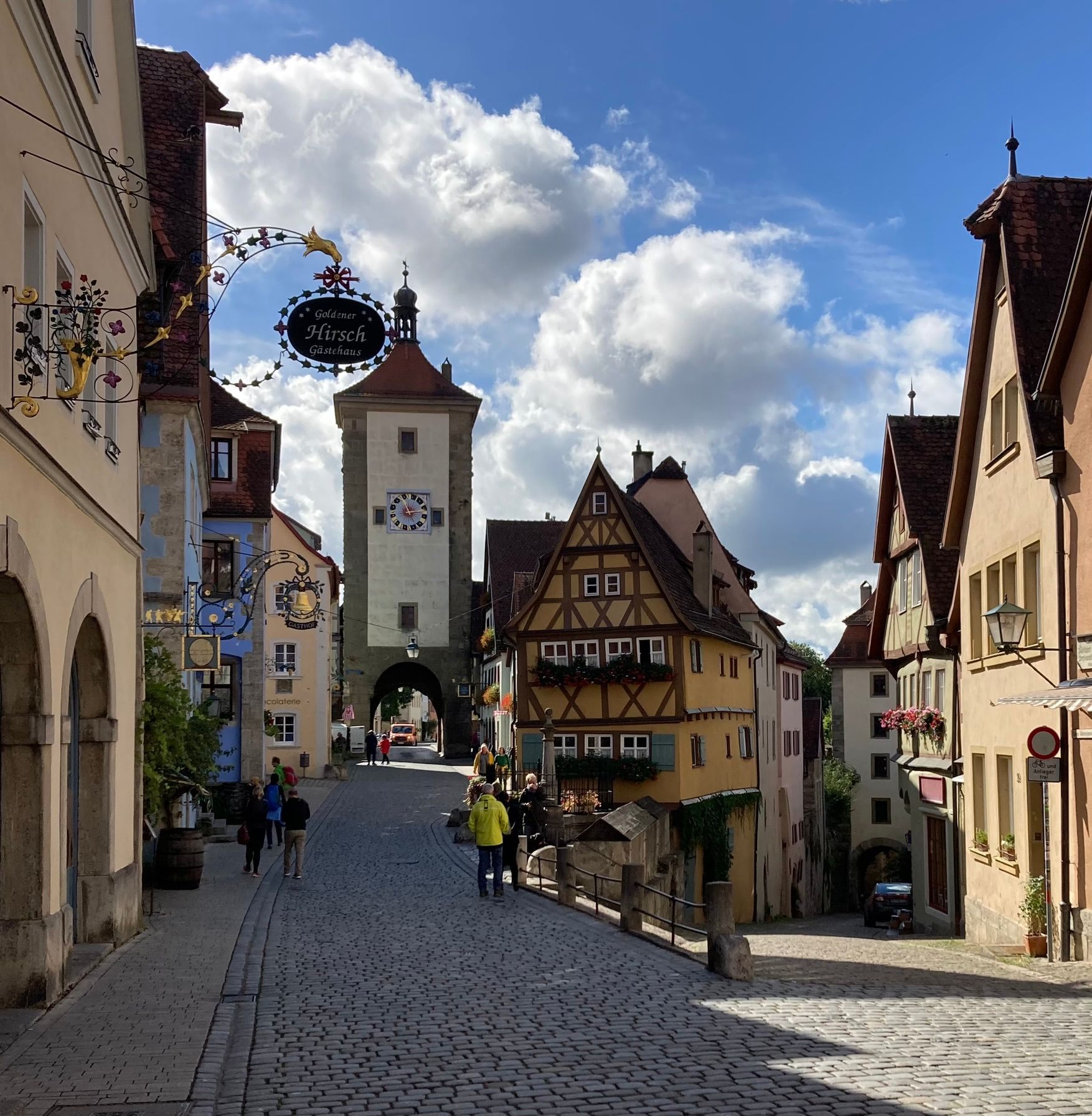
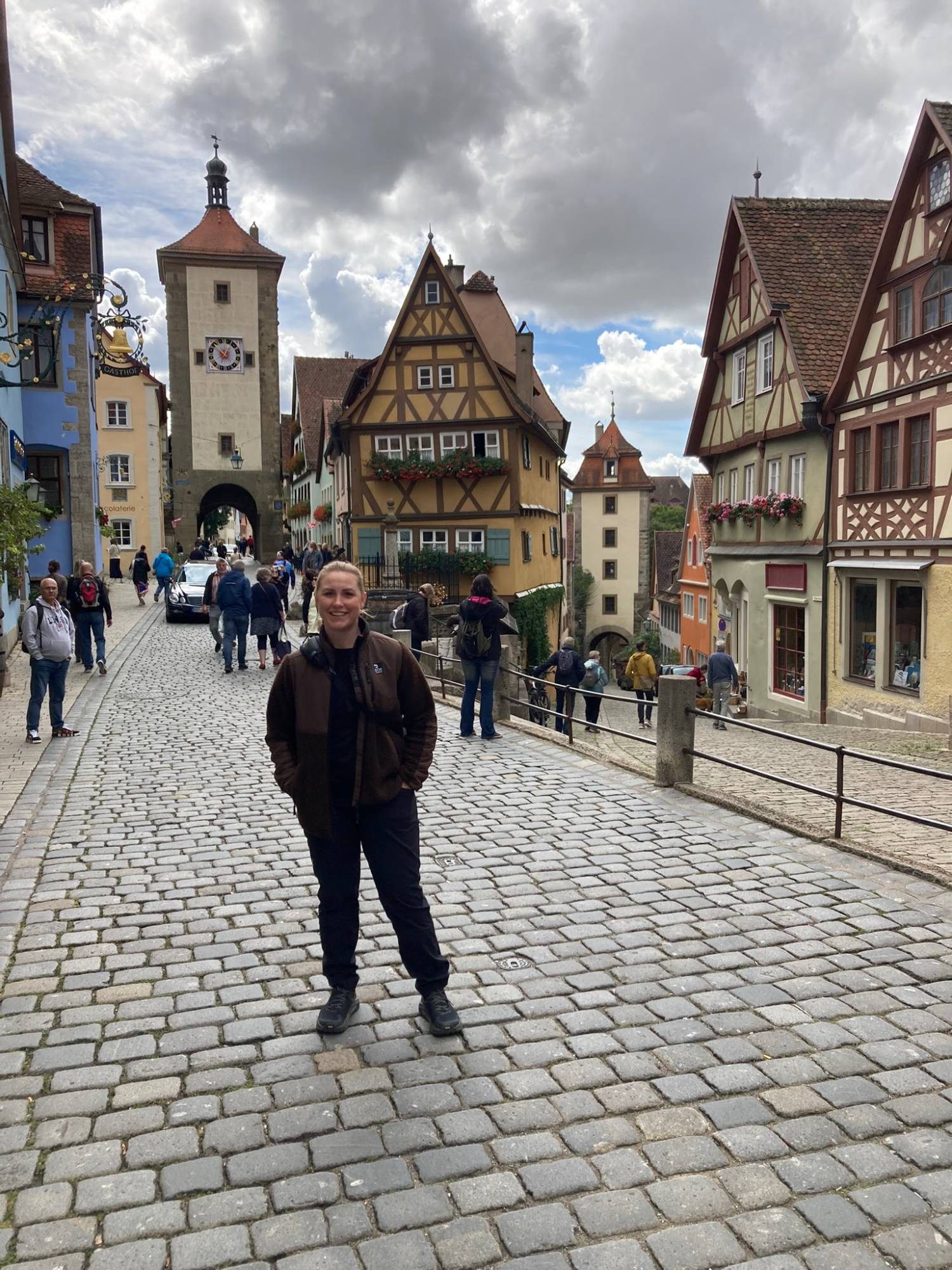
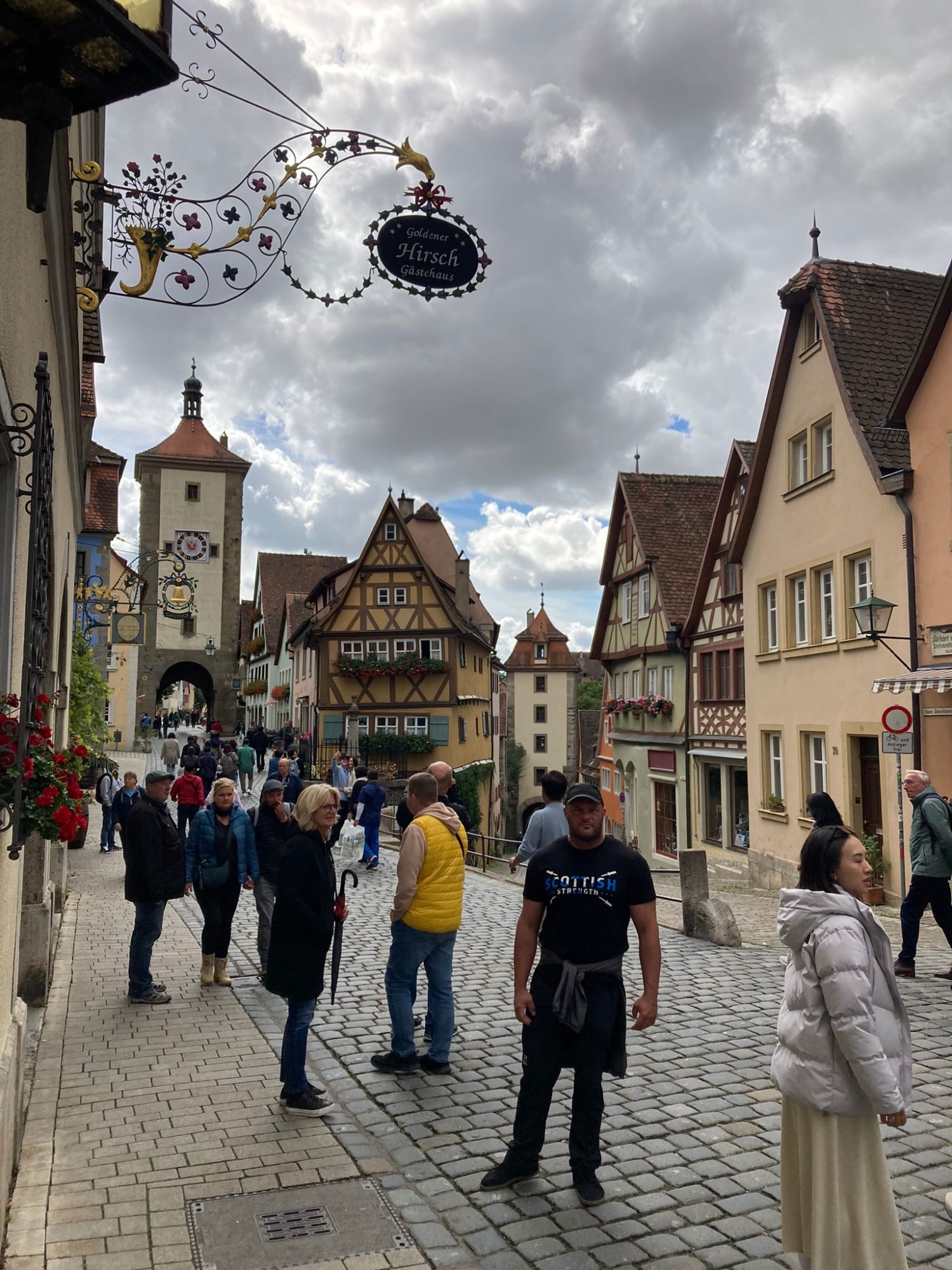
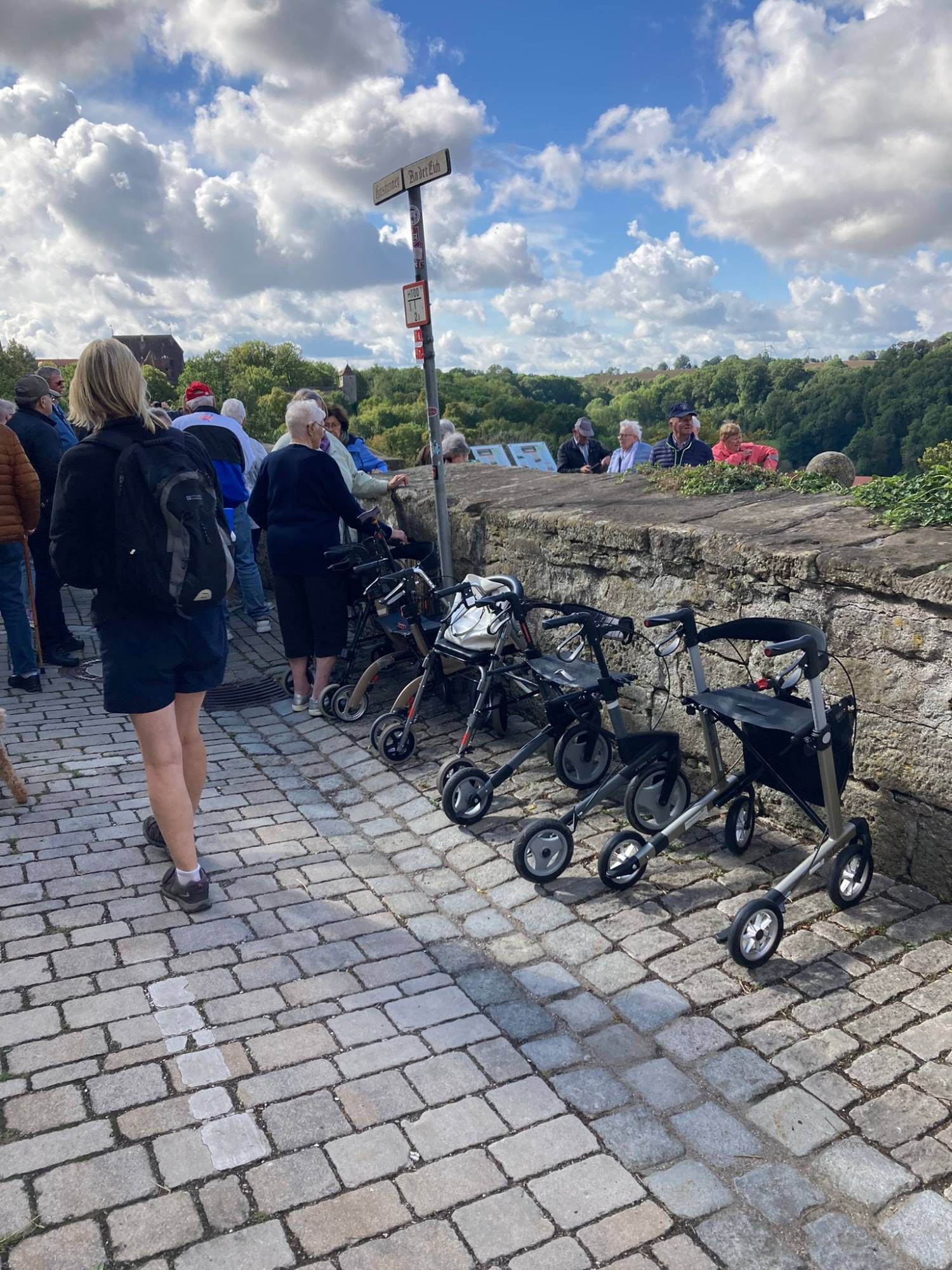
We'd just been through a run of very different tourist experiences. Vienna was too hectic and glamorous for our taste, and Eagle's Nest had disappointed us with its modern, commercial feel. Rothenburg felt different. Of course there are tourists here too – but we could walk the old streets without constantly running into big modern installations or something that felt designed around visitors. It felt like a real town, at a slower pace. At one viewpoint by the wall, a group of older visitors had parked their rollators in a neat row and were simply standing there enjoying the view. That small moment says a lot about the mood: people take their time here.
The town wall – the perfect last walk
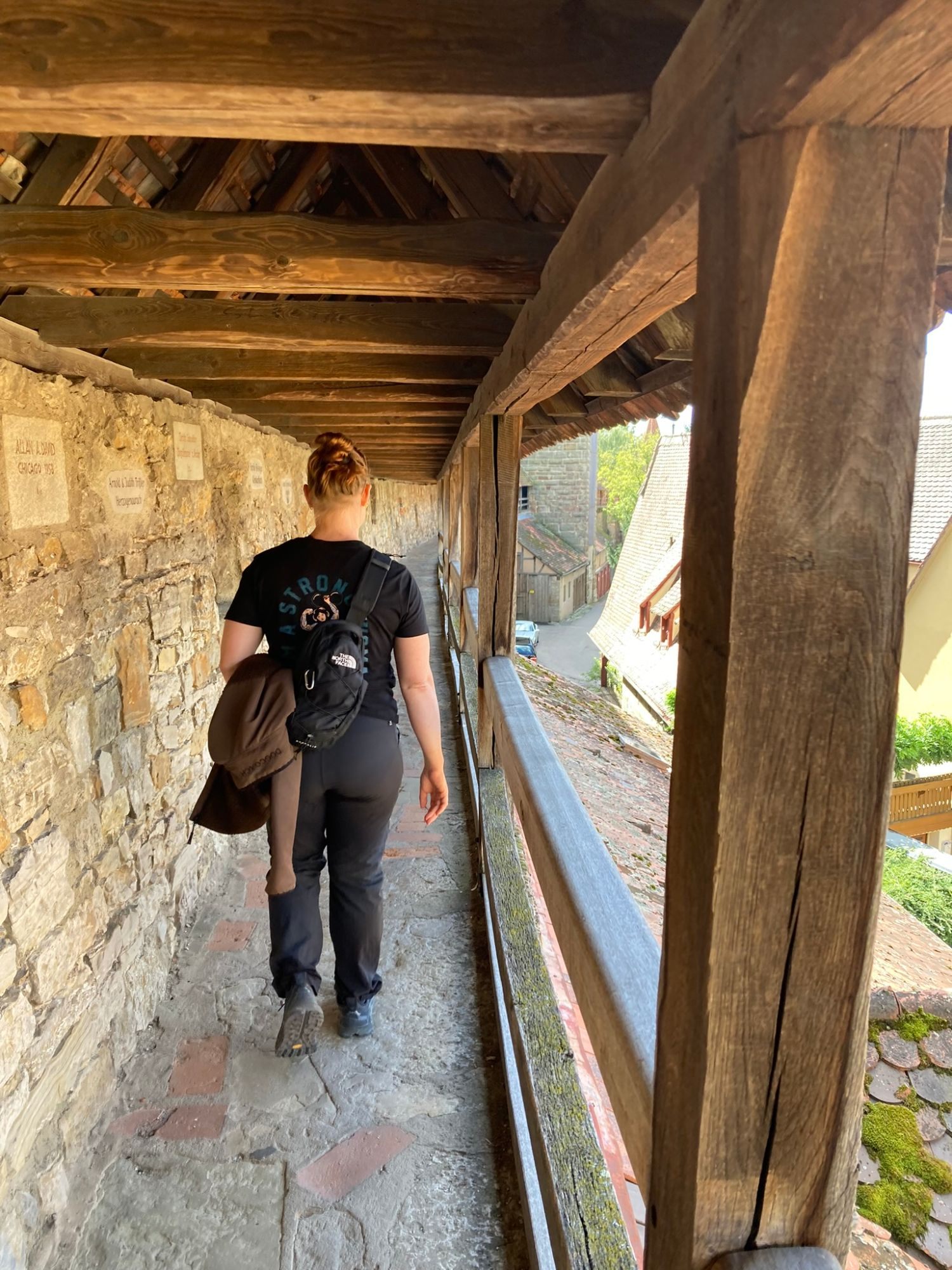
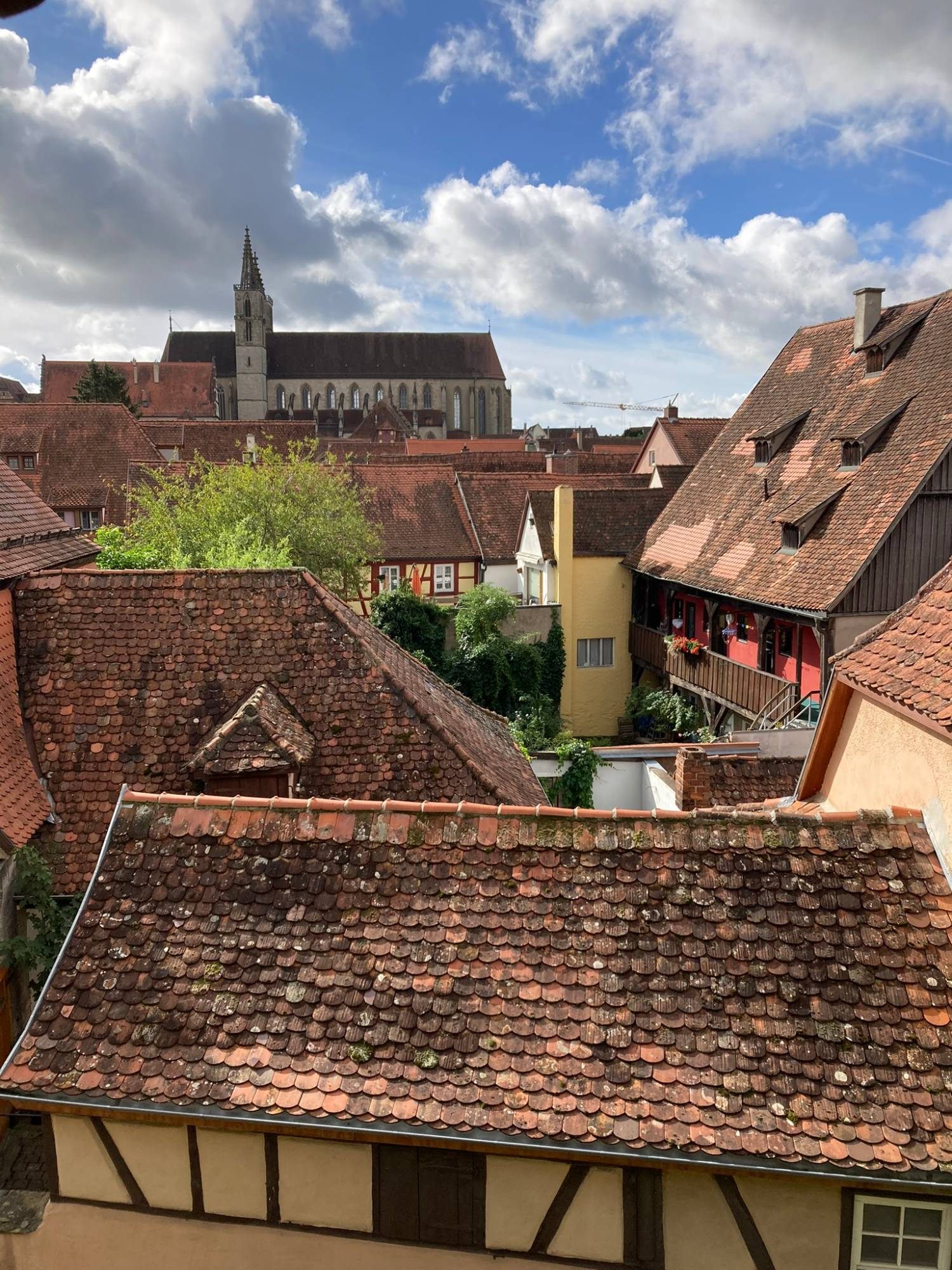
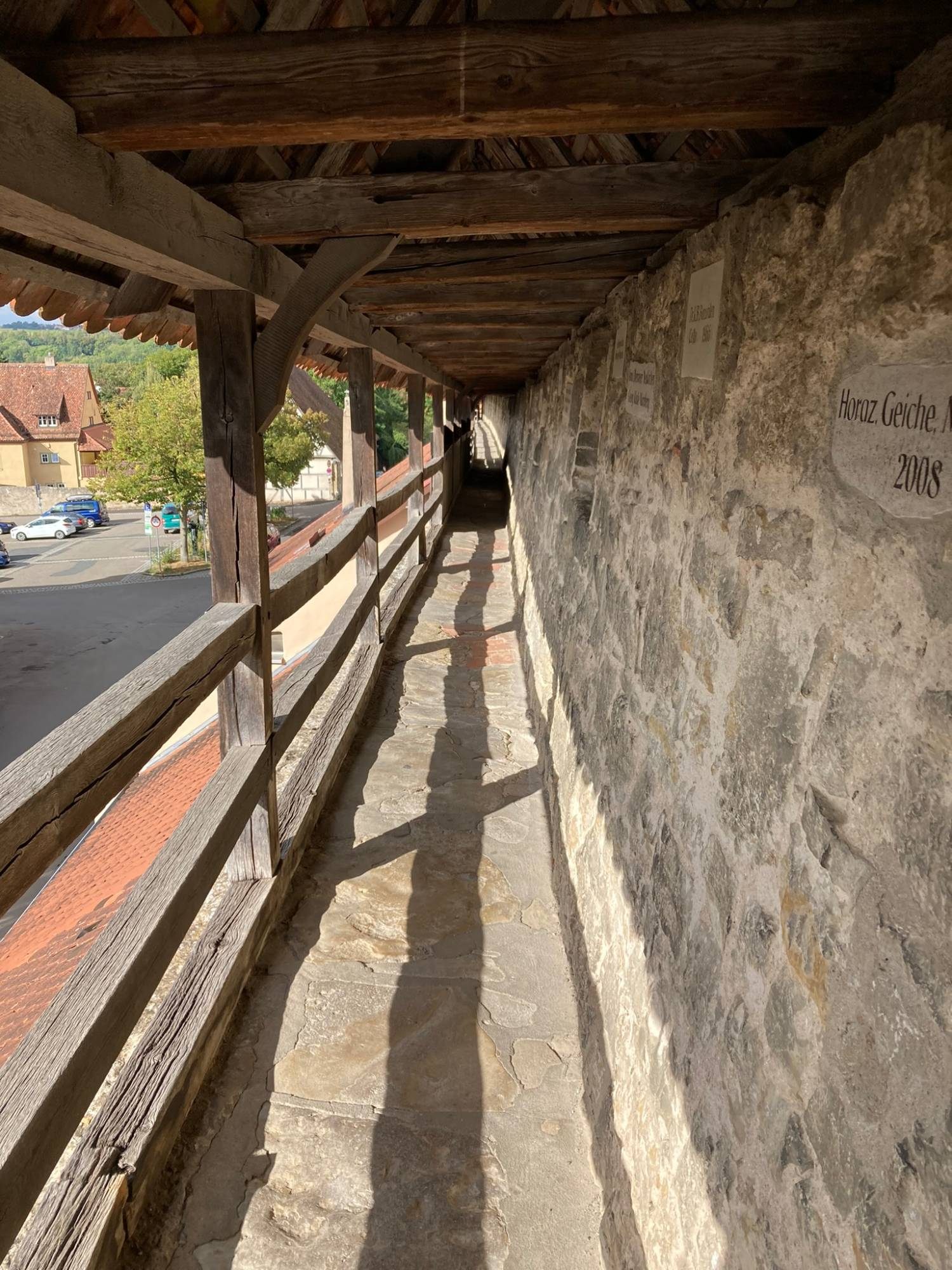
Our favourite part was the town wall. It runs for around four kilometres around the old town, with numerous towers and gates, and long stretches have a covered walkway you can walk along. Wooden beams, old stone, a tiled roof over your head and views down over the rooftops – it feels like walking through a historic building rather than a modern attraction. Nothing dramatic; just simple, authentic details. We walked sections of it rather than the whole circuit. (The tourist office has a brochure for the full Rothenburger Turmweg around the wall.)
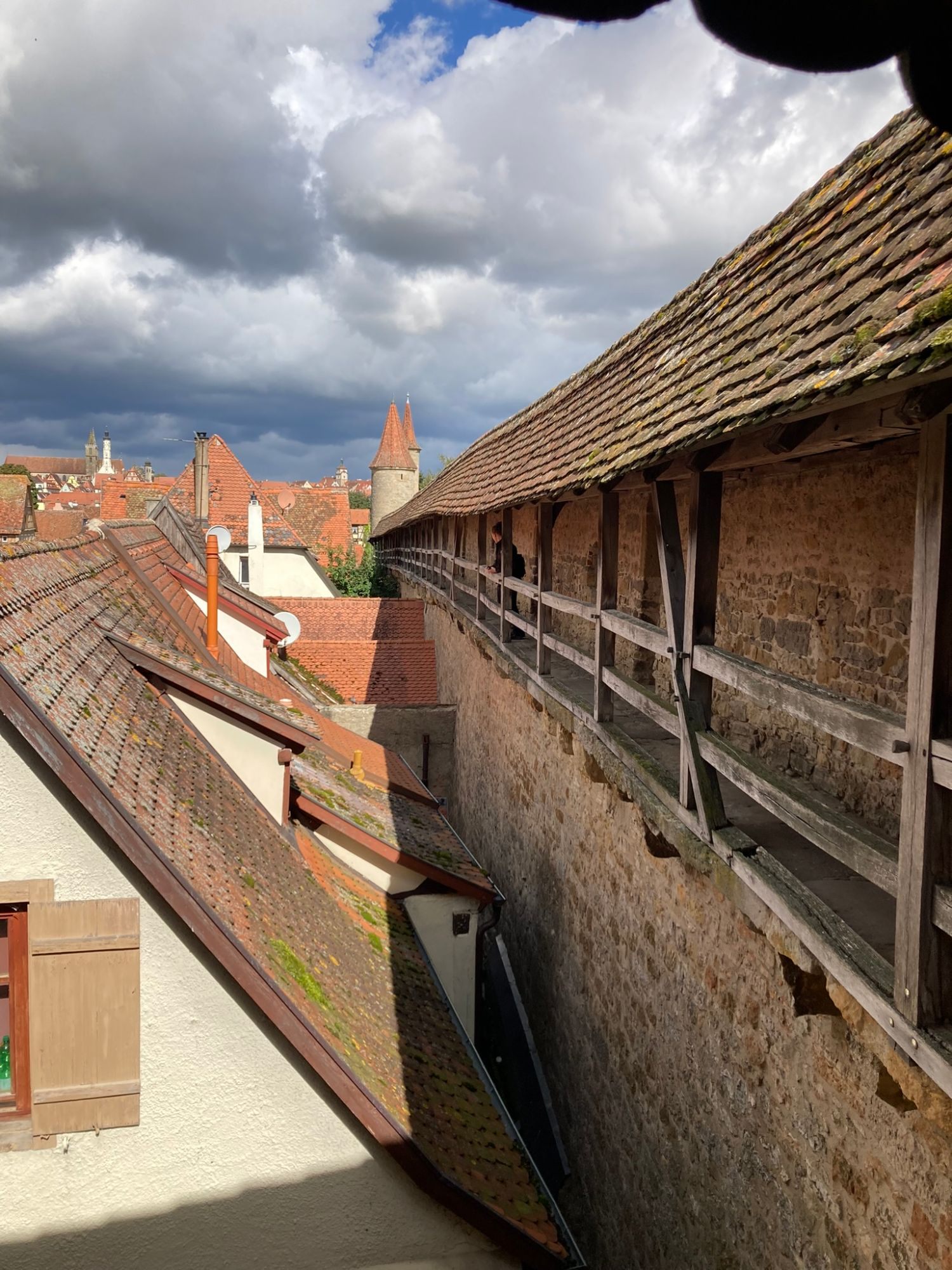
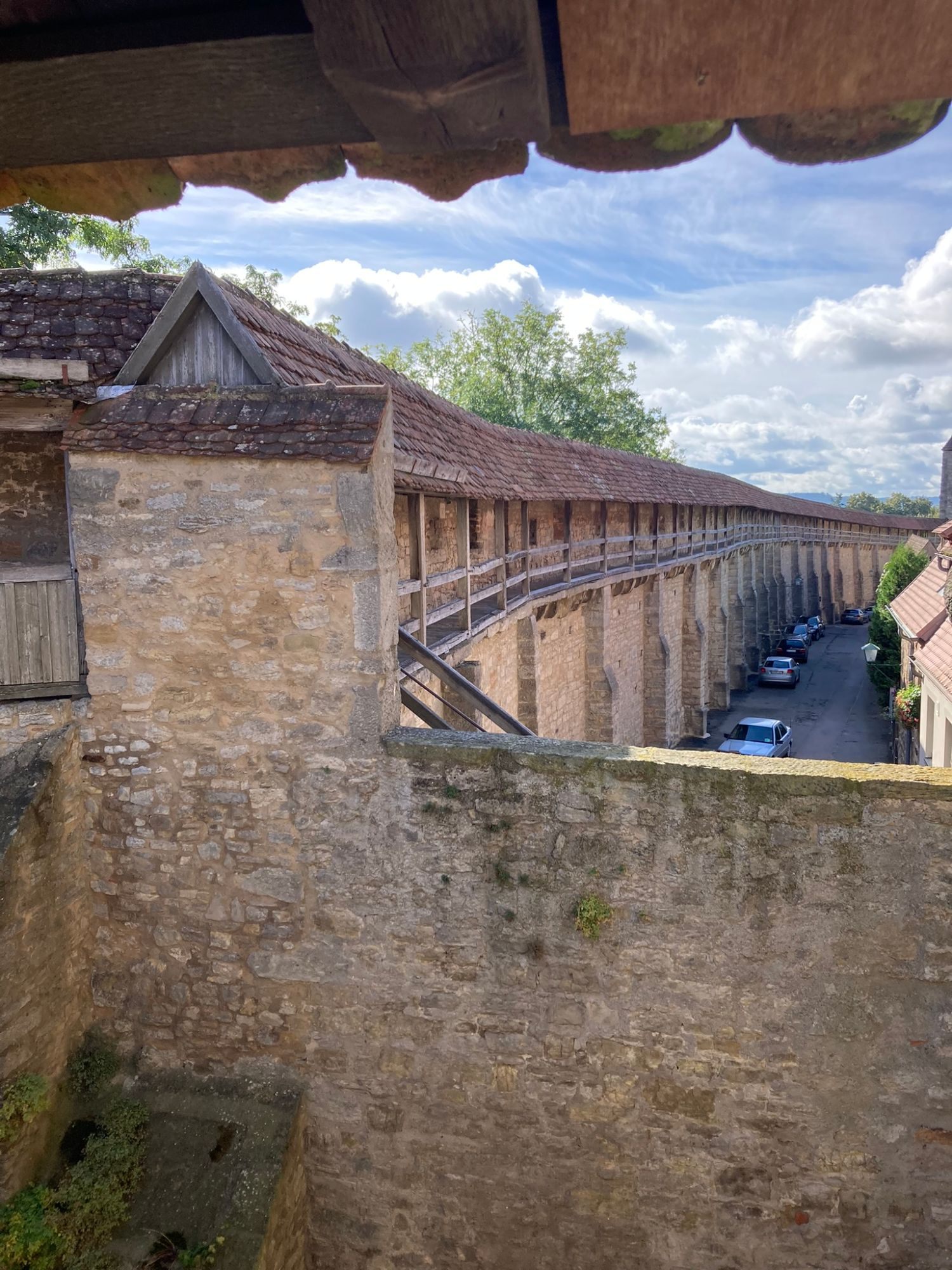
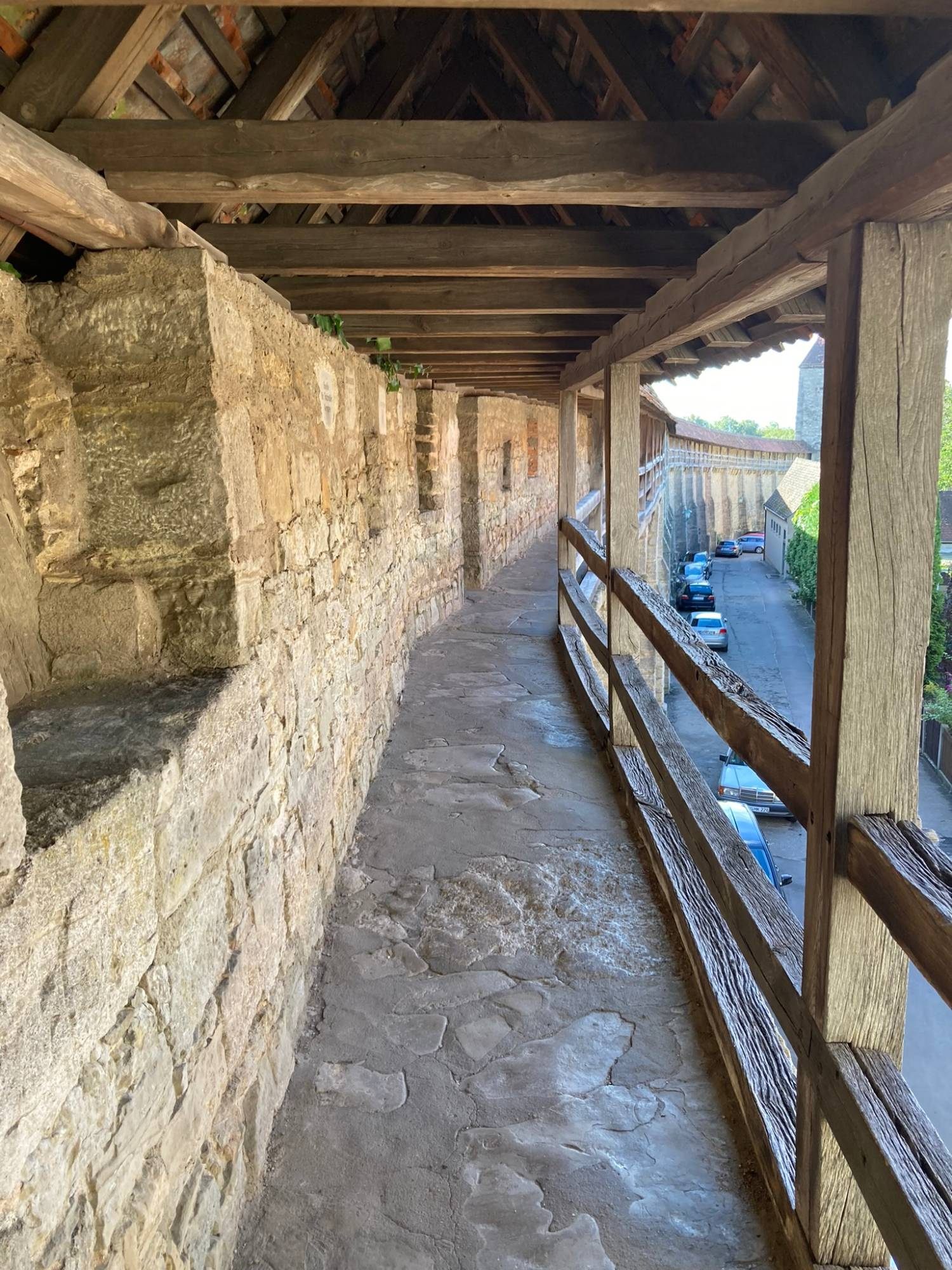
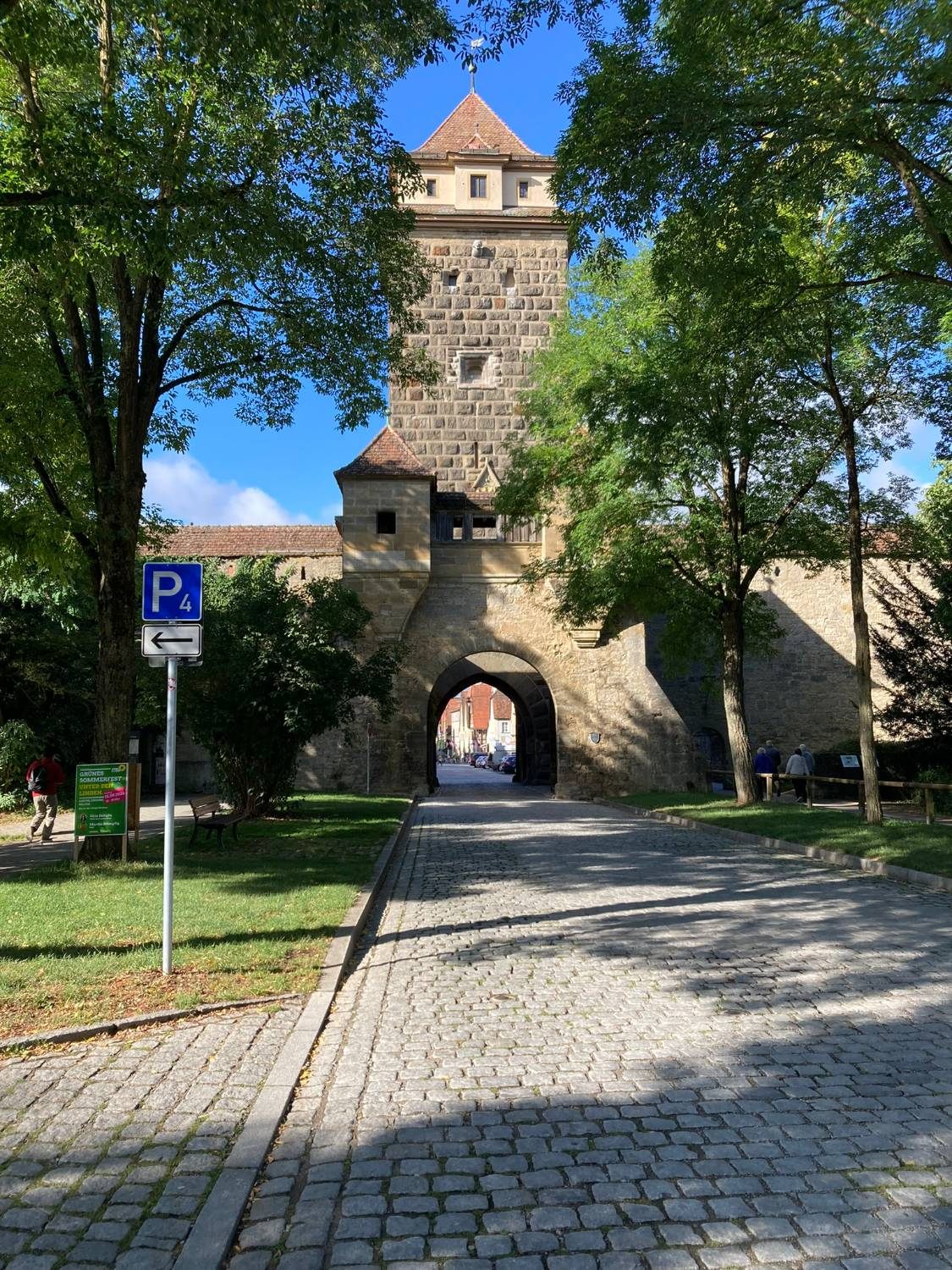
At one of the gate bastions we also climbed into the old fortifications, where an old cannon still points out of a gun port.
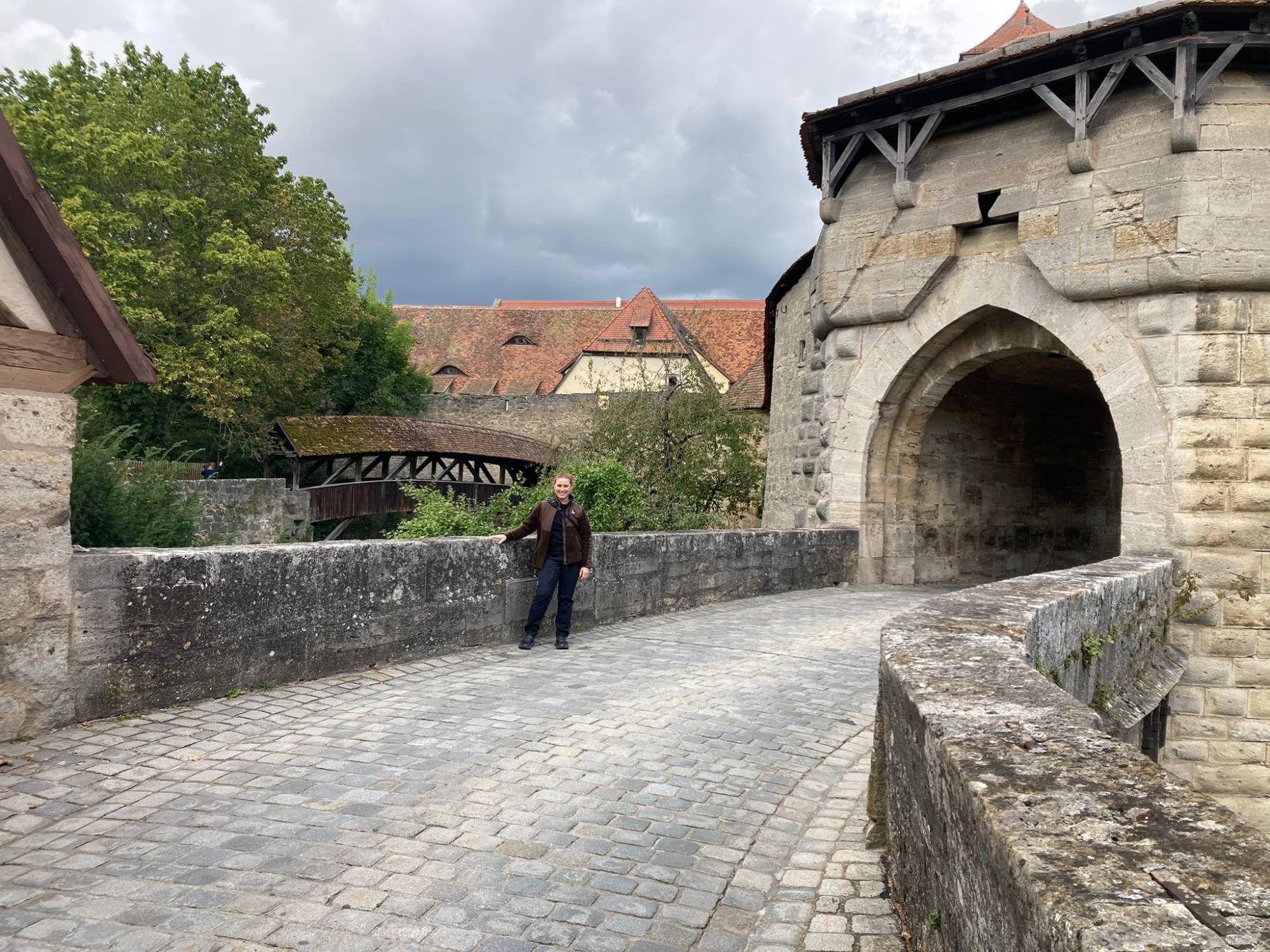
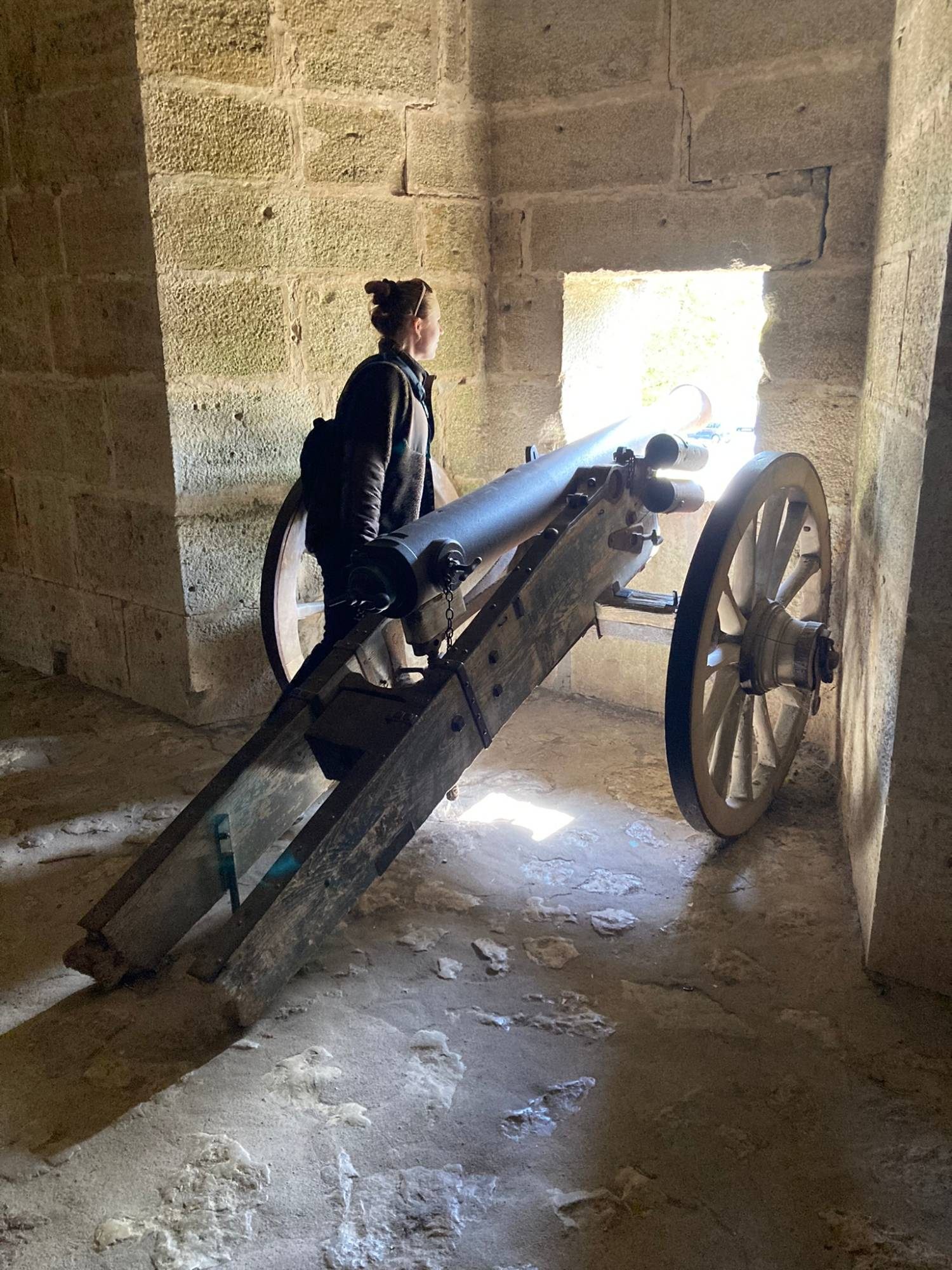
The old streets
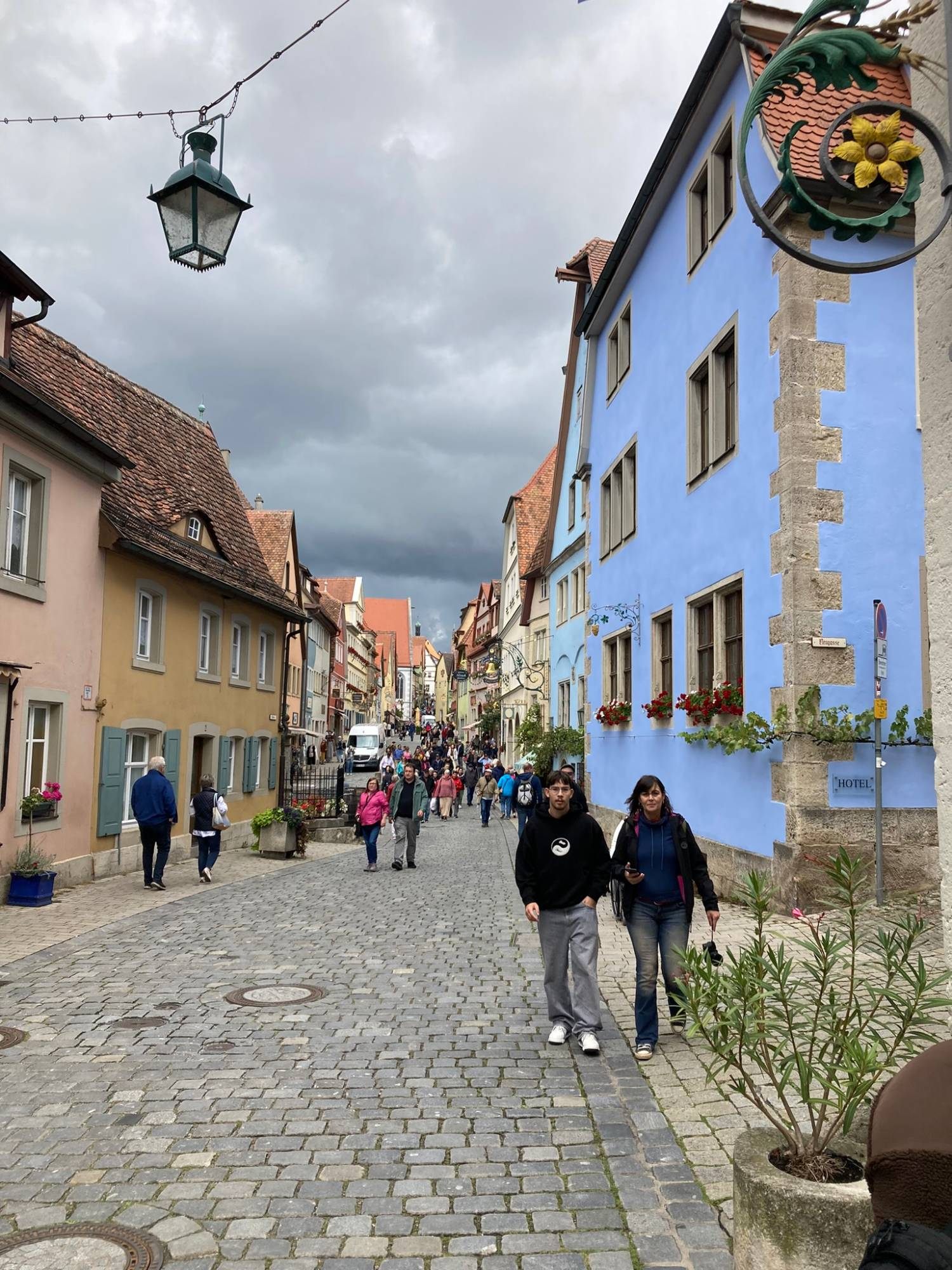
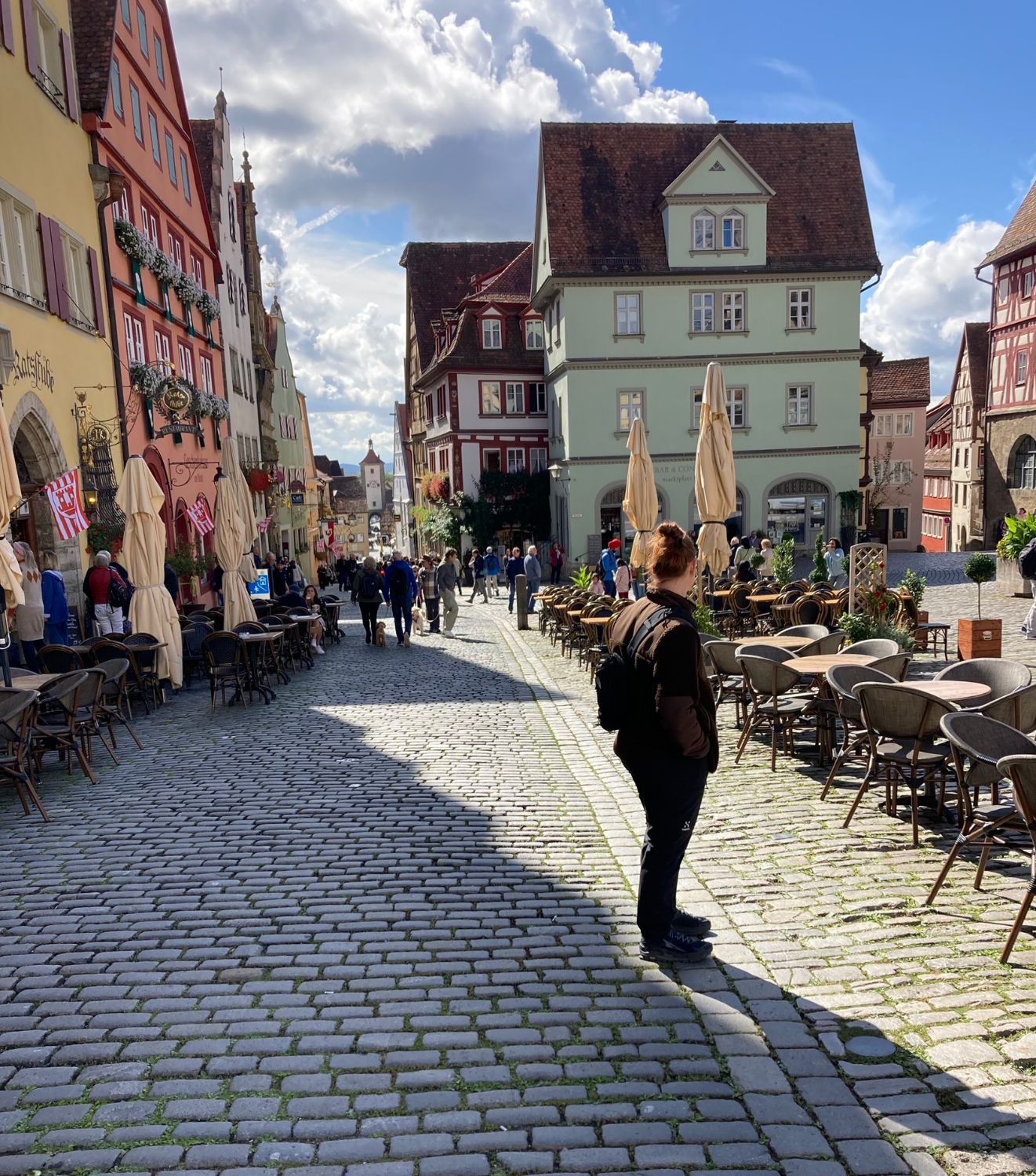
We carried on through the old town: cobbles, colourful houses, half-timbering and old towers. Rothenburg is photogenic without demanding a programme. You can just wander, look at the houses, find a new lane and enjoy the atmosphere – the quieter side streets were some of our favourites.
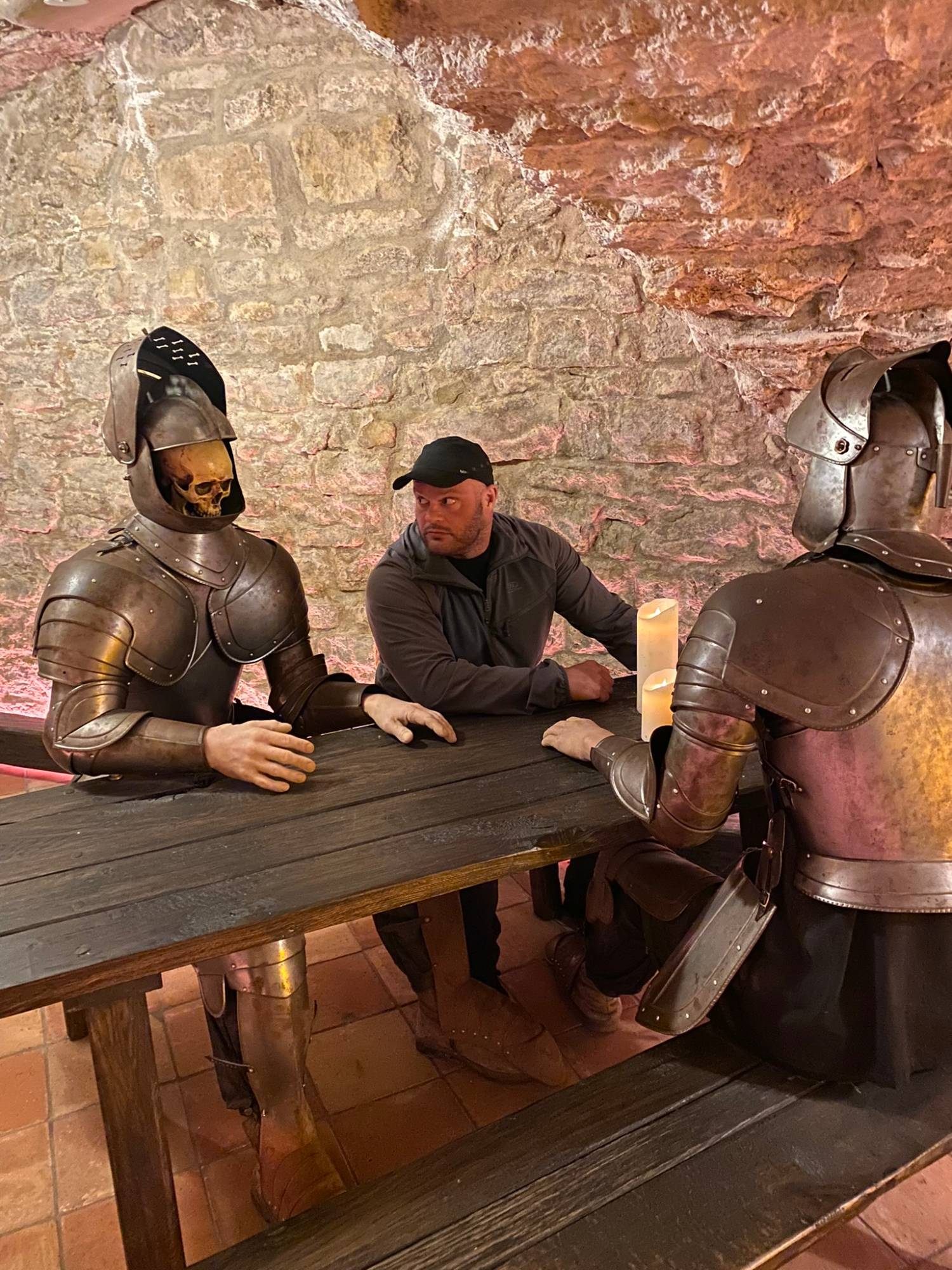
Somewhere along the way I ended up at a table in a vaulted cellar with two suits of armour for company – one of them with a skull behind the visor. Judging by my face, I wasn't sure who was buying the next round.
Is Rothenburg ob der Tauber worth it?
Yes – clearly. If you're driving through Germany towards Austria, Italy or anywhere further south, Rothenburg is an obvious place to stop or spend the night. You don't need several days: a few hours walking the old town and the wall was a lovely end to our trip. A few tips from our visit:
- Stay the night, so you don't have to see it in a rush.
- Walk part of the town wall – check access for the sections you want.
- Take the side streets, not just the famous photo spots.
- Check parking in advance. We had free parking at our hotel, but that doesn't mean all parking in Rothenburg is free.
Source: Rothenburg – town wall and gates.
4,299 kilometres later: what we'd do differently
Around 2pm we got back in the car and started the long drive home to Denmark. In total we drove 4,299 kilometres and crossed eight borders: into Germany, Poland, Slovakia and Austria, back and forth between Austria and Germany three times, and finally home. It was a really good trip – cities, mountains, waterfalls, historic places and active days. Some places surprised us; others didn't live up to our expectations. But the most useful thing we brought home wasn't the number of kilometres. It was what we learned about how we like to travel.
1. Bring a cool box
One of our best decisions was a cool box that plugs into the car's 12-volt socket and can also be used in the room. We used it a lot, and if we did this trip again we'd use it even more. We ate a few restaurant meals that we didn't think much of afterwards. Today we'd plan more of our meals ourselves – supermarket shopping and packed lunches – so we'd never have to pick a random restaurant just because we were hungry and had to move on.
2. Choose places with a kitchen
In 2024 we didn't care much about kitchen facilities when we booked. Today we would. Apartments or rooms with a kitchen make it easier to cook some meals, use the cool box properly and be less dependent on restaurants – especially on a trip where you often arrive late or leave early.
3. Fewer bases, longer stays
We had a lot of single nights on this trip. That let us see many places, but it also meant packing up, driving on, checking in and preparing for the next day over and over again. We were happiest where we stayed two nights. Next time we'd choose fewer bases and spend longer at each – not necessarily seeing less, just spending more time in the areas we'd already travelled to.
4. More time on foot
With fewer driving days we'd have more time to explore on foot. The Krimml Waterfalls are a good example: we loved the hike, but with more time we could have gone further up the valley. That kind of travel – nature, active days, historic places and time to explore without hurrying – is what we enjoy most.
5. Plan driving days realistically
The drive to Rothenburg – about four and a quarter hours instead of two and a half – showed how much roadworks and detours can change a day. Next time we'd leave more slack in the plan and avoid packing too many activities into days with long drives. A road trip is better when you're not constantly chasing the next destination.
Our verdict
All in all it was a great road trip. But our biggest lesson was that more destinations don't automatically make a better trip. Rothenburg was a good ending precisely because we could walk around at our own pace without a long list of things to tick off. That's the advice we'd pass on to anyone planning a road trip through Central Europe: plan the route – but give yourself time to actually experience the places you visit.