On the evening of 8 November 2026, I climbed onto an open wagon full of iron ore in the middle of the Sahara. Twelve and a half hours later, I climbed down again in Nouadhibou, on the Atlantic coast – black from head to toe, and with one of the best travel experiences of my life behind me.
The Iron Ore Train isn't a tourist train. It's a freight train that carries iron ore from the mines in the north of Mauritania to the port, and travellers who ride it lie on top of the ore in open wagons. There's no timetable you can rely on, no seat, no toilet and no guarantee that the train will even stop. This is how it went for me – and what I'd tell anyone thinking of doing it. It was part of my 8-day trip through Mauritania.
The short version
Choum to Nouadhibou on an open ore wagon, 8–9 November 2026. On board at 20.57, moving at 21.05, stopped in Nouadhibou at 09.26 – about 12½ hours. Just me and my guide, Sidi Mohamed, on our wagon. Ski goggles, a mask, a Mauritanian veil, plastic bags for everything, water and a sleeping bag. One stop in the night, sunrise over the Sahara, and two showers at the hotel. A trip of a lifetime – but nothing about this train is guaranteed.
The railway in brief
The Mauritania Railway is a single 704 km line between the iron ore mines around Zouérat and the port of Nouadhibou. It opened in 1963 and is run by the state mining company SNIM. Iron ore is one of Mauritania's most important exports, and this line is how it reaches the sea. The trains are enormous – usually described as around 200 wagons and about 2.5 km long. The stretch I rode, from Choum to Nouadhibou, is roughly 460 km.
The trains usually also have a passenger car, where you can buy a ticket. Riding on top of the ore isn't a ticketed service – it's something travellers do, and on my trip it came with a night-time check, which I'll come back to.
Arriving in Choum
I arrived in Choum at around 13.30 with my guide, Sidi Mohamed, straight from climbing Ben Amera. I was the only traveller on this part of my trip, so it was just the two of us – and we were both a bit tired. My trip was booked through ChingiTours, who work with the local company Time for Mauritania for the arrangements on the ground.
We checked into Choum Guesthouse, where I had my own room, and at about 14.50 I was served rice and chicken.
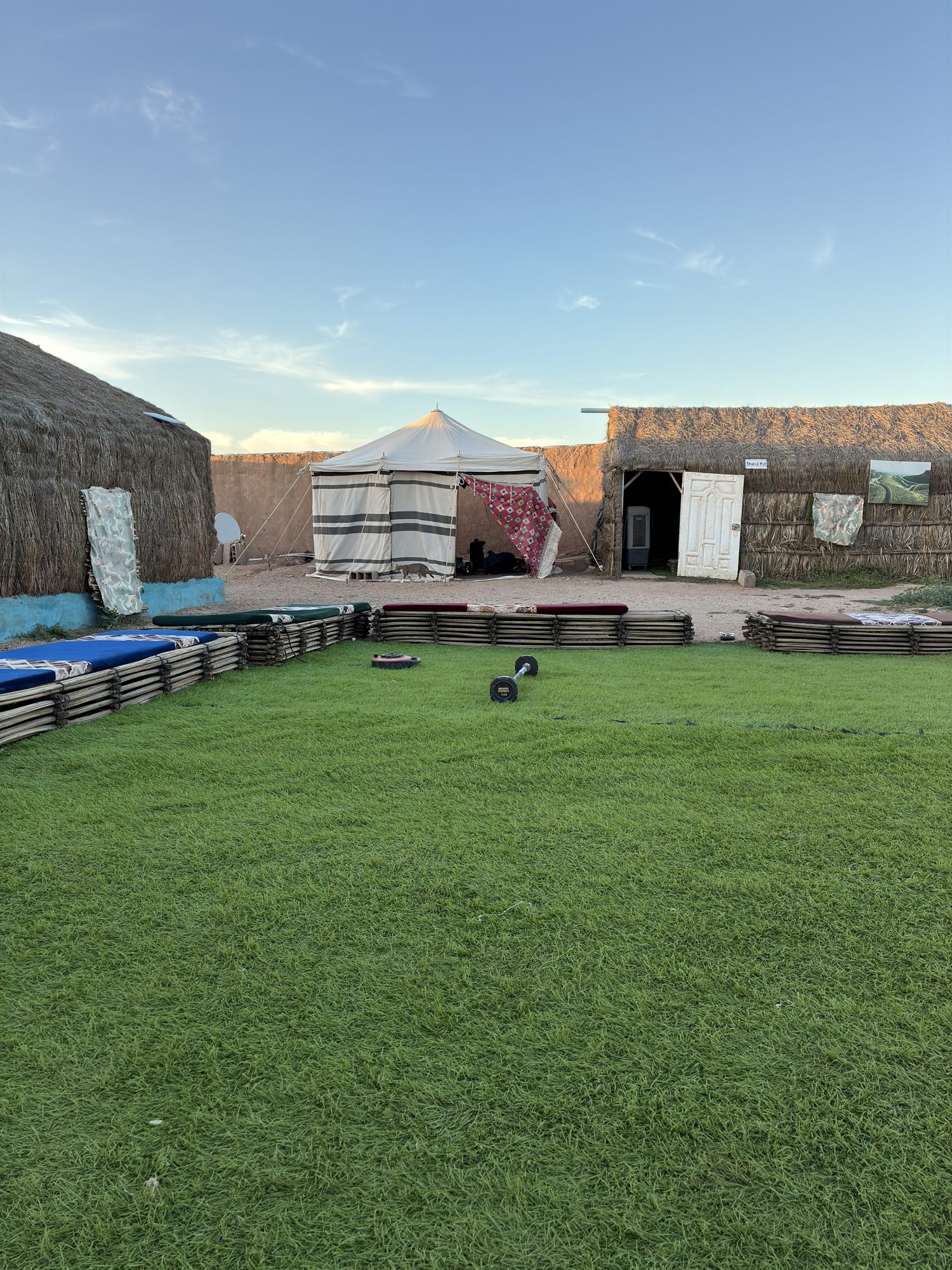
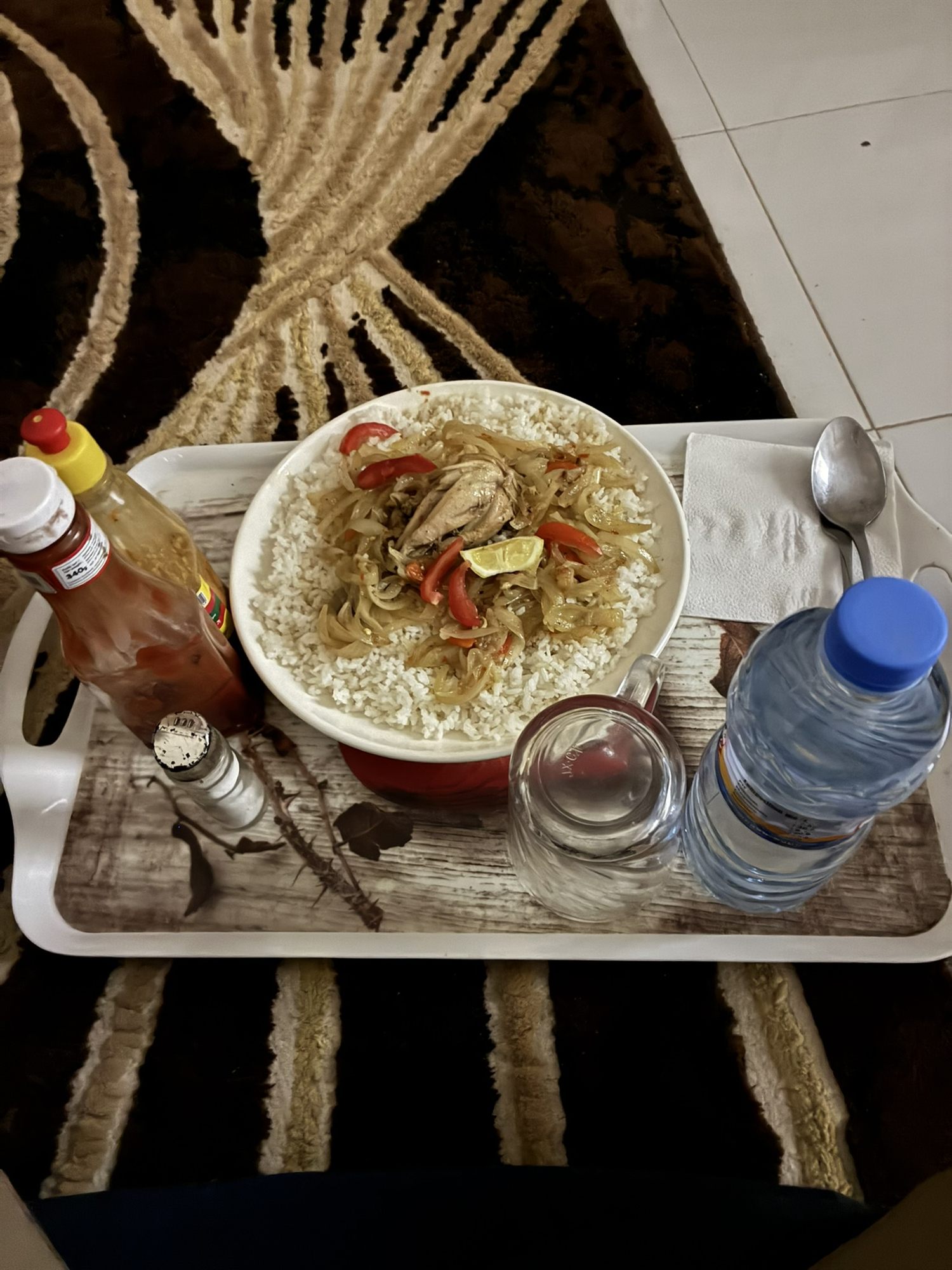
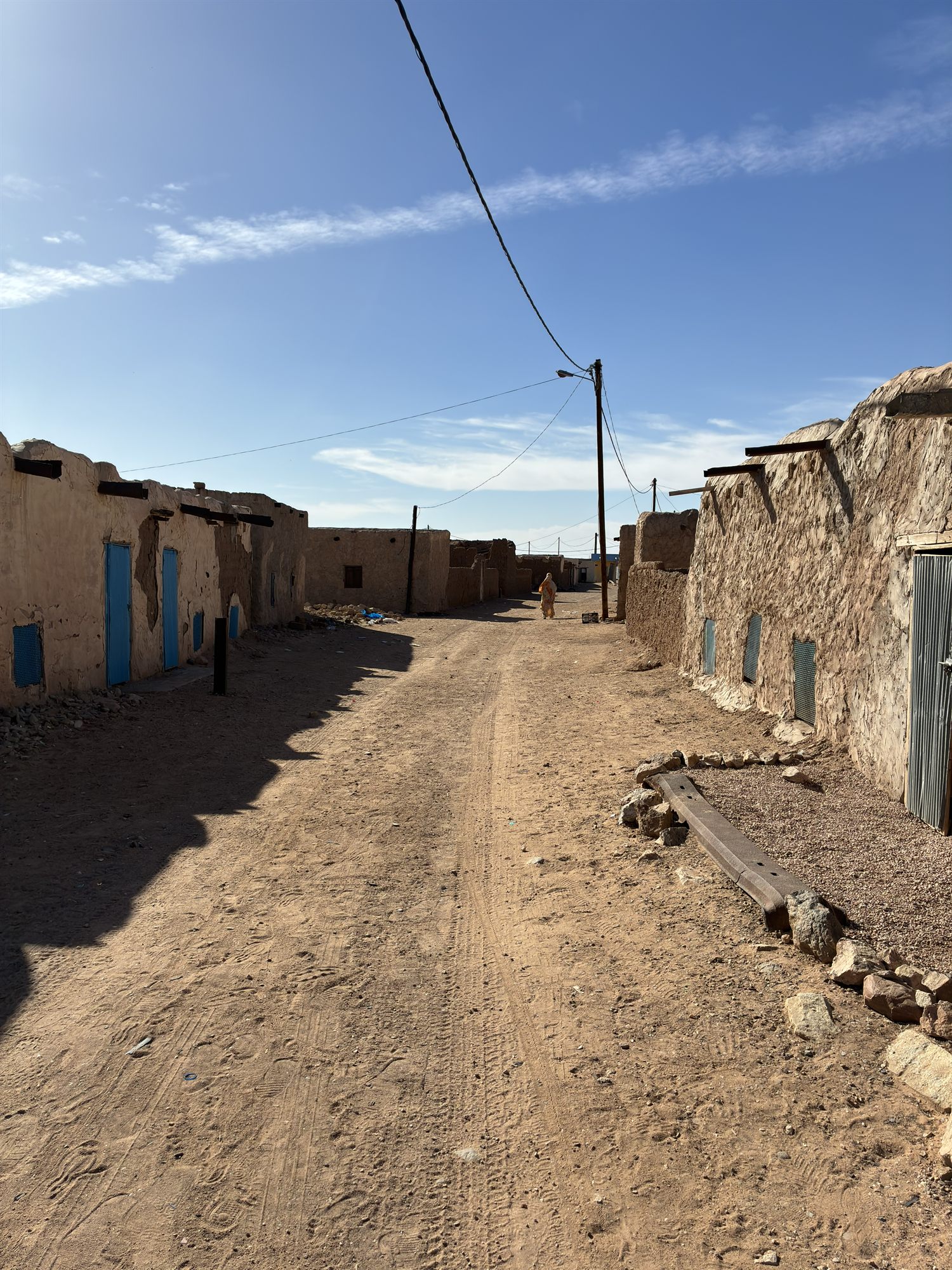
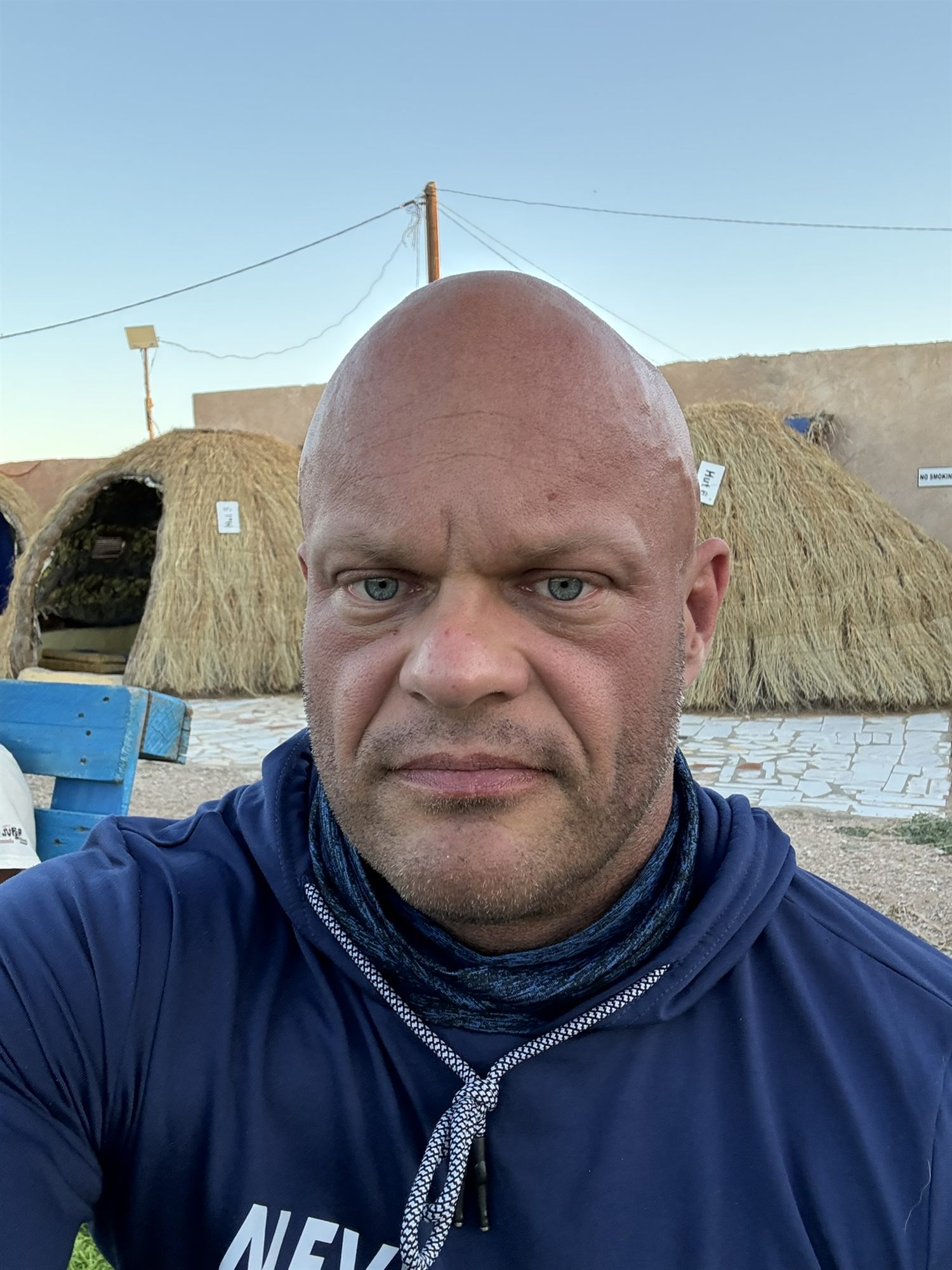
After eating, I walked around Choum for a while. It's a small town without much to see, but I met a group of young people who wanted to make TikTok videos with me, and I got a photo by one of the train wagons. A small, fun moment before the real thing.
Waiting – nobody knows exactly when the train comes
We knew the train had left the mine, but not when it would reach Choum. The guess was around 19.00–20.00, but that was all it was – a guess.
Gradually people gathered at the guesthouse. I'd estimate about 20 travellers were waiting for the train that evening. A group from Crazy Puffin Adventures should have ridden the day before, but the train hadn't stopped, so they'd had to wait an extra day in Choum.
Sidi Mohamed acted as a kind of coordinator for us. He had contacts around the railway and kept getting updates on where the train was. Around 19.00 we had news, and just before 20.00 he got word that it was about an hour away. That's when we started getting ready for real.
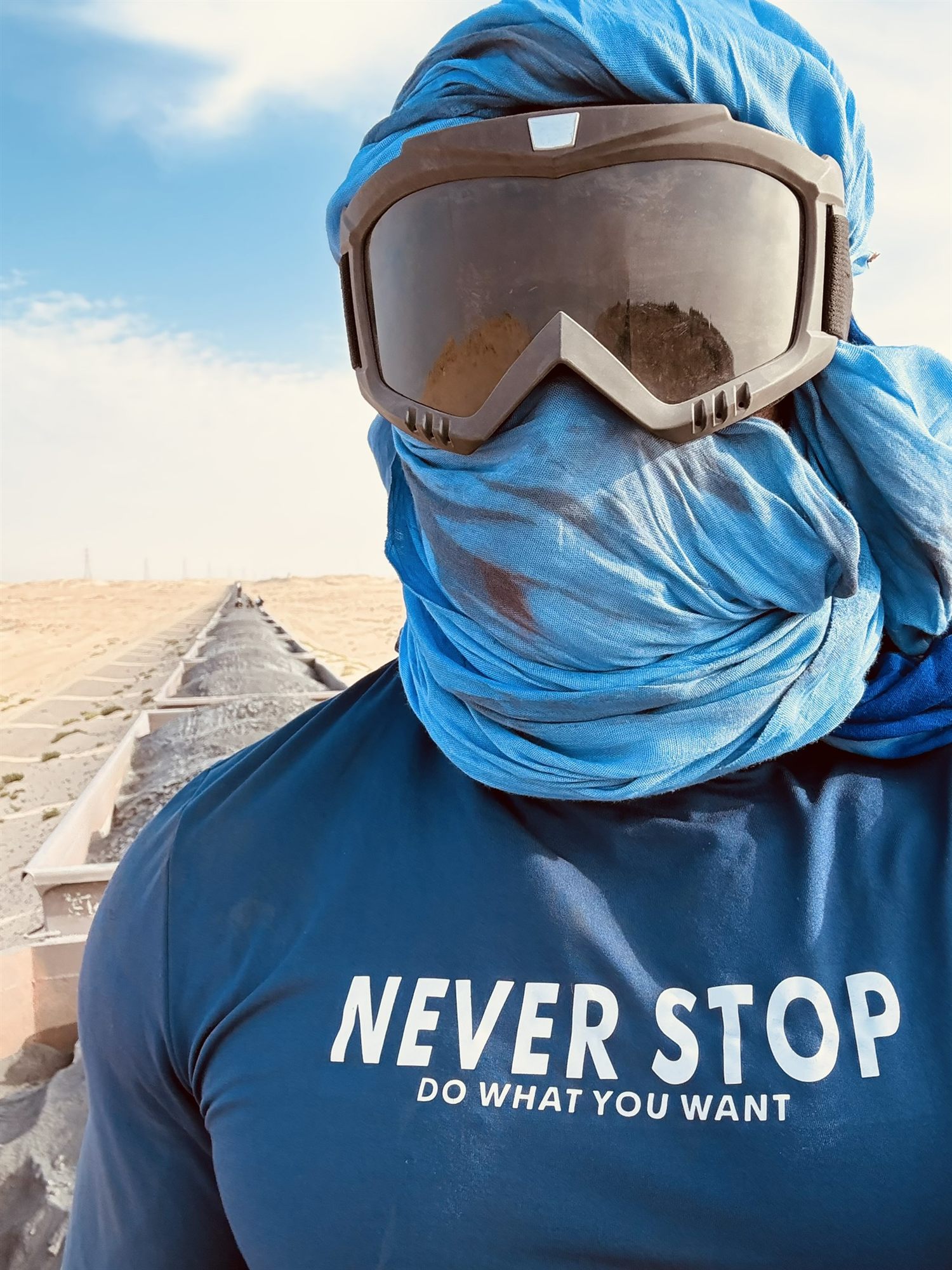
Goggles, masks and the Mauritanian veil
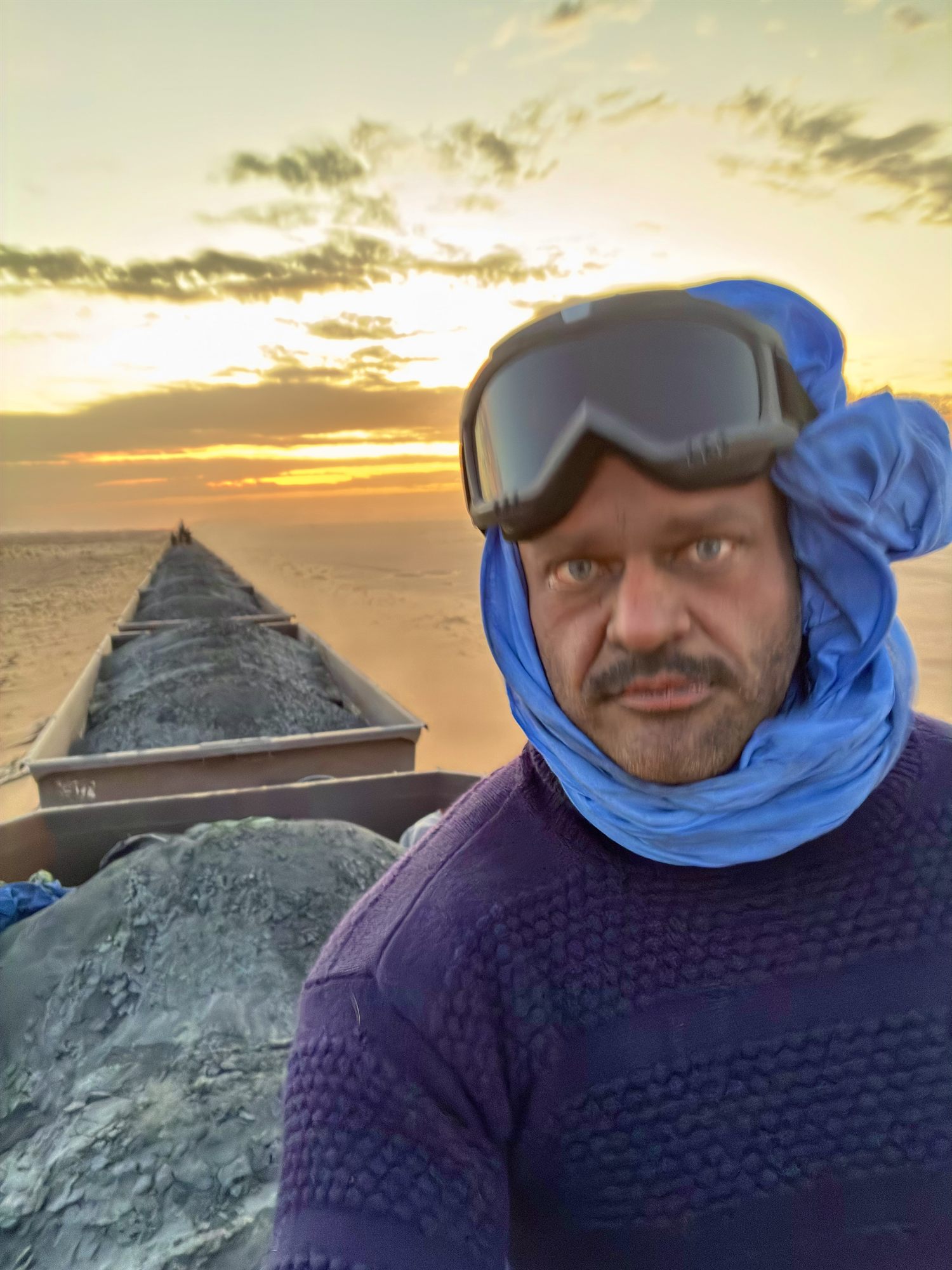
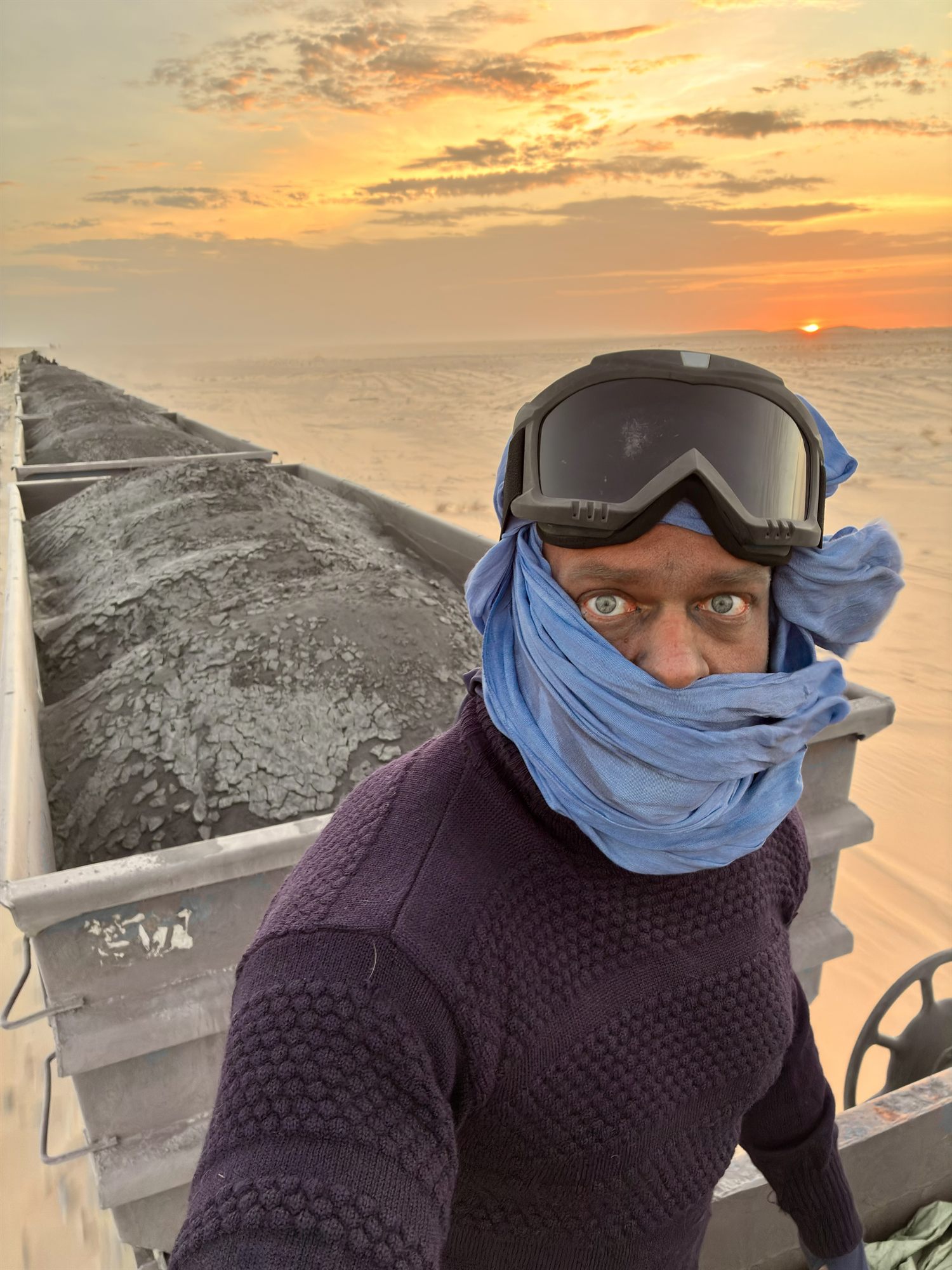
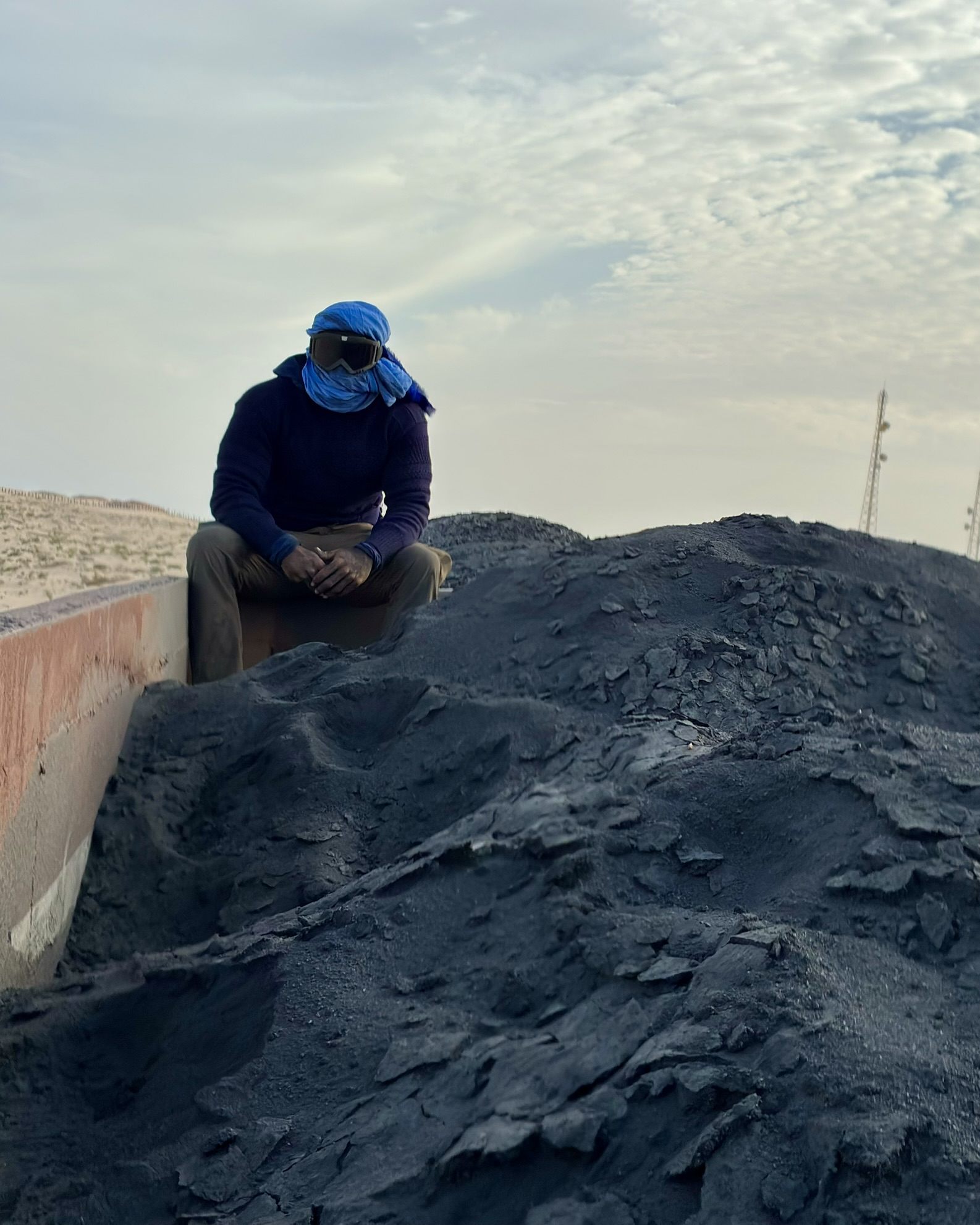
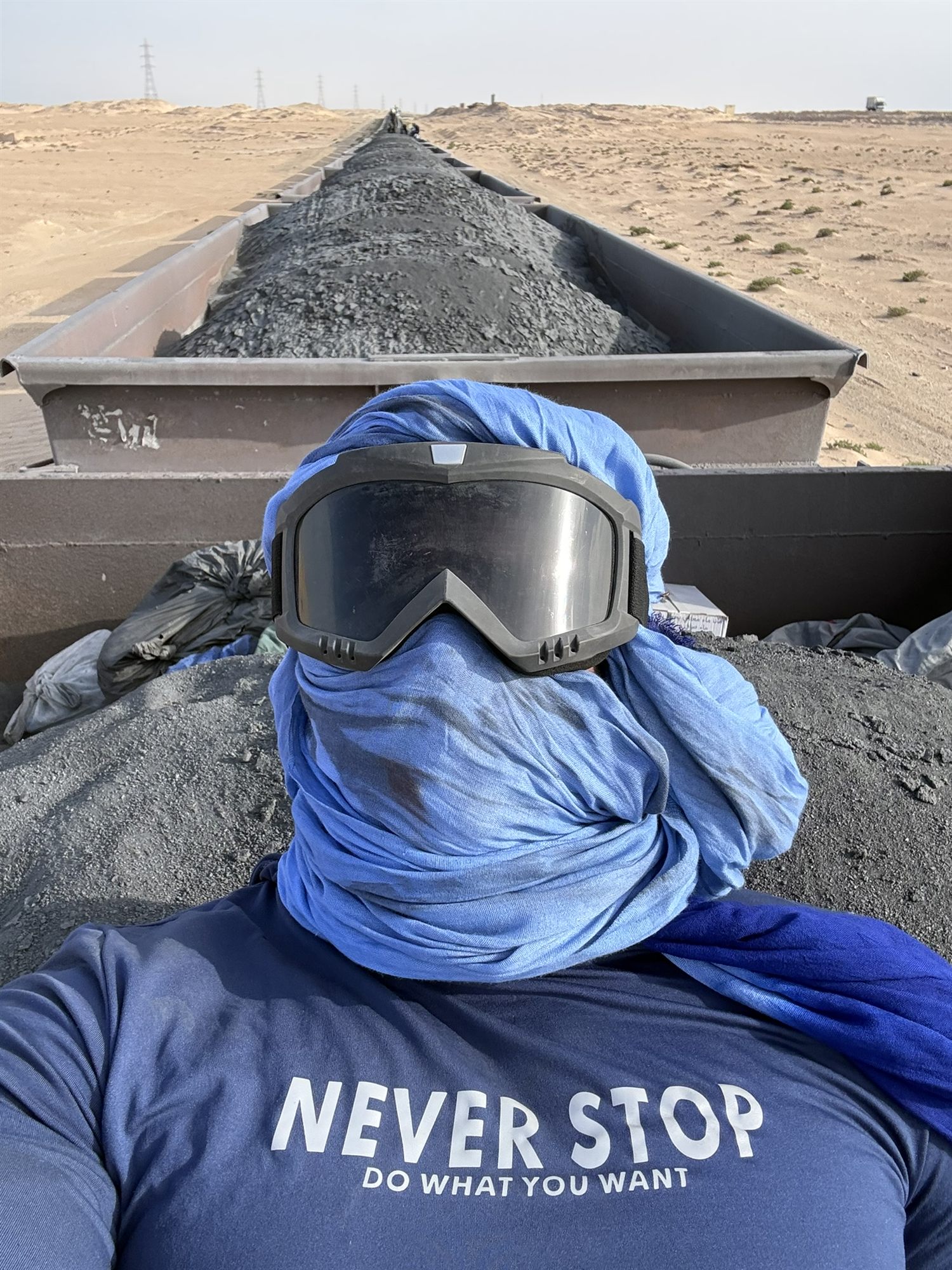
Out came the gear: ski goggles, a dust mask and the traditional Mauritanian veil, which we got help to wrap properly around our heads. Bags went into plastic. Water and sleeping bags were ready.
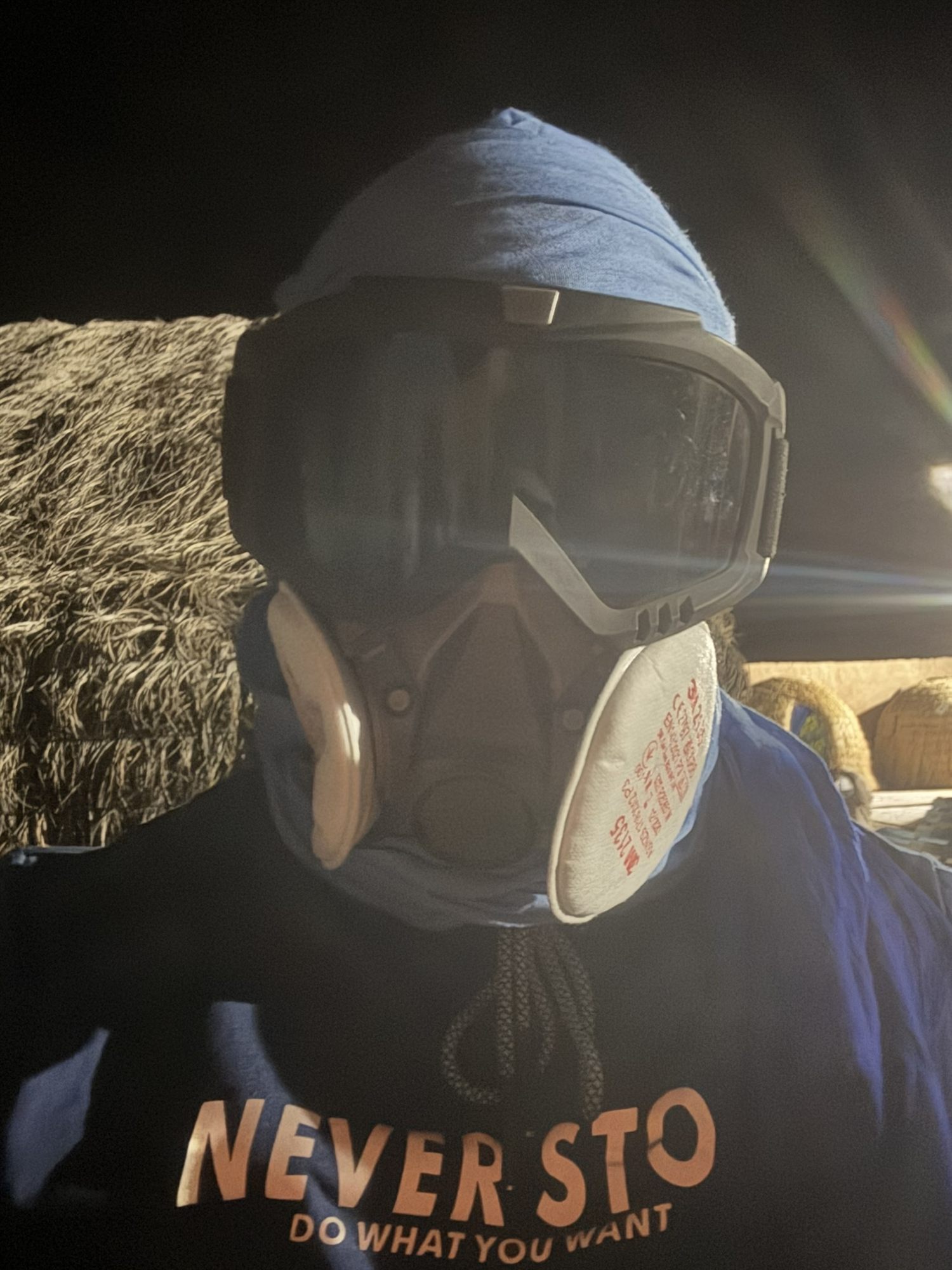
At about 20.30 we were told to go out to the cars. We drove towards the railway in 4x4s with the headlights off and waited in total darkness. You couldn't see much at all. Then, suddenly, we could hear the train coming.
The train arrives – and you have to be quick
As it got closer, we jumped back into the cars and drove up alongside the train. We could hear it braking and coming to a stop – and then everyone moved fast, climbing up onto the open wagons.
Sidi Mohamed went up first, and I followed. We got our things up: the bags wrapped in plastic, water and sleeping bags. At 20.57 we were sitting on our wagon – just the two of us on that one. At 21.05 the train started to roll.
A night on the ore under the stars
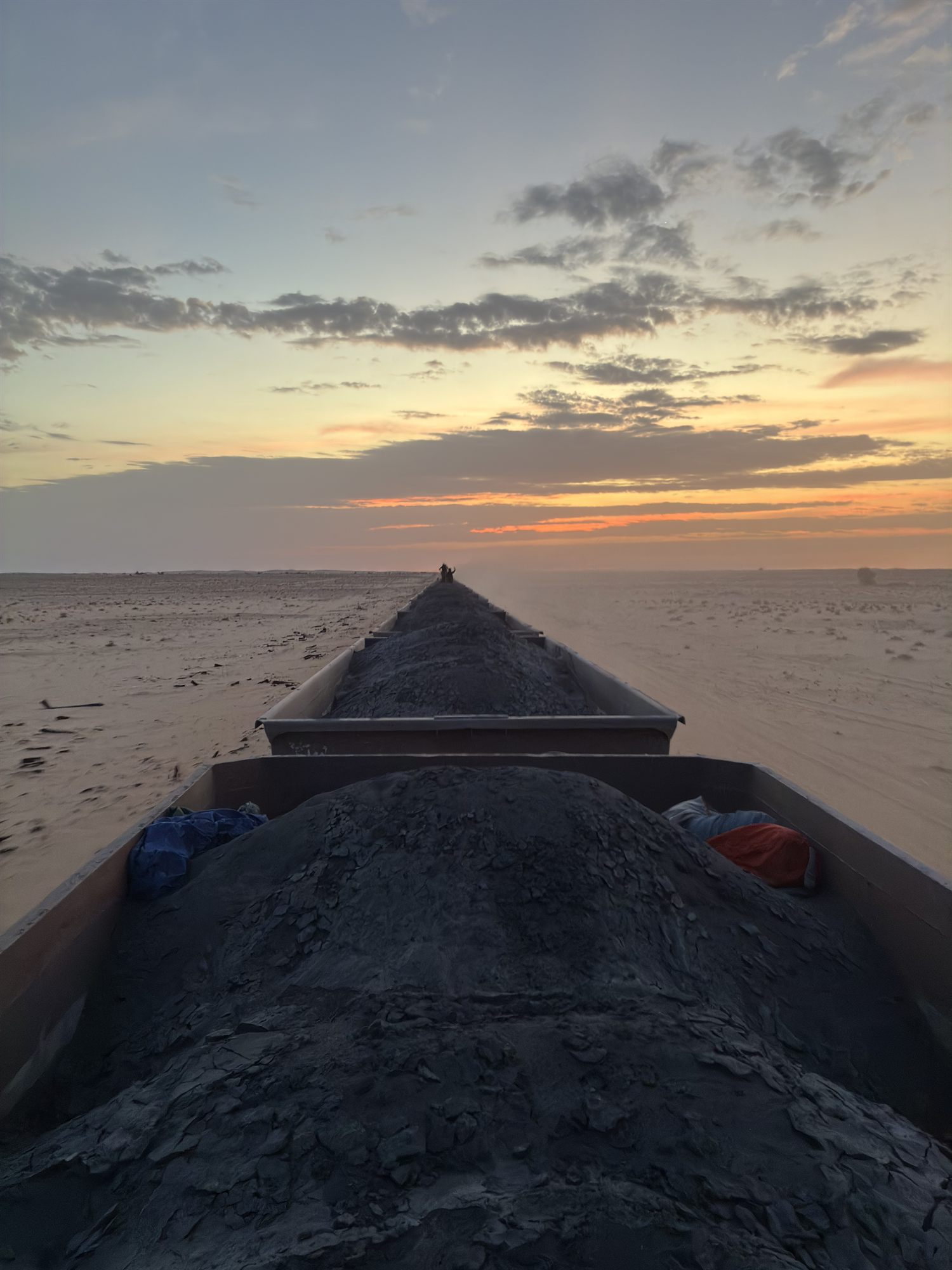
It's hard to describe sitting on an open ore wagon in the middle of the Sahara. It was completely dark. The sky was full of stars, with no light pollution at all. The only light came from the locomotives far ahead – the Beast, as I'd heard the train called. You could hear the engines, feel the whole train start to move, and then the heavy rumble of the iron wagons carried on through the night.
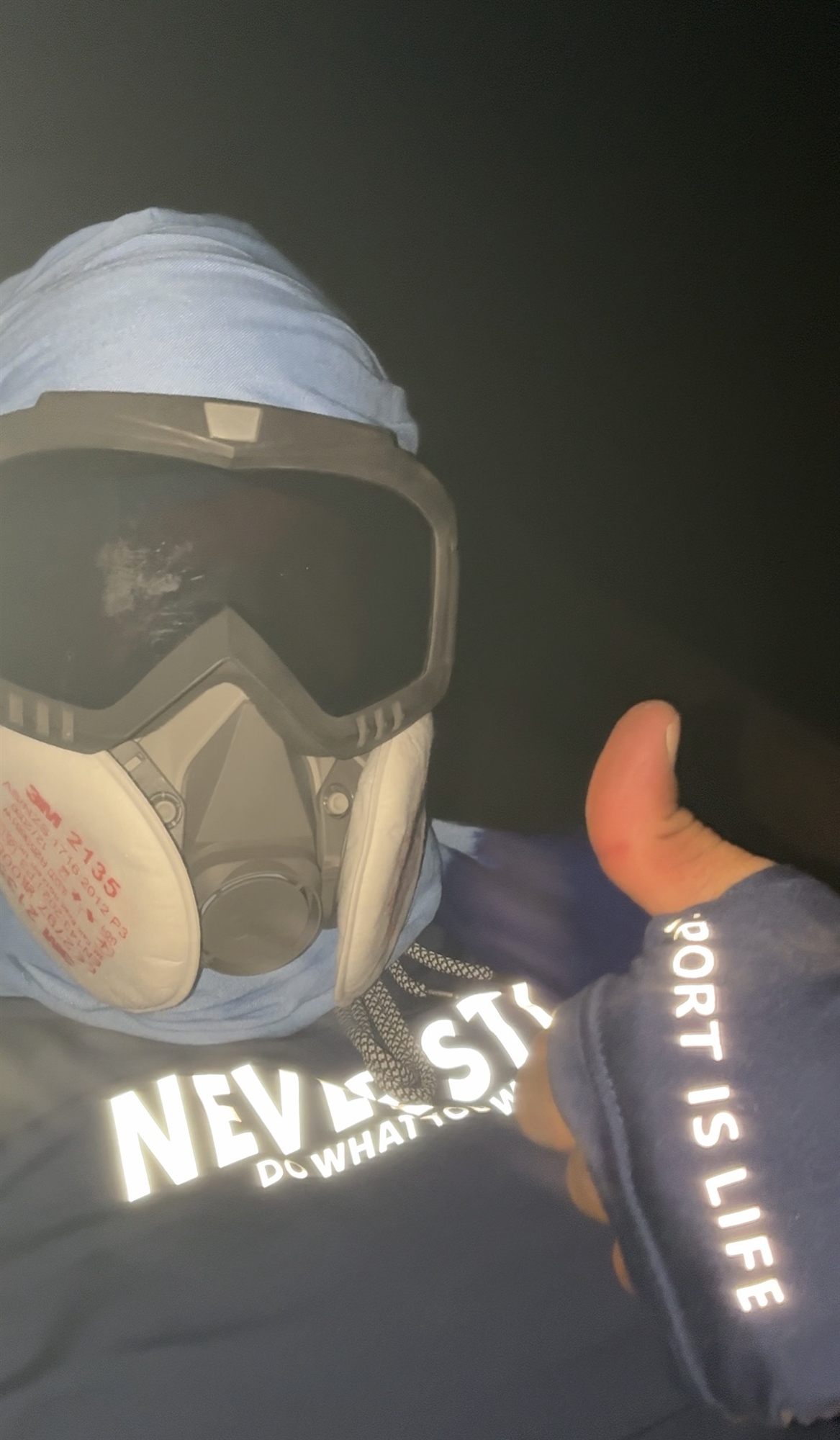
Sidi Mohamed told me the train was expected to stop after three or four hours, when train staff and police check the wagons for people riding without permission. People found on the ore wagons can be moved to the passenger car. According to him, that had happened two days earlier, when a bigger group was found and moved.
I lay down to sleep on the iron ore – and, surprisingly, I lay really well. The rumble of the train, the engines far ahead, the wagons moving through the desert. I fell asleep and woke now and then.
The stop in the middle of the night
At some point the train stopped. I woke up and lay completely still. I could hear cars driving along the wagons and people moving below. Sidi Mohamed was still asleep. I didn't move, and tried not to draw any attention.
After about ten minutes, the train started again. I was told later that this stop also lets another train pass in the opposite direction with empty wagons – roughly halfway along the line. I went back to sleep.
I never felt unsafe. It's an unusual and slightly surreal situation, but I felt safe being there with my guide.
Sunrise over the Sahara
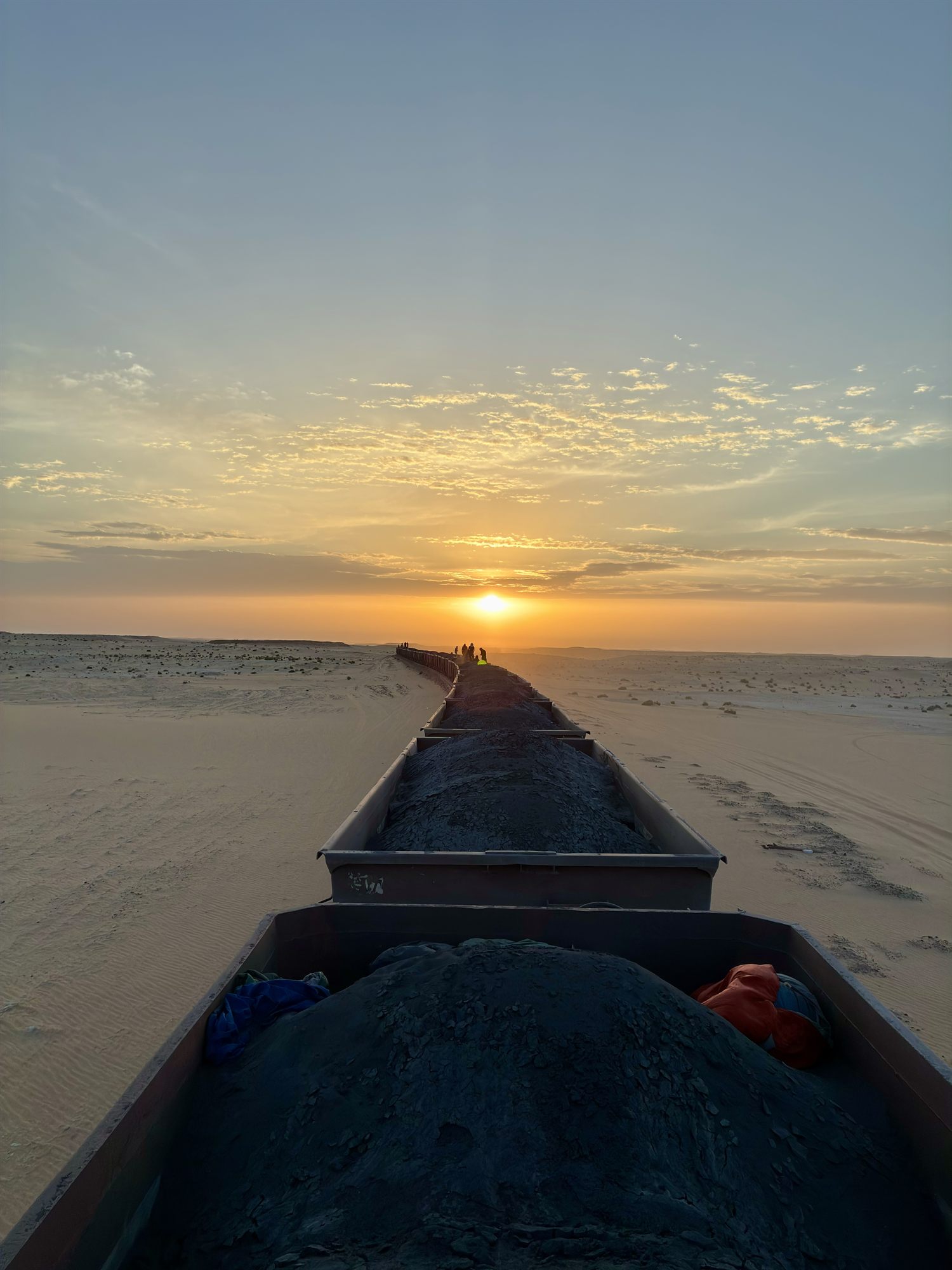
At around 06.36 it slowly started to get light. I lifted my goggles and looked out over the desert.
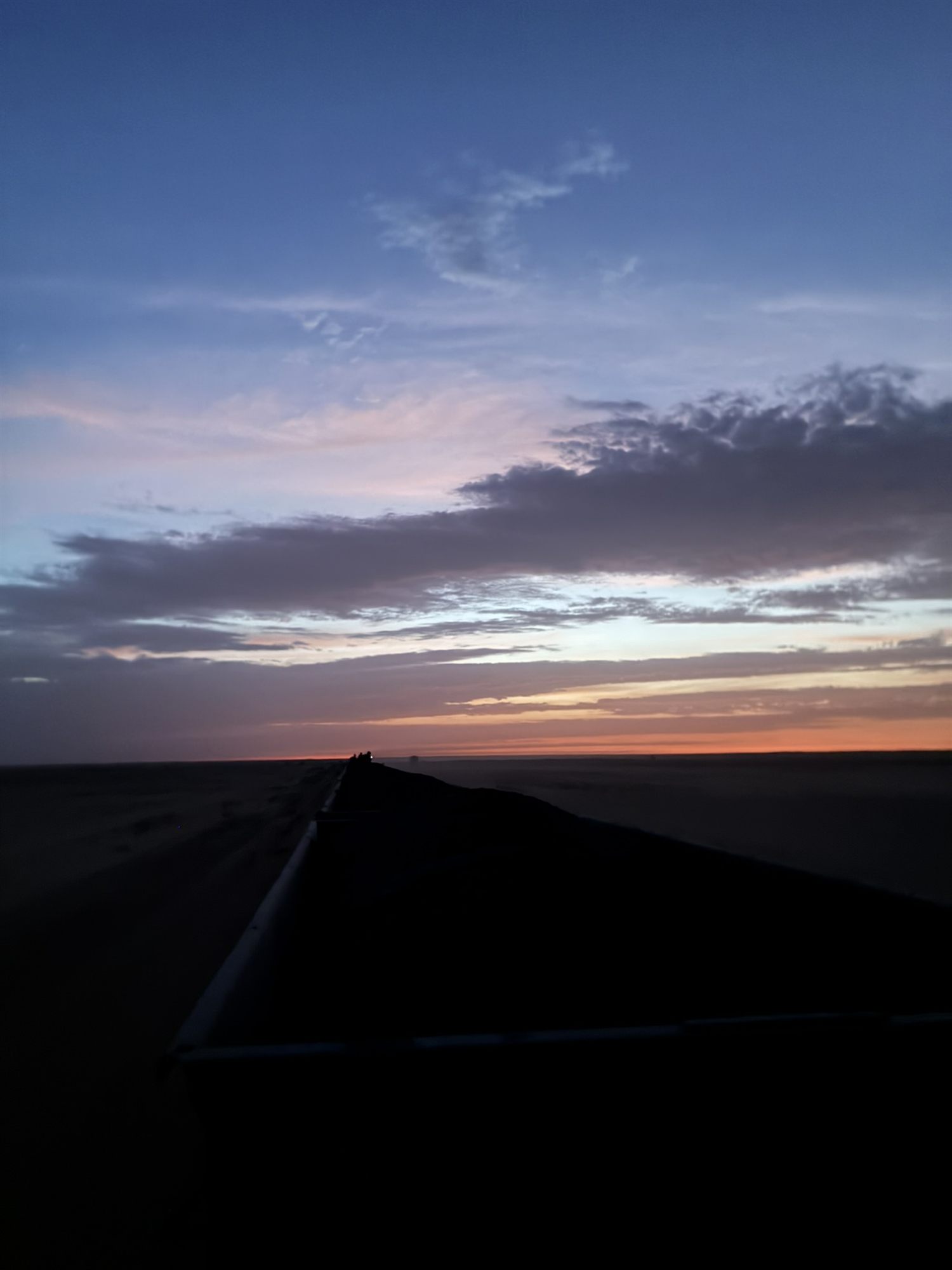
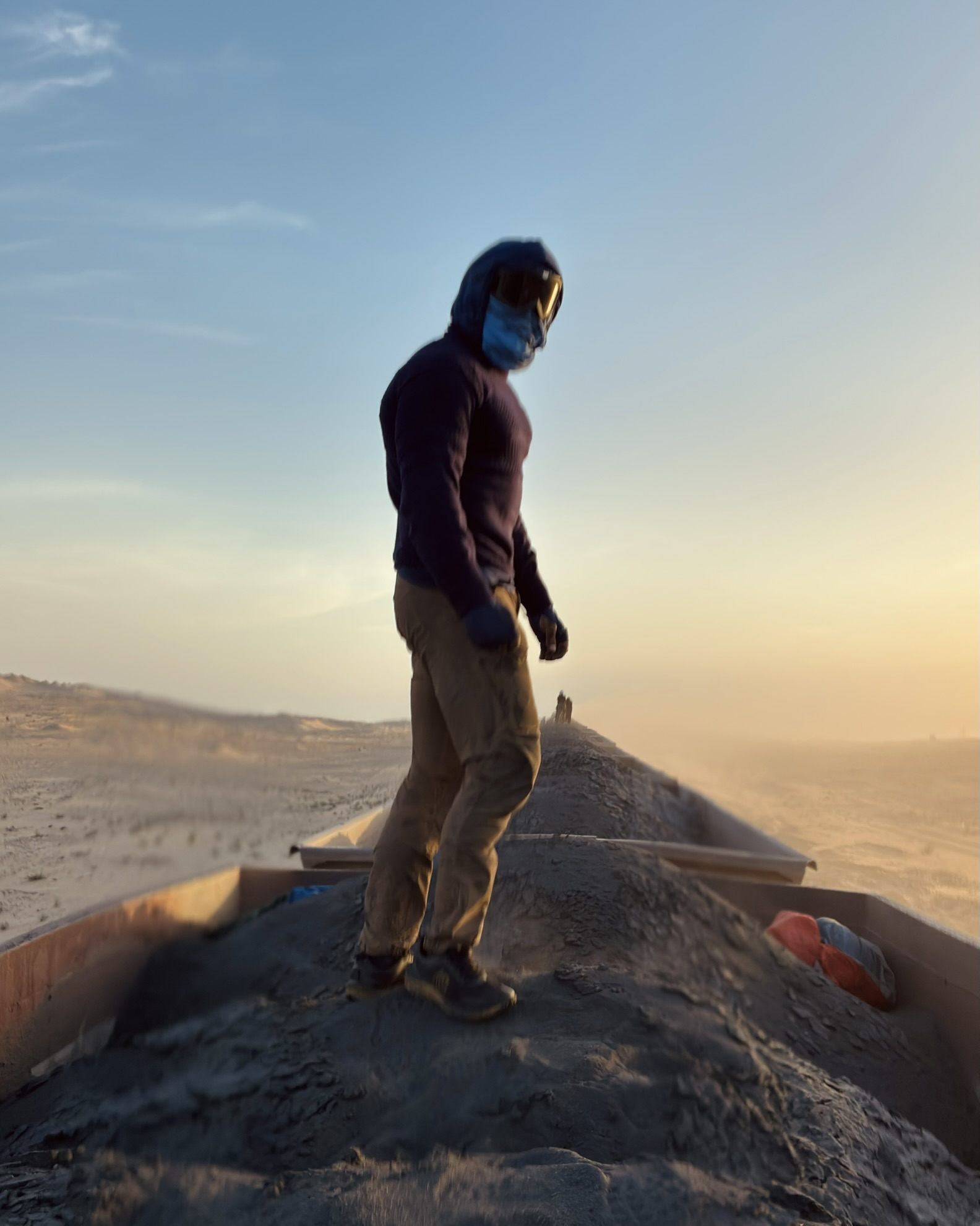
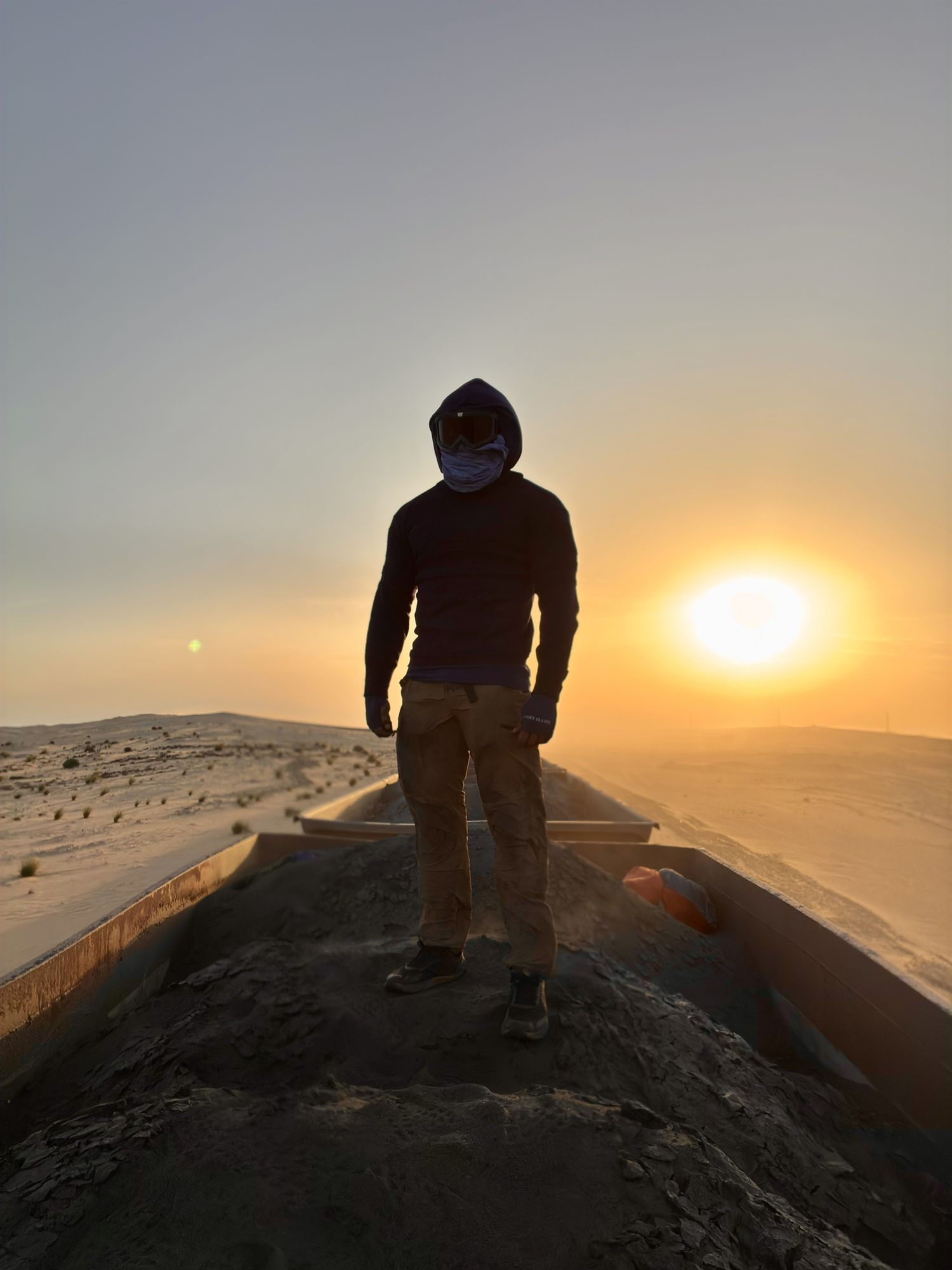
After a whole night in complete darkness, the horizon slowly took on colour. The Sahara opened up in front of me, and the light grew stronger minute by minute. From about 06.57 I took photos and filmed, and I spent roughly an hour doing that – and just enjoying it. Watching the sun rise from the top of an open ore wagon was one of the absolute highlights of the whole trip.
Here's a short video from the train:
Gradually I could see other travellers getting up on the other wagons. They'd also made it through the night without being moved to the passenger car.
It got a bit cooler towards the end of the night, and I put on a jumper – but it was never as cold as I'd expected.
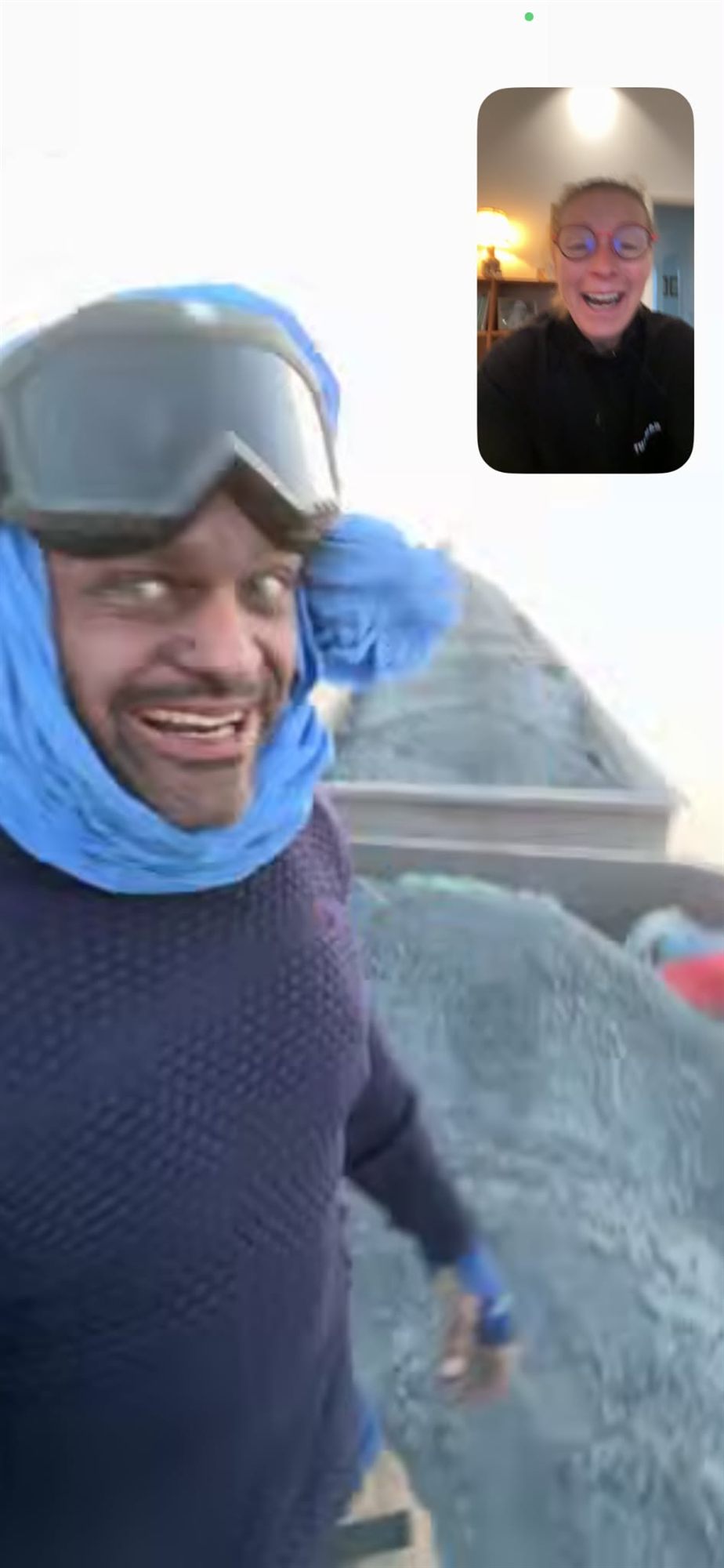
I tried to FaceTime Kristine, but she didn't answer at first. Instead I got hold of my mother-in-law, Inge, who was fairly surprised to see me calling from the top of an ore train in the middle of the Sahara. Later I reached Kristine too. A funny and rather special way to share it with the people at home.
Our wagon
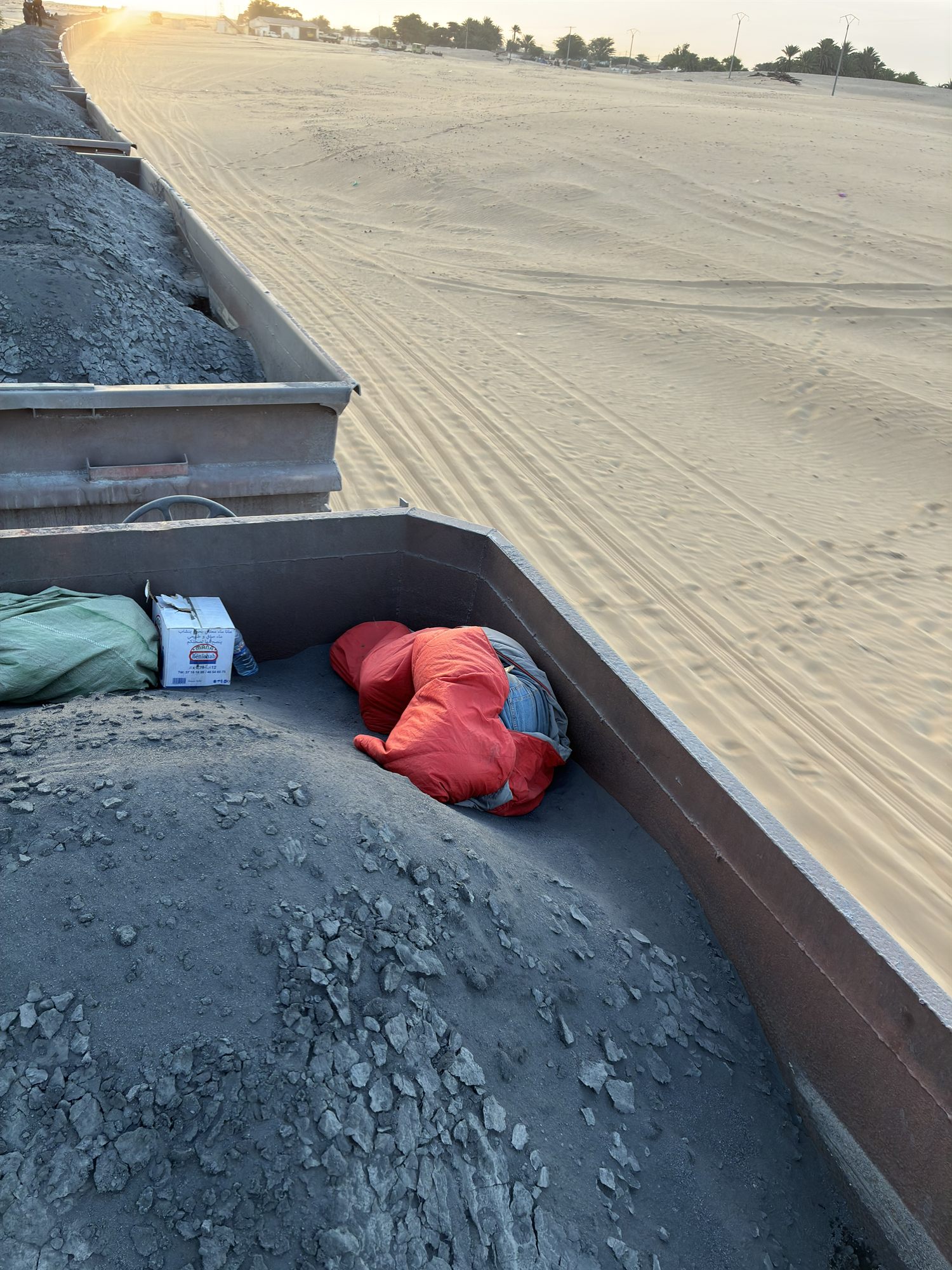
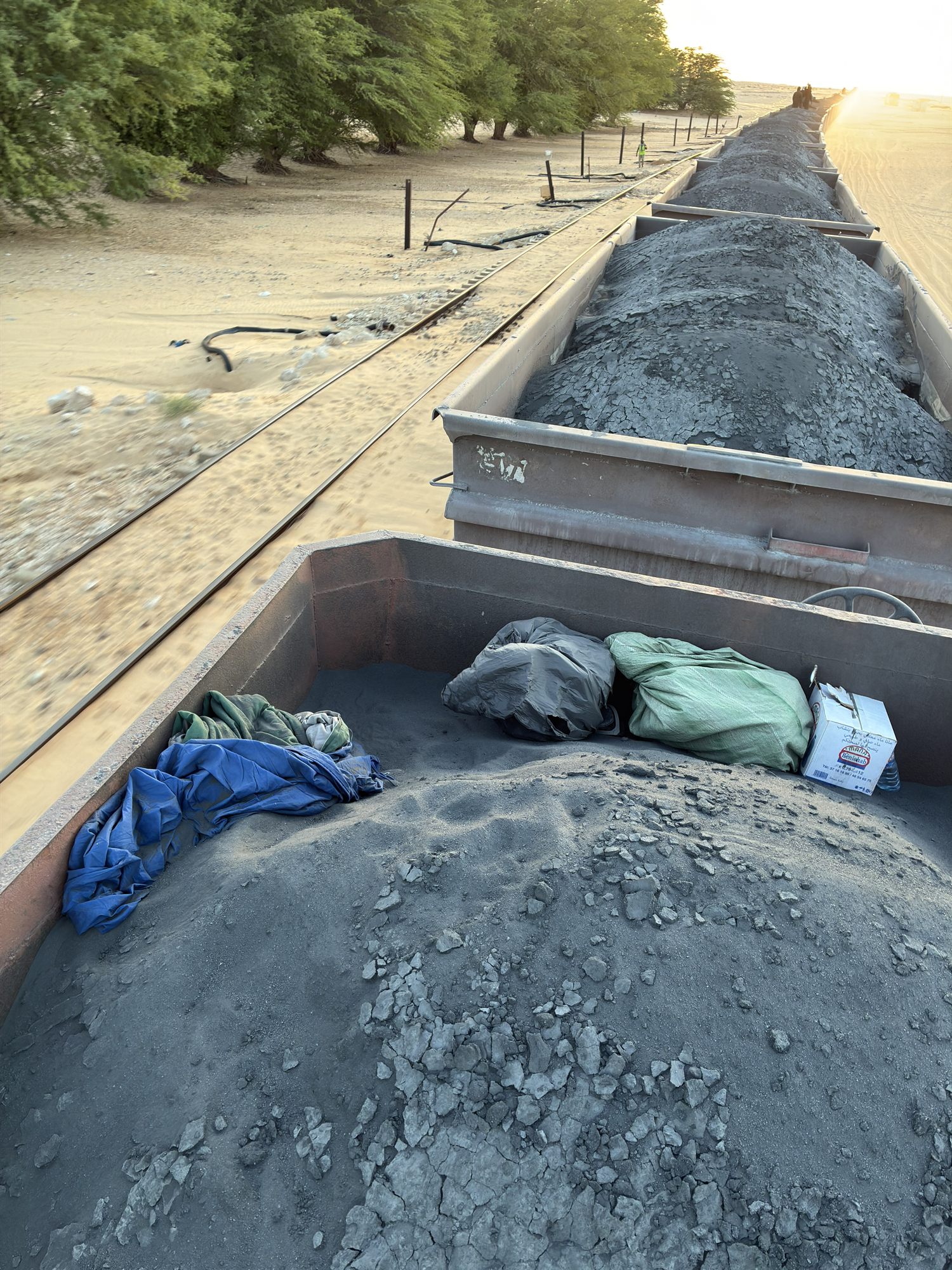
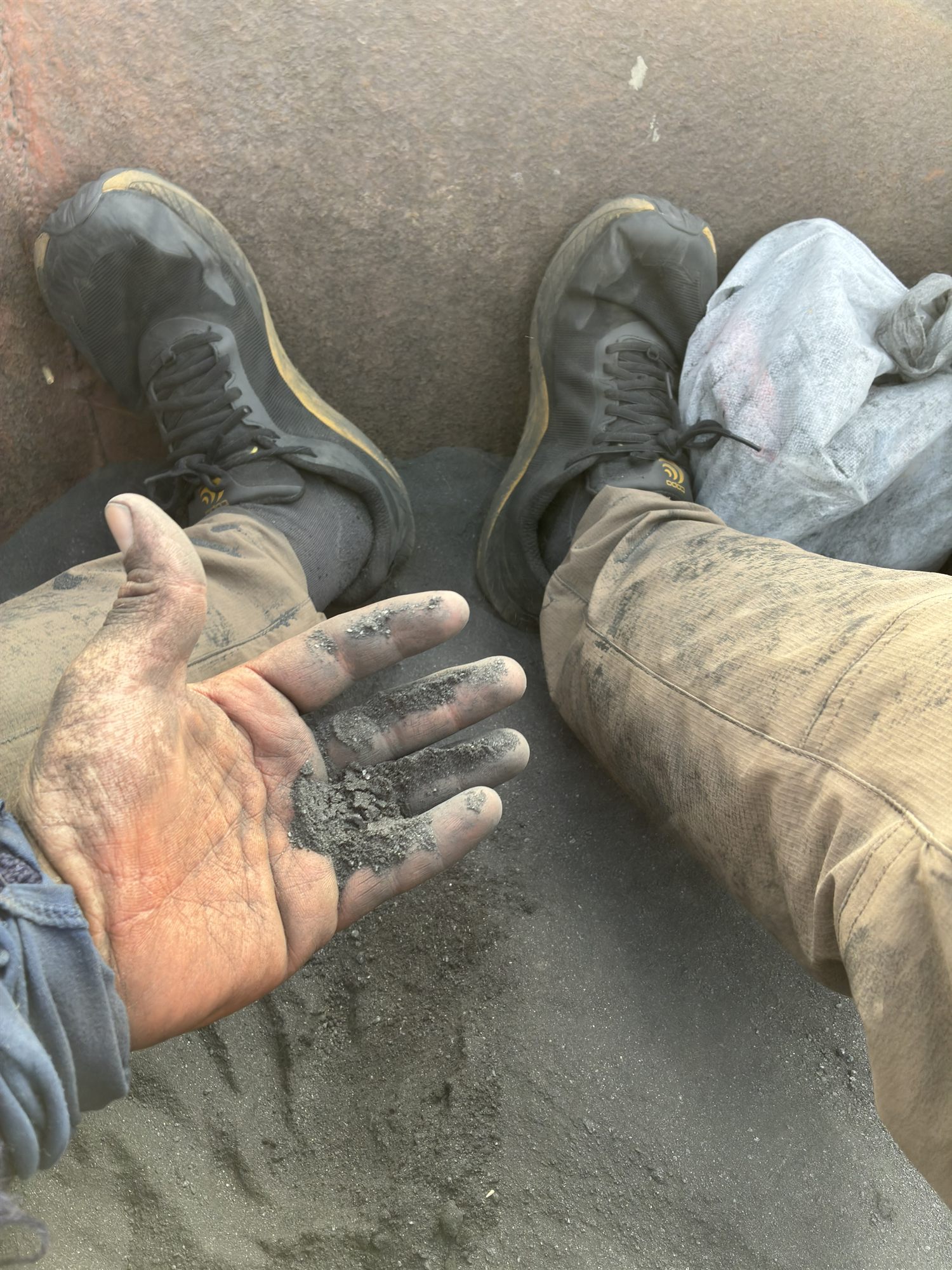
In daylight I could finally see where I'd spent the night: a hollow in a heap of grey-black iron ore, with our plastic-wrapped bags and sleeping bags along the edge. The ore gets into everything.
The last stretch to Nouadhibou
The landscape started to change, and I could see water alongside the line as we got closer to the city.
At about 09.19, taxis started driving up alongside the train, ready to pick up travellers. The passenger car stops outside the closed iron ore area, and the taxis take people on from there.
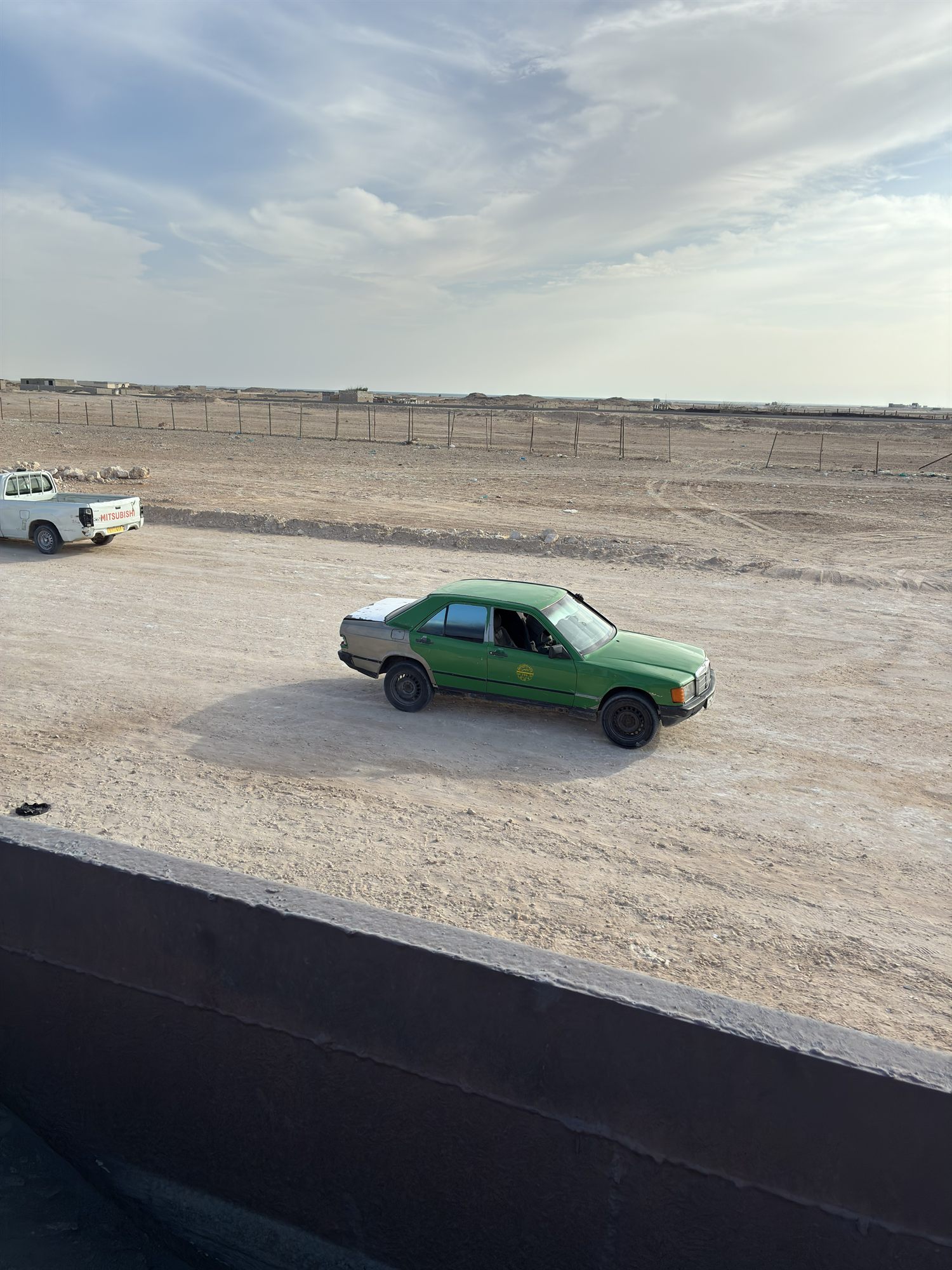
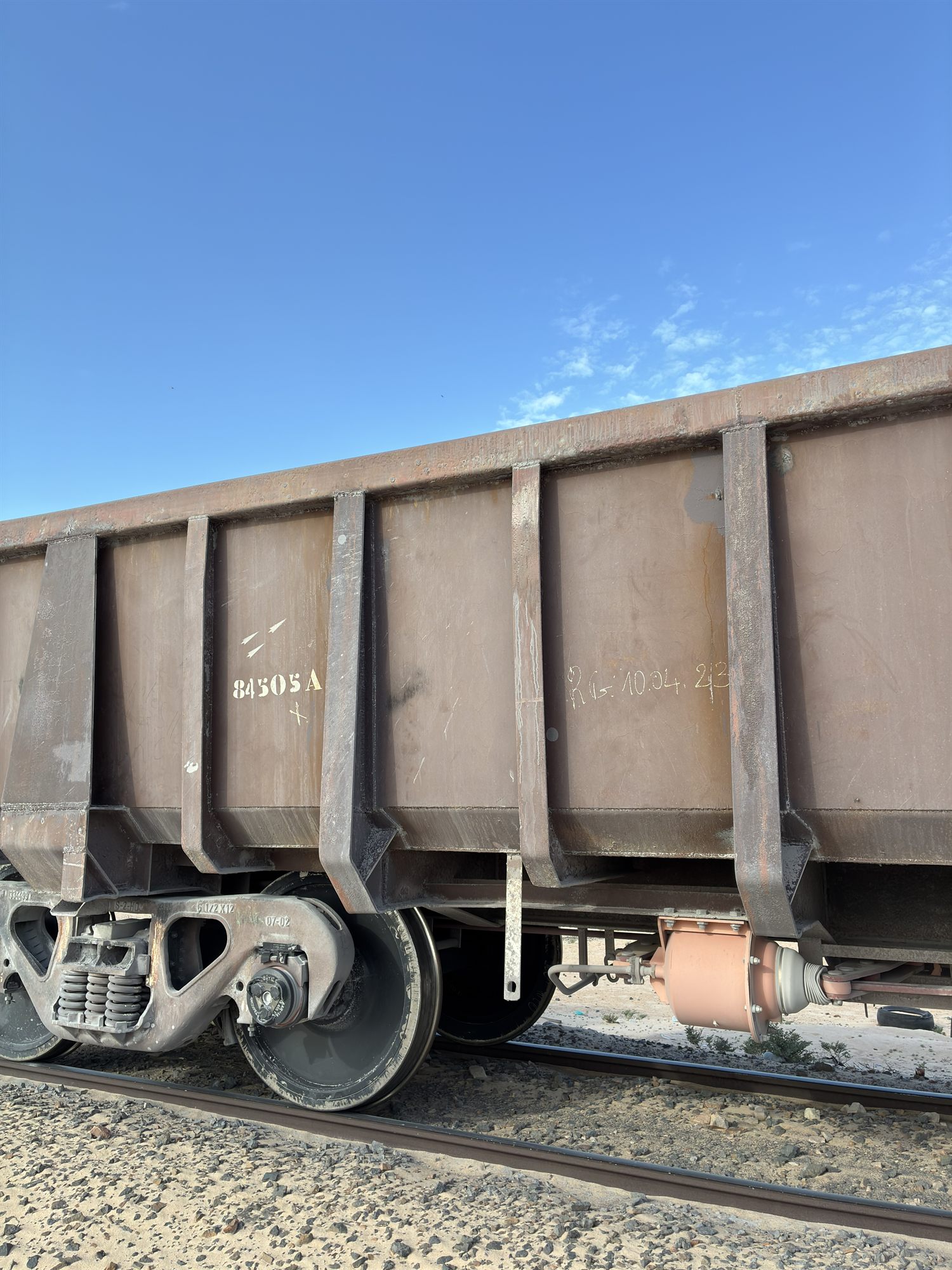
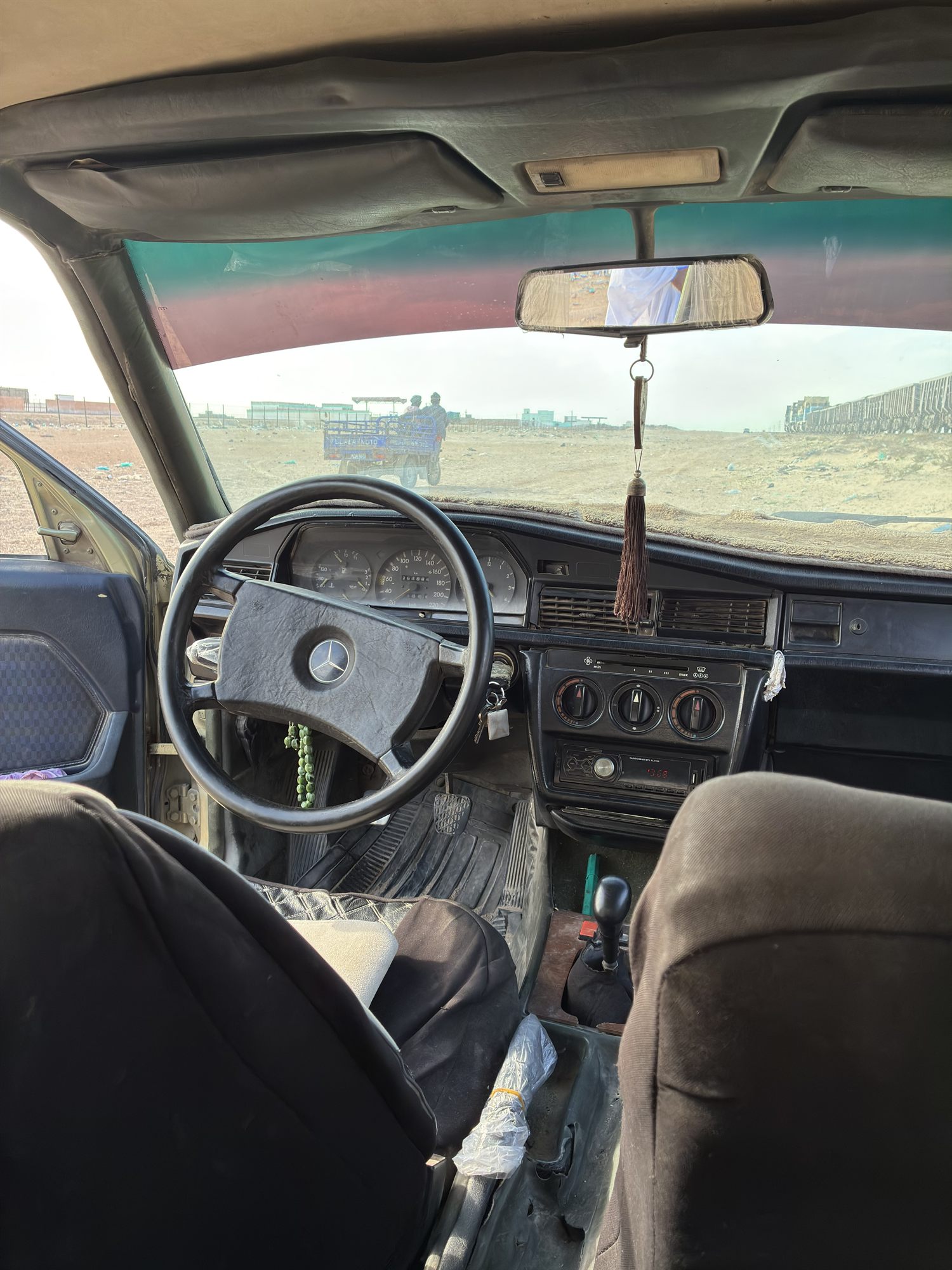
At 09.26 the train stopped. I'd been on board for 12 hours and 21 minutes. We got our things down, I took a photo of the wagon we'd ridden, and we jumped into one of the green taxis towards town.
Free Zone Hotel – black with iron ore dust
At 09.53 I arrived at the Free Zone Hotel in Nouadhibou, completely covered in black iron ore dust. It was everywhere – on my face, my body, down my back and all through my clothes. I took a photo so you can see what I looked like.
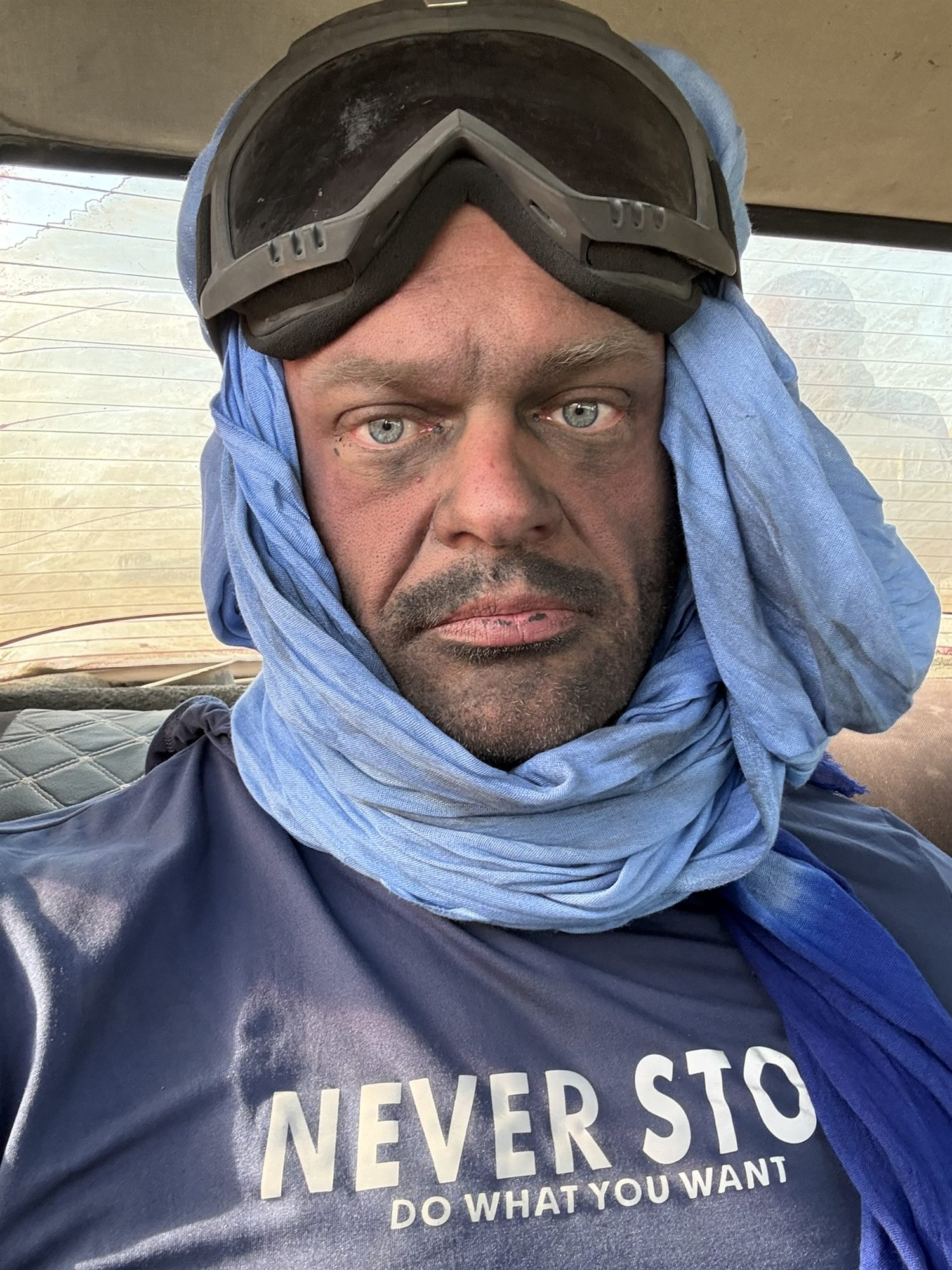

I needed two showers to get it all off. My clothes were so dirty that I threw them away. A fitting end to an extraordinary train journey.
Practical advice if you want to ride the Iron Ore Train
Go with a local guide
I'd strongly recommend arranging the trip through a local guide. You can try to do it on your own, but in my view it's far better to have a local person with you. There's no fixed timetable, and you don't know exactly when the train will come – it changes from day to day. Sidi Mohamed's contacts let us follow where the train was, so we knew when to get ready and when to drive out to the line. It made a big difference, and I think a guide is money well spent if you want the best chance of a successful trip.
Nothing about this train is guaranteed
This is the most important thing to understand. The Iron Ore Train is not a normal passenger service with a reliable timetable.
- There's no guaranteed arrival time, and the train can be late.
- It may not stop where you expect – or at all.
- You may have to wait an extra day.
- Conditions can be different from one departure to the next.
My trip went exactly to plan: the train stopped, we got on, we weren't moved, and there were no technical problems. But that doesn't mean it will go the same way for you. From my guide, I heard about a group that had to wait an extra day because the train didn't stop the day before, about travellers who were found during the check and moved to the passenger car, and about a later departure that had no passenger car, where travellers were dealt with differently on arrival. Those are things I was told about specific departures – not rules for every train.
What to bring
- Ski goggles. For me, the most important piece of kit. They keep the fine dust out of your eyes.
- A dust mask or a Mauritanian veil. You need to protect your face and airways. I had help tying the veil properly.
- Old clothes. Wear things you're happy to throw away. I did.
- Plastic bags. Wrap your backpack and everything else, and seal the bags well. Keep the things you'll need during the night in a separate small bag.
- Protection for your phone. I started with a waterproof phone case. When I took the phone out to film and take photos, I'd taped over the charging port and speaker openings to keep some of the dust out – but tape isn't a complete solution. Use a proper dust-proof case or cover.
- Plenty of water. I drank three or four bottles. There's no way to buy drinks along the way.
- Simple food. I only ate one pack of dry biscuits, about 250 g, and that was enough for me. Bring something easy to eat and store.
- A sleeping bag. I used mine on the wagon. It got cooler late in the night, but not as cold as I'd expected in November.
Toilets
There aren't any. On our wagon we agreed to use one corner as the toilet area. That's simply how it works on an open ore wagon, and it's worth knowing before you go.
My verdict: a trip of a lifetime
I'd imagined that riding the Iron Ore Train through the Sahara would be a big experience. It was better than I'd hoped. Lying on an open ore wagon under a sky full of stars, hearing the engines and feeling the whole wagon rumble through the night – and then the sunrise over the Sahara. I'll never forget it.
I never felt unsafe. I had a good guide, and it was just the two of us on our wagon. We were also lucky. You can't plan this with the certainty of an ordinary train journey: you have to be flexible, ready for very basic conditions and willing to accept that there's no guarantee of when the train will come or how the trip will go.
Go with a local guide, bring the right gear and expect very little comfort. But if you're looking for something completely different, and want to experience the Sahara in a way few people do, the Iron Ore Train is something I'd recommend without hesitation.
Practical information
| Our ride | Choum → Nouadhibou, 8–9 November 2026. On board 20.57, departed 21.05, arrived 09.26 – about 12½ hours, on an open ore wagon (not the passenger car). |
|---|---|
| Distance | About 460 km from Choum to Nouadhibou. The whole line, from the mines near Zouérat, is 704 km. |
| The railway | Mauritania Railway, opened in 1963 and run by the state mining company SNIM. Trains are usually described as around 200 wagons and up to about 2.5 km long. |
| Timetable | None you can rely on. We were told to expect the train around 19.00–20.00; it arrived just before 21.00. |
| Organised by | Booked through ChingiTours (not an affiliate link), with the local arrangements handled by Time for Mauritania. Guide: Sidi Mohamed. |
| Stayed | Choum Guesthouse before the train; Free Zone Hotel in Nouadhibou after. |
Background: Wikivoyage – Iron Ore Train and Wikipedia – Mauritania Railway. Everything about the trip itself is my own experience on one departure in November 2026, plus what my guide told me. Conditions and rules can change.