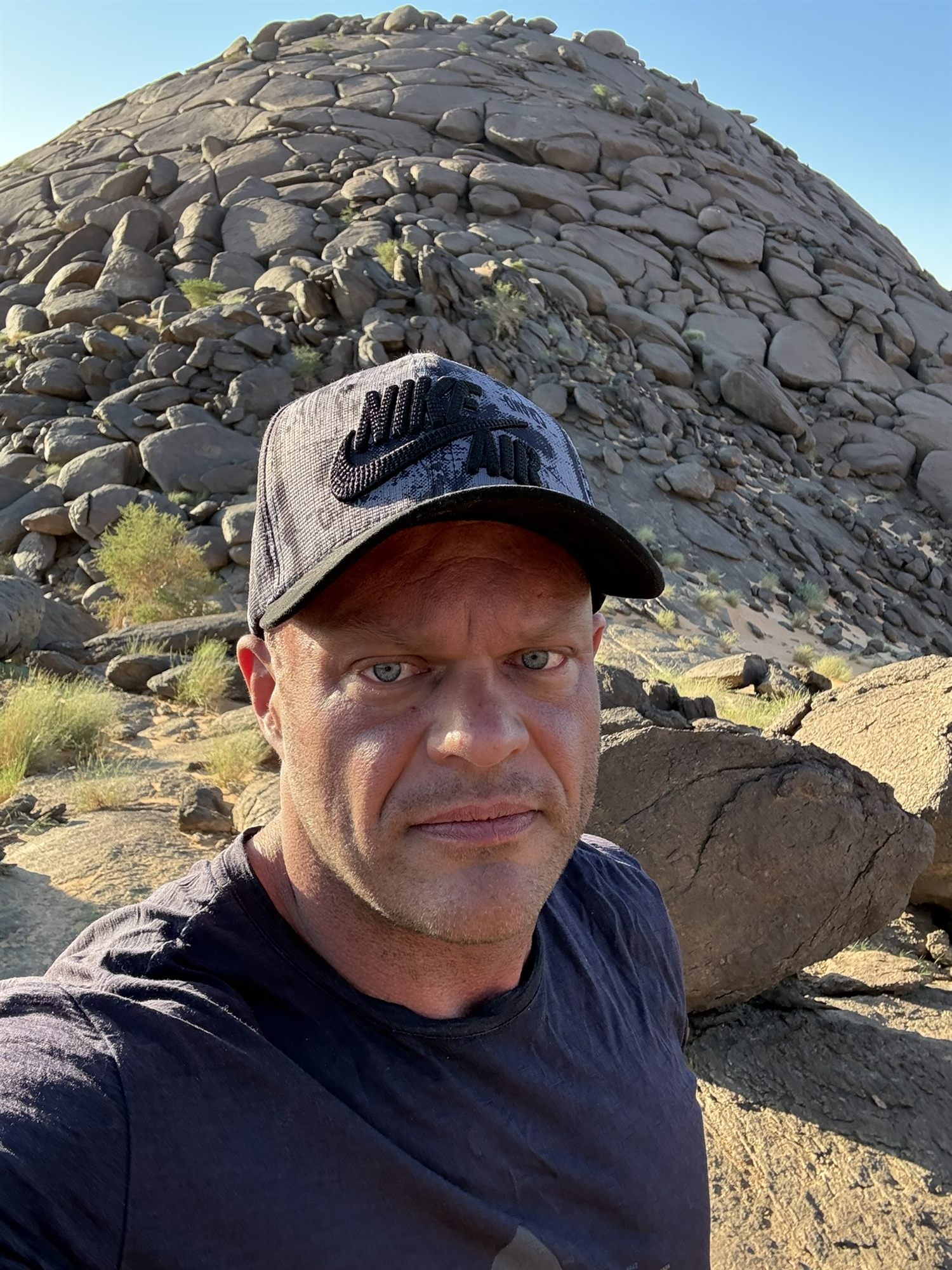
Ben Amera rises out of the flat Sahara in northern Mauritania like nothing else around it – a huge, dark dome of rock with nothing but sand in every direction. It's often described as the largest monolith in Africa, rising about 633 metres above the desert floor.
On 8 November 2026, as part of my trip through Mauritania, I climbed it. It took about an hour to get up, and it gave me one of the best views of the whole trip. It also taught me a clear lesson on the way down. This is how it went. The rest of the trip is in my 8 days through Mauritania.
The short version
Ben Amera, 8 November 2026. Started at about 07.50, summit at 08.51, back at the foot at about 10.45. No marked route – go with someone who knows the way. Scrambling rather than hiking, with one steep slab and nothing to hold on to. From the top we saw the Iron Ore Train cross the desert. Our attempt at a different way down got too steep and we turned back. Worth it – but not for everyone.
Morning in the camp
We woke at about 06.40 in our camp next to Ben Amera, just as the sun came up over the desert. The monolith stood black against the sky, with the light spreading out across the sand around it.
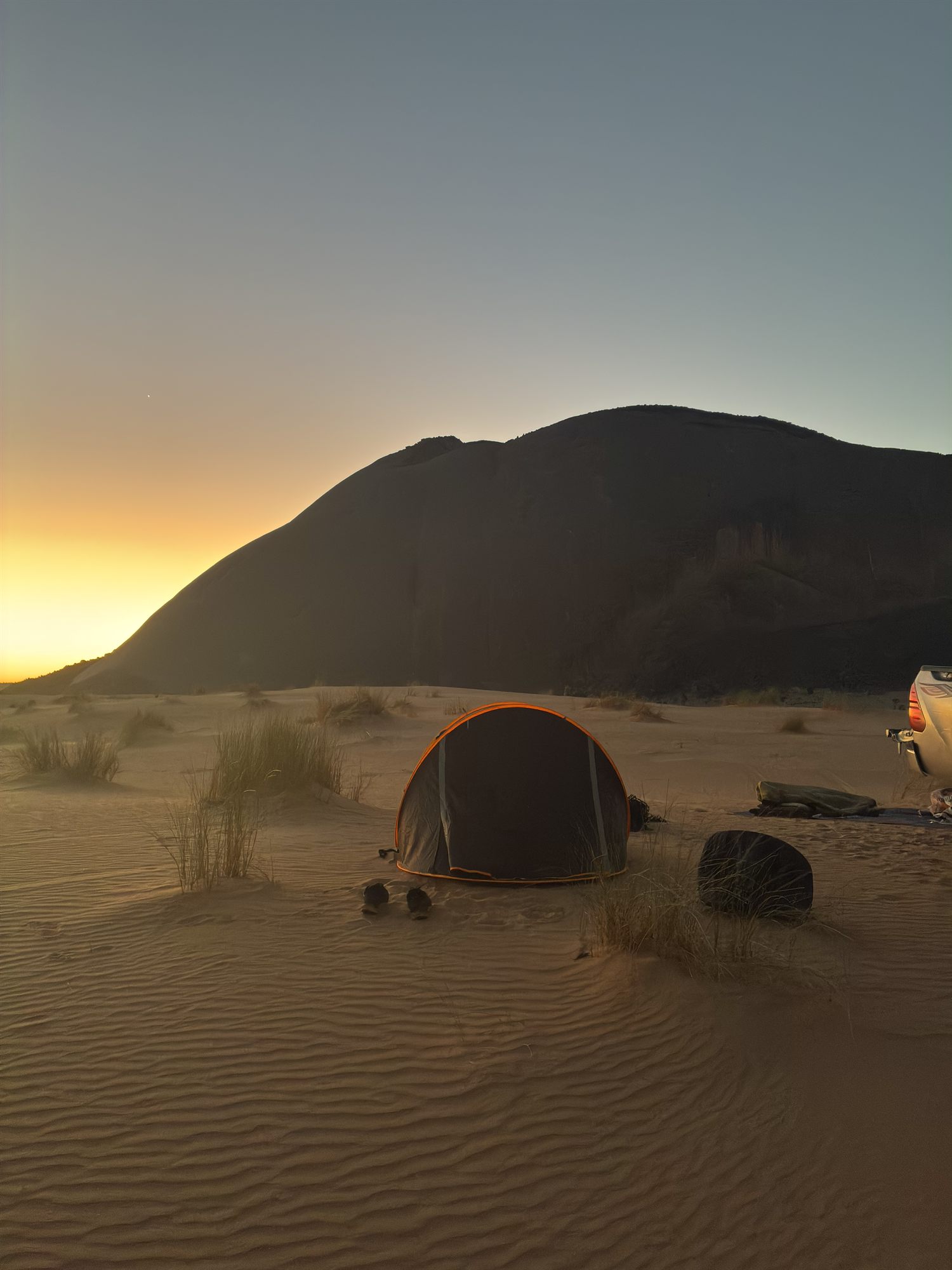
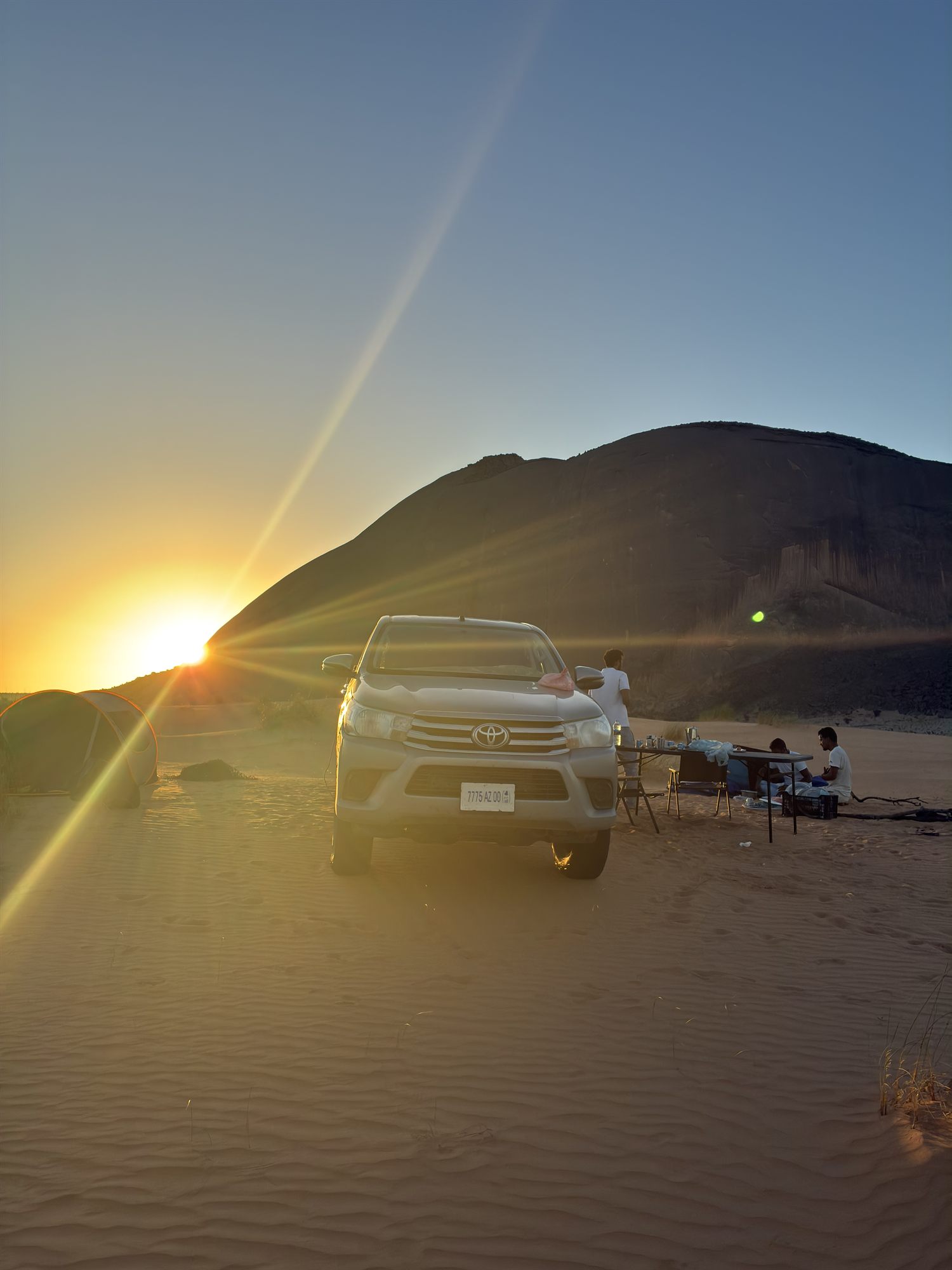
After breakfast we drove around to the other side of the monolith, where the climb starts.
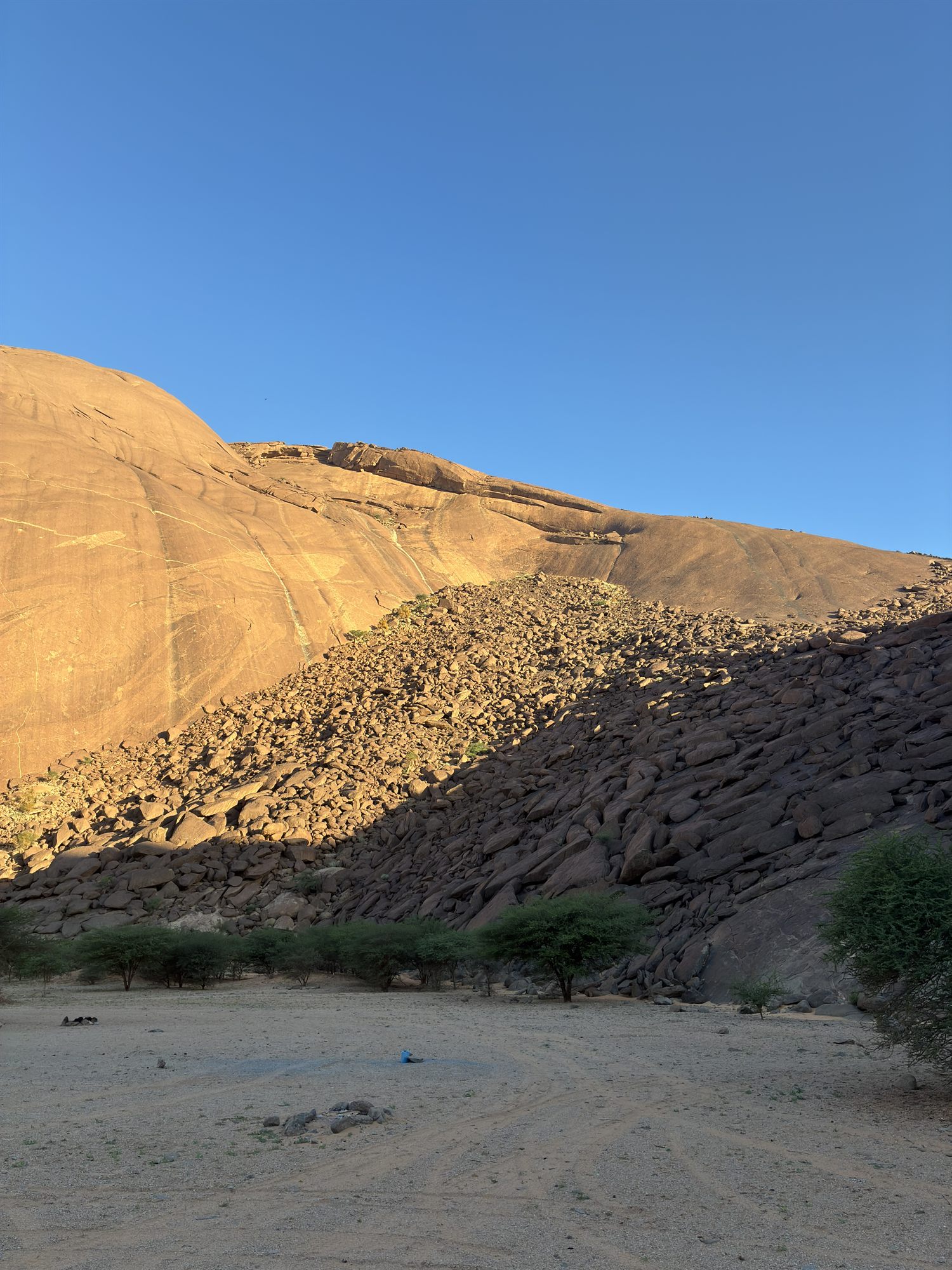
The climb begins – about 07.50
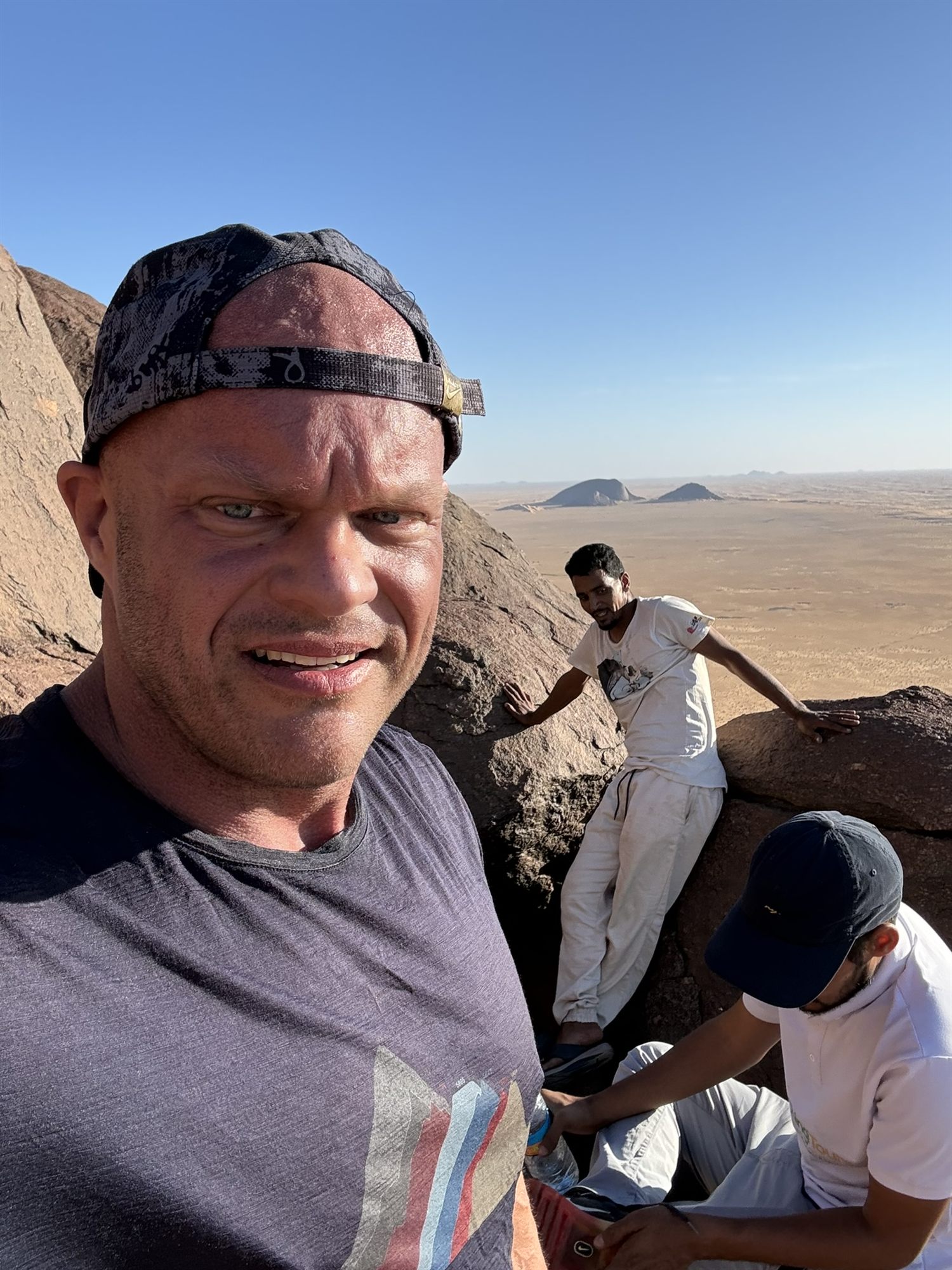
We started at about 07.50: me, my guide Sidi Mohamed, and a local guide who was going to show us the way up. There are no marked routes on Ben Amera – no paint marks, no signs, and no clear path to follow the whole way. That's why you need someone who knows where to go.
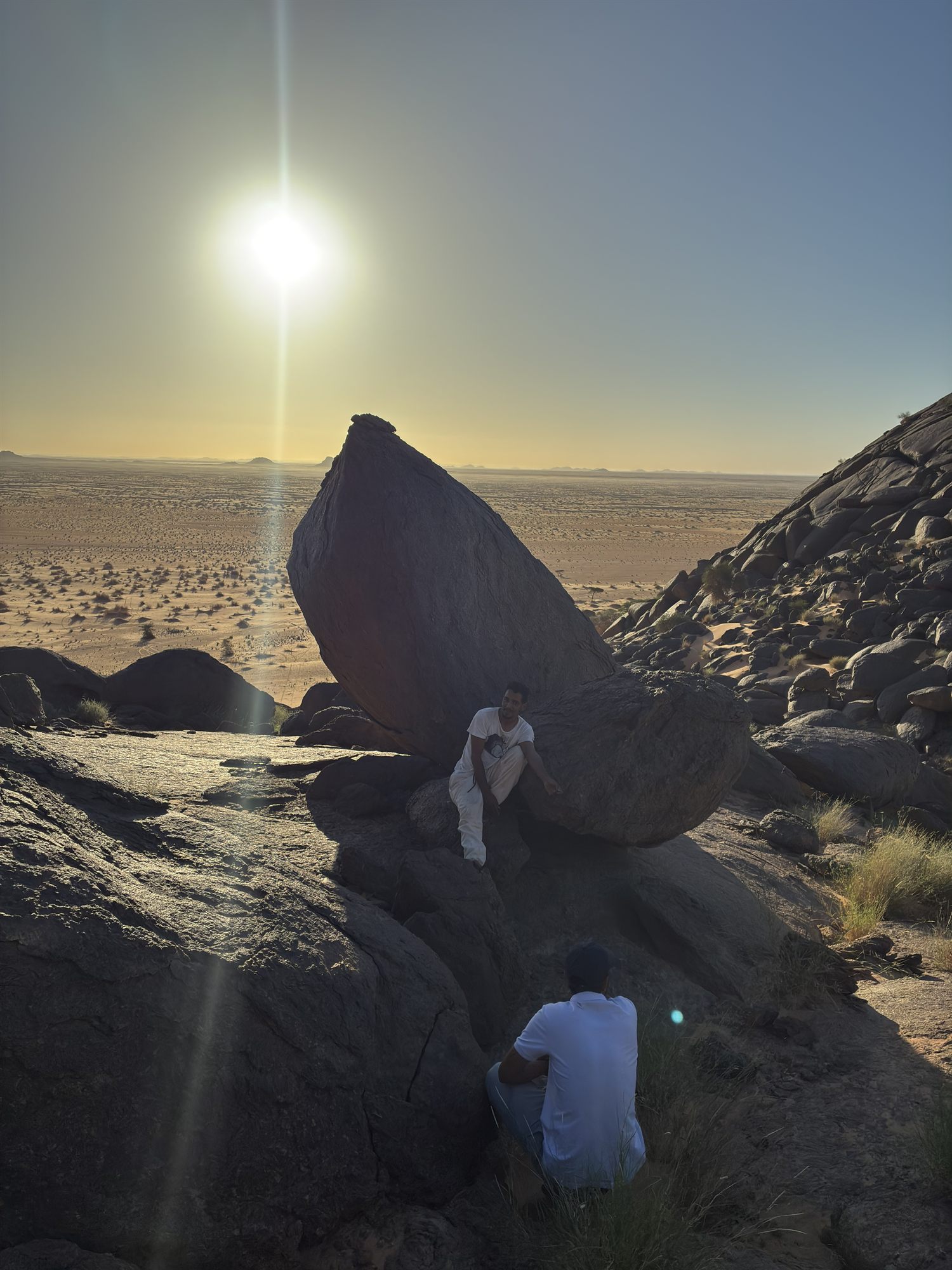
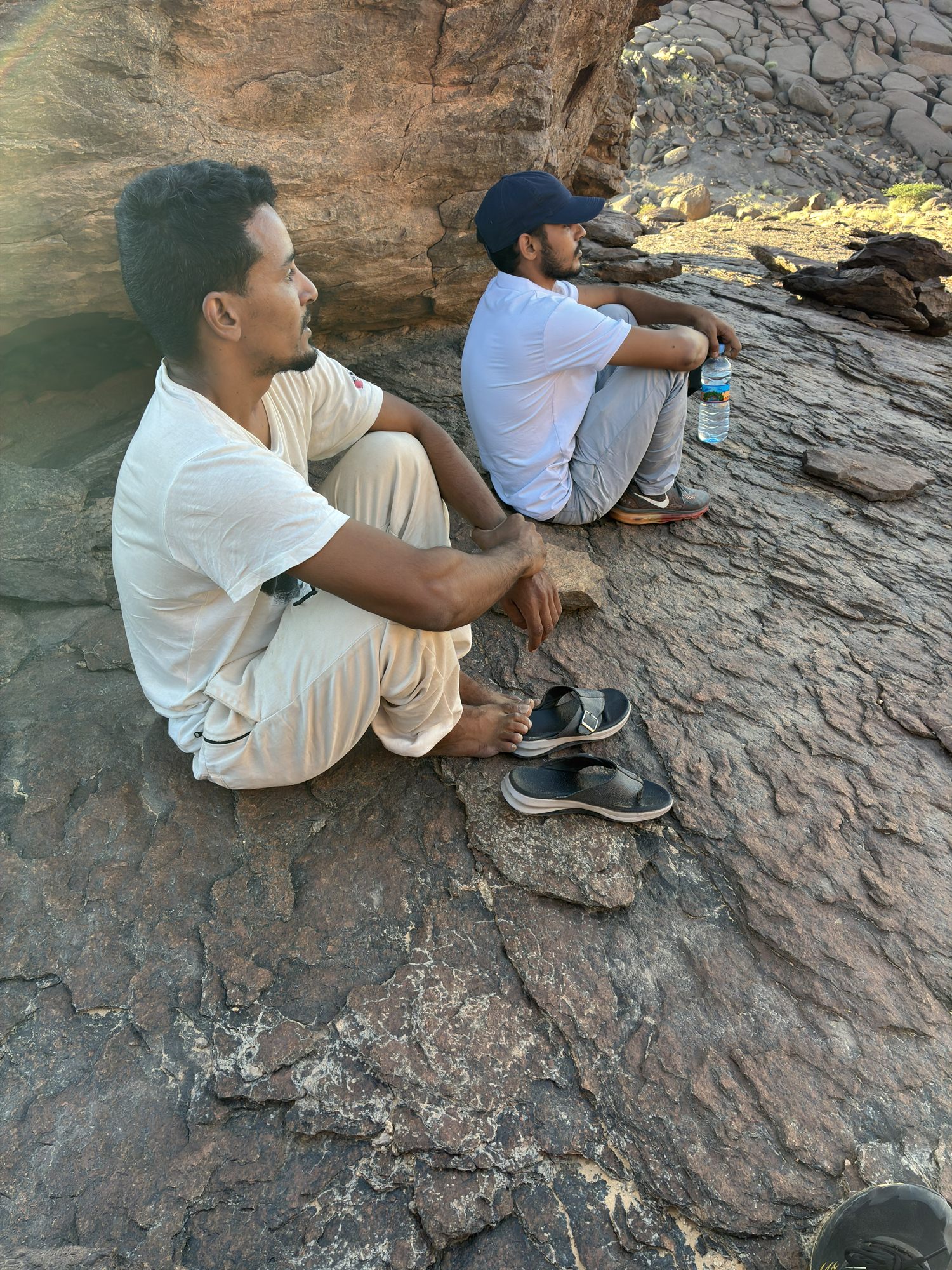
The local guide set off at an impressive pace – he more or less stormed up the rock. After about nine minutes he had to stop for a break. He was climbing in flip-flops, which is quite something when you see the terrain.
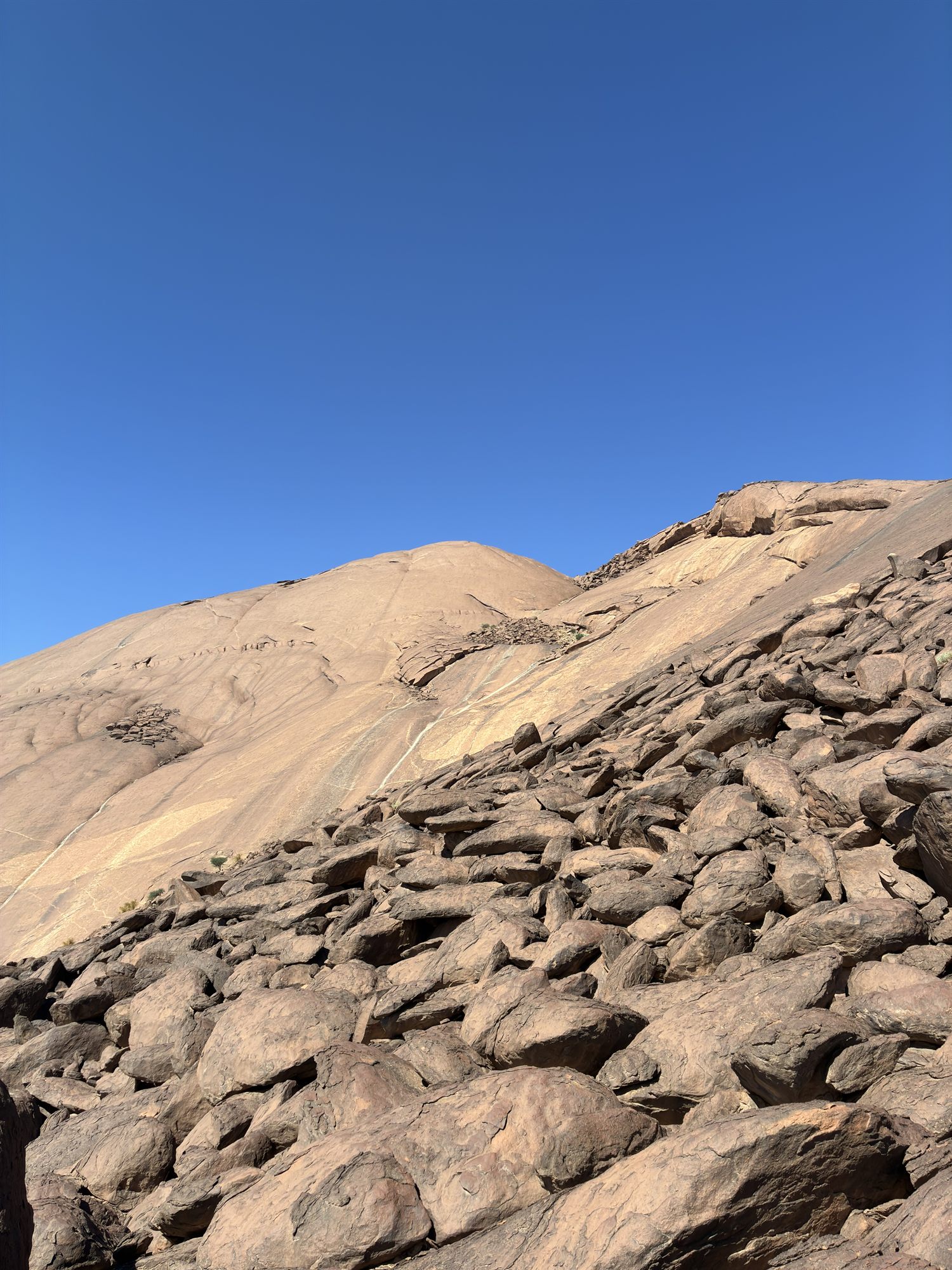
The first part is stony terrain. It isn't technically difficult, but now and then you use your hands and have to move carefully. It's more scrambling than walking, and it gradually gets harder as you go up.
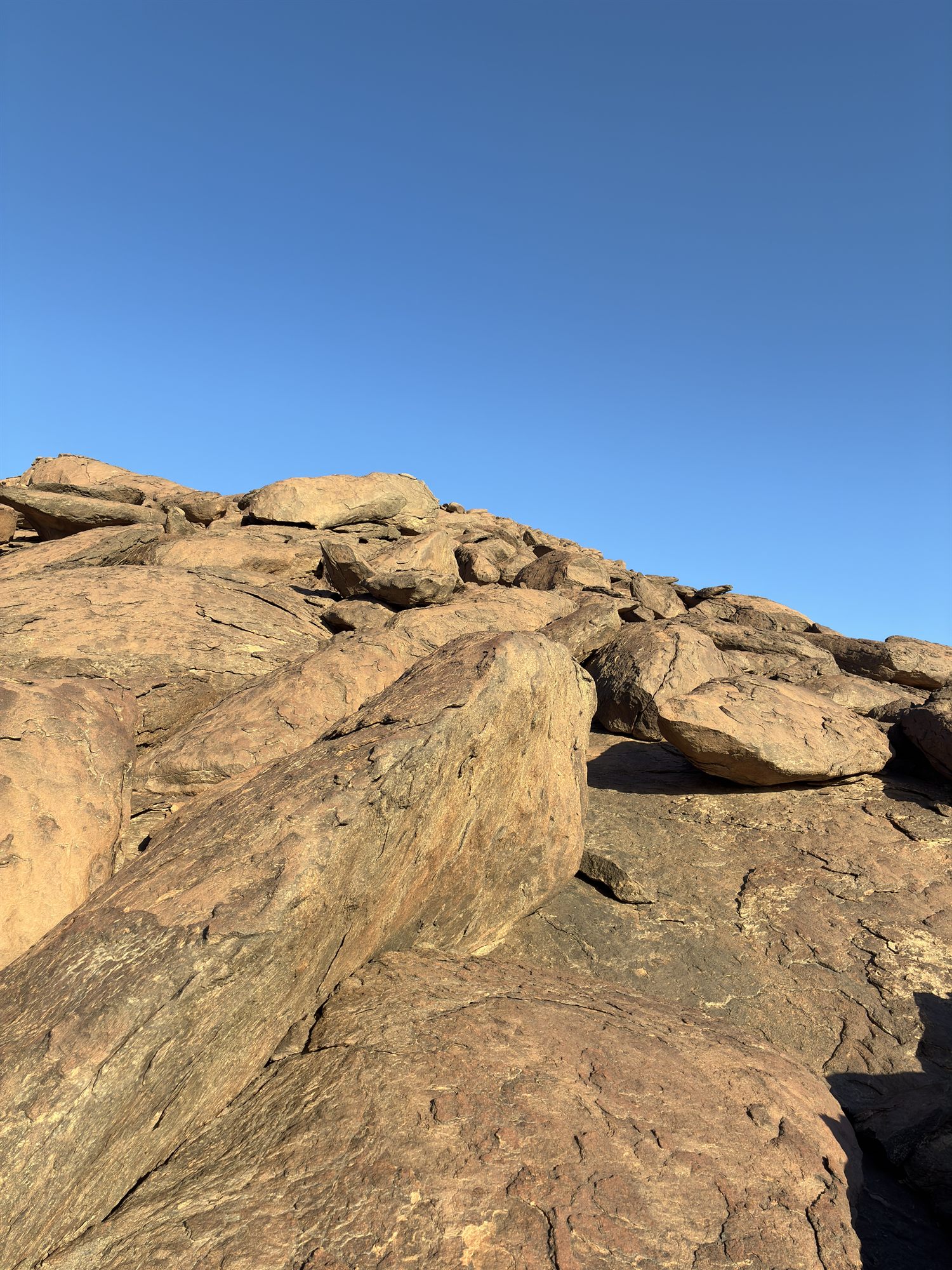
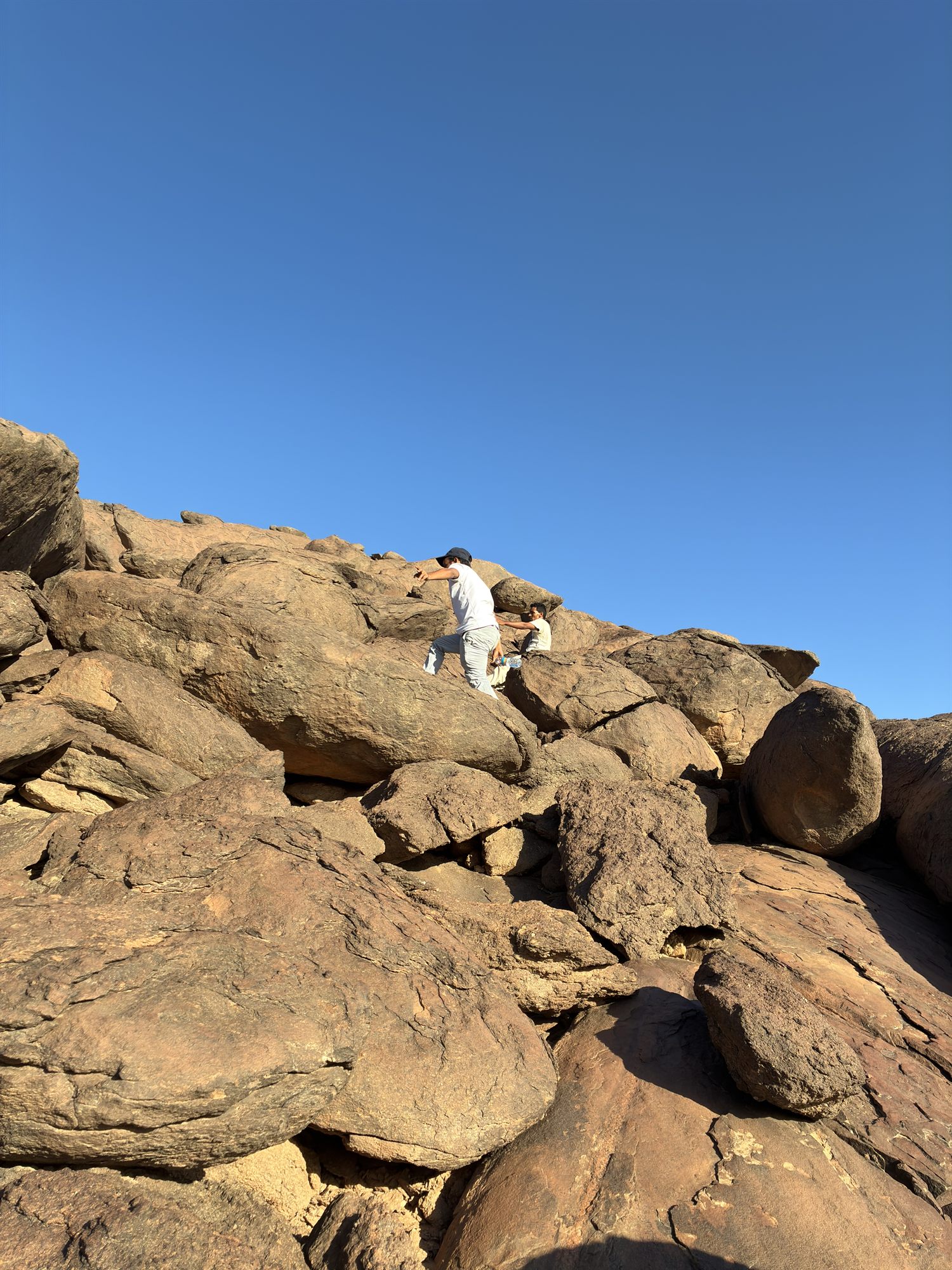
The local guide stays behind
At about 08.18 we stopped again. By now one of Sidi Mohamed's shoes had completely fallen apart, so he took it off and carried on barefoot.
The local guide who was supposed to take us all the way to the top also seemed to have had enough. He sat down and, in practice, told us to carry on to the summit ourselves, pointing up the direction we needed to go. After how fast he'd started, it was quite funny to see him sitting there while we went on without him. We could see which way to go, so we continued.
The steep slab
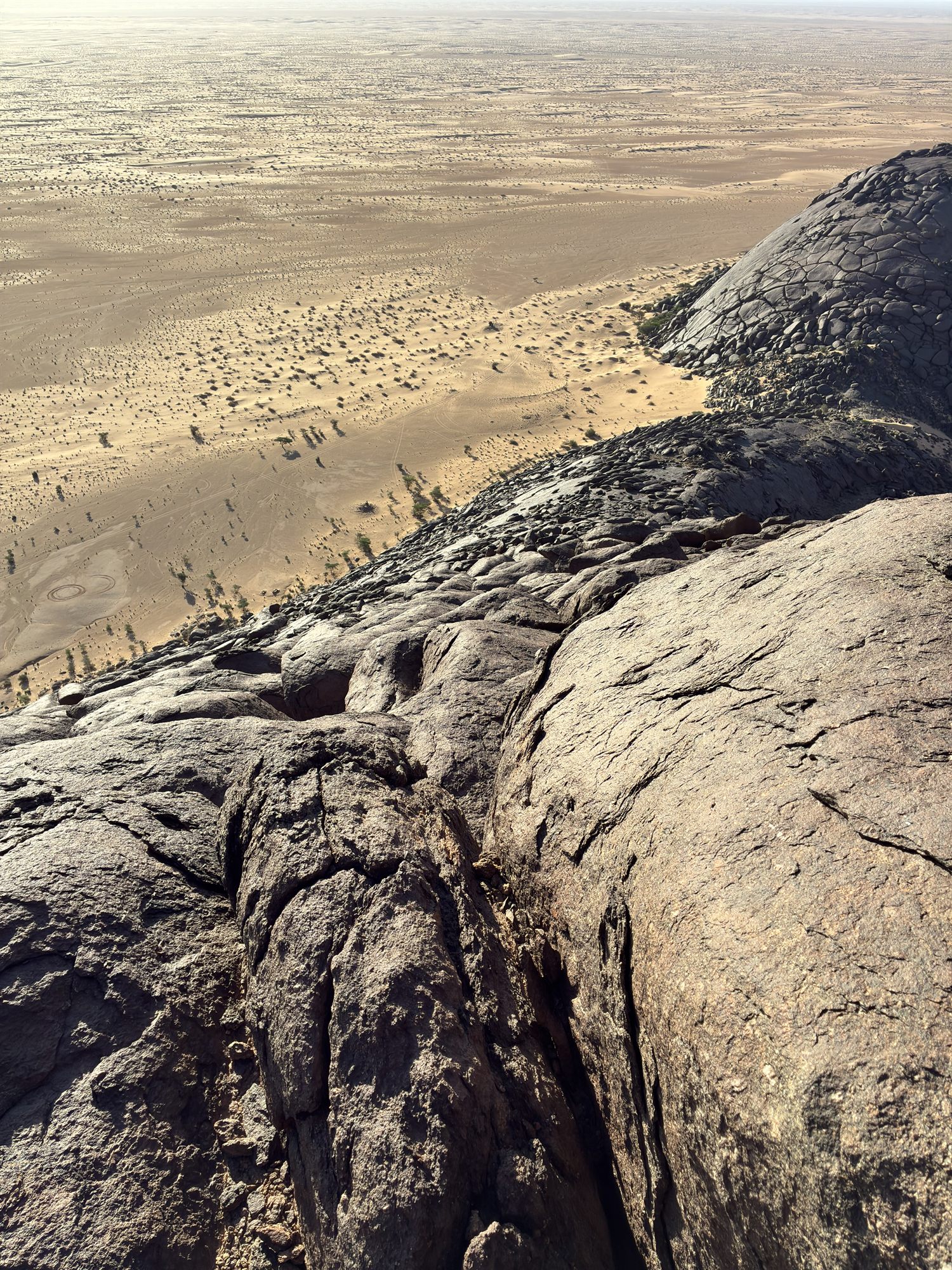
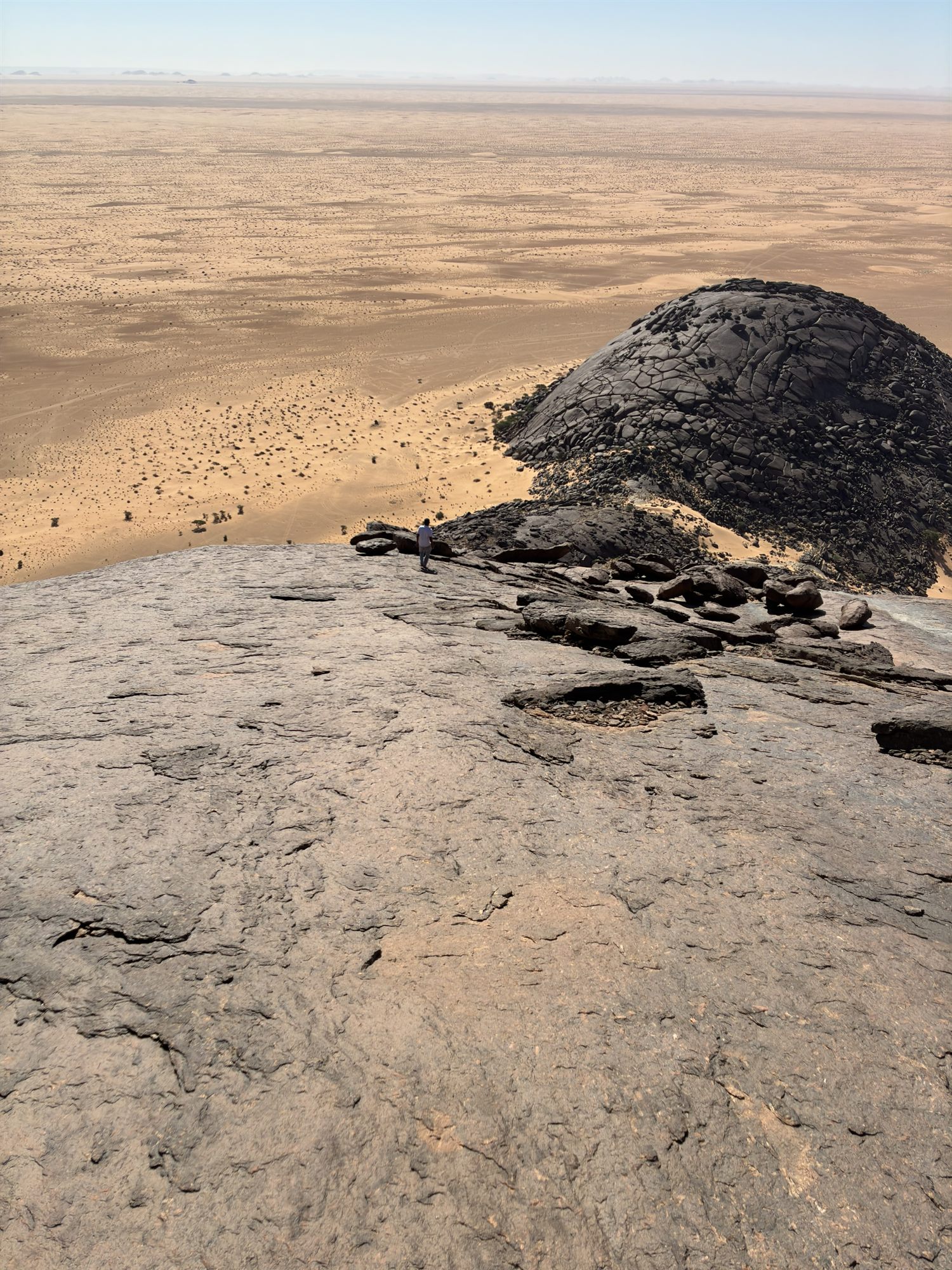
Then it got more demanding. We had to go up a steep slab – it felt very steep to me, maybe around 45 degrees, though that's my impression rather than a measurement. There wasn't much to hold on to, and we had to move very carefully.
We could see bolts in the rock, which suggested there had once been a rope or some kind of protection there. But there was no rope to use. We took it slowly. This is where you really want shoes with good grip – it isn't a place where you want to slip.
I climbed Ben Amera in the Topo Athletic MTN Racer 4, and the grip on the rock was good, including on this slab. (Affiliate link.) More about how I chose my shoes.
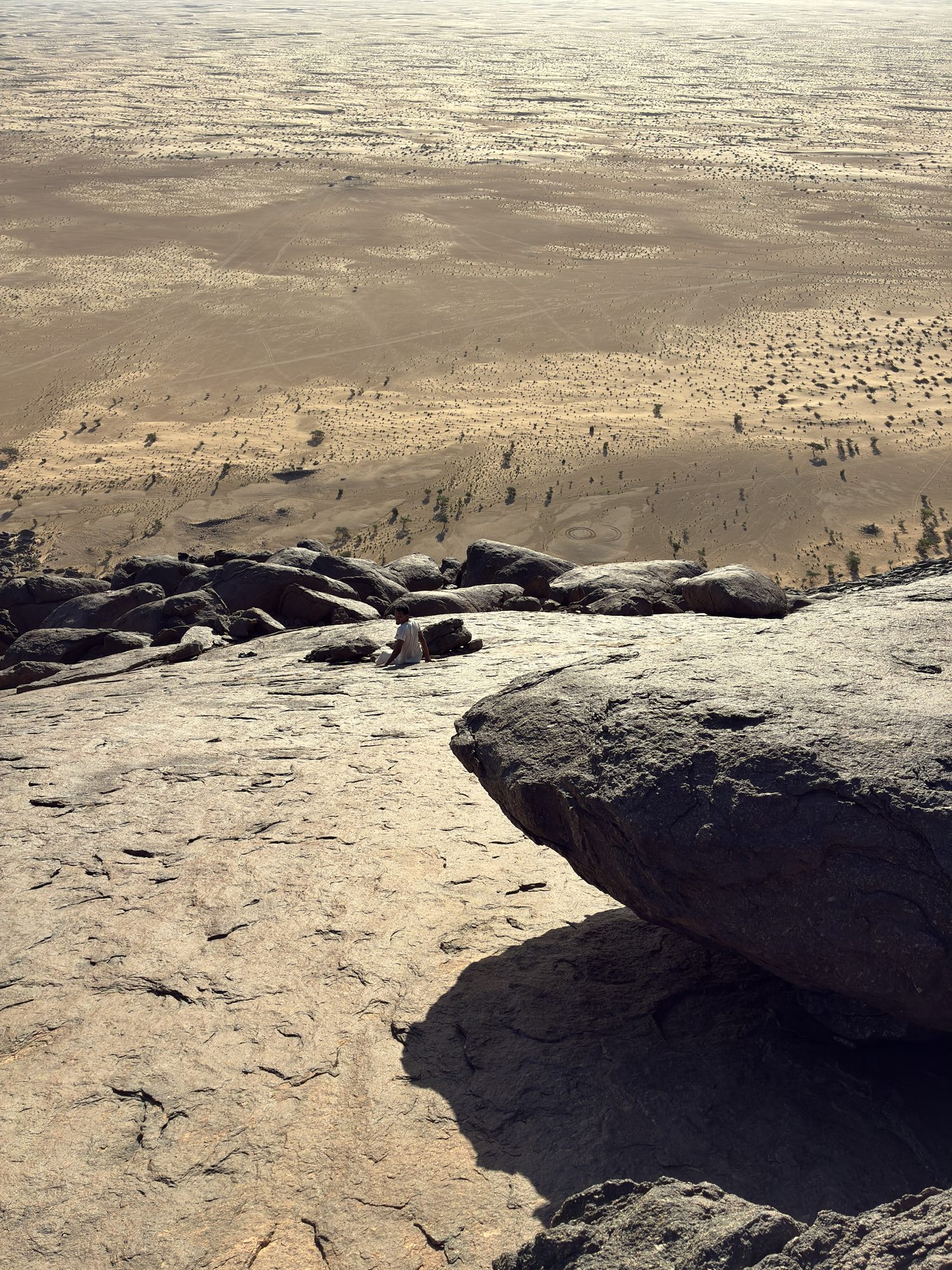
After the slab came some bigger boulders, which we also had to get over to reach the top.
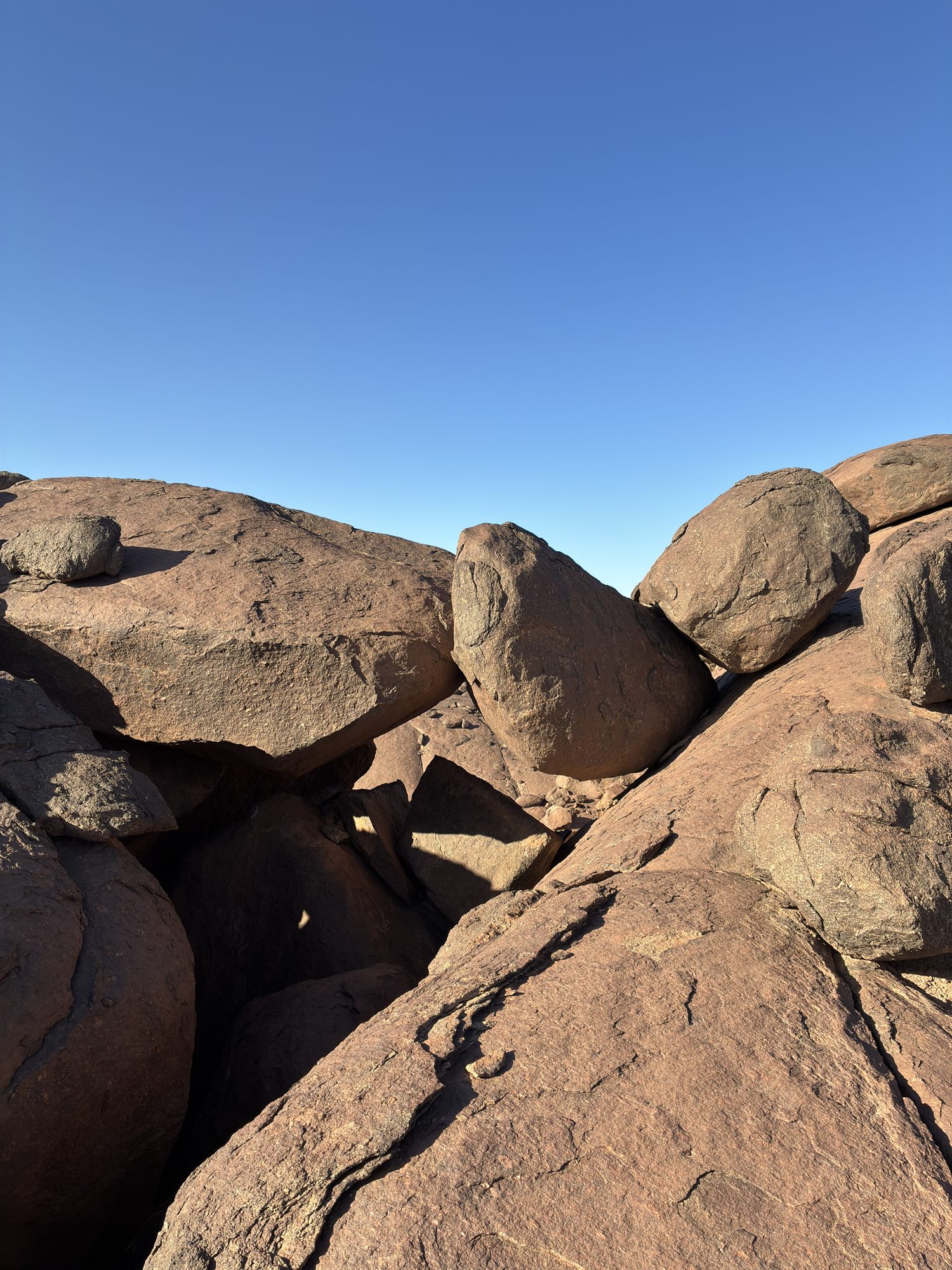
The summit of Ben Amera – 08.51
At 08.51 we reached the top of Ben Amera – about an hour from the bottom.
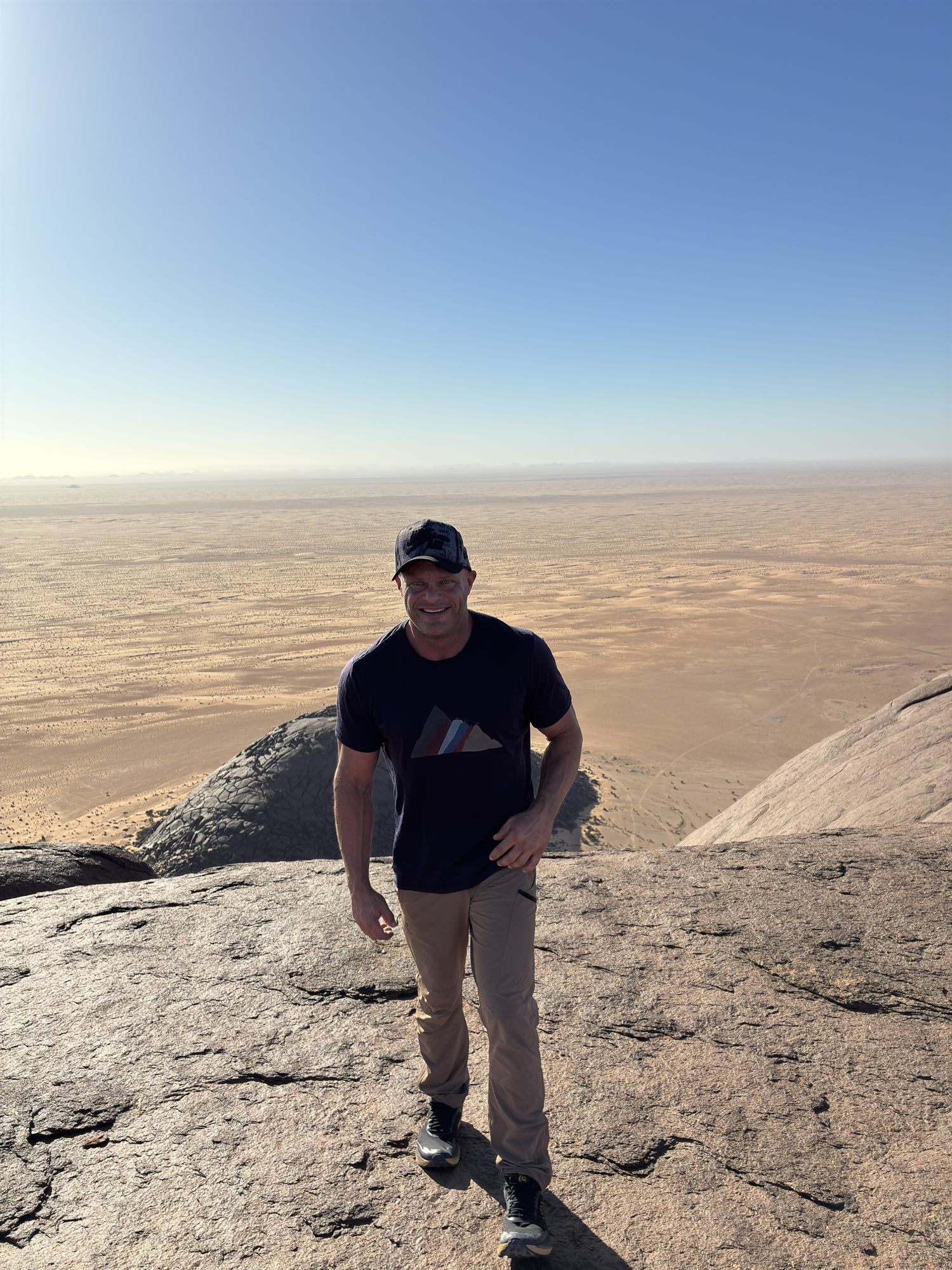
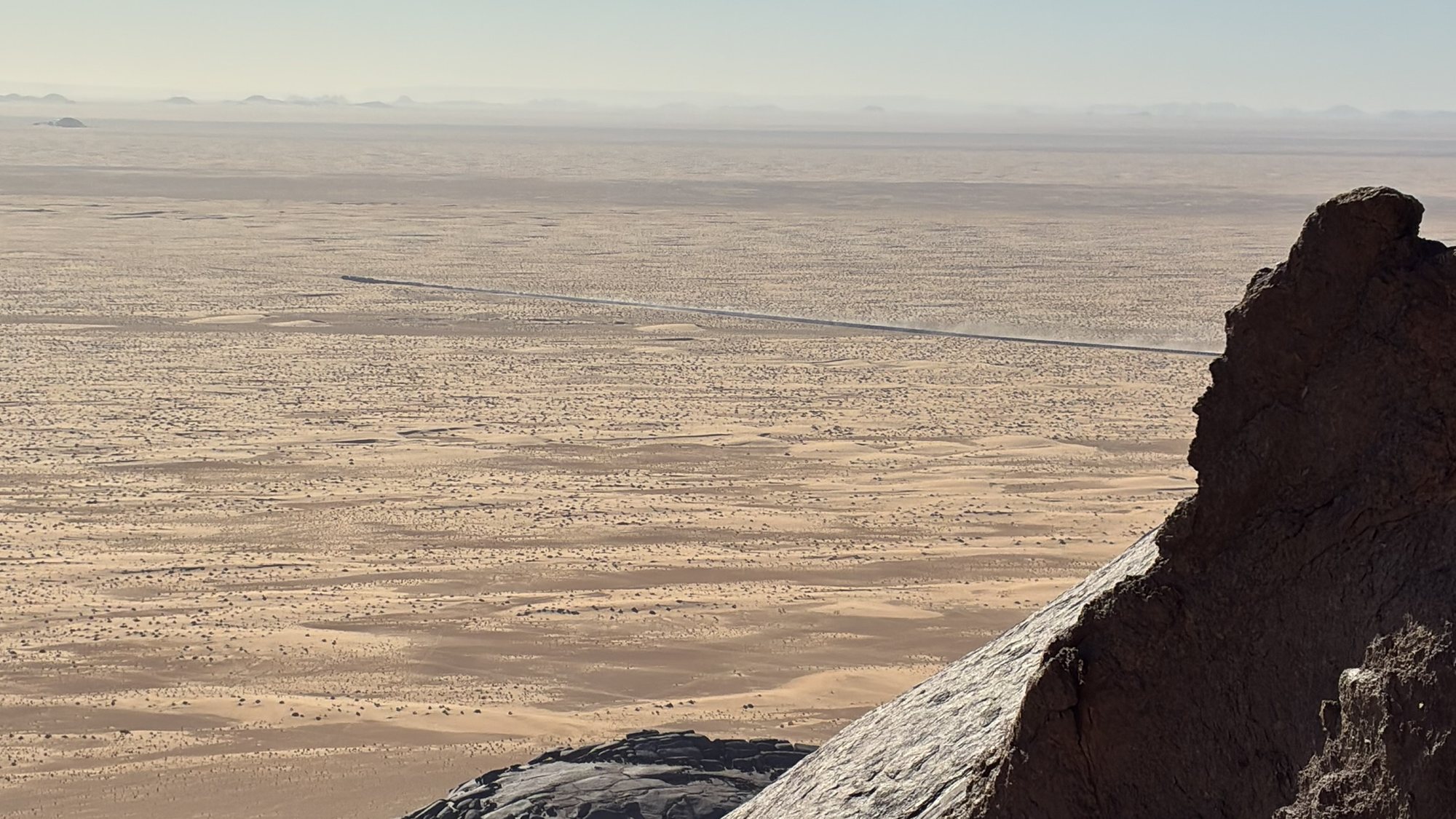
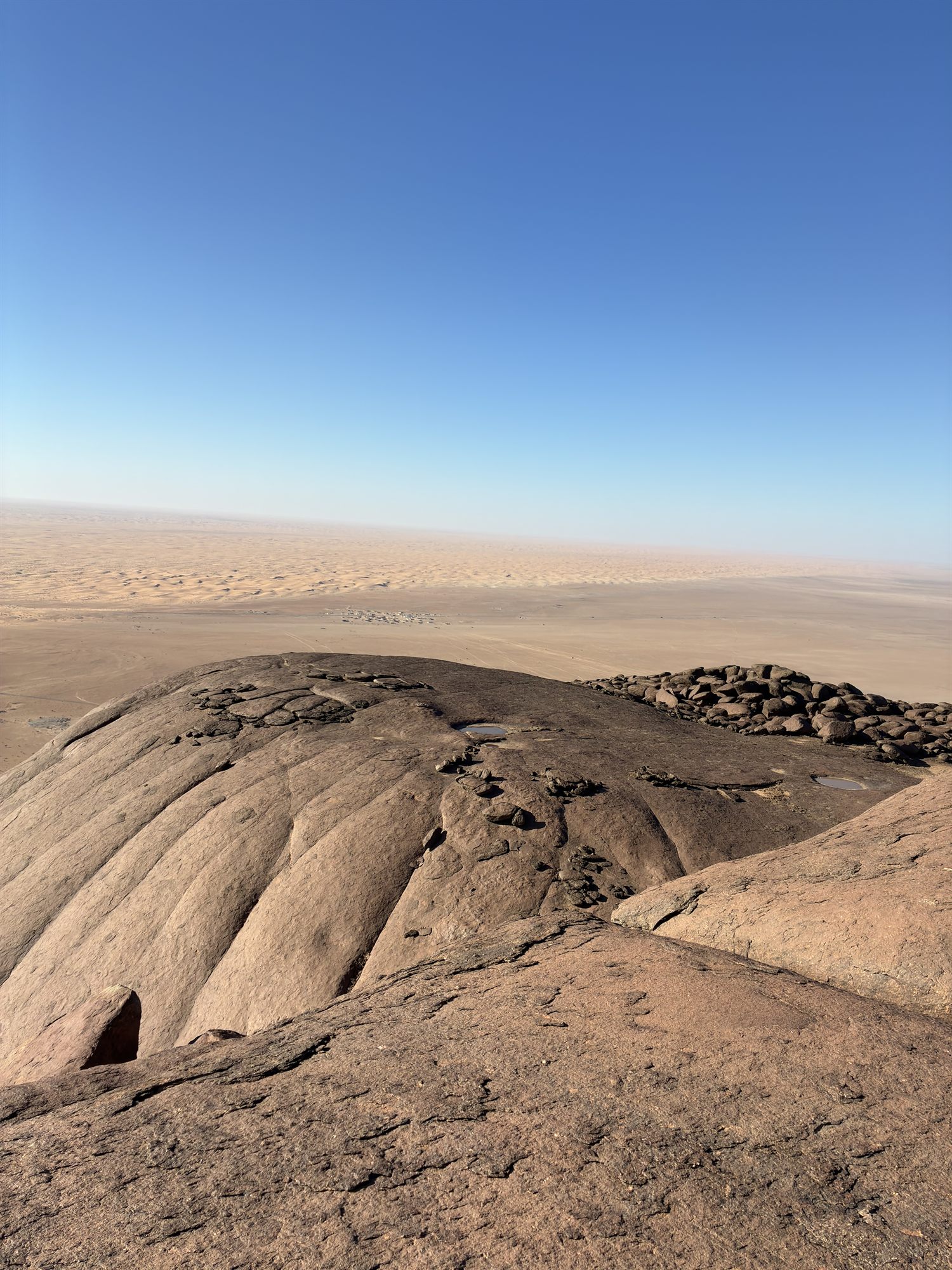
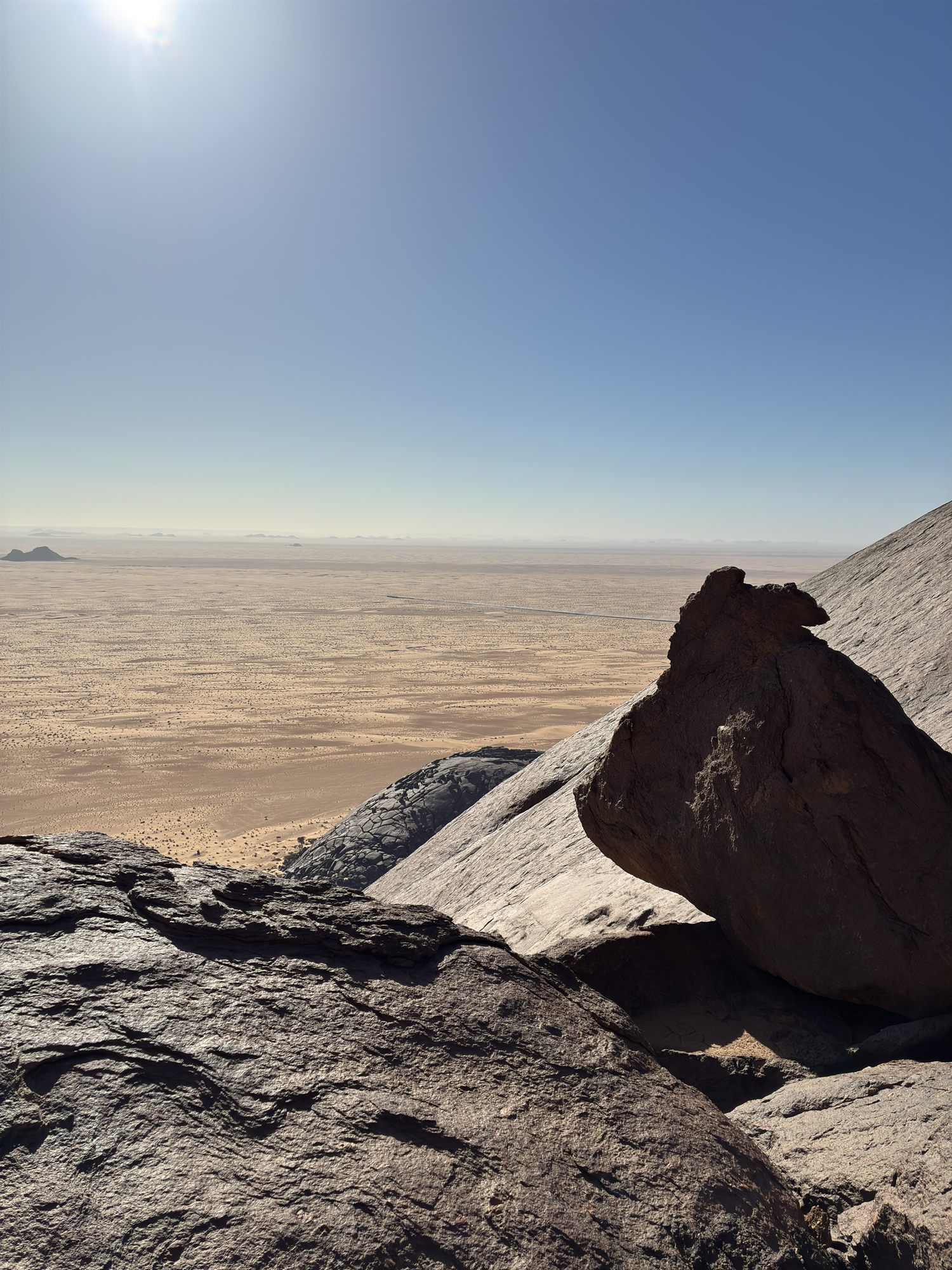
The view is fantastic. You're standing in the middle of the Sahara, with sand and rock stretching as far as you can see. We could also see the railway line where the Iron Ore Train runs through the desert – and then we heard it, and watched it roll past far below. Standing on top of Ben Amera and seeing that legendary train crawl through the desert was something special.
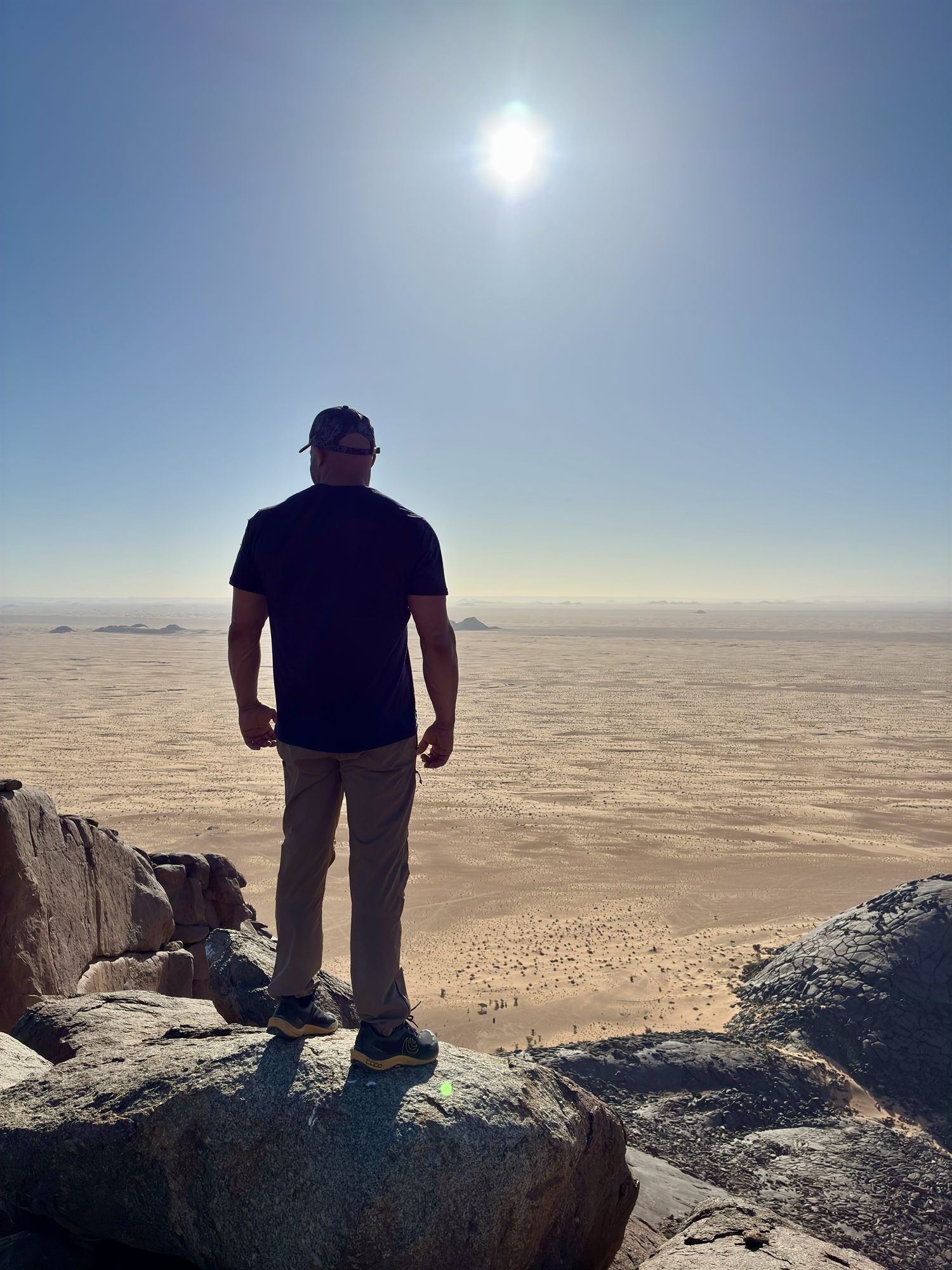
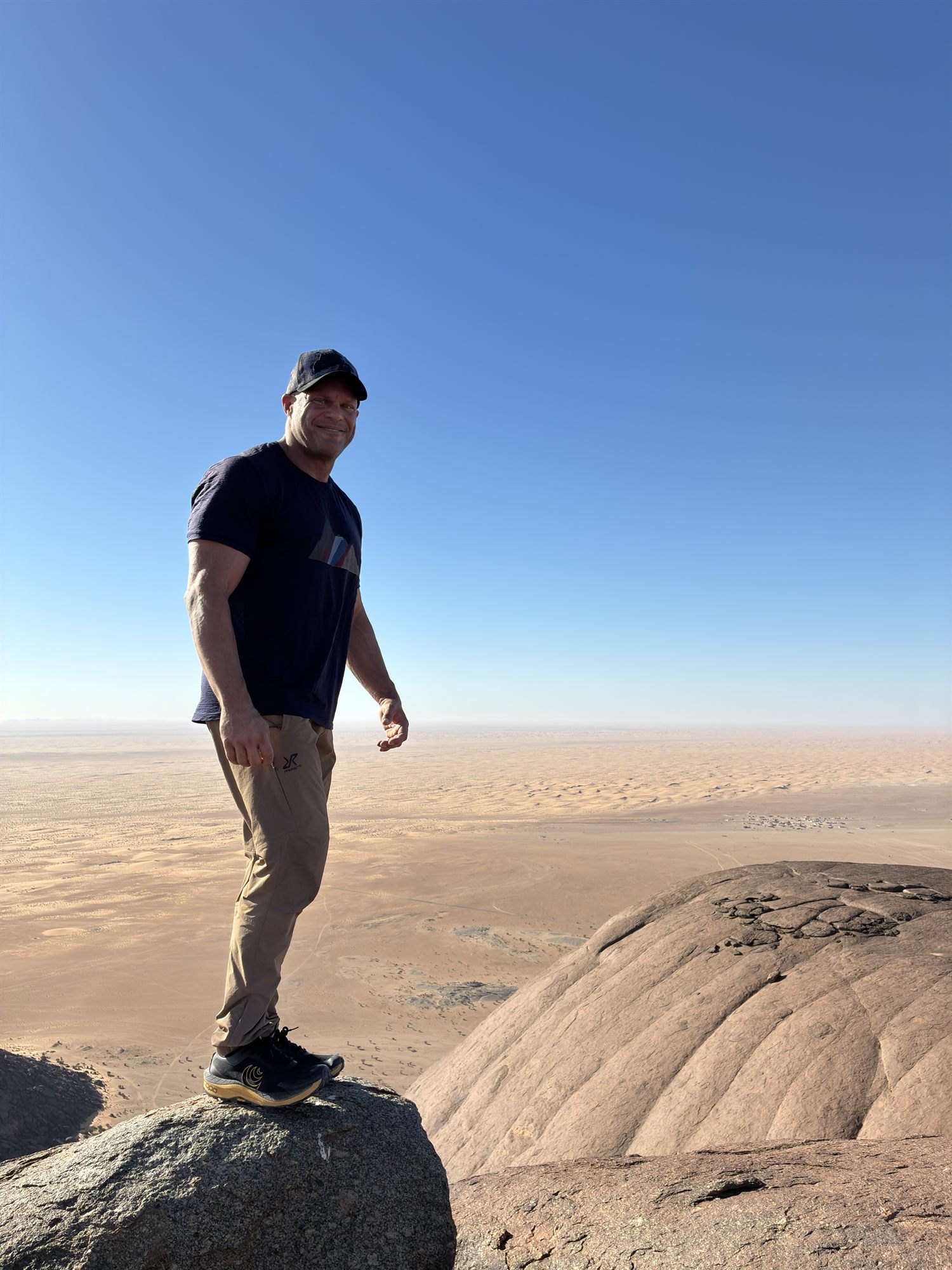
The monolith has two summit areas, and we could see it was possible to cross to the other one. There were some small pools of water over there that we wanted to take a closer look at.
Trying another way down – and turning back
We walked over to the other summit area to look at the pools. From there it looked as if we might find a different way down on that side. We no longer had the local guide with us, so we had to judge the terrain ourselves.
At first it went fine. But it got steeper and steeper, and at one point we could see we were heading out onto a dangerous slope. If you slipped there, there was nothing to stop you, and we couldn't see a safe way further down. We decided it was too risky to continue, and turned back to the top.
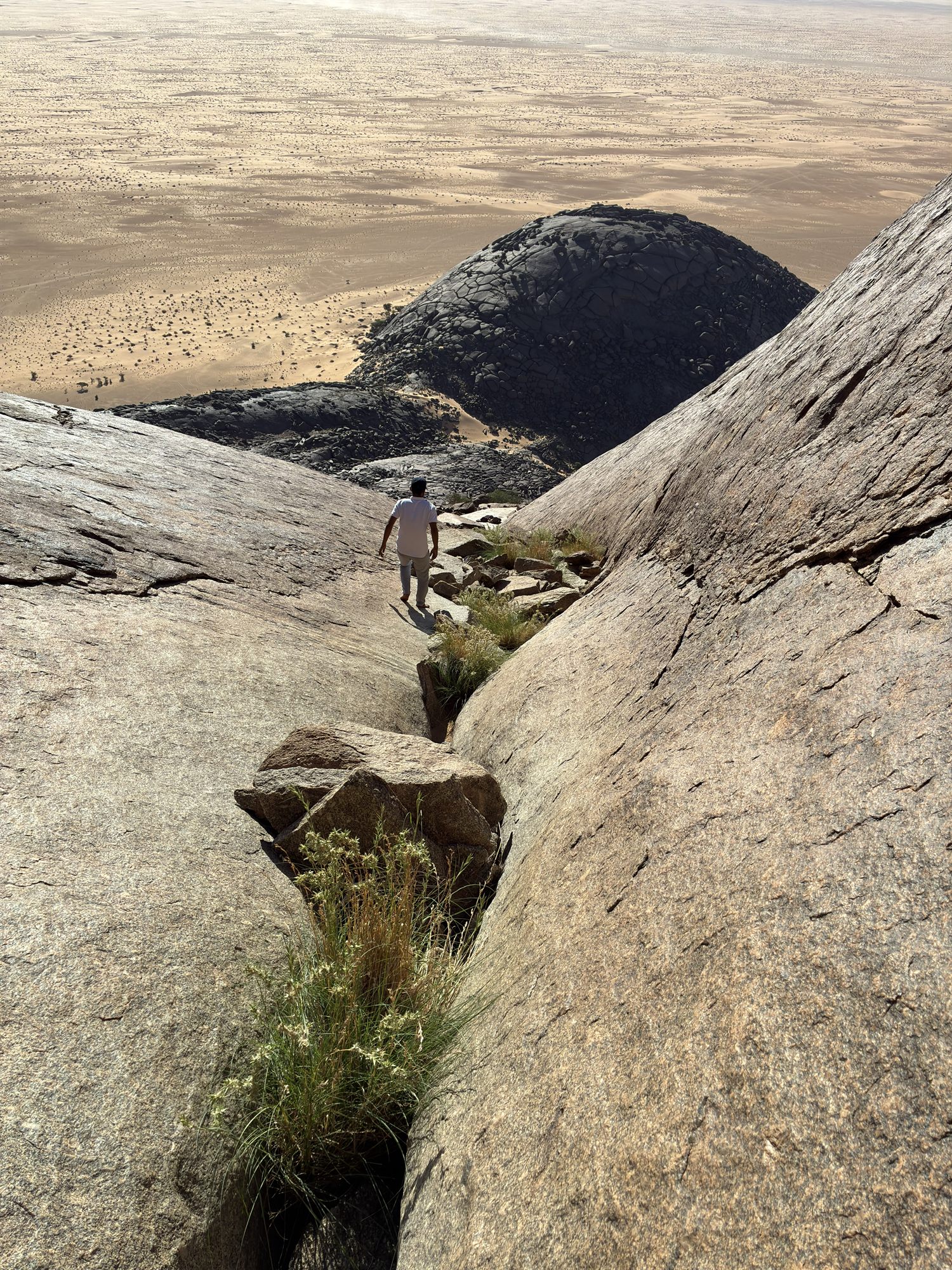
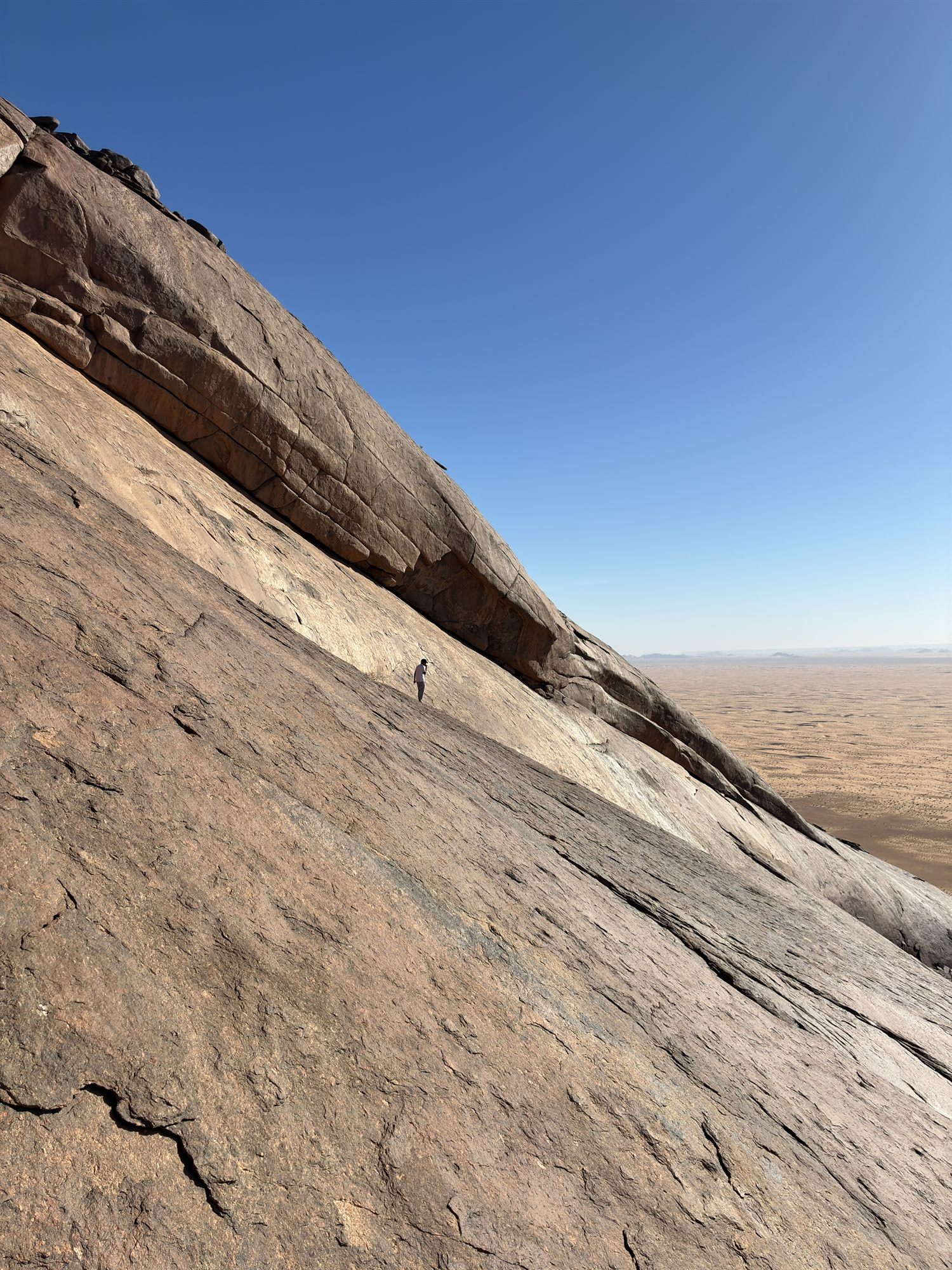
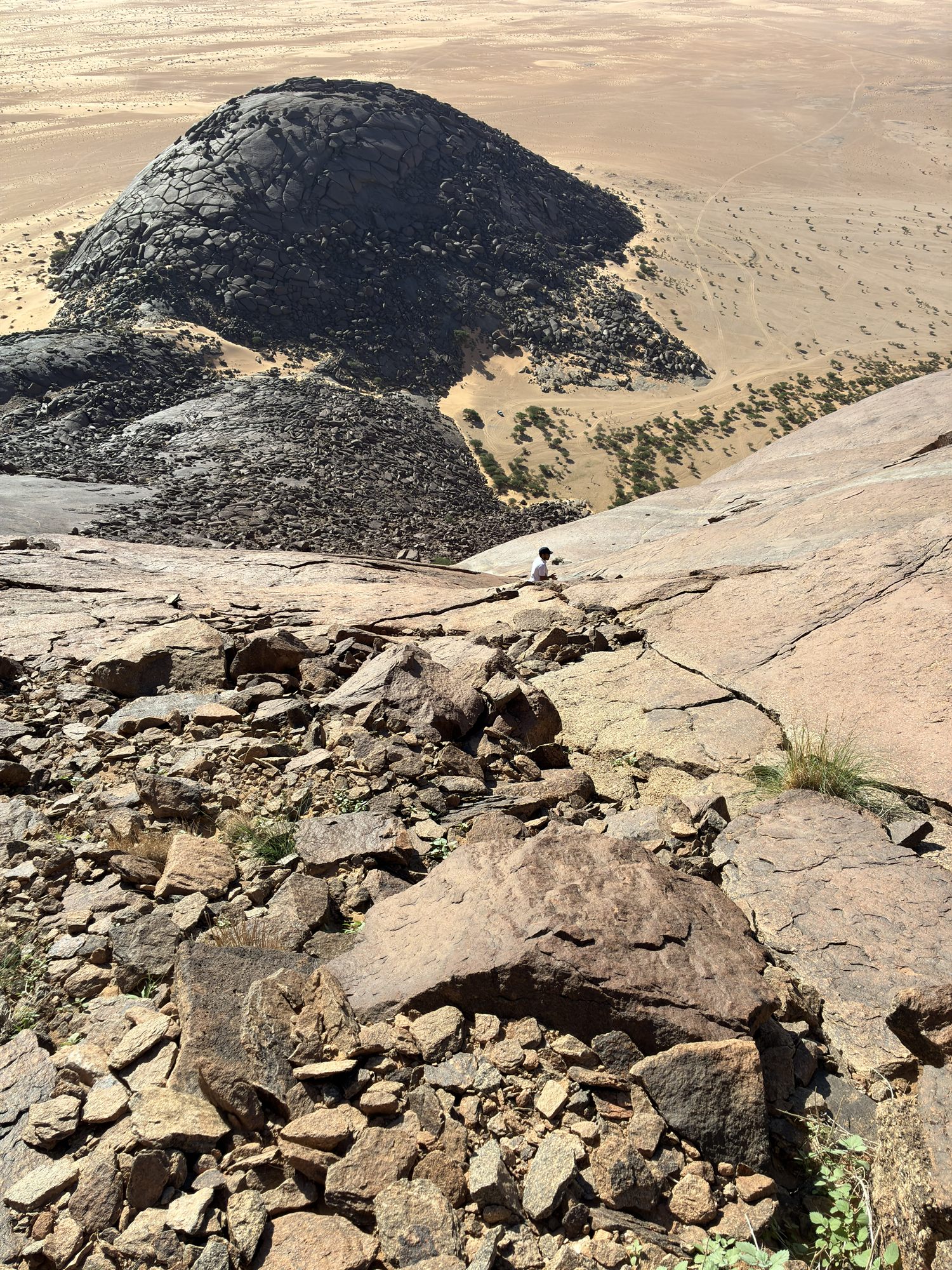
This is an important part of the story. Don't go looking for your own way down Ben Amera. The terrain can turn dangerous very quickly, and what looks like a route from above can end on a slope where you can't go on and can't easily get back.
A stone lift on the summit
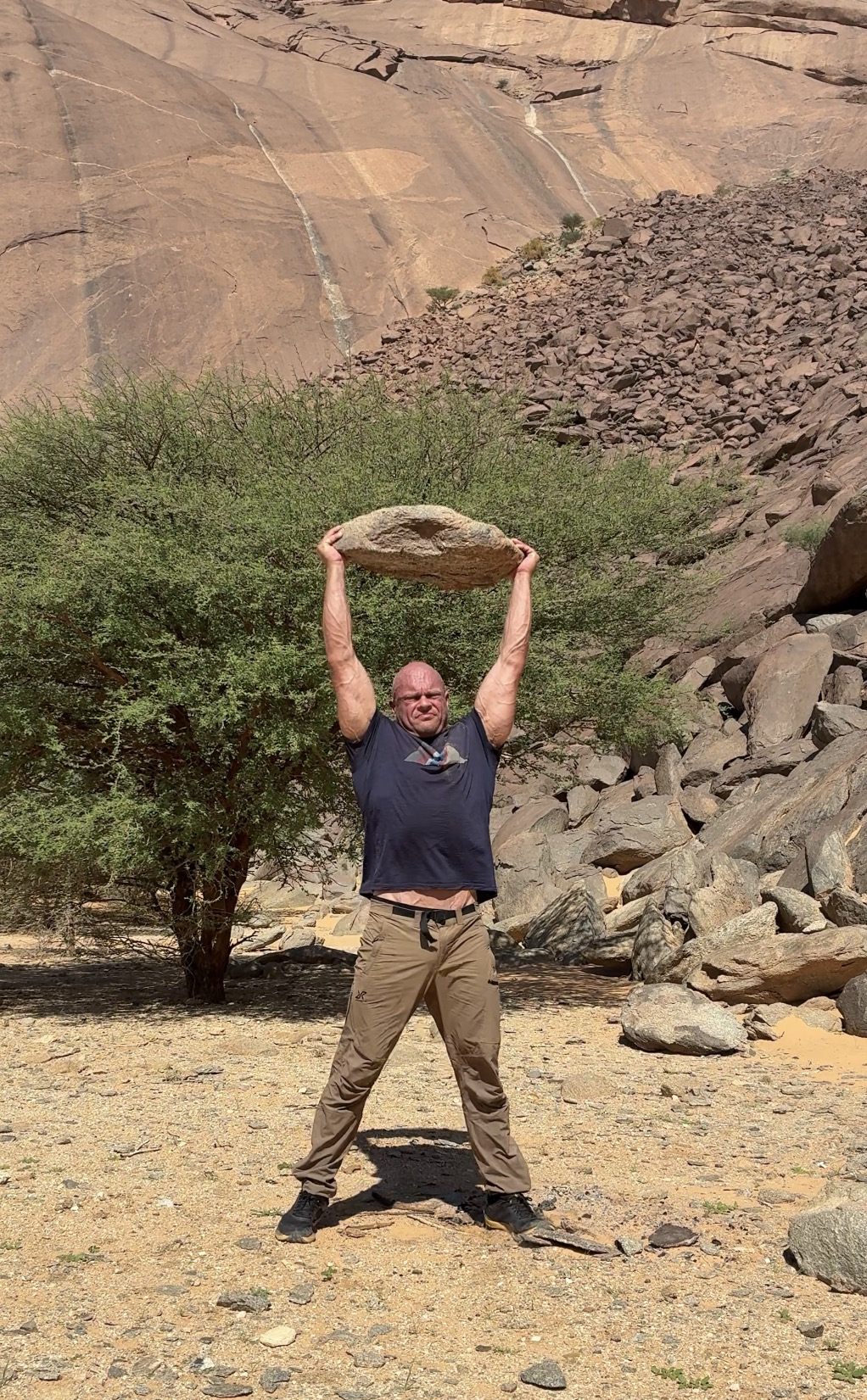
Back on top, I found a suitable stone. Lifting a stone overhead on the summit has become my own small tradition – it's the "stones" in Summits & Stones – so up it went, above Ben Amera.
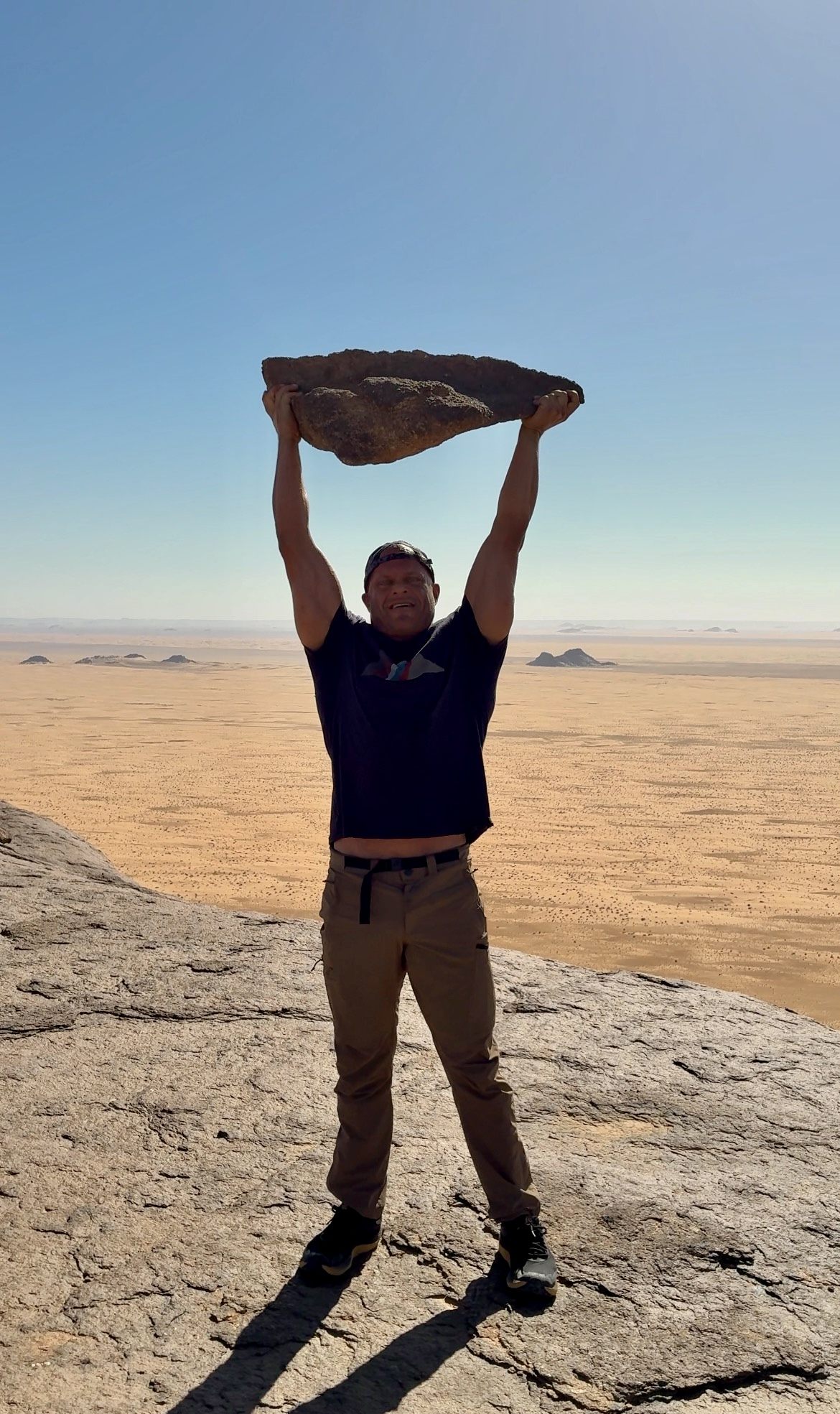
Sidi Mohamed wanted to try too, but he could hardly get the stone off the ground. A fun moment on the summit.
Down the normal route
We went back down the way we'd come up, and luckily that went fine – though the steep slab with the old bolts is just as steep going down. On the way we passed the local guide, still sitting there keeping an eye on his shoe.
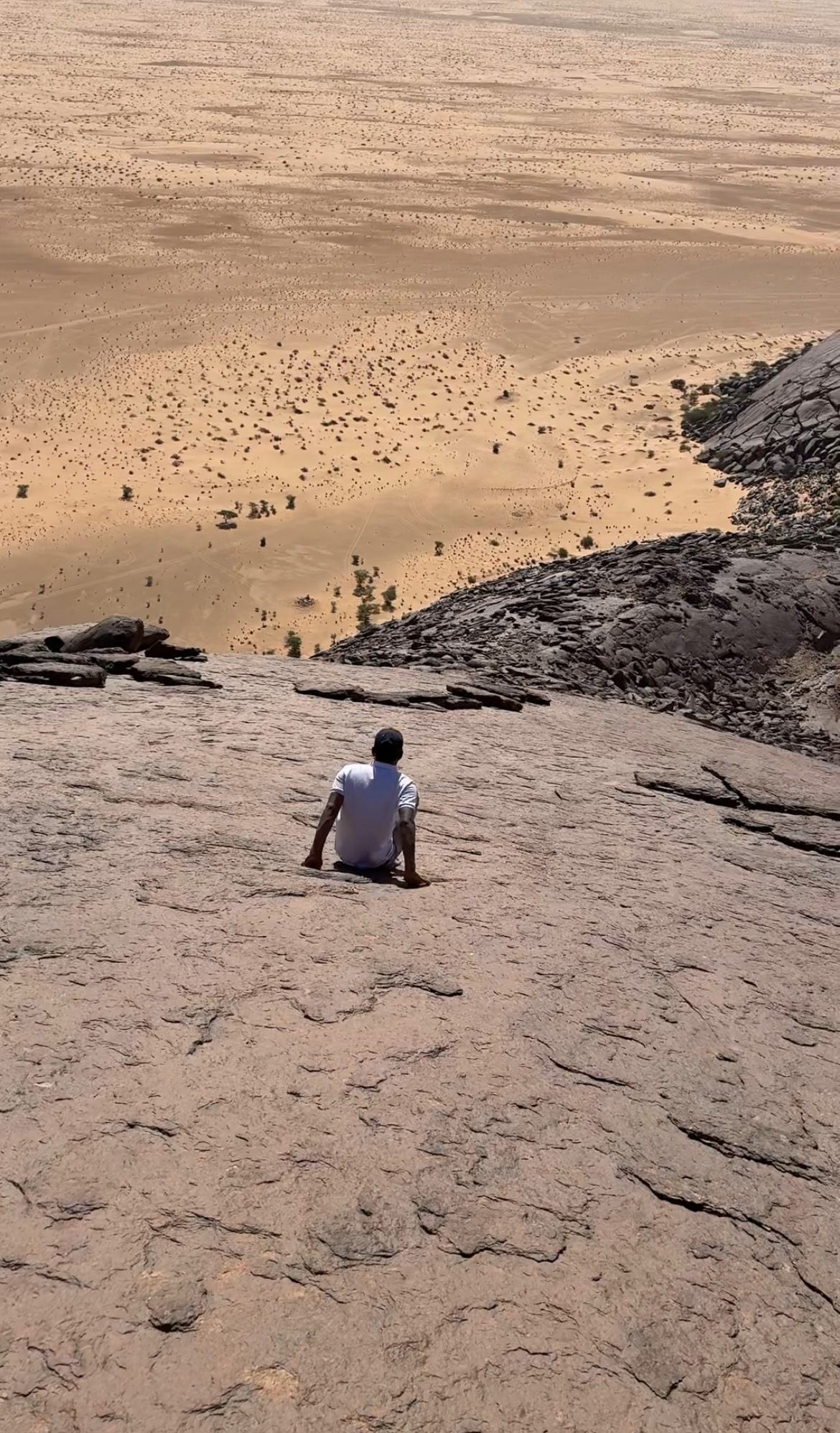
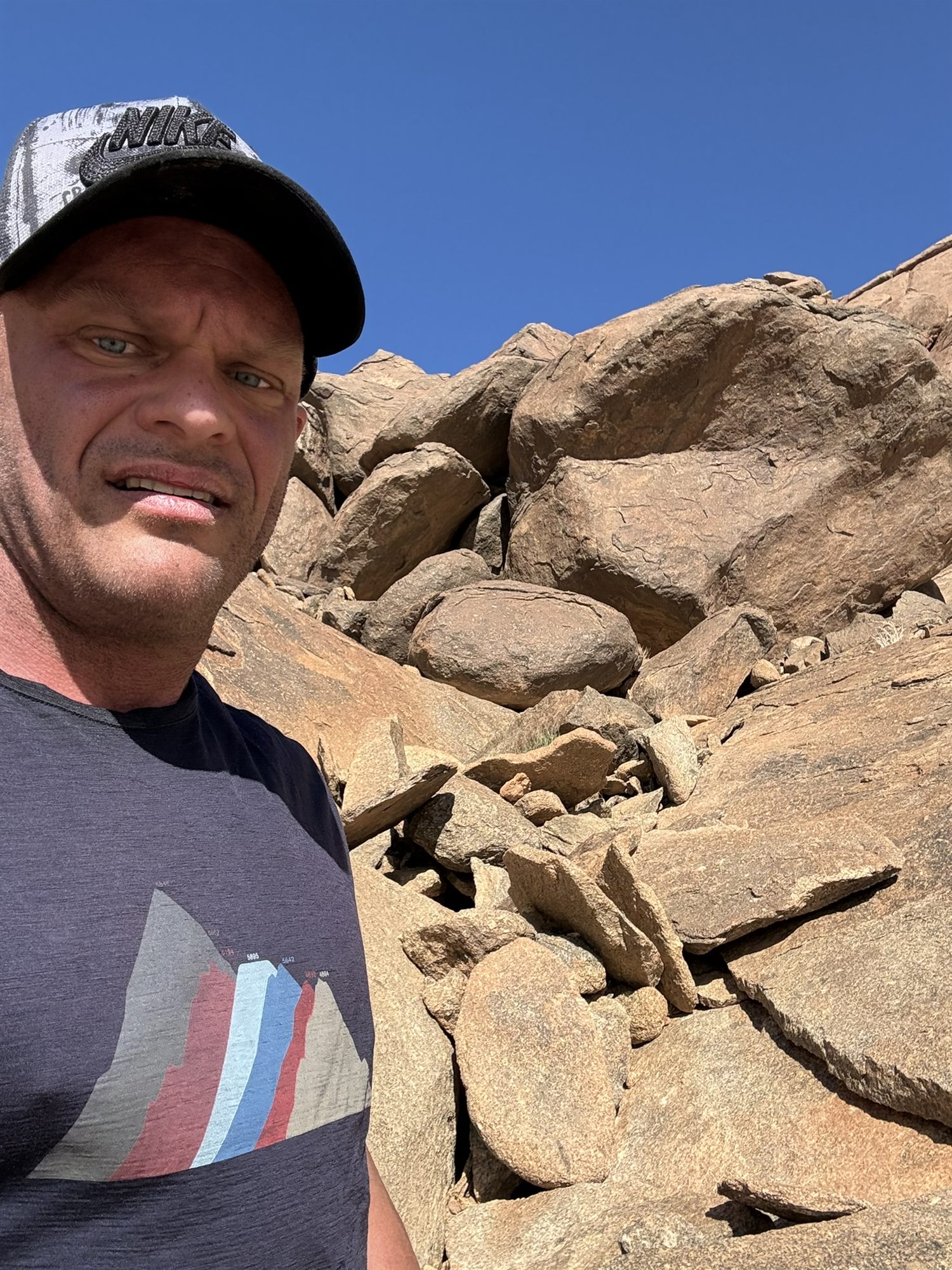
We were back at the foot of the monolith at about 10.45. The descent took much longer than expected, mostly because of our detour and having to turn back.
At the bottom I lifted one more stone overhead.
From Ben Amera we drove on to Choum for the next adventure: a night on the Iron Ore Train across the Sahara.
How hard is climbing Ben Amera?
The climb itself took about an hour. So it isn't long or extremely demanding compared with bigger mountain days. But don't underestimate the terrain.
What you need
- Good fitness, balance and mobility.
- Shoes with really good grip. On the steep slab, this matters more than anything. I wore the Topo Athletic MTN Racer 4.
- Enough water for the climb.
- A cap or other sun protection.
- The ability to move safely on steep, rocky ground, using your hands now and then.
- A local guide who knows the route. There's no marked trail.
It isn't a climb for everyone. It's not technical in the traditional sense, but there are passages where a mistake could have serious consequences. I'd clearly recommend going with a local guide and using the normal route both up and down – our attempt at another way down showed how quickly the terrain can turn dangerous.
My verdict
Ben Amera was a fantastic experience. Climbing a giant monolith in the middle of the Sahara and standing on top with the desert all around is something very special – and seeing the Iron Ore Train from the summit made it even better.
The climb is fairly short, but it has steep, rocky sections where you need good footing and have to be comfortable using your hands. I'd recommend it to people with good fitness, good balance and an appetite for something different in the Sahara – but not to everyone. It's not an ordinary hike. It's a short, exciting and at times challenging climb of a truly unique rock.
Practical information
| Our climb | 8 November 2026. Start about 07.50, summit 08.51, back at the foot about 10.45 (including our turned-back detour). |
|---|---|
| Ben Amera | A huge monolith – usually described as granite – in northern Mauritania, near the border with Western Sahara, about 4 km from the Iron Ore Train line. Usually described as rising about 633 m above the desert floor and as Africa's largest monolith. |
| Route | No marked route, no signs and no fixed rope on the steep slab when we were there (we saw old bolts). Go with someone who knows the way, and come down the way you went up. |
| Terrain | Scrambling on rocky ground, one steep slab, boulders near the top. Not technical climbing, but not a normal hike either. |
| Organised by | Part of my Mauritania trip booked through ChingiTours (not an affiliate link), with local arrangements by Time for Mauritania. Guide: Sidi Mohamed, plus a local guide for the route. |
Background: Wikipedia – Ben Amera. Heights, times and the steepness of the slab are from my own experience on one day in November 2026.