Nouakchott isn't a city you visit for famous sights. It was a small fishing town until the late 1950s, when it was chosen as the capital of the soon-to-be independent Mauritania and built almost from scratch. Today it's a big, busy, dusty city on the edge of the Sahara and the Atlantic.
On 6 November 2026 I spent a full day there with my local guide, Sidi Mohamed: a camel market, the central market, the fishing beach, lunch, a local gym – and, in the evening, Mauritanian tea in the sand dunes. It wasn't all comfortable. But it gave me a real feel for the country I was about to travel through – the rest of the journey is in my 8 days through Mauritania.
The short version
Nouakchott, 6 November 2026, with guide Sidi Mohamed. The camel market was interesting but uncomfortable to me. The central market was a good look at everyday trade. The fish market was rough, but the beach was the highlight of the day: painted wooden boats coming in through the surf, being hauled up the sand and unloaded while the fishermen worked and the buyers crowded round. A simple local gym, and in the evening three rounds of Mauritanian tea on a mat in the dunes.
Morning – and Sidi Mohamed
Breakfast at my hotel was very basic, with not much to choose from, so I walked over to a kiosk and bought a protein shake instead. At 09.30 Sidi Mohamed picked me up. He'd be my guide for the whole day – showing me around, explaining what we saw and helping me understand some of what was going on around us.
The camel market – interesting, but uncomfortable
At around 10.00 we reached the camel market. We parked and walked around. Sidi Mohamed told me there can normally be up to 3,000 camels here, and that there were far fewer that day. To me it was still a lot of camels – I'd never seen a camel market anything like this size.
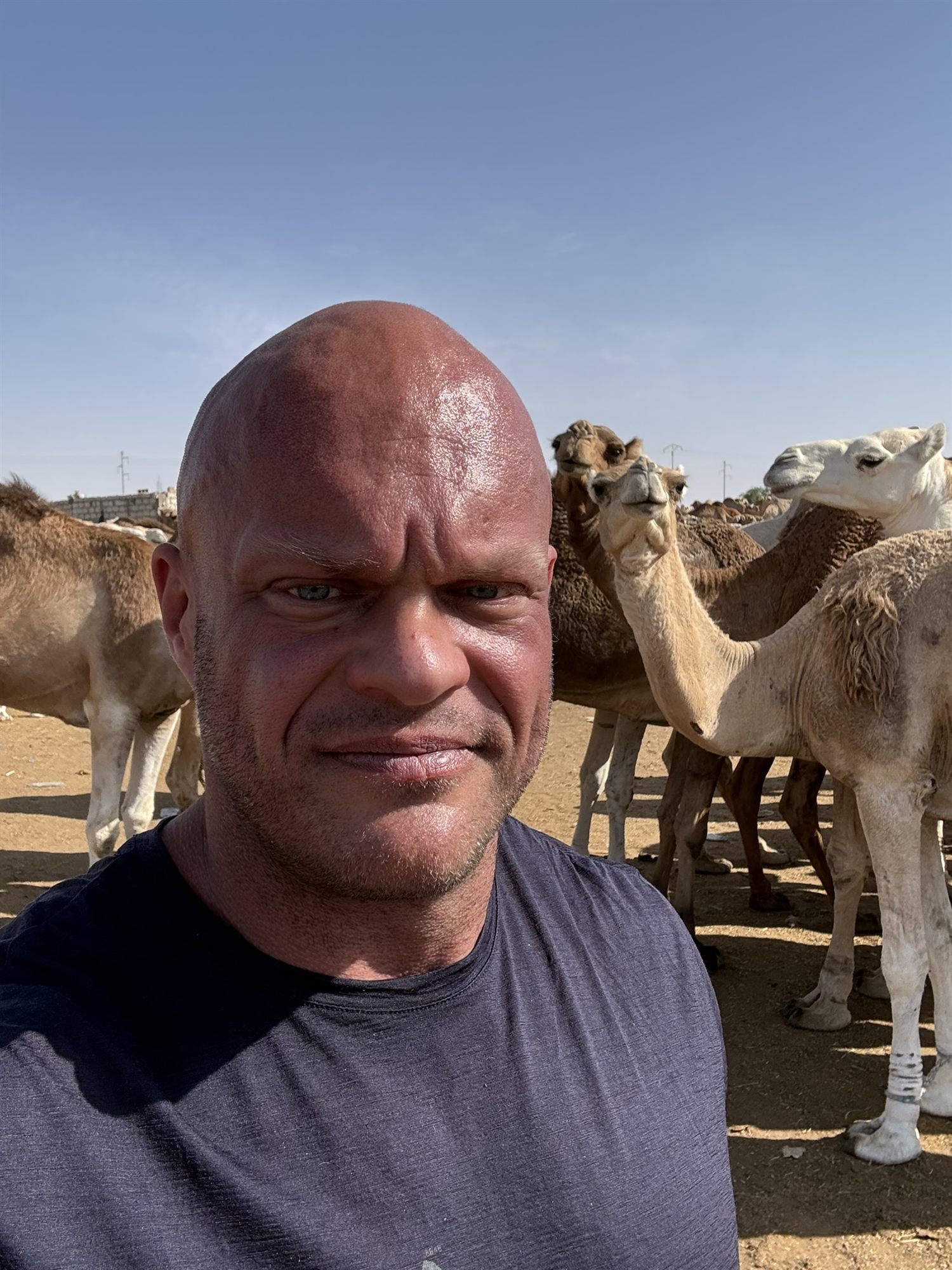
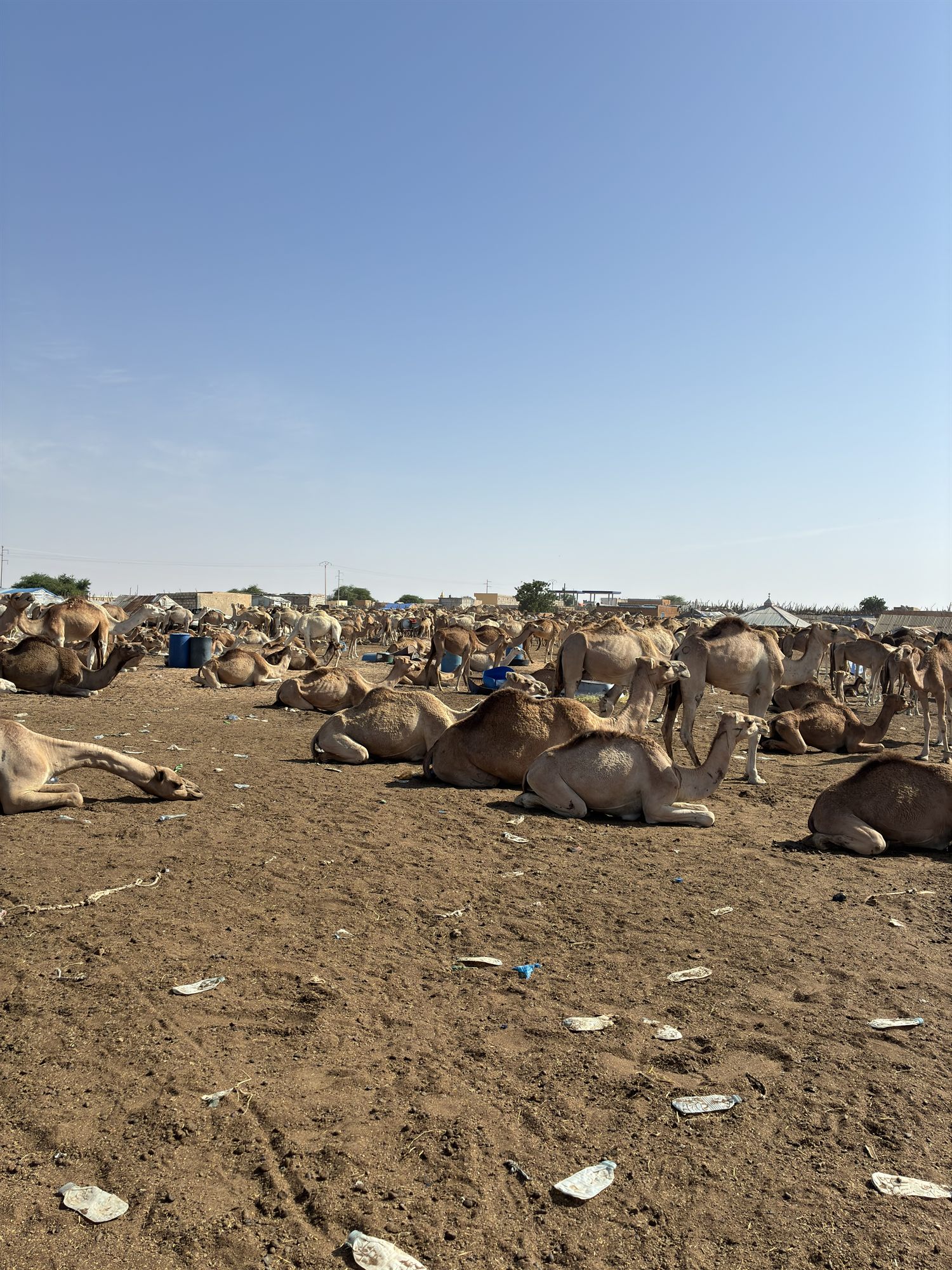
I quickly noticed that photographing and filming wasn't very welcome. People didn't seem happy about tourists walking around taking pictures, especially of them – which is why my photos are of camels, not people. That's how we were met at this market on this day.
The market was full of litter and the conditions were dirty. The camels were branded and had their legs tied. I also watched a camel arrive tied down on the back of a Toyota Hilux, and then get pushed off the truck bed. That made an impression on me – and not a good one. Seen through my Western eyes, the animals' welfare didn't look good. That's my personal impression from one visit, not an assessment of how camels are kept across Mauritania.
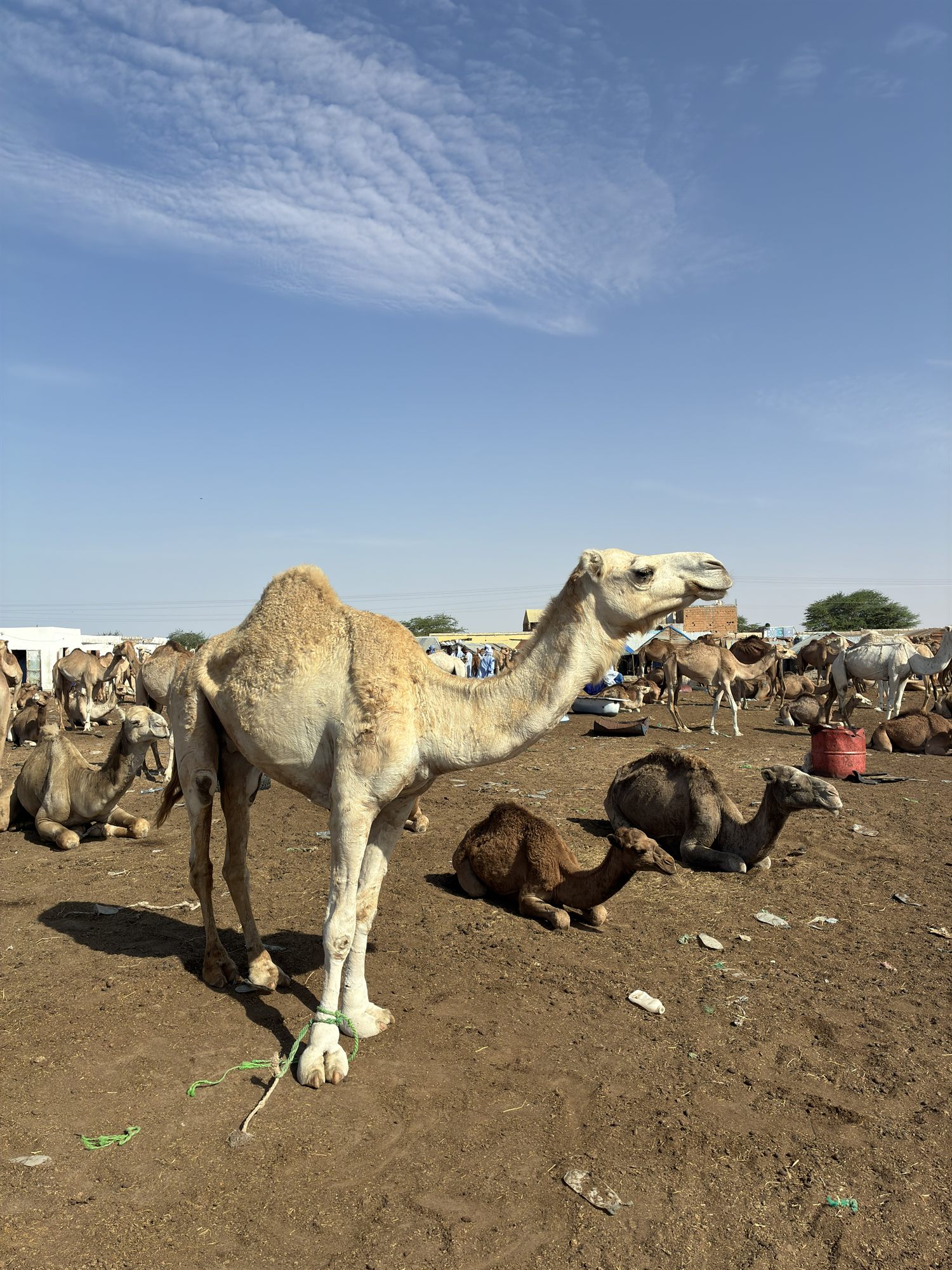
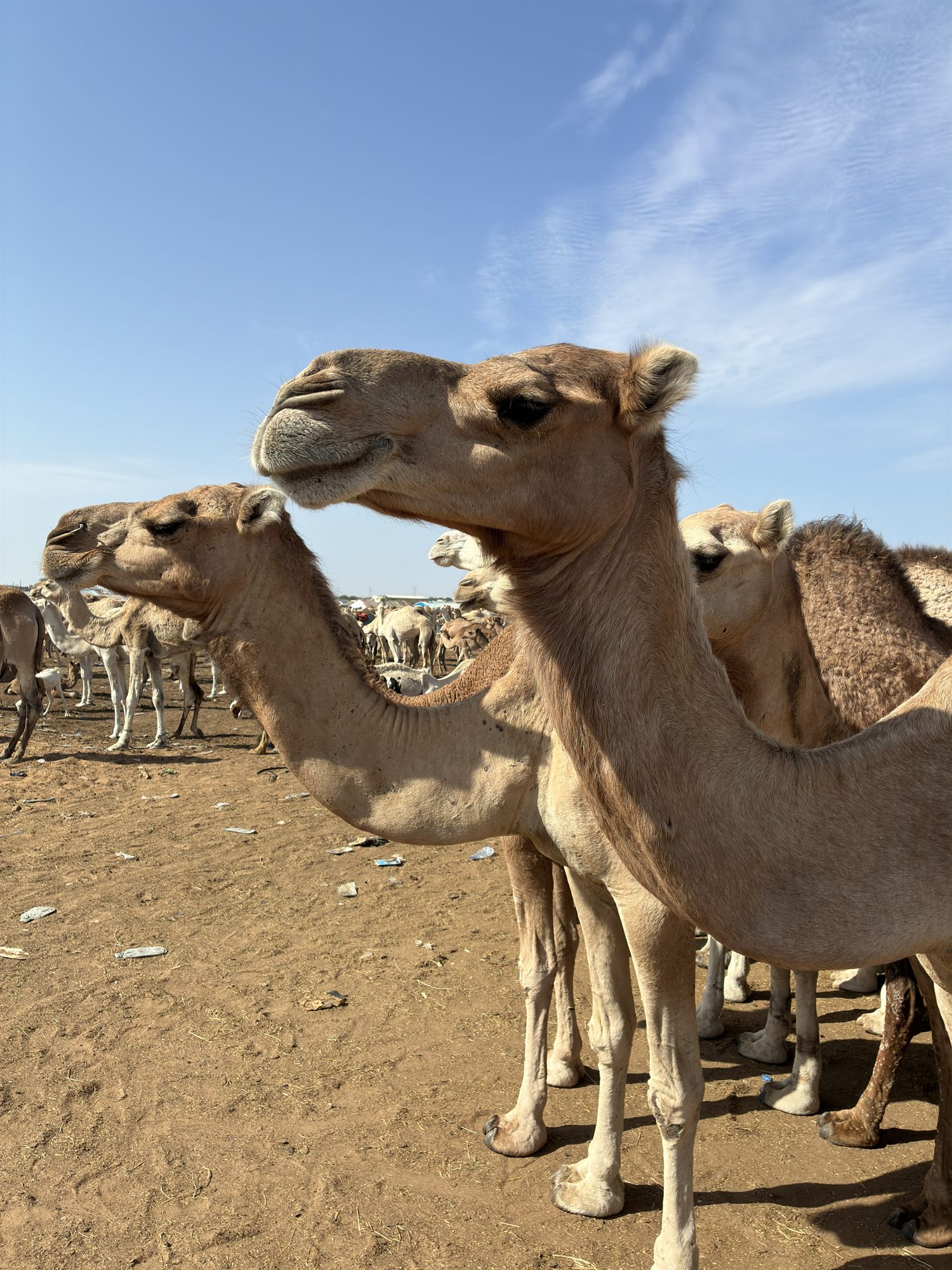
Sidi Mohamed explained that the camels are mainly sold for meat, but also for breeding and for milk. After about half an hour we'd seen most of it and moved on.
My verdict: it's a different and genuinely interesting place, and it shows you a real part of Mauritania's trade and daily life. But it wasn't a pleasant experience for me, and I didn't want to stay long.
Through the traffic to the central market
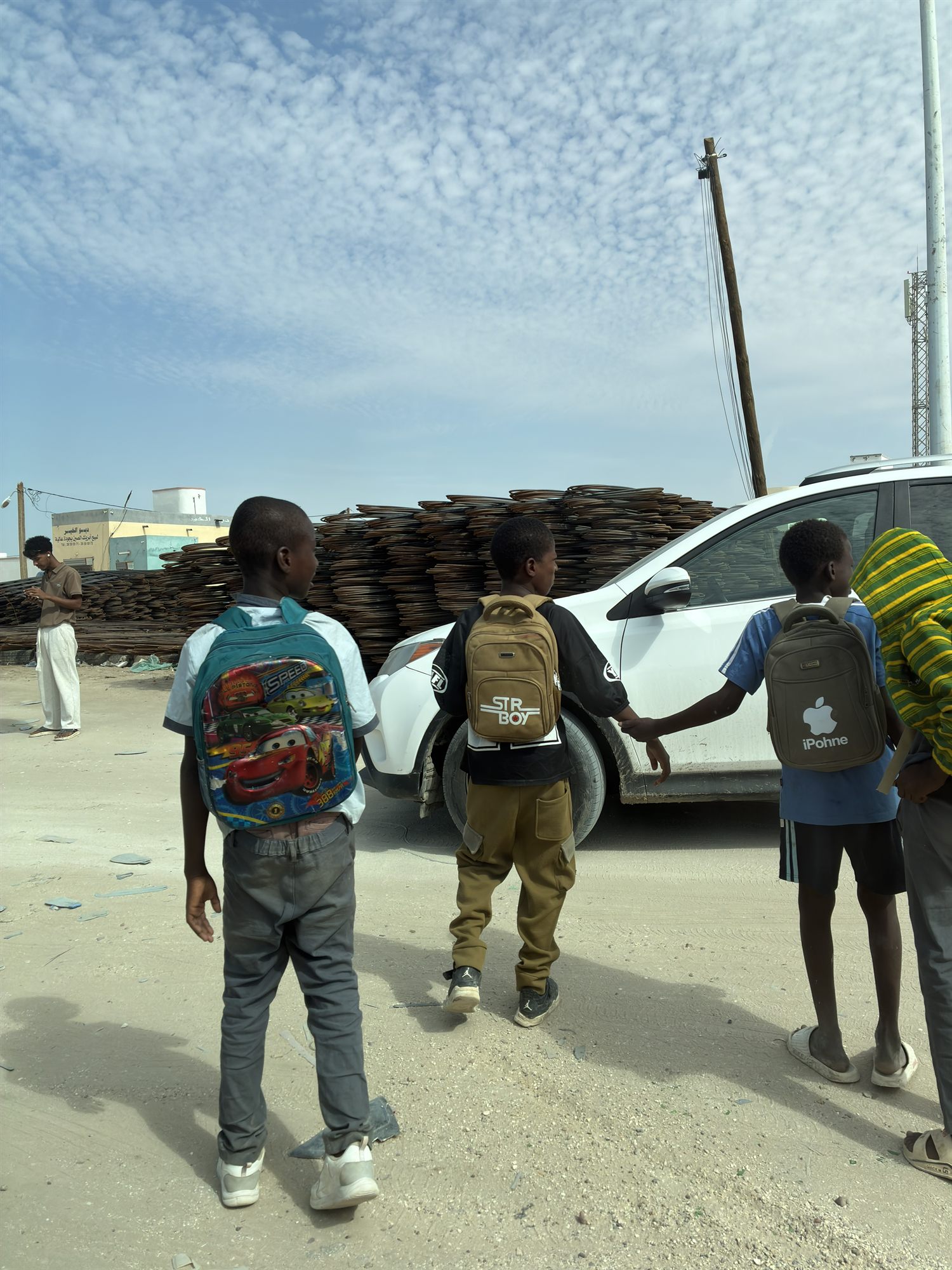
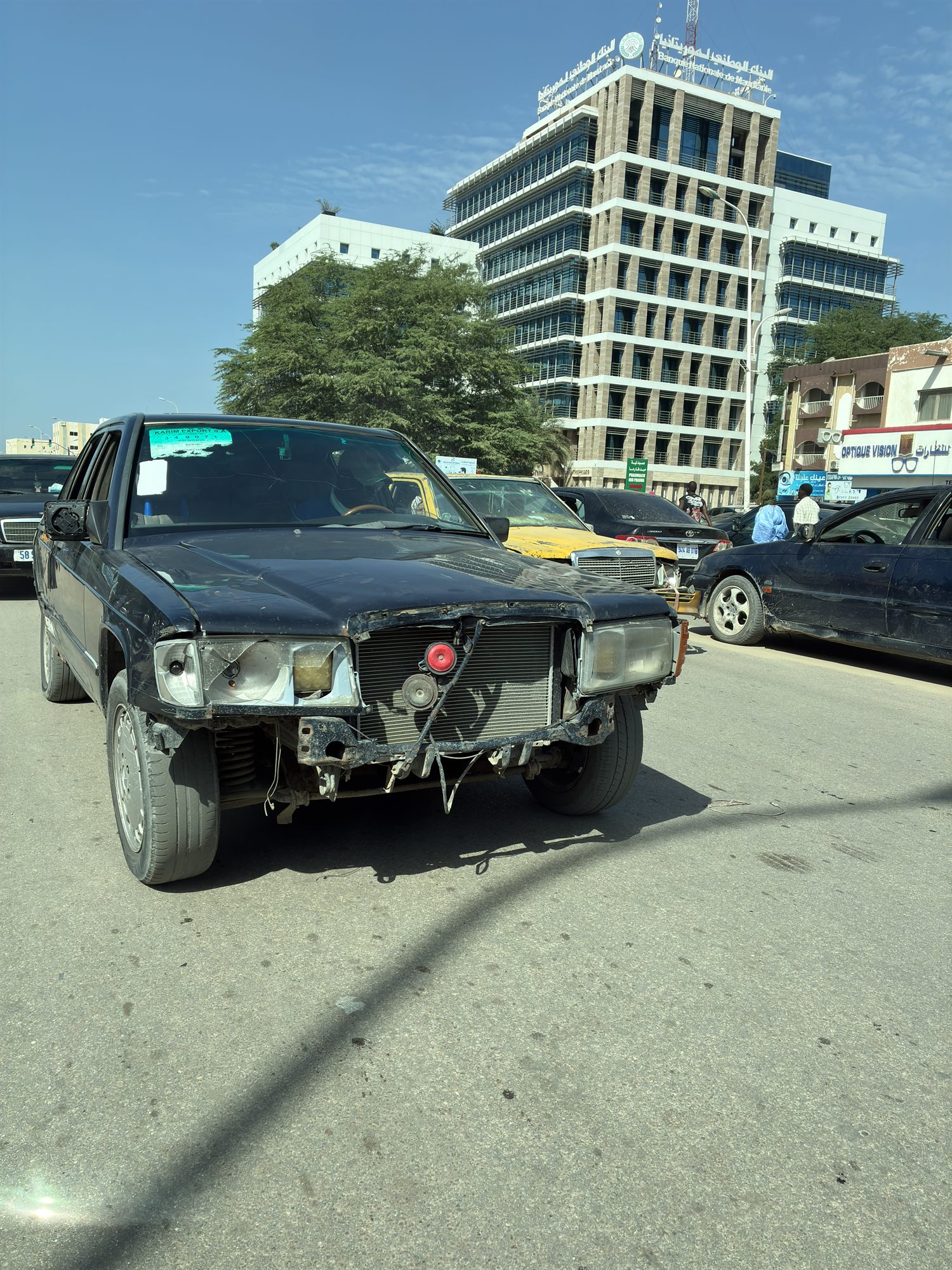
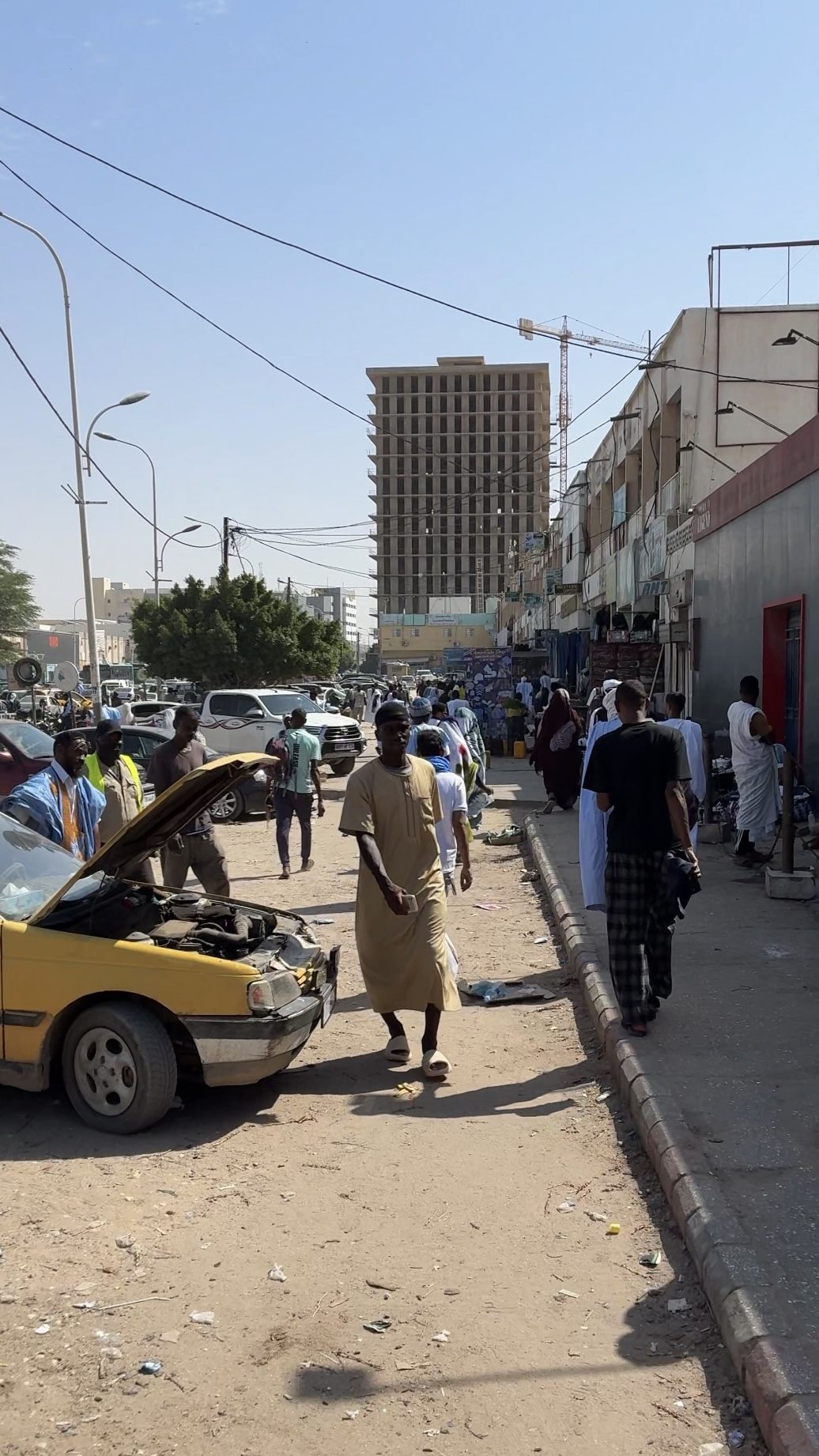
Part of the experience was simply the drive across Nouakchott: children walking to school, old cars, worn-out Mercedes taxis and a lot of life on the streets. The traffic looked chaotic to my European eyes – you seem to go when there's space, by a set of unwritten rules that aren't quite the ones we know at home.
At around 11.00 we reached the central market. We walked around and looked at everything for sale, and I bought two things: a cap against the sun, and a traditional Mauritanian veil, which I'd later wear on the Iron Ore Train.
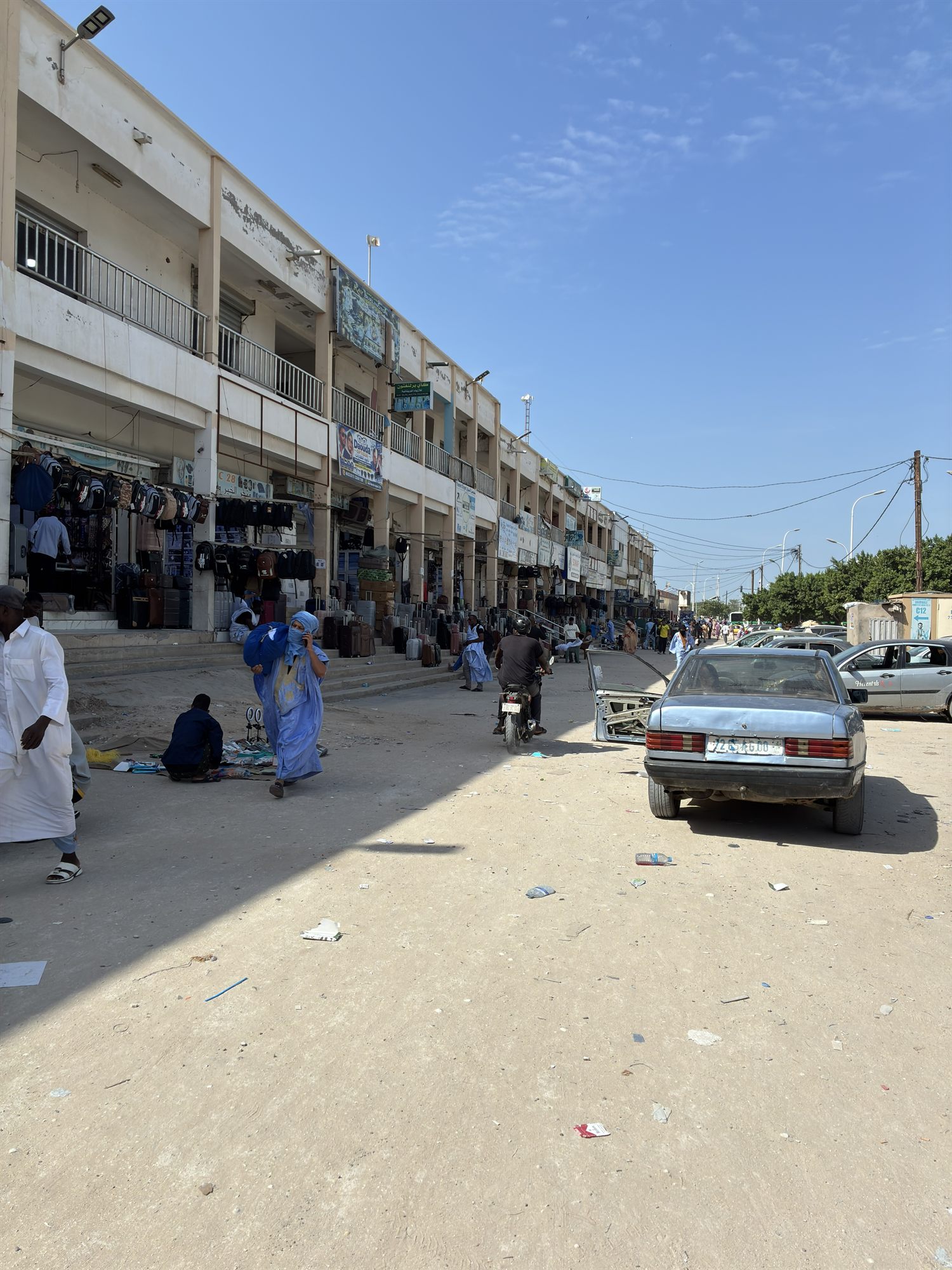
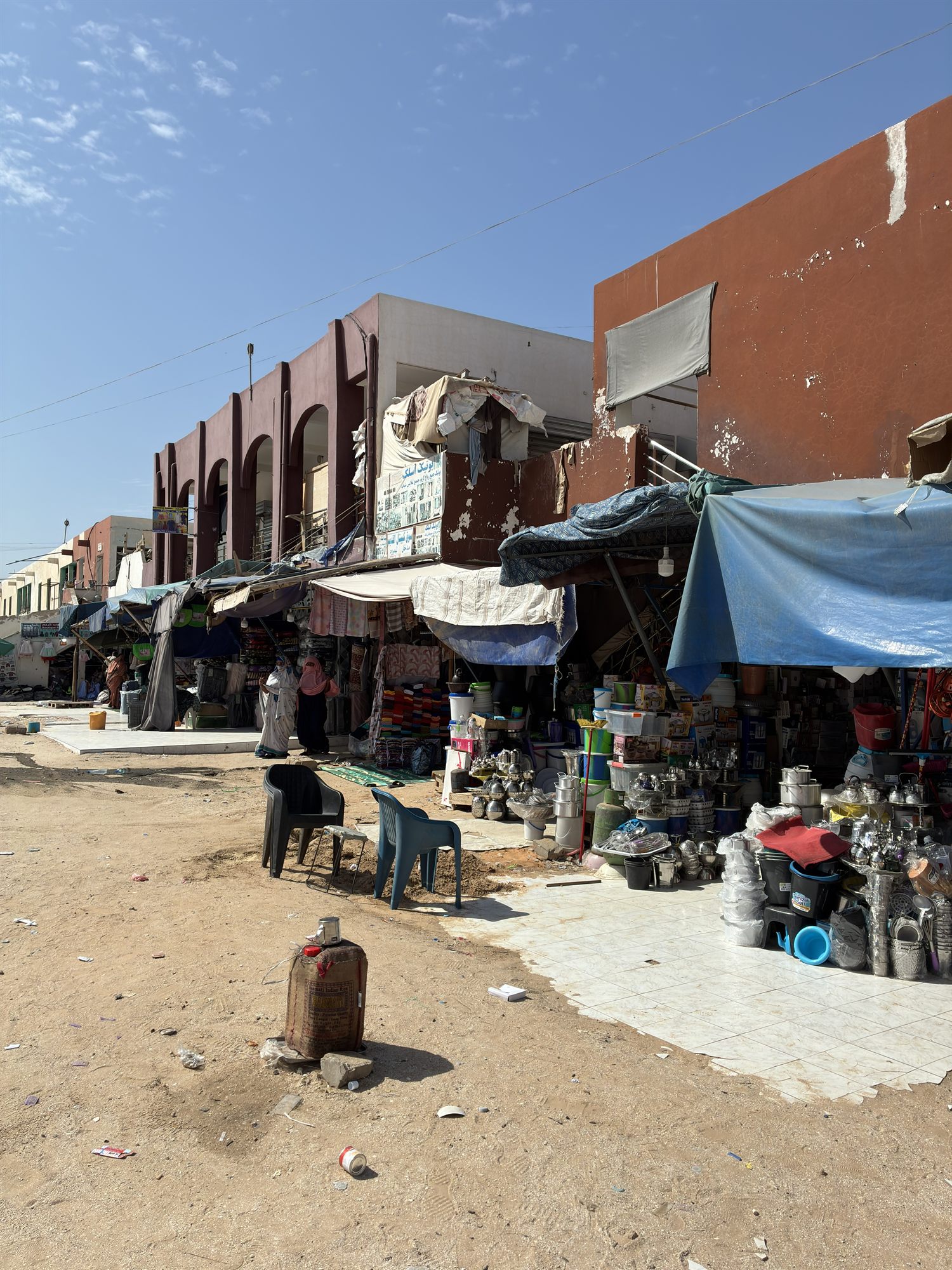
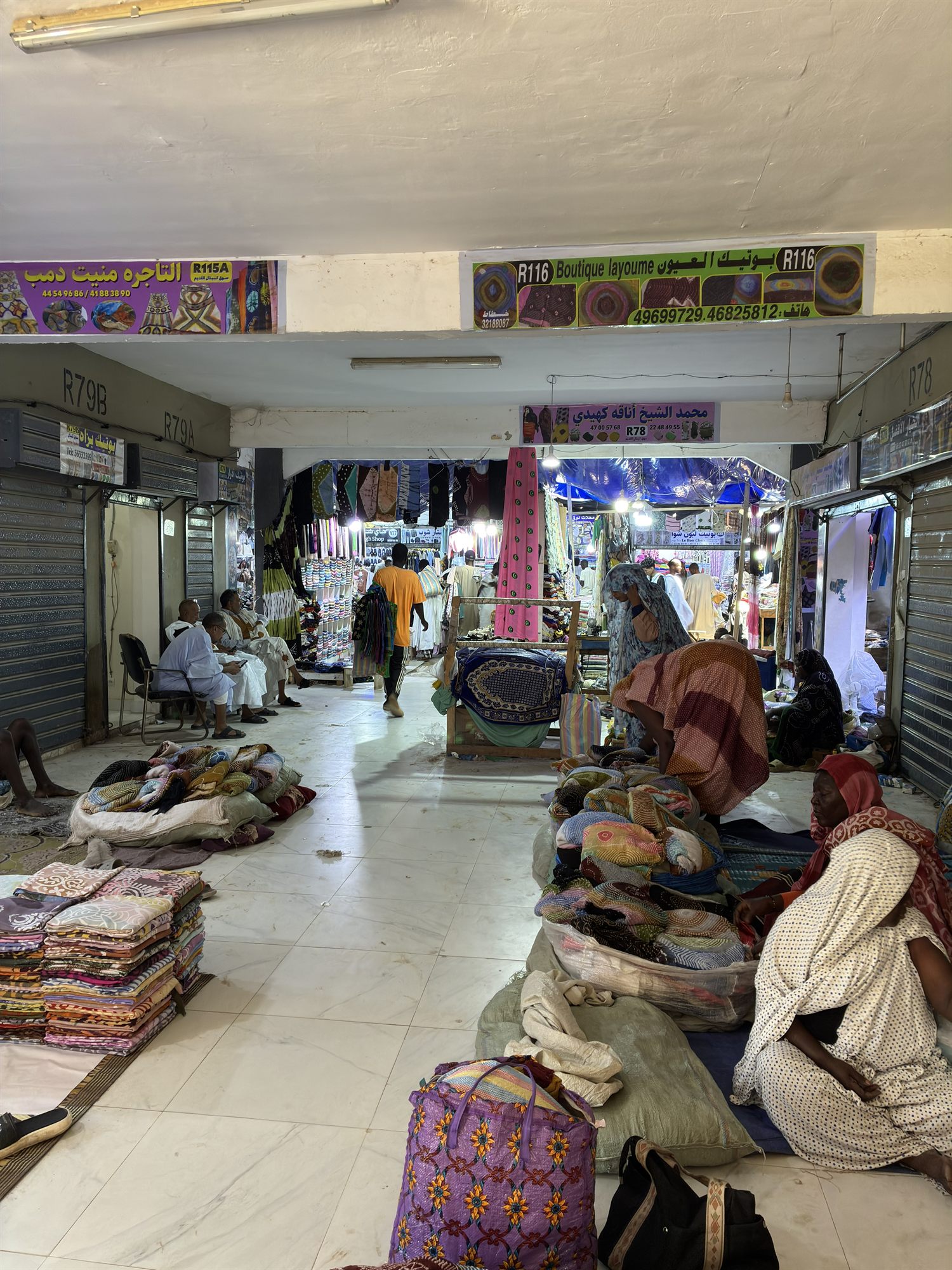
It was a good chance to see an ordinary part of the city's trade – nothing staged for tourists.
The fish market and the painted boats
At around 11.50 we drove on to the port and the fish market, where the traditional wooden boats come in from the sea and the catch is landed and sold. We passed a checkpoint at the entrance. Again, tourists didn't seem especially welcome, and there were limits on photographing and filming.
I asked Sidi Mohamed why. He told me that people there know the conditions at the market aren't very nice, and don't necessarily want pictures of them shared.
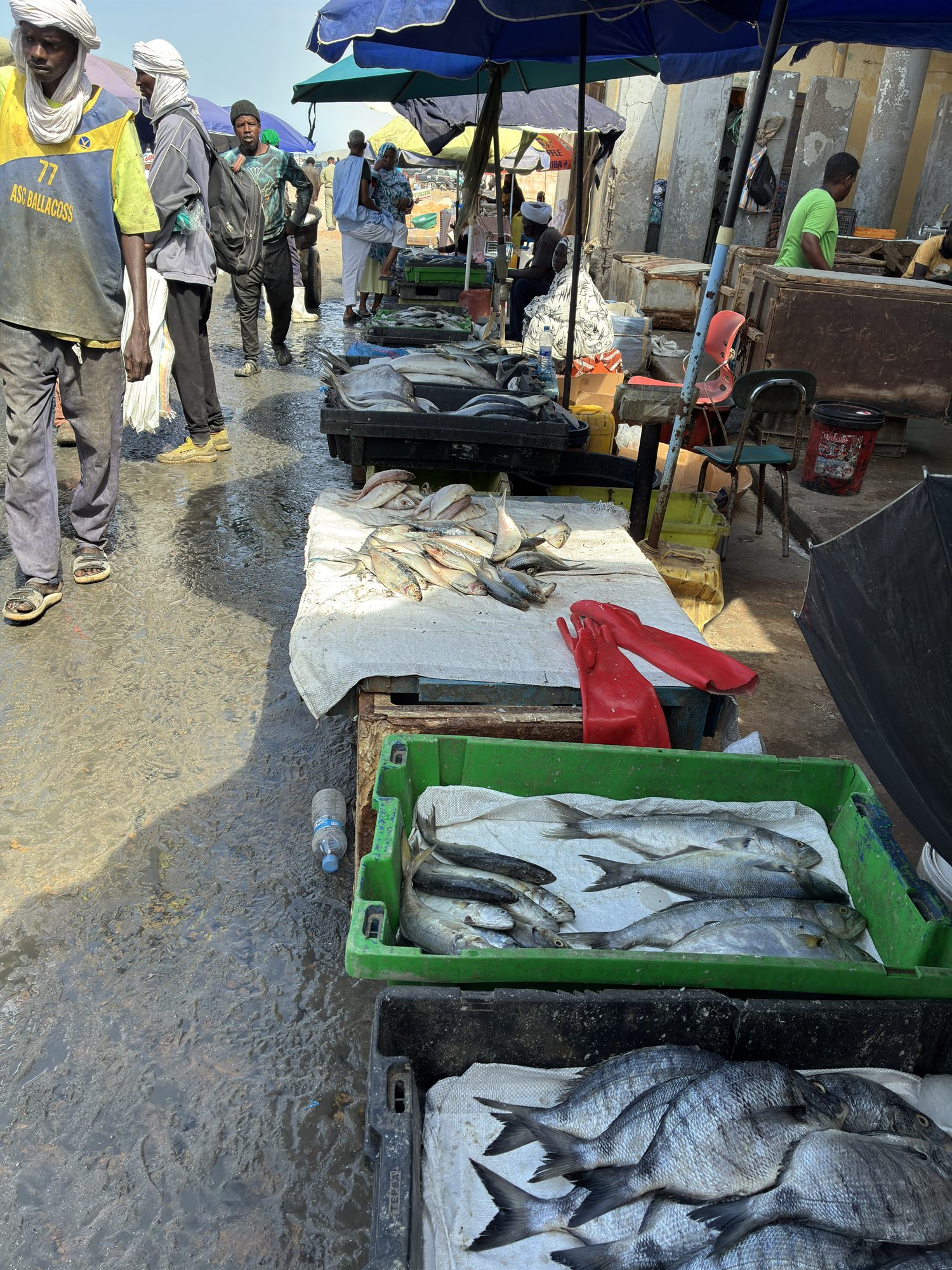
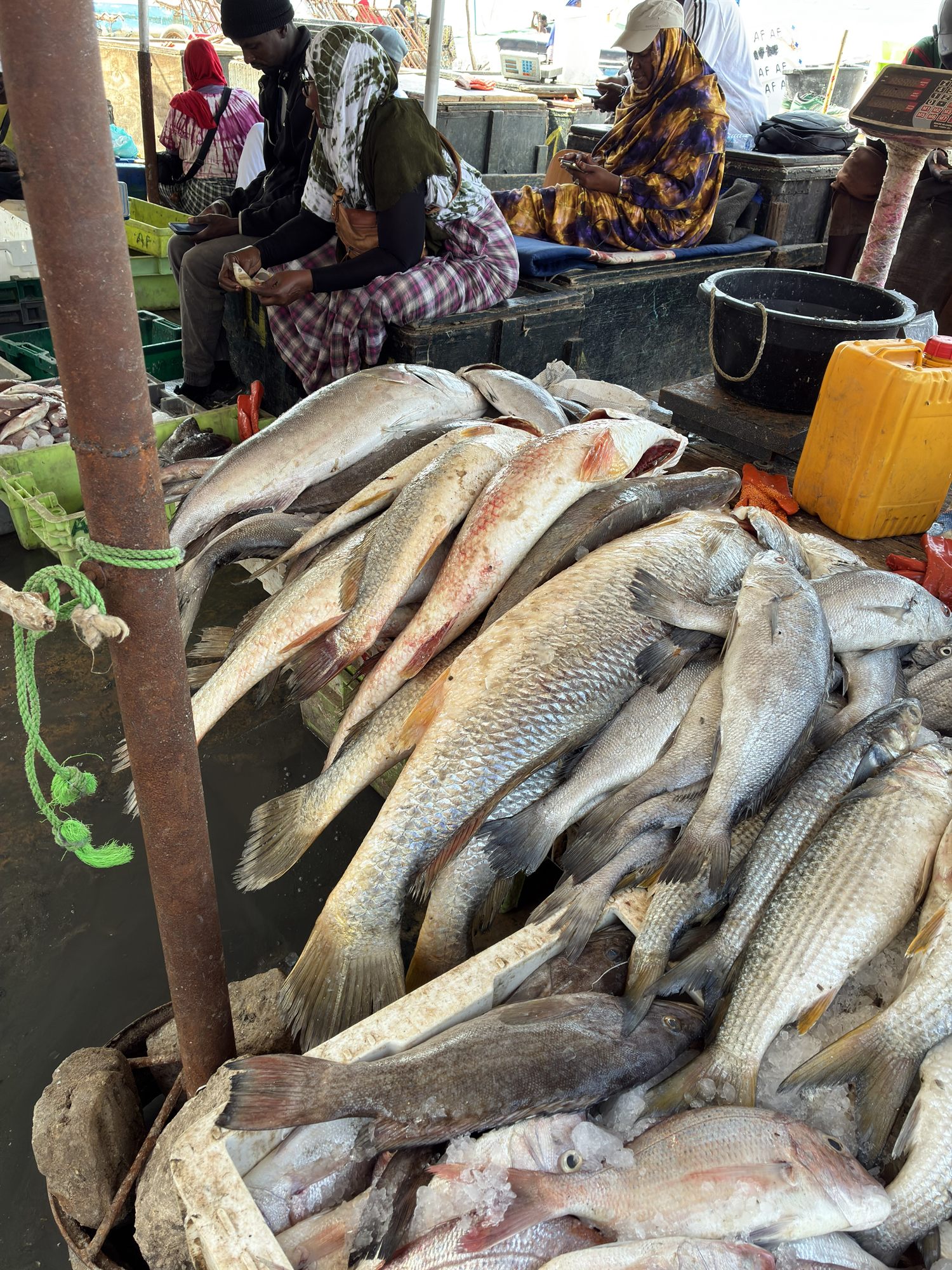
There was a huge amount of fish. What struck me was how it was handled and stored: it was very hot, far from all the fish was on ice, there were flies around some of it, and the smell wasn't pleasant. To my eyes the hygiene didn't look good, and it wasn't a place where I felt like buying fish.
But the beach and the boats were the best part of the whole day. We walked down to the sand and watched the colourful wooden boats coming in. Smaller boats go out to the bigger ones and bring the fish ashore, so the big boats don't always have to be pulled up on the beach. When a boat lands, it's hauled up the sand, and a crowd quickly gathers to buy the catch.
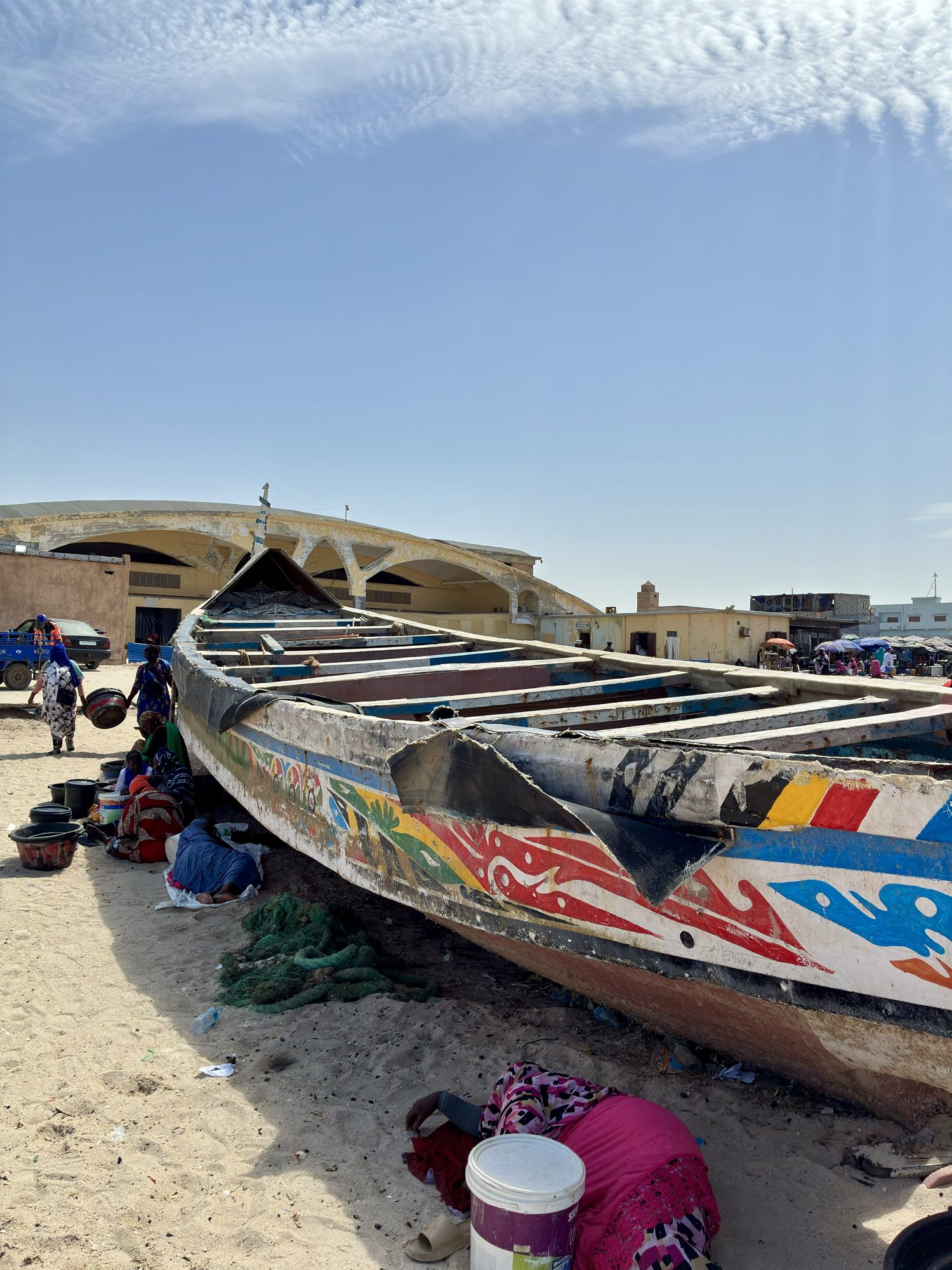
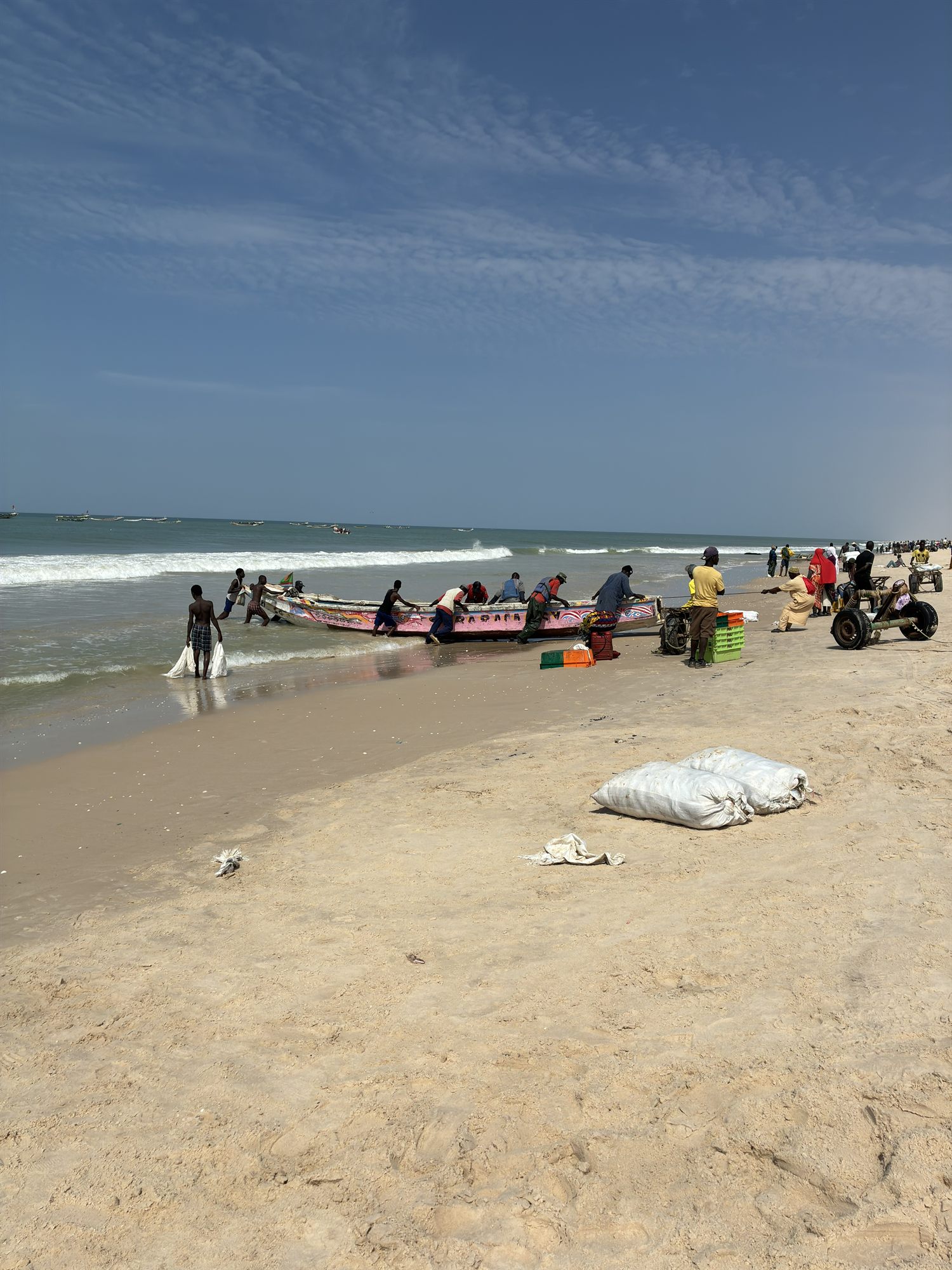
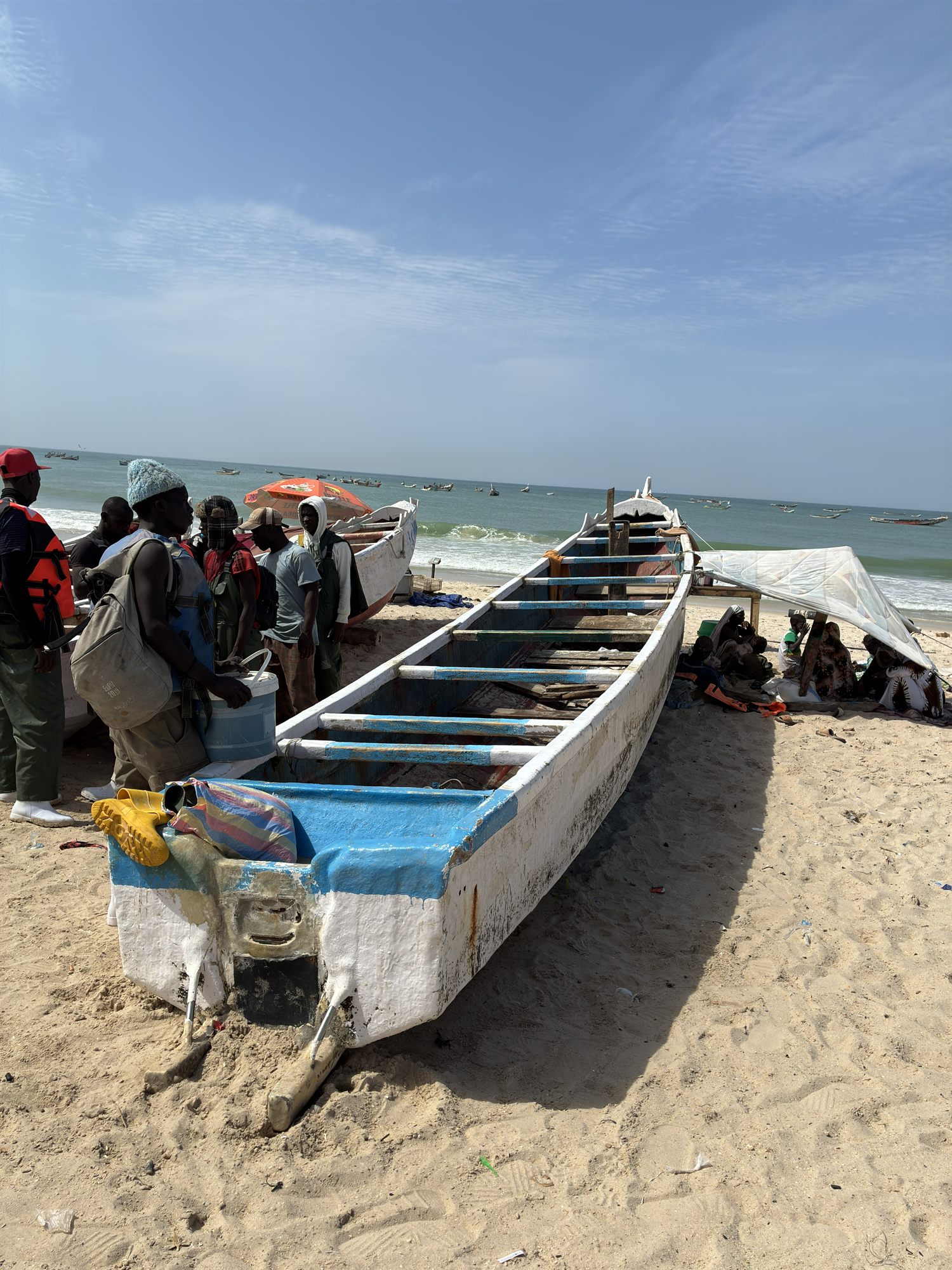
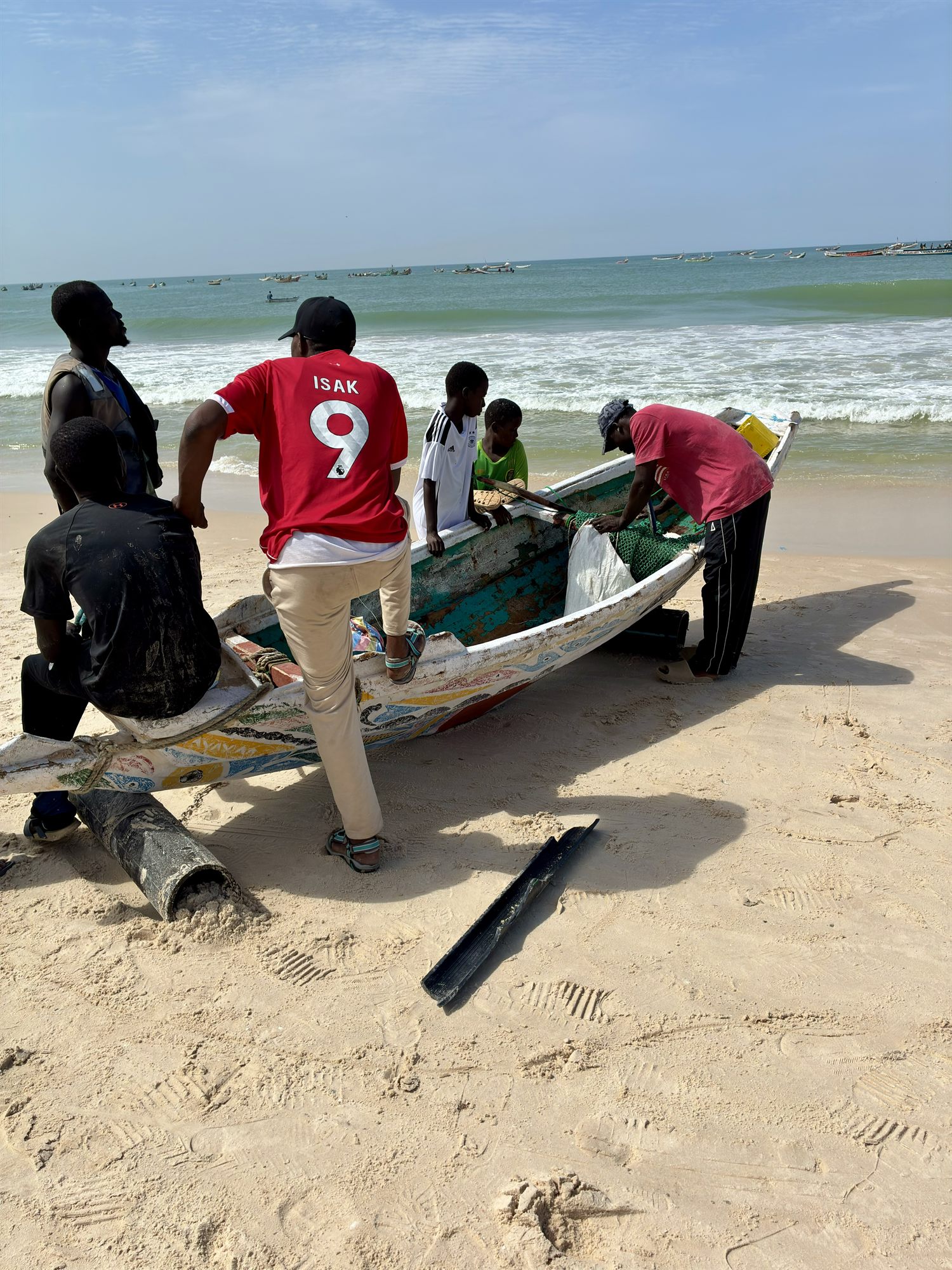
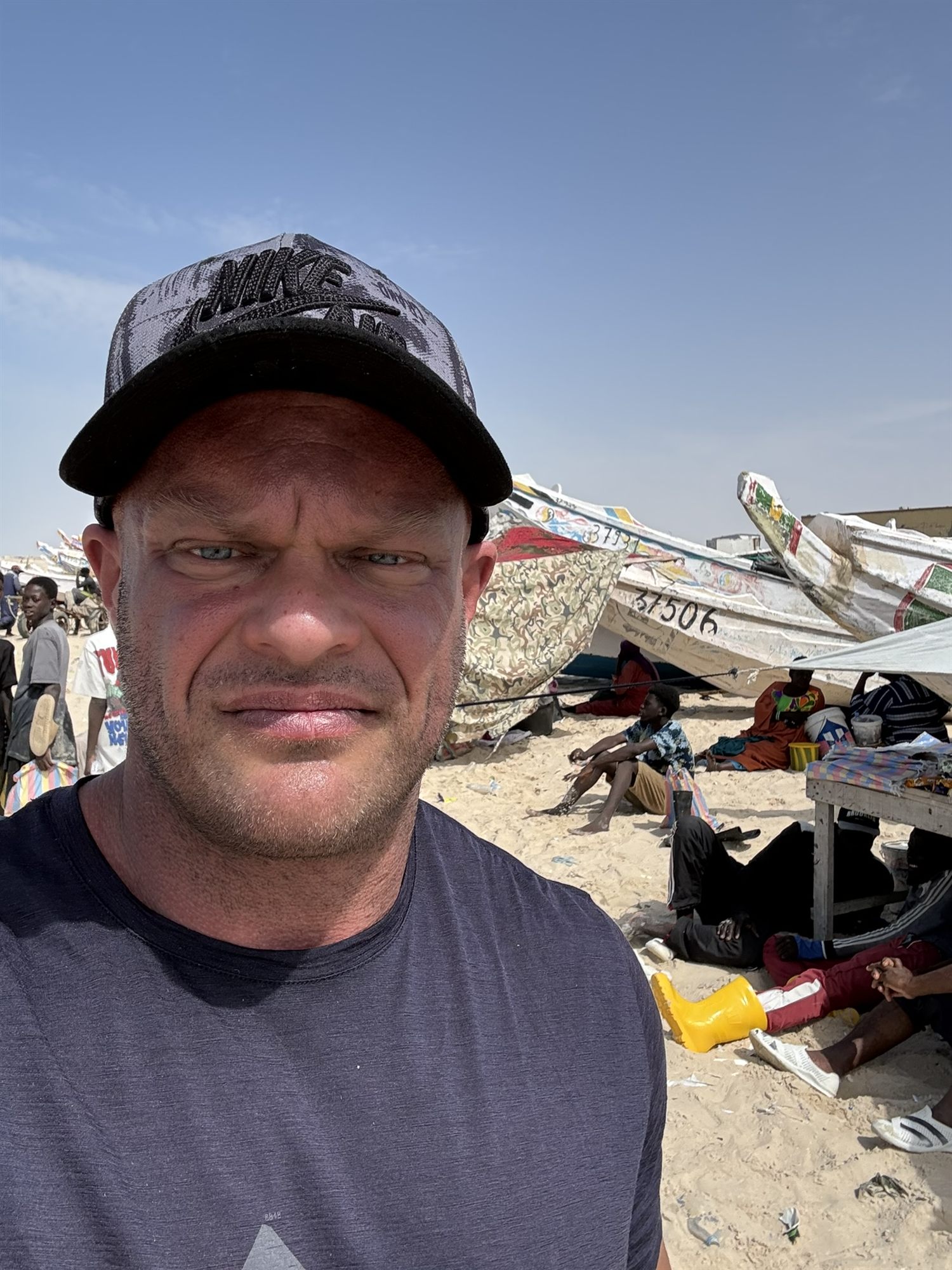
Watching the boats being dragged up the sand, the catch coming ashore and the fishermen working – all the colour, noise and activity around it – was what made the day for me. We didn't stay long, but it was fascinating to see how the fishing works. At around 12.10 we drove on.
My verdict: the conditions around the fish don't impress by Western standards. But the boats and the landing of the catch on the beach are well worth seeing – it's the part of Nouakchott I remember best.
The Lycée Militaire de Nouakchott
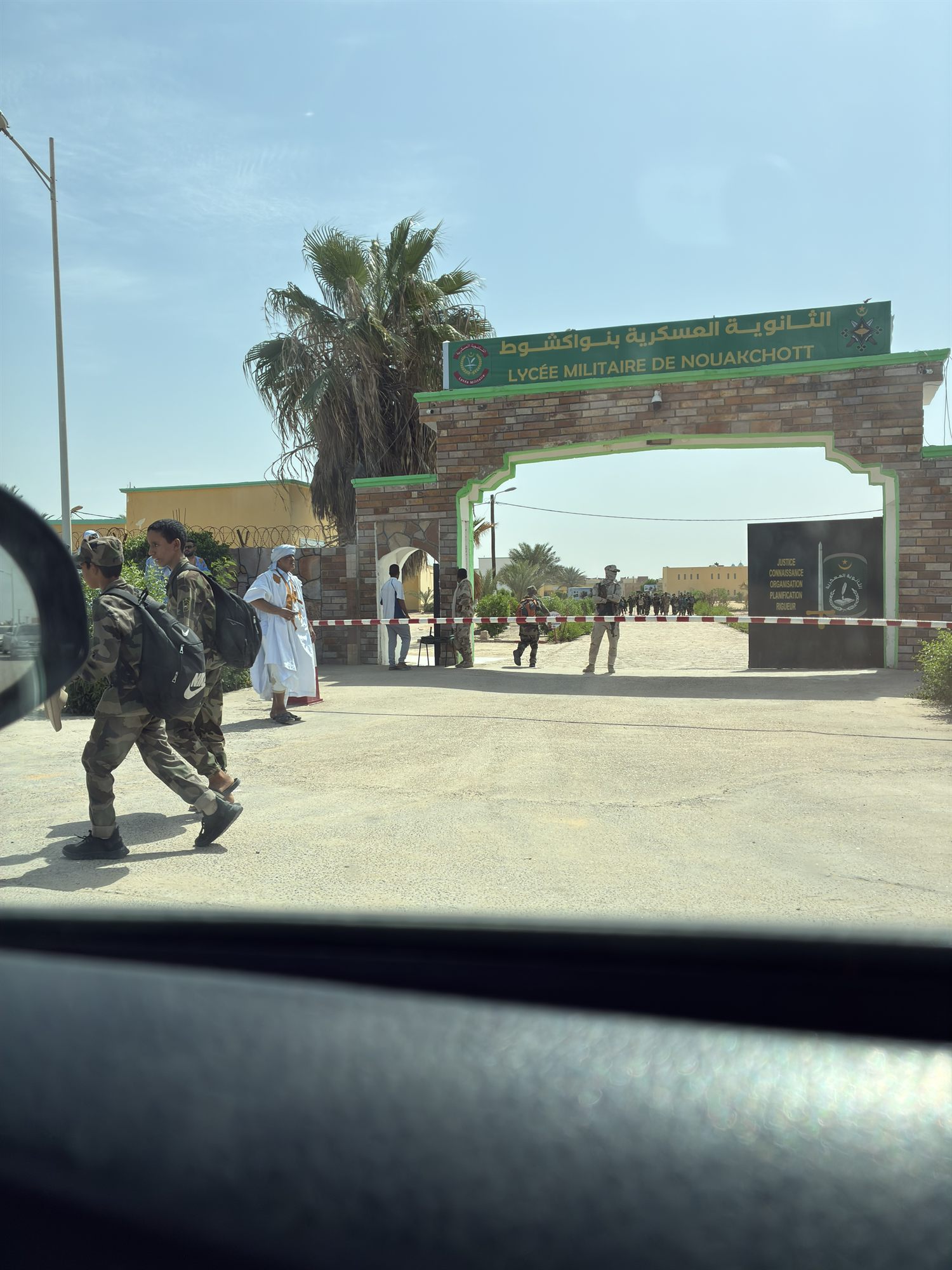
On the way, we passed the Lycée Militaire de Nouakchott, a military secondary school, just as the pupils were coming out in uniform. Sidi Mohamed told me the schooling there has a military structure and discipline. It was an interesting contrast to the ordinary schoolchildren we'd seen that morning.
Local lunch
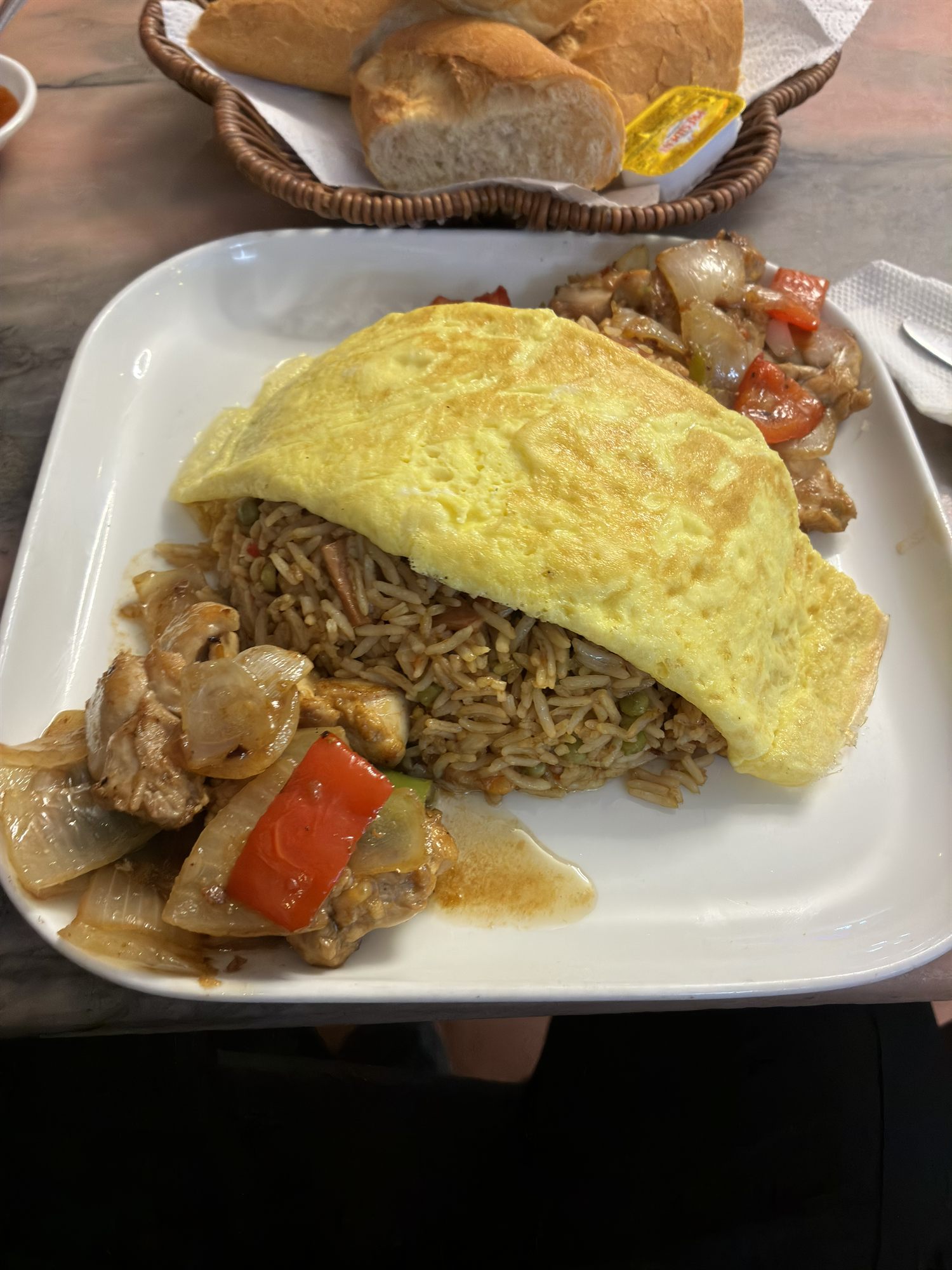
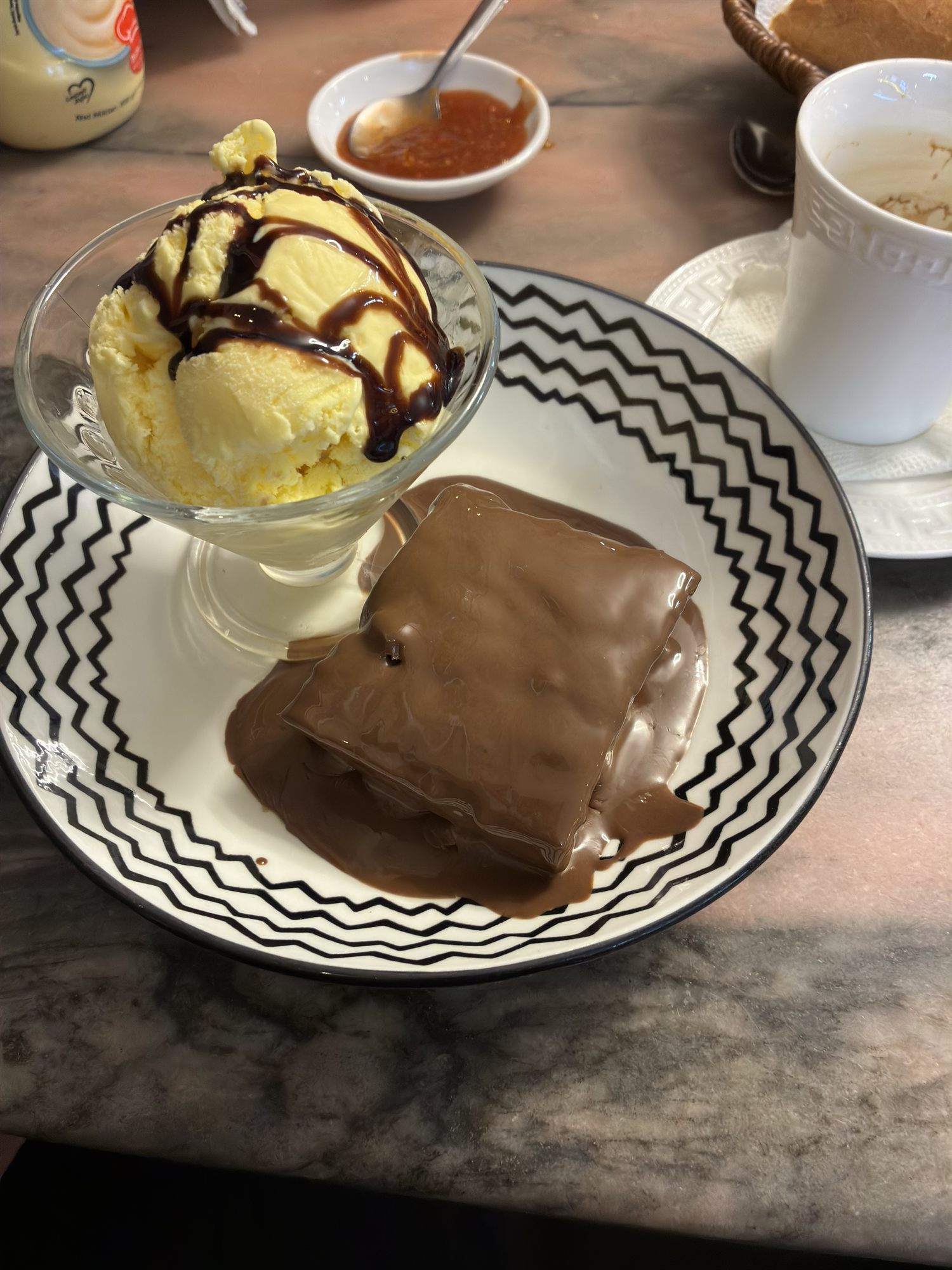
At around 12.30 we went to a local restaurant – the sign said Rotana Restaurant – and ate at about 13.10. I had rice with vegetables and meat under an omelette, and then ice cream and chocolate cake for dessert. The food was good, and it was nice to eat after a busy morning.
Training in a local gym
After lunch, Sidi Mohamed dropped me at a local gym, Energy Club. I've done strength training for many years, and I like visiting gyms when I travel – it's a fun way to see how people train in different parts of the world.
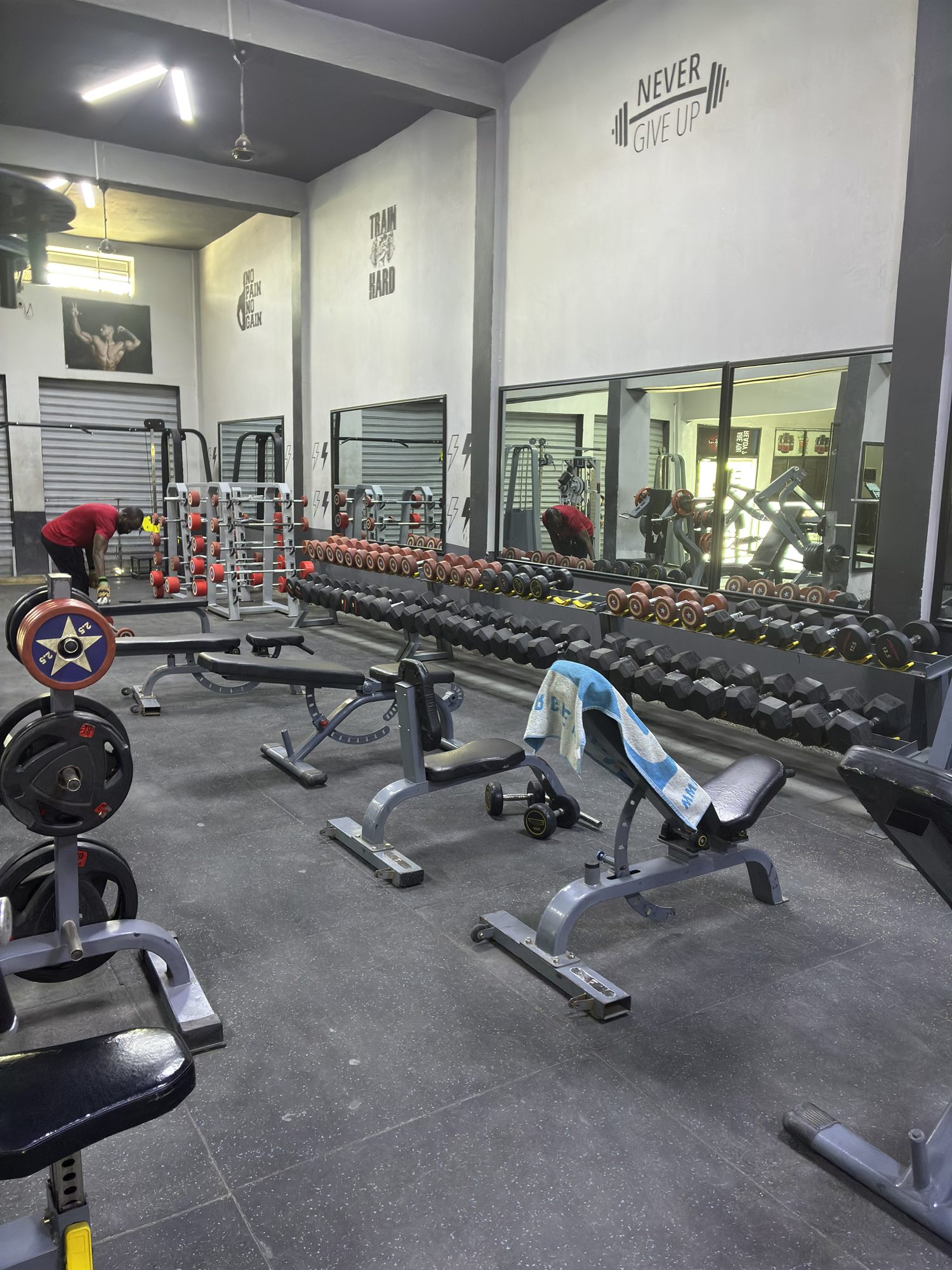
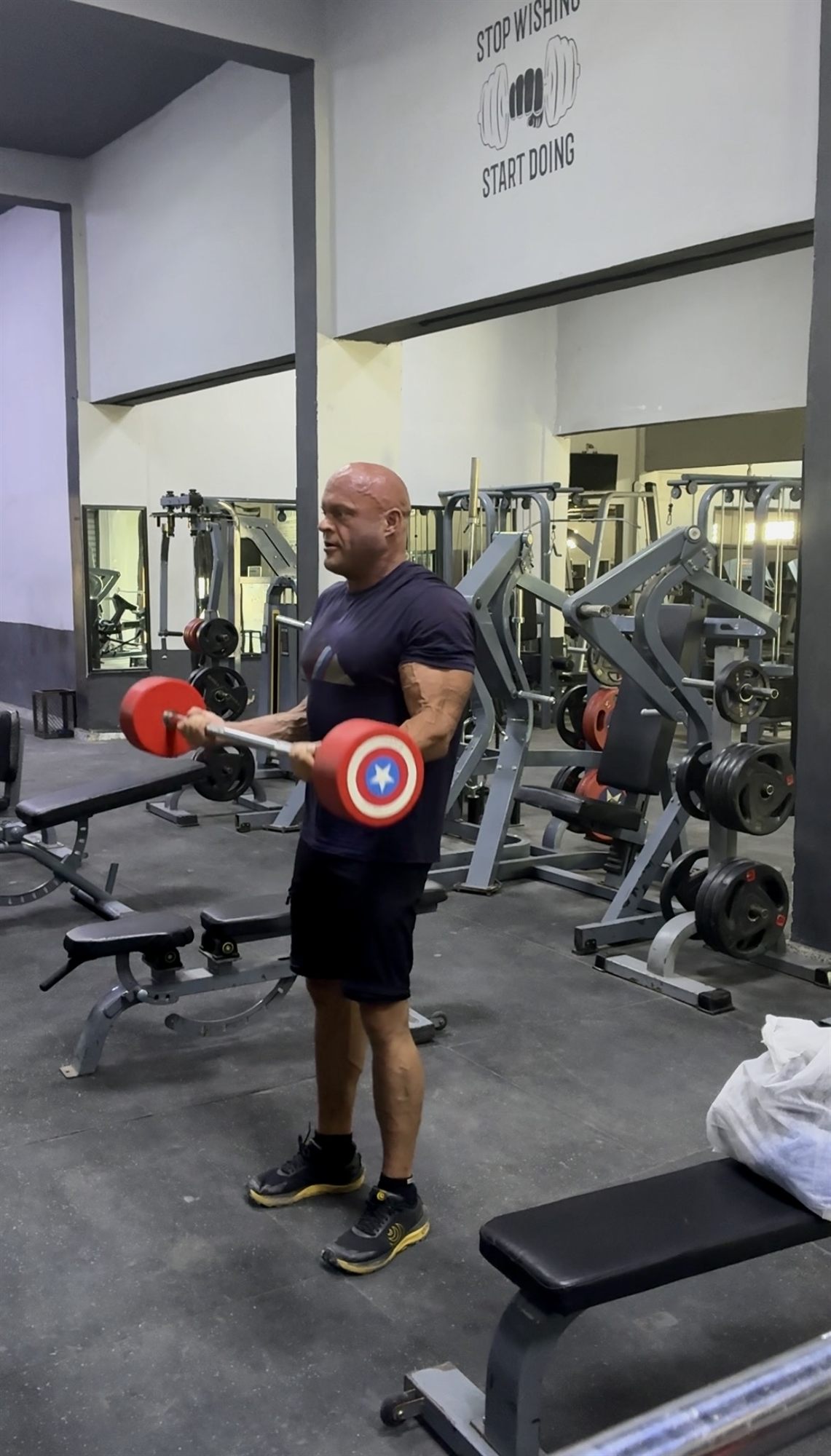
The equipment was old and worn, the floor wasn't completely level and there was no proper deadlift platform. But the machines were fine for bodybuilding, and there was plenty for a good session. I trained biceps and a bit of everything else. It was very hot inside. A gym doesn't have to be modern to give you a good workout, and it was a fun, real way to experience the city.
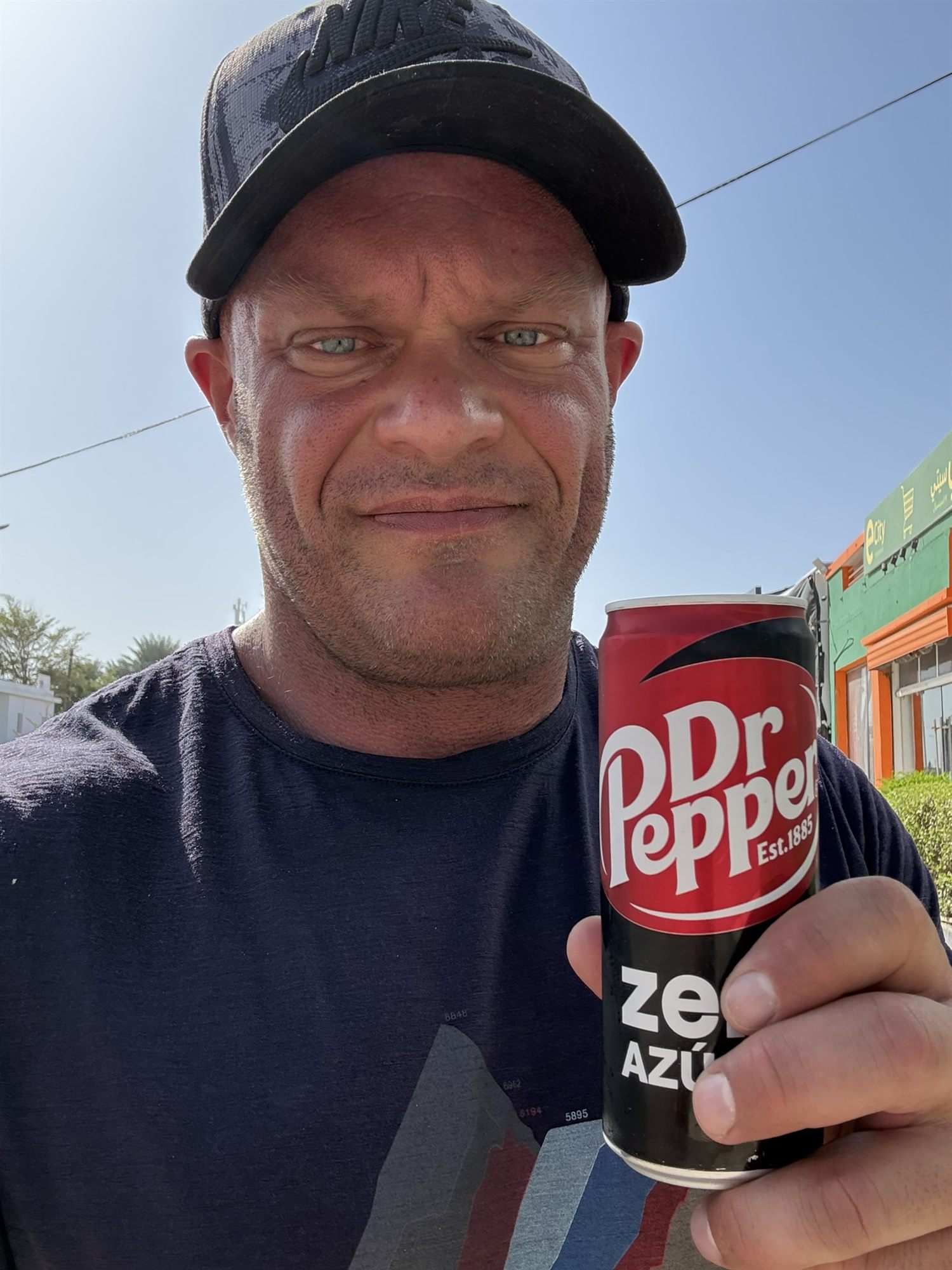
Afterwards I bought a cold Dr Pepper at a kiosk and walked the roughly two kilometres back to the hotel, where I rested before the evening.
Mauritanian tea in the dunes
At around 18.45 Sidi Mohamed picked me up again. We'd agreed that I should try traditional Mauritanian tea.
First we drove around town, stopping at small kiosks. Sidi Mohamed honked, the shopkeepers came out to the car, and he ordered what we needed: tea, mint, sugar, bread and the rest. Payment was made with a mobile payment app – it surprised me a little how practical and modern that was.
Then we drove out to some sand dunes to meet one of Sidi Mohamed's friends, and sat down on a mat in the sand. A small fire, a teapot and a few glasses – and they showed me how it's done.
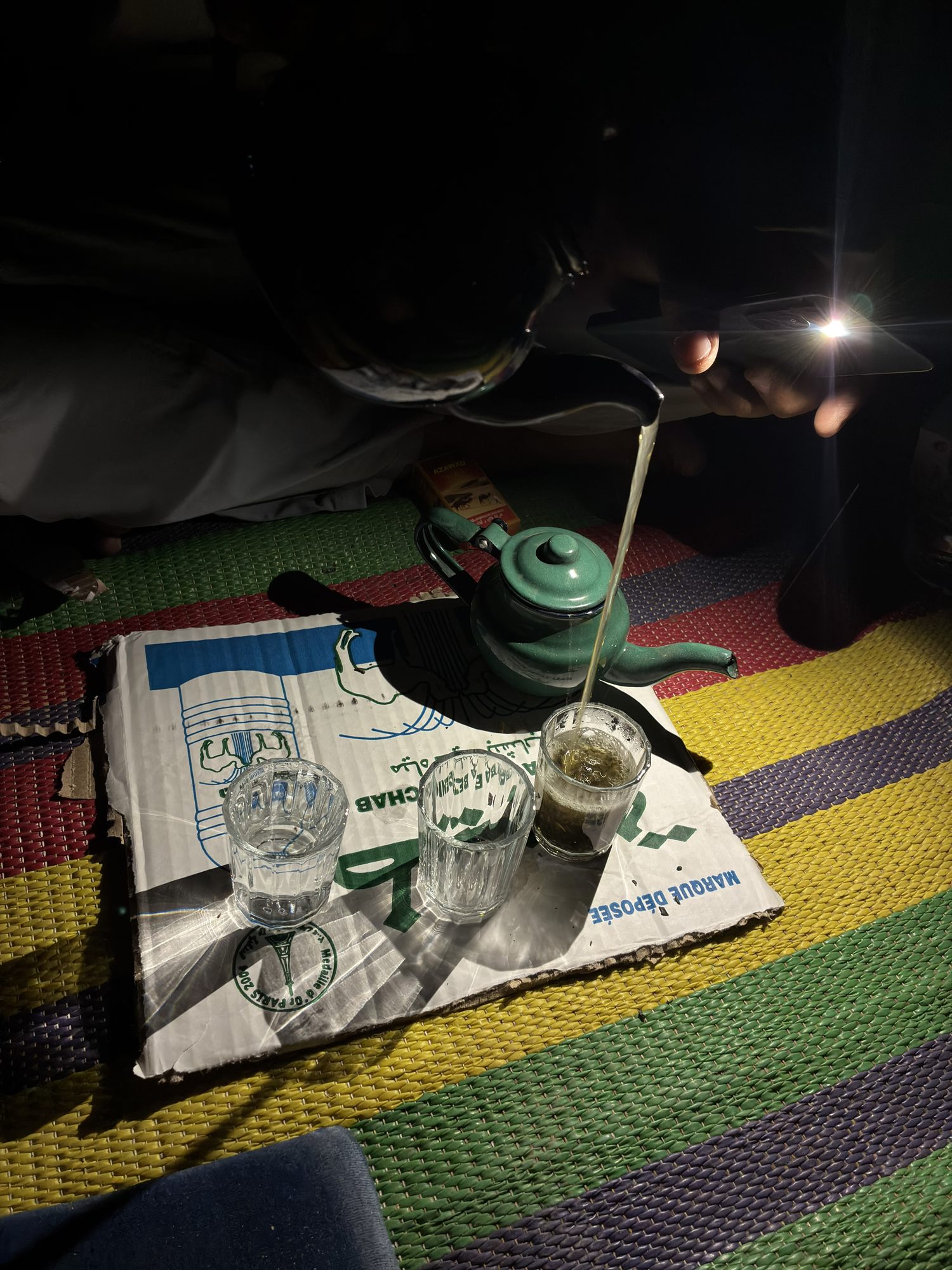
Mauritanian tea is served in three rounds. The first is strong, the second is medium and the last is milder. It's very sweet, and part of the ritual is pouring the tea back and forth between the glasses and the pot, from a height, to build a layer of foam on top.
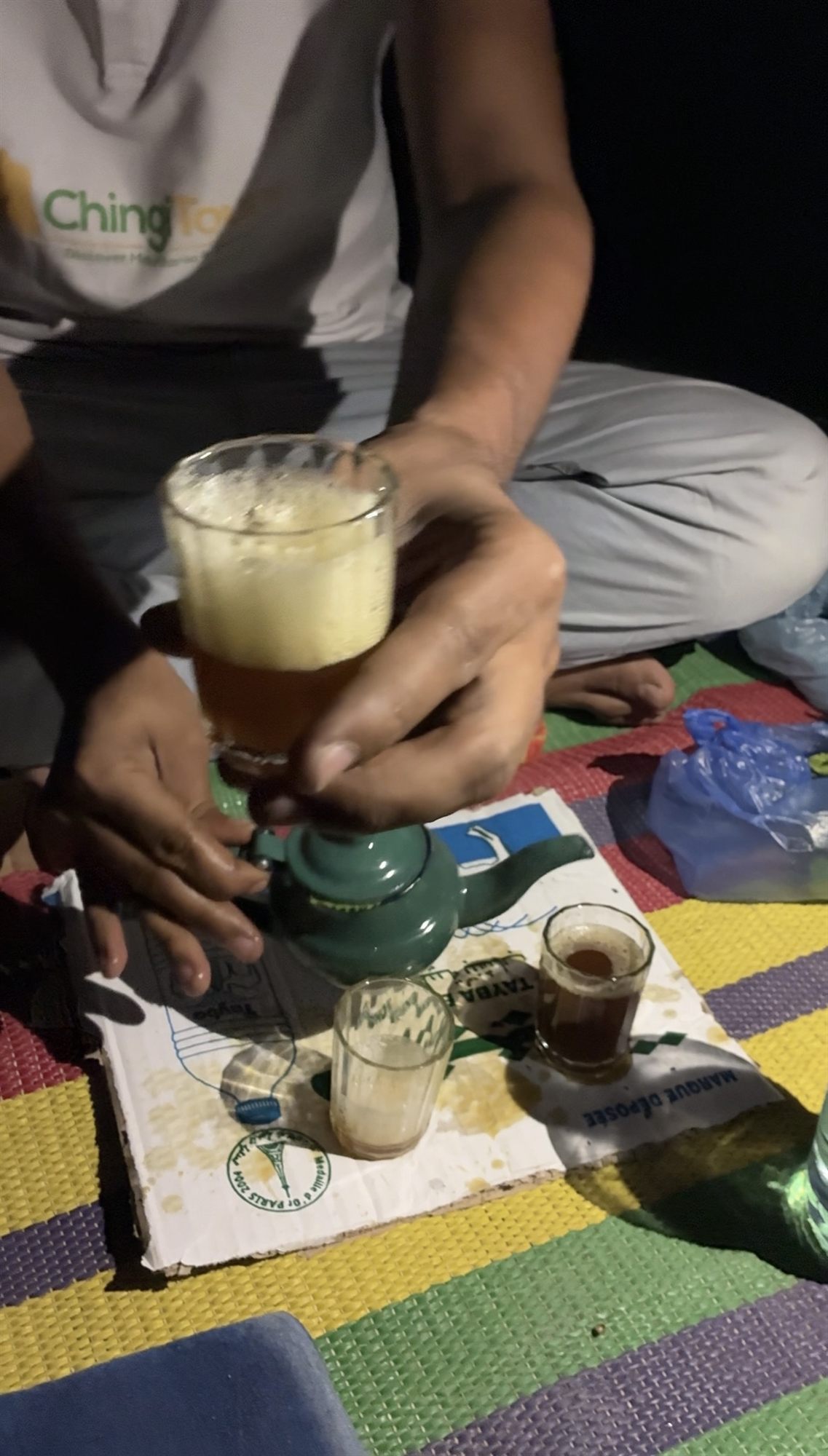
Sidi Mohamed told me they drink tea like this several times a day: in the morning, around midday when things are quieter, and in the evening, when people get together and end the day. He often meets his friends in the evening to drink tea this way.
We sat in the sand while the tea was made over the fire, talked and simply enjoyed it. After the busy markets earlier in the day, it was a completely different side of Mauritania – relaxed, welcoming and personal. It's one of the experiences I was looking forward to having more of on the rest of the trip.
My verdict on a day in Nouakchott
- The camel market: something different, and probably worth seeing if you're in Nouakchott. But I didn't find the conditions for the camels pleasant to see, and I didn't want to stay long.
- The central market: a good look at the city's trade and everyday life – and the drive there through the streets is part of the experience.
- The fishing beach: the best part of the day. The fish market itself is rough, but the painted wooden boats being hauled up the beach, the catch coming ashore and the fishermen at work are well worth seeing.
- The gym: not a tourist activity, but a fun and personal way to see a different side of the city.
- Mauritanian tea: good and genuine. A relaxed way to meet the local culture and understand how people spend time together.
Nouakchott isn't a classically beautiful capital full of well-known sights. But it has a lot of everyday life, and it's by getting out to the markets, the fishing beach and the places where people meet that you start to get a feel for the country.
From Nouakchott, the trip continued into the desert – read about climbing Ben Amera and riding the Iron Ore Train.
Practical information
| Our day | 6 November 2026, 09.30 to evening, with guide Sidi Mohamed. |
|---|---|
| Camel market | About 10.00–10.30. Photography of people wasn't welcome when we were there – ask first, or photograph the camels. |
| Central market | About 11.00. Good for a cap, a head scarf and everyday goods. |
| Fish market and beach | About 11.50–12.10. There's a checkpoint at the entrance and limits on photography. The boats come in on the beach next to the market. |
| Gym | Energy Club – old, worn equipment but decent bodybuilding machines. |
| Lunch | Rotana Restaurant, around 13.00. |
| Tea | Evening, in the dunes outside town, arranged by our guide. |
| Organised by | Part of my Mauritania trip booked through ChingiTours (not an affiliate link), with local arrangements by Time for Mauritania. |
Background: Wikipedia – Nouakchott, Global Voices – Tea in Mauritania. Everything about the markets and the conditions there is my own impression from one day in November 2026.